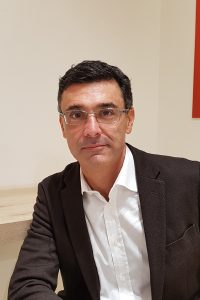
Giovanni Squillero is a Full Professor in the Department of Control and Computer Engineering (DAUIN) at Politecnico di Torino, Italy. He leads the CAD group (Electronic CAD & Reliability) and serves on Politecnico's Joint Committee for Teaching and Ph.D. Steering Committee (Pure and Applied Mathematics).
Dr. Markus Borg is a Senior Researcher and Adjunct Lecturer at Lund University, Sweden, specializing in the intersection of software engineering and applied artificial intelligence. He is a Principal Researcher at CodeScene and contributes to editorial boards for Empirical Software Engineering and IEEE Software . His work bridges academic research with industrial practice through collaborations with Ericsson and contributions to open-source tools like SMIRK. Markus's research focuses on empirical software engineering , technical debt , safety engineering , and requirements engineering for AI-integrated systems. He explores two key directions: AI4SE (applying machine learning to software engineering challenges like defect management and technical debt remediation) and SE4AI (ensuring quality assurance for ML components in safety-critical domains such as automotive systems). His work aligns with regulatory frameworks like the EU AI Act and industry standards for automotive safety. 2025 Contributions : Gamify Track: Two papers on gamification in software maintainability ICSE Journal-First: Longitudinal study on automated bug assignment at Ericsson IDE Track: Trust calibration in AI-assisted refactoring TechDebt Technical Papers: ACE tool for LLM-based technical debt remediation 2024 Contributions : PROFES: AI Act compliance in requirements engineering MO2RE: Code quality specifications TechDebt: Maintainable code ROI analysis Programming with AI: CodeScene platform demonstration 2023 Contributions : CAIN: ML testing in automotive perception systems EASE: Code ownership and defect resolution Mutation Track: Safety-critical mutation testing validation His recent publications emphasize automated defect management , LLM-driven refactoring , and safety validation for ML components , particularly in automotive contexts. Tools like SMIRK and ACE demonstrate practical applications of his research. Markus actively participates in program committees for ICSE, TechDebt, and ICSME, with a focus on bridging academic research with industrial AI/SE challenges.
Ivano Malavolta is an Associate Professor in Software Engineering at the University of Urbino , focusing on energy-efficient software, software architecture, and model-driven engineering (MDE). His research bridges robotics, mobile systems, and sustainability, emphasizing empirical methods and industrial applicability. Key Research Areas: Energy-efficient software, microservices, robotics systems, collaborative modeling, mobile application performance. Affiliations: Department of Software Engineering, University of Urbino. His recent publications highlight empirical studies on energy consumption patterns in robotics, mobile apps, and AI systems. He has contributed to frameworks like the Green Software Measurement Model (GSMM) and tools for architectural technical debt analysis. Notably, he has co-authored 15+ peer-reviewed articles in venues such as Journal of Systems and Software , Information and Software Technology , and ACM/IEEE conferences . His work often involves cross-platform comparisons (e.g., Electron vs. Web, Pandas vs. Polars) and systematic mappings of software engineering practices.
Paolo Bellavista is a Full Professor of Distributed and Mobile Systems at the Department of Computer Science - Science and Engineering, Alma Mater Studiorum – University of Bologna. His research focuses on edge computing, federated learning, IoT, digital twins, and blockchain applications. With over 140 journal articles and 200+ conference papers, his work appears in top venues such as ACM Computing Surveys and IEEE Transactions. He serves as Editor-in-Chief of the MDPI Computers Journal and holds editorial roles in IEEE Communications Surveys&Tutorials and ACM Computing Surveys. His contributions span network optimization, cybersecurity, and smart cities, with notable achievements in citation metrics (h-index 46 on Google Scholar). Research interests include distributed systems, vehicular networks, AI-driven security, and QoS-aware edge infrastructures. He has organized major conferences like IEEE Mobile Cloud and ACM ICDCN. Current projects explore federated learning unlearning, digital twin entanglement, and blockchain-based data spaces. His work bridges theoretical foundations with real-world deployments in smart manufacturing and healthcare. Editorial Roles : MDPI Computers (Editor-in-Chief), IEEE Communications Surveys&Tutorials (Associate Editor), ACM Computing Surveys (Editor) Conference Leadership : Technical Program Chair for IEEE Mobile Cloud 2015, General Co-Chair for SCNS 2018 Key Contributions : Over 140 journal papers, 15 special issues as guest editor, and 200+ conference publications His lab develops middleware for edge-cloud continuum applications and collaborates internationally on projects like InAbled Cities. Office hours are held weekly at the University of Bologna’s DISI department.
Nancy Varshney is a Part-Time Lecturer at the Department of Electronics and Telecommunications (DET) at Politecnico di Torino. She contributes to the College of Electronic Engineering, Telecommunications, and Physics, as well as the College of Mechanical, Aerospace, and Automotive Engineering within the university. Her academic work focuses on telecommunications technologies, particularly in the context of 5G and beyond. Research Interests : Nancy Varshney's research spans key areas such as millimeter-wave (mmWave) communication systems, beamforming strategies, UAV (drone)-assisted networks, and backscatter sensor technologies. Her work addresses critical challenges in optimizing data collection, energy efficiency, and network performance for next-generation wireless systems. Recent Publications : Her recent publications highlight advancements in mmWave beamforming, UAV-aided communication, and resource allocation for 5G+. These studies explore low-complexity algorithms, wideband mmWave systems, and beam squint effects to enhance network performance. The research contributes to the evolution of telecommunications infrastructure and wireless signal processing. Teaching Contributions : She collaborates on courses including 'Software-defined communication systems,' '5G and next-generation mobile computing,' and 'Communication and network systems,' particularly focusing on computer network design and control. Her teaching roles span multiple academic years and programs at Politecnico di Torino.
Lapo Mola is an Associate Professor at SKEMA Business School, specializing in Management of Projects, Information Systems, and Supply Chains. He serves as Co-Director of the Digital DBA (DDBA) program and Scientific Coordinator of the M2 Apprentissage in Business Process Management. His roles include membership in research centers like KTO and GREDEG, and involvement in initiatives such as the Trasformazione Digitale e Sostenibile delle PMI Venete project. His research focuses on the impact of Information Technologies (e.g., ERP, Business Intelligence) on organizational design, inter-organizational relationships, and institutional change. Key areas include digital transformation, IT-driven organizational capabilities, and international business models. He has published in journals like the European Journal of Information Systems and Information Systems Journal. Mola teaches modules such as Business Intelligence, Digital Transformation, and Generative AI for Management. He advises on doctoral programs and is a referent for Erasmus and digitalization initiatives. His work bridges theory and practice, emphasizing digital innovation in SMEs and sustainable practices. He leads projects like the Trasformazione Digitale e Sostenibile initiative, supporting Venetian SMEs in digital and sustainability transitions. His contributions span academic research, executive education, and applied projects, reflecting a commitment to advancing organizational and technological resilience.
Andrea Detti is a Professor at the Department of Electronic Engineering, University of Rome Tor Vergata. His research focuses on computer networks, particularly Information-Centric Networking (ICN), Cloud Computing, and Software Defined Networks (SDN). He has coordinated major EU projects like Fed4IoT and BONVOYAGE, addressing IoT and Intelligent Transport Systems. He serves as Associate Editor for IEEE Transaction on Network and Service Management and has guest-edited special issues on ICN. His teaching includes courses on Internet Technologies, Mobile Wireless Networks, and Cloud Computing, emphasizing hands-on labs with Linux, Cisco routers, and OpenStack. Key projects include leadership roles in EU initiatives such as ICN2020, GreenICN (energy-efficient ICN), and OFELIA (ICN over SDN). He coordinates industrial projects with Telecom Italia and SSI/Finmeccanica on publish-subscribe paradigms in MANET and DTN. His research spans ICN scalability, adaptive video streaming, and satellite communication optimizations. Publications (80+) cover ICN architecture, SDN integration, and network performance modeling. He actively participates in conferences and standardization efforts, contributing to the evolution of future Internet architectures.
Massimiliano Di Penta is an Ordinary Professor in the Department of Engineering (DING) at the University of Sannio . His research focuses on Software Engineering , Code Obfuscation , Software Security , and Empirical Software Engineering , with a strong emphasis on Open-Source Systems and Machine Learning in Software Development .
Paulo Romero Martins Maciel is a full professor at the Center for Informatics, Federal University of Pernambuco (UFPE), Brazil, where he has been a member since 2001. He previously served as a professor in the Department of Electrical Engineering at the University of Pernambuco from 1989 to 2003. He completed his graduate degree in electronic engineering from the University of Pernambuco in 1987, followed by master's and doctorate degrees in electronic engineering and computer science from UFPE. During his doctoral studies, he conducted a "sandwich internship" at Eberhard-Karls-Universität Tübingen, Germany (1996-1997), and later spent a sabbatical year at Duke University's Edmund T. Pratt School of Engineering. Graduate Degree: Electronic Engineering, University of Pernambuco (1987) Master's Degree: Electronic Engineering and Computer Science, Federal University of Pernambuco Doctorate: Electronic Engineering and Computer Science, Federal University of Pernambuco Professor Maciel leads the MoDCS Research Group and has established himself as a leading expert in dependability engineering, stochastic modeling, and performance evaluation of computing systems. His research spans cloud computing, edge computing, software aging and rejuvenation, and reliability analysis of complex systems. His work demonstrates a consistent focus on developing mathematical models (particularly Markov chains and Petri nets) to evaluate system behavior under various conditions. Recent research extends into emerging areas including Metaverse infrastructure, drone surveillance systems, satellite communications, and smart agriculture applications. His publication record is impressive with 191 publications and 1,298 citations, showing remarkable productivity and impact across nearly three decades. His most recent work (2024-2025) continues to push boundaries in aging dependability of cloud-edge systems for digital twins, high availability quantification in Metaverse storage, and stochastic modeling of satellite systems. His research methodology consistently applies hierarchical modeling approaches to address complex system interdependencies. Professor Maciel has mentored numerous researchers who have become active contributors in the field, including doctoral students Paulo Pereira and several co-authors who appear in his recent publications. His collaborative network extends across Brazil and internationally, reflecting the global recognition of his expertise.
Marco Torchiano is a full professor at the Department of Control and Computer Engineering (DAUIN) of Politecnico di Torino, Italy, and a Senior Member of the IEEE. His research focuses on green software, UI testing methods, open-data quality, and software modeling notations, employing empirical software engineering methodologies. Current academic affiliation: Professor at Politecnico di Torino Research interests: Software Engineering, Empirical Studies, Software Testing, Software Modeling, Data Quality, Data Visualization His recent work explores gamification in testing frameworks (GAppium, GERRY), accessible development tools (VS Code extension), and Android GUI testing challenges (multi-device robustness, widget layout analysis). He has also published on UML modeling with LLMs and Kotlin's impact on Android code maintainability. Contact: marco.torchiano@polito.it . Social media: Twitter @mtorchiano , Mastodon @mtorchiano@mastodon.uno .
Riccardo Morri is an Associate Professor at the Department of Modern Literature and Culture , Sapienza University of Rome . With a PhD in Geography (1999) and a Master in Human Geography (1993), he specializes in Historical Geography , Cartographic Education , and Public Geography . His work bridges geographical theory with educational practices and heritage preservation. Education PhD in Geography, University of Cassino (1999) Master in Human Geography, Sapienza University (1993) Morri's research focuses on historical urban landscapes , geographical heritage , and interdisciplinary methodologies . He explores how cartography and geography intersect with literature, memory, and education, particularly through projects like the MAGISTER initiative for territorial enhancement using geospatial tools. His recent publications (2022-2025) emphasize: Democratizing geographical knowledge Digital humanities applications in heritage studies Cartographic language in early childhood education Urban memory landscapes Participatory approaches to geographical heritage These works often integrate GIScience with cultural analysis and educational innovation. Scientific Awards include national qualifications as Full and Associate Professor, CNR's 'Promozione Ricerca 2005', and multiple research scholarships from Sapienza University and the Italian Foreign Office. Morri has: Led the MAGISTER Project (€165,000) for geospatial territorial enhancement Coordinated the Geocartography Laboratory at Sapienza since 2014 Managed EU-funded educational initiatives on remote sensing He serves on editorial boards for journals like J-Reading and Geotema , and organizes annual geography conferences with hundreds of participants.
Alfredo Pulvirenti is a Full Professor of Computer Science at the University of Catania, Italy. He holds a joint appointment with the Department of Clinical and Experimental Medicine and the Department of Mathematics and Computer Science. Born in 1974, he earned his Laurea (1999, summa cum laude), PhD (2003), and post-doc (2004) in Computer Science from the University of Catania. His academic career includes roles as Assistant Professor (2005-2014), Associate Professor (2014-2023), and Full Professor since 2023. His research bridges Bioinformatics and Biomedicine , focusing on RNA interference (microRNAs, long non-coding RNAs) via stochastic and network-based inference methods. Key contributions include subgraph matching , motif finding , and multiple network alignment using Monte Carlo techniques for analyzing biological networks . He also applies time series analysis to seismic and infrasonic signals through collaborations with Italy's National Institute of Geophysics and Volcanology (INGV). Recent publications highlight advancements in graph algorithms (e.g., MultiGraphMatch, ArcMatch) and systems biology tools like MITHrIL and SPECifIC. He co-directs the Jacob T. Schawartz International School for Scientific Research and leads national/regional projects on Bioinformatics and Big Data in Cancer . His group includes 3 researchers, 1 post-doc, and 3 PhD students in Complex Systems. Awards and Leadership : Best Paper Award at CBS 2009 Guest Editor for BMC Bioinformatics, Briefings in Bioinformatics, Elsevier Program Committee Member for major international conferences International Collaborations span institutions like NYU, Ohio State University Wexner Medical Center, Brown University, Tel Aviv University, Toronto University, and Università di Ancona.
Yehia Moustafa Abd Alrahman is a PostDoc researcher at the SysMA research unit of IMT School for Advanced Studies Lucca, where he also participates in the FILIERASICURA project with Cisco. He is preparing to relocate to the University of Leicester to collaborate with Prof. Nir Piterman on the ERC Consolidator Project DSynMA (Distributed Synthesis from Single to Multiple Agents). His academic journey began with a scholarship-funded computer engineering degree at IMT Lucca, followed by a master's scholarship in computer science where he served as a teaching assistant. Abd Alrahman's research focuses on formal methods for developing correct-by-construction software systems with emphasis on predictability, adaptivity, efficiency, reusability, maintainability and modularity. His work particularly addresses challenges in contemporary information systems including embedded systems and service-oriented architectures. Currently, he is investigating formal analysis approaches for securing supply chains in cyber-physical systems. His research spans attribute-based communication, collective adaptive systems, multi-agent systems verification, and reconfigurable distributed systems. His publication record shows a consistent trajectory from foundational work on attribute-based communication (2014-2018) toward increasingly sophisticated verification frameworks for reconfigurable systems (2019-2025). Recent publications demonstrate a clear evolution toward distributed synthesis techniques, model checking for reconfigurable multi-agent systems, and formal frameworks for runtime reconfiguration. His work bridges theoretical computer science with practical applications in secure system design. Abd Alrahman completed his PhD with first honors rating 'excellent' in the Computer, Decisions, and Systems Science track at IMT School for Advanced Studies Lucca. While no formal awards are documented in the provided materials, his consistent publication record in top venues like FORTE, ISoLA, and AAMAS demonstrates recognition within the formal methods community. His collaborations with established researchers like Nir Piterman, Rocco De Nicola, and Michele Loreti indicate strong research networks. As a PostDoc researcher, Abd Alrahman works within the SysMA research unit at IMT Lucca, contributing to the Italian Project FILIERASICURA with Cisco. His upcoming move to Leicester represents a significant career advancement through the ERC Consolidator Project DSynMA, which will expand his research scope into distributed synthesis for multi-agent systems.
Alessandro Rossi is an Associate Professor in the Department of Economics and Management at the University of Trento, Italy. He holds roles including Rector’s Delegate for Support to the Productive System and coordinates doctoral programs in Innovation & Entrepreneurship. He earned a Laurea in Business Economics from Ca’ Foscari University of Venice (1995), a PhD in Organization and Management of Enterprises from the University of Udine (2000), and conducted postdoctoral research at the University of Trento (2000-2002). His research focuses on organizational processes in knowledge-intensive sectors, particularly software industries, using experimental and computational methods. Key interests include innovation, decision-making, and open-source ecosystems. He leads projects funded by EU initiatives (e.g., Communia Network, LiquidPublication) and national grants (MIUR-PRIN, COFIN). He teaches courses such as Start-Up Lab, Managerial Decision Models, and Innovation in Local Manufacturing Systems. As an advisor, he supervised 98 theses (69 bachelor’s, 29 master’s). Awards include HICSS-43 Best Paper Nomination (2010) and a 2001 Young Researchers Grant. Key Roles: Doctoral Program Coordinator, Erasmus Program Coordinator, Open Innovation Researcher Research Projects: LiquidPublication (FP7), Designing Complex Artifacts (MIUR-PRIN), Open Source Software Networks Professional Engagements: Program Committee Member (Wikisym, EURAM), Scientific Board (Open Culture Conferences) His work bridges theoretical economics with empirical studies, emphasizing organizational design and open innovation dynamics.
Maria Tortorella is an Associate Professor in the Department of Engineering at the University of Unisannio, Italy. Her research focuses on software engineering with particular emphasis on business-process and software-system alignment. She has published extensively in the field of software maintenance, evolution, and quality assessment, with a publication record spanning over two decades from 1994 to 2019. Dr. Tortorella's primary research interests include: Software Maintenance and Evolution Software Comprehension and Reverse Engineering Software Quality Assessment Business Process Modelling Alignment between Business Processes and Software Systems Open Source Software Evaluation Her research trajectory shows a clear evolution from foundational software engineering topics toward contemporary challenges in business-IT alignment and open source software evaluation. Early work focused on program comprehension and identifying reusable components, while more recent publications examine architectural instability, quality evolution trends, and reliability assessment in open source projects. This progression reflects the changing landscape of software engineering practice and research priorities over her career. Dr. Tortorella has maintained strong collaborative relationships, particularly with Lerina Aversano, Gerardo Canfora, and Carmine Grasso, resulting in numerous co-authored publications. Her work demonstrates methodological rigor through empirical studies, case analyses, and framework development that bridges theoretical concepts with practical applications in software engineering and business process management.