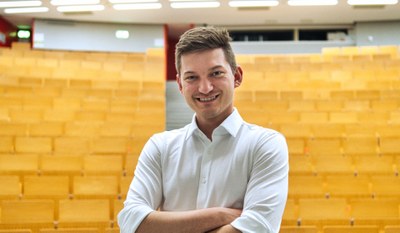
Andreas Weilinghoff is a Junior Professor of English Linguistics at the University of Koblenz , the youngest university in Germany. His work bridges empirical phonetics, sociolinguistics, and computational methods. Junior Professor (2023–present) Associated Researcher in Digital Humanities at University of Bern Member of German Association for the Study of English, ISCA, and Departmental Governing Body AI Consultant for English/Arts departments Research Focus : Quantitative phonetics, sociophonetics, AI-driven speech analysis, and computational linguistics. He develops open-source tools like Whisper-to-TextGrid converters and formant analyzers to democratize speech technology in education. Whisper server infrastructure for university Speech recognition software for MAXQDA integration TextGrid manipulation scripts His scientific contributions include: 2024: Evaluation of Whisper for sociolinguistic transcription (ICAME47) 2022: Aitken’s Law vowel duration analysis (NWAV50) 2023: Historical review of phonetic research (University of Bern) 2021: ASR demonstrations at ICAME42
Onur Demirörs is a prominent researcher in software engineering with a focus on functional size measurement, agile methodologies, business process modeling, and ontology development. He has collaborated extensively with scholars like Hüseyin Ünlü, Tuna Hacaloglu, and Özden Özcan Top across publications in journals such as Software Practice and Experience , Information and Software Technology , and conferences like SEAA and IWSM-Mensura. Research Themes: Software size/effort estimation, agile practices, process modeling, and ontology development Methodologies: Systematic literature reviews, case studies, empirical investigations Tools: COSMIC FSM, UPROM, PROMPTUM His articles analyze how functional size measurement bridges problem-solution domains, the role of NLP in size prediction, and maturity models for Industry 4.0. Scientific awards and student advisement aren't documented in this dataset.
Anish Das Sarma is a researcher affiliated with Google, USA , specializing in uncertain data management, MapReduce algorithms, and knowledge graph systems. He earned a PhD from Stanford University in 2010 under the supervision of Jennifer Widom and Alon Halevy, with a dissertation on "Managing Uncertain Data." His career spans collaborations with leading institutions, focusing on scalable data integration, social choice theory, and machine learning applications in scholarly knowledge organization. PhD in Computer Science, Stanford University (2010) Key collaborations: Stanford, Google Research, NFDI4DataScience His research interests intersect uncertain data modeling , MapReduce optimization , and large language model applications for scientific synthesis. Recent work includes FAIR data frameworks, ontology learning, and clinical entity linking. Article trends highlight his evolution from foundational database systems (2004-2015) to modern applications of LLMs in scholarly communication (2023-2024). Key areas: scalable algorithms, research data management, and ethical AI.
Maryline Moulin is a prominent geophysics researcher specializing in plate tectonics, continental margin evolution, and integrated seismic analysis. She has led major oceanographic campaigns including PAMELA-MOZ05/03 and MAGIC projects, focusing on passive margins in the South Atlantic and East African regions. 2003 PhD from University of Western Brittany 2016 Project Leader for PAMELA campaigns Key collaborator in 15+ international seismic studies Her research spans diverse methodologies: Wide-angle seismic (OBS) profiling Multi-channel seismic (MCS) interpretation Gravity and magnetic anomaly analysis 3D structural modeling (Placa3D) Seismo-stratigraphic analysis Recent publications (2023-2025) reveal patterns in: Proto-oceanic crust formation Passive margin segmentation Quaternary contourite systems Transform margin tectonics Deep crustal architecture
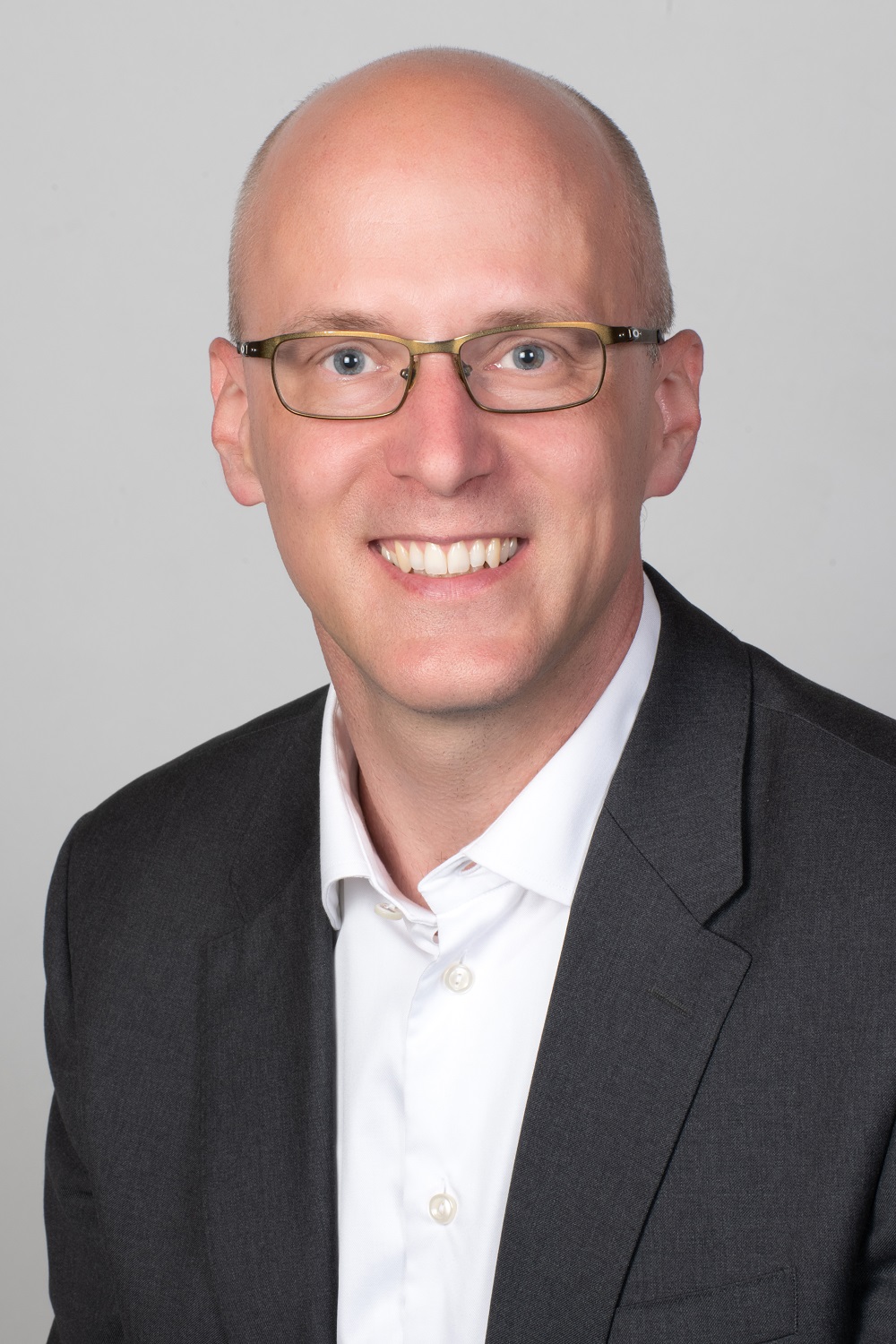
Ralf Plattfaut is Professor for Information Systems and Transformation Management at the University of Duisburg-Essen since 2023, where he leads the business process innovation and automation lab. Previously, he served as Professor for Business Informatics at South Westphalia University of Applied Sciences (2019-2023) and as Associate Partner at McKinsey & Company (2013-2019). His academic journey includes research positions at the European Research Center for Information Systems at University of Münster and visiting fellowships at Queensland University of Technology and University of Liechtenstein. His educational background includes: Master of Science in Information Systems (MScIS) from WWU Münster (2009), thesis on 'Lean Enterprise Content Management' Bachelor of Science in Information Systems (BScIS) from Hochschule Liechtenstein (2008), thesis on 'IT-Controlling - Investitionsrechnung und Simulation auf Basis des ARIS-Toolset' Studies in Information Systems at WWU Münster (2004-2009) with core subjects in Business Administration, Information Systems, and Finance PhD studies in Information Systems at University of Münster (2009-2013) Plattfaut's research focuses on business process management, digital transformation, and process automation. His work bridges academic theory with practical business applications, particularly examining how organizations implement and govern process innovations. He has made significant contributions to understanding Robotic Process Automation adoption, process mining applications, and the challenges of digital transformation in various sectors including healthcare, utilities, and public administration. His publication portfolio shows a clear trajectory from foundational work on process modeling and IT controlling through to contemporary research on AI-supported process automation and the societal implications of digital transformation. Recent work increasingly addresses the intersection of process management with emerging technologies while maintaining focus on practical implementation challenges faced by organizations. His scientific recognition includes multiple best paper nominations and awards at premier conferences including ICIS, HICSS, and BPM. Notably, he won the MINTchallenge for innovative teaching and received awards for research on public sector process management and RPA implementation challenges. As an active academic leader, Plattfaut serves on editorial boards for Information Systems and e-Business Management and Intelligent Systems in Accounting, Finance and Management journals. He has chaired tracks at major conferences including Wirtschaftsinformatik and Business Process Management conferences. His funded research projects demonstrate strong connections between academic inquiry and practical business needs, with recent grants from DFG, BMBF, and state ministries supporting research on process automation, process mining in utilities, and lightweight IT governance. Plattfaut maintains an active consulting practice supporting organizations on digital transformation journeys, particularly focusing on business process innovation. He also serves on the Advisory Board 'Digitale Region menschlich gestalten' for the Regional Development Programme 'Regionale 2025'.
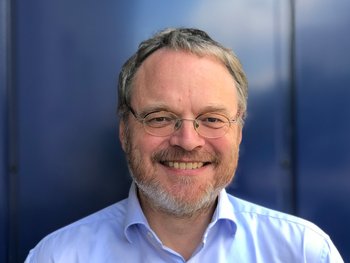
Prof. Dr. Matthias Tichy is a Full Professor and head of the Institute of Software Engineering and Programming Languages at Ulm University, Germany, since 2015. His research focuses on domain-specific languages (DSLs), model-driven engineering (MDE), self-adaptive software , and cyber-physical systems , with an emphasis on safety-critical applications and graph transformation formalisms. He employs empirical research methods to evaluate technical contributions and human factors in software engineering. University: Ulm University Role: Professor & Institute Head Research Interests span domain-specific languages for mechatronic systems, collaborative modeling , performance prediction in model transformations, and software evolution in industrial contexts. His work often bridges graph transformations and safety assurance for self-adaptive systems. Recent Publications highlight trends in model versioning (e.g., operation-based caching), DSL design (e.g., flowR for R code analysis), and automotive software testing (e.g., clustering test case specifications). He frequently collaborates with international institutions on topics like cyber-physical systems and IoT resilience . Key Collaborations include projects with Chalmers University, University of Gothenburg, and industrial partners like dSPACE GmbH. His grants and industry partnerships focus on automotive software , robotics , and self-healing systems .
Prof. Dr. Alexander A. Auer is a research group leader at the Max Planck Institute for Chemical Energy Conversion, specializing in Molecular Theory and Spectroscopy and Theoretical Methods and Heterogeneous Reactions. His work integrates computational chemistry, spectroscopy, and catalysis to address fundamental questions in energy conversion and material science. Research Focus: Auer's expertise spans: Development of quantum chemical methods (e.g., contributions to ORCA software) Electrocatalysis (oxygen evolution, fuel cell interfaces) NMR spectroscopy and hyperpolarization techniques Heterogeneous catalysis reaction mechanisms Polymorphism in molecular crystals Recent Publications: His 2024-2025 articles emphasize computational studies of transition metal catalysts, NMR methodology advancements, and energy-related electrocatalysis. Dominant themes include mechanistic insights into hydrogenation, oxygen evolution, and solid-state NMR applications. Collaborations: Frequently partners with experimental groups (e.g., Fürstner, Neese, List) to validate theoretical models. Leads interdisciplinary projects combining synthesis, spectroscopy, and computation.
Prof. Dr. Michael Goedicke is a faculty member at the University of Duisburg-Essen , holding the Professorship for Practical Informatics / Specification of Software Systems since 1994. His academic career spans over three decades with continuous contributions to software engineering and educational technology.
Christian Düben is a Research Fellow at Monash University , conducting interdisciplinary research at the intersection of economic geography , urban economics , and economic history . His work investigates the long-term evolution of urban landscapes, focusing on their determinants and contemporary economic impacts, while integrating methods from remote sensing, machine learning, and graph theory. He specializes in developing scientific software to support economic research, including R packages like conleyreg (Conley Standard Errors), spaths (shortest paths computation), and cppcontainers (C++-R integration). Previously, he contributed to the CollEc platform at the University of Hamburg and created the LearnEconometrics teaching platform at Helmut Schmidt University. Düben’s methodological expertise extends to programming in R, C++, Python, and Julia. He launched a blog in 2025 to communicate economic insights in accessible language and welcomes collaborations on data-driven research projects.
Kyrill Meyer is a Professor for Smart Service Systems at Mittweida University of Applied Sciences, Director of the Institute for Digital Service Systems at the IFDT (Institute for Digital Technologies) in Leipzig, and Managing Director of GFDT (Society for Digital Technologies). He holds a Dr. rer. nat. from the University of Leipzig (2009) and a Graduate degree in Computer Science from the same institution (2003). His research focuses on Smart Service Systems, Service Engineering, Innovation Management, and Business Information Systems. Meyer's work bridges theoretical service engineering with practical digital transformation applications, particularly in developing frameworks for smart service systems and analyzing social media data for business applications. His research demonstrates a strong connection between service engineering methodologies and emerging digital technologies. His recent publications show a clear trend toward applying service engineering principles to artificial intelligence, social media analytics, and smart city applications. Meyer's work spans both theoretical frameworks for service engineering and practical implementations in healthcare, urban infrastructure, and business environments. His research often involves interdisciplinary collaborations across technical and business domains. Meyer actively teaches Innovation Management at Mittweida University and has previously taught courses in Engineering IT-based services, Content Management, Service development, Media technology, Project management, and Software engineering. He supervises final and graduation theses regularly. His research projects include PILEA (focusing on medical diagnosis support systems), BeDaLA (developing data competence concepts), LEUKO-Expert (AI-based diagnosis support), MABIB (fire protection planning systems), FOKUS:SE (Service Engineering research network), and LESSIE (Leipzig Smart Service Engineering Cooperation Network). These projects highlight his commitment to applying service engineering principles across diverse domains from healthcare to urban planning.
Prof. Dr. Josef Griesbauer is a Professor of Automation and Measurement Technology at the Faculty of Electrical Engineering at Kempten University of Applied Sciences. He serves as Program Coordinator for the Mechatronics (Bachelor) program and heads the Measurement and Control Technology Laboratory. With extensive experience spanning both academia and industry, Prof. Griesbauer has established expertise in automation systems and measurement technology. His educational background includes a PhD in Physics from the University of Augsburg (2008-2011) with research conducted partly at Boston University. Prior to his professorship, he worked at 3S-Smart Software Solutions GmbH (CODESYS GmbH) on industrial development projects and held research positions at OSRAM and the University of Augsburg. Prof. Griesbauer's research interests focus on the intersection of traditional engineering principles with modern digital technologies. His work spans theoretical biophysics (particularly lipid monolayers and wave propagation) and practical industrial applications (TSN, OPC UA PubSub, digitalization in manufacturing). He has developed AI-assisted lectures and maintains extensive educational content on YouTube covering Measurement Technology, Automation Technology, and Machine Learning. His publication record shows a clear evolution from fundamental biophysics research to applied industrial automation. Early work focused on lipid monolayers and material science, while recent publications address practical implementation of Time-Sensitive Networking and digital integration in intralogistics systems. This transition reflects his unique ability to bridge theoretical physics with practical engineering solutions. Prof. Griesbauer co-founded the 'Allgäu 4 Production' platform and hosts 'The Griesbauer' podcast where he interviews experts on technology, science, automation, digitalization, AI, philosophy, and society. The podcast demonstrates his commitment to making complex technical topics accessible while exploring their societal implications. He maintains the Measurement and Control Technology Laboratory at Kempten University, which serves as a hub for practical education and applied research in automation technologies, supporting both student projects and industry collaborations.
Prof. Dr. Peter Buxman is a Professor in the Department of Information Systems / Business Informatics at the University of Technology Darmstadt , Germany. His academic career focuses on standardization, electronic data interchange (EDI), and XML applications in business processes. Position: Active Professor Department: Information Systems / Business Informatics School: Department of Law and Economics Email: buxmann@is.tu-darmstadt.de His research explores inter-organizational cooperation through technologies like SAP systems, XML, and WebEDI, analyzing network effects on software markets and digital economy communication architectures. He has investigated the economic implications of standardization, time as a success factor in networked companies, and the role of EDI in modern business. Key trends in his 15 most recent articles include XML-driven supply chain optimization, EDI evolution, and decision models for ICT standardization. His work often examines network effects , software standardization , and B2B communication in logistics and service management.
Prof. Mag. Dr. Ewald Jarz is a Professor of Computer Science at the University of Applied Sciences Rosenheim, Germany. His work bridges business administration and information technology, focusing on software engineering, e-learning, and IT solutions for SMEs. He has held leadership roles such as Chairman of the Examination Board for Business Informatics and contributed to IT service management and business process engineering. Academic Affiliation: University of Applied Sciences Rosenheim Department: Computer Science Leadership Roles: Chairman of the Examination Board for Business Informatics Jarz's research spans multimedia learning systems , business process engineering , and IT solutions for SMEs . His work emphasizes practical applications in education and industry, including case studies and ITIL process documentation. His publications (1995–2008) focus on information technology , educational multimedia , and business informatics , with recurring themes in IT service management and SMEs. Notable trends include the integration of multimedia in education and the evolution of IT governance frameworks. Scientific Awards: Dr. Otto Seibert Prize (1996) Marquis WHO's WHO inclusions (1996–1999) City of Innsbruck Research Prize (1997)
Prof. Dr. Wolfgang König is a Professor and Chair Holder at the Johann Wolfgang Goethe University in Frankfurt am Main, Germany. He is affiliated with the Department of Economics and the Institute of Business Administration, where he focuses on Business Informatics and Information Management. His academic career spans several decades, during which he has made significant contributions to the fields of E-Commerce, Standardization, and Information Systems. Prof. König's research interests primarily center around Business Informatics and Information Management, with a particular focus on E-Commerce, Standardization, Network Effects, and Electronic Data Interchange. His work explores the intersection of technology and business processes, examining how information systems can be leveraged to improve organizational efficiency and competitiveness. He has conducted extensive research on software standards, WebEDI, and digital signature legislation, contributing valuable insights to both academic and practical domains. Analysis of Prof. König's recent publications reveals a strong focus on the practical applications of information systems in business contexts. His work spans multiple domains including automotive industry supply chains, E-Commerce diffusion, and virtual knowledge communities. The research demonstrates a consistent interest in how technological standards emerge and diffuse through networks, with particular attention to the economic implications of these processes. His publications often combine theoretical frameworks with empirical studies, providing both conceptual contributions and practical insights for industry practitioners. While specific details about his advising activities and research grants are not provided in the available text, Prof. König's extensive publication record suggests active engagement with students and colleagues. His research has likely been supported by various funding mechanisms given the scope and depth of his investigations into business information systems and their applications across multiple industries. Prof. König's work appears to be conducted within the broader context of the Institute of Business Administration at Johann Wolfgang Goethe University, which likely provides the infrastructure and collaborative environment necessary for his research on business information systems and their applications.
Christian Spannagel is a Professor of Mathematics and Computer Science Didactics at the Heidelberg University of Education . He focuses on digital education transformation , integrating Flipped Classroom and HyFlex models into higher education. His work emphasizes science communication , social media engagement , and interactive teaching methods . Director of the Data Center Head of the Computer Science Department Contact person for "Information Technology Education in Schools" Module responsible for mathematics courses Spannagel's research bridges formal and informal learning through platforms like Twitch and Discord , where he streams lectures and fosters a community of 2.5M viewers. His projects include "True Math" , focusing on public mathematics engagement via livestreams and collaborative problem-solving. Recent publications analyze gamification , AI in education , and rules for educational tools . He critiques traditional assessment methods and advocates for student-centered digital integration . Spannagel actively engages with students and educators on platforms like Bluesky , LinkedIn , and YouTube , maintaining a #freeyouroffice philosophy as a digital nomad.