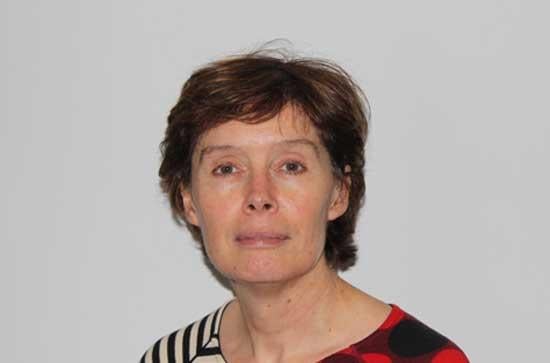
Alan Duggan is a Research Fellow in the Department of Building & Civil Engineering at the University of Galway, affiliated with the Engineering Research Group (ERG). His work focuses on sustainable construction practices, environmental engineering, and the environmental impact of infrastructure projects, particularly in peatland regions. He specializes in carbon footprint analysis, geotechnical challenges in peatland construction, and the development of low-carbon materials and techniques. Principal Investigator in ERG Focus areas: Peatland rehabilitation, carbon sequestration in construction materials, and sustainable transportation infrastructure His research integrates geotechnical engineering with environmental science, addressing challenges in ground improvement, drainage systems, and carbonation processes. Key contributions include studies on stabilized peat as a carbon sink and embodied carbon analysis in motorway construction. His publications span environmental sustainability, material science, and infrastructure planning, emphasizing practical solutions for reducing environmental impact in construction projects.
Simon Colreavy Donnelly is an Associate Professor in the Department of Computer Science & Information Systems at the University of Limerick. He is a member of the Interaction Design Centre and focuses on interdisciplinary research at the intersection of artificial intelligence, educational technology, and healthcare informatics. His work spans machine learning applications in medical data analysis, virtual reality (VR) and extended reality (XR) for inclusive education, and deep learning techniques in chemical analysis and spectroscopy. Research Interests: His primary areas of investigation include generative AI for education equity, semisupervised learning algorithms, virtual learning environments design, and the ethical deployment of immersive technologies in healthcare and palliative care. He also explores NMR spectroscopy analysis using deep learning and develops tools for nutritional content estimation through image processing. Collaborations: His recent collaborations span international teams addressing challenges in toxicity-free online discourse (PAN 2024), semisupervised learning distribution mismatches, and VR applications for post-pandemic blended learning. His work integrates computational methods with real-world applications in education, healthcare, and chemical analysis. Labs/Teams: Active within the Interaction Design Centre at UL, his research group develops practical solutions for accessibility in digital education and healthcare systems, emphasizing user-centered design principles for extended reality applications.
Constantine Evans is a Research Fellow at the Hamilton Institute, Maynooth University, focusing on the physics of complex self-assembly processes. His work examines how simple particles organize into intricate structures through algorithmic self-assembly, with applications in DNA nanotechnology and computational modeling. Institution: Maynooth University Research Unit: Hamilton Institute Location: Eolas Building, 3rd Floor, Office 339 Research Interests: Evans investigates non-equilibrium self-assembly systems, particularly DNA tile crystal growth and kinetic control mechanisms. His research bridges physics, computational theory, and molecular engineering to uncover unexpected behaviors in basic physical processes. Publication Trends: His recent work (2018-2024) demonstrates interdisciplinary advancements in DNA computing, focusing on proofreading systems, tile compiler optimization, and kinetic modeling. These publications span peer-reviewed journals, conference proceedings, and algorithmic frameworks that connect theoretical computer science with experimental biophysics. Labs & Teams: He is affiliated with the Hamilton Institute, a research center specializing in systems biology, computational modeling, and interdisciplinary scientific investigations.
Dr. Barry Cardiff is an Assistant Professor in the School of Electrical and Electronic Engineering at University College Dublin (UCD), where he has been a member of academic staff since September 2013. His career spans both industry and academia, with significant experience at Nokia Mobile Phone (UK) Ltd and Silicon & Software Systems (S3 group) before returning to complete his PhD at UCD. Education: B.Eng (1992), M.Eng.Sc. (1995), PhD (2011) from University College Dublin Professional Experience: Design Engineer at Nokia (1993-2001), Systems Architect at S3 group (2001-2007, 2011-2013) Current Position: Assistant Professor at UCD School of Electrical and Electronic Engineering Dr. Cardiff's research focuses on Digital Signal Processing applications in communication systems, with particular emphasis on theoretical analysis and practical implementation. His work bridges traditional communication theory with emerging biomedical applications, especially in wearable IoT sensors. He has made significant contributions to power/complexity reduction techniques in circuit design, specifically DSP algorithms for digitally assisted analog circuits. His research program addresses critical challenges in biomedical signal processing, sensor fusion, and efficient data transmission for healthcare applications. His recent publications demonstrate a strong trend toward biomedical applications of signal processing techniques, with a focus on ECG analysis, atrial fibrillation detection, and respiratory rate estimation using multimodal sensor fusion. The research shows a clear progression from traditional communication systems toward healthcare applications, with an emphasis on edge computing solutions that reduce power consumption in wearable devices. IEEE BioCas best paper award (2024) IEEE senior member since 2019 Active reviewer for multiple IEEE journals including Transactions on Biomedical Circuits and Systems, Circuits and Systems, and VLSI Systems Dr. Cardiff has supervised numerous research projects and has been instrumental in developing curriculum for digital communications, signal processing, and wireless systems. His teaching philosophy emphasizes open, friendly, and hands-on approaches that encourage independent thinking. He coordinates multiple modules including Communication Theory, Digital Electronics, DSP Technology, and Wireless Systems, demonstrating his commitment to both theoretical foundations and practical applications of electrical engineering principles. His research group works at the intersection of signal processing, machine learning, and biomedical engineering, developing innovative solutions for wearable healthcare monitoring. Current projects focus on event-driven processing architectures, decentralized classification systems, and signal quality-aware fusion techniques that enable robust performance in noisy real-world environments.
Ian Pitt is a Lecturer in Usability Engineering and Interactive Media at University College Cork (UCC). He leads the Interaction Design, E-Learning and Speech (IDEAS) Research Group, focusing on multimodal human-computer interaction, auditory interfaces, and accessibility solutions for visually impaired users. Pitt holds a D.Phil from the University of York, followed by research fellowships at Otto-von-Guericke University in Germany before joining UCC in 1997. His research interests include speech-based interfaces, e-learning systems, and accessibility technologies for blind users. Key projects include the EU-funded ENABLE Network (2011–2014) and prototype development for UniWink. He has secured significant grants, including €72,009 from IRCSET for voice analysis research and €19,478 from the EU for ICT-supported learning initiatives. Pitt has advised numerous PhD students, including Flaithri Neff (2011), Emma-Kate Crowley (2014), and current candidates Aine Kearns and Patrick Egan. His publications span journals like International Journal of Game-Based Learning and conferences such as ICCHP and ACM SIGACCESS. He has contributed to committees for conferences like CHI and the Irish HCI conference. Teaching modules include Usability Engineering, Human-Computer Interaction, and Digital Media Development. His work emphasizes inclusive design principles, with projects addressing navigation systems for blind students and adaptive e-learning frameworks. Recent research trends focus on ICT-delivered aphasia rehabilitation, emotional BCI interfaces, and multimodal learning systems. Collaborations include international partners through EU grants, reflecting his global impact in accessibility and educational technology.
Philip Cardiff is a Professor in Computational Mechanics at the School of Mechanical and Materials Engineering, University College Dublin. He holds a BE (2008) and PhD (2012) in Mechanical Engineering from UCD. His research focuses on computational mechanics, machine learning, and their integration, with expertise in finite volume methods, fluid-solid interaction, and biomechanics. He leads the Bekaert University Technology Centre and contributes to editorial roles in the Journal of Open Source Software and OpenFOAM Journal . Cardiff has secured grants from ERC, I-Form, and the UCD Energy Institute, addressing challenges in offshore energy, advanced manufacturing, and cardiac xenotransplantation. Education: BE in Mechanical Engineering, University College Dublin (2008) PhD in Development of the Finite Volume Method for Hip Joint Analysis, University College Dublin (2012) Professional Diploma in University Teaching & Learning, University College Dublin Research Interests: Computational mechanics, finite volume methods, and machine learning integration Fluid-solid interaction, biomechanics, and materials science Applications in additive manufacturing, energy systems, and biomedical engineering Grants & Awards: ERC Consolidator Grant (2020–2025) Funded Investigator in I-Form and UCD Energy Institute Principal Investigator in UCD Centre for Biomedical Engineering Teaching & Leadership: Programme Director for MEngSc in Materials Science and Engineering (2018–2023) Coordinates modules in computational mechanics and advanced materials processing Advocates constructivist teaching approaches with active learning strategies Labs & Collaborations: UCD Centre for Mechanics Bekaert University Technology Centre MaREI and I-Form Research Centres
Luigina Ciolfi is a Professor of Human Computer Interaction in the School of Applied Psychology at University College Cork (UCC), Ireland. She is a Co-Principal Investigator at Lero, the Science Foundation Ireland Research Centre for Software. Her academic journey includes roles at Sheffield Hallam University, University of Limerick, and visiting positions at Maynooth University and University of Rome Tor Vergata. She holds a Laurea (summa cum laude) from the University of Siena and a PhD from the University of Limerick, both in Human-Computer Interaction. Her research focuses on human experiences with digital technologies in collaborative contexts, particularly in cultural heritage and work practices. She contributes to fields like CSCW, participatory design, and qualitative methodologies. Ciolfi has led over €8M in research grants, authored/co-authored numerous books and journal articles, and served on editorial boards and international committees. She is a Senior Member of the ACM and an ACM Distinguished Speaker (2021-2024). Her current roles include Vice-Head of the School of Applied Psychology and Chair of UCC's Academic Council Research and Innovation Committee. She leads the Digital Cultures, New Media, and Cultural Analytics research cluster under the Future Humanities Institute. Ciolfi’s work emphasizes ethical and inclusive technology design, with projects addressing cultural heritage, nomadic work practices, and digital wellbeing.
Dr. Sharon O'Rourke is an Assistant Professor and Ad Astra Fellow at the University College Dublin (UCD) School of Biosystems and Food Engineering since 2019. Previously, she held roles at the University of Sydney and UCD's School of Agriculture and Food Science, focusing on soil science and environmental protection. She holds a BAgrSc from UCD and a PhD in Soil Nutrient Management from Queen's University Belfast. Research Interests: Her work centers on sustainable soil management, soil carbon sequestration, and environmental protection. She employs spectral techniques (e.g., mid-infrared, hyperspectral imaging) and modeling to study soil geochemistry, carbon dynamics, and climate change mitigation. Current projects include ClimateCropping (EU-wide soil carbon management), PRISM (in-field soil sensors), and CFunction (carbon-nutrient stoichiometry). Grants & Projects: Key grants include funding from Teagasc, the Department of Agriculture, and the Sustainable Energy Authority of Ireland. Notable projects include proximal soil sensing for carbon monitoring and bio-based product development via pyrolysis. Teaching: She coordinates modules such as 'Carbon & Sustainability,' 'Soil Technology,' and 'Research Skills,' emphasizing agricultural systems and climate-smart practices. Awards: Recognized as an Ad Astra Fellow, highlighting her contributions to innovative soil science research.
Dr. George O'Mahony serves as Head of Department of Computer Science at Munster Technological University (MTU) and is a CONNECT Associate Investigator with Research Ireland. He leads Ireland's Cyber Range infrastructure development and acts as WorldSkills Ireland Expert for Cybersecurity Skill 54, driving national cybersecurity initiatives through academia-industry collaboration. Education: B.E. in Electrical and Electronic Engineering, University College Cork (UCC) Ph.D. in Electrical and Electronic Engineering, University College Cork (UCC), 2021 His research pioneers cyber resilience frameworks for OT/IoT systems, zero-trust architectures, and machine learning applications in anomaly detection. He develops low-complexity security solutions for resource-constrained edge devices, with emphasis on wireless sensor networks, GPS applications, and penetration testing methodologies. His work bridges theoretical innovation with practical infrastructure implementation. Recent publications reveal accelerating focus on quantum-resistant cryptography, MQTT-ZT secure brokers, and unified cyber resilience models. His scholarly output consistently addresses interference detection in wireless networks while expanding into satellite communications security and AI-driven network customization, reflecting strategic adaptation to emerging cyber threats. Research Leadership: CONNECT: Associate Investigator advancing cyber security research NCF Cyber Shock: Co-Principal Investigator Cyber Explore: Principal Investigator at MTU Cyber Range: National infrastructure lead (mobile/cloud) Horizon Telemetry: Core research team member As STEM advocate and Cyber Futures Academy contributor, O'Mahony shapes cybersecurity education through WorldSkills Ireland engagement and industry-focused cyber range deployments that serve academic, governmental, and commercial sectors.
Fabiano Pallonetto is a Professor at Maynooth University's School of Business, with affiliations to the Hamilton Institute and Innovation Value Institute (IVI). He combines academic research with industry experience in energy, IT, and transport sectors. Role: Professor Location: Room 314, Maynooth University Contact: Fabiano.Pallonetto@mu.ie His research focuses on smart grid integration, energy system optimization, and sustainable development. Key projects include: NexSys (Funded Investigator): Developing net-zero energy pathways FLOW (Principal Investigator): Flexible EV-grid integration RES4CITY (Coordinator): Workforce upskilling for renewables Recent publications analyze energy flexibility software, deep learning optimization models, phase change materials for thermal storage, and blockchain security frameworks. His work spans smart cities , renewable integration , and AI-driven energy systems . Student Supervision: Currently advising MR B. Mohseni-Gharyehsafa (PhD research).
Abey Campbell is an Assistant Professor in Computer Science at the School of Computer Science, University College Dublin. He holds roles such as Deputy Programme Director for Computer Science, Director of UCD VR Lab, and 1st Year Stage Coordinator. His research focuses on Augmented Reality (AR), Virtual Reality (VR), Mixed Reality (MR), and Multi-Agent Systems with applications in education, healthcare, and human-computer interaction. Campbell has coordinated modules like Augmented and Virtual Reality, Computer Graphics, Game Development, and Mobile Computing. He earned his BSc and PhD in Computer Science from University College Dublin. His work explores touchless interaction technologies, machine learning agents in STEM education, and ethical implications of emerging technologies. Notable contributions include RenderKernel for real-time rendering systems and studies on AR's role in decision support systems. Campbell has secured a grant from Enterprise Ireland for collaborative design documentation and participates in professional activities like peer reviewing for Frontiers in Virtual Reality and IEEE conferences. His collaborative projects include developing AR tools for veterinary training and evaluating immersive VR experiences in nursing education. The UCD VR Lab under his direction focuses on applied research in spatial computing and interactive systems.
Dr. Sabin Tabirca is a Senior Lecturer at the School of Computer Science and Information Technology, University College Cork (UCC). He holds a BSc from Bucharest University and a PhD from Brunel University. His research focuses on Artificial Intelligence, Data Analytics, Algorithmics, Interactive Media, and HCI, with applications in computational cancer modeling, mobile health (mHealth), and parallel computing. He coordinates MPT Activities and is affiliated with the CRR Group and BCRI Centre. Notable awards include UCC's President Award for Innovation in Teaching (2007), IT@Cork Leader Award (2008), and UCC Staff Recognition Award (2013). His teaching includes modules like Parallel and Grid Computing, Mobile Application Design, and Graphics for Interactive Media. Dr. Tabirca has supervised over 70 MSc students and numerous PhD candidates, many of whom now hold academic and industry roles globally. His research includes developing mHealth apps for cystic fibrosis patients, 3D cancer visualization tools, and frameworks for mobile parallel computing. Publications span mHealth design pipelines, cancer prediction models, and mobile gaming for health education. He actively engages in interdisciplinary projects, blending computer science with medical and biological applications.
Professor Aoife Gowen is a leading academic at the UCD School of Biosystems & Food Engineering , specializing in hyperspectral imaging and its applications across medicine, food safety, and engineering. Her research, supported by prestigious European Research Council (ERC) funding, investigates water molecule interactions with surfaces to improve bone graft materials and develop innovative diagnostic tools for prostate cancer. She also leads Science Foundation Ireland (SFI)-funded projects on hyperspectral monitoring of bacterial growth for food safety. Beyond technical research, Professor Gowen has developed computational tools now integrated into commercial chemical analysis software. Her work spans interdisciplinary domains, including sustainable transport policy, critical thinking education, and promoting gender diversity in engineering. As a key figure in the Women on Walls initiative, she has enhanced visibility for women in STEM fields. Her recent publications focus on spectral technologies for food quality, microplastics characterization, and medical diagnostics, reflecting her commitment to addressing global challenges in health and sustainability. Scientific Awards: ERC Grant for water-surface interaction research Professor Gowen actively collaborates with European networks and industry partners, driving advancements in hyperspectral imaging applications. Her lab’s efforts to bridge computational science with real-world chemical analysis have positioned her as a pioneer in invisible chemistry visualization, impacting medicine, food, and environmental engineering.
Victor Lazzarini is a Professor of Music at Maynooth University, Ireland, specializing in computer music and audio signal processing. He holds a BMus from Universidade Estadual de Campinas (UNICAMP), Brazil, and an AMusD from the University of Nottingham, UK. His research spans electroacoustic music, digital signal processing, and music technology. He leads the Csound project, a widely used sound and music computing system, and authored libraries like Aulib and Aurora. Education: Bachelor of Music (BMus), UNICAMP, Brazil Advanced Music Degree (AMusD), University of Nottingham, UK His research interests include sound synthesis, computer music languages, and the intersection of music with technology. He has authored over 150 peer-reviewed publications and books such as Spectral Music Design: A Computational Approach (Oxford UP, 2021) and co-edited volumes like Ubiquitous Music Ecologies (Routledge, 2020). His work bridges academic and industrial sectors through projects like the Enterprise-Ireland-funded commercialization initiative. Prof. Lazzarini’s contributions to music technology include pioneering tools like Csound, which enable real-time audio synthesis and processing. His articles span topics from digital filter design to historical computer music archaeology, reflecting his expertise in both theoretical and applied domains. Awards: AIC/IMRO International Composition Prize (2006) He advises on interdisciplinary projects such as the BeatHealth initiative, integrating ubiquitous computing and music. His creative output includes electroacoustic compositions performed globally and released on labels like FarPoint Recordings. Lazzarini actively collaborates with international teams, contributing to conferences like DAFx and ICMC, and leads initiatives like the Ubimus (Ubiquitous Music) research network.
Catherine Hurley is a Professor of Statistics at Maynooth University's Faculty of Science & Engineering, where she serves as Subject Head of Statistics in the Department of Mathematics and Statistics. She maintains strong affiliations with both the MU Hamilton Institute and the National Centre for Geocomputation, positioning her work at the intersection of statistics, data science, and computational methods. Dr. Hurley is a leading expert in data visualization with primary research interests in visualization techniques for data science and machine learning problems. Over her distinguished career, she has authored and contributed to numerous software packages, beginning with Data Viewer (1987), a predecessor to GGobi, Quail (1987-2000), and many R packages including condvis2, vivid (2021), and Bartvis (2022). Her work has significantly advanced the field of statistical graphics and model visualization. Her recent research has focused on conditional visualization for statistical models, with several publications on the condvis package and related tools that enable researchers to explore complex machine learning models through interactive visual interfaces. She has also made substantial contributions to dendrogram seriation, pairwise comparison visualization, and variable importance displays, creating numerous R packages that have become essential tools for statisticians and data scientists. Her 2023 publications include significant contributions to Bayesian additive regression trees and variable importance visualization for machine learning models. Dr. Hurley has held significant leadership roles in the statistical community, serving as Vice-President (2017-2019) and President (2019-2021) of the Irish Statistical Association. She also served as Editor-in-Chief and Editor of the R Journal from 2019 to 2023, playing a crucial role in advancing open-source statistical software development and dissemination. Her work demonstrates a consistent pattern of developing practical visualization tools that address real-world challenges in statistical analysis and machine learning interpretation. The progression from early work on statistical graphics infrastructure to recent innovations in model exploration reflects her sustained commitment to making complex statistical concepts accessible through visualization.