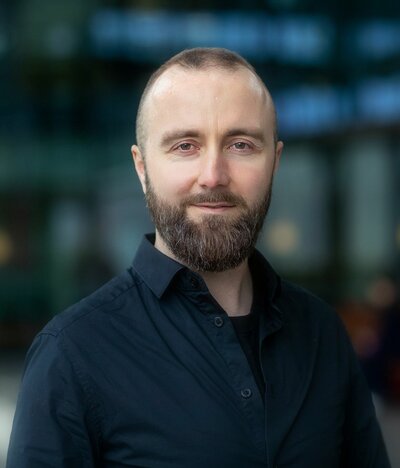
Marko Tanasković (born December 6, 1986) is a researcher at Singidunum University with a PhD in Information Technology and Electrical Engineering from ETH Zurich (2015). His academic background includes master's (ETH Zurich, 2011) and bachelor's (University of Belgrade, 2009) studies in Electrical Engineering. Doctoral studies: Information Technology and Electrical Engineering, ETH Zurich (2011-2015) Master studies: Information Technology and Electrical Engineering, ETH Zurich (2009-2011) Basic studies: Electrical Engineering, University of Belgrade (2005-2009) Tanasković's research focuses on control systems , predictive modeling , and optimization algorithms for mechanical and electrical systems. His work addresses adaptive model predictive control (MPC), sensorless motor positioning, and data-driven approaches for nonlinear systems. Recent publications (2018-2024) demonstrate expertise in: Embedded control systems (rotor polarity detection) Drone forensics and autonomous navigation Industrial automation (LabVIEW applications) Biomedical sensor development ('Smart Anklet') Machine learning optimization (firefly algorithm)
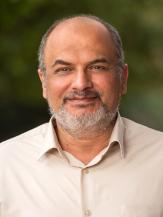
Dr. MARIOROSARIO PRIST serves as a Researcher at the Department of Information Engineering within the Faculty of Engineering at Marche Polytechnic University (UNIVPM) in Ancona, Italy. His institutional affiliation is maintained through the Department of Information Engineering (quota 170) at Via Brecce Bianche, 60131 Ancona, with contact details including phone 071 220 4468 and email m.prist@staff.univpm.it. Dr. PRIST's research spans cutting-edge domains in artificial intelligence applications for industrial systems, with particular emphasis on neural network implementations, digital twin architectures, and Industry 4.0 technologies. His work demonstrates strong focus on lightweight AI frameworks for edge computing , anomaly detection in manufacturing processes , and resource optimization in production environments . The research portfolio reveals consistent innovation in adapting advanced machine learning techniques to practical industrial constraints, especially for small and medium enterprises. Analysis of his publication trends indicates a strategic shift toward implementing AI solutions on resource-constrained devices and bridging edge computing with cloud infrastructure for real-time industrial monitoring. Recent work emphasizes practical applications of Echo State Networks for process control and anomaly detection, while maintaining strong connections to additive manufacturing optimization and safety monitoring systems. His research consistently addresses the challenge of making advanced AI accessible for industrial implementation without requiring extensive computational resources. Dr. PRIST's work demonstrates significant contributions to the integration of cyber-physical systems in manufacturing environments, with particular expertise in translating theoretical AI concepts into practical industrial applications that enhance production efficiency, safety, and sustainability.
Yu Li is a Lecturer at the University of Picardie Jules Verne (UPJV) and a member of research unit UR 4290 “Optimization and Cryptography, AI – OCIA.” His office is located in room 302, reachable by internal telephone extension 5900. Research Interests Dr. Li’s research spans several inter-related domains: Optimization & Control Theory – developing dynamic optimization algorithms for industrial processes such as continuous casting in steel manufacturing. Cryptography & Security – investigating secure and dependable models for cloud and distributed systems. Artificial Intelligence & Robotics – integrating AI perception and decision-making into cloud-connected robotic platforms, including exoskeletons for rehabilitation and autonomous ground vehicles. Cloud & Fog Computing – designing middleware and domain-specific languages that seamlessly connect robotic devices with cloud and edge resources. Publication Trends Over the past decade, Dr. Li’s publication record reveals a clear evolution from foundational work in software architecture and component-based systems (2010-2016) toward cutting-edge applications in cloud/fog-enabled robotics and AI-driven cyber-physical systems (2017-2023). His studies increasingly emphasize real-world deployment, simulation-driven resource estimation, and human-centric interaction in rehabilitation robotics. Scientific Awards & Recognition No specific awards are listed in the provided materials. Advising & Funding No explicit information about supervised students or funded grants is available in the text supplied. Laboratories & Teams He carries out his research within the UR 4290 research unit “Optimization and Cryptography, AI – OCIA” at UPJV, focusing on collaborative projects that bridge mathematics, computer science, and robotics engineering.
Matthew Dennis is an Assistant Professor in Ethics of Technology at Eindhoven University of Technology (TU/e) , affiliated with the Philosophy & Ethics group and the EAISI institute. He co-directs the Eindhoven Center for Philosophy of Artificial Intelligence (ECPAI) and serves as Senior Research Fellow with the Ethics of Socially Disruptive Technologies (ESDiT) consortium. His research examines how emerging technologies challenge concepts of fairness, autonomy, well-being, and creativity , particularly in digital content consumption and AI-generated synthetic content. He contributes to debates on digital well-being, algorithmic ethics, and self-cultivation , with a focus on platform design and societal impact. Key Collaborations : European Parliament's Science-Media Hub, Royal Bank of Scotland, EIT Digital, Responsible Sensing Lab Academic Leadership : Co-edited Philosophy of Fame & Celebrity (Bloomsbury 2024), Values for a Post-Pandemic Future (Springer 2023), and Ethics of Self-Cultivation (Routledge 2018) Scientific Contributions : Published in Science and Engineering Ethics , Ethics & Information Technology , and Journal of Applied Philosophy Recognized with the Next Nature Fellowship (2024) , Dennis integrates French/German philosophy with practical technology ethics, currently co-designing a digital wellness space with What Design Can Do .
Professor Shigeru Fujimura is affiliated with Waseda University as a faculty member of the Faculty of Science and Engineering , specifically in the Graduate School of Information, Production, and Systems . With a PhD in Engineering from Waseda University, his research focuses on intelligent informatics and system engineering , particularly in scheduling, optimization, and human-robot collaboration. His research spans multiple domains including: Deep Reinforcement Learning for combinatorial optimization Energy-efficient manufacturing systems Multi-agent collaboration frameworks Augmented Reality interfaces IoT business modeling Recent publications demonstrate expertise in graph neural networks , particle swarm optimization , and generative adversarial networks applied to industrial problems. He has received multiple awards including the Invention Encouragement Prize (2003) and IEEJ Paper Presentation Award (1994) .
Alaa Sheta is a tenured Professor of Computer Science at Southern Connecticut State University , New Haven, CT, USA. With over 180 refereed publications, three authored books, and extensive funded research, he is a globally recognized authority in machine learning, evolutionary computation, image processing, and robotics. Education B.E. Electronics & Communication Engineering, Cairo University, 1988 M.Sc. Electronics & Communication Engineering, Cairo University, 1994 Ph.D. Computer Science, George Mason University, USA, 1997 Research Interests Prof. Sheta’s research integrates machine learning , deep learning , and evolutionary algorithms to solve complex real-world problems. Core themes include image and signal processing for medical and industrial applications, autonomous robotics for navigation and inspection, big-data analytics for environmental and financial forecasting, and software reliability modeling using computational intelligence. His work frequently leverages meta-heuristic optimization techniques such as genetic algorithms, particle swarm optimization, and hybrid neuro-fuzzy systems. Publication Trends From 2015-2021, Prof. Sheta’s publications reveal a clear pivot toward deep learning and healthcare informatics , with multiple studies on obstructive sleep-apnea diagnosis using ECG and depth-sensor data, brain-tumor detection in MR images, and mobile-health applications. Earlier work emphasizes industrial process modeling , power-system optimization , and software effort estimation , reflecting sustained contributions across both theoretical algorithmic advances and high-impact interdisciplinary applications. Scientific Awards & Honors Best Poster Award, SGAI International Conference on Artificial Intelligence, Cambridge, UK, 2011 Senior Member, IEEE Vice-President, Arab Computer Society (2011) Associate Editor, International Journal of Advanced Computer Science and Applications (IJACSA) Associate Editor, International Journal of Computational Complexity and Intelligent Algorithms (IJCCIA) Advising & Grants Prof. Sheta has successfully supervised more than 30 master’s and Ph.D. students in the United States, United Kingdom, Jordan, and Syria. His research has been funded by the U.S. National Science Foundation , as well as agencies in Egypt, Saudi Arabia, and Jordan. He has also consulted for the Egyptian Ministry of Communication & IT (2002-2004) and UNDP Smart Schools project (2003). Labs, Workshops & Leadership He is the founder and chair of the Advanced Computation for Engineering Applications (ACEA) workshop series, held five times across Egypt, Jordan, and Saudi Arabia. He served as Program Chair of the Science and Information Conference 2013 in London and has held academic leadership roles such as Associate Dean (2008-2009) and Assistant Dean for Planning & Development (2006-2008) at Al-Balqa Applied University, Jordan.
Maarten Afschrift is an Assistant Professor at the Vrije Universiteit Amsterdam, affiliated with the Faculty of Behavioural and Movement Sciences, Department of Biomechanics. He holds additional roles at IBBA and AMS - Rehabilitation & Development. His research focuses on biomechanical modeling of human movement, particularly in musculoskeletal systems and gait analysis. He specializes in predictive simulations of locomotion, exoskeleton assistance, and the biomechanical implications of aging on movement strategies. Research Interests: Biomechanics of human movement and gait Musculoskeletal modeling and simulation Exoskeleton and assistive technology design Effects of aging on motor control and balance Predictive control strategies in human locomotion Recent Research Trends: His work emphasizes optimizing exoskeleton assistance for lower limbs, understanding metabolic energetics during walking, and modeling foot mechanics to improve gait simulations. Recent studies explore trade-offs between accuracy, speed, and stability in stepping tasks across age groups, leveraging computational frameworks like PredSim for predictive analysis. Teaching & Grants: He teaches courses on biomechanics of locomotion and contributes to editorial work in biomechanical journals. No specific grants or awards are listed, but his research is supported through institutional and collaborative projects. Labs/Teams: Active in interdisciplinary teams at IBBA and AMS, focusing on rehabilitation engineering and biomechanical innovations.
Prof. Christopher Habel is a Professor in the Department of Computer Science at the University of Hamburg, leading the WSV work area. His research focuses on spatial and temporal cognition, multimodal interaction, and accessibility technologies. He holds the formal title of Head of Department WSV and is affiliated with the Faculty of Mathematics, Computer Science and Natural Sciences. Habel's work bridges cognitive science, artificial intelligence, and human-computer interaction with an emphasis on assistive technologies for visually impaired individuals. Key research projects include the CINACS International Research Training Group, exploring auditory-haptic access to spatial graphics, and the development of multimodal comprehension systems integrating text, graphics, and tactile feedback. His contributions span theoretical frameworks in cognitive linguistics and practical implementations of verbal assistance systems for tactile maps and haptic graph exploration. Over 30 years of academic activity is reflected in his extensive publication record (1984–2015), with recent work emphasizing cross-linguistic studies, event recognition in virtual environments, and the design of multimodal interfaces for cognitive robotics. His research integrates computational models with empirical studies on human perception and language processing.
Dr. Eleftherios Doitsidis is an Associate Professor at the School of Production Engineering & Management of the Technical University of Crete (TUC) and a member of the Intelligent Systems & Robotics Laboratory. Previously, he served as faculty at the Department of Electronic Engineering at Hellenic Mediterranean University. His expertise spans multirobot systems, autonomous vehicle control, and computational intelligence. He holds a robust record of EU and national research project involvement. Research Interests: Specializes in multirobot team coordination, autonomous navigation systems for UAVs/AUVs, control systems design, and computational intelligence applications. Recent work focuses on energy-efficient path-planning for swarms, educational robotics frameworks like HYDRA, and digital twin integration in autonomous systems. Publications Trends: His 150+ publications address cutting-edge topics including: Autonomous vehicle control architectures Modular robotics for STEM education Optimization algorithms for multirobot systems Energy efficiency in manufacturing systems Advising & Projects: Lead researcher on numerous funded projects involving UAV/AUV missions, swarm robotics, and educational technology. Active in collaborative research with institutions like the University of South Florida. Labs & Groups: Leads the Intelligent Systems & Robotics Lab at TUC, developing advanced robotic platforms and educational tools. Maintains an open-access research portal at doitsidis.tuc.gr .
Bryan A. Jones serves as an Associate Professor and ECE ABET Coordinator in the Department of Electrical and Computer Engineering at Mississippi State University's Bagley College of Engineering. His educational background includes: Ph.D. in Electrical Engineering from Clemson University (2005) M.S. in Electrical and Computer Engineering from Rice University (2002) B.S.E.E. in Electrical and Computer Engineering from Rice University (1995) Dr. Jones' research focuses on robotics and real-time control systems, with specialized expertise in rapid prototyping for real-time environments and mechatronic system modeling. His work bridges theoretical control frameworks with practical implementation, emphasizing robust solutions for complex electromechanical systems. This research directly impacts industrial automation and advanced robotics development through efficient hardware-software integration. As ECE ABET Coordinator, he oversees accreditation compliance for all departmental engineering programs, ensuring alignment with national educational standards.
Lefteris Doitsidis is an Associate Professor at the School of Production Engineering and Management, Technical University of Crete. He holds a PhD in Production and Management Engineering from the same institution (2008), with prior academic positions at the Department of Electronics, Hellenic Mediterranean University. His professional journey includes visiting scholar roles at the University of South Florida, USA. Research focuses on robotic systems, including autonomous navigation of UAVs/AUVs, multirobot teams, computational intelligence, and educational robotics. He leads the Intelligent Systems and Robotics Laboratory, developing tools like HYDRA for STEM education and frameworks for industry 4.0 applications such as bin-picking and precision agriculture. His work integrates control systems optimization, energy efficiency in manufacturing, and digital twin technologies. Over 65 publications span journals, conferences, and books, emphasizing practical implementations like ROS-based autonomous vehicle testbeds and energy management systems for electric vehicles. Key contributions include UAV path planning algorithms, swarm robotics coordination, and sensor fusion techniques. Current research trends emphasize sustainability in manufacturing, educational robotics platforms, and autonomous systems validation through advanced algorithms like Deep Deterministic Policy Gradient.
Dr. Debbie Roy is an Assistant Professor in the Department of Computer Science and Engineering at the University of Texas at Arlington since Fall 2023. Previously, she served as an Associate Research Scientist at Northeastern University’s Department of Electrical and Computer Engineering (July 2020–August 2023), affiliated with the GENESYS lab. She holds a PhD (2020) and MS (2018) in Computer Science from the University of Central Florida, and an MS (2013) and BS (2009) in Information Technology from the Indian Institute of Engineering Science and Technology. Research Focus: Her work centers on Transformative Wireless Systems and Technology (TWiST) , including wireless networks, multimodal fusion, digital twins, networked robotics, and Open-RAN. She integrates AI/ML and AR/VR to advance practical wireless solutions through her lab’s interdisciplinary approach. Current research emphasizes spectrum learning and autonomous system integration. Teaching: Teaches CSE 1320 (Intermediate Programming) at UTA in Fall 2023 and previously instructed courses like Operating Systems, System Software, and Object-Oriented Programming during her graduate studies. Awards: 2024 IEEE ComSoc N2Women ‘Rising Stars in Networking and Communications’ award Labs & Teams: Leads the TWiST Lab at UTA, dedicated to pioneering advancements in wireless systems with real-world applications. The lab fosters innovation in AI-driven wireless networks and autonomous systems integration.
John Paulin Hansen is a Professor at the Technical University of Denmark (DTU), affiliated with the Department of Technology, Management and Economics under the Technology and Business Studies school. His research focuses on human factors, human-computer interaction, and assistive technologies, particularly in gaze interaction and rehabilitation robotics. He holds a Ph.D. from Aarhus University (1992) and has led research groups at institutions like Risø National Laboratory and the IT University of Copenhagen. His work emphasizes improving quality of life for individuals with motor disabilities through innovations like The Eye Tribe and GazeIT lab initiatives. Research Interests include: Eye-tracking technology and gaze interaction systems Exoskeletons and AR interfaces for stroke rehabilitation Human digital twins in healthcare Telepresence robotics accessibility Brain-computer interfaces (BCI) Key Achievements: Founded EU’s COGAIN network, co-created The Eye Tribe startup (acquired by Facebook/Oculus), and leads the GazeIT lab supported by the Bevica Foundation. His projects address sustainable development goals through inclusive technology solutions. Awards: Vanførefondens Forskerpris 2018 Multiple Best Paper Awards (2019–2022) Reviewers' Favourite Best Paper Award at DESIGN2022 Advising & Grants: Mentor to startups like The Eye Tribe and Orbital (acquired by GN Audio). Current projects include EU Horizon 2020 Rehyb initiative for AR exoskeleton interfaces and Human Digital Twin applications in rehabilitation. Labs/Teams: GazeIT lab pioneers assistive tech innovations, collaborating with LEGO and Serious Games Interactive. Active in developing inclusive design pedagogy and digital twin methodologies for healthcare.
Niels van Berkel is a Professor in the Department of Computer Science at Aalborg University, affiliated with The Technical Faculty of IT and Design. His research focuses on Human-Centered Computing and AI for societal benefit, with key projects including the HERD initiative on human-robot collaboration and initiatives to enhance mental health through digital tools. He leads multiple research projects involving AI ethics, healthcare applications, and swarm robotics. His educational background includes a Ph.D. in Computer Science. Research interests span AI explainability, human-AI interaction design, and the ethical implications of AI systems in healthcare and daily life. He has supervised 1 doctoral student and contributed to over 169 research outputs across journals, conferences, and datasets. Notable contributions include work on chatbot-driven data collection, coordination in AI development teams, and swarm robotics for search & rescue. His project 'AI for the People' emphasizes technology's role in improving societal wellbeing, while collaborations with medical professionals address chronic pain management and telehealth innovations. He received the DIS 2024 Honourable Mention and has actively engaged with media to communicate research impacts, including discussions on AI ethics and robot swarms. His work bridges technical innovation with human-centric design principles, addressing challenges in explainable AI, moral agency perceptions, and sustainable urban mobility solutions.
Ming Shen is an Associate Professor at the Department of Electronic Systems, part of The Technical Faculty of IT and Design at Aalborg University. His research focuses on antennas, millimeter-wave systems, and AI-driven RF sensors with applications in 5G/6G communications, biomedical engineering, and smart systems. His research interests span antenna design (including phased arrays, metamaterials, and compact structures), AI integration in electromagnetic systems, and medical sensor technologies. Recent projects include drone-based electromagnetic signature analysis, vibration energy harvesting for pacemakers, and smart healthcare systems for posture recognition and surgical site infection monitoring. Key projects include DRONES: Drone-Obtained Electromagnetic Signatures (2024–2028), Sensor Intelligence for Healthcare and Sports (2022–2027), and DeepBone (2021–2022), which explored deep learning for surgical infection detection. His work also bridges machine learning and electromagnetic design, with breakthroughs in surrogate modeling and automated antenna optimization. Ming Shen has supervised 6 PhD students and published over 160 peer-reviewed articles. Notable contributions include AI-assisted NLOS sensing, ultra-wideband antenna innovations, and medical applications such as electrical impedance-based bone healing assessment.