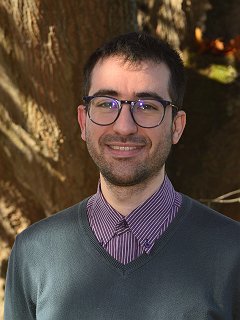
Luciano Baresi is a Full Professor at the Polytechnic University of Milan (Politecnico di Milano), Italy, affiliated with the Department of Electronics, Information and Bioengineering. He earned his laurea (MSc) and PhD in Computer Science from the same institution and has held visiting positions at the University of Oregon (USA), Tongji University (China), and the University of Paderborn (Germany). His research spans software engineering, with current focuses on self-adaptive systems, edge computing, and AI/ML-based software. His work integrates formal methods with practical applications, emphasizing autonomous systems, cloud-edge continuum, and federated learning. Recent publications highlight AI-driven advancements in software testing, resource optimization, and educational tools. Key research themes include: AI/ML for autonomous driving testing and data augmentation Serverless computing at the edge Federated learning system architectures Containerization and cloud resource management Awarded for impactful contributions: RE 2020 Most Influential Paper ICSOC 2020 Best Paper SEAMS 2022 Best Paper He advises 14+ PhD students and leads projects like Ketonet (health app), WHO's Essential Items Estimator, and dynaSpark. As Editor-in-Chief of Proceedings of the ACM on Software Engineering and senior editor for multiple journals, he shapes academic discourse in adaptive systems and software engineering.
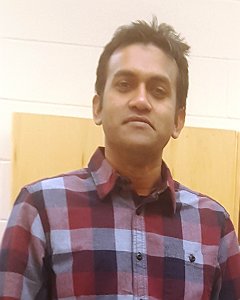
Masud Rahman is an Associate Professor in the Faculty of Computer Science at Dalhousie University, Canada, where he leads the RAISE Lab. Previously a tenure-track Assistant Professor, he completed his Ph.D. in Computer Science/Software Engineering from the University of Saskatchewan and a postdoctoral fellowship at Polytechnique Montreal. His academic career demonstrates strong progression with significant research impact in software engineering. Faculty of Computer Science, Dalhousie University (Current) University of Saskatchewan (Ph.D. studies) Polytechnique Montreal (Postdoctoral research) Dr. Rahman's research focuses on the intelligent automation of software maintenance and evolution, particularly targeting software debugging, code search, and code reviews. His work strategically combines Software Engineering with Artificial Intelligence techniques including Machine/Deep Learning, Information Retrieval, Mining Software Repositories, and Natural Language Processing. His industry experience as a professional developer for three years significantly shaped his research direction toward solving practical software maintenance challenges that cost the global economy billions annually. His research program addresses critical problems in software bug detection, diagnosis, explanation, and reproduction, with increasing focus on AI-powered and simulation modeling software. His publications demonstrate consistent output in top-tier venues including 7 papers at ICSE (A*), 3 at FSE (A*), 3 at ASE (A*), 8 at EMSE (A), 6 at ICSME (A), and 9 at MSR (A). The research trends show increasing focus on deep learning applications for software engineering problems, with particular attention to code search, bug localization, and debugging automation. His work has evolved from traditional information retrieval approaches to incorporate advanced neural network techniques and generative AI. Governor General's Gold Medal 2019 U of S Doctoral Thesis Award 2019 CS Best PhD Thesis Award 2019 TCSE Distinguished Paper Award Most Influential Paper Award Dr Keith Geddes Award Dalhousie Belong Research Fellowship President's Gold Medal (Bangladesh) Dr. Rahman has secured $500K+ in competitive research funding as Principal Investigator, including an NSERC Discovery Grant, Mitacs Accelerate International, and Climate Action and Awareness Fund. He actively collaborates with industry partners including Metabob Inc., Mozilla Firefox, and Vendasta Technologies. His service to the community includes extensive program committee work for major conferences and journal reviewing. He leads the RAISE Lab, which focuses on developing AI-powered solutions for software maintenance challenges, with current projects emphasizing sustainable software innovation and sustainable AI as part of Dalhousie's strategic goals.
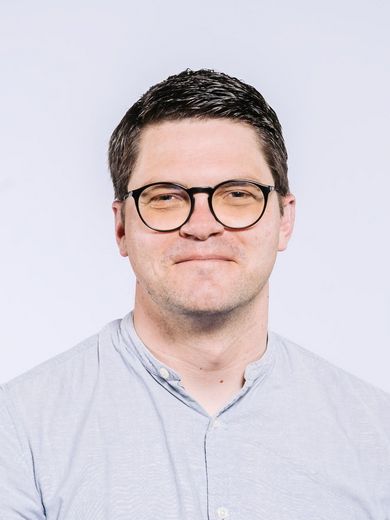
Djamel Eddine Khelladi is a CNRS Researcher at the IRISA laboratory within the DIVERSE team at University of Rennes, specializing in software engineering with emphasis on model-driven techniques and empirical validation. His work bridges theoretical frameworks and industrial-scale applications, particularly in evolving software ecosystems. His academic foundation includes a Ph.D. from Sorbonne University (formerly University Pierre et Marie Curie) at the Laboratory of Computer Science of Paris 6 (LIP6), followed by postdoctoral research at Johannes Kepler University Linz's Institute for Software Systems Engineering. This trajectory established his expertise in software evolution and model-driven approaches. Khelladi's research centers on software evolution challenges, particularly model-code co-evolution in highly-configurable systems like the Linux kernel. He develops scalable analysis tools (e.g., HyperAST, HyperDiff) and investigates empirical phenomena in build systems, configuration management, and polyglot programming environments. Recent work increasingly integrates large language models for automated co-evolution tasks while maintaining rigorous empirical validation. His publication trends reveal a consistent focus on practical tooling for software evolution, with growing exploration of AI-assisted engineering. Key themes include scalability in software history analysis, reproducibility in configurable systems, and debugging multi-language environments, often using Linux kernel ecosystems as testbeds. As an active community contributor, Khelladi serves on program committees for ASE, ICSE, and ESEC/FSE while advancing research through the DIVERSE team at IRISA. This group specializes in variability-intensive software systems, providing the collaborative environment for his empirical and tool-building research.
Christian Fieberg serves as a Professor of Data Science at Hochschule Bremen (City University of Applied Sciences) in Bremen, Germany, and holds an Affiliate Professor position at Concordia University in Montreal, Canada. He is actively affiliated with the DTX research cluster within the Faculty of Business and Economics at Hochschule Bremen, where his work bridges theoretical modeling with practical financial applications. Professor Fieberg's research spans financial economics with particular expertise in risk and portfolio management, sustainable investments, and data-intensive financial analysis. His methodological approach integrates advanced statistical techniques, machine learning algorithms, and econometric modeling to address complex financial problems. He specializes in working with large datasets and developing practical software tools that translate research findings into actionable insights for financial practitioners. His publication record reveals a strong focus on market predictability, factor modeling, and cross-sectional analysis across various asset classes. Recent work demonstrates increasing attention to cryptocurrency markets and the application of machine learning techniques to international financial markets. His research consistently appears in top-tier finance journals including the Journal of Finance, Journal of Financial and Quantitative Analysis, and Review of Finance, reflecting both methodological rigor and practical relevance. Top 50 most research-intensive economists under 40 years of age in German-speaking countries (Wirtschaftswoche) Professor Fieberg maintains active collaborations with researchers across international institutions, as evidenced by his co-authored publications with scholars from Concordia University, Montpellier Business School, and the University of Bremen. His work with the DTX research cluster emphasizes innovative research approaches and strong academic-industry networking. His current projects include Bond Factor Prediction (2025-2026) and participation in international workshops such as the STARS EU workshop in Sweden. His laboratory work focuses on developing computational tools for financial analysis using multiple programming environments including Matlab/Octave, R, Stata, Python, and Excel/VBA. The research group maintains active data repositories on Harvard Dataverse for replication purposes, demonstrating commitment to research transparency and reproducibility.
Damien POLLET serves as a Lecturer at Inria (French National Institute for Research in Digital Science and Technology), based in Office B105 of Building B at the Haute Borne site. He is actively affiliated with the Loki research team within the institute's organizational structure. His research focuses on core domains of Computer Science and Digital Technology , aligning with Inria's institutional mission in computational sciences and digital innovation. This encompasses theoretical and applied work in algorithmic systems, software engineering, and data-driven methodologies. As a member of the Loki research team, he contributes to collaborative projects advancing foundational computing principles, though specific team outputs are not detailed in the source text. His role integrates research with potential teaching responsibilities typical of lecturer positions in research-intensive institutions.
Yu Cao, Ph.D., is a tenured full professor at the Miner School of Computer & Information Science, University of Massachusetts Lowell, where he also serves as Director of the UMass Center for Digital Health. His academic journey includes faculty positions at The University of Tennessee (2010-2013) and California State University (2007-2010), followed by a Visiting Fellowship at Mayo Clinic. Dr. Cao holds a Ph.D. in Computer Science from Iowa State University (2007), where he also earned his M.S. (2005), along with an M.Eng. from Huazhong University of Science and Technology (2000) and a B.Eng. from Harbin Engineering University (1997), all in Computer Science. His educational background includes: Visiting Fellow, Biomedical Engineering, Mayo Clinic (2007) Ph.D., Computer Science, Iowa State University (2007) M.S., Computer Science, Iowa State University (2005) M.Eng., Computer Science, Huazhong University of Science and Technology, China (2000) B.Eng., Computer Science, Harbin Engineering University, China (1997) Dr. Cao's research spans multiple domains of knowledge discovery from complex data, with particular focus on Medical Imaging, Multimodal Deep Learning, Computer Vision, Artificial Intelligence, and Digital Health. His work emphasizes intelligent, multi-modal, and data-intensive medical image analysis and retrieval; motion tracking, analyzing, and visualization; and intelligent data analysis for electronic medical records and pervasive healthcare monitoring. His research program has produced over 150 peer-reviewed publications with more than 8,000 citations and an h-index of 40+, appearing in top venues including IEEE CVPR, IJCAI, ICLR, ACM MM, and IEEE ICME, as well as prestigious journals like IEEE TNNLS, TBME, TPAMI, TSC, and JBHI. Analysis of Dr. Cao's recent publications reveals a strong focus on applying deep learning techniques to medical imaging problems, particularly in endoscopy and diagnostic imaging. His work spans multiple subfields including polyp detection in colonoscopy videos, tuberculosis detection in chest X-rays, diabetic retinopathy analysis, and food recognition systems for dietary assessment. The publications demonstrate a consistent pattern of applying cutting-edge AI techniques to solve practical healthcare challenges, with increasing emphasis on multimodal approaches and real-world deployment considerations. Dr. Cao has received numerous accolades for his work, including Best Paper Awards from ACM/IEEE CHASE (2023), IEEE IJCNN (2020), and IEEE NAS (2015). His paper was the most downloaded from Smart Health Journal by Elsevier (2017-2018), and he was recognized for having the highest number of peer-reviewed publications among faculty members in the College of Sciences (2017-2018). He was named a Senior Member of IEEE in 2013, an honor granted to only 8% of IEEE members worldwide. His research has been supported by dozens of NSF/NIH/Industry sponsored grants totaling approximately $10 million. Notable projects include NIH/NSF Award #1R01EB021900 ($1.29 million) as Principal Investigator, NSF Award #1547428 ($500,000) as Co-PI, and NSF Award #1541434 ($1 million) as Co-PI. Dr. Cao has successfully mentored numerous graduate and undergraduate students, with current advisees working on medical image retrieval, data analysis for body sensor networks, and motion tracking and visualization. He has served on organizing committees for over 30 international conferences and workshops, demonstrating strong leadership in the academic community. As Director of the UMass Center for Digital Health, Dr. Cao leads a multidisciplinary team focused on developing innovative solutions for healthcare challenges using digital technologies. His lab maintains active collaborations with medical institutions including Mayo Clinic, Harvard Medical School, and Erlanger Hospital, facilitating the translation of research findings into clinical practice. The center's work spans multiple research areas including medical video/image analysis, motion tracking and visualization, context-aware data analysis for body area sensor networks, and risk analysis for acute coronary syndromes.