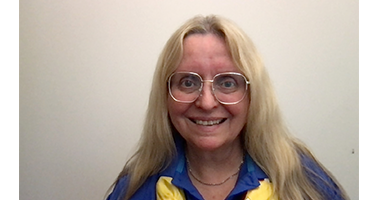
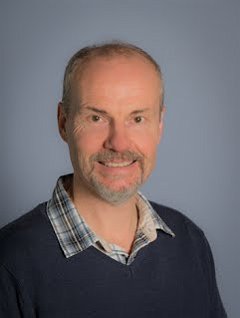
Anne C. Elster is a Professor and Director of the Heterogeneous and Parallel Computing Lab (HPC-Lab) at NTNU's Department of Computer Science, with additional roles as HPC Leader at the Center for Geophysical Forecasting and Senior Research Fellow at the Oden Institute. She holds board positions at NTNU and its Faculty of Information Technology. Her research spans: High-Performance Computing : GPU acceleration, auto-tuning, and heterogeneous systems Machine Learning : Applied to optimization and computational geosciences Parallel Algorithms : For scientific computing and real-time simulations Her recent publications (2021-2024) focus on GPU auto-tuning, quantum-HPC integration, distributed systems, and ML-driven geophysical data analysis, with strong emphasis on performance optimization across architectures. Awards and honors: IEEE Computer Society Distinguished Contributor (2021) IEEE Distinguished Speaker (2019-2022) IEEE Senior Member (2000) She has supervised 100+ master's students, 15+ PhDs, and secured major grants including EU H2020 projects. Current Post Docs focus on HPC acceleration and AI applications. Her HPC-Lab collaborates with CERN, Equinor, and international universities, specializing in GPU-accelerated scientific computing and tools for performance portability.
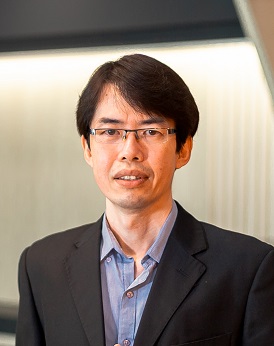
Sim Kwan Hua serves as Head of Department for Computer Science and Software Engineering and Lecturer at Swinburne University of Technology Sarawak Campus's Faculty of Engineering, Computing and Science. Joining the institution in 2007 after 6 years in ICT academia, he became Computer Science Program Coordinator in 2011 and has established himself as a key researcher in data-intensive computational fields. His academic credentials include: Bachelor of Information Technology in Computer Science (Honours), Universiti Malaysia Sabah Master of Science in Information Technology, Universiti Malaysia Sarawak Dr. Sim's research program centers on advanced analytical methodologies: Time Series Analysis for dynamic system modeling Time Series Pattern Recognition in complex datasets Data Mining techniques for knowledge discovery Statistical frameworks for data interpretation Predictive Analytic systems for real-world applications His research impact is demonstrated through significant grant funding: Smart Waste Collection System with Intelligent Data Optimization (SDEC TRG 2021, MYR 121,800.00, 2022-2024) Scalable Pattern Recognition in Financial Time Series Data (FRGS 2020, MYR 58,390.00) Prospective graduate students are encouraged to contact Dr. Sim via email to explore research opportunities in his data analytics specialization areas, where he actively mentors the next generation of computational scientists.
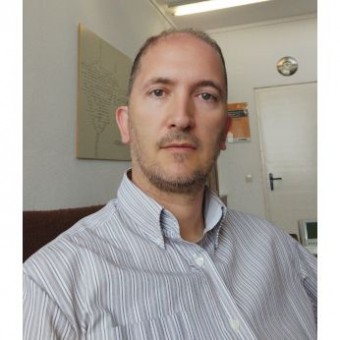
Rajiv Gupta is a Distinguished Professor and the Amrik Singh Poonian Professor of Computer Science at the University of California, Riverside (UCR), where he serves as Associate Dean for Academic Personnel in the Bourns College of Engineering (BCOE). He is a member of the RIPLE research group and has co-authored 327 papers with an h-index of 69 and over 16,600 citations. His extensive service includes chairing major conferences such as FCRC 2015, PPoPP 2020, ASPLOS 2011, and PLDI 2008. Professor Gupta's research focuses on Programming, Compiler, Runtime & Architectural Support for Parallel & Distributed Heterogeneous Systems and Software Tools for Monitoring and Managing Runtime Behavior . His work spans graph analytics with scalability and performance, understanding and managing the dynamic behavior of parallel programs, software speculation for irregular parallelism, dynamic program analysis for secure and reliable computing, and compiler optimizations with architectural support. His research has significant applications in high-performance computing, GPU programming, and distributed systems. Analysis of his recent publications reveals a strong focus on graph processing systems, with particular emphasis on evolving and streaming graph analytics. His work addresses critical challenges in memory management for large-scale graph processing, hardware acceleration for graph algorithms, and optimization techniques for concurrent and distributed graph computations. The research demonstrates a progression from foundational compiler and architecture work to increasingly sophisticated systems for handling modern data-intensive computing challenges. Fellow of the ACM (2009) Fellow of the IEEE (2008) Fellow of the AAAS (2011) NSF Presidential Young Investigator Award (1991) UCR Doctoral Dissertation Advisor/Mentor Award (2012) Multiple best paper awards across major conferences Two students won ACM SIGPLAN Outstanding Doctoral Dissertation Award Five advisees received NSF CAREER Award Professor Gupta has supervised 42 PhD students to completion and currently advises several doctoral candidates. His advising success is reflected in his students' achievements, including multiple award-winning dissertations and significant career accomplishments in academia and industry. His research has been supported by numerous grants from NSF, DARPA, and industry partners, enabling sustained investigation into parallel computing systems. The RIPLE research group under his leadership has produced influential work that bridges theoretical foundations with practical system implementations. As the leader of the RIPLE research group at UC Riverside, Professor Gupta oversees a vibrant team focused on innovative approaches to parallel and distributed computing. The group maintains strong collaborations with industry partners and other academic institutions, contributing to the development of next-generation computing systems. Current projects include GRASP (Graph Analytics with Scalability & Performance) and research on understanding and managing the dynamic behavior of parallel programs, reflecting the group's continued focus on cutting-edge computing challenges.
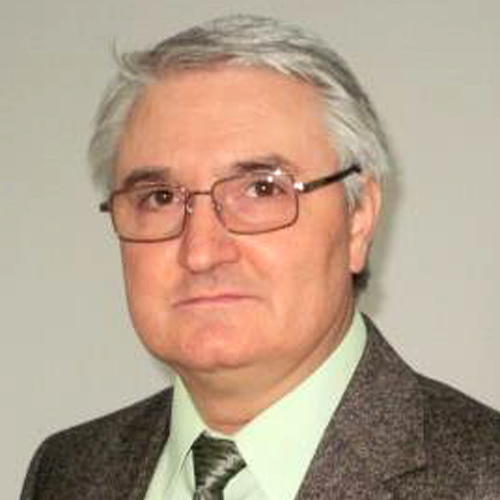
Konstantinos Kallas serves as Assistant Professor of Computer Science at the University of California, Los Angeles (UCLA), commencing his appointment in January 2025. Previously affiliated with the University of Pennsylvania as evidenced by his 2020 PLDI contribution, his research bridges theoretical formal methods with practical systems engineering across multiple high-impact conferences including PLDI, POPL, and SPLASH. His research program centers on enhancing computational efficiency and correctness in systems software, with three flagship projects defining his trajectory: PaSh for automatic shell script parallelization, Durable Functions for stateful serverless computing semantics, and DiffStream for differential testing of stream processing. These efforts consistently target the intersection of programming language theory and real-world systems constraints, particularly in parallelism, concurrency, and cloud-native environments where correctness guarantees are challenging to implement. Analysis of his publication history since 2020 reveals a methodological pattern: developing formal semantic models to enable practical optimizations in distributed systems. His work increasingly focuses on serverless architectures and data-intensive pipelines, with recent contributions emphasizing automated verification techniques. The evolution from shell script optimization (2020-2021) to serverless state management (2021-2022) demonstrates strategic expansion into cloud computing's hardest problems. Dr. Kallas actively contributes to the academic community through program committee service for PLDI (2022, 2025), POPL (2021, 2022, 2023), and SPLASH (2020-2023), including leadership roles as Publicity Co-Chair for PLDI 2025 and 2026. His June 2024 announcement confirms recruitment for Fall 2025 students at UCLA, targeting researchers interested in systems, compilers, and programming languages who can advance his work on correctness-preserving parallelization and serverless computing.
Joaquín Ángel Triñanes Fernández serves as a Professor in the Department of Languages and Computer Systems at the University of Santiago de Compostela. He teaches core courses including Business Intelligence, Software Engineering, and Environmental Data Analysis and Mining across multiple programs such as the Bachelor’s Degree in Informatics Engineering and Master in Massive Data Analysis Technologies. His research focuses on data-intensive systems, with primary interests in Big Data architectures, Data Science methodologies, and Software Engineering practices. These themes directly align with his teaching portfolio and affiliation with the SYSTEMS LABORATORY research group, where he contributes to computational solutions for environmental engineering and business intelligence applications. As an active member of the SYSTEMS LABORATORY, he participates in research initiatives centered on scalable data processing frameworks and real-world implementations of analytics systems, particularly emphasizing environmental data mining and enterprise-level business intelligence solutions.
J.S. Rellermeyer is a Professor at Delft University of Technology's College of Electrical Engineering, Mathematics and Computer Science , specializing in Data-Intensive Systems . His work bridges software engineering, machine learning, and distributed systems to address challenges in AI reliability and sustainability.
Thorsten Berger is a Professor and Head of the Chair of Software Engineering at Ruhr University Bochum, Germany. His office is located at MC 4.101 on the RUB campus, with contact details including phone (+49 (0) 234 32 25975) and email (thorsten.berger@rub.de). He's an active researcher with extensive service in the software engineering community, serving on program committees for major conferences including ICSE, FSE, ASE, and SPLC. Professor Berger's research primarily focuses on software engineering with specialization in variability management, software product lines, and robotics software engineering. His work bridges theoretical foundations with practical applications, particularly in behavior trees for robotic systems, configuration management, and domain-specific language engineering. His interdisciplinary approach connects software engineering with control theory and machine learning applications. Analysis of his recent publications reveals a strong trend toward robotics software engineering, with increasing focus on behavior trees, test-case specification, and runtime verification for robotic systems. His work also shows growing interest in machine learning integration with traditional software engineering practices, particularly in model integration and asset management for ML-enabled systems. The research demonstrates consistent evolution from foundational work in variability management toward more applied domains. His scientific achievements have been recognized with numerous awards: Multiple Most Influential Paper Awards (SLE 2024, VaMoS 2023, VaMoS 2020) Wallenberg Academy Fellowship VR Starting Grant from Swedish Research Council (2016) Best Paper Awards at Modularity (2015) and CSMR (2013) Distinguished Reviewer Awards from ASE, ICSE, and SPLC conferences ERC Starting Grant finalist (2019, 2020) Professor Berger has secured substantial research funding as Principal Investigator for multiple projects including Novel Techniques for Data-Driven Root-Cause Analysis and Variability Management (Volkswagen Infotainment), Properties and Verification Techniques for Behavior Trees (Phoenix Contact Foundation), and PrivacyE2E framework for AI-enabled systems (Federal Ministry of Education and Research). His Wallenberg Academy Fellowship and VR Starting Grant demonstrate his capacity to attract competitive early-career funding. He leads the Virtual Platform project funded by the Swedish Research Council and participates in EU-funded initiatives like CO4ROBOTS. As Head of the Chair of Software Engineering at Ruhr University Bochum, he leads a research group focused on advanced software engineering techniques with particular emphasis on variability-intensive systems. His team actively participates in international research collaborations including the Wallenberg Autonomous Systems Program (WASP) and has organized significant events like the Dagstuhl seminar 19191 on 'Software Evolution in Time and Space: Unifying Version and Variability Management.'
Angelo Sifaleras is a Full Professor at the Department of Applied Informatics, School of Information Sciences, University of Macedonia (Thessaloniki, Greece). He also serves as an Adjunct Professor of Quantitative Methods at the Hellenic Open University. His academic credentials include a Ph.D. in Applied Informatics (University of Macedonia, 2007) and a B.Sc. in Mathematics (Aristotle University of Thessaloniki, 1999). Research Focus: Professor Sifaleras specializes in Mathematical Programming , Network Optimization , and Heuristic Methods . His work integrates computational optimization with real-world logistics, supply chains, and sustainable systems. Key research themes include metaheuristic algorithms for vehicle routing, pollution-aware logistics, and parallel computing solutions for network analysis. Publication Trends: His 15 most recent articles emphasize hybrid metaheuristics (e.g., combining reinforcement learning with Variable Neighborhood Search), sustainable supply chain modeling, and high-performance computing applications. Dominant domains include operations research, environmental optimization, and educational algorithm visualization. Teaching & Service: He instructs courses in Combinatorial Optimization, Linear Algebra, and Heuristic Methods, employing tools like CPLEX, Gurobi, and SageMath. As an editor for Operations Research Forum and the Yugoslav Journal of Operations Research , he supports academic discourse in optimization. A Senior ACM member, he contributes to conferences like ICVNS and ITS.
Eduardo Rosa-Molinar is a Professor of Pharmacology and Toxicology and Neuroscience at the University of Kansas School of Medicine. He serves as the Director of the Microscopy and Analytical Imaging Research Resource Core Laboratory and is an Academic Affiliate of the Bioimaging Science Track in the Bioengineering Graduate Program at the University of Kansas School of Engineering. Previously, he was the Director of the Microscopy and Analytical Imaging (MAI) Research Laboratory at the University of Kansas. His expertise spans over 40 years in optical and electron microscopy methodologies. BA, University of Alabama PhD, Anatomy, Cell Biology and Neuroscience, University of Nebraska Medical Center Rosa-Molinar's research focuses on neurotechnology and the development of reagents, tools, and workflows for multi-scale multi-modal correlated volume resin microscopies. His work aims to determine the three-dimensional nano-scale geometry and chemical composition of synapses. He studies the proteins in cell membranes that act as channels through which signals pass into synapses, investigating how brain cells communicate across electrical and chemical synapses. His laboratory specializes in techniques that allow for the visualization of neuronal connections at unprecedented resolution. Analysis of his recent publications reveals a strong focus on microscopy innovation, particularly in 3D imaging techniques, neural circuit mapping, and the application of advanced microscopy to cancer research and stem cell biology. His work bridges fundamental neuroscience with practical applications in disease modeling and therapeutic development, with particular emphasis on rigor and reproducibility in imaging sciences. Rosa-Molinar has developed and refined numerous imaging techniques including correlative microscopy methods, novel staining protocols, and multi-functional neural tract tracers. His work on the western mosquitofish as a model organism has provided insights into sexual dimorphism in neural circuits and body plans. Director of the Microscopy and Analytical Imaging Research Resource Core Laboratory Professor of Pharmacology and Toxicology and Neuroscience Graduate Program Academic Affiliate of the Bioimaging Science Track in the Bioengineering Graduate Program Professor of Anatomy and Cell Biology at the University of Kansas Medical Center His laboratory trains numerous graduate students and postdoctoral researchers in advanced imaging techniques. Rosa-Molinar has contributed significantly to establishing standards for rigor and reproducibility in imaging sciences, developing training modules that have been widely adopted. His collaborative work spans departments and institutions, focusing on applying advanced microscopy to diverse biological questions from cancer biology to neural development.
Julián Sánchez-Hermosilla López is a Professor in the Department of Engineering at the University of Almería, Spain, specializing in agricultural robotics and precision agriculture technologies. His research focuses on developing autonomous systems for greenhouse operations, particularly in pesticide application, crop monitoring, and structural analysis of agricultural facilities. His research interests span agricultural robotics, precision agriculture, electrostatic spraying technology, UAV photogrammetry, and mechatronic systems for agricultural applications. Professor Sánchez-Hermosilla leads research in the 'Tecnología de la producción agraria en zonas semiáridas' group, focusing on technological solutions for Mediterranean agricultural challenges. His recent publication activity (2020-2024) demonstrates strong productivity in high-impact journals, with multiple Q1 publications in Computers and Electronics in Agriculture, Smart Agricultural Technology, and Science of the Total Environment. His work shows consistent focus on practical agricultural robotics solutions for greenhouse environments. Scopus h-index: 19 Web of Science h-index: 17 Scopus i10-index: 25 Web of Science i10-index: 22 Professor Sánchez-Hermosilla has served as Principal Investigator on numerous research projects funded by Spanish agencies, with total funding exceeding €500,000 in the past decade alone. His current research includes autonomous greenhouse monitoring vehicles and optimization of natural/artificial pollination in olive crops. He directs the research activities of multiple PhD students and has supervised numerous theses in agricultural engineering, with a particular focus on UAV applications, electrostatic spraying systems, and greenhouse structural analysis.
Markus M. Becker is the Head of Research Programme Smart Data Technologies at the Leibniz Institute for Plasma Science and Technology (INP) in Greifswald, Germany. He has been working at INP since May 2008 as a Scientist specializing in Plasma Modelling and Data Science. His educational background includes: Dr. (Doctorate) in Computational Physics from Leibniz Institute for Plasma Science and Technology (2008-2012) Diploma in Mathematics with Informatics from University of Greifswald (2006-2008) B.Sc. in Mathematics and Computer Science from University of Greifswald (2003-2006) Dr. Becker's research spans the intersection of plasma physics and data science. His work in plasma physics focuses on low-temperature plasma modeling, particularly dielectric barrier discharges at atmospheric pressure, plasma diagnostics, and reaction kinetics. His data science research includes semantic information management, metadata standards for plasma science, and machine learning applications for plasma modeling. He has been instrumental in developing the Plasma-MDS metadata schema and has contributed to research data management initiatives like NFDI4BIOIMAGE. His recent publications reveal a strong trend toward integrating data science methodologies with plasma physics research, spanning from fundamental plasma modeling to practical applications of semantic web technologies and machine learning. His scientific contributions include: Development of the Plasma-MDS metadata schema for plasma science Contributions to semantic information management in plasma science with VIVO Work on foundations of plasma standards Research on data-driven approaches to plasma science Development of tools like pyJSON Schema Loader and Adamant for metadata management Dr. Becker is actively involved in multiple research grants, including projects funded by the Deutsche Forschungsgemeinschaft and the Federal Ministry of Education and Research. His current projects focus on data-driven diagnostics of dielectric barrier discharges, open access for data-driven research, and national research data infrastructure. His leadership in the Smart Data Technologies program demonstrates his commitment to advancing data-intensive approaches in plasma science. His research group focuses on developing and applying data science methodologies to plasma physics problems, creating tools for metadata management, and establishing standards for plasma research data. The group works at the intersection of computational physics, data science, and research infrastructure development, providing a unique environment for interdisciplinary research.
Dr. Gang Mei is an Associate Professor in Scientific Computing within the School of Engineering and Technology at China University of Geosciences (Beijing), where he has held academic positions since 2014. His career progression includes Postdoctoral Researcher (2014-2016), Lecturer (Oct-Dec 2016), and current Associate Professor (since Jan 2017). His research bridges computational science and engineering applications with significant editorial contributions to computer science literature. Education: Ph.D. in Computer Science, University of Freiburg, Germany (2014) Research Interests: Dr. Mei specializes in Numerical Simulation and Computational Modeling, GPU Computing, Machine Learning, and Data Mining, with strong applications in Network Science and Spatial Information Systems. His work integrates Distributed and Parallel Computing techniques for large-scale scientific simulations, particularly in geospatial modeling and network analysis. The research demonstrates consistent focus on computational efficiency through hardware acceleration and algorithmic optimization across diverse domains including satellite imagery processing, financial event detection, and medical image classification. Publication Trends: His editorial portfolio reveals strong interdisciplinary patterns connecting computer science fundamentals with domain-specific applications. Recent works emphasize GPU-accelerated methods for data-intensive problems (2020-2022), spatial-temporal modeling (2019-2020), and network science applications (2021). The publications consistently address computational scalability challenges while maintaining practical relevance across geospatial, financial, medical, and engineering contexts. Professional Recognition: As an IEEE Member, Dr. Mei serves on editorial boards for IEEE Access and PeerJ Computer Science, reflecting peer recognition in computational fields. His editorial contributions span 15+ publications demonstrating expertise in evaluating cutting-edge computer science research. Academic Service: Beyond editorial work, Dr. Mei's service includes advising on computational methodology across multiple disciplines. His role as Academic Editor demonstrates commitment to scholarly communication, particularly in bridging theoretical computer science with practical engineering applications. No grant funding details were specified in available materials.
Marius Călin serves as a Lecturer in the Department of Exact Sciences at the Faculty of Horticulture, University of Agricultural Sciences and Veterinary Medicine of Iasi, Romania. His academic profile bridges computational science with agricultural applications through expertise in Information Technology, Applied Mathematics, and E-learning systems development. His research portfolio centers on five core domains: Soft Computing in Agricultural Sciences: Pioneering fuzzy logic applications for plant breeding and greenhouse management Decision Making under Uncertainty: Developing models for agricultural scenarios with incomplete data Decision Support Systems: Creating tools for land suitability assessment and resource optimization E-learning Applications: Designing specialized platforms for agricultural education Graph Databases: Implementing knowledge representation systems for agricultural data Analysis of his publication trajectory reveals an evolution from foundational fuzzy decision models (2000-2007) toward increasingly interdisciplinary work. Recent publications (2015-2022) demonstrate strong convergence between e-learning infrastructure development and agricultural informatics, particularly through Moodle-based systems for remote education during the pandemic and computational models for soil management. His work consistently emphasizes practical implementation of grid computing and soft computing techniques in agricultural contexts. Dr. Călin has secured significant research funding through seven major contracts, including leadership as USAMV Iasi responsible for the CEEX 1801 grid computing project (2006-2008) and contributions to sustainable soil management initiatives (ECOSEUMET, CNCSIS 738). His grant portfolio demonstrates sustained focus on translating computational research into agricultural solutions. Within the university ecosystem, he serves as Moodle platform administrator and coordinates Informatics discipline activities, fostering cross-departmental collaboration. His professional affiliations include ESNA (European Society for New Methods in Agricultural Research) and ROMAI (Romanian Society of Applied and Industrial Mathematics), reflecting his commitment to interdisciplinary scientific exchange.
Raffi Khatchadourian is an Associate Professor in the Department of Computer Science at Hunter College and a member of the Doctoral Faculty of The Graduate School and University Center's Ph.D. Program in Computer Science at the City University of New York (CUNY). He leads the PONDER Lab @ CUNY and is a member of the CUNY Institute of Computer Simulation, Stochastic Modeling, and Optimization (CoSSMO). His research lies at the intersection of software engineering, programming languages, and reliable machine learning systems. He investigates how program analysis, automated refactoring, and type theory can ease the burden of correctly, efficiently, and securely evolving large and complex software. His work spans several key areas including automated refactoring of Java programs, empirical studies of software development practices, migration of imperative Deep Learning programs to graph execution, and the application of software engineering methodology to improve statistical programs and artificial intelligence. His research has been externally supported by the National Science Foundation (NSF), the Japan Society for the Promotion of Science (JSPS), Amazon Web Services (AWS), and the Verizon Foundation. Dr. Khatchadourian's recent publications demonstrate a strong focus on improving Deep Learning systems through automated refactoring techniques, analyzing technical debt in machine learning systems, and addressing concurrency challenges in modern programming languages. His work frequently appears in top-tier conferences including ICSE, ASE, ESEC/FSE, and FASE. His scientific achievements have been recognized with numerous awards including the EAPLS Distinguished Paper Award at FASE '25, EAPLS Best Paper Award at FASE '20, and a Distinguished Paper Award at IEEE SCAM '18. He has also received fellowships from JSPS and NSF EAPSI, along with the Eleanor Quinlan Memorial Award for Excellence in Teaching. As an advisor, Dr. Khatchadourian has mentored numerous PhD, Master's, and undergraduate students, including Tatiana Castro Vélez who recently accepted a tenure-track Assistant Professor position at University of Puerto Rico. He has served on multiple program committees for major conferences including ICSE, ASE, ECOOP, and GPCE, and has organized events such as the New York Seminar on Programming Languages and Software Engineering (NYPLSE). He also mentors students through NYU GSTEM and ACM SIGPLAN-M programs. Dr. Khatchadourian maintains active research collaborations across institutions and leads the PONDER Lab @ CUNY, which focuses on programming, optimization, and novel development environments for reliable software. The lab provides opportunities for undergraduate, master's, and doctoral students interested in programming languages and software engineering research.
John Grundy is a Professor of Software Engineering and Senior Deputy Dean at Monash University's Faculty of Information Technology in Melbourne, Australia. He is also an Australian Laureate Fellow (2020-2026) and leads the "Human-centric Software Engineering" (HumaniSE) research lab. With over 32 years of academic experience, Professor Grundy has held numerous leadership positions including Pro Vice-Chancellor at Deakin University and Dean roles at Swinburne University and the University of Auckland. BSc(Hons), MSc, PhD and DSc degrees in Computer Science from the University of Auckland IEEE Fellow, Fellow of Automated Software Engineering, Fellow of Engineers Australia Lero Parnas Fellow (2023) Recipient of the ACM SIGSOFT Distinguished Service Award (2023) and Dean's Award for Graduate Research Student Supervision (2024) Professor Grundy's research focuses on making "Software Engineering more like traditional Engineering disciplines" through human-centric visual modeling approaches. His primary research areas include model-driven engineering, software architecture, visual languages, software security engineering, and human factors in software development. He specifically investigates how personality, emotions, gender, age, and disability impact software usage, requirements engineering, design, and testing. His current projects include the Visual Wiki platform for knowledge engineering, Marama meta-tools, and Software Process and Product Improvement initiatives. His research has significant implications for accessibility, usability, and the alignment of software applications with diverse user needs. Professor Grundy has published extensively in top software engineering venues and has supervised numerous PhD students throughout his career. IEEE Technical Council on Software Engineering Distinguished Education Award (2014) ACM SIGSOFT Distinguished Service Award (2023) CORE Distinguished Service Award (2023) Lero Parnas Fellow (2023) Dean's Award for Graduate Research Student Supervision (2024) Professor Grundy has supervised numerous PhD students and has received funding for various research projects, most notably his 5-year Australian Laureate Fellowship (2020-2026) focused on human-centric software engineering. His HumaniSE research lab brings together interdisciplinary teams to address challenges in making software systems more responsive to human needs and contexts. His lab focuses on developing new conceptual foundations and modeling techniques that incorporate human factors throughout the software development lifecycle, with applications in smart homes, digital health, and smart city solutions.