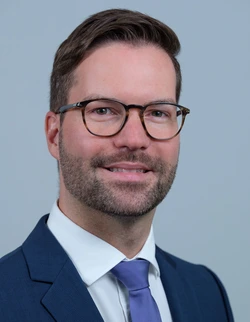
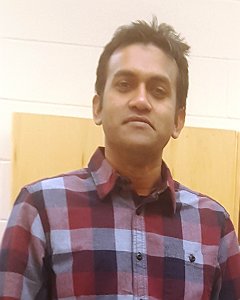
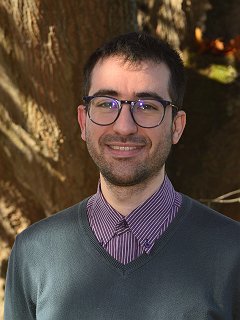
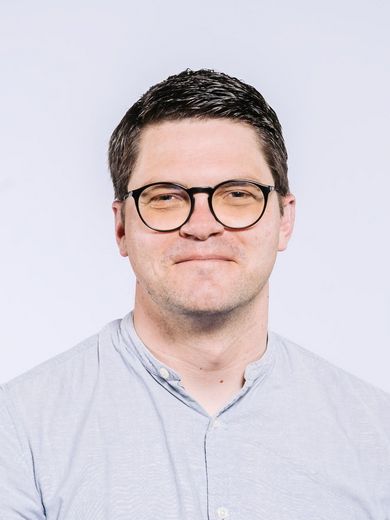
Stefan Kugele is a Research Professor for Model-based Systems Engineering and Software Engineering at Technische Hochschule Ingolstadt (THI). His research addresses complexity in mobility systems (e.g., automated driving/flying) through model-based approaches and formal verification. He investigates interactions between humans, environments, and autonomous systems to ensure reliability in software-intensive systems with AI components. Research Interests: Focuses on mathematically rigorous methods for system modeling, specification, and analysis of self-adaptive systems. Key areas include: Integration of data-driven AI components in engineering workflows Formal guarantees for system correctness Monitoring frameworks for autonomous operations Current Projects: MANNHEIM AutoDevSafeOps DevGPT Legacy AI Education & Career Since 07/2020: Research Professor, THI 10/2015–06/2020: Temporary Academic Council, Software & Systems Engineering, Technical University of Munich 11/2006–09/2015: Research Assistant, Technical University of Munich PhD (2006–2012) and MSc in Computer Science (minor: Electrical Engineering), Technical University of Munich
Thomas Rose is Professor for Media Processes at RWTH Aachen University and heads the research group on business process management at Fraunhofer FIT. He is affiliated with the Department of Computer Science (Informatik 5) and conducts research in media processes, process management, and digital collaboration systems for high-stakes domains such as healthcare and emergency response. His research focuses on the design and implementation of media processes for information capture and dissemination, along with advanced process management and customization techniques. Projects under his leadership include Setric (Security and Trust in Cities), ERMA (Electronic Risk Management Architecture), Olga (Online Guideline Assist for Intensive Care), and ZAMOMO (integration of model-based software and control engineering), all targeting real-world applications in public safety, healthcare, and industrial systems. His work has been recognized at the European level, with the Apnee(-Tu) project highlighted as a success story of European IST research by Commissioner Vivian Reding in 2005. The research group is funded by the B-IT Foundation, a 56 million Euro endowment supporting innovation at the intersection of Bonn and Aachen. Project Apnee(-Tu) selected as one of the success stories of European IST research by Commissioner Vivian Reding in 2005 Thomas Rose has supervised thesis projects and taught courses such as Data Visualization and Analytics and Distributed Ledger Technology. He collaborates extensively with Fraunhofer FIT and leads a research team focused on decision and process management support. His lab is embedded within the Fraunhofer Institute for Applied Information Technology, leveraging interdisciplinary teams to develop scalable, secure, and trustworthy process-aware systems.
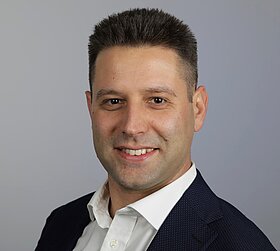
Liam Tirpitz is a researcher and PhD candidate at the Department of Computer Science, Faculty of Mathematics, Computer Science and Natural Sciences, RWTH Aachen University. He is affiliated with the Chair of Computer Science i5 (Information Systems and Databases) and the Data Stream Management and Analysis Group, where he has been working since February 2022. Education : Master's degree in Computer Science from RWTH Aachen University (2021). His research focuses on data stream processing, in-network computing, and FAIR data ecosystems, with applications in industrial and cyber-physical systems. He explores methods for efficient data aggregation, stability detection, and cross-organizational data sharing, often leveraging technologies like WebAssembly and knowledge graphs. His work integrates distributed systems principles with database technologies to enable scalable and secure data processing in industrial environments. The recent publications of Liam Tirpitz reflect a strong focus on industrial data management, with trends toward in-network computing, edge-based stream processing, and FAIR principles. His work spans both theoretical architectures (e.g., GALOIS) and applied implementations in domains like manufacturing and health data, demonstrating interdisciplinary collaboration and real-world impact. Liam Tirpitz is actively involved in teaching and academic supervision. He has taught courses such as Data Ecosystems Lab and Implementation of Databases, and is currently supervising multiple thesis projects on topics including WebAssembly-based query functions, anomaly detection, and hybrid stream processing. He participates in research projects like StreamFröst and the Cluster of Excellence Internet of Production, contributing to the development of digital infrastructure for sustainable industrial systems. He is based at the Chair of Computer Science i5, a leading research group in information systems and databases at RWTH Aachen, which supports his work in data-intensive applications and distributed computing environments.
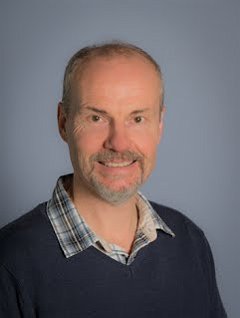
Benno Stein is a full professor of Web Technology and Information Systems at the Bauhaus-Universität Weimar, leading the Intelligent Information Systems Group. He chairs the Digital Bauhaus Lab , an interdisciplinary research center bridging Computer Science, Arts, and Engineering. His research focuses on symbolic AI principles applied to data/knowledge-intensive tasks, with contributions to information retrieval, data mining, computational linguistics, and engineering simulation. Education: Studied at the University of Karlsruhe (1984-1989), earned his PhD (1995) and habilitation (2002) in Computer Science at the University of Paderborn. Professional roles include appointments at IBM Germany and the International Computer Science Institute (Berkeley). Research leadership includes founding the Art Systems Software Ltd (1996) and serving as scientific director. He co-chairs PAN and Touché conferences on digital text forensics and argument retrieval. Active in academic governance as spokesperson of the Digital Bauhaus Lab and on multiple scientific boards. Recognized through scientific and commercial prizes for his innovations in simulation technology and AI-driven information systems.
Nikolas Herbst is a Professor and Chair of Software Engineering at the Department of Computer Science, University of Würzburg. He leads research in Software Performance Engineering, High-Performance Data Processing, and Autonomic Computing. His work focuses on Cloud and Serverless Computing, Elasticity, and Time Series Analysis. He currently serves as JMU Chief Information Security Officer (CISO) and holds leadership roles in SPEC Research Groups and ICPE Steering Committees. Education: PhD in Computer Science (Karlsruhe Institute of Technology, 2018) Master of Computer Science (Karlsruhe Institute of Technology, 2012) Research Interests: His lab develops tools like CHAMELEON, TELESCOPE, and BUNGEE for cloud elasticity and performance analysis. He emphasizes benchmarking, resource demand estimation, and self-aware systems. Recent projects include real-time forest monitoring (ROOT) and serverless scientific computing (SOS). Teaching: Teaches Operating Systems, Performance Engineering & Benchmarking, and Self-Aware Computing at both undergraduate and graduate levels since 2012. Awards: 10 Year Most Impact Paper Award (ACM/SPEC ICPE 2023) SPEC Kaivalya Dixit Distinguished Dissertation Award (2019) IBM PhD Fellowship (2014) Grants & Projects: Coordinates DFG-funded projects like bidt-ROOT (2023–2026) and SOS (2025–2029). Leads development of open-source tools for cloud performance analysis, including WCF (Workload Classification & Forecasting).
Prof. Achim Streit is a Professor for distributed and parallel high-performance systems at the Karlsruhe Institute of Technology (KIT) and has served as one of the directors of the Steinbuch Centre for Computing (SCC) since 2010. He actively leads national and international initiatives including the Helmholtz program "Engineering Digital Futures", the National Research Data Infrastructure (NFDI), and the European Open Science Cloud (EOSC), with SCC operating GridKa—the German data hub for particle physics and a Tier 1 center of the Worldwide LHC Computing Grid. His research centers on secure, distributed management of large-scale scientific data, emphasizing metadata standards, AI-driven knowledge extraction, and quantum machine learning. He develops scalable solutions for data-intensive fields like climate research, materials science, and particle physics while prioritizing energy efficiency on heterogeneous computing systems. Streit champions open science, ensuring freely accessible software and datasets through rigorous research software engineering practices. The SCC under his direction implements federated IT services across Helmholtz platforms (HMC, Helmholtz.AI, HIFIS) and NFDI consortia (NFDI4Ing, NFDI-MatWerk, PUNCH4NFDI). His team collaborates extensively with disciplines ranging from energy research to humanities, focusing on distributed authentication infrastructures, data archiving, and resource optimization for global scientific communities.
Thorsten Berger is a Professor and Head of the Chair of Software Engineering at Ruhr University Bochum, Germany. His office is located at MC 4.101 on the RUB campus, with contact details including phone (+49 (0) 234 32 25975) and email (thorsten.berger@rub.de). He's an active researcher with extensive service in the software engineering community, serving on program committees for major conferences including ICSE, FSE, ASE, and SPLC. Professor Berger's research primarily focuses on software engineering with specialization in variability management, software product lines, and robotics software engineering. His work bridges theoretical foundations with practical applications, particularly in behavior trees for robotic systems, configuration management, and domain-specific language engineering. His interdisciplinary approach connects software engineering with control theory and machine learning applications. Analysis of his recent publications reveals a strong trend toward robotics software engineering, with increasing focus on behavior trees, test-case specification, and runtime verification for robotic systems. His work also shows growing interest in machine learning integration with traditional software engineering practices, particularly in model integration and asset management for ML-enabled systems. The research demonstrates consistent evolution from foundational work in variability management toward more applied domains. His scientific achievements have been recognized with numerous awards: Multiple Most Influential Paper Awards (SLE 2024, VaMoS 2023, VaMoS 2020) Wallenberg Academy Fellowship VR Starting Grant from Swedish Research Council (2016) Best Paper Awards at Modularity (2015) and CSMR (2013) Distinguished Reviewer Awards from ASE, ICSE, and SPLC conferences ERC Starting Grant finalist (2019, 2020) Professor Berger has secured substantial research funding as Principal Investigator for multiple projects including Novel Techniques for Data-Driven Root-Cause Analysis and Variability Management (Volkswagen Infotainment), Properties and Verification Techniques for Behavior Trees (Phoenix Contact Foundation), and PrivacyE2E framework for AI-enabled systems (Federal Ministry of Education and Research). His Wallenberg Academy Fellowship and VR Starting Grant demonstrate his capacity to attract competitive early-career funding. He leads the Virtual Platform project funded by the Swedish Research Council and participates in EU-funded initiatives like CO4ROBOTS. As Head of the Chair of Software Engineering at Ruhr University Bochum, he leads a research group focused on advanced software engineering techniques with particular emphasis on variability-intensive systems. His team actively participates in international research collaborations including the Wallenberg Autonomous Systems Program (WASP) and has organized significant events like the Dagstuhl seminar 19191 on 'Software Evolution in Time and Space: Unifying Version and Variability Management.'
Markus M. Becker is the Head of Research Programme Smart Data Technologies at the Leibniz Institute for Plasma Science and Technology (INP) in Greifswald, Germany. He has been working at INP since May 2008 as a Scientist specializing in Plasma Modelling and Data Science. His educational background includes: Dr. (Doctorate) in Computational Physics from Leibniz Institute for Plasma Science and Technology (2008-2012) Diploma in Mathematics with Informatics from University of Greifswald (2006-2008) B.Sc. in Mathematics and Computer Science from University of Greifswald (2003-2006) Dr. Becker's research spans the intersection of plasma physics and data science. His work in plasma physics focuses on low-temperature plasma modeling, particularly dielectric barrier discharges at atmospheric pressure, plasma diagnostics, and reaction kinetics. His data science research includes semantic information management, metadata standards for plasma science, and machine learning applications for plasma modeling. He has been instrumental in developing the Plasma-MDS metadata schema and has contributed to research data management initiatives like NFDI4BIOIMAGE. His recent publications reveal a strong trend toward integrating data science methodologies with plasma physics research, spanning from fundamental plasma modeling to practical applications of semantic web technologies and machine learning. His scientific contributions include: Development of the Plasma-MDS metadata schema for plasma science Contributions to semantic information management in plasma science with VIVO Work on foundations of plasma standards Research on data-driven approaches to plasma science Development of tools like pyJSON Schema Loader and Adamant for metadata management Dr. Becker is actively involved in multiple research grants, including projects funded by the Deutsche Forschungsgemeinschaft and the Federal Ministry of Education and Research. His current projects focus on data-driven diagnostics of dielectric barrier discharges, open access for data-driven research, and national research data infrastructure. His leadership in the Smart Data Technologies program demonstrates his commitment to advancing data-intensive approaches in plasma science. His research group focuses on developing and applying data science methodologies to plasma physics problems, creating tools for metadata management, and establishing standards for plasma research data. The group works at the intersection of computational physics, data science, and research infrastructure development, providing a unique environment for interdisciplinary research.
John Grundy is a Professor of Software Engineering and Senior Deputy Dean at Monash University's Faculty of Information Technology in Melbourne, Australia. He is also an Australian Laureate Fellow (2020-2026) and leads the "Human-centric Software Engineering" (HumaniSE) research lab. With over 32 years of academic experience, Professor Grundy has held numerous leadership positions including Pro Vice-Chancellor at Deakin University and Dean roles at Swinburne University and the University of Auckland. BSc(Hons), MSc, PhD and DSc degrees in Computer Science from the University of Auckland IEEE Fellow, Fellow of Automated Software Engineering, Fellow of Engineers Australia Lero Parnas Fellow (2023) Recipient of the ACM SIGSOFT Distinguished Service Award (2023) and Dean's Award for Graduate Research Student Supervision (2024) Professor Grundy's research focuses on making "Software Engineering more like traditional Engineering disciplines" through human-centric visual modeling approaches. His primary research areas include model-driven engineering, software architecture, visual languages, software security engineering, and human factors in software development. He specifically investigates how personality, emotions, gender, age, and disability impact software usage, requirements engineering, design, and testing. His current projects include the Visual Wiki platform for knowledge engineering, Marama meta-tools, and Software Process and Product Improvement initiatives. His research has significant implications for accessibility, usability, and the alignment of software applications with diverse user needs. Professor Grundy has published extensively in top software engineering venues and has supervised numerous PhD students throughout his career. IEEE Technical Council on Software Engineering Distinguished Education Award (2014) ACM SIGSOFT Distinguished Service Award (2023) CORE Distinguished Service Award (2023) Lero Parnas Fellow (2023) Dean's Award for Graduate Research Student Supervision (2024) Professor Grundy has supervised numerous PhD students and has received funding for various research projects, most notably his 5-year Australian Laureate Fellowship (2020-2026) focused on human-centric software engineering. His HumaniSE research lab brings together interdisciplinary teams to address challenges in making software systems more responsive to human needs and contexts. His lab focuses on developing new conceptual foundations and modeling techniques that incorporate human factors throughout the software development lifecycle, with applications in smart homes, digital health, and smart city solutions.
Luciano Baresi is a Full Professor at the Polytechnic University of Milan (Politecnico di Milano), Italy, affiliated with the Department of Electronics, Information and Bioengineering. He earned his laurea (MSc) and PhD in Computer Science from the same institution and has held visiting positions at the University of Oregon (USA), Tongji University (China), and the University of Paderborn (Germany). His research spans software engineering, with current focuses on self-adaptive systems, edge computing, and AI/ML-based software. His work integrates formal methods with practical applications, emphasizing autonomous systems, cloud-edge continuum, and federated learning. Recent publications highlight AI-driven advancements in software testing, resource optimization, and educational tools. Key research themes include: AI/ML for autonomous driving testing and data augmentation Serverless computing at the edge Federated learning system architectures Containerization and cloud resource management Awarded for impactful contributions: RE 2020 Most Influential Paper ICSOC 2020 Best Paper SEAMS 2022 Best Paper He advises 14+ PhD students and leads projects like Ketonet (health app), WHO's Essential Items Estimator, and dynaSpark. As Editor-in-Chief of Proceedings of the ACM on Software Engineering and senior editor for multiple journals, he shapes academic discourse in adaptive systems and software engineering.
Masud Rahman is an Associate Professor in the Faculty of Computer Science at Dalhousie University, Canada, where he leads the RAISE Lab. Previously a tenure-track Assistant Professor, he completed his Ph.D. in Computer Science/Software Engineering from the University of Saskatchewan and a postdoctoral fellowship at Polytechnique Montreal. His academic career demonstrates strong progression with significant research impact in software engineering. Faculty of Computer Science, Dalhousie University (Current) University of Saskatchewan (Ph.D. studies) Polytechnique Montreal (Postdoctoral research) Dr. Rahman's research focuses on the intelligent automation of software maintenance and evolution, particularly targeting software debugging, code search, and code reviews. His work strategically combines Software Engineering with Artificial Intelligence techniques including Machine/Deep Learning, Information Retrieval, Mining Software Repositories, and Natural Language Processing. His industry experience as a professional developer for three years significantly shaped his research direction toward solving practical software maintenance challenges that cost the global economy billions annually. His research program addresses critical problems in software bug detection, diagnosis, explanation, and reproduction, with increasing focus on AI-powered and simulation modeling software. His publications demonstrate consistent output in top-tier venues including 7 papers at ICSE (A*), 3 at FSE (A*), 3 at ASE (A*), 8 at EMSE (A), 6 at ICSME (A), and 9 at MSR (A). The research trends show increasing focus on deep learning applications for software engineering problems, with particular attention to code search, bug localization, and debugging automation. His work has evolved from traditional information retrieval approaches to incorporate advanced neural network techniques and generative AI. Governor General's Gold Medal 2019 U of S Doctoral Thesis Award 2019 CS Best PhD Thesis Award 2019 TCSE Distinguished Paper Award Most Influential Paper Award Dr Keith Geddes Award Dalhousie Belong Research Fellowship President's Gold Medal (Bangladesh) Dr. Rahman has secured $500K+ in competitive research funding as Principal Investigator, including an NSERC Discovery Grant, Mitacs Accelerate International, and Climate Action and Awareness Fund. He actively collaborates with industry partners including Metabob Inc., Mozilla Firefox, and Vendasta Technologies. His service to the community includes extensive program committee work for major conferences and journal reviewing. He leads the RAISE Lab, which focuses on developing AI-powered solutions for software maintenance challenges, with current projects emphasizing sustainable software innovation and sustainable AI as part of Dalhousie's strategic goals.
Djamel Eddine Khelladi is a CNRS Researcher at the IRISA laboratory within the DIVERSE team at University of Rennes, specializing in software engineering with emphasis on model-driven techniques and empirical validation. His work bridges theoretical frameworks and industrial-scale applications, particularly in evolving software ecosystems. His academic foundation includes a Ph.D. from Sorbonne University (formerly University Pierre et Marie Curie) at the Laboratory of Computer Science of Paris 6 (LIP6), followed by postdoctoral research at Johannes Kepler University Linz's Institute for Software Systems Engineering. This trajectory established his expertise in software evolution and model-driven approaches. Khelladi's research centers on software evolution challenges, particularly model-code co-evolution in highly-configurable systems like the Linux kernel. He develops scalable analysis tools (e.g., HyperAST, HyperDiff) and investigates empirical phenomena in build systems, configuration management, and polyglot programming environments. Recent work increasingly integrates large language models for automated co-evolution tasks while maintaining rigorous empirical validation. His publication trends reveal a consistent focus on practical tooling for software evolution, with growing exploration of AI-assisted engineering. Key themes include scalability in software history analysis, reproducibility in configurable systems, and debugging multi-language environments, often using Linux kernel ecosystems as testbeds. As an active community contributor, Khelladi serves on program committees for ASE, ICSE, and ESEC/FSE while advancing research through the DIVERSE team at IRISA. This group specializes in variability-intensive software systems, providing the collaborative environment for his empirical and tool-building research.
Christian Fieberg serves as a Professor of Data Science at Hochschule Bremen (City University of Applied Sciences) in Bremen, Germany, and holds an Affiliate Professor position at Concordia University in Montreal, Canada. He is actively affiliated with the DTX research cluster within the Faculty of Business and Economics at Hochschule Bremen, where his work bridges theoretical modeling with practical financial applications. Professor Fieberg's research spans financial economics with particular expertise in risk and portfolio management, sustainable investments, and data-intensive financial analysis. His methodological approach integrates advanced statistical techniques, machine learning algorithms, and econometric modeling to address complex financial problems. He specializes in working with large datasets and developing practical software tools that translate research findings into actionable insights for financial practitioners. His publication record reveals a strong focus on market predictability, factor modeling, and cross-sectional analysis across various asset classes. Recent work demonstrates increasing attention to cryptocurrency markets and the application of machine learning techniques to international financial markets. His research consistently appears in top-tier finance journals including the Journal of Finance, Journal of Financial and Quantitative Analysis, and Review of Finance, reflecting both methodological rigor and practical relevance. Top 50 most research-intensive economists under 40 years of age in German-speaking countries (Wirtschaftswoche) Professor Fieberg maintains active collaborations with researchers across international institutions, as evidenced by his co-authored publications with scholars from Concordia University, Montpellier Business School, and the University of Bremen. His work with the DTX research cluster emphasizes innovative research approaches and strong academic-industry networking. His current projects include Bond Factor Prediction (2025-2026) and participation in international workshops such as the STARS EU workshop in Sweden. His laboratory work focuses on developing computational tools for financial analysis using multiple programming environments including Matlab/Octave, R, Stata, Python, and Excel/VBA. The research group maintains active data repositories on Harvard Dataverse for replication purposes, demonstrating commitment to research transparency and reproducibility.