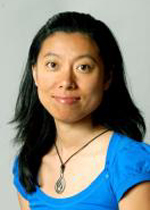
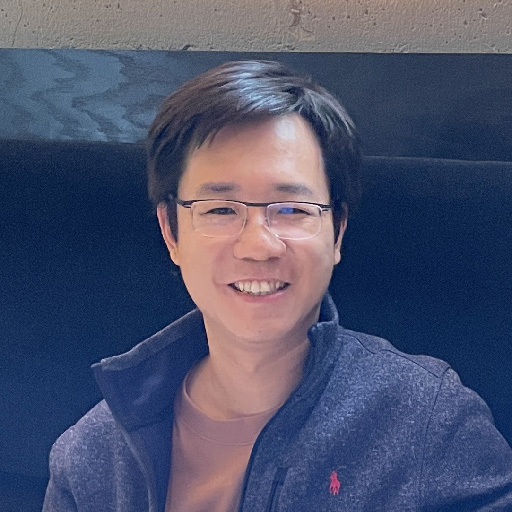
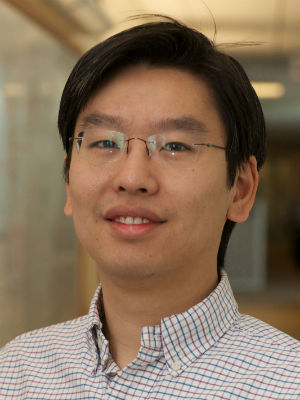
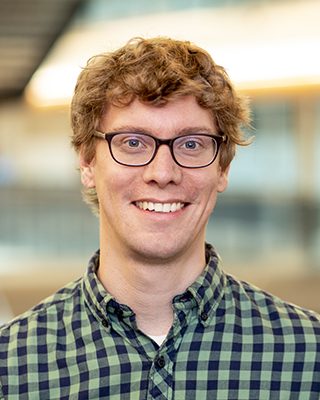
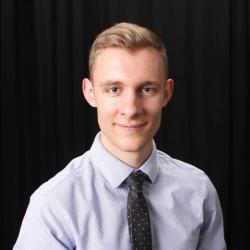
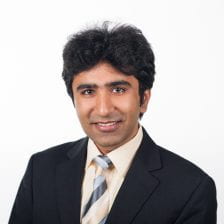
Matthew Louis Mauriello is an Assistant Professor in the Department of Computer and Information Sciences at the University of Delaware , where he directs the Sensify Lab . He holds a PhD in Computer Science from the University of Maryland (2018) and completed postdoctoral work at Stanford University (School of Medicine, 2020; School of Public Policy & Environmental Engineering Department, 2019). Research interests span Human-Computer Interaction (HCI), Ubiquitous Computing, and User-Centered Design with applications in: Sustainability Human-Building Interaction Wearable Technology Personal Informatics Educational Game Design Mental Health Interventions Recent publications highlight trends in stress monitoring (skin-like biosensors, workplace wellbeing), energy auditing (thermography systems), and educational technology (block-based programming tools for teachers). His work appears in ACM CHI, ACM Human-Computer Interaction, and Building and Environment. Scientific awards include: Best Paper Honorable Mention, CHI 2016 Best Paper Honorable Mention, CHI 2015 Best of WebSci'18 Teaching at University of Delaware encompasses courses like Educational Game Design Operating Systems Advanced Web Technologies Computing for Social Good with a focus on project-based learning and systems thinking.
Dawn Song is a Professor in the Department of Electrical Engineering and Computer Science at the University of California, Berkeley, affiliated with multiple research centers including the Berkeley Artificial Intelligence Research Lab (BAIR) and the Berkeley Center for Responsible, Decentralized Intelligence (RDI). She holds leadership roles in AI safety, cybersecurity, and blockchain research. Her work bridges machine learning, security, and distributed systems, with notable contributions to formal verification, privacy-preserving technologies, and AI governance. Education: Ph.D. (2002) and M.S. (1999) in Computer Science from UC Berkeley and Carnegie Mellon University, respectively. She previously served as an Assistant Professor at Carnegie Mellon University before joining UC Berkeley in 2007. Research Interests: Dawn's work focuses on AI safety, cybersecurity, and the ethical implications of frontier AI. She explores topics such as large language model vulnerabilities, zero-knowledge proofs, blockchain security, and policy frameworks for AI governance. Her research combines theoretical rigor with practical applications, addressing challenges in secure systems, adversarial machine learning, and privacy-preserving computation. Publications: Her recent work includes groundbreaking studies on LLM memorization, smart contract decompilation, and AI agent cybersecurity evaluation. She also leads initiatives like the Singapore Consensus and California Report on AI safety priorities, emphasizing global collaboration in risk mitigation. Notable Awards: MacArthur Fellowship (2010), ACM Fellow (2019), IEEE Fellow (2019) Advising & Grants: She advises projects on AI policy and cybersecurity, securing grants from NSF, DARPA, and industry collaborations. Her lab develops tools like CyberGym for evaluating AI agents and zkPyTorch for secure machine learning. Labs & Teams: Her research groups at UC Berkeley focus on cutting-edge projects in AI safety, blockchain, and cybersecurity, collaborating with industry leaders and policymakers to advance both technical and ethical standards.
Kaiming He is an Associate Professor with tenure in the Department of Electrical Engineering and Computer Science (EECS) at the Massachusetts Institute of Technology (MIT), holding the Douglas Ross (1954) Career Development Professor of Software Technology chair. He also works part-time as a Distinguished Scientist at Google DeepMind. Prior to joining MIT in 2024, he was a research scientist at Facebook AI Research (FAIR) from 2016 to 2024, and a researcher at Microsoft Research Asia (MSRA) from 2011 to 2016. Dr. He received his PhD from the Chinese University of Hong Kong in 2011 and his Bachelor of Science from Tsinghua University in 2007. His academic journey reflects a strong foundation in computer science and engineering that has led to transformative contributions in artificial intelligence. His research primarily focuses on computer vision and deep learning, with pioneering work on deep residual networks (ResNets), visual object detection and segmentation, and self-supervised learning. He is best known for his work on Deep Residual Networks (ResNets), recognized as the most-cited paper of the twenty-first century. The residual connections he pioneered are now fundamental components in modern deep learning architectures including Transformers, AlphaGo Zero, AlphaFold, and various generative AI models. His recent publications demonstrate continued innovation across generative models, transformer architectures, and cross-disciplinary AI applications. His work bridges theoretical advances in neural network design with practical implementations that address real-world challenges in physics, biology, and other scientific domains. PAMI Young Researcher Award (2018) Best Paper Award, CVPR (2009, 2016) Best Paper Award, ICCV (2017) Best Student Paper Award, ICCV (2017) Everingham Prize, ICCV (2021) Most-cited paper of the twenty-first century Dr. He advises graduate students including Jake Austin, Xingjian Bai, and Mingyang Deng, and teaches advanced courses such as "6.S978: Deep Generative Models" (Fall 2024) and "6.8300/6.8301: Advances in Computer Vision" (Spring 2024). His research group actively explores how AI can serve as a unifying framework across scientific disciplines, breaking down traditional barriers between fields through shared methodologies and tools.
Justin Johnson is an Assistant Professor at the University of Michigan's College of Engineering, Department of Electrical Engineering and Computer Science, and a Research Scientist at Facebook AI Research (FAIR). His work bridges computer vision, machine learning, and deep learning, focusing on visual reasoning, vision-language tasks, image generation, and 3D reasoning using neural networks. PhD, Stanford University (advised by Fei-Fei Li) His research interests span visual reasoning , vision and language , 3D vision , and image generation , with a focus on innovative applications of deep neural networks. Recent publications highlight work on 3D consistency, self-supervised learning, and multimodal integration of vision and text. Notable contributions include PyTorch3D for 3D data processing, and foundational work in visual question answering , neural style transfer , and scene graph-based image generation . Publications span top conferences like ICCV, CVPR, and NeurIPS. He teaches courses including EECS 498/598: Deep Learning for Computer Vision and EECS 442: Computer Vision at University of Michigan, with prior involvement in Stanford's CS 231N in co-teaching roles. Software projects include open-source frameworks like fast-neural-style for real-time artistic style transfer, and PyTorch3D for efficient 3D deep learning. These tools demonstrate his commitment to practical implementations and community-driven research.
Dr. Diyi Yang is an Assistant Professor in the Computer Science Department at Stanford University. She leads the Social and Language Technologies (SALT) Lab, affiliated with the Stanford NLP Group, Stanford HCI Group, Stanford AI Lab (SAIL), and Stanford Human-Centered Artificial Intelligence (HAI). Her research focuses on socially aware natural language processing, large language models (LLMs), and human-AI interaction, aiming to improve human-human and human-computer communication through socially grounded AI systems. Education: Ph.D. in Language Technologies Institute, Carnegie Mellon University (2013–2019) B.S. in ACM Honored Class, Shanghai Jiao Tong University (2009–2013) Research Interests: Dr. Yang’s work bridges computational social science and NLP. She explores how AI can understand social contexts in language use and develop systems that respect cultural norms, ethical standards, and human values. Her lab’s projects include AI companions for skill training (e.g., Rehearsal Dialects), norm-aware LLMs (NormBank), and frameworks for human-AI collaboration (Co-Gym). Recent efforts address bias in AI, societal impacts of LLMs, and ethical evaluation of human-AI systems. Awards & Honors: 2024: Sloan Research Fellowship, ONR Young Investigator Award 2023: Adamic-Glance Young Distinguished Award (ICWSM), Kavli Fellow (NAS) 2022: NSF CAREER Award, Microsoft Research Faculty Fellow 2020: IEEE AI’s 10 to Watch Advising & Grants: Dr. Yang advises over 10 PhD students and postdocs, co-leading projects on LLM evaluation (SWE-bench/SWE-smith), human-AI ethics, and culturally aware NLP. Her research is supported by NSF, Amazon, DARPA, Google, and Stanford’s HAI initiative. Labs & Teams: The SALT Lab collaborates across disciplines, with projects spanning computer science, linguistics, and social sciences. Current initiatives include developing AI tools for mental health support (AI Partner & Mentor) and auditing societal impacts of LLMs.
Colin Raffel , currently an Associate Professor at the University of Toronto and Associate Research Director at the Vector Institute , is a leading researcher in machine learning and natural language processing . His career spans roles at Hugging Face (Faculty Researcher), Google Brain (Senior Research Scientist), and UNC Chapel Hill (Assistant Professor). Education: PhD in Electrical Engineering (Columbia), MA in Music/Science (Stanford), BA in Mathematics (Oberlin) Key affiliations: Google Brain (2016-2020), Hugging Face (2021-present), Vector Institute (2023-present) His research focuses on language model development , attention mechanisms , efficient machine learning , and music information retrieval . Recent work explores model merging , parameter-efficient fine-tuning , and data-constrained language models . Teaching : Has instructed courses at University of Toronto and UNC Chapel Hill on Neural Networks , Deep Learning , and Information Theory . Academic service includes organizing ICLR workshops and serving as Senior Area Chair for NeurIPS and EMNLP . Notable awards : NSF CAREER (2022), Caspar Bowden Award (2023), NeurIPS Outstanding Paper (2023) Key contributions : Core developer of WT5 , Git-Theta , and mir_eval software
Harris H. Wang is an Associate Professor in the Department of Systems Biology and Department of Pathology and Cell Biology at Columbia University's Vagelos College of Physicians and Surgeons, where he also serves as Interim Chair of Systems Biology. He is affiliated with the Center for Computational Biology and Bioinformatics (C2B2) and the Integrated Program in Cellular, Molecular and Biomedical Studies (CMBS). B.S., Physics and Mathematics, MIT Ph.D., Biophysics, Harvard University Dr. Wang's research lies at the intersection of systems and synthetic biology, focusing on developing foundational technologies for genome engineering, microbiome manipulation, and synthetic genomics. His lab pioneers methods such as MAGE, MAGIC, CAST, and CAMII to enable high-throughput genetic manipulation, in situ microbiome engineering, and AI-driven microbial culturomics. Key research themes include understanding microbial community dynamics, engineering cellular memory systems, designing biocontained genetic circuits, and applying synthetic biology to human health challenges in personalized medicine and infectious disease. His recent publications reveal a strong trend in spatial and functional metagenomics, CRISPR-based microbiome editing, and synthetic biology tools for data storage and genetic stability. The articles span high-impact journals like Nature , Science , and Nature Biotechnology , reflecting his leadership in developing scalable, programmable biological systems. Scientific Awards: NIH Director’s Early Independence Award Forbes 30 Under 30 in Science Sloan Research Fellowship NSF CAREER Award ONR Young Investigator Award Burroughs Wellcome Fund PATH Award Schaefer Scholar Blavatnik National Award Vilcek Prize PECASE Dr. Wang has advised numerous PhD and postdoctoral researchers, many of whom have gone on to independent scientific careers. His lab is supported by major grants from NIH, NSF, DARPA, DOE, and foundations including the Bill & Melinda Gates Foundation and CZ Biohub NY. He is actively involved in educational initiatives, including organizing Columbia’s iGEM team and the Cold Spring Harbor Laboratory Synthetic Biology course. The Wang Lab is based at the Columbia University Irving Medical Center and is part of national consortia such as the Engineering Biology Research Consortium (EBRC) and the Genome Project-Write (GP-Write) initiative. The lab develops and applies cutting-edge technologies in automation, machine learning, and synthetic biology to engineer microbiomes for applications in medicine, global health, and climate change.
Maja J Matarić is the Chan Soon-Shiong Chaired and Distinguished Professor of Computer Science at the University of Southern California's Viterbi School of Engineering, with courtesy appointments in Neuroscience and Pediatrics. She serves as founding director of the USC Robotics and Autonomous Systems Center, co-director of the USC Robotics Research Lab, and Principal Scientist at Google DeepMind. Previously, she held leadership roles as USC's interim Vice President of Research (2020-2021) and Vice Dean for Research (2006-2019). Her educational background includes: PhD in Computer Science and Artificial Intelligence from MIT (1994) MS in Computer Science from MIT (1990) BS in Computer Science from University of Kansas (1987) Matarić pioneers Socially Assistive Robotics (SAR) , a field her lab named, focusing on human-robot interaction that provides assistance through social rather than physical support. Her research targets critical health and wellness challenges including post-stroke rehabilitation, autism spectrum disorder therapy, cognitive exercises for Alzheimer's patients, ADHD academic support, and mental health interventions. She develops systems modeling user engagement, personality, and motivation, with extensive real-world deployments in schools, rehabilitation centers, and homes. Analysis of her recent publications reveals dominant themes in cognitive health robotics (2025 CHI paper on LLM-powered elder care), pediatric assistive technology (2025 IDC speech therapy review), and adaptive preference modeling (2025 HRI contrastive learning work). Her research consistently bridges machine learning with human-centered design for vulnerable populations. Major scientific recognition includes: ACM Athena Lecturer Award (2024) ACM Eugene L. Lawler Humanitarian Award (2024) ACM Fellow (2020) Presidential Mentoring Award (2011) Multiple society fellowships (AAAS, IEEE, AAAI) As a dedicated mentor, Matarić has championed underrepresented groups through CRA-W, placing numerous women in faculty positions. She leads USC Viterbi's K-12 STEM Outreach Program serving low-income Los Angeles schools and authored The Robotics Prime for student education. Her research has secured significant funding enabling real-world technology transfer, with documented impact in rehabilitation centers and homes through deployable SAR systems. Her Robotics Research Lab at USC drives innovation in embodied AI, with current projects spanning LLM-integrated elder care robots, ADHD academic companions, and autism therapy systems. The lab emphasizes co-design with end-users and rigorous real-world validation across diverse populations.
Olga Sorkine-Hornung is a Professor of Computer Science at ETH Zurich and head of the Institute of Visual Computing. She leads the Interactive Geometry Lab, focusing on theoretical and practical advancements in digital content creation, geometry processing, and shape modeling. Current position: ETH Zurich, Department of Computer Science Previous roles: Courant Institute (NYU), Technical University of Berlin Education: BSc and PhD from Tel Aviv University, postdoc at TU Berlin Her research spans shape representation, digital fabrication, computer animation, and fundamental geometry processing. Key contributions include Laplacian surface editing, as-rigid-as-possible deformation, and generalized winding numbers. She works on applications in VR, AR, and autonomous systems. Awards include Test of Time Awards (2024), ACM Fellow (2020), ERC Consolidator Grant (2020), and EUROGRAPHICS Young Researcher Award (2008). She has supervised numerous students and co-developed software libraries like libigl and Instant Meshes . Co-chair roles for SIGGRAPH, Eurographics, and Pacific Graphics Editorial board member for ACM Transactions on Graphics and other journals Keynote speaker at VMV, CVPR, and SIAM conferences Her work bridges mathematical rigor with practical implementation, advancing computer graphics and geometry processing through intuitive algorithms that maintain surface detail while enabling efficient computation.
Tim Althoff is an Associate Professor at the Paul G. Allen School of Computer Science & Engineering, University of Washington, specializing in Artificial Intelligence and Human-Centered Computing. His research focuses on behavioral data science, combining Data Science Natural Language Processing Social Computing Human-Centered AI Ethics & Fairness to extract insights about health and well-being. Recent publications highlight advancements in: Mental health support through AI Wearable sensor health monitoring Online community analysis Reproducibility in data science Public health interventions with notable papers in ACL, Nature Machine Intelligence, and NeurIPS. Scientific recognition includes: ACL 2023 Outstanding Paper Award WWW 2021 Best Paper Award Double ICWSM 2021 Best Paper Awards SIGKDD Dissertation Award 2019 Fulbright Scholarship German National Merit Foundation Actively mentoring postdoctoral researchers and seeking PhD students in areas like neural representation learning, NLP applications to psychology, and mobile health technologies through his Behavioral Data Science Group .
Richard M. Murray is the Thomas E. and Doris Everhart Professor of Control and Dynamical Systems and Bioengineering at the California Institute of Technology (Caltech). He holds a B.S. from Caltech (1985), M.S. from UC Berkeley (1988), and Ph.D. from UC Berkeley (1990). He has served in academic roles from Assistant Professor (1991–1997) to his current endowed professorship. He chaired the Engineering and Applied Science division (2000–2005) and Biology and Biological Engineering (2020–2024). His research focuses on feedback control in biological and autonomous systems, synthetic cells, and networked control systems. Collaborators include experts in robotics, synthetic biology, and systems biology. Key awards include the IEEE Control Systems Award and election to the National Academy of Engineering. His educational contributions span courses on control systems, robotics, and bioengineering. Current research projects include the Developer Cell initiative (Sloan Foundation), layered testing for autonomous systems (AFOSR), and microbiome-based environmental solutions (CHARMME, ARO). He advises numerous graduate students and postdocs, with notable alumni in academia and industry. Labs include facilities in Keck and Steele laboratories at Caltech. His work bridges control theory, synthetic biology, and autonomous systems to address societal challenges like environmental monitoring and safe autonomy.
Haijun Xia is an Assistant Professor at the University of California, San Diego (UCSD), where he directs the Foundation Interface Lab and contributes to the Cognitive Science and Design Lab. His work focuses on Human-Computer Interaction (HCI) and Human-AI Collaboration , emphasizing the development of dynamic, malleable interfaces that integrate human cognition with intelligent systems to enhance thinking and working paradigms. Education: Bachelor's, Tsinghua University Master's and PhD, University of Toronto His research spans generative AI , interface design , and creative collaboration , with applications in data visualization, programming, and scholarly work. He advocates for treating information as a malleable material that can be flexibly manipulated by users and AI agents. Recent publications highlight advancements in: 2025 CHI Conference - Generative user interfaces, malleable overview-detail designs, and compositional structures for human-AI co-creation 2024 CHI Conference - Structured design space exploration with LLMs, ASCII diagram analysis, and adaptive presentation systems 2023 CHI/UIST Conferences - Data particle visualization, contextual logging tools, and metaphor generation for science communication Scientific recognitions include: Multiple Best Paper Awards and Honorable Mentions at CHI and UIST Hellman Fellowship and grants from NSF , Microsoft , Google , Meta , Apple , and Adobe He actively recruits undergraduate and graduate interns and has an upcoming postdoc position in early 2025 for researchers interested in foundational interface development.
Trevor Campbell is an Associate Professor in the Department of Statistics at the University of British Columbia (UBC), Vancouver. He holds a Ph.D. in Machine Learning and Statistics from MIT and a B.A.Sc. in Aerospace Engineering from the University of Toronto. His research focuses on automated, scalable Bayesian inference algorithms, Bayesian nonparametrics, and streaming data analysis. Campbell is a core contributor to probabilistic programming tools like Pigeons.jl and has developed influential methods for coreset-based Bayesian inference. Education : Ph.D. in Machine Learning and Statistics (2016), MIT M.S. in Aeronautics and Astronautics (2013), MIT B.A.Sc. in Aerospace Engineering (2011), University of Toronto Research Interests : His work emphasizes scalable Bayesian computation, including variational inference, MCMC optimization, and coresets. He develops algorithms that balance statistical accuracy with computational efficiency, particularly for large-scale datasets. His recent work explores adaptive samplers (e.g., AutoStep, autoMALA) and theoretical guarantees for coreset methods. Applications span astrophysics, materials science, and network analysis. Awards & Grants : NSERC Discovery Grant (2025) Blackwell-Rosenbluth Award (2021) PIMS Early Career Award (2023) Google Perception Academic Funding (2020) Advising & Labs : He supervises a team of PhD and M.Sc. students at UBC, focusing on Bayesian methodology and computational tools. His lab collaborates with institutions like SFU and MIT on projects involving distributed sampling and probabilistic modeling. He co-organizes workshops on Bayesian computation and serves on editorial boards for Bayesian Analysis and TMLR.
Avi Turetsky is an Adjunct Professor at the Weatherhead School of Management (Case Western Reserve University) and a Research Fellow in private equity. Currently a Partner and Co-Head of the Quantitative Research Group (QRG) at Ares Management, he oversees original research, quantitative software development, and tools production teams. Previously served as Chief Operating Officer for The Riverside Company's Europe Fund and holds advisory roles at EDHEC and INSEAD . Research Focus: Turetsky’s work bridges private equity practice and quantitative finance, examining distributional patterns in investment outcomes, competency frameworks for financial professionals, and mathematical models for performance evaluation. His recent publications explore robust statistical methods in portfolio construction, direct alpha calculations for skill assessment, and sector-based value creation strategies in private equity-owned companies. Key Article Trends: His research spans 2016–2023, emphasizing quantitative methodologies in private equity, including skew analysis , value creation metrics , and competency clustering . Topics range from alliance changes in intercollegiate athletics to mathematical modeling of investment professional performance. Leadership & Teams: At Ares Management, Turetsky co-leads the QRG, managing cross-functional teams in Original Research , Quantitative Software Development , and Tools Production . He collaborates with investment teams to integrate quantitative strategies into decision-making processes.
Tushar Krishna is an Associate Professor in the School of Electrical and Computer Engineering at Georgia Institute of Technology, with a courtesy appointment in the School of Computer Science. He earned his PhD in Electrical Engineering and Computer Science from MIT in 2014, an MSE in Electrical Engineering from Princeton University in 2009, and a B.Tech in Electrical Engineering from IIT Delhi in 2007. His research spans computer architecture, interconnection networks, networks-on-chip (NoC), and AI/ML accelerator systems, with a focus on optimizing data movement in modern computing platforms. His work is funded by NSF, DARPA, IARPA, SRC, Department of Energy, Intel, Google, Meta, Qualcomm, and TSMC. His papers have been cited over 17,000 times, with three receiving IEEE Micro's Top Picks recognition, one earning an honorable mention, and four winning best paper awards. Dr. Krishna leads the Synergy Lab at Georgia Tech and has developed several influential tools including ASTRA-sim for distributed AI/ML training, MAESTRO and SCALE-sim for accelerator design space exploration, and Garnet2.0 for NoC simulation. His recent work focuses on large language model acceleration, distributed training systems, and neuro-symbolic AI architectures. He has received numerous teaching and research awards including induction into the HPCA Hall of Fame (2022), the Class of 1940 Teaching Effectiveness Award (2018), and the Roger P. Webb Outstanding Mid-career Faculty Award (2024). HPCA Hall of Fame Inductee (2022) Roger P. Webb Outstanding Mid-career Faculty Award (2024) Richard M. Bass/Eta Kappa Nu Outstanding Junior Teacher Award (2023) Roger P. Webb Outstanding Junior Faculty Award (2021) Class of 1940 Course Survey Teaching Effectiveness Award (2018) Dr. Krishna currently serves as Associate Director for the Center for Research into Novel Computing Hierarchies (CRNCH) and co-chair of the Chakra Execution Traces and Benchmarks Working Group. He has held the ON Semiconductor (Endowed) Junior Professorship at Georgia Tech (2019-2021) and has been a visiting professor at MIT EECS, Harvard University CS, and a researcher at Intel's VSSAD group.