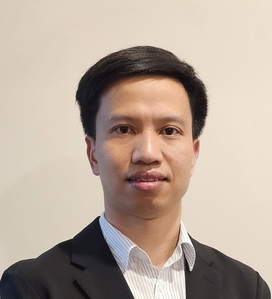
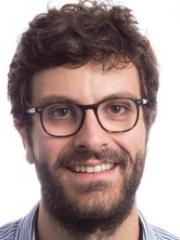
Associate Professor Sonny Pham leads research in artificial intelligence at Curtin University's School of EECMS. His work balances theoretical foundations with practical applications in computer vision, data mining, and deep learning. As head of the IAMAI research group, he collaborates with industry partners on security systems, healthcare AI, and sustainable technologies. His research explores: Computationally efficient deep learning architectures Compressed sensing for high-dimensional data Robust statistical methods for real-world problems Applications in computer vision and industrial automation Recent publications demonstrate a focus on medical imaging interpretation and efficient neural networks, with applications spanning radiology report generation, semantic segmentation for autonomous systems, and cybersecurity. His team's work consistently bridges theoretical AI advancements with industrial applications. Honors include: Multiple WANMA Awards (2021-2024) for industry-impactful research INCITE Award for social impact technology (2024) IEEE Young Author Best Paper Award (2010) Over $5M in competitive research funding including MRFF and DFAT grants He leads the IAMAI research group with 12+ graduate students and coordinates Curtin's Master of Artificial Intelligence program. Industry collaborations include Alcoa Australia, iCetana, and HyprFire.
Professor Daniel Catchpoole serves as Deputy Head of School (Research) at the School of Computer Science, University of Technology Sydney (UTS), holding dual appointments at UTS and The Children's Hospital at Westmead. With over 20 years of research experience, he bridges computational sciences and pediatric cancer research through the Biomedical Data Science Lab in the Australian Artificial Intelligence Institute. His work integrates data analytics, artificial intelligence, and software development with molecular cancer biology to transform pediatric cancer treatment pathways. PhD in Cancer Cell Biology, University of New South Wales (1991-1995) Founding Fellow, Royal College of Pathologists Australasia (2010-present) Head, Children's Hospital at Westmead Tumour Bank (2001-present) Professor Catchpoole's research focuses on translational applications of genomics in childhood cancers, particularly acute lymphoblastic leukemia and neuroblastoma. His work combines high-throughput genomic technologies with advanced computational analysis to develop systems biology approaches for cancer patient assessment. Recent projects explore virtual reality applications for complex genomic data visualization and copper chelation therapies to enhance neuroblastoma immunotherapy. His research has received significant funding from Cancer Institute NSW, Sony Foundation, ARC, and NHMRC. His publication record spans biomedical data science, cancer genomics, and virtual reality applications in oncology. Recent work demonstrates leadership in 3D latent diffusion models for tumor segmentation, biobank economics, and innovative immunotherapies. His research consistently addresses the critical need for actionable knowledge from complex multidimensional biomedical data. Editorial Board Member, Cancers (2023) Associate Editor, Innovations in Digital Health, Diagnostics and Biomarkers (2019) Founding member and first President, Australasian Biospecimens Network Association Professor Catchpoole has supervised 17 Honours students (including 6 First Class Honours), 3 MSc students, and 12 PhD candidates across multiple institutions, with 6 current PhD students. His collaborative research bridges UTS's Faculty of Engineering and IT with The Children's Cancer Research Unit at The Children's Hospital at Westmead. Significant research funding includes Cancer Institute NSW grants, Sony Foundation VR projects, and ARC Discovery Projects focused on genomic data analysis and clinical decision support systems. His leadership extends to building frameworks for translational research, managing biobanks and clinical data linkages, and navigating governance requirements for cancer research. The Tumour Bank at Kids Research, CCRU, represents his long-standing commitment to pediatric cancer infrastructure development.
Dr. Gowri Sankar Ramachandran is a Senior Lecturer in the School of Information Systems at Queensland University of Technology (QUT), specializing in cybersecurity and distributed systems. She holds a PhD from KU Leuven (Belgium) and a postdoctoral position at the University of Southern California (USC). Her research focuses on open-source software security, runtime threat detection, blockchain applications, and IoT vulnerabilities. Notable contributions include the FUSE tool for detecting malicious packages and the discovery of hyperlink hijacking vulnerabilities affecting millions of domains. Research interests span software supply chain security, metadata-based risk analysis, and generative AI for cyber risk modeling. Awards include Best Paper Awards at ACM CBSE (2016), Mobiquitous (2017), and BigMM (2019). Collaborations include projects with CSIRO, the City of Los Angeles, and the University of São Paulo. She teaches courses on cybersecurity, database management, and network security, and actively supervises PhD students in cybersecurity and blockchain domains. Recent publications address blockchain-based data governance, quantum-resilient IoT protocols, and decentralized identity systems. Her work bridges academic research with real-world impact, addressing critical challenges in digital systems security and privacy.
Dr. Maxime Cordeil is a Senior Lecturer in Human Centred Computing at the School of Electrical Engineering and Computer Science, The University of Queensland. His research focuses on Virtual and Augmented Reality technologies for data interaction, interactive visualization systems, and AR interfaces for industry applications. He has authored over 60 publications in top-tier venues such as ACM CHI and IEEE VR, and was nominated as Australia's Field Leader in Computer Graphics in 2021 and 2022. Research Interests: Data visualization, immersive analytics, medical imaging, collaborative systems, and human-computer interaction. Current Projects: Includes embedded visualizations for sports performance, interactive machine learning in 3D environments, and mixed-reality applications in forensic science. PhD Supervision: Actively guiding students in topics like immersive gesture exploration, AR for digital health, and collaborative VR systems. His work bridges theory and practice, with tools like IATK (Immersive Analytics Toolkit) and the MADE-Axes hardware system. He collaborates with industry partners like Raytracer and CSIRO, focusing on applications in space exploration, underwater training, and remote operations. Awards: Multiple best paper recognitions at ISS and CHI, plus industry-driven research grants. Labs: Leads the Immersive Analytics research group at UQ, specializing in embodied interaction and spatial computing.
Tongguang Li is a Research Fellow at the Department of Human Centred Computing, Monash University. His research focuses on learning analytics, self-regulated learning, and AI applications in education. He has contributed to the development of the FLoRA engine, an AI tool designed to enhance hybrid human-AI regulated learning. Li’s work explores adaptive scaffolding, large language model (LLM) feedback systems, and the integration of multimodal data for educational insights. His recent studies investigate how LLMs like ChatGPT can provide effective feedback to students, analyze rhetorical patterns in writing, and measure the impact of scaffolding on learning processes. Li has been recognized for his research with the Conference Best Full Student Paper Award from the Australiasian Society for Computers in Learning in Tertiary Education (2022). Key themes in his work include understanding self-regulated learning strategies through trace data, optimizing adaptive systems for learner engagement, and leveraging AI for educational innovation. His research bridges cognitive science, data analytics, and educational technology to improve learning outcomes and pedagogical practices.
Dr. Sam Ferguson is a Senior Lecturer at the School of Computer Science, University of Technology Sydney (UTS), with a multidisciplinary background in music performance, cognitive science, and psycho-acoustics. His research explores the intersection of sound, music, and human experience through creative coding, machine learning, and interactive systems. Key Research Areas: Sound and Music Computing, Human-Computer Interaction, Creative Coding, Cognitive Science, Installation Art, and Acoustics. Current Projects: ARC Linkage project on creative coding and multiplicitous media; industry collaborations on IoT-based audiovisual systems. Recent Publications: Focus on spatial audio complexity, gestural interaction with networked sound, music emotion recognition frameworks, and robotic performance through genre-based cultural platforms. Leadership Roles: Director of Teaching & Learning Engagement; former Deputy Head of School (Teaching and Learning); active in ACM Creativity and Cognition Steering Committee. Teaching: Courses like Digital Media Studio , Prototyping Physical Interaction , and Data Processing using R within UTS's interdisciplinary Software Development Studio.
Dr. Siqi Ma is a Senior Lecturer at the UNSW Institute for Cyber Security (IFCYBER) within the School of Systems & Computing at the University of New South Wales (UNSW). He previously served as a Lecturer at the University of Queensland's School of Information Technology and Electrical Engineering (ITEE). He holds a Ph.D. in Information Systems from Singapore Management University (2018) and was a Postdoctoral Research Fellow at Data61, CSIRO. He also visited Carnegie Mellon University (CMU) in 2015. Current Role: Senior Lecturer, UNSW Institute for Cyber Security Former Role: Lecturer, University of Queensland Education: Ph.D. (Singapore Management University), Postdoc (Data61, CSIRO) His research spans automated vulnerability detection, mobile security, IoT security, network authentication, and graph-based adversarial robustness. Recent work focuses on drone configuration bugs, Android malware analysis via GNNs, federated learning privacy, and credential leakage in open-source projects. Key trends in his 2024-2025 publications include automated security analysis for embedded systems, deepfake detection in multimedia, and privacy-preserving mechanisms for distributed networks. He collaborates with institutions like Purdue University, Singapore Management University, and CSIRO Data61.
Cormac Fay is a Research Fellow in Artificial Intelligence for Smart Cities at the School of Computing and Information Technology (SCIT), University of Wollongong, within the Faculty of Engineering and Information Sciences. His roles include affiliations with the SMART Infrastructure Facility and the ARC Centre of Excellence for Electromaterials Science. Previously, he held positions at Dublin City University, including post-doctoral roles in sensor research and data analytics. He holds a PhD in Engineering from Dublin City University (2013), an M.Eng. in Telecommunications Engineering (2007), and a B.Eng. in Mechatronic Engineering (2005). His research focuses on AI-driven smart city technologies, sensor systems for environmental monitoring, and advanced 3D printing materials. Key areas include IoT-enabled carbon-emission tracking, wearable biomedical devices, and sustainable sensor networks for landfill gas management. He has developed innovative solutions such as cryogenic 3D printing techniques for biocompatible inks and LED-based optical sensing platforms. Dr. Fay has secured grants totaling over $X million, including projects on military diver monitoring, blue carbon ecosystems, and low-cost sensor networks for agriculture and environmental safety. His work integrates interdisciplinary approaches, bridging materials science, biomedical engineering, and environmental engineering. Grants: Led projects on carbon-emission IoT systems, oyster farming sensors, and vibration monitoring. Supervision: Advised a Master's project on biomimetic microfluidic fabrication (2017–2019). Labs/Teams: Collaborates with the SCIT, SMART Infrastructure Facility, and global institutions like École Polytechnique Fédérale de Lausanne.
Dr. Sie Teng Soh is an Associate Professor at Curtin University's School of Electrical Engineering, Computing and Mathematical Sciences. With qualifications including a PhD from Louisiana State University, he specializes in computer networks, wireless systems, and algorithm design. Research focuses on: Network topology optimization for UAV systems Energy-efficient IoT task scheduling Reliable wireless communication protocols Game-theoretic network management Green computing in software-defined networks Publication trends show advancing work in UAV network optimization, with recent articles addressing max-min rate optimization, energy harvesting in IIoT, and machine learning approaches for coverage prediction. His research consistently addresses practical challenges in wireless network deployment under real-world constraints. Teaching areas include advanced courses in network reliability and traffic engineering. Professional service includes editorial roles for IEEE Transactions on Parallel and Distributed Systems and program committee memberships for major conferences including FAST and EuroSys.
Professor Marius Portmann is the UQ-Cisco Chair of Network Security at the School of Electrical Engineering and Computer Science (EECS), University of Queensland. His expertise spans Cybersecurity, IoT, and Applied AI. He holds a PhD from ETH Zurich (2003) and has led research in Software Defined Networking (SDN), blockchain, and energy-harvesting IoT systems. Education: PhD in Electrical Engineering from Swiss Federal Institute of Technology (ETH Zurich), 2003. Research focuses on securing IoT networks, AI-driven intrusion detection, and sustainable sensor systems. He has pioneered self-powered IoT systems using energy harvesters and developed frameworks like FlowTransformer for network analysis. His work bridges theoretical advancements with practical applications in smart tourism, energy efficiency, and edge computing. Recent publications highlight innovations in DDoS detection (P4-Secure), sensor-based environmental monitoring (EcoShower), and graph-based anomaly detection (XG-BoT). His datasets (e.g., NF-ToN-IoT-v3) are widely used in ML-based cybersecurity research. Collaborations include industry partners like Cisco and institutions like RMIT. Grants and leadership roles in interdisciplinary projects underscore his impact. He advises on IoT security standards and contributes to open-source tools for network research. Current projects explore edge-AI integration and sustainable sensor networks.
Ediz Cetin is an Associate Professor in Digital Electronics Engineering at Macquarie University's School of Engineering and a member of the Astrophysics and Space Technologies Research Centre. He serves as Course Director for the MEng Electronics Engineering program and Chair of the School's Postgraduate Coursework Committee. His research focuses on radio frequency interference mitigation, fault-tolerant reconfigurable circuits for space applications, machine learning in RF signal analysis, and low-power digital circuit design. Education: PhD in Signal Processing (Unsupervised Adaptive Signal Processing Techniques for Wireless Receivers) B.Eng. (Hons.) in Control and Computer Engineering Research Interests: RF interference detection and localization GNSS anti-jamming and spoofing detection FPGA-based reconfigurable systems Space instrumentation and CubeSat technologies Machine learning for signal processing Awards: Excellence in Learning Innovation (FSE Teaching Award, 2022) Highly Commended Finalist – Vice-Chancellor’s Award for Learning Innovation (2022) Innovative Approaches – Highly Commended (FSE Teaching Award, 2020) Key Projects: SmartSat CRC (2020–2026): Smart Satellite Technologies and Analytics Spacecraft Innovation Lab (2021–2022) CubeSat Biological Payload (2019–2022) Teaching Contributions: Led the 'Improving Student Engagement with Anywhere and Any-time Laboratory Access' initiative (2019–2020), enhancing remote lab accessibility for students.
David Lo is the OUB Chair Professor of Computer Science at Singapore Management University's School of Computing and Information Systems, where he directs the Information Systems and Technology Cluster and the Center for Research on Intelligent Software Engineering. An ACM Fellow, IEEE Fellow, and ASE Fellow, his research focuses on AI for Software Engineering (AI4SE), leveraging machine learning, data mining, and NLP to enhance software analytics and automation. Research Highlights: AI4SE, code LLMs, human-AI synergy in software engineering, software reliability, and empirical studies of practitioner pain points Awards: IEEE TCSE Distinguished Service Award, university-wide Teaching Excellence Award, Outstanding Graduate Supervisor Award, 2 Test-of-Time Awards, and 11 ACM SIGSOFT/IEEE TCSE Distinguished Paper Awards Leadership: General Chair of ASE'16 and MSR'22, PC Co-Chair for ASE'20, FSE'24, and ICSE'25, ACM SIGSOFT Executive Committee member His work has received over 20 awards, 37,000 citations, and an H-index of 100. As an educator, he has mentored trainees who became faculty and R&D experts globally.
Dr. Madhushi Bandara is a Lecturer at the School of Computer Science, University of Technology Sydney (UTS), specializing in knowledge representation, complex system modeling, and data analytics. She leads the data management research stream at the UTS DigiSAS lab and is a core member of the Biomedical Data Science Laboratory within the UTS Australian Artificial Intelligence Institute. Her industry collaborations include Telstra, Cancer Australia, and Capsifi, focusing on AI integration in healthcare and finance. She coordinates the Business Information Systems major in UTS's Master of Information Technology program and convenes the Future Generation Enterprise Architecture Community of Practice. Education PhD in AI Systems Engineering, University of New South Wales (2020) BSc (Hons) in Engineering, University of Moratuwa, Sri Lanka (2015) Research Interests Madhushi's work bridges machine learning, knowledge graphs, and enterprise architecture to address challenges in data governance for SMEs, ESG metric management, and healthcare pathway analysis. Her research emphasizes translating cutting-edge AI into industry solutions through contextual domain knowledge integration. Scientific Awards UNSW-UTS Trustworthy Digital Society Scholarship Teaching & Leadership She teaches enterprise information systems, digital strategy, and AI for enterprises in UTS's online postgraduate programs. Her service roles include co-chairing tracks at the Australasian Conference on Information Systems and reviewing for Expert Systems with Applications.
Dr. Mohsin Malik is an Associate Professor of Project Management at Swinburne University of Technology (since 2023) in Melbourne, Australia. Previously, he held roles as Senior Lecturer (2018–2022) at Swinburne and Lecturer (2016–2018) at the University of Melbourne. He earned his PhD in Technology Management from the University of Western Australia (2012). His research focuses on organizational dynamics for innovative outcomes in digital contexts, sustainability in supply chains, and project management practices aligned with UN Sustainable Development Goals (SDG-9, SDG-12, SDG-3). Key areas include digital transformation, lean management, agile project management, and supply chain resilience. Dr. Malik’s work has been published in top-tier journals like the International Journal of Project Management, Information & Management, and IEEE Transactions on Engineering Management. He currently serves as Senior Associate Editor of the International Journal of Physical Distribution & Logistics Management and has secured grants totaling over AUD 1M, including a 2025–2028 project on digital transformation in Indian/Australian organizations funded by DFAT. His research explores topics such as socio-cognitive dynamics in digital transformation, lean socio-technical systems, and agency theory in international development projects. Recent projects include analyzing digital platform interactions for Australian artists and evaluating virtual healthcare barriers during the pandemic. He actively supervises doctoral and master’s students focusing on digital governance, social sustainability, and project monitoring frameworks. Dr. Malik is a globally recognized scholar, with over 23 years of academic and industry experience. He collaborates with organizations like the Victorian Music Development Office and the Australian Academy of Science, emphasizing real-world impact through research.
Babak Abedin is a Professor of Business Analytics and Head of the Department of Actuarial Studies and Business Analytics at Macquarie Business School, Macquarie University. He holds a PhD in Information Systems from UNSW Business School and has expertise in AI ethics, cybersecurity governance, and digital transformation. His research focuses on responsible AI, data analytics governance, and the societal impact of technology. He has secured over $4M in external funding and led projects with organizations like the Reserve Bank of Australia and Cancer Council NSW. He is the program leader of Responsible AI at Macquarie’s Centre for Applied AI and serves on editorial boards for journals such as Information Systems Frontiers and Electronic Markets . His teaching emphasizes real-world challenges, earning him the UTS Learning & Teaching Citation (2019) and Macquarie’s Faculty of Business Teaching Award (2010). He has supervised over 10 PhD/Master’s students. His recent work explores agile cybersecurity policy frameworks, digital empowerment in health communities, and AI’s ethical implications. He frequently engages with media on topics like health informatics and AI governance. Key collaborations include studies on blockchain systems, dynamic capabilities in digital transformation, and gender bias in AI. His articles address cybersecurity policymaking, adult learning in online communities, and value co-creation in digital ecosystems.