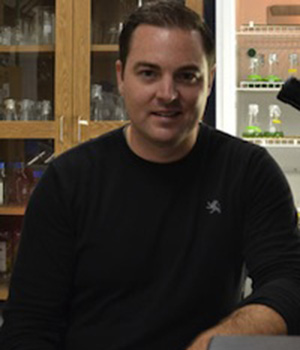
Todd Miller is an Affiliate Professor at the School of Freshwater Sciences and Associate Professor in Environmental Health Sciences at the Zilber College of Public Health, University of Wisconsin-Milwaukee. He holds additional roles as Research Associate at the Center for Limnology and Department of Bacteriology, University of Wisconsin-Madison, and served as a Postdoctoral Scholar in Environmental Health Engineering at Johns Hopkins School of Public Health. Education: PhD in Marine Estuarine Environmental Sciences from the University of Maryland and BS in Biological Sciences from St. Norbert College. Research focuses on microbial regulation of toxin exposure in water/wastewater systems, with emphasis on cyanobacterial harmful algal blooms (HABs), toxin dynamics, and ecosystem impacts. His work integrates field monitoring technologies (e.g., Panther Buoy) with microbial community analysis to model toxin production and degradation in aquatic environments. Publications highlight advancements in real-time HAB monitoring, toxin epidemiology in vulnerable communities, and phosphorus dynamics in eutrophic systems. Collaborative efforts include community-driven initiatives like CLEAR (Community leaders engaged in aquatic research) to enhance urban waterway understanding. Labs/Teams: Directs the Miller Laboratory, pioneering innovations in water quality monitoring systems and cyanotoxin research. Current projects address toxin mitigation strategies, climate-driven bloom shifts, and interdisciplinary solutions for public health protection.
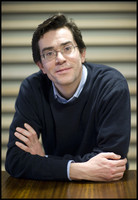
Klaas-Jan Stol is a Senior Lecturer at the School of Computer Science and Information Technology, University College Cork. His research focuses on software development methods, open source practices, and improving research methodologies in software engineering. He leads projects funded by Science Foundation Ireland (SFI) and industry, with grants totaling over €1.5 million. Notable roles include SFI Principal Investigator on open source and agile projects. Education: PhD (Computer Science, University of Limerick), MSc (University of Groningen), B.ICT (Hanzehogeschool Groningen). Former Research Fellow at Lero - Irish Software Research Centre. Research interests span open source adoption, inner source frameworks, crowdsourcing, and theory development. Key publications include Adopting InnerSource: Principles and Case Studies (2018) and Scaling a Software Business (2017). Awards include the Lero Director’s Research Excellence Award (2019). Grant leadership includes SODAW (€464k), HUSRAI (€353k), and Security-Centered Developers (€91k). Guides PhD/postdoc researchers in areas like secure coding and open source ecosystems. Editorial roles: Empirical Software Engineering, Journal of Systems and Software. Labs/Teams: Active in Lero as a Funded Investigator, contributing to industry-academia collaborations.
Ronald de Wolf is a part-time Full Professor at the Institute for Logic, Language and Computation (ILLC), University of Amsterdam, and a researcher/group leader at the Algorithms and Complexity group of CWI (Dutch Centre for Mathematics and Computer Science). He is an active member of QuSoft and the Amsterdam Theoretical Computer Science ecosystem. His PhD was completed at CWI and ILLC, followed by postdoctoral research at UC Berkeley. Research Focus: De Wolf specializes in quantum computing, complexity theory, and algorithm design. His work explores quantum advantages in computation, communication, and learning, with applications in optimization, machine learning, and information theory. Recent investigations include quantum algorithms for linear algebra, error correction, and communication complexity. Publication Trends: His recent articles (2020-2025) predominantly focus on quantum algorithmic advantages, complexity bounds, and practical applications in machine learning and optimization. Key themes include quantum speedups for linear algebra, error-resilient quantum protocols, and theoretical limits of quantum computation. Awards & Honors: ERCIM Cor Baayen Award (2003) STOC Best Paper Award (2012) STOC Test-of-Time Award (2022) Gödel Prize (2023) Academic Leadership: He currently advises PhD student Lynn Engelberts and has graduated 10 doctoral students. As coordinator of the NWO Gravitation program Quantum Software Consortium , he oversees major research initiatives. He secured participation in EU projects (QAIP, RESQ, QAP, QCS, QALGO, QuantAlgo) and leads research teams at CWI and QuSoft.
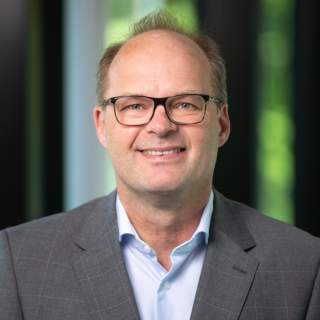
Bram Nauta is a Professor at the University of Twente's Faculty of Electrical Engineering, Mathematics and Computer Science (EEMCS), leading the Integrated Circuit Design (EEMCS-EE-ICD) group. His research focuses on analog and RF CMOS circuits for wireless communication, bridging the analog and digital worlds, with applications in 5G/6G and IoT. He co-founded the ChipTechTwente ecosystem in 2022 and has held leadership roles at IEEE conferences, including ISSCC Program Chair and IEEE Solid-State Circuits Society President. Education: M.Sc. in Electrical Engineering (cum laude), University of Twente (1987) Ph.D. in Electrical Engineering, University of Twente (1991) Research Focus: Nauta's work emphasizes ultra-low-power analog circuits, miniaturization, and efficiency improvements. He pioneered techniques using pulsed signals instead of continuous power, enabling transformative advancements in wireless communication. His research targets high-frequency applications critical for future 5G/6G networks and unconventional IoT integrations (e.g., plant connectivity). Scientific Awards: ISSCC Van Vessem Outstanding Paper Awards (2002, 2009, 2025) ISSCC Author-Recognition Award (2023) Simon Stevin Meester (2014) ERC Advanced Grant (2019) Dutch Innovation Award (2023) NWO Stevin Prize (2023) IEEE Fellow KNAW Membership Education & Ecosystem: Nauta teaches electronic systems design at the bachelor's level and mentors ~65 Master's students. His department has attracted 7 chip design companies to establish centers near the University of Twente, creating local employment opportunities and fostering industry-academia collaboration.
John R. Hott is an Associate Professor in the Department of Computer Science at the University of Virginia. He holds a Ph.D. from the University of Virginia (2018) and degrees from the College of William and Mary (B.S. 2005, M.S. 2007). His research focuses on improving CS education through AI integration, analyzing student collaboration dynamics, and social network evolution. He also explores data visualization and interdisciplinary applications in the humanities and education. Education: Ph.D. Computer Science, University of Virginia, 2018 M.S. Computer Science, College of William and Mary, 2007 B.S. Computer Science and Mathematics, College of William and Mary, 2005 Research Interests: CS Education innovations Collaboration policies and academic integrity Social network analysis in evolving systems AI-driven classroom tools Data visualization techniques CS integration in humanities His recent work emphasizes equitable course design, leveraging community software, and pandemic-era educational adaptations. Notable contributions include the ASCI initiative and analysis of Piazza engagement patterns. Awards: ACM@UVA Teacher of the Year (2024) ACM@UVA Rising Star Faculty (2023) Raven Fellowship (2015) John teaches courses like CS4730 (Game Design), CS4640 (Web Programming), and foundational algorithms and data structures. His work bridges pedagogical theory with practical classroom implementation, emphasizing scalable solutions for large enrollments.
Vittorio Fra is a Fixed-term Assistant Professor at the Interuniversity Department of Regional and Urban Studies and Planning (DIST) at Politecnico di Torino, where he conducts research in artificial intelligence, neuromorphic computing, edge computing, and robotics. He is a member of the PIC4SeR Interdepartmental Center for Service Robotics and contributes to interdisciplinary research bridging engineering, nanotechnology, and smart urban systems. His research interests center on AI and neuromorphic computing for industrial and IoT applications , with strong emphasis on brain-inspired computing, memristive devices, and nanoscale technologies. His work spans from low-level hardware characterization to high-level algorithm design, integrating machine learning, bio-inspired computing, and scientific simulation. He actively explores neuromorphic solutions for real-world edge applications such as human activity recognition, smart traffic control, and assistive technologies like Braille readers. The trend across his recent publications (2022–2025) reveals a consistent focus on deploying spiking neural networks and neuromorphic architectures on commercial edge devices, optimizing neural execution, developing benchmarking tools (e.g., NeuroBench, WiN-GUI), and validating neuromorphic solutions on practical problems like Sudoku and the knapsack problem. His work bridges theoretical AI with applied engineering, targeting sustainability and innovation in infrastructure and urban communities. Scientific Awards: No scientific awards explicitly mentioned in the text. Advising and Grants: Vittorio Fra supervises Filippo Aisa , a PhD candidate in Electrical, Electronic, and Communications Engineering. He leads a commercially funded research project titled Supporto allo sviluppo di un smart digital water distributor monitoring system (2025–2026) , serving as the Scientific Responsible. His teaching roles include PhD instruction, course collaboration, and invited membership in academic councils across engineering and planning programs. Labs and Research Teams: He is a member of the PoliTO Interdepartmental Centre for Service Robotics (PIC4SeR) , a multidisciplinary research center focused on robotics for societal applications. His collaborations span multiple institutions and projects, involving teams working on neuromorphic ecosystems (e.g., Lava-Loihi), wireless sensor networks, and brain-inspired computing frameworks.
Yang Yuxiang is an Assistant Professor at the University of Hong Kong's School of Computing and Data Science. His research focuses on software security, adversarial machine learning, and AI safety, with a particular emphasis on formal methods and large language models. He holds a PhD from Hong Kong. Research interests include: Automated program repair using LLMs Cybersecurity in open-source ecosystems Adversarial attacks on vision-language models Formal verification of theorem provers Ethical implications of AI systems Recent publications explore cutting-edge topics such as causality-aware safety testing for autonomous systems , smart contract vulnerability detection , and large model safety at scale . His work bridges theoretical foundations with practical applications in secure software development and AI ethics.
Dr. Marcus Handte is a Senior Researcher at the University of Duisburg-Essen, focusing on networked embedded systems, context-aware computing, and sustainable mobility. His academic journey includes a Habilitation in Computer Science (2013) and a PhD in Natural Sciences (2009) from Universität Stuttgart, alongside a Master's degree from Georgia Institute of Technology (2002). Research Interests Context-aware applications Localization and location-based systems Sustainable mobility solutions Internet of Things (IoT) Smart city infrastructure Privacy-preserving technologies His recent work involves developing platforms for multimodal mobility analysis (MOBYDEX), wireless EV charging systems (TALAKO, FAIR), and innovative approaches to indoor localization. Publications span journals like Machine Vision and Applications and conferences in pervasive computing. Scientific Recognition Best Poster Award at ACM KMIS 2023 Dr. Handte has contributed to projects such as ATMo2, INNAMORUHR, and GAMBAS, and maintains active collaborations across institutions. His expertise in adaptive middleware and distributed systems continues to shape research in smart mobility and ambient intelligence.
Christelle Scharff is a Professor at Pace University 's Seidenberg School of Computer Science and Information Systems. Her research spans Artificial Intelligence , Global Software Engineering , and ICT for Development (ICTD) , with a focus on cultural and educational applications. 1993-1999: BS, MS, PhD in Computer Science (Universite Henri Poincare, France) Her work includes AI ethics , deep learning for cultural preservation , and mobile technology for education in Africa . She leads the Seidenberg School's Artificial Intelligence Lab and has secured grants from NSF, IBM, Microsoft, Google , and USAID . Recent publications analyze global AI strategies , scrum team dynamics , and coding education in Africa . Her projects emphasize localization and sustainable technology deployment in Senegal and Cambodia. 2023 : NYAS Scientist Fellow 2019, 2012 : Fulbright Scholar in Senegal 2015 : Jefferson Award for Public Service She teaches advanced courses including Mobile Application Development , AI Ethics , and Software Reliability , with a pedagogical approach integrating field research and social entrepreneurship.
Coen De Roover is a Professor at the Software Languages Lab of the Vrije Universiteit Brussel , actively leading research in program analysis, software quality, and security. He chairs the Bachelor in Computer Science program and supervises a dynamic research group. Research Focus: Static/dynamic analysis, automated testing, software maintenance, AI for SE, infrastructure as code security. Projects: Bugatti (2025-2028), Cracy (2024-2027), CRPF (2024-2028), BaseCamp Zero (2022-2026), EcoPipe (2023-2025), APAX (2022-2024). Scientific Awards: MSR 2025 Distinguished Dataset Award IEEE TCSE Distinguished Paper Award (SANER 2022) ICSE 2022 Best Artifact Award SCAM 2022 Best Artifact Award Conference Leadership: General Chair of SCAM 2024, Program Co-Chair for GPCE 2024, and active in organizing summer schools on security testing.
Tyler R Kartzinel is an Associate Professor in the Department of Ecology, Evolution, and Organismal Biology at Brown University and a member of the Institute at Brown for Environment and Society. He leads the Genomic Opportunities Lab (GenOps), an interdisciplinary research group that combines molecular ecology, fieldwork, ecological theory, and data science to understand biodiversity, species interactions, and environmental change. His work spans multiple continents including Africa (Kenya, Uganda, Tanzania), South America (Costa Rica, Chile), and North America (Yellowstone National Park, New England), focusing on conservation-relevant questions at the interface of genomics and ecology. Dr. Kartzinel's research interests center on conservation biology and molecular ecology, with particular emphasis on dietary DNA metabarcoding, gut microbiome analysis, and biodiversity monitoring. His work bridges fundamental ecological questions about species interactions and community dynamics with practical conservation applications. He has developed innovative genomic approaches to study food webs, dietary niche partitioning, and the impacts of large herbivores on ecosystem structure and function. His research integrates field experiments with laboratory molecular techniques to address pressing conservation challenges in a changing world. The 15 most recent publications reveal a strong focus on dietary ecology, microbiome science, and conservation genomics. His work consistently applies DNA-based techniques to understand wildlife diets, host-microbe interactions, and ecosystem dynamics across diverse systems from African savannas to Yellowstone National Park. Key trends include the development of CRISPR-based genomic tools for biodiversity science, investigation of diet-microbiome relationships across multiple taxa, and the application of molecular techniques to address conservation-relevant questions about endangered species and ecosystem management. 2018-2022 Ecological Society of America Early Career Fellow Dr. Kartzinel leads multiple research projects funded by the National Science Foundation and other agencies, including long-term studies in African savannas and Yellowstone National Park. His UHURU experiment in Kenya has generated over 12 years of data on large herbivore exclusion effects. He actively collaborates with conservation organizations worldwide to translate research findings into practical conservation solutions. His lab trains undergraduate and graduate students in molecular ecology techniques and conservation applications. The Genomic Opportunities Lab maintains state-of-the-art molecular facilities at Brown University for pre- and post-PCR work. The lab collaborates extensively with researchers across Brown's departments and with international conservation organizations. They develop and share field-tested protocols and open-source software to advance ecological research globally, with particular focus on making genomic tools accessible for conservation practitioners in diverse settings.
Anne Helmond is an Associate Professor of Media, Data and Society at Utrecht University , specializing in the platformization , algorithmization , and datafication of the web. She is a key contributor to the focus area Governing the Digital Society , where she develops digital methods for analyzing mobile data flows and app store infrastructures . Her work combines empirical and historical perspectives, emphasizing the material and programmable data infrastructures of platforms.
Christine Rizkallah is a Senior Lecturer in the School of Computing and Information Systems at the University of Melbourne, Australia. She joined the university in December 2021 after serving as a Lecturer at the University of New South Wales (UNSW) from April 2018 to December 2021. Her research focuses on interactive theorem proving, formal verification, programming languages, and systems, with an emphasis on building practical tools for high-assurance software development. She leads a research group working on the Cogent and Dargent languages, aiming to reduce the burden of formal verification in systems programming. Education: PhD in Computer Science, Universität des Saarlandes and Max-Planck-Institut für Informatik, Germany (2015), thesis: Verification of Program Computations , supervised by Prof. Dr. Kurt Mehlhorn. MSc in Computer Science, Universität des Saarlandes, Germany (2009), thesis: Proof Representations for Higher Order Logic , supervised by Prof. Dr. Gert Smolka and Dr. Chad E. Brown. BSc in Computer Science, German University in Cairo, Egypt (2007), thesis: X2-Planner: A Hierarchical Task Network Planner for Real Time Gaming Applications , supervised by Prof. Dr. Slim Abdennadher and Dr. Thorsten Maier. Her research interests lie at the intersection of programming languages and formal methods. She develops domain-specific languages with strong type systems and verified compilers to enable trustworthy software systems. Her work spans algorithms, logic, security, and social choice theory, reflecting a strong interdisciplinary approach. She has published extensively in top venues such as POPL, ICFP, ASPLOS, JAR, and PACMPL, with a focus on certifying compilation, refinement verification, and mechanized reasoning. Her recent publications reveal a consistent focus on formal verification of systems software, particularly through the Cogent language and its ecosystem. Key themes include verified data layout refinement (Dargent), property-based testing, termination analysis, cost modeling, and integration with foreign functions. Her work combines theoretical rigor with practical implementation, often involving mechanized proofs in Isabelle/HOL and Coq. Scientific Awards and Recognition: Distinguished Artefact Award at SLE'22 (awarded to Zilin Chen for work under her supervision). First Prize, SPLASH'22 Student Research Competition (undergraduate), won by Raphael Douglas Giles. Second Prize, ACM-wide Student Research Competition (undergraduate, 2023), won by Raphael Douglas Giles. She has supervised numerous PhD, Masters, and Honours students, many of whom have continued in academia or industry research roles. She has received research funding through institutional support and collaborative grants, though specific grants are not detailed in the provided text. She is actively involved in the programming languages community, serving on program committees for POPL, ICFP, CPP, PLDI, and others, and holding leadership roles such as Program Chair for FUNARCH'25 and Diversity and Inclusion Co-Chair for PLDI'25. She teaches core courses including Declarative Programming and Models of Computation at the University of Melbourne. She leads a vibrant research team and collaborates widely across institutions including UNSW, University of Pennsylvania, and international partners. Her lab focuses on building verified systems using functional programming and formal methods, with strong ties to the DeepSpec project and the Isabelle/HOL community.
Maria Wirzberger is a tenure-track Assistant Professor at the University of Stuttgart, Germany. She serves as spokesperson for the Stuttgart Research Focus “Interchange Forum for Reflecting on Intelligent Systems” (SRF IRIS), head of the Department of Teaching and Learning with Intelligent Systems, and co-director of the Artificial Intelligence Software Academy (AISA). Her research team operates within the Cyber Valley ecosystem, Europe’s largest AI research consortium. Her work sits at the interdisciplinary intersection of cognitive psychology, human-computer interaction, instructional design, and artificial intelligence. She employs experimental lab, field, and online studies alongside user-centered software development and modeling approaches to design responsible, user-adaptive assistive technologies. Initially focused on learning contexts, her research now extends to single-pilot operations, digital health, sustainable product development, and industrial robotics. Current projects investigate cognitive processes, user characteristics, and contextual factors through modeling human cognition (cognitive/connectionist approaches), advanced statistical analysis (multilevel models, time series, SEM), and multimodal cognitive load assessment (eye tracking, physiological measures, speech analysis). Key initiatives include designing adaptive assistive systems using predictive analytics, studying distraction/resumption patterns, supporting neurodiversity in HCI, and examining trust mechanisms and AI bias in human-AI interaction. Professor Wirzberger leads interdisciplinary collaborations through Cyber Valley and actively seeks research partners and students. Her leadership in the SRF IRIS forum and AISA demonstrates commitment to advancing responsible AI development while addressing critical human factors in emerging technical domains.
Marc Chaumont is an Associate Professor at the University of Nîmes since 2005 and a senior researcher at LIRMM Montpellier. He holds an HDR (Habilitation à Diriger des Recherches) and is an IEEE Senior Member. Since October 2024, he has been an associate collaborator at IRISA laboratory in Vannes, France. His career spans academic research, teaching, and interdisciplinary collaborations with institutions like MARBEC, CIRAD, and CNRS. PhD in Computer Science from IRISA Rennes (2003) Engineer Diploma from INSA Rennes (1999) His research focuses on visual data analysis , remote sensing , and digital forensics , particularly in steganography and steganalysis . He has contributed to creating large-scale databases like LSSD , a 2 million JPEG image dataset for deep-learning steganalysis. His work extends to AI applications in marine ecology, medical imaging, and poverty estimation from satellite data. Recent publications highlight collaborations across disciplines, including transformer models for socioeconomic indicator prediction, 3D fish tracking in coral reefs, and self-supervised encoder pretraining for chronic wound segmentation. He has supervised interns like Ayman El Mannouy (2024) and Abir Zahi (2023) in projects related to weakly supervised segmentation and marine biodiversity. IEEE Senior Member (2020) Top-3% Best Reviewer at IEEE ICIP 2020 Marc has taught courses ranging from signal processing to image compression since 1999. His technical contributions include software tools for image databases and steganalysis algorithms. He actively participates in European projects like DFUC'2024 and ConvEntion for astronomical data classification.