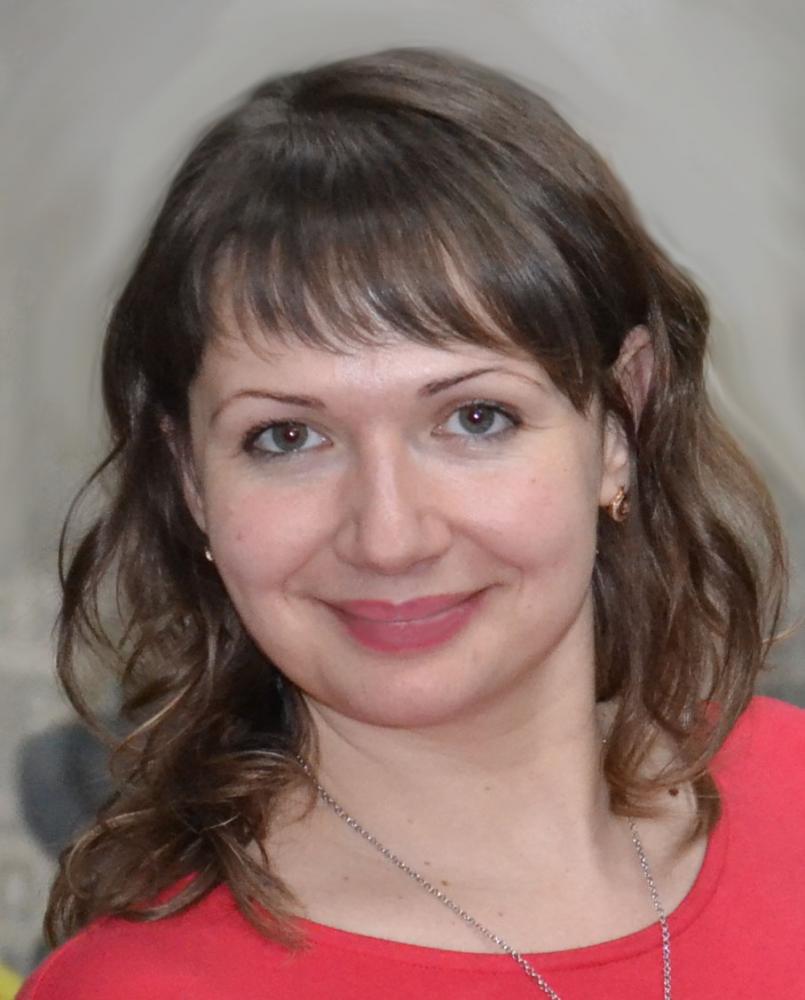
Abdul Salam Al-Nuwaisri is an Associate Professor in the Department of Software Engineering at the College of Information Technology, University of Tripoli. His academic role focuses on software engineering education and research. Research Interests include: Software Engineering methodologies Programming languages and systems Technology-driven innovation Algorithm design and optimization
Yuriy Alekseevich Krysan is an Associate Professor at the Department of Electrical Drive and Automation of Industrial Installations at Zaporizhia Polytechnic University. With over 20 years of experience since joining the university in 2002, he has established himself as a specialist in electrical engineering with a focus on electric drive systems and steelmaking furnace regulation. Zaporizhia State Technical University, 1998: Electrical Engineer in "Electrical drive and automation of industrial installations" Zaporizhia State Technical University, 1999: Master of Electromechanics in "Electromechanical automation systems and electric drive" Dr. Krysan's research primarily focuses on the regulation of powerful steelmaking furnaces and electromagnetic processes in electrical equipment. His work spans theoretical modeling, practical implementation, and educational applications in electric drive systems. He has made significant contributions to understanding variable load impacts on synchronous electric drives, optimization of technological processes, and development of monitoring systems for energy converters. His recent publications (2017-2022) demonstrate a consistent focus on electromagnetic processes, electric drive stability, and optimization of steel production systems. The research shows progression from theoretical modeling to practical implementation of control systems, with increasing emphasis on computerized solutions and energy efficiency. Honorary certificate of the October District Administration, Zaporizhzhia, 2008 Dr. Krysan teaches Electric Drive Theory, Computerized Electric Drive Systems, and Electronics and Microprocessor Technology. His educational contributions include developing laboratory stands for asynchronous electric drive research and universal remote control systems for MICROMASTER 440 drives. He has also integrated software tools like Trace Mode into the educational process. His laboratory work focuses on electrical drive systems, particularly for industrial applications including steel production. He has developed specialized test stands for research and educational purposes, contributing to both theoretical understanding and practical implementation of electric drive technologies.
Professor Kateryna Ivanivna Antonyuk serves in the Department of Economics and Customs at National University Zaporizhzhia Polytechnic's Faculty of Business Technologies and Economics, holding the academic rank of Professor with Doctor of Economic Sciences degree. Her 15-year academic career since 2011 encompasses teaching innovative international business models, global marketing, and anti-corruption disciplines while leading research on consumption security systems. Her educational foundation includes: Higher National Institute for Strategic Studies (2020) - Doctoral studies in Economics Kyiv National Economic University (2008) - Postgraduate studies in Economics and Enterprise Management Zaporizhia National Technical University (2005) - Honors diploma in Marketing Professor Antonyuk's research centers on consumption security across institutional hierarchies, with expanding focus on wartime economic resilience. Her work examines how global marketing frameworks adapt to geopolitical instability, particularly analyzing Ukraine's integration challenges with EU regulatory systems. Recent scholarship investigates sustainable development intersections with consumption security, revealing critical linkages between environmental protection and economic stability during conflict. Analysis of her 15 most recent publications shows dominant focus on Ukraine's post-war reconstruction through seven key lenses: consumption security frameworks (32% of works), international trade adaptation (24%), sustainable development integration (18%), digital transformation (12%), entrepreneurship ecosystem rebuilding (9%), and environmental economics (5%). This distribution reflects urgent national priorities while maintaining theoretical rigor in economic security. Her scientific recognition includes: National University 'Zaporizhzhia Polytechnic' Gratitude (2023) for student business idea mentorship Zaporizhzhia Regional State Administration Award (2023) for youth scientific project development As DAAD project 'DILLUGIS' coordinator, she facilitates German-Ukrainian academic mobility while co-managing Economic Fundamental Initiative's 'Economic Literacy for All' program. Her grant leadership focuses on practical solutions for wartime economic continuity, including dual education systems and anti-corruption frameworks. International engagements span Estonia's Business School, East Bavarian Technical University, and EU-funded summer schools on sustainability. Professor Antonyuk actively shapes policy through Ukraine's Association of International Economists, contributing to national discussions on consumption security standards and EU integration pathways. Her current work establishes methodological frameworks for measuring war-induced economic damage while developing reconstruction models for enterprise ecosystems.
Gheorghe-Dan SOREA is a Lecturer in Electrical Engineering at the Department of Electrical Engineering and Applied Physics, Transilvania University of Brașov , under the Faculty of Electrical Engineering and Computer Science . His work bridges information technology with electrical engineering, focusing on sustainable energy systems. Research Interests Integration of renewable energy into power grids Monitoring and improving electrical power quality Optimizing energy efficiency in residential and industrial systems Application of IT tools in electrical engineering education Recent publications highlight his contributions to hybrid renewable energy systems and numerical modeling for electrical engineering challenges. His work spans both theoretical and applied domains, emphasizing practical solutions for standalone energy systems and educational software tools. His professional activities include collaborations on energy management strategies and the development of computational methods for electrical machine analysis. Contact Building N, Room NII 9 Phone: + 40 711 928 609 Email: gheorghe.sorea@unitbv.ro
Mihai Mocanu is a Lecturer at the University of Craiova, affiliated with the Faculty of Automatic Control, Computers and Electronics. His work spans machine learning, educational data mining, and medical imaging technologies. Research Interests: He focuses on developing interpretable machine learning models, particularly using decision trees for educational data mining and GIS analysis. His work also includes designing e-learning systems with personalized recommendation workflows and enhancing engagement through data-driven approaches. Notable Contributions: Mihai has pioneered segmentation techniques for 3D medical imaging, created adaptive learning systems with stacked models, and explored social network impact on education. His research integrates pedagogical agents and usability evaluation frameworks in e-learning platforms.
Cristian Mihaescu is a Lecturer at the Department of Computer Science and Engineering (DCTI), University of Craiova, within the Faculty of Automatic Control, Computers and Electronics. He is actively involved in teaching and research related to machine learning, distributed systems, and educational data mining. Teaching: Data Structures and Algorithms, Parallel and Distributed Algorithms, Machine Learning, Distributed Systems Engineering Research Focus: Machine learning applications in education, social network analysis, and compiler optimization Technological Interests: Microservices, data mining, and intelligent system design
Stefan Berinde is a Lecturer in Mathematics at the Babes-Bolyai University , Cluj-Napoca, Romania, within the Faculty of Mathematics and Computer Science . He holds a Ph.D. in Mathematics focusing on celestial dynamics, specifically The Origin and Evolution of Celestial Bodies Gravitating in the Vicinity of Earth's Orbit . His research interests span Astronomy (solar system dynamics, NEO studies), Computer Science (numerical integration algorithms, software development), and Recreational Mathematics (puzzle design and analysis). Developed the SolSyIn package for simulating solar system dynamics using the Radau-Everhart integrator. Teaches courses like Mathematical Analysis for Computer Science and maintains online educational resources. Active in astrophotography and programming tools (e.g., WinGraph unit for graphics). Research focuses on gravitational dynamics, orbital mechanics, and numerical methods. Projects include modeling asteroid trajectories and exploring chaotic systems through software like SolSyIn . No scientific awards or grants explicitly mentioned.
Robert BUCHMANN is a Professor at Babeș-Bolyai University's Faculty of Economics and Business Administration, Department of Business Information Systems. His career spans over two decades, with roles in both teaching and research, focusing on Knowledge Management Systems, Semantic Web, and Enterprise Modeling. He has contributed to prestigious projects and disseminated research through conferences like HICSS, ECIS, and journals such as Telematics and Informatics. A member of AIS and INSTICC, he actively reviews for academic venues and leads research initiatives. Education Doctor in Economics (2005), Babes-Bolyai University (thesis: 'E-commerce experimental models') Master in Economics (2001), Babes-Bolyai University (thesis: 'The equilibrium between software reliability and efficiency') Bachelor in Economics (2000), Babes-Bolyai University (thesis: 'Distance learning software applications for accounting') XML Summer School training (2006), Oxford University and CSW Ltd. Research and Projects Dr. BUCHMANN specializes in Semantic Web technologies, Enterprise Modeling, and Knowledge Management, with a focus on interdisciplinary applications in business contexts. He has led projects like the FP7 EU COMVANTAGE and coordinated research grants in e-commerce and software quality. His work bridges theoretical modeling and practical implementation, particularly in distributed computing and business process management. Scientific Awards 2008 - Award for professional debut from the Association of Economic Studies Faculties in Romania 2004 - Research Council Award from Babes-Bolyai University for doctoral results Teaching and Academic Contributions He pioneered English-taught courses such as 'Internet of Things' and 'Semantic Business Process Management,' and coordinated curricular development for web-related disciplines. He has also served as an invited lecturer at the Next Generation Enterprise Modeling Summer School in Austria. Professional Affiliations Member of the Association for Information Systems (AIS) and the Institute of Electrical and Electronics Engineers (INSTICC).
Dr. Timenko Artur Valentynovych serves as Senior Lecturer at Zaporizhia National Technical University's Department of Computer Systems and Networks within the Faculty of Computer Science and Technologies. Holding a specialist degree in Computer Systems and Networks (2010), he maintains active roles in both teaching and research. His educational background includes graduation from Zaporizhia National Technical University in 2010 with specialization in Computer Systems and Networks. Professional development is evidenced through continuous research output and curriculum development activities. Research focuses on Internet of Things , computer networks , and neural networks , with particular emphasis on protocol verification, device interoperability, and embedded system optimization. Recent work explores semantic chatbots for IoT management, air quality monitoring systems, and MQTT protocol compatibility analysis. His methodology integrates formal verification techniques with practical hardware implementation. Publication trends from 2020-2024 reveal consistent contributions to IoT infrastructure (45%), network protocols (30%), and AI applications (25%). Key journals include Shipbuilding & Marine Infrastructure and Scientific Notes of Vernadsky University. Research demonstrates strong industry relevance with applications in smart homes, environmental monitoring, and critical systems. Teaching responsibilities encompass Python programming basics, computer network design, IoT fundamentals, and wireless technologies. His laboratory guidelines for Embedded Computer Systems and IoT disciplines reflect practical, hands-on pedagogy. Current projects involve developing automated temperature control systems and network anomaly detection using hybrid neural networks. Professional activities include active participation in Ukrainian academic conferences and international collaborations through ZNTU's research infrastructure. His work contributes to the university's strategic focus on digital innovation and sustainable technology development.
Eugen Borcoci serves as a Full Professor in the Department of Telecommunications at the National University of Science and Technology Politehnica Bucharest. With an extensive publication record spanning networking technologies, he has established himself as a significant contributor to the field of telecommunications research. His work bridges theoretical networking concepts with practical implementations, particularly in next-generation network architectures. Professor Borcoci's research interests focus on advanced networking paradigms including Software Defined Networking (SDN), Network Function Virtualization (NFV), and 5G/6G network architectures. He has pioneered work in network slicing technologies, particularly for vehicular communications and Internet of Vehicles applications. His research demonstrates a consistent emphasis on practical implementations and validation of theoretical networking concepts through experimental frameworks and open-source platforms. His recent publication trajectory (2021-2025) reveals a strong focus on Open Source MANO for network automation, SDN controller optimization across different network topologies, and specialized applications of network slicing for electric vehicle infrastructure and vehicular communications. This work demonstrates a clear progression from theoretical networking concepts to practical deployment scenarios with industry relevance. Professor Borcoci actively collaborates with international researchers, particularly with Marius Vochin, Frank Y. Li, and Andra Ciobanu, indicating strong international research connections. His work appears primarily in networking conferences and journals focused on telecommunications infrastructure and next-generation network architectures.
Dr. Neculai Cojan is an Associate Professor at the Technical University of Iasi (TUIASI), Department of Electronics and Telecommunications. His academic role includes teaching analog integrated circuits and conducting research in advanced electronic circuit design. He holds a Ph.D. in Engineering and has been actively involved in industry-sponsored projects, such as the FSM project collaboration mentioned in his work. His research focuses on analog circuit design, particularly in Gm-C filters, MOSFET-based amplifiers, and oscillator development. Notable contributions include novel implementations of oscillation-based testing methodologies and variable gain amplifier architectures. His work frequently explores integration challenges in CMOS technologies and high-frequency signal processing. Recent publications (2010-2011) emphasize structured approaches to filter design, electrically controlled components, and top-down project methodologies. His research bridges theoretical analysis with practical applications in both academic and industrial contexts. Dr. Cojan’s technical expertise is further evidenced by his involvement in circuit testing innovations and the development of industry-relevant solutions. Despite no listed awards, his sustained output in high-impact circuit design areas reflects significant contributions to the field of analog electronics.
Adrian ALEXANDRESCU is an Associate Professor at the Department of Computer Science and Engineering within the Faculty of Automatic Control and Computer Engineering at “Gheorghe Asachi” Technical University of Iași. He is a member of the Open Infrastructure Research Center and specializes in interdisciplinary research areas such as blockchain technology, distributed systems, artificial intelligence (genetic algorithms, neural networks), and IoT applications. His work bridges theoretical computer science with practical implementations in education, healthcare, and smart technologies. His research interests focus on leveraging blockchain for secure transactions, optimizing distributed systems, and enhancing e-learning through gamification. He has contributed to projects involving sensor networks for health monitoring, real-time driver sobriety tracking, and decentralized identity management systems. His academic contributions span over 20 years, with notable work on genetic algorithms for task mapping in heterogeneous systems and cloud-based solutions for ambient assisted living. Dr. ALEXANDRESCU’s publications emphasize blockchain’s role in trustless systems, IoT-driven healthcare environments, and AI-driven solutions for education and logistics. His work on decentralized article retrieval systems and plagiarism detection frameworks underscores his commitment to ethical and efficient digital ecosystems. Despite no explicitly listed awards, his prolific publication record reflects sustained academic excellence. He advises on projects at the intersection of cloud computing, distributed architectures, and smart technologies. His labs and collaborations focus on developing scalable solutions for real-world challenges such as secure real estate transactions and community-driven academic publishing systems.
Darius Bufnea is an Associate Professor at the Department of Computer Science, Faculty of Mathematics and Computer Science, Babeş-Bolyai University in Cluj-Napoca, Romania. His academic address is at No. 1 Mihail Kogalniceanu Street, RO-400084 Cluj-Napoca. He teaches various courses including Web Programming, Security Protocols in Communications, Web Security and Internet, Web Traffic Control, and Operating Systems for Parallel and Distributed Architectures. Dr. Bufnea's research spans multiple domains within computer science, with a strong focus on parallel and distributed computing systems. His work explores innovative frameworks like PowerList-based programming models and their implementation in Java. He has made significant contributions to web security research, particularly in detecting and measuring scraper sites and clickbait content. His research bridges theoretical computer science with practical applications in web technologies and parallel programming paradigms. His publication record shows a consistent trajectory of research in parallel computing frameworks, with recent work expanding into web security and content analysis. The trend indicates a progression from foundational parallel programming models toward applied research in web technologies, security, and educational approaches for teaching complex computing concepts. His work on measuring "scrappiness level" of websites represents an innovative approach to quantifying web spam and content duplication issues. Dr. Bufnea actively engages with students through undergraduate and dissertation thesis supervision, with specific research topics available through university channels. His teaching philosophy emphasizes hands-on learning, as evidenced by detailed laboratory assignments covering web technologies from HTML/CSS to advanced JavaScript and server-side programming.
Dr. Florentin Bota is a Part-Time Lecturer at Babeș-Bolyai University. His research spans interdisciplinary domains including Machine Learning , Game Theory , and Software Development , with a focus on integrating Human Behavior Modeling into computational systems. His notable work includes the Sotirios virtual learning game and studies on Multi-agent Systems , Temporal Discounting , and Software Fault Prediction . He has contributed to 3D Computational Models and Community Structure Detection in complex networks. For academic inquiries, contact florentin.bota@ubbcluj.ro or reach out via Microsoft Teams.
Potecea Olga is an Associate Professor at the Romanian-American University, affiliated with the Faculty of Commercial Relations and Domestic and International Financial-Banking and the Faculty of Management-Marketing. She specializes in Corporate Accounting, Managerial Accounting, International Accounting Standards (IFRS), Internal Public Audit, and Public Institution Accounting. Education: Graduated from the Academy of Economic Studies in Bucharest in 1997 (Faculty of Economics and Management of Agricultural and Food Production); PhD in Economics (Accounting specialization) from the same institution in 2006 Her research focuses on the intersection of accounting and innovation management, particularly in knowledge-based organizations and Romanian economic contexts. Key areas include intangible asset valuation, ICT impact on innovation, and advanced accounting information systems for corporate governance. She has participated in 42 research-development-innovation projects, including 2 national research contracts as director, 3 as member, and 36 collaborations with business environments. Her publications emphasize strategic accounting frameworks and digital transformation in economic management.