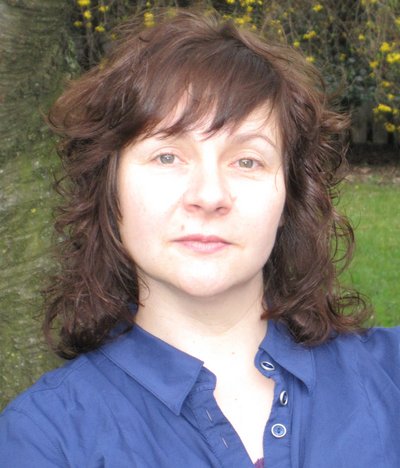
Emilia Barakova is an Associate Professor at the Industrial Design Department of Eindhoven University of Technology. She leads the Social Robotics Lab and Transdisciplinary Research & Design cluster, focusing on robotics for autism intervention and cognitive assistance. PhD in Mathematics & Natural Sciences (University of Groningen, 1999) MSc in Electronics & Automation Engineering (Technical University of Sofia, Bulgaria) Her research merges robotics, cognitive science, and AI to develop embodied agents for social skills training in autistic children and well-being enhancement for people with disabilities. She co-developed the TiViPE programming environment for customizable robot therapy scenarios. Key publication trends show emphasis on: Human-robot interaction for autism therapy Emotion recognition via movement analysis Visual programming frameworks for robot customization Multi-agent systems in social training She serves as Associate Editor for journals including International Journal of Social Robotics and Transactions of Human-Machine Systems , and has held academic positions at RIKEN Brain Science Institute and German-Japanese Robotics Research Lab.
Twan Basten is a Full Professor in the Electronic Systems group at Eindhoven University of Technology (TU/e). He leads research on embedded and cyber-physical systems, focusing on model-driven design, computational models, and system dependability. He holds an MSc (1993) and PhD (1998) in Computing Science from TU/e, advancing from Assistant to Full Professor by 2009, and became the Electronic Systems group chair in 2013. His research spans international projects (FP5-7, H2020, ECSEL) and Dutch initiatives (STW, NWO, RVO), with over 200 publications and seven best paper awards. He has co-supervised 21 PhD students and actively participates in program committees and conferences. His work contributes to UN Sustainable Development Goals through innovations in smart systems. Education: MSc in Computing Science, TU/e (1993) PhD in Computing Science, TU/e (1998) Research Interests: Explores design methodologies for embedded systems, including scenario-based design, real-time scheduling, and performance analysis. Specializes in model-driven engineering and computational models to ensure system dependability. Active in projects like TRANSACT (real-time systems) and SAM-FMS (flexible manufacturing). Key Contributions: Co-author of 1 book and over 200 scientific publications Recipient of seven best paper awards Co-supervised 21 PhD degrees Senior member of IEEE and lifetime member of ACM Labs & Teams: Leads the Model-Based Design Lab and contributes to EAISI High Tech Systems initiatives. Collaborates on tools like TRACE4CPS for execution trace analysis and CReTS for vehicle platooning simulation.
Bert de Vries is a Professor at the Signal Processing Systems Group at Eindhoven University of Technology (TU/e), where he has been employed since January 2012. He maintains a dual career, also working at GN Hearing in the hearing aids industry since April 1999, where he holds both research and managerial roles. His academic journey began at TU/e, where he earned his MSc in Electrical Engineering in 1986, followed by a PhD from the University of Florida in 1991. Between 1992 and 1999, he worked at Sarnoff Research Center in Princeton, NJ, contributing to diverse signal and image processing projects. Professor de Vries's research centers on Bayesian Machine Learning, with particular focus on the Free Energy Principle and its applications to engineering problems. His work bridges theoretical neuroscience with practical signal processing systems, especially in biomedical applications. He directs the BIASlab research team at TU/e, which develops probabilistic programming tools including RxInfer.jl, ForneyLab.jl, GraphPPL.jl, ReactiveMP.jl, and Rocket.jl. His research spans active inference, variational message passing, probabilistic programming, and Bayesian neural networks, with applications ranging from hearing aids to multi-agent systems. Analysis of his recent publications reveals a strong trend toward practical implementations of Bayesian inference frameworks, particularly through Julia-based probabilistic programming tools. His work shows increasing focus on active inference applications, message passing algorithms, and the intersection of Riemannian geometry with probabilistic modeling. The research demonstrates consistent progression from theoretical foundations toward real-world engineering applications, particularly in biomedical signal processing and autonomous systems. Professor de Vries teaches a graduate-level course on Bayesian Machine Learning at TU/e and actively contributes to open-source software development through his GitHub profile (bertdv), with recent activity as recent as August 2025. His research team has developed several influential probabilistic programming libraries that have gained significant attention in the machine learning community. The BIASlab research group continues to advance the state of the art in Bayesian inference methods with applications in hearing technology, robotics, and signal processing.
Vasil I. Shteriyanov is a doctoral candidate at the School of Mathematics and Computer Science, Eindhoven University of Technology, with a focus on the Department of Software Engineering and Technology. His research bridges artificial intelligence and engineering applications, particularly in software development for industrial contexts. His work centers on Artificial Intelligence and Deep Learning applied to Engineering Drawings , Construction Sector , and Cost Estimation . He has contributed to automating tasks in Piping and Instrumentation Diagrams (P&IDs) and improving symbol recognition in technical drawings. Research Outputs 2025: Automation of instrument typical expansion in P&IDs (AAAI-25) 2025: Line number detection in P&IDs (ICMLA 2024) 2024: AI-driven cost estimation in EPC projects (SANER 2024) 2024: Density and noise impact on symbol recognition (IS 2024) 2023: Thesis on P&ID symbol detection for material take-off generation
Devrim Murat Yazan is an Associate Professor at the University of Twente, affiliated with the Department of Industrial Engineering & Business Information Systems and the Digital Society Institute. He holds a PhD from the Interpolytechnic School of Doctorate (Politecnico di Bari, Politecnico di Milano, and Politecnico di Torino, 2011, Italy). His research focuses on sustainable supply chain management, circular economic business models, industrial symbiosis networks, and decision-making frameworks for transitioning to a circular economy. Methodologies include input-output modeling, game theory, and agent-based simulation. He leads the 'Sustainable Circular Economy' research group, supported by a Horizon 2020 grant (€725k contribution from UT). The group explores decision-making in industrial symbiosis, efficient network operations, and cost/benefit-sharing mechanisms. Recent work includes developing matchmaking platforms for circular construction ecosystems and analyzing greenwashing impacts on brand perception. Awards include the CIOB Award (2024). His teaching includes courses like 'Sustainable Business Development' and 'Sustainable Supply Chains for Consumer Products'. His work contributes to UN Sustainable Development Goals related to responsible consumption and production (SDG 12) and climate action (SDG 13). Grants and collaborations involve EU Horizon 2020 and diverse institutions. Research outputs span 62 peer-reviewed articles, with a focus on circular economy implementation, industrial symbiosis dynamics, and decision-support tools.
Tiziano De Matteis is an Assistant Professor in the @Large Research group at Vrije Universiteit Amsterdam's Faculty of Science, Department of Computer Systems. He also holds an affiliation with the Network Institute. His research focuses on overcoming post-Moore architecture challenges through parallel and distributed computing, high-performance systems, energy efficiency, and FPGA applications. Previously, he was a PostDoc at ETH Zurich's SPCL Group and earned his MSc/PhD from the University of Pisa. Education PhD in Computer Science, University of Pisa MSc in Computer Science, University of Pisa Research Interests Post-Moore architectures for distributed ecosystems Energy-aware parallel computing High-level abstractions for parallel software development FPGA-based hardware acceleration Data stream processing and distributed systems Recent Research Trends Recent work emphasizes: Data center risk analysis and sustainability Optimizing microservices and distributed scheduling LLM model offloading to NVMe storage Python-based data-centric programming productivity GPU interconnect performance in supercomputing Grants & Projects Participates in the EU-funded 'Extreme and Sustainable Graph Processing' project (2023-2025), exploring scalable graph algorithms and energy-efficient computing systems. Teaching Accelerator-Centric Computing Ecosystems Computer Organization Distributed Systems Systems Seminar
Tiago Prince Sales is an Assistant Professor in the field of Semantics, Cybersecurity & Services, actively contributing to foundational research in conceptual modeling, ontology, and information systems. His work bridges formal methods with practical applications in digital platforms, cybersecurity, and knowledge representation. Assistant Professor, Semantics, Cybersecurity & Services Active in international research communities (FOIS, ER, BPMDS, RCIS) Key focus: Ontology, Domain Modeling, Interoperability, Digital Platforms Recognized with multiple best paper awards His research centers on the development and application of formal conceptual models using frameworks such as OntoUML and the Unified Foundational Ontology (UFO). He investigates how domain models can enhance system design, improve interoperability, and support risk analysis in complex information systems. His work often integrates empirical insights with theoretical rigor, aiming to address real-world challenges in modeling. The recent publications highlight a strong trend toward ontological engineering in cybersecurity (e.g., phishing attack modeling), digital platform taxonomy, and FAIR data planning. These works demonstrate a consistent focus on creating reusable, semantically rich models that support both human understanding and machine processing across domains. The integration of modeling with data science and security indicates a forward-looking research agenda. Best paper award at FOIS 2023 Best paper award at ER 2022 EMMSAD 2025 Best paper award Tiago Prince Sales actively mentors and collaborates with researchers, though no formal students are listed. He has secured recognition through competitive awards and leads significant research outputs, including datasets and open models. His involvement in organizing top-tier conferences such as FOIS 2024 reflects leadership in the academic community. While specific grants are not listed, his productivity suggests external funding support. He contributes to open science through Zenodo-hosted datasets like the OntoUML Vocabulary and GO-Plan method, and participates in collaborative teams focused on knowledge graphs, FAIRification, and model-driven engineering. His role in organizing the FOIS 2024 conference underscores his integration within leading research networks in formal ontology and conceptual modeling.
Boelie Elzen is an External employee at Wageningen University, affiliated with the OT Team Agriculture & Society and the Agricultural Biosystems Engineering department. Holding a dr.ir. degree, he functions as a Researcher with expertise in agricultural innovation systems and sustainability transitions. His research focuses on: Innovation Systems in Agriculture Environmental Impact Assessment Sustainability Transitions Agricultural Policy Mixed Cropping Systems Agroecology Recent publications (2022-2025) demonstrate interdisciplinary work spanning computer science history and agricultural innovation, with emphasis on mixed cropping, AKIS frameworks, and EU agroecology strategies that bridge social sciences and agronomy. Elzen has led significant projects including: EU-TU-18037 PLAID (2017-2019) Internationale workshop Systeeminnovaties (2010) Toolkit M&E voor projectleiders (2010) Leren van praktijkinitiatieven (2009) These initiatives address system innovations in agriculture through monitoring tools and practical learning frameworks. He actively contributes to the OT Team Agriculture & Society and Agricultural Biosystems Engineering, driving research on sustainable agricultural transitions.
Dr. Alraune Zech is an Assistant Professor for Computational Environmental Hydrogeology at Utrecht University, Faculty of Geosciences, Department of Earth Sciences, Hydrogeology group. Her research focuses on groundwater flow and transport processes in heterogeneous environments, with emphasis on practical applications in contaminated aquifers, PFAS remediation, and construction-related groundwater issues. She is affiliated with the Helmholtz-Centre for Environmental Research and serves as convener for EGU sessions on contaminant transport. Dr. Zech's educational background includes: PhD in Computational Hydrosystems from Friedrich-Schiller-University Jena and Helmholtz-Centre for Environmental Research (2010-2013) Prediploma Degree in Business Mathematics from University Leipzig (2011) Diploma in Mathematics with minor in Chemistry from University Leipzig (2003-2009) Her research interests span hydrogeology, groundwater modeling, and environmental remediation. She specializes in stochastic and computational modeling of subsurface processes, with focus on contaminated aquifers, PFAS removal strategies, biodegradation, bioremediation, and heat transport in the subsurface. Her work bridges theoretical approaches with practical applications in construction engineering and environmental protection. Analysis of Dr. Zech's recent publications (2021-2025) reveals strong focus on advancing hydrogeological modeling techniques, particularly in aquifer heterogeneity characterization, machine learning applications in hydrogeology, and practical remediation strategies. Her work spans fundamental research on pore-scale processes to field-scale applications, with increasing integration of artificial intelligence methods for solving complex groundwater problems. Dr. Zech leads several significant research projects: Living Lab PFAS Remediation (2024-2028): Developing strategies for PFAS contamination SilPit (2024-2028): Studying erosion of silicate grouting in construction pits MIBIREM (2022-2027): Creating innovative technological toolbox for bioremediation She actively supervises multiple PhD students including Alexandra Hockin, Kim Bartsch, Mahammad Valibeknejad, Sona Aseyednezad, Hannah Gebhardt, and Martijn van Leer. Her research is supported by funding from the Ministry of Infrastructure and Water Management, NWO, and EU Horizon programs.
Luca Ardito is an Assistant Professor in the Department of Control and Computer Engineering at the Polytechnic University of Turin, where he contributes to the Software Engineering research group and serves as an Editorial Board Member for PeerJ Computer Science. His educational background includes: BSc in Computer Engineering from Politecnico di Torino MSc in Computer Engineering from Politecnico di Torino Ph.D. in Computer Engineering from Politecnico di Torino Dr. Ardito's research focuses on mobile and ubiquitous computing, green software, programming languages, and empirical software engineering. He investigates mobile development/testing, software sustainability, programming language analysis (particularly Rust), and evidence-based software engineering methodologies. His work bridges theoretical frameworks with practical applications to enhance software quality and environmental efficiency. His sole authored publication analyzes Rust code properties through empirical metrics, demonstrating his specialization in programming language evaluation and software quality assessment. This aligns with broader trends in empirical software engineering research. No scientific awards were documented in the provided materials. Information regarding graduate student supervision and research funding sources was not specified in the available text. He actively participates in the Software Engineering research group at Politecnico di Torino, which investigates software development lifecycle optimization, testing methodologies, and emerging technology integration.
Maria Csernoch is an Associate Professor at the Faculty of Informatics, University of Debrecen, Hungary. Education: Teacher degree in mathematics, descriptive geometry, informatics and English Bachelor of Science in software engineering and lean management Doctor of Philosophy in mathematics and computer sciences Dr. habil. degree in applied linguistics Research Interests: Dr. Csernoch specializes in the didactics of Informatics, focusing on developing computational thinking skills through innovative pedagogical approaches. Her work emphasizes knowledge-transfer mechanisms, cross-disciplinary digital subject integration, sustainable digital practices, and lean methodologies in computing education to optimize resource efficiency while maintaining pedagogical rigor. Professional Service: She serves as an Editorial Board Member for PeerJ Computer Science.
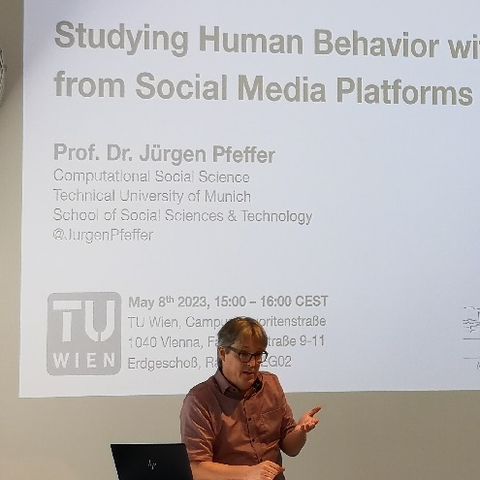
Jürgen Pfeffer is a Professor of Computational Social Science & Big Data at the Technical University of Munich's School of Social Sciences and Technology, with an additional appointment as Adjunct Professor at Carnegie Mellon University's Institute for Software Research. His interdisciplinary work bridges computer science and social science with a focus on analyzing large-scale socio-technical systems. His research expertise spans computational social science, network analysis, and big data methodologies. Pfeffer's work examines methodological, algorithmic, and theoretical challenges in analyzing dynamic social systems, with current projects focusing on modeling and detecting negative dynamics from social media, particularly online firestorms and hate speech against politically active women. His research combines network science approaches with computational methods to understand complex social phenomena. Pfeffer's publication record demonstrates significant contributions to the field since his 2010 doctorate, with high-impact papers in journals like Science and EPJ Data Science. His work on social media analysis, particularly the influential 2014 Science paper 'Social Media for Large Studies of Behavior' co-authored with Derek Ruths, has shaped methodological approaches in the field. His research shows consistent evolution from foundational network analysis to contemporary applications in political discourse, hate speech detection, and multi-layer network analysis. Hennig, M., Brandes, U., Pfeffer, J., & Mergel, I. (2012). Studying Social Networks. A Guide to Empirical Research Ruths, D., & Pfeffer, J. (2014). Social Media for Large Studies of Behavior Pfeffer, J., Morstatter, F., & Mayer, K. (2018). Tampering with Twitter's Sample API As an advisor and collaborator, Pfeffer has worked extensively with researchers including Raji Ghawi, Mirco Schönfeld, Momin Malik, and Kathleen Carley. His work demonstrates strong connections between theoretical network science and practical applications in social media analysis. His current research continues to address pressing issues in online discourse, with recent work focusing on hate speech classification, lexical change in negative word-of-mouth, and polarization dynamics in social media environments. Pfeffer leads the Pfeffer Lab, which focuses on developing methodological approaches for analyzing complex social systems through computational methods. His work has implications for understanding political legitimacy, social influence, and community dynamics in both online and offline contexts.
Prof. Mehdi Dastani is a Professor and chair of the Intelligent Systems group within the Department of Information and Computing Sciences at Utrecht University's Faculty of Science. He leads the Master's program in Artificial Intelligence and focuses on formal and computational models in AI, particularly multi-agent systems. His research integrates insights from philosophy, psychology, and law to develop autonomous agents that reason about social and cognitive concepts like norms, emotions, and responsibility. Dastani has held academic roles at Utrecht University since 2001, including postdoctoral research and faculty positions. Education: M.Sc. Computer Science (University of Amsterdam, 1991), M.Sc. Philosophy (University of Amsterdam, 1992), Ph.D. in Humanities (University of Amsterdam, 1998). His work spans theoretical and applied projects, including grants for initiatives like Golden Agents (simulating Golden Age creative industries) and traffic control systems using virtual organizations. He is actively involved in academic committees, editorial boards, and organizing international conferences like AAMAS and PRIMA. Research Interests: Multi-Agent Programming, Normative Systems, Autonomous Agents, Cognitive Robotics, and Human-Centered AI. His projects address challenges like norm enforcement, decision-making in complex systems, and ethical AI integration with societal needs. Advising & Grants: Supervised numerous PhD students (e.g., Birna van Riemsdijk, Bas Testerink) and secured grants for projects such as 'Controllable AI: Human-Centered Approach'. His work includes collaborations on urban governance, autonomous driving, and AI tools for literacy support in children. Labs & Teams: Leads the Intelligent Systems group, contributing to agent-based simulations, ethical AI frameworks, and interdisciplinary collaborations with social scientists and urban planners.
Arend van Peer is a Researcher in Plant Breeding at Wageningen University & Research, specializing in fungal biology and biotechnology. His work focuses on leveraging white rot fungi for applications in sustainable agriculture, including lignocellulosic biomass conversion, mycelium-based materials, and improving feed quality for ruminants. Key projects include developing circular leather alternatives and optimizing fungal strains for industrial uses. He leads initiatives like the 'Right Fungus for the Right Job' program and collaborates on interdisciplinary projects bridging horticulture and mushroom cultivation. Peer has contributed to genomic studies of Agaricus bisporus and Pleurotus species, advancing understanding of fungal genetics and reproductive mechanisms. His research integrates molecular biology, genomics, and applied biotechnology to address agricultural challenges. Notable achievements include pioneering agar-based screening methods for fungal incompatibility and co-developing the DigiFungi educational software. Peer actively participates in academic and professional seminars, emphasizing circular economy principles and cross-sectoral innovation.
Ayushi Rastogi is an Assistant Professor at the University of Groningen, affiliated with the Software Engineering group in the Bernoulli Institute under the Faculty of Science and Engineering. She holds a PhD from IIIT-Delhi and has conducted postdoctoral research at TU Delft and the University of California, Irvine, with additional experience as a visiting researcher at Microsoft Research. Her research focuses on data analytics and AI-driven solutions for software engineering challenges, particularly in open-source ecosystems and developer communities. Key interests include psychological safety in OSS, pull request dynamics, and fairness in software practices. She actively contributes to EDI initiatives through Informatics Europe and the Netherlands' IPN EDI committee. Her work combines empirical software engineering and repository mining to address real-world software challenges. Notable contributions include analyzing fork sustainability in developer communities and exploring code review velocity. She has received the MSR Rich Holt Early Career Achievement Award 2025 and serves as an Associate Editor for IEEE Software. Her GitHub repository 'fsoc' investigates fork impact on developer community sustainability, and she leads projects like OpenDataology for AI dataset compliance. Awards include the 2022 Best Disruptive Paper Award (ISSRE) and supervision of the MSR 2024 Distinguished Doctoral Award-winning thesis by Dr. Gunnar Kudrjavets. She chairs MSR 2025 and frequently presents on topics like gender equality in tech and burnout prevention. Her research spans compiler analysis, memory management, and EDI policy design in ICT sectors.