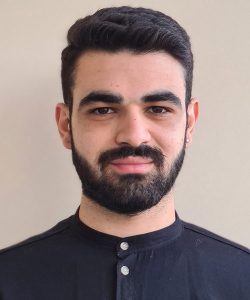
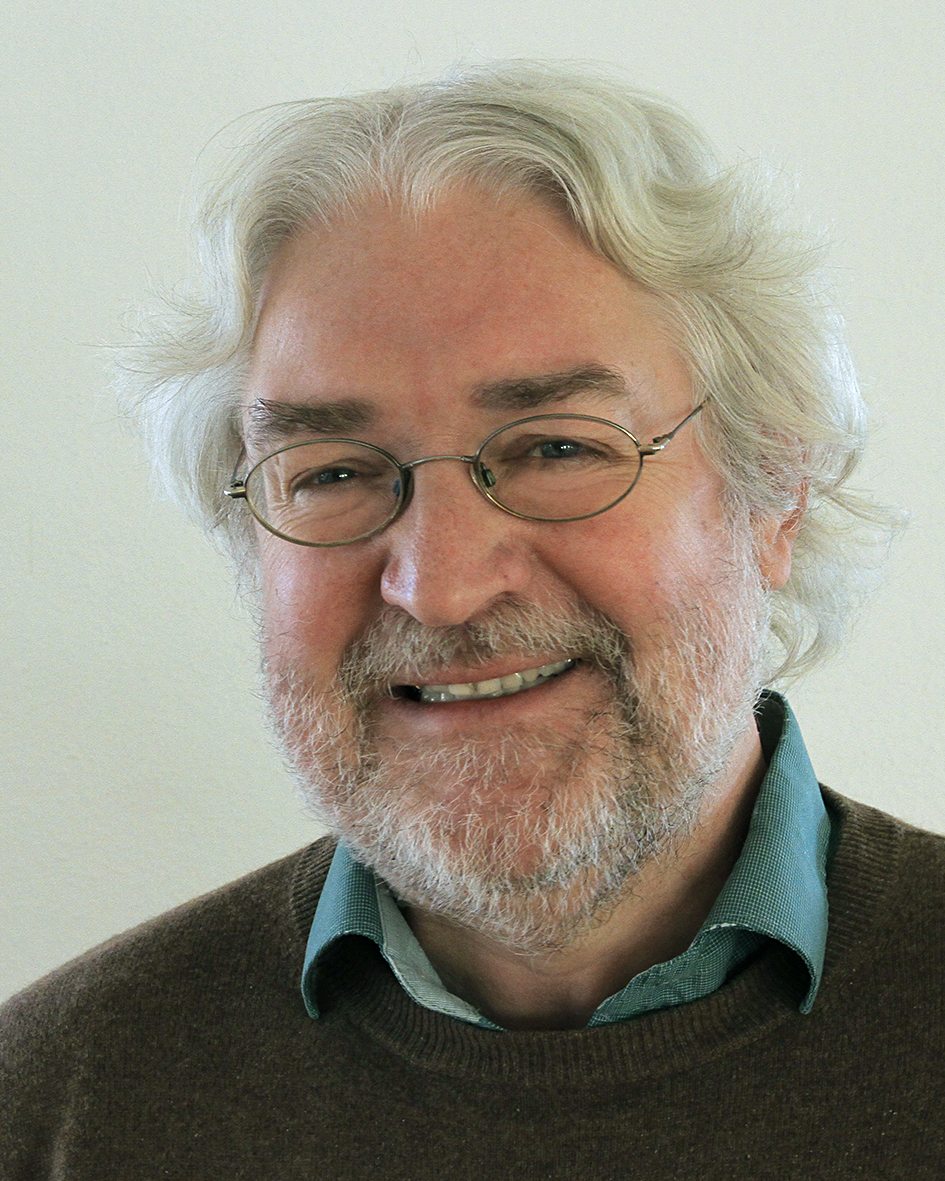
Yrd. Doç. Dr. Sepidehn Hassanpour Khodaeı is an Assistant Professor at the Software Engineering Department of the Engineering Faculty at Adakent University. Her professional profile is listed within the university's academic staff directory alongside departments like Engineering and Business. While specific research interests are not elaborated in the provided text, her affiliation with the Software Engineering department suggests focus areas may include software development methodologies, systems design, and algorithmic innovation. No detailed publications or awards are mentioned in the current data. She maintains affiliation with institutional units such as the Engineering Faculty without indication of part-time status or administrative roles beyond her academic appointment.
Prof. Dr. MUSTAFA KEMAL UYGUROĞLU is a Professor of Electrical and Electronic Engineering at Eastern Mediterranean University (EMU), affiliated with the Faculty of Engineering. He has held academic positions since 1987, progressing from Lecturer to Professor by 2015. His research focuses on robotics, mechatronics, mathematical modeling, computer vision, and kinematic analysis of mechanical systems. Education: B.S. in Electrical Engineering, EMU (1981–1985) M.S. in Robotics, EMU (1989–1991) Ph.D. in Robotics, EMU (1992–1998) Research Interests: Prof. Uyguroğlu’s work spans robotics, including mobile robotics, autonomous systems, and trajectory optimization. He has pioneered research in kinematic analysis of geared and tendon-driven mechanisms, fire detection in video sequences, and face-tracking algorithms. His recent projects involve anomaly detection using deep learning and conformal prediction, as well as integration of multi-platform robotics simulations. Publications & Impact: His publications reflect expertise in robotics systems, video surveillance, and control engineering. Notable contributions include studies on omnidirectional mobile robots, fire detection algorithms, and graph-theoretic approaches to mechanism analysis. His work bridges theoretical modeling and practical applications like emergency monitoring systems. Service & Leadership: Vice Rector (2009–2014) Senate Member (2017–present) Founded EMU’s Robotics Lab Developed curricula for Electrical Engineering, Information Engineering, and Mechatronics programs Advising & Mentorship: Supervised 8 graduate theses (4 Ph.D., 4 M.S.) and actively participates in thesis committees. His students have specialized in topics like six-legged robot kinematics and equivalent robotic manipulators. Labs & Infrastructure: Leads the Robotics Lab at EMU, focusing on hardware-software integration for autonomous systems and simulation tools (CoppeliaSim, MATLAB).
Professor Marios Dikaiakos is a full-time faculty member at the University of Cyprus (UCY), Department of Informatics. He holds a Ph.D. in Computer Science from Princeton University (1994) and has been at UCY since 1998. His roles include serving as Chair of the Department of Informatics (2010-2014) and Founding Director of the Entrepreneurship Center (2014-2021). He leads the Internet Computing Laboratory, focusing on Network-Centric Systems, Cloud Computing, and Social Media Analysis. His research has resulted in over 160 publications and 22 funded projects. Research interests include edge computing, cloud systems, IoT energy modeling, and polarization detection in news media. He has developed open-source tools like Fogify and BenchPilot for edge computing emulation. Active in academic governance, he has reviewed proposals for EU, national, and Chinese institutions. His work bridges theoretical computer science with practical applications in telemedicine, smart grids, and entrepreneurship ecosystems.
Michalis Piponidis is a PhD Candidate and researcher at the KIOS Research and Innovation Center of Excellence within the Department of Electrical and Computer Engineering at the University of Cyprus. He earned his B.Sc. in Computer Engineering from the same department in 2021. His research spans key domains in modern engineering: Machine Learning for algorithmic optimization Embedded Systems design and implementation His work integrates hardware-software co-design principles with intelligent systems development.
Karl Jansen is a researcher at DESY Zeuthen, Germany, where he leads the Center for Quantum Technologies and Applications (CQTA) and contributes to the NIC research group 'Elementary Particle Physics'. His work spans computational sciences, quantum computing, lattice field theory, and theoretical biology, with a focus on interdisciplinary approaches integrating physics and AI in drug design. Affiliated institutions: DESY Zeuthen, NIC (Research Center Jülich) Research areas: Quantum technologies, computational physics, molecular simulations, and epigenetic drug development Recent publications emphasize machine learning applications in drug discovery, epigenetic inhibition mechanisms, and advanced computational modeling techniques. His leadership in quantum technologies highlights DESY's commitment to cutting-edge research infrastructure. Personal interests include diving (documented across global locations like Australia, Taiwan, and Cyprus) and music, reflecting a multidisciplinary engagement beyond formal academic roles.
Prof. Dr. Nadire ÇAVUŞ serves as Professor and Vice Dean at Near East University, concurrently holding leadership roles as Head of the Computer Information Systems Department and Director of the Computer Information Systems Research and Technology Centre. Her institutional affiliations demonstrate deep integration within the university's technical academic structure. Her research focuses on interdisciplinary technology domains with emphasis on: Computer Science fundamentals and applications Information Systems architecture and implementation Software Engineering methodologies Technology management frameworks Research center operational leadership As Director of the Computer Information Systems Research and Technology Centre, she oversees institutional research initiatives, technology development projects, and academic-industry partnerships while maintaining active departmental and dean-level administrative responsibilities.
Assoc. Prof. Dr. Seren BAŞARAN is an academic faculty member at the Department of Computer Information Systems within the College of Engineering at Near East University . Her research focuses on educational technology, machine learning, decision analysis, and the integration of social media in higher education. She has contributed extensively to the development of e-learning systems, including the creation of the multilingual platform ‘Net-Class’. Specializations: Educational Technology, Fuzzy Logic Applications, Learning Analytics, Cloud Computing, Spectral Geometry, and Social Media in Pedagogy. Her recent work explores smart mobility data platforms, blended learning during the pandemic, and multi-criteria decision-making frameworks for evaluating digital learning tools. Despite her prolific publication record, no explicit information about scientific awards or advisees is available.
Kaan UYAR is an Assistant Professor in the Department of Software Engineering at Near East University since March 2023, with continuous academic service at the institution since 1993. His career progression includes roles as Lecturer in Electrical and Electronic Engineering (1995-2000), Dr (2006-2007), Assistant Professor in Computer Engineering (2008-2011, 2013-2023), and administrative positions including Vice-Chair of Computer Engineering (2007-2010) and Chair of Information Systems Engineering (2011-2013). His extensive educational background includes: BSc in Electrical and Electronics Engineering from Anadolu University (1992) MA in International Relations from Near East University (1994) Pedagogical formation from Ataturk Teacher Training Academy (1996) BA in Public Administration from Anadolu University (1998) MSc in Computer Engineering from European University of Lefke (1999) PhD in Computer Engineering from Near East University (2006) Uyar's research spans artificial intelligence , systems and control , engineering education , and e-government , with emphasis on practical applications of computational intelligence. His work demonstrates deep integration of deep learning for medical image analysis and neuro-fuzzy systems for forecasting, applied to critical domains including cancer diagnosis, disease outbreak prediction, and accessibility compliance. Analysis of his 2018-2024 publications reveals three dominant research trajectories: (1) web accessibility assessments across Cyprus, Ethiopia, and the EU focusing on government, health, and retail sectors; (2) medical diagnostics using AI for lung, colon, and breast cancer detection; and (3) forecasting systems for public health (measles) and agriculture (food security) using adaptive neuro-fuzzy techniques. His regional focus on Cyprus and Ethiopia highlights contextualized problem-solving. Uyar maintains active professional engagement through membership in the IEEE and Cyprus Turkish Chamber of Electrical Engineers , reflecting his commitment to engineering standards and academic discourse within regional and international communities.
Assist. Prof. Dr. Ümit İLHAN is a full-time lecturer in the Department of Computer Engineering at the College of Engineering, Near East University. He joined the university in 2003 and was awarded the title of Assistant Professor in 2008. Previously, he served as a part-time lecturer at the university between 1990 and 2003 while working in the IT sector, including roles as IT Manager at Hürbank (1995–2003). He earned his Ph.D. from Near East University in 2007, focusing on Artificial Neural Networks and Fuzzy Logic. Education : Bachelor's in Computing from the Polytechnic of Central London (1981). His research interests center on Artificial Neural Networks and Fuzzy Logic , with publications in international conferences and journals. He has also contributed to applied computing projects, notably organizing general, local, and presidential elections in the Turkish Republic of Northern Cyprus as a software developer under a protocol between Near East University and the TRNC Supreme Election Committee. Additional roles include serving as Director of the Near East University Vocational School since 2008 and Vice Dean of the Engineering Faculty in 2008. He participates in competitions for vocational secondary schools as a jury member under the TRNC Ministry of Education. His career spans private teaching institutions, computer hardware sales, and software development before transitioning to academia.
Dr. Hamit ALTIPARMAK is a Lecturer in the Department of Computer Engineering at Near East University. He completed his B.Sc. and M.Sc. degrees in Computer Engineering at Near East University (2014) and is currently enrolled in a 4-year university degree program in business at Anadolu University. His research interests span core aspects of computer engineering including software development, networking, and data structures. Education B.Sc. in Computer Engineering, Near East University (2014) M.Sc. in Computer Engineering, Near East University (2014)
Oluwaseun Priscilla Olawale is a Lecturer in Software Engineering at Near East University (Nicosia, Cyprus), where she is concurrently pursuing her master's degree in Software Engineering. She previously served as a teaching assistant at the same institution. Her academic background includes a Bachelor's degree in Computer Science from Bowen University, Nigeria, complemented by professional experience as an IT Specialist at the Standards Organisation of Nigeria and Software Developer at Royal Niger Company. Research Focus: Her work centers on developing reliable software solutions with emphasis on artificial intelligence applications. Primary domains include healthcare technology (medical imaging, remote healthcare, IoHT security), industrial systems (Industry 4.0 automation), cybersecurity (blockchain integration, anomaly detection), and educational technology (post-pandemic learning environments). She demonstrates consistent interest in interdisciplinary AI implementations bridging theoretical models and practical challenges. Publication Trends: Recent articles (2020-2025) reflect a progression from foundational surveys in data mining and blockchain verification toward applied AI solutions. Emerging themes include disaster prediction systems, audio-visual signal processing, and security-enhanced healthcare networks. Her technical approach frequently employs deep learning architectures (CNNs, VGG-16), blockchain frameworks, and signal processing techniques to address real-world problems across diverse sectors.
Ramiz SALAMA is a Lecturer in Software Engineering at the Engineering Faculty's Computer Engineering Department, Near East University (NEU). He has been teaching and supervising students since 2009, with courses including Computer Networking & Data Communication, Mobile Computing, Cyber Security, and Introduction to Computer Programming. Education He earned his BSc in Computer Engineering from NEU in 2002, commenced his MSc in the same department in 2005, and is currently preparing for his PhD. Research Focus His research spans: Core areas: Computer Networking, Cyber Security, Mobile Applications, and Learning Management Systems Emerging domains: IoT, Cloud Computing, Blockchain, and AI-driven solutions for healthcare, smart grids, and urban infrastructure Publications Recent articles (2023-2025) emphasize securing next-generation technologies—blockchain, 6G networks, and IoT systems—with applications in healthcare, smart cities, and education. Trends show strong convergence of AI, cybersecurity, and sustainable computing. Advising & Service He actively supervises: Graduation projects Summer training programs and serves as an exam coordinator. No grants or lab affiliations are mentioned.
Zöhre SERTTAŞ is a Lecturer in the Department of Computer Information Systems at Near East University, Northern Cyprus, with contact details zohre.serttas@neu.edu.tr and +90 (392) 223 64 64. Her research focuses on transformative educational technologies, particularly: AI-driven immersive e-learning environments Metaverse-based educational paradigms Gamification and digital game development Mobile applications for special education and elderly/disabled users Cloud forensics and digital evidence preservation Recent publications (2023-2025) demonstrate her leadership in developing simulation-based cultural education tools, ethical AI frameworks for education, and practical implementations like the NEU-LIFE ASSIST mHealth application. Her work bridges technical innovation with pedagogical effectiveness across banking, healthcare, and STEM education domains.
Omar Iraqi Houssaini serves as a full-time Lecturer in the School of Science and Engineering at Al Akhawayn University in Ifrane, where he has taught computer science and cybersecurity courses at undergraduate and graduate levels since 2003. His institutional roles include prior service as IT Manager (2005-2009) and IT Director (2009-2012) at the same university. His academic credentials include: Ingénieur d'Etat from EMI (Ecole Mohammadia d'Ingénieurs) in Rabat MSc in Computer Networks from Al Akhawayn University (2003) Ph.D. in Computer Science from Mohammed V University in Rabat (defended 2022) Dr. Houssaini's research centers on collaborative self-protecting software , unsupervised machine learning , and application-level intrusion detection . His work develops autonomous cybersecurity systems that detect and neutralize threats without human intervention, merging theoretical computer science with practical security implementations. Professional certifications form a critical component of his expertise: CISSP (Certified Information Systems Security Professional) CISA (Certified Information Systems Auditor) ISO 27000 standards certification These industry credentials complement his academic role, providing students with real-world security management perspectives alongside theoretical instruction.
Marios Mavridis is an Associate Professor in the Department of Accounting, Economics and Finance at the School of Business Administration, European University of Cyprus, where he has served since 1992. He concurrently holds office as a Member of Parliament for the Kyrenia District since 2011. His academic credentials include: PhD in Economics (1991, University of Illinois) Bachelor's Degree in Accounting-Economics (1984, University of Illinois) Certified Public Accountant (1986, American Institute of Certified Public Accountants) Dr. Mavridis' research spans empirical finance, economic policy, and accounting with emphasis on market efficiency, corporate governance, and Cypriot economic development. His work integrates econometric analysis of stock and foreign exchange markets with policy-oriented studies on EU accession impacts, demographic challenges, and shareholder value optimization. The interdisciplinary nature of his scholarship bridges financial theory with practical applications in emerging economies. Analysis of his publications (2000-2007) reveals consistent focus on time-series modeling of financial markets, particularly volatility clustering and long-memory effects in small-cap exchanges. His research demonstrates methodological rigor in Granger causality testing and predictability frameworks while addressing regionally specific contexts like Cyprus' transition to EU membership. The work shows increasing policy relevance through commissioned studies for governmental and industrial bodies. As a sitting Member of Parliament, Dr. Mavridis applies his economic expertise to legislative processes while maintaining active academic engagement. His commissioned research for organizations like the Pancyprian Organization of Multi-Children Families and the Employers and Industrialists Federation of Cyprus demonstrates applied scholarship addressing national economic challenges.