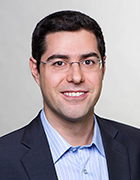
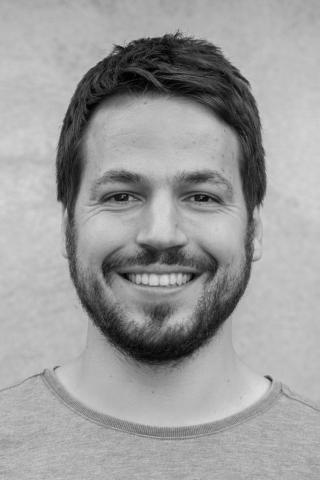
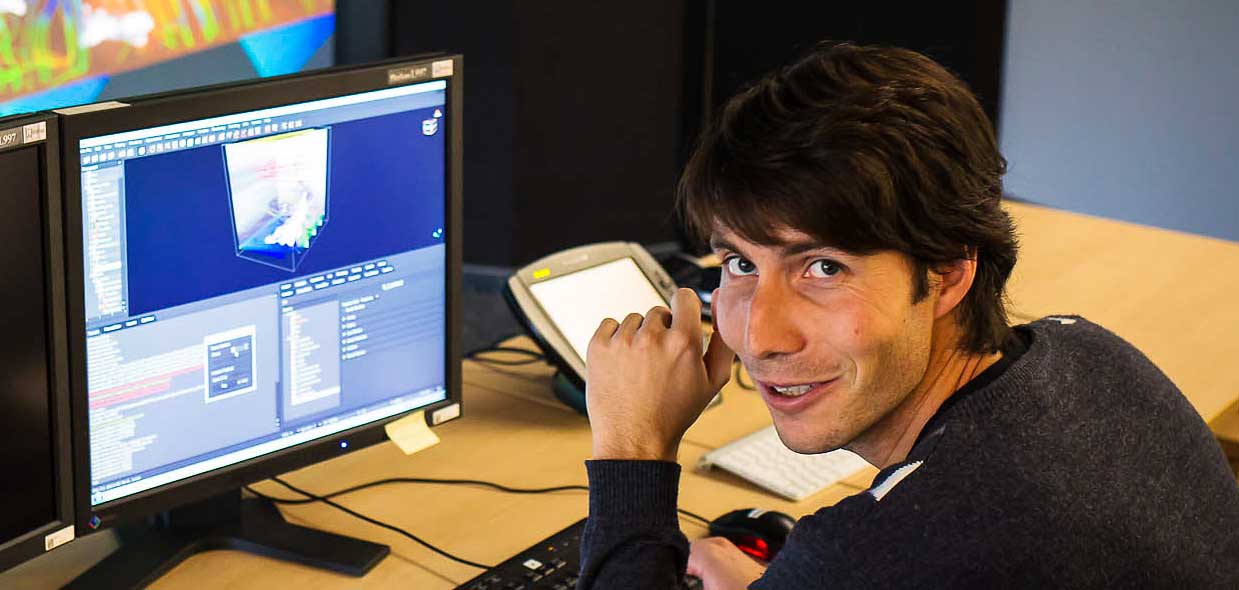
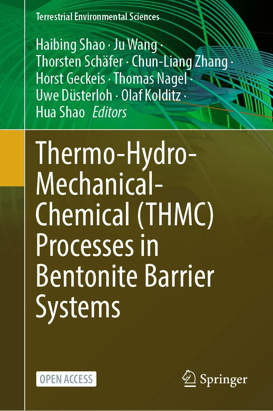
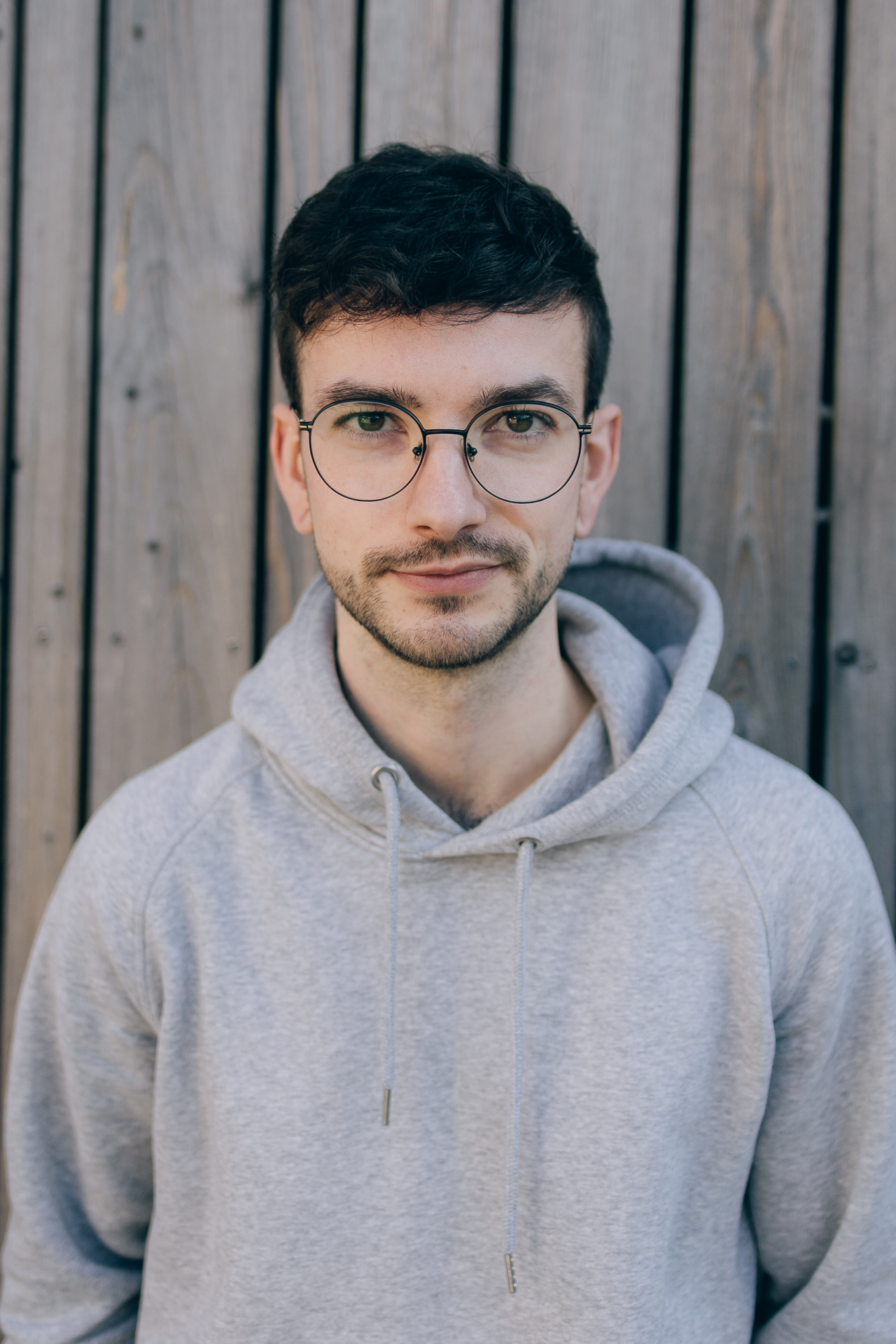
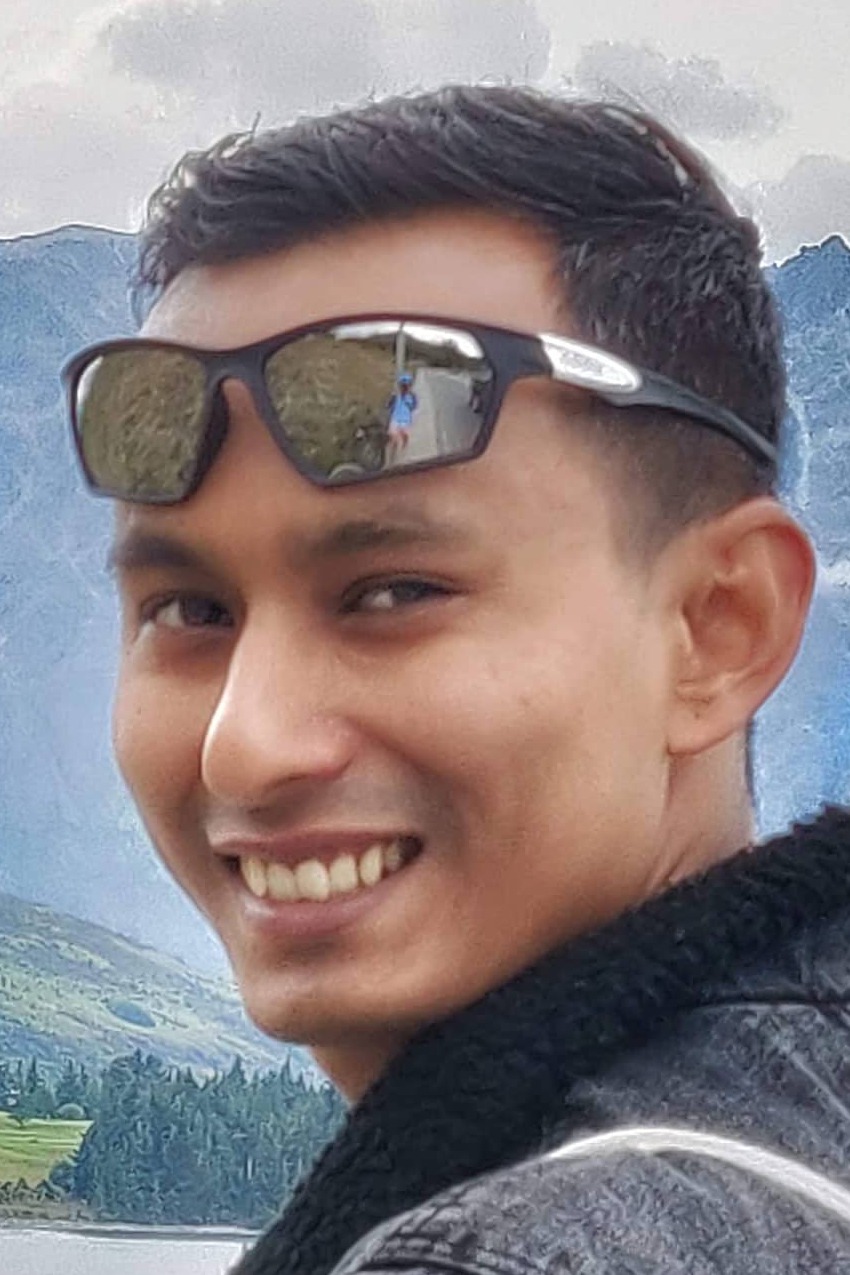
Dr. Malte Vogl is a Senior Research Fellow at the Max Planck Institute for Geoanthropology in Jena, Germany. His work bridges the history of science, computational modeling, and digital humanities, focusing on socio-epistemic networks and knowledge evolution. He has previously held research associate positions at the Max Planck Institute for the History of Science in Berlin. PhD in Physics Researcher in ModelSEN (BMBF-funded) Contributor to DARIAH and TOPOI projects Developer of simulation tools like SciCom Research Interests Dr. Vogl investigates knowledge evolution through network analysis and agent-based modeling, particularly in historical contexts. His work explores: Epistemic communities in early modern science Socio-epistemic network frameworks Quantum criticality in many-body systems Temporal network modeling of historical communication Research data infrastructure development Mathematical epistemology of historical knowledge His recent publications focus on simulating historical communication networks and analyzing archival data survival biases. He integrates computational methods with historical scholarship to uncover dynamics of knowledge transformation.
Prof. Jenna Koenen holds the Chair of Chemistry Education at the Technical University of Munich (TUM), focusing on innovative educational methodologies in chemistry instruction. Her work emphasizes digital tools like SpinDrops simulations, inquiry-based learning frameworks, and teacher professional development. She investigates cognitive processes in scientific inquiry, visual literacy, and the integration of technology in STEM education. Her research spans topics such as: Design of interactive visualizations for organic chemistry concepts Evaluation of digital vs. traditional learning materials Metacognitive strategies in laboratory settings Teacher training programs emphasizing professional knowledge development Key contributions include frameworks for assessing experimental competencies and boundary object approaches to interdepartmental collaboration. Her work bridges chemistry content mastery with pedagogical innovation, particularly in fostering scientific thinking among pre-service teachers. Recent studies explore motivational impacts of narrative-based learning materials, visual literacy training for scientific image interpretation, and equity-focused teacher development initiatives in underserved educational contexts.
Professor Alessio Gagliardi is an Associate Professor at the TUM School of Computation, Information and Technology , Technische Universität München. His academic career includes a tenure-track position since 2014 and promotion to Associate Professor in 2020. He contributes to the development of the TiberCAD and GDFTB simulation software and integrates machine learning into materials science research. Education: Engineering degree from the University of Rome Tor Vergata (Italy) Doctorate in Physics from the University of Paderborn (2007) Postdoctoral research at Bremen Center for Computing Materials and Rome Research Interests: Prof. Gagliardi’s work focuses on simulating nanostructured devices for energy conversion, including organic semiconductors, perovskite solar cells, and electrochemical systems. His methods span nanoscale ( density functional theory , quantum Green’s functions), mesoscale ( kinetic Monte Carlo ), and macroscopic ( drift-diffusion models). Recent efforts emphasize machine learning applications for multiscale modeling and experimental-theoretical integration. Articles Overview: Recent publications explore machine learning optimization in materials design, nanoscale simulations for energy devices, and advancements in electrocatalysts. Key themes include improving platinum electrocatalyst efficiency, perovskite solar cell stability, and AI-driven predictions for material performance. Labs/Teams: Active in software development teams for TiberCAD and GDFTB , advancing computational tools for materials science and energy systems.
Prof. Christian Stemmer is a Professor of High-Speed Aerodynamics at the Technical University of Munich (TUM), affiliated with the TUM School of Engineering and Design and the Department of Aerodynamics and Fluid Mechanics. His research focuses on hypersonic flows, boundary layer transition, thermal and chemical nonequilibrium phenomena, and research data management. Stemmer holds a Dr.-Ing. habil. and has extensive international experience, including postdoctoral work at Stanford University and NASA Ames. Career highlights: Appointment as extraordinary professor in 2019, leadership roles in the Collaborative Research Center TRR40 (SFB/TRR40), and membership in editorial boards such as Advances in Aerodynamics . Awards: 2020 NATO AVT Panel Excellence Award for contributions to hypersonic flow research. Key projects: Investigation of hypersonic boundary layer transition under high-enthalpy conditions, development of numerical models for rocket combustion chambers, and leadership in national and international research consortia. His work bridges fundamental fluid mechanics with aerospace engineering applications, emphasizing high-performance computing and data-driven methodologies. Recent contributions include studies on roughness-induced instabilities, shock-wave interactions, and metadata extraction frameworks for HPC workflows.
Dr. Markus Kowarschik is a researcher affiliated with the Chair of Computer Science Applications in Medicine at Technical University of Munich under Prof. Nassir Navab. His work focuses on interventional imaging, blood flow quantification, and tomographic reconstruction. He contributes to labs like DHM (Deutsches Herzzentrum München), NARVIS, and IFL, advancing medical imaging and AI applications in healthcare. His teaching includes courses on medical procedures, robotics, and deep learning in medical contexts. Recent research emphasizes AI-driven solutions for endovascular procedures, motion compensation in imaging, and 3D pose estimation. His research interests span medical image analysis, computer vision, and generative models applied to surgical data science. Key projects involve developing datasets for benchmarking, improving X-ray imaging systems, and integrating simulation for medical training. He has no listed awards but maintains an active publication record in top-tier journals and conferences. Labs and collaborations include the NARVIS Lab (navigation and robotics), DHM for cardiac imaging, and GenAI initiatives exploring generative models. His work bridges clinical needs with computational methods, addressing challenges in radiation dosimetry, robotic control systems, and real-time imaging analysis.
Razvan-Mihai Ursu is a Researcher at the Chair of Communication Networks (Lehrstuhl für Kommunikationsnetze) at the Technical University of Munich, led by Prof. Wolfgang Kellerer. His research focuses on cloud-native network functions (CNFs), Kubernetes-based orchestration, energy-efficient telecom cloud architectures, and network security in open RAN systems. He holds a Master’s degree in Electrical Engineering and Information Technology from TUM (2023) and has been actively involved in the Chair since June 2023. Key research areas include: Design and optimization of Kubernetes orchestration for telecom core networks Energy-efficient redundancy models for telco applications Simulation frameworks for multi-tier Kubernetes deployments (e.g., using Shadow simulator) Security vulnerabilities in O-RAN nearRT-RIC platforms Autonomous network adaptation via digital twins He supervises master’s theses on topics such as CNF orchestration tools evaluation, energy optimization in Kubernetes clusters, and security testing of FlexRIC platforms. His work aligns with projects like the 6G Future Lab Bavaria and the ERC Network Flexibility initiative. Current projects involve advancing simulations for Kubernetes-based systems and developing mathematical models to optimize telecom cloud redundancy for energy efficiency while maintaining service availability.
Maximilian Rabe is a Postdoctoral Researcher in the Department of Experimental and Biological Psychology at the Faculty of Human Sciences, University of Potsdam, with a secondary affiliation at the University of Copenhagen. Currently on parental leave until September 22, 2025, he maintains active research involvement in computational cognitive science, with particular focus on eye-movement dynamics during reading processes and psycholinguistic modeling. His dual institutional appointments reflect his interdisciplinary research bridging German and Danish academic communities. Dr. Rabe completed his academic training with a B.Sc. in Psychology from the University of Potsdam (2016), followed by an M.Sc. in Psychology - Cognition and Brain Science from the University of Victoria, Canada (2018), and earned his Ph.D. in Cognitive Science from the University of Potsdam in 2024 under the supervision of Ralf Engbert and Shravan Vasishth. His research program centers on computational and statistical modeling of cognitive processes, with specific expertise in eye-movement control, psycholinguistics, and memory systems. Dr. Rabe develops integrated cognitive architectures that simulate how humans process language and allocate visual attention during reading. His methodological approach combines experimental psychology with advanced Bayesian statistics and dynamical systems theory to create predictive models of cognitive behavior. Analysis of his publication trajectory reveals a consistent focus on developing sophisticated computational frameworks for understanding reading processes, with increasing emphasis on integrated models that couple syntactic processing with eye-movement control. A distinctive feature of his work is the development of specialized methodological tools, particularly R packages that advance research practices in cognitive science. His publications span high-impact journals in psychology, cognitive science, and methodology, demonstrating strong interdisciplinary reach. Dr. Rabe is actively involved in multiple research projects funded by the German Research Foundation (DFG), including Project B03 of Collaborative Research Center 1287 on eye-movement control and parsing processes, and Project B03 of CRC 1294 on parameter inference in dynamical cognitive models. His work at the University of Copenhagen investigating visual attention in virtual reality environments receives support from Villum Fonden. As a methodological innovator, Dr. Rabe has developed and maintains several important R packages including hypr for hypothesis-driven contrast coding, designr for experimental design, appRiori for Bayesian analysis, and RStanTVA for visual attention modeling. His commitment to open science practices is evident in his software development and preprint sharing. Working within Ralf Engbert's research group at the University of Potsdam, Dr. Rabe contributes to a vibrant interdisciplinary environment that combines experimental psychology, computational modeling, and advanced statistical methods. His research has implications for understanding fundamental cognitive processes and developing more accurate models of human information processing during language comprehension.
Dr. Justin Calabrese is the Head of Earth Systems Research at the Center for Advanced Systems Understanding (CASUS) , part of the Helmholtz-Zentrum Dresden-Rossendorf (HZDR) . His work integrates ecology, epidemiology, and computational modeling to address complex systems-level challenges. Research Interests: Dr. Calabrese specializes in Ecological modeling of animal movement and habitat use Epidemiological dynamics of disease outbreaks Computational tools for spatial and temporal data analysis Conservation biology applications Key Contributions: He develops advanced methodologies like the ctmm R package for movement analysis and applies mathematical frameworks to problems ranging from wildlife-vehicle collisions to pandemic response strategies.
Dr. Michael Hecht leads the Mathematical Foundations of Complex System Science group at the CASUS - Center for Advanced Systems Understanding , part of the Helmholtz-Zentrum Dresden-Rossendorf (HZDR) . His research focuses on computational mathematics, numerical methods, and their applications in physics-informed machine learning and partial differential equations. Research Interests: Polynomial interpolation in high-dimensional spaces Topological data structure preservation in neural networks Hybrid surrogate models for complex systems Uncertainty quantification and numerical integration Recent Trends in Publications highlight advancements in polynomial-based methods for machine learning, numerical solutions to PDEs, and open-source tools like UQTestFuns and Minterpy , emphasizing efficiency and approximation accuracy across disciplines. Scientific Awards & Recognition: HZDR Innovation Contest participant ORCID: 0000-0001-9214-8253 Labs & Teams: Affiliated with the CASUS - Center for Advanced Systems Understanding , contributing to complex system science through interdisciplinary research in mathematics, computer science, and physics.
Felix Binkowski is a researcher at the Zuse Institute Berlin within the Modeling and Simulation of Complex Processes department and Computational Nano Optics group. His work focuses on computational methods for photonic systems and quantum technologies. Position: Researcher Email: binkowski@zib.de Research Interests include: modal analysis of nanophotonic devices, resonance phenomena in non-Hermitian systems, Purcell effect optimization for quantum emitters, and application of Riesz projections to eigenvalue problems. His projects span from theoretical developments to experimental validation of optical materials. Key methodologies: AAA rational approximation, Riesz projections, Gaussian process optimization Application areas: photovoltaics, nanolasers, plasmonic systems Recent Publications (2024-2025) demonstrate expertise in: computational resonance extraction, pole-zero analysis of photonic systems, and uncertainty-guided design optimization. Notable works include software frameworks for resonance expansion (RPExpand) and studies on Purcell enhancement in 2D material-based nanoresonators. Education includes a doctoral degree (2023) from Freie Universität Berlin under Christof Schütte, and a Master's (2017) from Technische Universität Berlin with advisors Jörg Liesen and Martin Weiser.
Prof. Dr. Nicolas R. Gauger is a Full Professor and Chairholder for Scientific Computing at the University of Kaiserslautern-Landau (RPTU), holding dual appointments in the Department of Mathematics and Department of Computer Science. Since February 2015, he has also served as Director of the Computing Center (RHRZ) at RPTU. His academic career includes positions as Assistant Professor at Humboldt University Berlin (2005-2010), Associate Professor at RWTH Aachen University (2010-2014), and a Visiting Professorship at MIT (March-August 2014). Prof. Gauger earned his Master in Mathematics from Leibniz University of Hanover in 1998 and his Ph.D. in Applied Mathematics from Braunschweig University of Technology in 2003. Prior to his professorial positions, he worked as a Research Scientist in Numerical Methods for Aerodynamics at the German Aerospace Center (DLR) in Braunschweig from 1998 to 2010, while also being a Member of the DFG Research Center MATHEON in Berlin from 2006 to 2010. His research spans multiple disciplines within computational science and engineering, with primary interests in Nonlinear Optimization, Numerical Optimization, Optimization and Control with PDEs, Aerodynamic Shape Optimization, Computational Fluid Dynamics (CFD), Computational Aeroacoustics (CAA), Algorithmic Differentiation (AD), Machine Learning (ML), and High-Performance Computing (HPC). His work bridges theoretical mathematics with practical engineering applications, particularly in aerospace and medical physics. Recent publications show a strong trend toward integrating differentiable programming techniques with traditional computational methods, especially in optimizing experimental setups in fundamental physics and medical applications like proton therapy. Among his notable recognitions are being named an Associate Fellow of the American Institute of Aeronautics and Astronautics (AIAA) in August 2018, receiving a Teaching Award (June 26, 2025), and a Best Student Paper Award at AIAA Aviation 2020. He serves on the Managing Board of ERCOFTAC (European Research Community on Flow, Turbulence and Combustion) and the Steering Committee of the ERCOFTAC Special Interest Group on Design Optimization. Prof. Gauger has been actively involved in multiple research initiatives including the Research and Development Lab 'Data Analysis and Artificial Intelligence' of the Fraunhofer Performance Center (vice spokesperson since March 2016), AICES (2010-2019), (CM)^2 (2014-2019), MathApp (2019-2024), and currently MSO (Modelling, Simulation and Optimisation) since 2024. He leads a research team of approximately 15 members working on projects related to algorithmic differentiation, computational fluid dynamics, and optimization methods. His laboratory, the Scientific Computing research group at RPTU, is involved in multiple interdisciplinary projects including SIVERT (pCT) for fighting cancer with AI and the 'AI Care' project. The team has developed several important software tools including CoDiPack, OpDiLib, and SU2, which are widely used in the computational science community for algorithmic differentiation and aerodynamic optimization.
Lars Bilke is a Researcher at the Department of Environmental Informatics , Helmholtz Centre for Environmental Research - UFZ, Germany. His work focuses on software development for the OpenGeoSys simulation platform, build engineering for multiplatform systems, scientific 3D visualization, and virtual reality applications in environmental modeling. He leads the Software Engineering and Visualization workgroup and contributes to projects like TESSIN VISLab. Research interests include: Open-source geosimulation software development Multiplatform build systems Scientific visualization techniques Virtual reality for environmental data His publications from 2021-2025 cover advancements in geoscientific software tools, with a focus on OpenGeoSys and OGSTools versions. These works emphasize environmental system modeling, computational hydrosystems, and 3D data visualization methodologies. Bilke collaborates with teams on projects related to subsurface engineering, reactive transport modeling, and environmental risk assessment. Contact: lars.bilke@ufz.de
Afid Nur Kholis is a Researcher at the Helmholtz Centre for Environmental Research - UFZ in the Department of Environmental Informatics . His work focuses on Scientific 3D Visualization , Virtual Reality applications , and software development for environmental simulations , particularly through contributions to the open-source OpenGeoSys and OGSTools platforms. He collaborates on computational hydrosystems , reactive transport modeling , and environmental data integration . Research Interests: Primarily centered on multi-layered domain boundary rendering , groundwater flow modeling , and interactive visualization for hydrological systems. His projects address saline intrusion , radionuclide migration , and urban microclimate impacts . Publications: Recent work includes versions of OpenGeoSys (2025) and OGSTools (2025), with a focus on environmental informatics and open-source simulation frameworks . Earlier contributions (2023-2024) involve hydro-mechanical effects in clay rocks and multi-compartment water dynamics .
Felix Pohl is a postdoctoral researcher at the Helmholtz Centre for Environmental Research (UFZ) in Leipzig, Germany, affiliated with the Department of Computational Hydrosystems . His work focuses on data-driven analysis of ecosystem fluxes and the impact of extreme weather events, particularly droughts, on environmental systems. Education : M.Sc. in Applied Physical Geography, University of Würzburg (2013-2016) B.Sc. in Geography with minor in Philosophy, University of Würzburg Dr. Pohl’s research investigates climatic and environmental changes , the impact of weather extremes on ecosystems , and mitigation strategies for climate change. He also emphasizes science communication and addressing climate change skepticism through interdisciplinary dialogue. His recent publications highlight trends in drought legacy effects , hydrometeorological modeling , and ecosystem phenology across temperate forests. Articles span topics like soil moisture dynamics , carbon cycling , and remote sensing applications for environmental monitoring. Scientific Recognition : Co-author on ASCE-EWRI 2023 Award-winning study (Mai et al., 2021) for Best Case Study in Hydrologic Engineering Dr. Pohl collaborates with teams at ICOS , TERENO , and 4DHydro projects, contributing to robust drought forecasting systems and high-resolution environmental data infrastructure .
Pallav Kumar Shrestha is a postdoctoral researcher at the Helmholtz Centre for Environmental Research (UFZ) since 2017, focusing on Computational Hydrosystems in Leipzig, Germany. His work centers on resolving challenges in global hydrological modeling, particularly for small catchments and reservoir systems. Developed subgrid catchment conservation method for gridded hydrological models Created new reservoir module for mHM Contributor to Nature Communications flood early warning system paper Research Themes : Flood forecasting at global/regional scales Reservoir modeling in regulated basins Climate change impacts on water resources Computational hydrosystems development Environmental informatics for global hydrology Key Projects : ULYSSES (Copernicus), SaWaM (BMBF), 4DHydro (ESA), and state of global water resources (WMO). His 2025 ASCE-EWRI award paper on Great Lakes runoff intercomparison highlights his collaborative impact. Modeling Expertise : Active member of the mHM development team , contributing to debugging, user support, and training across Europe and Asia. His technical skills bridge Fortran programming for skill assessment tools and ecFlow automation systems.