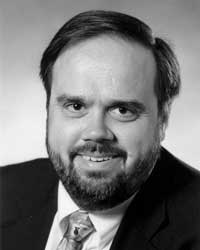
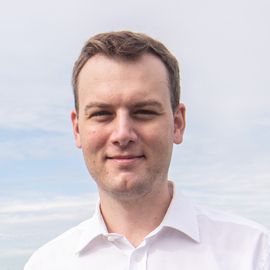
Martin T. Wells is the Charles A. Alexander Professor of Statistical Sciences at Cornell University, with joint appointments in the Department of Statistical Science, Department of Biological Statistics and Computational Biology, Department of Social Statistics, and as Professor of Clinical Epidemiology and Health Services Research at Weill Medical School. He serves as Editor-in-Chief of the ASA-SIAM Book Series and Co-Editor of the Journal of Empirical Legal Studies. Cornell University, Ithaca, NY Weill Cornell Medical College Research Interests span applied and theoretical statistics, Bayesian methods, biostatistics, clinical epidemiology, and computational biology. His work bridges disciplines like finance, legal studies, and health services research. Article Trends highlight advancements in Bayesian modeling, quantum cognition machine learning, tensor analysis, and misclassification correction, with applications in genomics, finance, and public health. Fellow of the American Statistical Association Fellow of the Royal Statistical Society Contributions include developing statistical software (e.g., rTensor), methodological innovations in clinical trials, and empirical legal studies on civil rights and the death penalty.
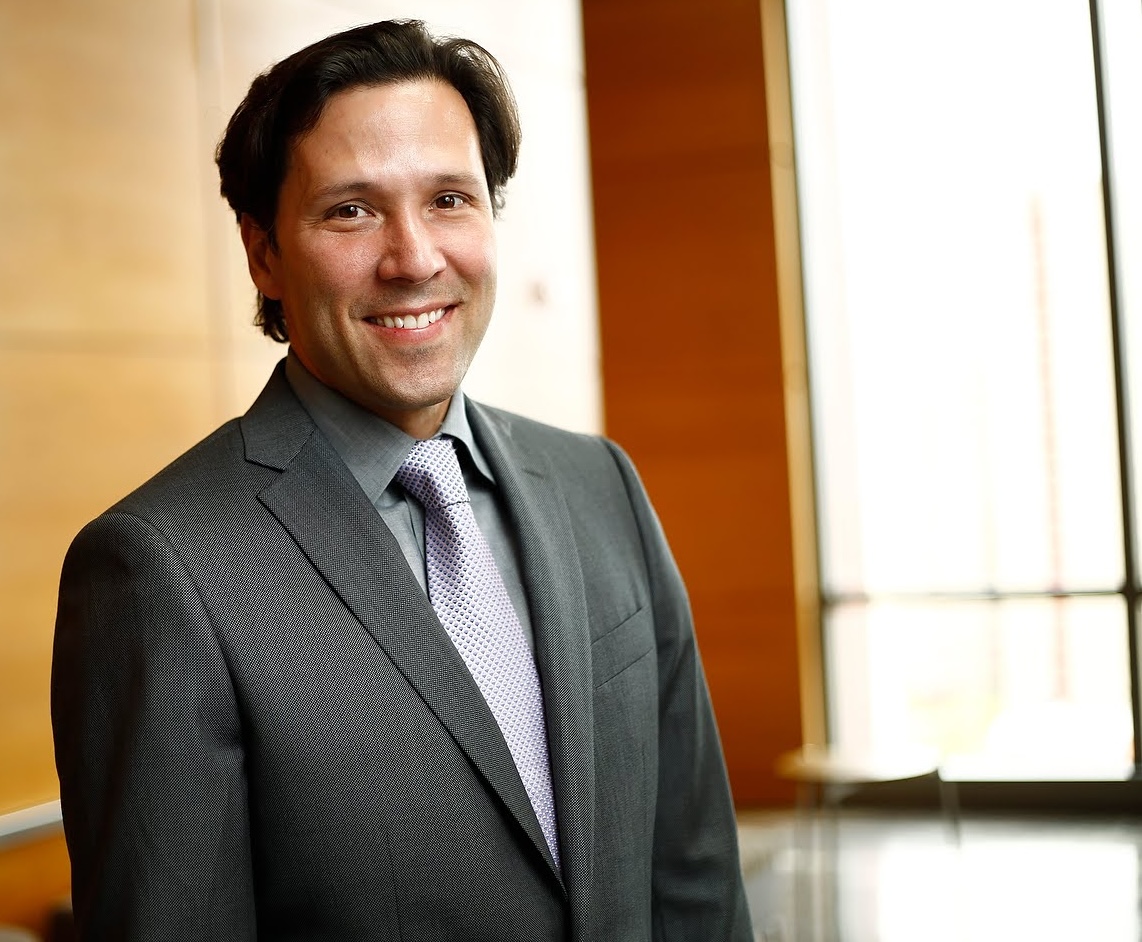
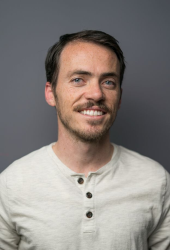
Sainyam Galhotra is an Assistant Professor in the Department of Computer Science at Cornell University. His research focuses on developing data science tools for trustworthy analytics, integrating causal inference, data management, and machine learning to enhance robustness, explainability, and fairness in algorithmic systems. PhD: University of Massachusetts Amherst (2020), advised by Barna Saha B.Tech: Indian Institute of Technology Delhi (2014), advised by Amitabha Bagchi Postdoctoral Research: University of Chicago (Computing Innovation Fellow) His work spans artificial intelligence, causal inference, and responsible data science, emphasizing ethical algorithm design and reliable data integration. Recent publications highlight advancements in fair clustering, causal feature selection, and entity resolution frameworks. His research trends from 2023–2024 include contributions to spatio-temporal data correlation, community detection in geometric graphs, and distribution-aware dataset search. Key themes are fairness in machine learning, causal modeling, and scalable data management solutions. Computing Innovation Fellowship (2021) DAAD AInet Fellow (2021) ACM SIGMOD Entity Resolution Programming Contest Finalist (2021) Krithi Ramamritham Computer Science Scholarship (2019) BEST Paper Award in SIGSOFT FSE 2017 He actively seeks PhD or Master’s students interested in data science and trustworthy AI. Contact via email: sg@cs.cornell.edu .
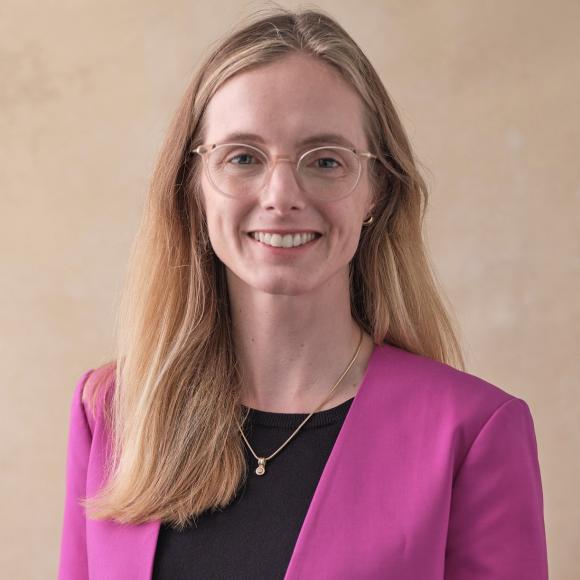
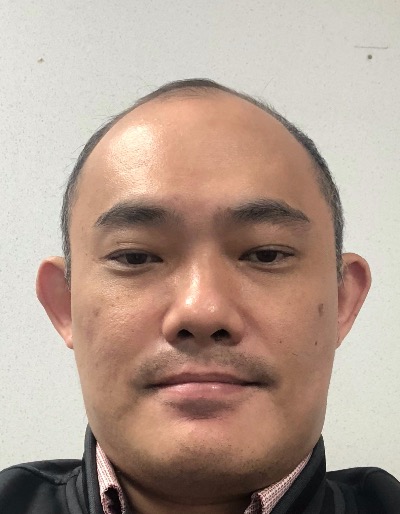
Demetris Christodoulou is an Associate Professor in Accounting, Governance and Regulation at the University of Sydney. He holds a BEcon from Piraeus University, an MSc(Fin) from the University of York (UK), and a PhD from Athens University of Economics and Business (AUEB). His research focuses on applying data analytics, econometrics, and visualization techniques to financial analysis, equity valuation, life insurance, and financial advice. He co-directs the PEMA research group, specializing in productivity and performance measurement analytics, and previously led the MEAFA research group (2007–2022). He has collaborated extensively with industry partners including Deloitte and Australian insurers, and developed training programs for over 1,000 executives. His work includes open-source contributions to Stata software and the Graph Workflow platform, alongside $662k in workshop-generated funds supporting academic programs. He has advised multiple PhD students and taught at leading universities globally. Education: BEcon in Economics (Econometrics), Piraeus University MSc in Finance, University of York (UK) PhD in Accounting and Financial Analysis, Athens University of Economics and Business His research interests span financial reporting models, life insurance underwriting strategies, and behavioral finance. Recent projects address dishonesty mitigation in insurance disclosures and the adviser effect on customer disclosures. He has published widely in top journals like the Review of Accounting Studies and Stata Journal , and his work was featured in The Australian for insights on insurance fraud reduction. He maintains international collaborations, including visiting roles at Columbia Business School and the University of Cyprus, and serves on advisory boards for organizations like Behaviour.ai. Publications highlight methodological innovations in econometrics and visualization, with 2025's upcoming Stata Journal paper advancing time-series analysis techniques. His grants include partnerships with industry on longitudinal studies of insured lives, aiming to improve risk modeling and public policy insights.
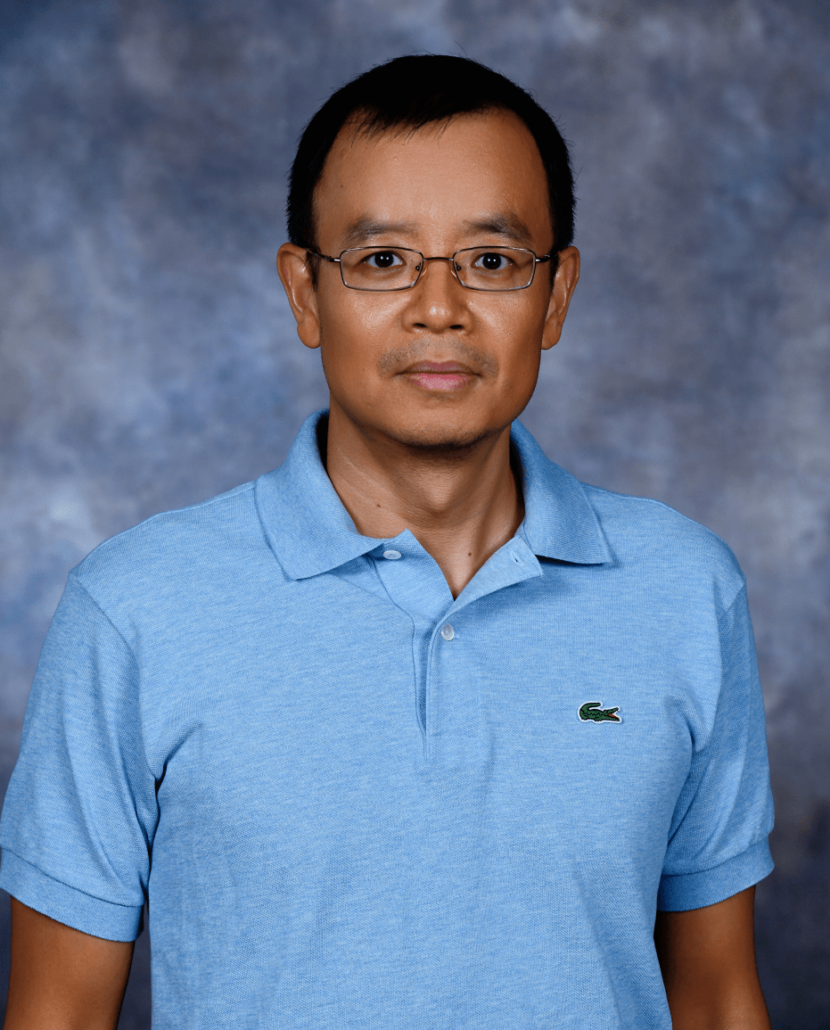
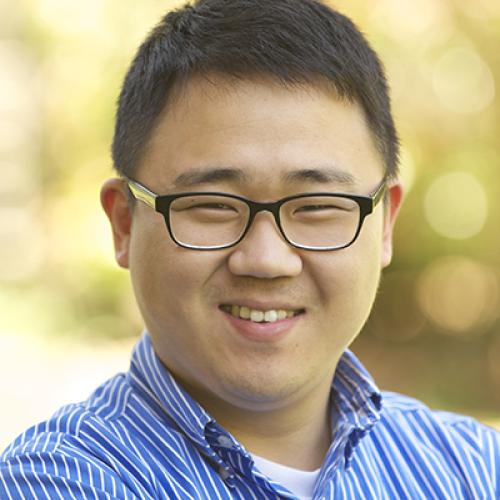
Eduardo Azevedo is the John M. Bendheim and Thomas L. Bendheim Professor of Business Economics and Public Policy at the Wharton School , University of Pennsylvania. He holds a courtesy appointment as Professor of Economics and was awarded the 2016 Sloan Foundation Fellowship. His research integrates economic theory with practical applications across science and business domains. His research interests include: Market design Selection markets Social science genetics Experimental economics Game theory Recent publication trends focus on: Economic theory applications to healthcare and digital markets Empirical Bayes methods in A/B testing Adverse selection in insurance markets Strategic behavior in two-sided matching Evolutionary behavioral economics He serves as an instructor for BEPP2500 - Managerial Economics , emphasizing real-world application of microeconomic theory to business problems. His work also involves software development for economic research, including MATLAB-based empirical Bayes tools for analyzing treatment effects in large-scale experiments. Scientific awards : Sloan Foundation Fellow (2016)
Angelo Peccerillo is a distinguished Full Professor of Petrology at the University of Perugia, Italy, with an extensive academic career spanning multiple Italian universities. He previously served as Full Professor of Petrology at the Universities of Calabria (1993-1997) and Messina (1985-1993), and as Associate Professor of Volcanology (1982-1985) and Assistant Professor (1971-1982) at the University of Florence. He earned his Laurea Degree in Geology from the University of Florence in 1970 and has been a member of Academia Europaea since his election. Peccerillo's research focuses on the petrology and geochemistry of magmatic processes, with particular expertise in igneous petrology, geochemistry, volcanology, orogenic volcanism, and continental rift magmatism. His scholarly work has established him as a leading expert in understanding the complex relationships between mantle processes, crustal interactions, and volcanic activity in the Mediterranean region and beyond. His research methodology integrates petrological, geochemical, and geophysical approaches to develop comprehensive models of magmatic systems. Analysis of Peccerillo's recent publications reveals a consistent focus on magmatic processes across diverse geological settings. His work spans from detailed studies of specific volcanic systems like the Aeolian Islands and Ethiopian Rift to broader investigations of mantle structure and geodynamic processes in the Mediterranean region. A recurring theme is the integration of multiple analytical approaches to model magma plumbing systems, understand mantle composition, and elucidate the geodynamic evolution of volcanic regions, particularly examining the relationships between deep and shallow mantle processes. Antonio Feltrinelli Price 2006 for Earth Sciences, awarded by the National Academy of Lincei, Italy Professor Peccerillo has supervised numerous MSc and PhD students both at his home institution and abroad. His editorial leadership includes serving as Chief Editor of the "European Journal of Mineralogy" from 2006 to 2008 and membership on the editorial boards of several prestigious journals including "Lithos," "Journal of Volcanology and Geothermal Research," "Geological Society of Italy Bulletin," and "Open Mineralogy Journal." He has been actively involved in research evaluation, serving on national and international panels for organizations such as NSF, ESF, CNR, MIUR, and NATO. Peccerillo maintains strong international scientific connections through visiting positions at institutions like the Australian National University, University of Gottingen, and University of Paris XI at Orsay. His leadership extends to professional organizations, having served as President of the Italian Petrology Group and currently as a Member of Academia Europaea. His administrative experience includes serving as Department Head and Coordinator of PhD programs at the Universities of Messina, Cosenza, and Perugia.
Carolin Pflueger is an Associate Professor at the Harris School of Public Policy , University of Chicago, and holds affiliations as a NBER Faculty Research Fellow and CEPR Research Affiliate . Her work bridges macroeconomics and finance, focusing on inflation dynamics, monetary policy impacts, and financial market risk perception. University: University of Chicago School: Harris School of Public Policy Affiliations: NBER, CEPR Role: Associate Professor Her research explores how inflation and monetary policy influence financial markets, including models connecting Treasury bond risk to stagflation drivers and analyzing economic agents' perceptions of policy uncertainty. Recent work leverages cross-sectional data of stock prices and economic forecasts to quantify macrofinancial linkages. Notable scientific recognitions include the Fama DFA Prize (2023), AQR Insight Award Finalist (2018), and the Arthur Warga Award (2014). She has received NSF Grant 2149193 for macrofinance research. Contact: cpflueger@uchicago.edu | GitHub Code Repositories
Francisco Barillas Bedoya is an Associate Professor at the School of Banking and Finance within the UNSW Business School, University of New South Wales. His research focuses on theoretical and empirical asset pricing, particularly portfolio choice, asset pricing tests, macrofinance, and term structure of interest rates. He has published extensively in top-tier journals like the Journal of Finance and Management Science. PhD from New York University MA from University of British Columbia BSc from Trent University His recent publications analyze Sharpe ratios for model comparison, speculative behavior in bond markets, and risk premia in fixed income markets. While no formal awards are listed, his work intersects financial economics, econometrics, and computational methods. Office: Level 3, Room 333C, Ref E12 Email: f.barillas@unsw.edu.au
Zhipeng Liao is a Professor of Economics at the University of California, Los Angeles (UCLA), where he contributes to the Department of Economics. He holds a Ph.D. from Yale University and specializes in econometric theory and applied econometrics. His research focuses on developing statistical methods for evaluating economic models, nonstationary time series analysis, and robust inference in semi/nonparametric frameworks. Professor Liao's work has been published in leading journals such as the Annals of Statistics , Econometrica , and the Review of Economic Studies . He serves on the editorial boards of several prestigious journals, including Econometric Reviews , Econometric Theory , and Journal of Business & Economic Statistics . His research interests span econometric theory, time series analysis, panel data modeling, and nonparametric inference, with applications to financial economics and macroeconomic modeling. His recent publications emphasize methodological advancements in hypothesis testing, model selection, and robust estimation techniques. These include contributions to the analysis of spatially dependent panel data, instrumental variables methods, and the evaluation of macro-finance models. His work bridges theoretical econometrics with practical applications, addressing challenges such as endogeneity, model misspecification, and computational efficiency. Liao’s editorial roles reflect his influence in shaping the direction of econometric research. His research has implications for policy analysis, financial market modeling, and empirical studies requiring rigorous statistical foundations. Despite the breadth of his contributions, no specific awards or grants are explicitly mentioned in the provided text.
Filip Biljecki is an Assistant Professor jointly appointed at the Department of Architecture within the College of Design and Engineering and the Department of Real Estate at the NUS Business School, National University of Singapore. He is the founder and principal investigator of the NUS Urban Analytics Lab and was awarded the prestigious NUS Presidential Young Professorship in 2020. With over 150 peer-reviewed publications, his research bridges geomatic engineering, geospatial technologies, and urban data science to advance digital twins and data-driven urban planning. Dr. Biljecki's educational background includes: PhD in 3D GIS (cum laude), Delft University of Technology, Netherlands (2017) MSc in Geomatics, Delft University of Technology, Netherlands (2010) BSc in Geodesy and Geoinformatics, University of Zagreb, Croatia (2008) His research interests focus on emerging urban data sources, particularly urban imagery, and their application in 3D city modeling, digital twins, and GeoAI. He explores how crowdsourcing and open science can inform cutting-edge techniques for urban sensing and analytics at city-scale. His work significantly contributes to establishing smart cities through innovative methods that integrate recent advancements in computer science, geomatics, and urban data science. Analysis of his recent publications reveals a strong focus on street view imagery applications for urban analytics, digital twin development, and geospatial AI. His research spans multiple domains including urban morphology, environmental assessment, public health applications, and urban comfort analysis. The interdisciplinary nature of his work is evident in collaborations with researchers from diverse fields, producing impactful studies that address complex urban challenges through innovative methodological approaches. His notable scientific achievements include: Annual Teaching Excellence Award (ATEA), 2025 College Educator Award AY2023/2024, 2025 Urban Informatics Paper of the Year Award, 2023 Top 2% scientists worldwide (Stanford University), 2021 Presidential Young Professorship (NUS), 2020 As an educator, Dr. Biljecki has supervised dozens of students leading to publications in leading journals and placements at top universities and organizations. He has delivered talks at over 120 universities and organizations worldwide including MIT, Stanford, Harvard, and ETH Zurich. His research is supported through various grants and affiliations including his role as Principal Investigator at the Future Cities Lab Global at the Singapore-ETH Centre. The NUS Urban Analytics Lab, which he established, brings together scholars from diverse disciplines to drive research on making cities smarter and more data-driven. The lab has developed innovative tools like ZenSVI for street view imagery analysis and has produced influential research on urban digital twins, urban morphology, and GeoAI applications. Through his leadership, the lab continues to pioneer methods that advance data-driven urban planning and smart city development.
Fabio Sigrist is a Professor of Applied Statistics and Data Science at the Institute of Financial Services Zug (IFZ) , part of the Lucerne University of Applied Sciences and Arts . He also holds a Senior Scientist and Lecturer position at the Seminar for Statistics, ETH Zurich . His career spans academic research, industry consulting, and project leadership in finance and data science. PhD in Statistics (2013), ETH Zurich MSc in Mathematics with distinction (2008), ETH Zurich MEd in Mathematics Education (2008), ETH Zurich Sigrist’s research focuses on integrating Machine Learning with Spatial Statistics for applications in Financial Econometrics and Credit Risk . His work includes developing novel algorithms like GPBoost and KTBoost , advancing spatio-temporal modeling , and applying tree-based boosting to financial problems. Projects such as CreHos (credit risk in hospitality) and NISMO (interpretable real estate modeling) highlight his interdisciplinary approach. His publications address challenges in large-scale spatial data , loss given default modeling , and stock volatility prediction . He contributes to software development with tools like spate (R package) and varycoef (spatially varying coefficients).
Taylor Sparks is a Professor of Materials Science and Engineering at the University of Utah, where he also serves as Director of Graduate Affairs for the John and Marcia Price College of Engineering. He holds a PhD in Applied Physics from Harvard University, an MS in Materials from the University of California, Santa Barbara, and a BS in Materials Science & Engineering from the University of Utah. His research focuses on advancing materials discovery using machine learning to streamline and optimize material design, with applications in energy materials, dental materials, and sustainable engineering. His work integrates big data and materials informatics to explore new synthetic techniques, structure-property relationships, and sustainable materials that balance performance with economic factors. The Sparks Research Group has secured funding from agencies including DOE, NSF, DOD, and various industry partners. Sparks' recent research output demonstrates a strong trend toward leveraging artificial intelligence and machine learning to accelerate materials discovery, with particular emphasis on large language models for materials science, Bayesian optimization for experimental design, and novel approaches to crystal structure prediction. His work bridges the gap between theoretical predictions and experimental validation in materials science. NSF CAREER Award Royal Society Wolfson Visiting Fellow Acta Materialia Outstanding Reviewer Award for 2020 Honorary Outstanding Faculty Teaching Award of 2020-2021 Materials Science & Engineering Department Research Award for 2023 John G. Francis Prize for Undergraduate Student Mentoring Sparks has advised numerous graduate students who have gone on to successful careers in academia and industry. His research has been supported by significant grants from NSF, DOE, DOD, Army Research Office, and industry partners. His group has developed innovative tools including the Materialism Podcast, a materials science YouTube channel, and the Honegumi interface for Bayesian optimization, demonstrating his commitment to both research excellence and science communication. The Sparks Research Group operates multiple laboratories focused on materials characterization, synthesis, and informatics. They collaborate extensively with other institutions globally, host visiting researchers, and run outreach initiatives including the Materialism Podcast and YouTube channel to make materials science more accessible to broader audiences.
Prof Nigel Mehdi is the Director of the DPhil in Sustainable Urban Development at the University of Oxford's Department for Continuing Education, where he also serves as a Departmental Lecturer. He is a Fellow of Kellogg College, Oxford, and holds an Honorary Professorship in the School of Computer Science at the University of Birmingham. Additionally, he serves as Programme Director for the UAE National Artificial Intelligence Programme. Education: PhD in Real Estate Economics from London School of Economics Postgraduate qualifications in Software Engineering, Politics, Development and Democratic Education, Sustainable Development, Digital Education, and Professional Education and Training Research Interests: Prof Mehdi's research sits at the intersection of urban economics , digital technologies , and sustainable development . His work focuses on applying advanced technologies like AI and big data analytics to urban challenges. Key areas include: Real estate sustainability and economics Smart cities and intelligent buildings Spatial big data applications in urban planning Digital education for sustainability Urban resilience and governance Property technology (PropTech) innovations Research Trends: His recent publications demonstrate a clear focus on future-oriented urban governance , with multiple 'Executive Outlook' reports examining privacy, governance, money, ESG, and work in 2030+ scenarios. These works bridge academic research with practical policy implications for urban development. His earlier works focus on technological applications in surveying and urban development, showing an evolution from technical implementation to strategic foresight. Awards and Recognition: OUSU Outstanding Tutor (2017) Fellow of the Royal Institution of Chartered Surveyors Fellow of the British Computer Society Fellow of the Higher Education Academy Teaching and Supervision: Prof Mehdi leads the DPhil in Sustainable Urban Development programme and teaches on the Master's in Sustainable Urban Development. He welcomes doctoral applications in areas including: Real estate sustainability Spatial big data and smart cities Digital economies and urban analytics AI applications in urban contexts Urban resilience and governance Professional Roles: He serves as Chair of the UK Education Standards Board for the Royal Institution of Chartered Surveyors and as an Accreditation Team member for the Institution of Engineering and Technology. His consultancy work spans public and private sectors, including governments, NGOs, and global corporations.
Dr. Chee Kiat Seow is an Associate Professor at the University of Glasgow's School of Computing Science. He holds a PhD from Nanyang Technological University (NTU) and an MSc from the National University of Singapore (NUS). His research focuses on cyber-physical security, wireless communication localization, and IoT systems leveraging AI/ML. He has led projects valued in the millions, winning awards like the IEEE Best Student Paper and National Instruments Engineering Impact Awards. Education: PhD (NTU), MSc (NUS) Research: Specializes in UWB positioning, spoofing detection, and IoT integration with 5G/GNSS. Teaching: Courses include Big Data, Software Engineering, and Data Analytics. His recent work addresses NLOS mitigation in indoor localization and cyber-physical security threats. Over 63 publications span journals like IEEE Transactions and conferences such as IPIN and WF-IoT. Supervised 6+ PhD/MSc students on topics like autonomous robotics and AI-driven localization. Grants: Includes $853K for 5G-X Smart Building projects and $797K for GNSS signal authentication. Awards: IEEE PIERS Best Student Paper (2019), NI Engineering Impact Awards (2015-2016). He advises on IoT and cybersecurity for organizations like ARTC and National Instruments. Active in IEEE Signal Processing and Computer Society.
Dr. Heesung Woo is an Assistant Professor of Advanced Forestry at the College of Forestry, Oregon State University , specializing in robotics, sensor integration, and precision forestry. His work focuses on autonomous forestry machinery, AI-driven forest management, and sustainable practices. He advises two graduate students and collaborates internationally through research projects. Research Interests: Autonomous Forest Machinery Development Sensor Integration & ICT Solutions Precision Forestry via Remote Sensing/LiDAR/GIS Machine Learning for Forest Inventory Advanced Forestry Practices for Sustainability Publications emphasize innovative applications of technology in forestry, including LIDAR integration, harvester data analytics, and carbon offset project modeling. His work bridges engineering, environmental science, and policy. Dr. Woo leads the Advanced Forestry Lab at Oregon State, focusing on real-world deployment of cutting-edge technologies to address challenges in forest operations, sustainability, and resource optimization.
Dr. Thilina Halloluwa is a Teaching Focused Lecturer in the Department of Human-Centred Computing at The University of Queensland (UQ). He holds a PhD in Human-Computer Interaction from Queensland University of Technology (2019) and a Computer Science undergraduate degree from the Sri Lanka Institute of Information Technology. With over 15 years of academic and industry experience, his research emphasizes real-world impact in education technology, financial inclusion, smart agriculture, and HCI. Educational Background: PhD in Human-Computer Interaction, Queensland University of Technology (2019) Bachelor of Computer Science, Sri Lanka Institute of Information Technology Research Interests: Education for All: Leveraging technology to enhance collaborative learning and social experiences in education. Human Money Interaction: Designing ethical AI solutions for financial services, particularly for underserved communities. Smart Agro: Developing AI-driven tools for crop disease detection, yield optimization, and precision agriculture. Software Project Estimation: Improving effort estimation accuracy through explainable AI (Metrix project). Key Contributions: Developed UrbanAgro (tomato disease detection) and BellCrop (bell pepper disease datasets). Pioneered Dhana Labha , a financial management tool for rural Sri Lankan communities. Advanced online exam proctoring systems for low-resource settings. Previous Roles: Lecturer at University of Sydney (2023) Senior Lecturer at University of Colombo (2013–2023) Lab/Team Affiliations: Smart Agro Project: AI-driven agricultural solutions Metrix Initiative: Software project estimation frameworks