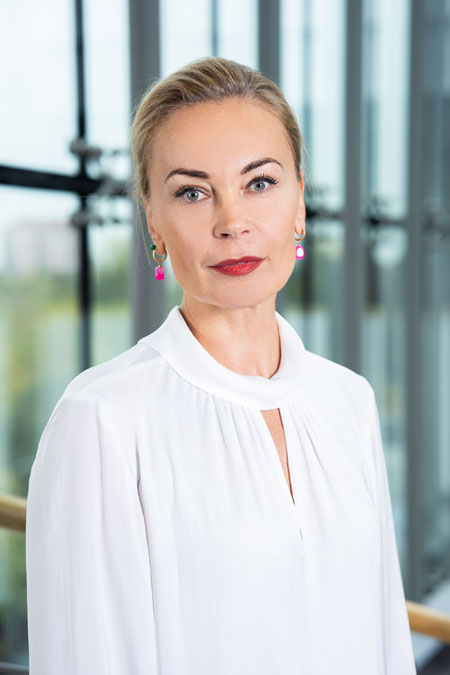
Dr. Jarosław Emilianowicz holds a PhD in Electrical Engineering and serves as a researcher at the Department of Telecommunications and Teleinformatics within Wrocław University of Science and Technology's Faculty of Information and Communication Technology. Doctoral degree in Electrical Engineering Specializes in electromagnetic field applications and wireless communication systems Active in LPWAN technologies and IoT implementations His research spans electromagnetic field shaping, wireless sensor networks, and real-time location systems. Recent work focuses on LoRaWAN-based environmental monitoring in large buildings, demonstrating practical IoT applications for smart infrastructure. Publications show expertise in microwave techniques, WLAN security analysis, and embedded communication systems. Key technical interests include signal processing algorithms, secure wireless transmission mechanisms, and microprocessor-based measurement devices. Active in conference proceedings and book chapters related to telecommunications applications, with contributions appearing in IEEE publications and Polish technical monographs.
Dr. Oksana Dubinina is an Assistant Professor at the Department of Didactics, School Education and Pedagogy within the Institute of Pedagogy, Faculty of Social Sciences, at the John Paul II Catholic University of Lublin. Her work focuses on pedagogical innovation, educational technology, and teacher training, with a particular emphasis on developing research competences and cognitive strategies for gifted youth. Current affiliation: John Paul II Catholic University of Lublin Role: Assistant Professor Research areas: Pedagogy, Educational Technology, Gifted Education Research Interests: Dr. Dubinina’s research spans pedagogical methodologies for history teachers, the integration of information technologies in education, and strategies for fostering gifted children’s cognitive development. She explores educational reforms through the lens of multilateral personality learning and blended learning frameworks. Scientific Achievements: 2024: Program council member of Ukrainian Society 2023: Visiting professorship at National Research Center in Warsaw 2022: Member of national expert team at Information Society Development Foundation Collaborative Work: Dr. Dubinina frequently collaborates with scholars such as Andriy Borovyk, Tetiana Burłajenko, and Krystyna Chałas, contributing to publications on digital education, curriculum innovation, and pandemic-era teaching practices.
Dr. Bartłomiej Jefmański is a Professor at the Department of Econometrics and Informatics at the Wrocław University of Economics – Jelenia Góra Branch. His work focuses on applying fuzzy logic and multi-criteria decision-making (MCDM) methodologies to address challenges in business sustainability, digital transformation, and organizational diversity management. He has pioneered the development of the IFMCDM R package, an open-source tool for intuitionistic fuzzy decision analysis. His research spans diverse areas including Industry 4.0 technologies' impact on sustainability, regional smart specialization, and employee satisfaction benchmarking. Notable contributions include frameworks for measuring subjective quality of life using fuzzy synthetic measures and analysis of renewable energy investment attitudes. Publications (2021-2025) highlight trends in digital transformation's role in Industry 4.0, diversity management benefits in V4 countries, and applications of intuitionistic fuzzy TOPSIS in service quality evaluation. His work bridges theoretical advancements in fuzzy set theory with practical business and policy applications. Jefmański collaborates with local governments and enterprises on sustainability strategies, contributing to regional development initiatives. His research emphasizes methodological innovations in data analytics and decision support systems for SMEs.
Dr. Michał Jakubiak is affiliated with the Department of Logistics at Wrocław University of Economics. His research focuses on optimizing logistics and supply chain systems, with a particular emphasis on ERP implementations, warehouse management, municipal waste collection, and simulation-based process improvement. He has contributed to advancing methodologies for order picking efficiency, product availability metrics, and the application of the SCOR model in supply chain analysis. His work spans theoretical and applied aspects of logistics, including studies on master data minimization in production planning, the impact of storage methods on warehouse efficiency, and the use of simulation tools to evaluate order picking concepts. He also explores challenges in the construction and pharmaceutical industries related to supply chain accessibility and inventory management. His publications consistently address practical applications of logistics research, bridging academic theory with real-world operational challenges in both private and public sectors.
Dr hab. Sylwia Stańczyk is an Associate Professor at the Department of Transformation and Development of Organization, Wrocław University of Economics and Business (UEW). Her research focuses on strategic management, interorganizational relationships, business ecosystems, and network identity. She has authored two monographs and numerous articles in journals such as European Management Journal and Industrial Marketing Management , emphasizing triangulation methodology and relational approaches. Her research interests include co-evolution, innovation dynamics, and the attributes of strategic relationships, with a particular emphasis on coopetition and trust mechanisms in business networks. She actively contributes to the academic community through systematic literature reviews and methodological frameworks in management studies. Notable publications include works on coopetition performance, interorganizational relationship lifecycle analysis, and business ecosystem identity. Her work bridges theoretical insights with practical implications for organizational collaboration and strategic adaptability. Education: Not explicitly stated in the text. Labs/Teams: Research focuses on organizational routines, strategic networks, and innovation ecosystems. Grants/Awards: None explicitly mentioned, though her work has been supported by grants such as UMO-2020/39/B/HS4/00935.
Bartosz Kołodziejek is an Associate Professor at the Faculty of Mathematics and Information Science, Warsaw University of Technology. His research lies at the intersection of probability theory and mathematical statistics, with a focus on stochastic fixed point equations, free probability, and graphical models. He actively publishes in top-tier journals and maintains a strong collaborative network. His research interests include: Stochastic fixed point equations and their applications Characterizations of probability distributions on symmetric and homogeneous cones Free probability and free convolution Graphical models and high-dimensional statistics Symmetry in Gaussian models and model selection Perpetuities and tail behavior of stochastic recursions The analysis of his recent publications reveals a consistent trend in theoretical probability and statistical methodology, particularly in high-dimensional inference, random matrix theory, and invariant models. His work often involves deep analytical techniques and connections across fields such as convex analysis, exponential families, and stochastic processes. He has no listed scientific awards on his homepage. While no students or grants are explicitly mentioned, his active publication record and software contributions (such as the gips R package) suggest ongoing research leadership. He collaborates with prominent researchers in probability and statistics across Europe. He is involved in the development of statistical software, notably contributing to the theoretical foundations of the gips package for Gaussian models with permutation symmetry, used in high-dimensional data analysis.
Bartłomiej Furman serves as Professor and Head of Research Group at the Institute of Organic Chemistry Polish Academy of Sciences, leading a multidisciplinary team comprising Prof. Marek Chmielewski, Dr. Piotr Szcześniak, chemists Magdalena Cebula, Piotr Dziura, and Dr. Barbara Grzeszczyk, along with PhD students Justyna Najczuk and Magdalena Dolna. His research is currently supported by two active National Science Centre grants focusing on photochemical rearrangements and ring synthesis. Professor Furman's research centers on innovative organic synthesis methodologies, particularly chemoselective amide activation, stereoselective β-lactam synthesis via Kinugasa reactions, and rearrangements of vinyl ethers/alkoxydienes. His group develops computational tools like Tesliper software for optical spectra simulation and bridges synthetic chemistry with medicinal applications through iminosugar and fluorinated compound synthesis. Recent work demonstrates exceptional expertise in photochemistry and metal-free catalytic systems. Analysis of his 2020-2025 publications reveals dominant themes in photochemical reactions (especially photo-Fries rearrangements of lactams/enamides), metal-free methodologies for heterocycle synthesis, and fluorinated compound development. His work consistently targets structurally complex molecules including medium-sized rings, bicyclic iminosugars, and polyaromatic systems with clear pharmaceutical relevance. Professor Furman currently supervises two PhD students: Justyna Najczuk (working on light-driven deoxygenation) and Magdalena Dolna (specializing in flow photochemistry). His research group operates under two significant grants: NCN SONATA BIS 2023/50/E/ST5/00050 for photochemical rearrangement of macrocyclic α-azido ketones, and NCN OPUS 2019/35/B/ST4/02794 for synthesizing medium/large rings from tetraoxanes. The research group maintains advanced facilities for organic synthesis, photochemistry, and computational modeling at the Institute of Organic Chemistry, with current projects emphasizing process automation in photochemical reactions and stereoselective ring formation methodologies.
Marek Bawiec serves as an Assistant Professor in the Department of Technical Informatics at the Faculty of Computer Science and Telecommunications, Wrocław University of Science and Technology. His academic profile demonstrates expertise in embedded systems design and wireless communication technologies with particular focus on practical implementations in resource-constrained environments. Dr. Bawiec's research interests center around three main pillars: Embedded Systems Development for specialized applications Indoor Localization Technologies for GPS-denied environments Internet of Things (IoT) communication protocols and implementations His work addresses critical challenges in wireless networking, particularly Bluetooth Low Energy optimization for large-scale sensor deployments where conventional communication approaches fail. Analysis of his publication record reveals consistent focus on wireless communication systems with strong emphasis on experimental validation. His research demonstrates expertise in both theoretical modeling and practical implementation of communication protocols, with applications spanning emergency response systems, health monitoring solutions, and precision agriculture. The interdisciplinary nature of his work connects computer engineering with real-world problem solving across multiple domains. Dr. Bawiec maintains active research collaborations across disciplines, as evidenced by his contributions to pandemic forecasting models and biomedical applications. His technical approach combines rigorous experimental methodology with practical system design, resulting in publications that address both theoretical challenges and implementation constraints in wireless sensor networks.
Wojciech Czech, PhD, Eng., serves as an Assistant Professor at the Institute of Computer Science within the Faculty of Computer Science at AGH University of Science and Technology in Kraków, Poland. His primary office is located in building D-17 at Kawiory Street 21, room 3.39, with contact details including email czech@agh.edu.pl and phone +48 12 328 33 45. His research focuses on core areas of Computer Science and Information Technology, emphasizing theoretical and applied computing systems, software development methodologies, and information processing frameworks derived from his departmental affiliation. Scientific Awards: No awards or honors were documented in the source materials. Advising and Grants: No information regarding graduate students, doctoral advisees, or research funding was provided.
Urszula Izydora Ogiela serves as a research and teaching assistant professor at the Institute of Computer Science within the Faculty of Computer Science at AGH University of Science and Technology in Kraków, Poland. Her primary academic affiliation centers on advancing computer science research and education at this leading technical institution. Her research spans core computer science domains including Artificial Intelligence, Data Science, and Software Engineering, with emphasis on practical applications in information systems and machine learning methodologies. This interdisciplinary focus drives both her teaching curriculum development and collaborative research initiatives within the university's technical ecosystem. Based at headquarters D-17 (ul. Kawiory 21), Dr. Ogiela maintains active engagement in the university's research community while fulfilling teaching responsibilities across computer science programs. Her work contributes to AGH's reputation as Poland's premier technical university specializing in engineering and computational sciences.
Grzegorz Rogus is a Lecturer at the Department of Applied Informatics, Faculty of Electrical Engineering, Automatics, Computer Science and Biomedical Engineering, AGH University of Science and Technology in Kraków. His teaching responsibilities include postgraduate programs in Software Engineering and Web Application Programming, with a focus on practical aspects like software testing and modern web technologies (Vue, Node.js) and frameworks (Ruby on Rails). Research Interests: His work centers on applied software engineering, web development, testing methodologies, and information systems design. These align with the Department of Applied Informatics' emphasis on translating theoretical knowledge into real-world applications.
Maciej Huk is an Assistant Professor at Wroclaw University of Science and Technology, working in the Department of Applied Informatics within the Faculty of Information and Communication Technology. He has been affiliated with the university since 2007, previously working in the Department of Artificial Intelligence and Department of Security of Computer Systems before moving to his current department in 2016. His academic credentials include Ph.D. and D.Sc. degrees in Computer Science from Wroclaw University of Technology (2007, magna cum laude) and an M.Sc. Eng. degree in Computer Science (magna cum laude). Dr. Huk's research spans multiple areas of artificial intelligence and computer science, with particular emphasis on contextual systems, artificial neural networks, and machine learning. His work explores contextual neural networks, selective attention mechanisms, genetic algorithms, and ensembles of classifiers. He has developed several research software systems including H2O Snowflake for distributed training of contextual neural networks, CxNNS, GACS for context-sensitive text mining, and DYDO for educational applications. His research bridges theoretical computer science with practical applications in IoT, embedded systems, and robotics. His publication record shows consistent productivity with research spanning from 2006 to the present (2025), demonstrating evolving focus from foundational neural network research to more applied contextual systems. The publication trends indicate a strong specialization in contextual neural networks, with recent work expanding into biomedical applications (CRISPR-Cas9 analysis), educational technology (attendance systems), and energy optimization. His work consistently addresses the challenge of context representation and utilization in machine learning systems. Dr. Huk serves as an Academic Editor for PLOS ONE Journal and Evolving Systems Journal, and has reviewed over 130 papers since 2016 for journals registered in ISI Web of Science. He has been actively involved in the academic community as a program and organization committee member for numerous conferences including ACIIDS (2016-2021), ICCCI (2016-2020), and others. He has chaired special sessions on Intelligent and Contextual Systems at IEEE conferences. His professional activities extend beyond pure academia, including serving as Software Architect/Data Analyses Architect at Gigaset Communications since 2008, and organizing clinical research including the Phase 3 randomized multicenter clinical study NCT04952519 on amantadine treatment for COVID-19 patients. He is certified to organize clinical trials with human subjects through NIH NIAID Good Clinical Practices 2.0.
Dr. Borysław Paulewicz is an Assistant Professor in the Department of Experimental Psychology at Jagiellonian University's Faculty of Philosophy. Previously taught cognitive psychology and psychometrics at SWPS University for a decade. His work bridges cognitive psychology, mathematical methodology, and meta-theoretical foundations of psychology, with a focus on metacognition and causal inference. Current affiliations: Jagiellonian University, Faculty of Philosophy, Department of Experimental Psychology Past affiliations: SWPS University of Social Sciences and Humanities Research Interests: Specializing in causal/Bayesian inference applications, development of hierarchical generalized linear models, and formal definitions of measurement invariance. His projects explore metacognition, consciousness, and placebo mechanisms through National Science Centre grants (MAESTRO, HARMONIA, SONATA BIS/SONATA programs). Academic Contributions: Created R libraries for psychometric models, formulated causal-theoretical measurement frameworks, and authored a GitHub-hosted book on mathematics for psychologists. Published extensively in metacognition, signal detection theory, and causal modeling. Projects: Key investigator in studies on pain unlearning, metacognitive mechanisms, and cognitive control. Collaborated with Agata Blaut on emotional disorder biases, Michał Wierzchoń on consciousness, and Marta Siedlecka on metacognition.
Dr. Suvarna Rekha Chinta serves as an Assistant Professor in the Department of Clinical Psychology within the Faculty of Philosophy at Jagiellonian University in Krakow, Poland. Her academic profile spans clinical practice, cognitive neuroscience, and human-computer interaction, reflecting a truly interdisciplinary approach to understanding cognitive processes and neurodevelopmental disorders. Her educational background and professional qualifications include over nine years of practical experience as a therapist, complemented by extensive research activities. Dr. Chinta earned her doctorate and has established herself as a respected academic in multiple fields of psychological science. Dr. Chinta's research program demonstrates remarkable breadth, focusing on autism spectrum disorders, working memory enhancement through transcranial electrical stimulation, EEG and fMRI studies related to schizophrenia, and assistive technologies for children with dyslexia. Her recent publications from 2023-2024 indicate an active and current research trajectory in cognitive neuroscience methodologies. Her scholarly contributions span multiple disciplines, with publications appearing in neuroscience journals, cognitive psychology outlets, and human-computer interaction venues. This cross-disciplinary approach reflects her commitment to addressing complex psychological questions through multiple methodological lenses. Active member of the American Psychological Association (APA) Former editorial board member of DAS Singapore Recipient of research funding for projects on autism, PMTCT-HIV/AIDS, and dyslexia As an educator, Dr. Chinta has taught undergraduate courses in artificial intelligence and neural networks, human-computer interaction, cognitive science, and neuropsychology. Her teaching philosophy appears to integrate clinical practice with technological applications, preparing students for interdisciplinary approaches to psychological science. She maintains an active laboratory conducting research on EEG and fMRI methodologies related to schizophrenia and cognitive enhancement techniques. Her work with multilingual populations, particularly Telugu speakers, demonstrates a commitment to understanding cognitive processes across diverse linguistic backgrounds.
Dr. Bipin Indurkhya is a Professor at the Jagiellonian University 's Department of Cognitive Science within the Faculty of Philosophy. With a PhD in Computer Science, he has lectured globally and leads research projects in social robotics, affective computing, and creative interaction design. Master of Science in Electronic Engineering (Philips International Institute, 1981) PhD in Computer Science (University of Massachusetts, 1985) His research focuses on: Social Robotics - child-robot interaction, elderly care, educational applications, and ethical considerations Multimodal Interaction - combining visual, auditory, and haptic modalities for enhanced user experience UX Design - participatory and co-design methodologies for technology development Affective Computing - haptic-based communication systems Creative Cognition - metaphor theory and its applications in technology design Recent publications show strong emphasis on robot ethics , cross-cultural HRI studies , participatory design , and creative technologies . His work spans educational robotics, elderly care systems, and theoretical investigations into metaphorical cognition. Key scientific contributions include navigation architectures for autonomous robots, calm technology frameworks, and prosody modeling systems for artificial communication.