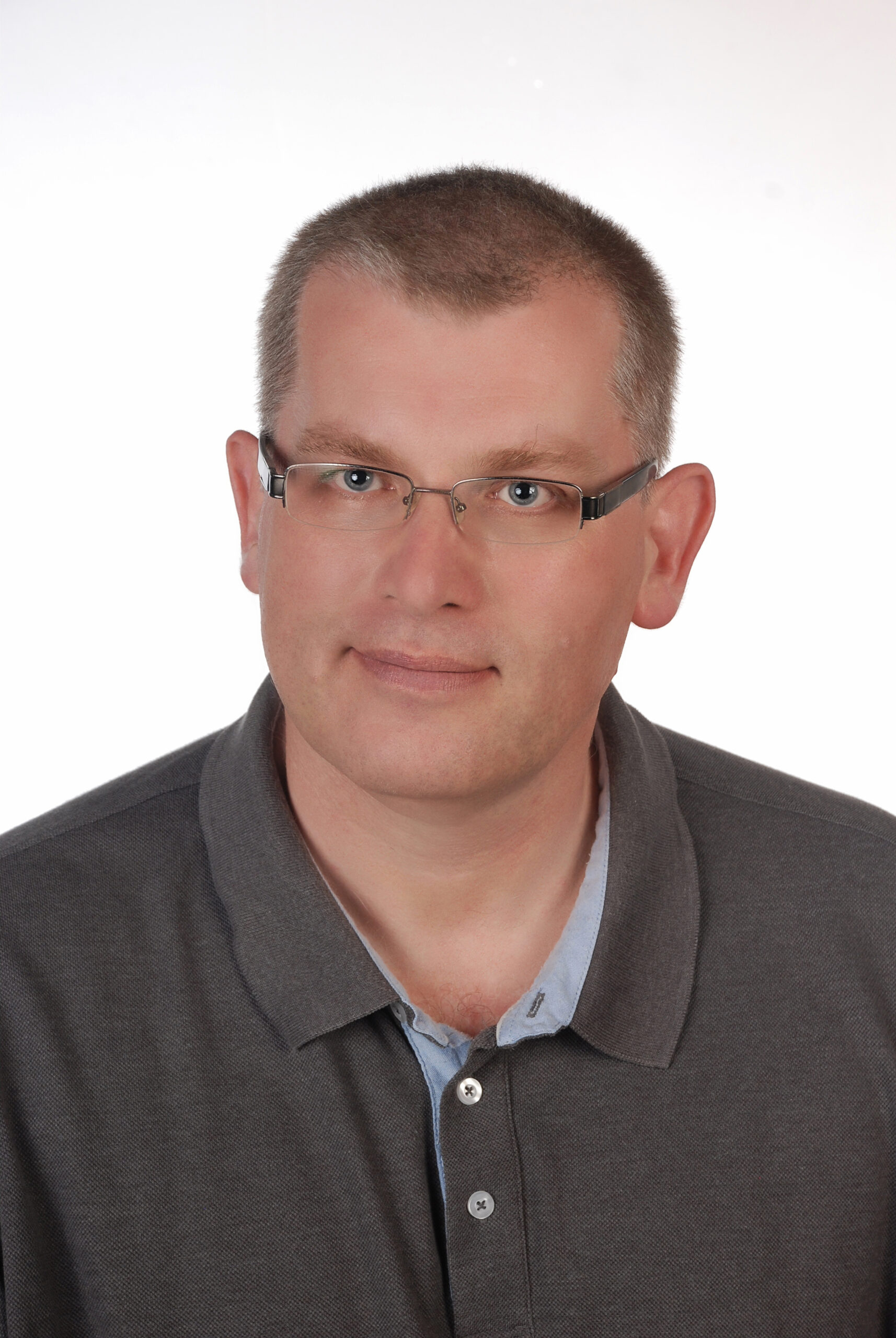
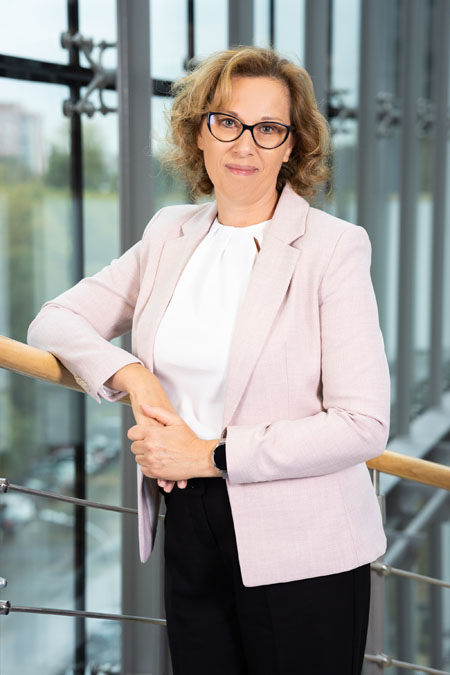
Miroslaw Pawlak is affiliated with Adam Mickiewicz University in Poznan, Poland, focusing on second language acquisition and language learning psychology. Key research areas: Emotional dynamics in language classrooms, strategic grammar instruction, blended learning environments Recent work explores foreign language enjoyment/boredom, grit in SLA, and technology-mediated learning Publications from 2025 investigate: Emotion mediation in Chinese student engagement Pronunciation knowledge development through explicit/implicit learning Playfulness as a counterbalance to language learning boredom His work employs advanced statistical modeling and mediation analysis to understand affective factors in multilingual education contexts.
Adam Depta is a researcher at the Institute of Management under the Faculty of Organization and Management at Lodz University of Technology. His primary research focuses on multidimensional statistical analyses across management, engineering, healthcare, and social sciences. Key areas include econometric methods in economic analyses, risk assessment in capital markets, quality of life measurements, and healthcare system challenges. He actively participates in professional societies such as the Polish Statistical Society and the Classification and Data Analysis Section (SKAD). His work integrates statistical methodologies with practical applications in organizational management, environmental health, and education technologies. Research interests emphasize quantitative approaches to understand consumer behavior, healthcare outcomes, and workplace dynamics. Recent studies explore the impact of environmental pollutants on athlete performance, e-learning effectiveness in Polish universities, and patient safety in primary care. He also investigates factors influencing employee and student well-being in remote work and academic settings. Dr. Depta contributes to interdisciplinary projects, including process optimization in manufacturing and quality control systems. His professional affiliations include membership in the Polish Teachers' Union and the Carpathian Scientific and Educational Society, reflecting his commitment to academic collaboration and educational improvement.
Grzegorz Kozieł is a Senior Lecturer at Lublin University of Technology, affiliated with the Faculty of Electrical Engineering and Computer Science and the Department of Computer Science. His research focuses on Information Security, Digital Signal Processing, and Cybersecurity, with additional interests in steganography, database systems, and network security. He has been involved in numerous projects, including the Integrated Development Programme of Lublin University of Technology and initiatives like Moodle ANMC and JCSI Resources. His academic contributions span over 50 publications, emphasizing comparative analyses of technologies such as smart home systems, programming languages, and database frameworks. Notable recent work includes studies on cybersecurity awareness among young learners, watermarking techniques for 3D models, and the application of Fourier transforms in sensor data analysis. Current projects include advancements in digital twin models for visually impaired individuals and participation in LubGame Conference 2025. Dr. Kozieł has received recognition through awards such as the Merit Medal for the City of Lublin (though explicitly awarded to departmental professors, it reflects his collaborative contributions). His teaching and research emphasize practical applications, including WordPress-based student projects and assessments of foreign language learning portals. He actively contributes to the development of IT education curricula, focusing on bridging academic training with industry needs.
Dr. Dorota Jegorow is an Assistant Professor at the Department of Econometrics and Statistics , Institute of Economics and Finance , within the Faculty of Social Sciences at the John Paul II Catholic University of Lublin , Poland. Specializes in Econometrics , Regional Development , and European Cohesion Policy Active in Entrepreneurship , Public Finance , and Digital Technology Applications in socio-economic contexts Recipient of 2022 National Award for research on cryptocurrency volatility
Prof. Andrzej Dudek is a faculty member at the Department of Econometrics and Informatics, Wrocław University of Economics – Jelenia Góra Branch. His research focuses on advanced data analysis methodologies, including symbolic data analysis, machine learning applications, and statistical modeling. Dudek has contributed to the development of R packages such as IFMCDM and mdsOpt, which support multi-criteria decision making and multidimensional scaling. His work addresses challenges in outlier detection, clustering, and predictive modeling across domains like tourism, healthcare, and finance. Recent studies explore consumer behavior shifts during the pandemic, AI-driven medical modeling, and robust regression techniques for noisy data. Key research areas include econometric modeling, computational statistics, and the integration of machine learning with traditional statistical methods. Dudek’s interdisciplinary approach spans from theoretical algorithm development to practical applications in industry and public health. He actively contributes to academic conferences and publishes in leading journals, demonstrating expertise in both methodological innovation and real-world problem-solving.
Krzysztof Heller serves as a research assistant professor at the Institute of Computer Science within the Faculty of Computer Science at AGH University of Science and Technology in Kraków, Poland. His primary office is located at D-17, ul. Kawiory 21. His research spans foundational and applied computer science disciplines, with emphasis on: Artificial intelligence systems development Large-scale data mining methodologies Machine learning algorithm optimization Robust software engineering practices Secure computer network architectures Distributed computing frameworks Dr. Heller maintains active academic engagement through his institutional role and correspondence via kjheller@agh.edu.pl .
Dr. Maciej Beręsewicz serves as a Professor in the Department of Statistics at Poznan University of Economics and Business (UEP), holding key institutional roles including Member of the Competition Committee for "Mini-grants for Research," University Evaluation Team, and Rector's Committee for Academic Teacher Awards. His office is located in Building C, Room 406, with contact email Maciej.Beresewicz@ue.poznan.pl and phone 61 854 36 80. His research centers on representative methods, non-random samples, public statistics, big data applications, and statistical package development. He specializes in methodological innovations for non-probability surveys, capture-recapture modeling, and integrating administrative/online data sources into official statistics frameworks. Recent publications demonstrate a cohesive trajectory in survey methodology, particularly calibration techniques for probability/non-probability sample integration, quantile estimation, and job vacancy analysis using online advertisements. His R packages ( nonprobsvy , singleRcapture ) operationalize these methods for practical statistical implementation. Prof. Beręsewicz maintains significant external engagements through the Central Statistical Office of Poland (Real Estate Price Statistics Team, Quality Group), Baltic-Nordic-Ukrainian Network on Survey Statistics (Scientific Committee), and international bodies including the International Association of Official Statisticians and International Association of Survey Statisticians.
Professor Dariusz Sawicki is a faculty member at Warsaw University of Technology's Faculty of Electrical Engineering, affiliated with The Institute of the Theory of Electrical Engineering, Measurement and Information Systems. His research spans computer vision, optical engineering, and human factors with applications in virtual reality and occupational safety. His primary research interests focus on advanced optical systems including ray tracing methodologies, light source characterization, and image processing techniques. Specialized work in glare assessment at outdoor workplaces has established him as an expert in lighting ergonomics, while his development of Semi-Cave virtual reality environments demonstrates interdisciplinary innovation connecting computer graphics with human psychophysiology. Recent publications reveal expanding work in botanical reconstruction, fractal generation, and pandemic-era communication systems. Professor Sawicki has supervised 92 promoted theses and authored 80 publications with significant bibliometric impact (h-index 9 in Scopus). His work includes 1 patent and participation in multiple projects, with research funded through institutional support at Warsaw University of Technology. Current laboratory activities center on the Semi-Cave virtual reality facility for studying audiovisual environment impacts on human performance. 80 Publications with cumulative ministry score of 2,315 92 Supervised theses 1 Patent h-index (Scopus): 9 | h-index (WoS): 8 Total CiteScore: 63.19
Grzegorz Gołaszewski serves as a Lecturer at AGH University of Science and Technology in Kraków, Poland, within the Department of Applied Computer Science and Computational Physics under the Faculty of Physics and Applied Computer Science. His office is located in room 231 of building D-10 at Reymonta 19 street, with contact details including phone +48 12 617 45 28 and institutional email. His research focuses on Applied Computer Science and Computational Physics, emphasizing computational modeling, numerical simulations, and algorithm development for solving complex physics and engineering problems. This interdisciplinary work bridges theoretical physics with practical software engineering methodologies to advance scientific computing applications. As an academic professional holding a doctoral degree in engineering, Dr. Gołaszewski contributes to teaching and departmental activities, supporting student education in computer science and physics disciplines while engaging in collaborative research within his department.
Dr. hab. Wojciech Malec serves as Assistant Professor in the Department of Theoretical Linguistics at the Faculty of Humanities, John Paul II Catholic University of Lublin (KUL). His academic profile bridges theoretical linguistics with practical applications in language assessment technology. His research focuses on: Language assessment and criterion-referenced testing methodologies Web-based test development systems and educational technology integration Corpus linguistics applications in language teaching Vocabulary acquisition and assessment techniques E-learning platform development, particularly his WebClass system Malec's scholarly work demonstrates consistent innovation in computer-assisted language testing, with recent publications exploring AI-generated test items, regular expression applications in scoring algorithms, and reduced redundancy testing approaches. His research trajectory shows increasing sophistication in merging linguistic theory with computational methods for practical educational applications. His scientific recognition includes: The Rector of the Catholic University of Lublin Award for Teams (4th Degree, 2016) Nagroda Rektora KUL zespołowa II stopnia (2015) As an active academic contributor, Malec serves as reviewer for journals including Studies in Second Language Learning and Teaching, Foreign Languages at School, and Vocabulary Learning and Instruction. He has organized the LingBaW international conference series annually from 2014-2023 and participates in the Central Examination Board (CKE) task force, influencing national language testing frameworks in Poland.
Wojciech Thomas is a Lecturer at the Department of Applied Informatics, Faculty of Information and Communication Technology, Wrocław University of Science and Technology. He teaches courses including Technologies Supporting Software Development (DevOps) , Cloud Computing , and Script Languages . Since 2016, he has directed the postgraduate program Computer Network Administration , designed for professionals seeking advanced knowledge in network/server management. His research focuses on DevOps, cloud technologies (AWS/Azure), automation of complex IT environments, web applications, and software engineering. He has published on topics ranging from task scheduling algorithms to trends in software engineering education. His publications (2000–2021) reflect interdisciplinary work in computer science, operations research, and educational methodology. Common themes include optimization algorithms, cloud infrastructure, and academic curriculum development.
Prof. Agnieszka Stanimir is a faculty member at the Department of Econometrics and Operations Research, Wrocław University of Economics. Her research focuses on socio-economic challenges related to aging populations, tourism industry dynamics, and generational analysis. She actively contributes to academic discussions on policy impacts and demographic shifts in Europe. Education and Academic Background: While detailed educational history is not explicitly stated, her academic rank of professor indicates advanced doctoral qualifications (habilitation in Poland) and extensive research contributions. She is affiliated with the Faculty of Economics and Finance, specializing in econometric methods and applied statistical analysis. Research Interests: Her work spans topics such as seniors' quality of life, tourism accessibility for elderly populations, socio-economic disparities, and multivariate statistical techniques. Recent studies emphasize post-pandemic recovery, sustainable tourism practices, and generational differences in technology adoption. Publications: Over 50 peer-reviewed articles from 2003–2025. Key themes include EU policy evaluations, silver economy development, and statistical methodologies like correspondence analysis. Recent trends focus on post-COVID demographic challenges and active aging strategies. Grants and Collaboration: No specific grants listed, but her active seminar roles (e.g., supervising master's and licentiate seminars) suggest involvement in academic mentorship. She communicates in Polish, English, and German, enhancing cross-cultural research collaboration. Labs/Teams: Leads research initiatives within the Department of Econometrics, focusing on applied socio-economic analysis. Her work often integrates quantitative methods with policy-oriented frameworks.
Professor Katarzyna Dziubalska-Kołaczyk is a leading figure in phonology, phonetics, and natural linguistics at Adam Mickiewicz University (AMU) in Poznań, Poland. She has served as Deputy Dean, Dean, and currently as Deputy Rector for Science and Humanities at AMU, while leading the Interdisciplinary Center for Speech and Language Processing and co-heading Bilingualism Matters@Poznań. Education: M.A. (1983), Ph.D. (1988), D.Litt. (1995) in English Linguistics from AMU; Senior Fulbright Grant (2001/2002) at University of Hawai'i at Manoa. Her research spans Natural Phonology , Phonotactic and Morphonotactic Theory , and the NAD (Net Auditory Distance) Model , with applications in speech processing, literacy training, and language revitalization. She has pioneered the Natural Growth Theory of Acquisition and challenged syllable necessity in her Beats-and-Binding Phonology framework. Recent publications focus on phonotactic complexity , cross-linguistic cluster analysis , and multilingual acquisition , reflecting her integration of theoretical and applied linguistics. Her editorial leadership of Poznań Studies in Contemporary Linguistics since 1999 underscores her influence in the field. Major Awards: Knight's Cross of Polonia Restituta, Senior Fulbright Grant, AMU Rector's Prizes (20+), Gold Cross of Merit, Minister of Science and Higher Education Prize. Professional Leadership: President of Societas Linguistica Europaea (2012-2014), member of Polish Academy of Sciences Linguistics Committee, Academia Europaea, and Austrian Academy of Sciences. As an educator, she has taught phonetics, phonology, and language acquisition at AMU and Universität Wien, mentoring a generation of linguists in Natural Phonology and phonotactic research . Her lab work and conference organization (e.g., New Sounds, PLM meetings) highlight her commitment to interdisciplinary collaboration.
Sławomir Kotyra, M.A., is a Lecturer at the Department of Neuroinformatics and Biomedical Engineering under the Faculty of Mathematics, Physics and Computer Science at Maria Curie-Skłodowska University (UMCS). His academic profile includes research in biomedical signal processing and neuroinformatics. Department: Neuroinformatics and Biomedical Engineering School: Mathematics, Physics and Computer Science Email: slawomir.kotyra@mail.umcs.pl Research interests focus on neurofeedback systems , EEG signal analysis , and SSVEP (Steady-State Visually Evoked Potentials) with applications in human-animal interaction and neural response measurement. His work spans hardware-software integration for Linux-based biomedical systems and data acquisition protocols. His publications address EEG in animal behavior studies , synchronized signal processing , and Linux-compatible neurophysiological software . Key themes include signal analysis, brain-computer interfaces (BCI), and comparative neurophysiology between trained/untrained dogs.
Dr. Uday Venkatadri is a Professor and Department Head in the Department of Industrial Engineering at Dalhousie University in Halifax, Nova Scotia, Canada. He has been teaching at Dalhousie University since July 2001, progressing from Assistant Professor (2001-2006) to Associate Professor (2006-2019) and finally to Professor (2019-present). His extensive experience includes prior roles as a Lead Architect for supply chain planning products at Baan and as a Research Associate at Université Laval in Québec City. Dr. Venkatadri's educational background includes: Ph.D. in Industrial Engineering from Purdue University M.S. in Industrial Engineering from Clemson University B.Tech in Mechanical Engineering from Indian Institute of Technology, Banaras Hindu University His research focuses on addressing design, planning, and control issues in production and distribution systems in the era of Industry 5.0 and Hyperconnected Logistics. He employs Mixed Integer Linear Programming as the cornerstone of his methodological approach, while incorporating trends in big data analytics, machine learning, and artificial intelligence. Dr. Venkatadri's work spans several critical areas including facilities planning and design, supply chain management, production planning and control, and sustainable manufacturing systems. He has developed frameworks for perishable food supply chains, healthcare logistics during pandemics, offshore wind energy maintenance, and cellular manufacturing systems. Dr. Venkatadri's recent publications demonstrate a strong emphasis on sustainable and resilient supply chains, maintenance optimization, and the application of advanced analytics to logistics problems. His work addresses contemporary challenges such as pandemic response in healthcare supply chains, optimization of renewable energy systems, and management of perishable goods in food supply chains. He frequently collaborates with researchers across disciplines, particularly with Claver Diallo, Abdelhakim Khatab, and other colleagues in the field of industrial engineering. Dr. Venkatadri has received numerous awards and honors throughout his career: 2021: Teaching award by the Logistics and Supply Chain Division of the Institute of Industrial and Systems Engineers 2016: Best Teacher of the Year award, Department of Industrial Engineering, Dalhousie University 2004: Best Teacher of the Year award, Department of Industrial Engineering, Dalhousie University 1991-1993: Summer David Ross Fellowship from Purdue University for excellence in teaching 1987-1990: David Ross Fellowship from Purdue University for Ph.D. work 1988: Institute of Industrial Engineer's General Motors First Place Master's thesis award Dr. Venkatadri has advised numerous graduate students, with many co-authoring publications with him. His research has been supported by various grants focusing on supply chain optimization, maintenance systems, and sustainable manufacturing. He is actively involved in the academic community as a Senior Member of IIE (Institute of Industrial Engineers), a Member of Engineers Nova Scotia, and a Member of the Canadian Operational Research Society (CORS). His teaching portfolio includes undergraduate and graduate courses in computational methods, operations research, supply chain management, facilities design, and quality control.