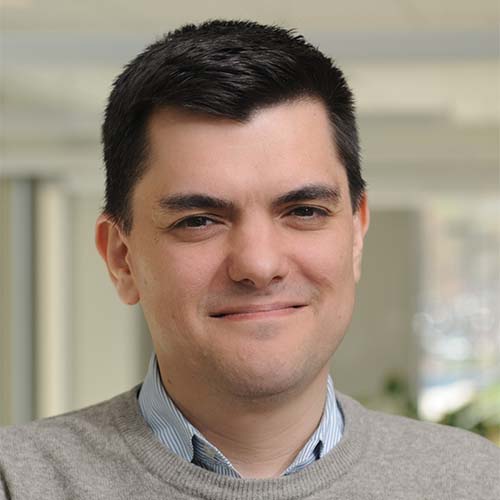
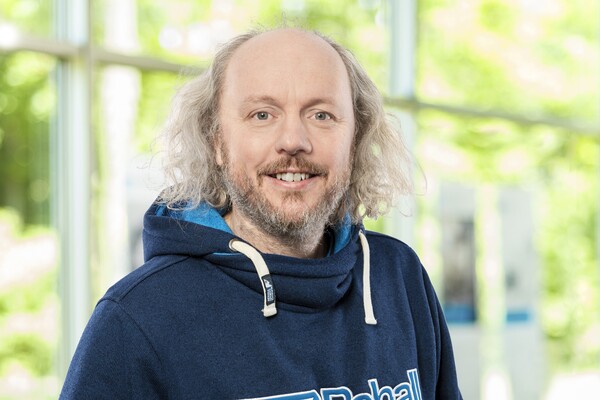
Jiri Srba is a Professor at Aalborg University's Department of Computer Science, part of the Technical Faculty of IT and Design. He leads research in the Distributed, Embedded and Intelligent Systems group and contributes to projects like "ControLing wAter In an uRban Environment" and "Collective Adaptive System SynThesIs using Non-zero-sum Games". His office is located at Selma Lagerløfs Vej 300, 9220 Aalborg Øst, Denmark. Contact him at +4599409851 or srba@cs.aau.dk. His core research focuses on formal methods and applied computer science: Model checking and verification of concurrent systems Petri nets and their applications Network protocol verification and synthesis Distributed system correctness Automated reasoning for industrial systems His publication record shows strong emphasis on network verification, model checking optimization, and applying formal methods to environmental systems. Recent work integrates computer science with sustainable engineering, particularly in water management systems and energy control.
René Jr Landry is a full Professor in the Department of Electrical Engineering at École de technologie supérieure (ETS), Université du Québec, specializing in Global Navigation Satellite Systems (GNSS), avionics, and wireless communication technologies. His academic journey includes a B.Ing. from Polytechnique Montréal, M.Sc. from University of Surrey (UK), and Ph.D. from SupAréo in Toulouse. He maintains active research leadership through two key laboratories: LASSENA (Laboratory of Space Technologies, Embedded Systems, Navigation and Avionics) and LACIME (Communications and Microelectronic Integration Laboratory). His research spans critical aerospace navigation domains including GNSS signal processing, inertial navigation systems, software-defined radio for avionics, radio frequency interference mitigation, and indoor positioning technologies. Landry's work addresses real-world challenges in satellite navigation robustness, precision positioning in urban/denied environments, and next-generation avionic system security. His current projects focus on blockchain-enhanced IoT security, AI-driven GNSS disruption analysis, and adaptive RF front-ends for multi-band avionics applications. Analysis of his recent publications reveals strong emphasis on resilient positioning systems through multi-constellation integration (particularly Iridium-NEXT), blockchain applications for navigation security, and explainable AI techniques for GNSS signal quality assessment. His work increasingly bridges traditional navigation engineering with cutting-edge security and machine learning paradigms. 2014 Prix d'excellence du c.a. pour les services à la collectivité Landry has supervised over 100 graduate students across doctoral, master's, and research projects since 2005, with current supervision extending through Summer 2025. His research funding supports multiple industry partnerships focused on avionics certification, software-defined radio implementations, and next-generation navigation systems. The LASSENA laboratory under his leadership develops certified avionic products from open-source SDR platforms and advances multi-sensor fusion techniques for challenging navigation environments. His research infrastructure includes specialized facilities for GNSS signal simulation, avionics hardware testing, and multi-sensor integration. Current work emphasizes flight-tested validation of RF front-end technologies, blockchain-secured navigation data, and real-time interference mitigation systems for aviation applications.
Hakan Aydin is a Professor and Director of the PhD Program in the Department of Computer Science at George Mason University's Volgenau School of Engineering. He has been teaching at George Mason University since 2001 and has established himself as a leading researcher in real-time embedded systems and energy-aware computing. Education: PhD in Computer Science from the University of Pittsburgh (2001) Hakan Aydin's research primarily focuses on sustainable computing, real-time embedded systems, fault tolerance, Internet-of-Things, and cyber-physical systems. His work bridges theoretical foundations with practical implementations, particularly in energy management for real-time systems. He has developed innovative techniques for reliability-aware power management, dynamic voltage scaling, and energy harvesting in wireless sensor networks. His research has significant implications for extending battery life in mobile devices, improving reliability in safety-critical applications, and enabling sustainable computing practices. Aydin's publications reveal a consistent research trajectory centered around energy efficiency and reliability in real-time systems. His work spans theoretical algorithm development, system-level implementation, and experimental validation. A notable trend is the evolution from single-processor systems to multicore and heterogeneous architectures, reflecting industry trends. His recent work increasingly addresses security aspects of real-time systems and the integration of IoT technologies. Scientific Awards: National Science Foundation CAREER Award (2006) George Mason University Computer Science Department Teaching Award (2006, 2009) Best Paper Award at IEEE Green and Sustainable Computing Conference (IGSC'20) Best Student Paper Award at IEEE International Conference on Embedded Software and Systems (ICESS'15) Best Paper Award at IEEE International Conference on Embedded Computing (EmbeddedCom'14) Best Paper Award at International Workshop on Highly-Reliable Power-Efficient Embedded Designs (HARSH'13) Best Paper Award at ACM International Conference on Modeling, Analysis and Simulation of Wireless and Mobile Systems (MSWIM'11) Hakan Aydin has advised seven PhD students to completion, including Vinay Devadas (2011), Baoxian Zhao (2012), Bo Zhang (2012), Mohammad Atiqul Haque (2016), Maryam Bandari (2016), Arda Gumusalan (2019), and Abhishek Roy (2021). His research has been generously supported by the National Science Foundation through multiple grants, including CSR: Small: Collaborative Research: Towards Reliability-Centric Real-time Computing on Heterogeneous Chip Multiprocessor Systems (2014-2017), CSR: Small: Energy Harvesting for Performance Sensitive Wireless Sensor Networks (2011-2015), and CSR: Small: Collaborative Research: Generalized Reliability-Aware Power Management for Real-Time Embedded Systems (2010-2014). Prof. Aydin has held significant leadership roles in the academic community, serving as the Technical Program Committee Chair of the IEEE RTAS 2011 and General Chair of IEEE RTAS 2012. He is also a member of the Editorial Board of Journal of Real-Time Systems (Springer). His work has established foundational principles in reliability-aware energy management for real-time systems, influencing both academic research and industrial practices in embedded computing.
Vinod M. Vokkarane is a Professor in the Department of Electrical and Computer Engineering at the University of Massachusetts Lowell, where he serves as Director of the Center for Smart Cyber-Physical Systems (SCyPS) and Director of Advanced Computer Network Labs. Previously, he was an Associate Professor at University of Massachusetts Dartmouth from 2004 to 2013 and a Visiting Scientist at MIT's Research Laboratory of Electronics from 2011 to 2014. His extensive research portfolio spans multiple domains of advanced networking and cyber-physical systems. Dr. Vokkarane earned his educational foundation with a B.S. from University of Mysore, India (1999), followed by an M.S. (2001) and Ph.D. (2004) in Computer Science from the University of Texas at Dallas. His dissertation focused on optical burst-switched networks, establishing the foundation for his future research trajectory. His research interests center on Cyber-Physical Systems, Network Optimization, Reliability, Smart Grids, and Cyber-Security, with particular expertise in the design, analysis, and modeling of architectures, protocols, and algorithms for ultra-high speed networks including Optical networks, Grid/Cloud networks, and Big-data networks. His work bridges theoretical foundations with practical implementations, often addressing critical challenges in network reliability, security, and efficiency. His research has received significant recognition through numerous best paper awards and substantial external funding. Analysis of his recent publications reveals a clear evolution toward increasingly sophisticated integration of cyber-physical systems with power infrastructure, particularly in the areas of grid resilience and observability. His work has expanded from fundamental optical networking research to address critical infrastructure challenges, with a growing emphasis on machine learning applications for network optimization and power system monitoring. The recent focus on PMU networks, disaster resilience, and cyber restoration demonstrates his strategic pivot toward addressing national security and critical infrastructure protection challenges. UMass Dartmouth Scholar of the Year Award (2011) UMass Dartmouth Chancellor's Innovation in Teaching Award (2010-11) University of Texas at Dallas Computer Science Dissertation of the Year Award (2003-04) Multiple Best Paper Awards including IEEE GLOBECOM 2005, IEEE ANTS 2010, ONDM 2015, ONDM 2016, and IEEE ANTS 2016 Texas Telecommunications Engineering Consortium Fellowship (2002-03) Dr. Vokkarane has successfully mentored numerous graduate students who have contributed significantly to his research projects, with several going on to successful careers in academia and industry. His research has been consistently supported by major funding agencies including NSF, DOE, and USMC, with recent projects totaling over $5 million in funding. Current projects include Unified Post-Disaster Restoration Planning for Cyber-Physical Power Distribution Systems (ONR, $550K), CyberCARE: Northeast University Cybersecurity Center (DOE, $3.5M), and Flexible Spectrum Allocation in Next-Generation Optical Networks (NSF, $350K). He leads the Center for Smart Cyber-Physical Systems (SCyPS) and Advanced Computer Network Labs at UMass Lowell, where his research teams work on cutting-edge problems in network architecture, cyber-physical security, and infrastructure resilience. His labs collaborate extensively with national laboratories and industry partners to translate theoretical advances into practical solutions for real-world infrastructure challenges.
Associate Professor Dan Dongseong Kim is Deputy Director of UQ Cybersecurity and an Associate Professor at The University of Queensland (UQ), Australia. Previously, he held permanent academic positions at The University of Canterbury (UC), New Zealand (2011-2018) as a Senior Lecturer and Lecturer. His research focuses on Cybersecurity and Dependability for AI, IoT, Autonomous Vehicles, Cloud Computing, and Moving Target Defenses (MTD). Doctor of Philosophy in Computer Engineering from Korea Aerospace University Postdoctoral Research at Duke University (2008-2011) Visiting Scholar at University of Maryland (2007) Dan's work explores Graphical Security Models , Moving Target Defense for proactive resilience, and AI-Driven Cybersecurity with emphasis on adversarial robustness and interpretable models. His recent publications (2024-2025) span journals like IEEE Transactions on Dependable and Secure Computing and conferences such as DSN , addressing automated defense, evolving attacks, and hardware-aware security frameworks. He has advised 15 Ph.D. graduates, including researchers now at institutions like RMIT University, La Trobe University, and CSIRO's Data61. Current supervision includes projects on Automated Penetration Testing , AI-Based Intrusion Response , and Moving Target Defense . Dan's research is funded by agencies including the Republic of Korea's Agency for Defence Development and US Army Research Lab . His professional roles include Associate Editor for IEEE Communications Surveys and Tutorials and Steering Committee Chair for IEEE PRDC .
Robert M. Weikle, II is a Professor in the Charles L. Brown Department of Electrical and Computer Engineering at the University of Virginia, with a courtesy appointment in the Department of Physics. He earned his B.S. from Rice University (1986), M.S. (1987), and Ph.D. (1992) in Electrical Engineering from Caltech, followed by postdoctoral work at Chalmers University of Technology (1992). His research focuses on millimeter-wave and terahertz electronics , applied electromagnetics, integrated antennas, low-noise sensors, and heterogeneous integration of compound semiconductors. His work bridges electronics and photonics for spectrum access, with applications in astronomy, spectroscopy, and metrology. He has published extensively on micromachined silicon substrates, superconducting materials, and emerging technologies. Scientific Awards: IEEE Microwave Prize (1993) David A. Harrison III Award (1999) University of Virginia All-University Outstanding Teaching Award (2000) Edlich-Henderson Innovator of the Year (2016) Fulbright Scholar (2001) As Chief Technology Officer and co-founder of Dominion Microprobes, Inc., he commercializes micromachined wafer probes for high-frequency metrology. His lab, located in E220 Thornton Hall and the Jesse W. Beams Physics Building, has produced 15+ recent publications on submillimeter-wave devices, THz probes, and calibration techniques.
Dr. Dijiang Huang is an Associate Professor in the School of Computing and Augmented Intelligence at Arizona State University (ASU). He joined ASU in 2005 after completing his Ph.D. in Telecommunications and Computer Networking from the University of Missouri-Kansas City (2004). His research focuses on cybersecurity, mobile computing, and cloud computing, supported by grants from the National Science Foundation (NSF), Office of Naval Research (ONR), and industry partners like HP. He has received prestigious awards, including the ONR Young Investigator Award and HP Innovative Research Award. Education: B.E. in Telecommunications, Beijing University of Posts and Telecommunications (1995) M.S. in Computer Science, University of Missouri-Kansas City (2001) Ph.D. in Telecommunications and Computer Networking, University of Missouri-Kansas City (2004) Research Interests: Huang’s work emphasizes secure communication protocols, privacy-preserving techniques, and resilient network architectures. He has pioneered frameworks like Secure Group Communication (SeGCom) and Attribute-Based Cryptography , addressing challenges in VANETs, SDN, and edge computing. His recent projects include developing Waterfall for SDN security and SmartDefense for DDoS mitigation. Grants & Awards: ONR Young Investigator Award (2008) HP Innovative Research Award (2008) NSF grants for secure mobile cloud frameworks and cyber-physical systems Professional Contributions: Huang has served as a reviewer for journals like IEEE Transactions on Wireless Communications and conferences such as ACM MobiArch. He co-developed the Open Human-Robotic Mobile Networking and Security Testbed (OHReST) and the Virtual Laboratory (VLab) for cybersecurity education.
Bonnie Berger is the Simons Professor of Mathematics at the Massachusetts Institute of Technology and head of the Computation and Biology group at MIT's Computer Science and AI Lab. She holds additional appointments as an Associate Member of the Broad Institute, Faculty member of Harvard/MIT Health Science & Technology, and Affiliated Faculty of Harvard Medical School. Her career has been dedicated to pioneering computational approaches in molecular biology, where she has been instrumental in defining the field. Professor Berger's research focuses on designing algorithms to extract biological insights from large-scale data sets. Her work spans Compressive Genomics, Network Inference, Structural Bioinformatics, Genomic Privacy, and Medical Genomics. She actively collaborates with experimental biologists to maximize the power of computation for biological discovery, developing methods that address the challenges of modern high-throughput biological data. Her recent publications demonstrate a strong trend toward integrating machine learning with structural biology and genomic privacy. The articles show increasing sophistication in using deep learning for protein structure prediction, developing privacy-preserving techniques for genomic data sharing, and creating efficient algorithms for massive biological data sets. Her work bridges theoretical computer science with practical biological applications. Professor Berger's scientific recognition includes: Election to the National Academy of Sciences (2021) ISCB Accomplishments by a Senior Scientist Award SIAM Sonya Kovalevsky Lecture Prize Fellowships in ACM, ISCB, AMS, and other prestigious societies Multiple RECOMB Test of Time Awards NIH Margaret Pittman Director's Award She has mentored numerous students who have gone on to make significant contributions in computational biology, including Ellen Zhong, Yun William Yu, and Hyunghoon Cho. Her lab receives substantial research funding supporting projects in genomic privacy, structural bioinformatics, and compressive algorithms for biological data. Professor Berger serves on the Executive Editorial Board of the Journal of Computational Biology and multiple other editorial boards. The Computation and Biology group at MIT CSAIL, which she leads, is at the forefront of developing computational methods for biological discovery. The group combines expertise in algorithms, machine learning, and biology to tackle fundamental challenges in genomics and structural biology. They are currently organizing the Machine Learning in Structural Biology workshop at NeurIPS 2025, highlighting their leadership in this rapidly evolving interdisciplinary field.
Dr. Mark G. Reith is an Assistant Professor of Computer Science at the Air Force Institute of Technology (AFIT), part of the U.S. Air Force’s Air University. He is based at Wright-Patterson Air Force Base, Ohio, within the Graduate School of Engineering and Management. Dr. Reith holds a Ph.D. in Computer Science from the University of Texas at San Antonio (2009), an M.S. in Computer Science from AFIT (2003), and a B.S. in Computer Science from the University of Portland (1999). Ph.D., Computer Science, University of Texas at San Antonio, 2009 M.S., Computer Science, Air Force Institute of Technology, 2003 B.S., Computer Science, University of Portland, 1999 Dr. Reith's research focuses on cybersecurity, cyber education, game-based learning, and multi-domain operations. He investigates operational cybersecurity in space systems, software factories, and military training through serious games. His work emphasizes trust management, cyber risk assessment, and defense acquisition innovation. He actively promotes STEM outreach and cyber workforce development within the Department of Defense. His recent publications reflect a strong trend in defense-oriented cybersecurity research, particularly in the domains of space system security, military software acquisition, and gamified cyber training. Articles span journals such as Air & Space Operations Research , Defense Acquisition Research Journal , and International Journal of Serious Games , highlighting interdisciplinary work bridging computer science, military strategy, and education. Dr. Reith has received notable recognition, including: AFA Colonel Charles A. Stone Award (2023) DAF Outstanding STEM Outreach Champion Award (2023) AFIT Team of the Quarter (2017) Bernard A. Schriever Essay Contest Winner (2017) He has advised numerous graduate students, many of whom are co-authors on his publications, particularly in the areas of cyber risk, space cybersecurity, and educational games. Dr. Reith has also contributed to research grants and initiatives focused on improving cyber hygiene, military IoT security, and multi-domain command and control. He is a frequent invited speaker on topics such as game-based learning and industry-academia collaboration in cybersecurity. Dr. Reith is actively involved in research labs and teams at AFIT, particularly those focused on cyber education, serious games (e.g., Battlespace Next), and operational cybersecurity. His work often involves collaboration with students and faculty across engineering, systems, and defense domains.
Majid Ghaderi is a Professor in the Department of Computer Science at the University of Calgary, Faculty of Science. His expertise spans network algorithms, secure communication, and machine learning applications in network control. He holds a Ph.D. in Computer Science from the University of Waterloo (2006), and M.Sc. and B.Sc. degrees in Software Engineering from Sharif University of Technology (2001 and 1999). Education: Ph.D. Computer Science, University of Waterloo, 2006 M.Sc. Software Engineering, Sharif University of Technology, 2001 B.Sc. Software Engineering, Sharif University of Technology, 1999 Research Interests: Dr. Ghaderi focuses on optimizing network algorithms, securing communication in distributed systems, and leveraging machine learning for network control. His work addresses challenges such as secure wireless protocols, SDN-based network management, and efficient resource allocation in data centers. He explores proactive traffic scheduling and anomaly detection in critical infrastructures like industrial control systems and vehicular networks. Publications Trends: His recent work emphasizes covert communication in heterogeneous networks, adaptive federated learning in edge environments, and low-overhead diagnostic systems for cloud networks. He also investigates cybersecurity defenses against hardware vulnerabilities and dynamic threat landscapes. Awards: Best in-session Presentation Award, IEEE INFOCOM 2018 Municipal Excellence Award, Government of Alberta 2018 Faculty of Science Excellence in Teaching Award 2012 Advising & Grants: While no specific advisees are listed, his research has been supported by grants focusing on network security, edge computing, and IoT applications. He teaches CPSC 441 (Computer Networks) and maintains an active lab focused on network systems and cybersecurity. Labs & Teams: His research group collaborates on projects involving software-defined networks, vehicular communication, and industrial IoT security. The team develops open-source tools for network monitoring and anomaly detection.
Rachee Singh is an Assistant Professor of Computer Science at Cornell University, leading the sysphotonics research group. She concurrently serves as an Amazon Scholar within the SageMaker Hyperpod teams, specializing in large-scale machine learning infrastructure development for cloud environments. Her research focuses on photonic interconnect systems for server-scale, rack-scale, and long-haul communication networks, targeting performance optimization for distributed machine learning and planet-scale cloud workloads. Key specialties include optical network design, fault-tolerant WAN architectures, and energy-efficient datacenter interconnects, with strong emphasis on practical deployment in real-world systems. Her group bridges theoretical networking principles with applied AI infrastructure challenges. Recent publications demonstrate concentrated innovation in photonic network optimization for ML workloads, particularly in wavelength management, collective communication algorithms, and chip-to-chip photonic fabrics. This work spans optical physics, distributed systems, and machine learning, revealing a trajectory toward sustainable, high-performance AI infrastructure. Scientific recognition includes: Amazon Research Award (2023) Cisco Research Award Dr. Singh actively mentors graduate researchers including Jonathan Aimuyo, Byungsoo Oh, and Arjun Devraj, whose co-authored publications form the core of her group's output. Research funding is secured through competitive grants from the NSF (including a $1M award for chip-to-chip photonic fabrics), SRC/DARPA JUMP 2.0 program, Cisco, and Cornell's Atkinson Center for Sustainability. The sysphotonics group operates as Cornell's hub for photonic network systems research, developing programmable integrated photonics solutions and collaborating with Amazon on SageMaker Hyperpod for next-generation ML infrastructure.
Renjie Zhao is an Assistant Professor in the Department of Computer Science at Johns Hopkins University and a member of the Data Science and AI Institute. His research focuses on wireless networking and mobile computing, with significant contributions to millimeter-wave communications, software-defined radio, and IoT systems. Dr. Zhao received his B.E. in Electric Power Engineering and Automation from Shanghai Jiao Tong University in 2018, followed by an M.S. (2020) and Ph.D. (2023) in Electrical and Computer Engineering from the University of California San Diego, where he was advised by Professor Xinyu Zhang. His research centers around three main areas: next-generation wireless network architectures (5G millimeter wave, 6G joint communication and sensing, Internet of Things), novel radio hardware and software design (software-defined radio, wireless brain interfaces, low-power ultra-wide-band), and ubiquitous communication and sensing systems (smart homes, virtual/augmented reality, localization, ultra-reliable RFID for supply chains). His work bridges theoretical innovation with practical implementation, often resulting in open-source hardware and software platforms that advance the field. Dr. Zhao's research has been published in top conferences including ACM SIGCOMM, MobiCom, and NSDI. His work demonstrates a clear progression from foundational wireless communication systems to increasingly sophisticated sensing and localization applications, with consistent focus on practical deployment challenges and solutions. Scientific Awards: Best Paper Award at ACM MobiCom 2020 for work on massive MIMO millimeter-wave software radio Best Paper Award at ACM SenSys 2023 for NeuroRadar paper Hopkins AITC funding for AI technologies promoting healthy aging Dr. Zhao actively serves the research community as TPC member for major conferences including MobiCom'25, NSDI'25, and MobiSys'25, and as a reviewer for leading journals. He is involved in multiple NSF-funded projects, including an NSF CIRC project developing the next-stage M-Cube platform. His lab, focused on wireless systems, maintains strong industry connections with companies like Qualcomm and Samsung. Dr. Zhao leads the M-Cube project, an open-source millimeter-wave massive MIMO software radio platform that has been adopted by numerous research institutions worldwide. His team continues to develop innovative wireless technologies with practical applications in supply chain management, healthcare, and smart environments.
Zachary Kincaid is an Associate Professor in the Department of Computer Science at Princeton University's School of Engineering and Applied Science. His research focuses on program analysis, logic, and programming languages, with an emphasis on making program analysis compositional and robust. He received his PhD from the University of Toronto under the supervision of Azadeh Farzan. His work has been implemented in the Duet program analyzer, and he has an Erdős number of 3. Dr. Kincaid's research interests include: Compositional program analysis techniques Algebraic approaches to program analysis Termination analysis and ranking function synthesis Verification of concurrent and parallel programs Automated reasoning and decision procedures Analysis of numerical programs and loops His recent publications show a strong focus on developing novel techniques for program analysis that bridge theoretical computer science with practical verification tools, particularly in nonlinear analysis, quantified reasoning, and compositional verification. Dr. Kincaid has received research support from ONR grant N00014-19-1-2318 for his work on robust program analysis. He has advised graduate students including: Current: Jake Silverman, Nicolas Koh, Nikhil Pimpalkhare Graduated: Shaowei Zhu (PhD 2024, Researcher at Amazon), Charlie Murphy (PhD 2023, Postdoc at University of Wisconsin–Madison) Dr. Kincaid teaches courses including: COS 320 – Compiling Techniques (Spring 2024, 2022, 2020, 2019) COS 516 / ELE 516 – Automated Reasoning about Software (Fall 2025, 2022, 2018) COS 217 – Introduction to Programming Systems (Fall 2024) COS IW – Practical Solutions to Intractable Problems (Fall 2023, Spring 2023, 2018, 2017) COS IW – Little Languages (Spring 2018) COS 597D – Reasoning about concurrent systems (Fall 2016)
Frank Fitzek serves as Full Professor holding the Deutsche Telekom Chair of Communication Networks at Dresden University of Technology, where he directs the Centre for Tactile Internet (CeTI) Cluster of Excellence and maintains association with the Faculty of Computer Sciences. His work is institutionally anchored within the School of Engineering Sciences and actively engages with 5G Lab Germany and 6G-life Hub initiatives, positioning him at the forefront of next-generation communication research. Fitzek's research spans communication networks, tactile internet systems, 5G/6G mobile technologies, network coding, quantum networking, virtual twinning, and haptic feedback systems. His recent publications demonstrate emphasis on resilient network architectures through quantum security protocols, cloud-native 5G implementations, theoretical communications frameworks, and human-computer interaction in mixed reality environments. This work consistently bridges theoretical innovation with practical testbed validations across multiple emerging technology domains. As Director of CeTI, Fitzek leads a major interdisciplinary research cluster focused on ultra-low latency networks enabling remote physical interaction. His affiliations with 5G Lab Germany and 6G-life Hub facilitate industry-academic collaboration on standardization and deployment of future communication infrastructures, with particular emphasis on network coding techniques and tactile internet applications that transform industrial automation and teleoperation scenarios.
Jelena Mirkovic serves as Principal Scientist at USC Information Sciences Institute (USC/ISI) and Research Associate Professor at the University of Southern California's Thomas Lord Department of Computer Science. She has held faculty positions at USC since 2010, progressing from Research Assistant Professor to her current role as Research Associate Professor since 2017, while also serving as Project Leader at USC/ISI. Her educational background includes: PhD in Computer Science from UCLA (2003) MS in Computer Science from UCLA (2000) B.Sc. in Computer Science from University of Belgrade, Serbia (1998) Mirkovic's research spans network security, human-centered attacks, and cybersecurity experimentation infrastructure. Her work focuses on critical security challenges including botnets, denial-of-service attacks, IP spoofing, vulnerability scanning, and user-centric privacy. She has pioneered methodologies for security experiments and led major infrastructure projects including the DETER testbed and SPHERE (Security and Privacy Heterogeneous Environment for Reproducible Experimentation). Analysis of her recent publications reveals consistent innovation across multiple security domains. Her work demonstrates strong technical depth in DDoS defense systems (particularly DNS protection), binary vulnerability analysis, privacy-preserving systems, and security experimentation infrastructure. A notable trend is her focus on bridging theoretical security concepts with practical implementation through large-scale testbeds and real-world data analysis. Her significant scientific achievements include: IEEE Senior Member distinction Best paper award at IEEE COMSNETS 2023 for DNS DDoS defense research Mirkovic has secured substantial research funding as Principal Investigator or Co-PI on numerous grants from NSF, DHS, and other agencies. Current major projects include SPHERE (Security and Privacy Heterogeneous Environment for Reproducible Experimentation), DISCERN (Datasets to Illuminate Suspicious Computations), and modernizing DeterLab education infrastructure. She has successfully led multiple REU sites focused on cybersecurity education and workforce development. She directs the STEEL (Security Research Lab) at USC/ISI, which develops innovative security solutions through interdisciplinary research in network security, human factors in security, and cybersecurity experimentation infrastructure. The lab emphasizes practical implementations that address real-world security challenges while advancing theoretical understanding of security systems.