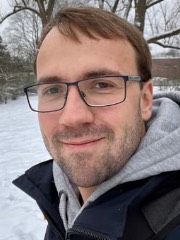
Stefan Kowalewski serves as Professor of Embedded Software at RWTH Aachen University, leading the Chair of Embedded Software (Informatik 11) within the Department of Computer Science. His research spans critical domains including medical cyber-physical systems, automotive software, and industrial automation, with over 150 publications demonstrating sustained scholarly impact. Professor Kowalewski's work focuses on three interconnected research pillars: Embedded Systems Verification: Pioneering model checking techniques for PLC code, particularly addressing state space challenges in GRAFCET-based specifications Medical Cyber-Physical Systems: Developing safety-critical software for mechanical ventilation, extracorporeal membrane oxygenation, and ARDS diagnosis systems with strong clinical collaborations Automotive Software: Creating verification frameworks and safety architectures for automated vehicles through projects like UNICARagil Recent publications reveal an increasing integration of AI techniques with traditional verification methods, particularly for medical applications involving neonatal care and critical respiratory support. His 2024-2025 work shows particular emphasis on timing isolation in vehicle communication systems, middleware performance evaluation, and robust AI models for medical diagnosis. Professor Kowalewski maintains active collaborations with RWTH Aachen University Hospital's medical departments and automotive industry partners. His laboratory operates specialized facilities including the Cyber-Physical Mobility Lab for vehicle research and in-vivo testing setups for medical device validation. He has supervised numerous doctoral candidates, with recent students focusing on topics like ARDS classification algorithms, GRAFCET verification techniques, and safety architectures for software-defined vehicles. His educational contributions include developing remote teaching platforms for cyber-physical systems education.
Tobias Hoßfeld is a full Professor at the Chair of Communication Networks (Informatik III) within the Faculty of Mathematics and Computer Science at the University of Würzburg, Germany, since 2018. He completed his PhD in 2009 and habilitation in 2013, both at the University of Würzburg, and previously held the Chair of Modeling of Adaptive Systems at the University of Duisburg-Essen (2014–2018). His research focuses on network technologies, including 5G/6G, Quality of Experience (QoE), Green Communication Networks, and Software Defined Networking. His work has been recognized with awards such as the Fred W. Ellersick Prize (2013), multiple best paper and reviewer awards, and the GI/ITG MMB 2010 PhD Award. He contributes to editorial boards of journals like IEEE Communications Surveys & Tutorials and serves on committees including the ITG/VDE expert group on Communication Networks and Systems. Research Interests: Network and Service Management, Green Communication Networks, 5G/6G, QoE, IoT, and Queueing Theory. Awards: 10+ major awards, including IEEE Fred W. Ellersick Prize and multiple best paper awards. Leadership Roles: Head of Chair of Communication Networks (2018–present), Chair of Modeling of Adaptive Systems (2014–2018), and TPC Co-Chair for international conferences. Education: Habilitation (2013), PhD (2009), and Diplom in Computer Science (2003), all at University of Würzburg. Tools & Datasets: Authored an open-access textbook on performance modeling with interactive notebooks for numerical implementations.
Johan Eker is a Professor in Real-Time Control Systems at Lund University's Faculty of Engineering and a Principal Researcher in Cloud Technology at Ericsson Research. He holds a dual affiliation, actively contributing to both academic and industrial research in the domain of control systems and cloud automation. His research interests lie at the intersection of computer science and control theory, with a focus on the automation of large-scale software systems such as cloud services and telecommunications networks. He leverages machine learning and advanced control methodologies to develop intelligent, adaptive, and scalable systems. His work benefits from close collaboration with Ericsson Research, enabling access to real-world data and operational environments for validation and innovation. Johan Eker is involved in cutting-edge research areas including autonomous cloud systems, event-based control, and learning-based control architectures. His contributions support the evolution of resilient, efficient, and self-managing infrastructures in modern computing and networking environments. He is actively engaged in research collaboration between academia and industry, bridging theoretical advancements with practical deployment. His work is supported through partnerships with Ericsson, allowing for real-world testing and implementation of control solutions in cloud and telecom systems. Johan Eker is affiliated with the Department of Control Engineering at Lund University, where his expertise contributes to education and research in systems, control, and real-time computing. He plays a key role in advancing the integration of control theory into modern software and networked systems.
Dr.-Ing. Ullrich Mönich is a Senior Researcher and Lecturer at the Technical University of Munich (TUM) , affiliated with the Chair of Theoretical Information Technology and leading research activities at the Advanced Communication Systems and Embedded Security Lab (ACES Lab) . Since 2019, he has been instrumental in shaping experimental and theoretical research in 6G communications, physical layer security, and signal processing. Education: Dr.-Ing. in Electrical Engineering, Technische Universität München (2011) – supervised by Prof. Holger Boche Previous affiliations include MIT (2012–2015) and TU Berlin Research Focus: His research spans signal processing, wireless communications, machine learning, and sampling theory , with a strong emphasis on physical layer security , computability in signal processing , and 6G communications . He explores theoretical foundations and practical implementations, including neuromorphic computing, digital twinning, and secure modular coding schemes. Publications & Trends: His recent publications (2023–2025) are heavily concentrated in 6G communications , integrated sensing and communications (ISAC) , semantic physical layer security , and digital twinning . These works often combine theoretical analysis with experimental validation using 5G/6G testbeds and neuromorphic hardware. Teaching & Supervision: Regularly teaches "Foundations of Analog, Digital, and Quantum Computers" (tutorials since 2018) Previously taught "Applied Functional Analysis" and "Advanced Signal Theory" Involved in practical courses like "Software Defined Radio Laboratory" Labs & Teams: He leads the ACES Lab at TUM, which focuses on experimental validation of advanced communication systems, including physical layer security, neuromorphic computing, and 6G testbeds. The lab collaborates with national and international partners, including MIT, and is supported by major funding bodies such as the German Federal Ministry of Education and Research (BMBF) and the German Research Foundation (DFG).
Aiko Pras is a Professor at the University of Twente in Enschede, Netherlands. His research spans network and service management, cybersecurity, and distributed systems, with a focus on DNS security, DDoS mitigation, IPv6, and software-defined networking. Research Interests: Network and Service Management Cybersecurity and DDoS Mitigation DNS Security and IPv6 Software-Defined Networking (SDN) Internet Measurement and Performance Critical Infrastructure Protection (ICS/SCADA) Article Trends: Pras's recent work emphasizes collaborative DDoS defense, DNS security, and IPv6 vulnerabilities. His studies often involve large-scale measurements and propose practical solutions for internet resilience and security. Collaborations: He frequently collaborates with Anna Sperotto, Roland van Rijswijk-Deij, and other experts in network security and measurement.
Hans-Joachim Hof is a Professor and Vice President for Teaching and Students at Technische Hochschule Ingolstadt (THI), where he has been employed since 2016. He serves as Head of Bachelor Cybersecurity (since 2022), Project Manager for THIsuccessAI (since 2021), and Head of the Research Group 'Security in Mobility' at the CARISSMA Institute of Electric, Connected and Secure Mobility. Additionally, he chairs the Scientific Board of the Center of Entrepreneurship and serves on the Supervisory Board of AININ. Professor, Head of INSecurity - Ingolstadt Applied IT Security Research Group (since WS 2016) Professor of Secure Software Systems, Head of MuSe - Munich IT Security Research Group at HAW Munich (2011-2016) Research Scientist at University of Karlsruhe (2008-2011) Research Assistant at Institute for Telematics, University of Karlsruhe (TH) (2003-2007) Professor Hof holds a doctorate in engineering and completed studies in computer science with a specialization in telematics and reliability architectures of systems, with a minor in law. His research spans automotive security, network security, and IT security, with recent focus on security in the Internet of Things, development processes for Secure Automotive Software, Automotive Blockchains, and Future Automotive Security Architectures. His work bridges theoretical security frameworks with practical automotive applications, particularly in electric vehicle security and battery management systems. Hof's recent publications reveal a strong trend toward automotive cybersecurity, with particular emphasis on electric vehicle infrastructure security, battery management systems, and vehicle security operations centers. His research increasingly addresses the security challenges of connected and autonomous vehicles, with growing attention to trust management systems and the security implications of AI in automotive contexts. The interdisciplinary nature of his work connects computer security with automotive engineering, energy systems, and digital forensics. Professor Hof has received numerous prestigious awards for his research contributions: Multiple Best Paper Awards at SECURWARE (2015, 2016, 2017) Best Paper Awards at CENTRIC (2010, 2012) Best Speaker Award at ESE Congress 2015 IARIA Fellow recognition Best Paper Award at ICIW 2010 As Editor-in-Chief of the International Journal on Advances in Security and Chairman of the German Chapter of the ACM, Hof plays a significant role in shaping security research discourse. His leadership extends to the German Informatics Society where he serves on the Executive Board. His research group INSicherheit (http://insi.science) actively collaborates with industry partners on real-world security challenges. Professor Hof leads the INSecurity research group at THI, which focuses on applied IT security with particular expertise in automotive contexts. The group maintains strong industry connections and operates within the CARISSMA research institute, which specializes in electric, connected, and secure mobility. Their work includes practical security testing, development of security architectures, and analysis of emerging threats in automotive systems, with notable contributions to EV charging security, battery management systems, and vehicle forensics.
Zheng Yang is a Professor at Tsinghua University's School of Software, with significant research contributions in cryptography, cybersecurity, and privacy-preserving systems. His work spans multiple institutions including collaborations with University of Helsinki's Secure System Group and Chongqing University of Technology. He maintains active research in both theoretical and applied security domains, with particular focus on industrial applications. Professor Yang's research interests center on cryptographic protocols, authentication mechanisms, and security for emerging technologies. His work addresses critical challenges in Cyber-Physical Systems security, Industrial Internet of Things protection, and privacy-preserving computation. He has made significant contributions to secure key exchange protocols, authentication systems, and defenses against sophisticated network attacks including DDoS mitigation strategies. His research bridges theoretical cryptography with practical implementations for resource-constrained environments. Analysis of Professor Yang's recent publications reveals a strong trend toward practical security solutions for industrial and embedded systems. His work increasingly focuses on balancing security with performance constraints in Cyber-Physical Systems and Industrial IoT environments. Key research themes include lightweight cryptography for resource-constrained devices, privacy-preserving location services, and novel authentication mechanisms that maintain security while minimizing computational overhead. His publications demonstrate consistent innovation in adapting cryptographic techniques to real-world security challenges. Professor Yang has established himself as a leading researcher through his extensive publication record in top security venues including IEEE Security & Privacy, USENIX Security, and ACM conferences. His work has been published consistently in high-impact journals and conferences, demonstrating sustained research productivity and influence in the security community. Professor Yang maintains active research collaborations with numerous institutions globally, evidenced by his extensive co-authorship network. His research has attracted significant funding for projects addressing critical security challenges in emerging technologies. His work on secure authentication protocols and privacy-preserving systems has practical applications across multiple industry sectors. Professor Yang leads research initiatives focused on secure Cyber-Physical Systems and Industrial IoT security. His laboratory work emphasizes practical implementations of cryptographic protocols for real-world systems, with particular attention to performance constraints in embedded environments. Current research directions include secure communication for programmable logic controllers, privacy-preserving location services, and adaptive defenses against sophisticated network attacks.
Marco Polverini is an active computer networking researcher with a prolific publication record spanning over a decade, with 59 publications documented from 2012 to 2025. His work primarily focuses on advanced networking technologies including Segment Routing, Software Defined Networking, and Network Function Virtualization. His research interests center around network routing optimization, traffic engineering, and network monitoring. He has made significant contributions to Segment Routing technology, developing novel behaviors for low-latency communication, black hole detection mechanisms, and traffic matrix assessment techniques. His recent work integrates artificial intelligence approaches, particularly reinforcement learning, with traditional networking protocols to create more adaptive and efficient network systems. He has also been exploring the application of Digital Twin technology for network management and optimization. Analysis of his publication trends shows a clear evolution from foundational work on energy-efficient networking and traffic engineering to more recent innovations in Segment Routing, in-band network telemetry, and AI-driven network optimization. His publications consistently appear in top networking venues including IEEE JSAC, IEEE Transactions on Network and Service Management, INFOCOM, and NOMS, demonstrating his standing within the networking research community. Throughout his career, Polverini has maintained strong collaborative relationships, particularly with Antonio Cianfrani (54 joint publications), Marco Listanti (33 publications), and Francesco Giacinto Lavacca (16 publications), suggesting he works within a well-established research group focused on next-generation networking technologies.
Dr. Hamid Zargariasl is a Researcher in the Computer Engineering Department at BTU Cottbus-Senftenberg. His work focuses on IoT systems, RFID technology, social network analysis, and distributed computing. He leads the UBICO Team and contributes to the Computer Engineering Group, exploring interdisciplinary applications of telecommunications and sensor networks. His research integrates theoretical frameworks with practical implementations, addressing challenges in smart city infrastructure, healthcare systems, and educational technology. Key research areas include optimizing RFID and sensor performance, analyzing social object interactions in IoT networks, and developing protocols for distributed computing. His experimental studies bridge academic performance metrics with mobile social network dynamics, and he has pioneered methodologies for network integration and centrality analysis in evolving systems. Publications span 15 years (2009–2024), emphasizing real-world data analysis and system optimization. Notable work includes enhancing digital thread functionality in aerospace engineering and evaluating smart parking sensor technologies. His contributions inform both technical systems and socio-economic policy recommendations. Dr. Zargariasl collaborates within interdisciplinary teams, contributing to the BTU's research initiatives while maintaining active engagement in the academic community through lectures and student mentorship.
Simone Ferlin is an Adjunct Senior Lecturer at Karlstad University working with 5G and Internet evolution. She completed her PhD in computer science in 2017 at the Simula Research Lab and Universitetet i Oslo under the supervision of Dr. Ozgu Alay and Prof. Michael Welzl. Her PhD dissertation focused on increasing robustness in multipath transport with MPTCP. Dr. Ferlin's educational background includes a PhD in Computer Science from the Simula Research Lab and Universitetet i Oslo (2017). Her doctoral research centered on enhancing robustness in multipath transport protocols, specifically focusing on MPTCP (Multipath TCP). She also completed undergraduate work that contributed to a book project with Prof. Friedrich Oehme on electronics and circuit technology. Dr. Ferlin's research spans multiple domains at the intersection of networking, systems, and performance engineering. Her primary interests include network and system measurements, performance analysis, security, and congestion control. She investigates how networks like the Internet evolve, examining technology development, adoption patterns, and their impacts on various entities. Additionally, she explores ways to harmonize security and privacy while making them more usable and assessable. Her work particularly focuses on transport layer and multipath transport protocols, examining their performance and security aspects. She also investigates application and transport layer performance, automation, and monitoring. Her research extends to network programming in both Linux kernel and user space, mobile broadband networks from 2G to 5G, and their intersection with the Internet. She is deeply engaged in observability, distributed and system performance monitoring, and automation. Analysis of Dr. Ferlin's recent publications reveals a strong focus on next-generation networking technologies. Her work spans multiple domains including 5G/6G networks, transport protocols (particularly QUIC and MPTCP), network virtualization, container orchestration, and the application of machine learning to networking problems. She has increasingly incorporated large language models into network configuration and automation research. Her publications demonstrate a consistent emphasis on performance measurement, optimization, and security across diverse networking environments from the edge to the cloud. Dr. Ferlin has received notable recognition for her research contributions: Best paper award at IEEE ICIN'21 for 'Learning-based Incast Performance Inference in Software-Defined Data Centers' Applied Networking Research Prize (ANRP)'25 winner for 'NetConfEval: Can LLMs Facilitate Network Configuration?' Dr. Ferlin is actively involved in mentoring the next generation of networking researchers. She has co-supervised numerous Master's and PhD students across multiple institutions including Karlstad University, KTH, TU Berlin, University of Oslo, and universities in Brazil. Her students have worked on diverse topics including NAT64 performance comparison, system tracing visualization, network observability, ML applications to multipath transport, FEC integration with QUIC, high-performance networking for 5G, congestion control, shared bottleneck detection, multipath IoT applications, and container runtime performance. She is also involved in several significant research projects including Vinnova's SEMLA (Securing Enterprises via Machine-Learning-based Automation), Horizon Europe's CODECO (Cognitive Decentralised Edge Cloud Orchestration), and the Knowledge Foundation of Sweden's DRIVE (Data-driven Latency-Sensitive Mobile Services for a Digitized Society). Dr. Ferlin serves as Workshop Chair for ACM SIGCOMM '25, is a member of the ACM/IRTF Applied Networking Research Workshop (ANRW) steering committee, and co-chairs the Internet Congestion Control Research Group (ICCRG) at the IRTF. She previously served as Associate Technical Editor for IEEE Communications Magazine and has been active on numerous program committees for major networking conferences including SIGCOMM, CoNEXT, IMC, and PAM.
Mathias Fischer is Professor for Computer Networks at the University of Hamburg since December 2021, affiliated with the MIN Department of Informatics. He previously served as an assistant professor at Universität Hamburg (2016-2021), University Münster (2015-16), and held postdoctoral positions at the International Computer Science Institute/UC Berkeley (2014-15) and the Center for Advanced Security Research Darmstadt/TU Darmstadt (2012-14). His educational background includes a PhD in Computer Science from TU Ilmenau (2012) and a diploma in Computer Science from the same institution (2008). He also served as Head of Data Literacy Education in IT Support at the University of Hamburg's ISA Center. Professor Fischer's research spans critical areas of modern network infrastructure, with particular emphasis on IT and network security , resilient distributed systems , and network monitoring . His work addresses fundamental challenges in cybersecurity including botnet monitoring, intrusion detection, and critical infrastructure protection. His research group actively investigates P2P networks and develops innovative approaches to network security that balance functionality with privacy preservation. Analysis of his recent publications reveals a strong focus on privacy-enhancing technologies, network security protocols, and resilient distributed systems. His research trajectory shows increasing attention to practical implementations of security solutions for edge computing environments, digital twin networks, and time-sensitive networking applications. The work demonstrates sophisticated integration of cryptographic techniques with network architecture design to address emerging security challenges in distributed systems. Among his notable recognitions are the Claussen-Simon Competition for Universities (2019), the University Prize of the Claussen-Simon Foundation (2019), and an Outstanding Paper Award at ACSAC (2018). Claussen-Simon Competition for Universities (2019) University Prize of the Claussen-Simon Foundation 2019 Outstanding Paper Award at ACSAC (2018) Professor Fischer leads multiple significant research projects including SOVEREIGN (Technologically sovereign security monitoring), RESISTANT (Resilient zero-trust platform for aircraft), and Dynamic situational awareness for rescue teams. His research group comprises numerous doctoral and master's students working on cutting-edge network security challenges. Current projects focus on developing resilient data and AI platforms for crisis situations, security monitoring for critical infrastructures, and innovative home network security solutions. The Computer Networks research group at the University of Hamburg, led by Professor Fischer, maintains active collaborations with industry and academic partners. The group operates specialized laboratories focused on network security testing, intrusion detection systems, and resilient network architectures. Current research directions include QUIC protocol security, federated learning security, and privacy-preserving network analytics, with strong emphasis on practical implementations that address real-world security challenges.
Dr. Heiko Bornholdt is a Researcher in the Computer Networks group at the Department of Informatics, University of Hamburg. He is affiliated with the Faculty of Mathematics, Informatics, and Natural Sciences. His research focuses on distributed communication middleware, overlay networking, and edge computing. He holds a doctoral degree and has been with the university since 2016. Position: Research Associate / Postdoc Office: Room F-622, Vogt-Kölln-Str. 30 Contact: heiko.bornholdt@uni-hamburg.de | +49 40 42883-2332 Research Interests Dr. Bornholdt’s work emphasizes distributed systems , particularly in the context of smart cities and IoT. Key areas include: Overlay networks for edge computing Decentralized privacy-preserving systems Efficient data discovery in IoT Latency-aware network protocols Publications Overview His recent work spans 20+ publications, with significant contributions to: Edge computing middleware (e.g., software-defined overlay networks) Secure communication in untrusted environments Smart urban data spaces Awards & Grants No specific awards mentioned, but active in funded projects including the EU-GDPR compliant blockchain research. Labs & Teams Part of the Computer Networks Team led by Prof. Mathias Fischer, collaborating with researchers like Kevin Röbert and Jeetesh Gupta.
Randy Verdecia-Peña is a researcher specializing in wireless communication and 5G technologies, focusing on millimeter-wave (mmWave) systems, software-defined radio (SDR), and network protocols. His work emphasizes practical experimentation with advanced signal processing techniques, including machine learning for channel estimation and hardware prototyping for integrated access and backhaul (IAB) architectures. Key contributions include phased array-aided 5G prototypes, flexible layer 2 protocols, and cooperative relay node design in both indoor and outdoor environments. Collaborations frequently involve hardware validation and performance analysis across frequencies like 26 GHz and 60 GHz.
Prof. Georg Carle is a full Professor in Network Architectures and Network Services at the Technical University of Munich (TUM), affiliated with the TUM School of Computation, Information and Technology. He leads research in Internet technology, focusing on future network architectures, security, and real-time communication. Prior roles include positions at the University of Tübingen and Fraunhofer Institute for Open Communication Systems (FOKUS). Education: Electrical Engineering diploma from University of Stuttgart (1992), Master of Science in Digital Systems (Brunel University, London), and PhD in Telematics from University of Karlsruhe (1996). He held scholarships in complex systems and European Union-funded research at Institut Eurécom. Research Interests: Prof. Carle's work spans network security, sensor networks, autonomous systems, and future Internet protocols. His group develops tools like MoonGen (packet generator) and pos (experiment workflow system). Recent focus includes QUIC protocol analysis, network slicing, and reproducible experimentation frameworks. Key Contributions: Award-winning research includes Applied Networking Research Prizes (2017-2018), Best Paper Awards in IMC/PAM, and innovations in network measurement, security, and programmable data planes. His lab explores cutting-edge topics like post-quantum cryptography, low-latency networking, and 6G automation. Recognition: Honors include ACM SIGCOMM Community Contribution Award, IRTF ANRP, and multiple conference best paper accolades. He advises on network infrastructure for industrial IoT, automotive systems, and secure multiparty computation.
Tobias Meuser is a Researcher at the Multimedia Communications Lab of Technische Universität Darmstadt, leading the "Adaptive Communication Systems" group since 2020. He holds a PhD (2019) focused on vehicular network data management and has been a central figure in the third phase of the Collaborative Research Center (CRC) MAKI as a principal investigator in subproject B1. His work emphasizes resilient 5G networks, edge AI, and distributed systems. Education: B.Sc. Business Informatics (Fernuniversität Hagen) M.Sc. Informatics (TU Darmstadt) Research Interests: Resilience in 5G and beyond Edge AI and distributed machine learning Information assessment in vehicular networks Collaborative perception systems Hardware acceleration for network functions Key Projects: Principal Investigator in CRC MAKI's B1 (Monitoring and Analysis) Collaborations with Opel (cooperative maneuvering) and Deutsche Bahn (5G resilience) Labs/Teams: Head of Adaptive Communication Systems group at Multimedia Communications Lab Member of Distributed Sensing Systems group (2016–2020)