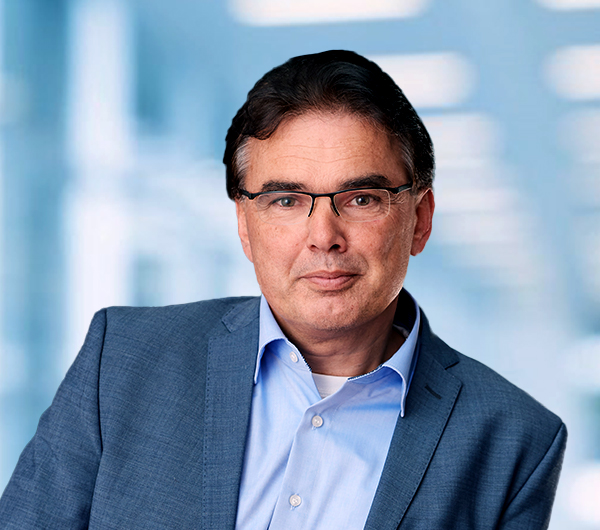
Danny Raz is a Professor at the Technion - Israel Institute of Technology, specializing in computer science and networking. His work focuses on cloud computing, network function virtualization (NFV), resource allocation, and online algorithms. Institution: Technion - Israel Institute of Technology, Haifa, Israel Research interests include: Network Function Virtualization (NFV) and service chaining Stochastic and dynamic resource allocation Online algorithms in random-order models 5G/edge computing infrastructure Blockchain network analytics Over the past decade, his publications in venues like IEEE/ACM Transactions on Networking and INFOCOM address: Optimal deployment of cloud services TCAM-based classification and flow measurement Game-theoretic approaches to load balancing Cost-aware live migration and fault recovery Wireless network optimization (4G/5G) Collaborations with researchers like Yuval Shavitt, Joseph Naor, and Haim Kaplan highlight his interdisciplinary work bridging theory and practice in networking and cloud systems.
Prof. Jürgen Jasperneite is the director of Fraunhofer IOSB-INA in Lemgo and a board member of the Institute for Industrial Information Technology (inIT) at Ostwestfalen-Lippe University of Applied Sciences (TH OWL). He holds the Professorship for Computer Networks and focuses on industrial communication systems for cyber-physical systems and IoT. Current affiliations: Fraunhofer IOSB-INA (Director), inIT (Board Member), TH OWL (Professor) International collaborations: Guest Professor at Midsweden University (2021–present), Research Fellow at Stanford University (2017–present) Research Interests include: Distributed real-time communication and processing 5G/6G integration into industrial networks Time-Sensitive Networking (TSN) and Ethernet migration Semantic interoperability and IT security SmartFactoryOWL and Industry 4.0 testbeds Zero-touch management and network digital twins His work spans manufacturing, process automation, logistics, and urban mobility , with a focus on bridging information technology (IT) and operational technology (OT) through standards like OPC UA and PROFINET. Scientific Recognition : IEEE Senior Member (since 2006) Over 250 publications and conference leadership roles Best Paper Awards at IEEE ISPCS (2007), IEEE ETFA (2012), GI Echtzeit (2014) Founding director of Germany's first Fraunhofer application center for industrial automation Contact: computernetworks@init-owl.de
Marc Adrat is an Honorary Professor at RWTH Aachen University and Head of the Software Defined Radio research group at Fraunhofer Institute for Communication, Information Processing and Ergonomics (FKIE). His dual role combines academic teaching with cutting-edge industrial research in communications engineering. Education: Diplom-Ingenieur in Electrical Engineering (1997), RWTH Aachen University Dr.-Ing. (PhD) in 2003 from Institute of Communication Systems and Data Processing (IND), RWTH Aachen Research Focus: Prof. Adrat specializes in channel coding , modulation techniques , and iterative decoding with particular emphasis on polar codes , BICM-ID systems , and EXIT chart analysis . His work bridges theoretical foundations with practical implementations in software-defined radio systems. His recent research directions include applying machine learning techniques (particularly genetic algorithms) to optimize communication systems, developing autoencoder-based signal enhancement methods, and advancing spectrum monitoring technologies for cognitive radio applications. Awards & Recognition: Best Paper Award at ICMCIS 2022 for work on spectrum monitoring techniques Appointed Honorary Professor by RWTH Aachen University in June 2024 Teaching & Supervision: Since 2009, he has taught courses on Modern Channel Coding for Wireless Communications and Advanced Coding and Modulation at RWTH Aachen. His teaching covers both theoretical foundations and practical implementations of modern communication systems. Laboratories & Teams: At Fraunhofer FKIE, he leads the Software Defined Radio research group, focusing on developing flexible, reconfigurable radio systems for military and civilian applications. The group works extensively on real-time implementations of advanced coding and modulation schemes.
Prof. Kurt Rothermel is a faculty member at the University of Stuttgart, specifically affiliated with the Institute for Parallel and Distributed Systems (IPVS) within the Faculty of Computer Science, Electrical Engineering, and Information Technology. His research focuses on distributed systems with particular expertise in time-sensitive networking, networked control systems, and complex event processing. Prof. Rothermel's research interests span multiple areas in distributed computing and networking: Distributed Systems and Networked Control Systems Time-Sensitive Networking and Deterministic Networking Quality of Service (QoS) Management and Optimization Complex Event Processing and Stream Analytics Edge Computing and Real-Time Video Analytics Digital Twin Systems and Proximity-based Services His recent publications (2022-2025) demonstrate a strong focus on time-sensitive networking, with numerous papers addressing scheduling algorithms, conflict graph creation, and latency management for time-triggered communication. There's also significant work on load shedding techniques for resource-constrained environments, particularly for real-time video analytics at the edge. His research increasingly incorporates digital twin systems and explores novel approaches for distributed mobile simulation, as evidenced by his "Persival" framework for handling 3D meshes on AR devices. Prof. Rothermel has made substantial contributions to the field of complex event processing, developing multiple shedding strategies (gspice, hSPICE, pspice) to manage resource constraints while maintaining utility. His work bridges theoretical networking concepts with practical applications in industrial settings, particularly evident in his research on networked control systems and time-sensitive software-defined networks.
Adnan Akhunzada is a prolific researcher with extensive contributions to computer science, particularly in artificial intelligence, cybersecurity, and internet of things. His work spans deep learning architectures, software defined networks, and security frameworks for emerging technologies. Research Interests include: Deep learning for micro-expression and image analysis Quantum control systems with reinforcement learning AI-based phishing and malware detection Federated learning for drone services Cryptographic protocols for UAV communications Publication Trends show expertise in: Hybrid neural network architectures Cybersecurity for industrial IoT Privacy-preserving crowdsourcing Sign language recognition datasets 5G-assisted cognitive communication
Alexandra Silva is a Professor of Computer Science at Cornell University with prior affiliations as a Royal Society Wolfson Fellow and Professor of Algebra, Semantics, and Computation at University College London . She leads a research group focusing on the modular development of specification languages and algorithms for models of computation, emphasizing coalgebra as a unifying mathematical framework. Research Interests Her work spans foundational and applied areas in theoretical computer science, including: Coalgebraic methods for formal verification Automata theory and learning algorithms Probabilistic programming and semantics Programming language design (e.g., NetKAT, Kleene Algebra with Tests) Concurrency theory and distributed systems Algebraic structures in computation Recent publications address network verification (StacKAT), symbolic automata learning, probabilistic regular expressions, and outcome logic for correctness/incorrectness reasoning. She is actively involved in organizing academic events like OPLSS 2025 and co-authoring foundational works in Formal Aspects of Computing and Theoretical Computer Science . Scientific Awards Distinguished Paper Award (ACM SIGPLAN POPL, 2020) Best Paper Award (RTA, 2015) She teaches courses on Kleene Algebra with Tests (KAT) and verification at summer schools like Marktoberdorf 2025 , and her research includes collaborations on probabilistic network verification (ProbNV) and stochastic system modeling.
Colin Reiff serves as a Research Assistant at the Institute for Control Engineering of Machine Tools and Manufacturing Units at the University of Stuttgart, focusing on advanced manufacturing systems and process optimization. His work bridges theoretical research with industrial applications in automotive, aerospace, and general production contexts. His research interests center on process control and optimization in multi-stage production systems and Additive Manufacturing (Powder Bed Fusion Processes) . Reiff has developed innovative approaches for zero-defect manufacturing, particularly through smart centering methods for rotation-symmetric parts and automated vision data systems using collaborative robots. His work demonstrates how dimensional deviations can be compensated during production rather than detected at final inspection. Analysis of his publication record from 2018-2024 reveals consistent focus on manufacturing innovation, with increasing emphasis on data-driven approaches, software-defined manufacturing, and sustainable production. His research spans both theoretical frameworks and practical implementations, with several solutions transitioning to industrial applications. Reiff actively supervises student theses and practical experiments, including the "Simulation of a feed axis closed loop control with MATLAB/Simulink" laboratory course. His work has been supported through EU-funded projects like ForZDM under Horizon2020 and the High-Performance Center "Mass Personalization" in Stuttgart. His research group operates within the University of Stuttgart's manufacturing ecosystem, contributing to initiatives like the "Stuttgarter Maschinenfabrik" - a fully digitalized production environment for customer-individualized products. This environment leverages digital twins and new technological infrastructure to enable application development freedom and machine park flexibility.
Prof. Dr. Jürgen Heym serves as a Professor at the Faculty of Informatics, Hof University of Applied Sciences, where he is affiliated with the Institute for Information Systems (iisys). He holds the position of Program Director for the Master of Software Engineering for Industrial Applications program. His research and teaching focus centers on Networked Systems and Network Technology, with strong emphasis on Software Engineering applications in industrial contexts. These domains define his academic leadership in curriculum development and technical instruction. Professor Heym maintains active office hours on Wednesdays (09:30-10:30) in Campus Hof Building C, Room C118, facilitating direct engagement with students and academic collaborators.
Professor Michael Scharf is a faculty member at Esslingen University of Applied Sciences, where he serves as Professor for Communication Networks since September 2018. His expertise lies in communication networks, with a particular focus on TCP/IP protocols, network management, and optimization techniques. Esslingen University of Applied Sciences, School of Computer Science and Information Technology Professor for Communication Networks (2018-present) Laboratory Management of Communication Technology Laboratory Dr. Scharf's research interests span applied communication networks, with special emphasis on modern TCP/IP applications for IoT and Automotive Ethernet, as well as network management and data modeling using NETCONF/YANG frameworks. His work bridges theoretical networking concepts with practical implementations, particularly in the areas of congestion control, multipath transport, and application-layer traffic optimization. His publication portfolio demonstrates consistent contributions to networking research, with recent focus on YANG data modeling for TCP, IoT networking standards, and ALTO protocol extensions. The research trajectory shows evolution from congestion control mechanisms to modern network data modeling and IoT applications. Best presentation/demo award for 'Monitoring and Abstraction for Networked Clouds', Proc. ICIN, Oct. 2012 Chair of the TCPM working group in the IETF from 2011 to 2022 Reviewer for TCP/UDP port numbers allocation by IANA since 2022 Dr. Scharf has supervised numerous student works including Bachelor's and Master's theses, study projects, and research projects. His industry experience prior to academia included significant roles at Alcatel-Lucent Bell Labs and Nokia, where he worked on network management systems and was recognized as a Distinguished Member of Technical Staff. He leads the Communication Technology Laboratory (KTlab) at Esslingen University, which focuses on practical implementations and testing of communication network technologies, particularly in the areas of cyber-physical networks, embedded systems communication, and automotive communication networks.