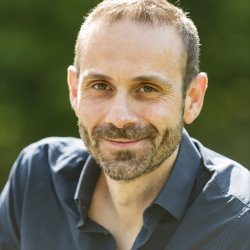
Dr. Andrew Logsdail is a Reader in Catalytic and Computational Chemistry at Cardiff University’s School of Chemistry, part of the Cardiff Catalysis Institute (CCI). He holds a PhD in Chemistry (University of Birmingham), an MRes in Materials and Nanochemistry, and a BSc in Natural Sciences. His research focuses on computational modeling of catalytic materials, software development (e.g., ChemShell), and heterogeneous catalysis with applications in energy and sustainability. He is a Fellow of the Higher Education Authority and a Chartered Chemist with the Royal Society of Chemistry. Key roles include UKRI Future Leaders Fellow (2020–2024) and leadership in international organizations like the IUPAC Division II. His work is funded by UKRI, EPSRC, and industry partners like BP and Johnson Matthey. Research interests span computational catalysis, nanomaterials, and data-driven materials discovery. Notable projects include QM/MM simulations for catalytic systems, development of the ChemShell software, and studies on zeolites, palladium catalysts, and CO₂ reduction. He supervises PhD students and contributes to teaching at undergraduate and postgraduate levels. Dr. Logsdail’s achievements include over 100 peer-reviewed publications and significant contributions to software development in computational chemistry. His awards include the UKRI Future Leaders Fellowship and leadership roles in national and international scientific committees. He actively engages in outreach, promoting chemistry education and catalysis research.
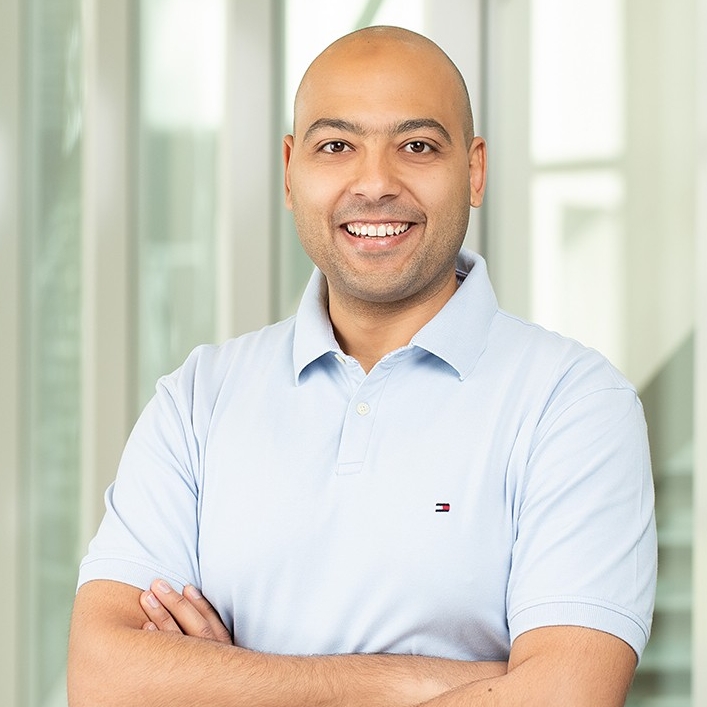
Karim Ali is an Associate Professor of Computer Science at New York University Abu Dhabi (NYUAD), where he leads research in programming languages, static analysis, security, and compilers. He is affiliated with the Department of Computer Science within the College of Arts and Science. Prior to joining NYUAD, he served as an Associate Professor at the University of Alberta. His academic training includes a BSc from The American University in Cairo, and MMath and PhD degrees from the University of Waterloo, completed in 2014. BSc: The American University in Cairo MMath: University of Waterloo PhD: University of Waterloo (2014) His research focuses on making static analysis tools more practical by enhancing their scalability, precision, and usability. He investigates program analysis techniques applicable to real-world software, with applications in security, just-in-time compilation, and mobile app development. His work spans theoretical foundations and tool development, including the SWAN framework for Swift and contributions to secure cryptographic API usage through CogniCrypt. The recent publications reflect a strong trend in developer-centric static analysis, secure coding, energy efficiency in mobile apps, and compiler optimization. His work combines empirical studies with tool-building, emphasizing usability and integration into developer workflows. Scientific Awards: Dahl-Naygaard Junior Prize (2021) ACM SIGSOFT Distinguished Paper Award ACM SIGPLAN Distinguished Paper Award Distinguished Artifact Award, ECOOP 2014 Karim Ali has mentored numerous students and collaborated extensively with researchers worldwide. His lab has contributed tools adopted by major static analysis frameworks like Soot, WALA, and DOOP. He has secured research recognition through awards and industrial impact, including helping Symantec fix a security vulnerability. He teaches core courses such as Computer Systems Organization and supervises capstone projects, guiding students in original research. His lab conducts research on programming languages and static analysis, with projects including SWAN for Swift analysis, usability studies of static analysis tools, and development of precise pointer analysis techniques. The team works on both academic research and practical tooling for developers.
Scott T. Doyle is an Associate Professor in the Department of Pathology and Anatomical Sciences at the Jacobs School of Medicine & Biomedical Sciences, University at Buffalo. His research integrates biomedical imaging, artificial intelligence, and computational pathology to develop quantitative tools for clinical diagnostics and anatomical modeling. Education: PhD in Biomedical Engineering, Rutgers, The State University of New Jersey (2011) BS in Biomedical Engineering, Rutgers, The State University of New Jersey (2006) Optical Microscopy & Imaging in the Biomedical Sciences, Marine Biological Laboratory (2014) hES Stem Cell Culture Training, WNYSTEM (2014) R Bioconductor Training, Roswell Park Cancer Institute (2016) Dr. Doyle’s research focuses on developing AI-driven algorithms for biomedical image analysis, particularly in digital pathology and 3D anatomical modeling. His work spans tumor segmentation, risk prediction in oral and thyroid cancers, and integration of virtual and physical anatomy in medical education. He applies machine learning, deep learning, and computational modeling to enhance diagnostic accuracy and patient outcomes. His recent publications reflect a strong trend in applying artificial intelligence to histopathology, with emphasis on active learning, 3D reconstruction, and multi-institutional data fusion. Key areas include oral cavity cancer recurrence prediction, thyroid cancer subtyping, and computational modeling of surgical margins and anatomical structures. Scientific Service and Recognition: Reviewer for NIH SPORE grants Peer reviewer for journals including Medical Image Analysis , BMC Bioinformatics , IEEE Transactions on Biomedical Engineering Program Committee and Session Chair, SPIE Medical Imaging: Digital Pathology (2016–present) Member, Graduate Program Steering Committee, Pathology & Anatomical Sciences Mentor, McNair Scholarship and CSTEP programs for underrepresented students Dr. Doyle has secured significant research funding as Principal Investigator on NIH and CTSI grants, including a $2M+ NIH grant for predicting oral cancer recurrence. He has also contributed to educational innovation through hybrid anatomy curriculum development and AI training for pathologists. He leads the 'Atoms to Anatomy' research initiative and is active in strategic planning at the Jacobs School. Laboratories and Collaborative Teams: Dr. Doyle collaborates with the Center for Computational Research (CCR) and is involved in the Structural Sciences Learning Center (SSLC). He has led projects with teams at Ibris, Inc., Veterans Affairs Hospital, and Mount Sinai School of Medicine.
Jens Palsberg is a Professor and former Department Chair of Computer Science at the University of California, Los Angeles (UCLA), where he currently serves as Director of the UCLA-Amazon Science Hub for Humanity and Artificial Intelligence and co-director of UCLA's quantum research center. He chairs ACM SIGPLAN and is a member of the ACM Council. His research spans programming languages, software engineering, quantum computing, compilers, embedded systems, and information security. Palsberg has authored over 80 technical papers, co-authored the book Object-Oriented Type Systems , and revised Appel's textbook on Modern Compiler Implementation in Java . His recent work shows a significant shift toward quantum computing, including compiler techniques and program analysis for quantum systems. Analysis of his recent publications reveals a clear transition from traditional programming language research to quantum computing, with nearly half of his 2022-2024 publications focusing on quantum topics while maintaining strong work in software engineering and programming languages. His quantum research particularly emphasizes compiler optimization, abstract interpretation, and circuit analysis. ACM SIGPLAN Distinguished Service Award (2012) UCLA teaching award for quantum computing courses (2023) National Science Foundation CAREER and ITR awards Purdue University Faculty Scholar award IBM Faculty Award Okawa Foundation research award Palsberg has served in numerous leadership roles including general chair of POPL, conference chair of LICS, and vice chair of ACM SIGBED. His research has been supported by DARPA, Intel, British Telecom, and the National Science Foundation. He was instrumental in establishing UCLA's Masters degree in quantum science and has mentored numerous students through his legendary proof sessions. He leads a research group of over 30 professors in UCLA's quantum research center and maintains active collaborations across academia and industry, particularly with Amazon through the UCLA-Amazon Science Hub.
Mingda Li is an Associate Professor in the Department of Nuclear Science and Engineering at the Massachusetts Institute of Technology (MIT), holding the Class of 1947 Career Development Professorship. His research spans quantum materials, nanoscale energy transport, and AI-driven materials discovery, utilizing neutron/X-ray scattering techniques and machine learning to address challenges in quantum computing, thermal management, and energy conversion. He leads the Quantum Measurement Group and teaches graduate courses including Quantum Theory of Materials Characterization. Education: Bachelor of Science in Engineering Physics, Tsinghua University, 2009 Doctor of Philosophy in Nuclear Science and Engineering, MIT, 2015 Postdoctoral Research, MIT Mechanical Engineering Department Research Interests: Dr. Li's quantum research develops theoretical frameworks for topological order and defect-engineered quantum materials, with applications in microelectronics and quantum computing. His energy transport studies investigate phonon/electron dynamics at interfaces under non-equilibrium conditions to design materials for thermal management in electronics. The AI program creates symmetry-aware generative models that integrate ab initio calculations with experimental data, enabling closed-loop materials discovery for quantum and energy technologies. Publication Trends: Analysis of 15 recent 2025 publications reveals dominant themes in quantum materials (topological semimetals, 2D magnets), AI-driven design (generative models, symmetry-equivariant networks), and advanced characterization (neutron/X-ray spectroscopy). Key innovations include defect engineering for thermal transport, machine learning for spectroscopic data interpretation, and quantum phenomenon discovery in complex materials, reflecting strong interdisciplinary integration. Scientific Awards: No scientific awards were mentioned in the provided text. Advising and Grants: Dr. Li mentors graduate students in the Quantum Measurement Group, guiding research in quantum materials characterization and AI applications. He has taught core courses including Applied Nuclear Physics and Machine Learning in Nuclear Science and Engineering. His research is supported by grants focused on quantum engineering and nuclear materials, with collaborations spanning national laboratories and industry partners for quantum computing and energy applications. Labs and Teams: The Quantum Measurement Group operates at the intersection of experimental physics and computational science, utilizing neutron scattering facilities (including Spallation Neutron Source) and ultrafast X-ray techniques. The team develops custom software for data analysis and collaborates with institutions like MIT.nano for materials synthesis, maintaining a pipeline from theoretical prediction to device-level validation for quantum and thermoelectric materials.
Timothy Menzies is a full Professor in the Department of Computer Science at North Carolina State University's College of Engineering. He serves as the director of the Irrational Research lab (mad scientists r'us) and holds editorial positions as editor-in-chief of the Automated Software Engineering journal and associate editor for IEEE Transactions on Software Engineering. With over 300 publications and more than 24,000 citations, Menzies is a globally recognized leader in software engineering research. Menzies' research focuses on developing computer systems that make optimal decisions with minimal data, specializing in artificial intelligence, intelligent agents, data sciences, analytics, and software engineering. His pioneering work in data-driven, explainable, and minimal AI for software systems has redefined defect prediction, effort estimation, and multi-objective optimization. He is particularly known for his contributions to empirical software engineering, emphasizing transparency and reproducibility. As the co-creator of the PROMISE repository, he helped establish modern empirical software engineering by demonstrating that small, interpretable AI models can outperform larger, more complex ones. Menzies' recent publications reveal several key trends in his research: a growing emphasis on ethical considerations in AI deployment, particularly in sensitive domains like legal systems; continued innovation in software analytics with a focus on hyperparameter optimization tailored specifically for software engineering tasks; exploration of causal relationships in software analytics; and development of techniques that work effectively with limited data, including landscape analysis, surrogate learning, and active learning approaches. Mining Software Repositories Foundational Contribution Award (2017) Carol Miller Graduate Lecturer Award (2016) IBM Faculty Award (2016, 2017) ACM Fellow (2025) ASE Fellow (2024) IEEE Fellow Professor Menzies has advised 24 Ph.D. students throughout his career, with recent completions including Andre Motta (April 2025) and Xueqi Yang (October 2024). His research has secured over $19 million in funding from prestigious agencies including NSF, DARPA, and NASA, as well as industry partners like Meta, Microsoft, and IBM. Current grants focus on improving machine learning model efficiency, adapting empirical software engineering methods to computational science, vulnerability detection, and software analytics at scale using transfer learning across 10,000+ GitHub projects. Menzies has developed innovative approaches to help developers navigate the challenges of AI implementation while maintaining ethical standards and practical effectiveness. As director of the Irrational Research lab, Menzies leads a team focused on creating AI tools that are not only intelligent but also fair, transparent, and trustworthy. The lab's work emphasizes practical applications of AI in software engineering while addressing the human factors involved in developer-AI collaboration. Current projects include developing methods for better fuzzing with L3harris, improving vulnerability detection through smart pruning techniques, and creating AI platforms for workforce empowerment through credential gap diagnostics.
Qiongshi Lu is an Associate Professor at the University of Wisconsin–Madison, affiliated with the Department of Biostatistics and Medical Informatics within the School of Medicine and Public Health. He also holds affiliate faculty positions in the Department of Statistics, Computer, Data & Information Sciences at the College of Letters and Science. His research focuses on developing statistical methods for human genetics, including genome-wide association studies (GWAS), gene-environment interactions, and genetic risk prediction. Lu’s work bridges computational biology, epidemiology, and clinical genetics, with a particular emphasis on understanding complex trait variability and resilience mechanisms in neurodegenerative diseases like Alzheimer’s. His lab (qlu-lab.org) explores innovative statistical frameworks such as PIGEON for gene-environment interaction analysis and has contributed to tools like the R package 'ipd' for predictive data inference. Recent studies highlight his interdisciplinary approach, addressing topics from congenital heart disease genetics to socioeconomic health gradients using large-scale genomic datasets. While no formal advisees are listed, his research collaborations span multiple institutions and disciplines.
Rudolf Ramler is an External Lecturer at TU Wien's Faculty of Informatics, Department of Information Systems Engineering. He specializes in software testing methodologies, automated testing frameworks, and software quality assurance. His research focuses on improving testing practices for legacy systems, industrial automation software, and defect prediction in software projects. He teaches the Software Testing course (VU 188.280) in 2025S. His work spans empirical investigations, tool-supported testing, and systematic literature reviews. Ramler has contributed to projects like CDL-SQI (2018–2024), exploring practical approaches for testing industrial automation systems. Research interests include test code readability, automated testing strategies, and value-driven testing frameworks. His publications address challenges in retrofitting tests for legacy code, comparing manual and automated testing efficacy, and developing context-specific defect prediction models. He has collaborated with industry partners to apply academic research to real-world software engineering problems.
Daniel Campbell is a Lecturer in Web Development & Web AI at the Computer Science department of Edge Hill University. His work contributes to UN Sustainable Development Goals related to health and innovation. He is affiliated with the Centre for Intelligent Visual Computing and the Data and Complex Systems Research Centre. Education: He completed his Doctoral Thesis in 2018 titled 'An Ontology-Driven Approach To Personalised mHealth Application Development' under supervisors E. Pereira, G. McDowell, and C. Balakrishna. Research focuses on mHealth applications, ontology-driven frameworks, machine learning for health monitoring, and software engineering practices like bug prediction and open-source repository analysis. Recent projects include a Knowledge Exchange initiative with the water industry (2024-2026) as a Co-Investigator. His articles explore topics ranging from accelerometer-based elderly activity prediction to automated classification of software repository messages. Collaborations span institutions globally, with active engagement in topics like healthcare technology and user-centric design.
Dr. Chanchal K. Roy is a Professor of Software Engineering/Computer Science at the University of Saskatchewan (USask), Canada, and Director of the NSERC CREATE SOAR program. He leads the Software Research Lab (SRLab) and is renowned for his work on code clone detection (NiCad tool) and software maintenance. His research spans software evolution, big data analytics, and quantum computing applications in software engineering. Dr. Roy holds a Ph.D. from Queen’s University, an M.Sc. from RWTH Aachen University, and a B.Sc. from Khulna University. Research interests include software clone detection, maintenance, and evolution, with emphasis on semantic analysis and cross-language clones. He has published over 240 papers (h-index 52) and attracted $6M+ in funding, including NSERC grants and CFI-JELF support. Awards include the GSA Advising Excellence Award, Outstanding Young Computer Science Researcher Award, and multiple Most Influential Paper awards. Key contributions include developing NiCad, advancing Stack Overflow search techniques, and leading collaborative projects in software analytics. His work has been featured in ACM Tech News, TechRepublic, and Stack Overflow blogs. Dr. Roy actively engages in keynotes at conferences like WCRE, IWSC, and BIM.
Dr. Kevin Schneider is a Professor in the Department of Computer Science at the University of Saskatchewan. His research focuses on software architecture, evolution, analysis, and visualization, with notable work in quantum computing applications and machine learning. He also explores collaborative software teams and domain-specific languages to enhance development processes. Education: Ph.D., Computing and Information Science, Queen’s University (2000) Research Associate, Computing and Information Science, Queen’s University (1991–94) M.Sc., Computing and Information Science, Queen’s University (1990) B.Sc.(Hon), Computational Science, University of Saskatchewan (1980) Research interests include software design principles, maintenance strategies, and the integration of AI/quantum computing into software engineering. He emphasizes reproducibility in scientific workflows and tools like VizSciFlow. His work often bridges theory and practice, addressing challenges in code clone stability, user feedback management, and healthcare-related machine learning frameworks. Scientific Awards: Most Influential Paper at SCAM 2001 for his work on software engineering via source transformation. Advising and grants: While no specific advisees are listed, his research involves large-scale projects such as the Nutrient App and automated polyp segmentation tools. He collaborates on grants related to quantum computing applications and cloud-based software systems. Labs and teams: His work centers on collaborative scientific data analysis groups and developing tools for real-time groupware systems in complex workflows. He contributes to projects like CloneCognition and FSECAM, aiming to improve software design and maintenance through advanced analytics.
Luca Susmel is a Professor of Structural Integrity and Transforming Lives Fellow at Sheffield Hallam University. His expertise spans static, dynamic, and fatigue assessment of engineering materials and structures, with a focus on notched, welded, and 3D-printed components. He has authored over 350 publications, including 165+ peer-reviewed articles and a seminal book on multiaxial fatigue. His research has earned a high h-index and top 2% global scientist recognition. He serves as Editor-in-Chief of Theoretical and Applied Fracture Mechanics and has developed multiaxial fatigue-assessment software. Education and Career: Susmel has held academic roles at institutions including the University of Padova, Trinity College Dublin, and the University of Sheffield. His work bridges theoretical and experimental investigations, validated through systematic experiments. Notable projects include fatigue assessment of cast iron water pipes and hydrogen effects on metallic materials. Research Interests : Multiaxial fatigue, additive manufacturing materials, fracture mechanics, welded joints, notch fatigue, and fatigue life prediction. His methodologies include critical distance theory and advanced stress analysis approaches. Grants and Projects : Led numerous projects funded by EC, trusts, and private companies. Key areas include HyDeploy (hydrogen pipeline safety) and FRAMED (fatigue assessment of welded joints). Awards : Top 2% global scientist (Clarivate Analytics), Transforming Lives Fellow, high h-index recognition.
Jonathan Skelton is a Senior Lecturer in Computational and Theoretical Chemistry at the University of Manchester's School of Chemistry. He holds a Ph.D. in Computational Chemistry from the University of Cambridge (2010–2013) and a B.A. and M.Sc. in Natural Sciences from Trinity College, Cambridge (2006–2010). His research focuses on lattice dynamics and computational modeling of materials, particularly thermoelectrics, to enhance energy efficiency and sustainability. Education Ph.D. in Computational Chemistry, University of Cambridge (2010–2013) M.Sc. and B.A. Natural Sciences, Trinity College, University of Cambridge (2006–2010) Research Interests : Lattice dynamics, density-functional theory (DFT), thermoelectric materials, thermal transport, and computational materials design. His work emphasizes structural dynamics' role in material properties and the development of open-source tools for broader accessibility. Recent Research Trends : Recent publications explore thermoelectric properties of oxides (e.g., LaCoO₃), lanthanide frameworks, and 2D materials. His studies highlight advances in thermal conductivity reduction and phonon engineering for energy applications. Awards & Memberships : Associate Fellow of the UK Higher Education Academy, Member of the Royal Society of Chemistry. Grants & Supervision : Advised multiple PhD theses on topics like actinide systems and functional perovskites. Active in reviewing and conference participation. Labs & Collaborations : Works on open-source software development and collaborates globally on energy materials research.
Javier Irizarry is a Professor and Interim Chair in the School of Building Construction at Georgia Tech's College of Design. He also serves as Associate Dean for Academic Affairs and Outreach , overseeing academic programs, diversity initiatives, and recruitment efforts. As Director of the CONECTech Lab, he pioneers research in Construction 4.0 and UAV applications for infrastructure challenges. Education : Ph.D. (Civil Engineering), Purdue University Masters in Engineering Management, Polytechnic University of Puerto Rico B.S. (Civil Engineering), University of Puerto Rico, Mayagüez Research Focus : Irizarry’s work integrates cutting-edge technologies into construction, including Unmanned Aerial Systems (UAS), Reality Capture, Virtual/Augmented Reality, and Human Factors in Robotics. His lab develops frameworks for Construction 4.0 , emphasizing technology-driven solutions for safety and efficiency. Lab & Impact : The CONECTech Lab focuses on Construction 4.0 , advancing drone-based inspection systems, digital twins, and safety analytics. His research has led to over 100 publications, with applications in infrastructure monitoring, safety management, and educational tools. Leadership : As Associate Dean, Irizarry drives academic innovation and outreach, including pre-college programs and diversity strategies. He is a licensed Professional Engineer (PE) and FAA-licensed drone pilot, bridging academia and industry.
Professor Ferrante Neri is a faculty member at the University of Surrey, holding the positions of Professor of Machine Learning and Artificial Intelligence and Associate Dean (International) for the Faculty of Engineering and Physical Sciences (FEPS). He is affiliated with the Nature Inspired Computing and Engineering Research Group, Surrey Institute for People-Centred AI (PAI), and the Computer Science Research Centre within the School of Computer Science and Electronic Engineering. His research focuses on optimization, explainable AI, and machine learning, with contributions to memetic computing and differential evolution. Since 2010, he has chaired the IEEE Task Force on Memetic Computing. He advises PhD students in topics like dynamic multi-objective optimization and AI-driven applications. His teaching expertise includes mathematical foundations for computer science. He has supervised students such as Aisha E S E Saeid and Pengjin Wu. Notable research areas include evolutionary algorithms, neural architecture search, and applications in robotics and environmental monitoring. Labs and teams include the Nature Inspired Computing group, which explores AI-driven solutions for complex problems. His work bridges theoretical advancements and practical applications in fields like autonomous systems and deep learning.