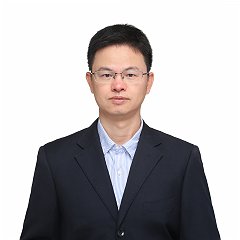
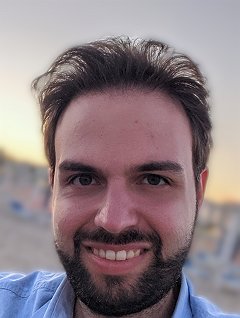
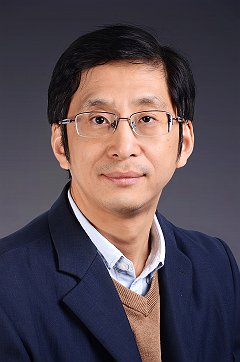
Lina Gong is an Associate Professor at the School of Computer Science and Technology, Nanjing University of Aeronautics and Astronautics, China. She holds a Ph.D. in Computer Software and Theory from China University of Mining and Technology (2020) and completed a research visit at Queen's University's Software Analysis and Intelligence Lab (SAIL) under Prof. Ahmed Hassan (2019-2020). Her research focuses on leveraging machine learning to extract insights from software repositories, with emphasis on: ML-enabled defect prediction techniques Code pre-trained models for vulnerability detection Identifier normalization and issue classification Empirical studies of software quality attributes Her recent publications (2023-2025) demonstrate strong trends in applying transformer architectures to code analysis, with increasing focus on supply chain security and cross-platform UI translation. Key venues include IEEE TSE, ACM TOSEM, and ASE. Scientific recognition includes: National Natural Science Foundation of China (2022-2025) Natural Science Foundation of Jiangsu Province (2022-2025) Key National Laboratory Foundation (2022-2023) Excellent Ph.D. Student Award (CUMT) She actively mentors graduate students (14 advisees: 1 doctoral, 13 master's) and serves on program committees for ASE, APSEC, and SANER. Her research is supported by multiple competitive grants focusing on ML applications in software engineering.
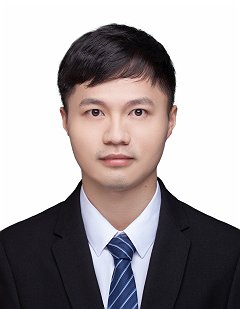
Hui Liu is a Professor in the School of Computer Science and Technology at Beijing Institute of Technology, where he leads research in AI-based software development with a focus on LLM applications. His work spans software refactoring, quality improvement, and maintenance, funded by the National Natural Science Foundation of China and the National Key Research and Development Program of China. PhD from Peking University (2008) Former graduate student at Software Engineering Institute, Peking University Distinguished member of China Computer Federation Secretary-General of CCF Technical Committee on Software Engineering Professor Liu's research centers on LLM-based program generation, evaluation and testing of large language models, software refactoring techniques, and automatic construction of software engineering datasets. His work bridges artificial intelligence and software engineering, with particular emphasis on improving code quality through empirical studies and machine learning techniques. Current projects include code contamination detection, context-aware naming recommendations, and refactoring validation using LLMs. His research has evolved from traditional code smell detection to cutting-edge applications of large language models in software development. Liu's publication record shows a strong trend toward LLM applications in software engineering, with recent work focusing on code review generation, commit message generation, and refactoring validation using large language models. His research combines empirical methods with machine learning approaches, often analyzing large code corpora from open-source projects. The work spans both theoretical foundations and practical tool development, with several contributions merged into Eclipse as part of the open-source community. ACM Distinguished Paper Award (ESEC/FSE 2023) ACM Distinguished Paper Award (ICSE 2022) RE'2021 Best Research Paper Award IET Software Premium Award (2018) New Century Excellent Talents in University (2013) Beijing Higher Education Young Elite Teacher (2013) Professor Liu actively mentors PhD and Master's students, with recent graduates including Waseem Akram (awarded Outstanding Graduate) and several students publishing at top venues. His research is supported by major Chinese funding agencies, and he serves on program committees for leading software engineering conferences including ASE, ICSE, and FSE. He maintains strong industry connections through contributions to Eclipse and studies of open-source ecosystems like Rust. Liu leads a research group focused on AI for software engineering, with active projects on code generation, refactoring, and quality improvement. The group collaborates extensively with international researchers and contributes directly to open-source tools, particularly in the Eclipse ecosystem where multiple refactoring improvements have been merged.
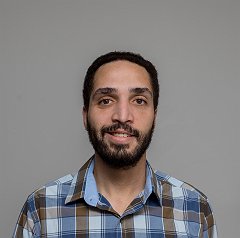
Xiao Yu is a Research Fellow (Assistant Research Professor) at the State Key Laboratory of Blockchain and Data Security, Zhejiang University, Hangzhou, China. Previously, they were a Postdoctoral Researcher at Huawei under Prof. Xin Xia. They hold dual PhD degrees: from Wuhan University's School of Computer Science (December 2020) supervised by Prof. Jin Liu, and from City University of Hong Kong's Department of Computer Science (March 2021) supervised by Prof. Qing Li and Prof. Jacky Wai Keung. Research focuses on three interconnected domains: LLMs Data Governance and Evaluation addressing hallucination phenomena and task-specific LLM evaluation in software engineering; Intelligent Software Engineering leveraging deep learning for code generation, annotation, and maintenance; and Software Security and Reliability investigating vulnerability detection, log anomaly identification, and security bug classification. Their work bridges theoretical advancements with industrial applications, particularly in blockchain and data security contexts. Recent publications demonstrate strong trends in realistic LLM evaluation (RealisticCodeBench), vulnerability detection using semi-supervised learning, and industrial anomaly detection. Key thematic areas include effort-aware defect prediction, code smell detection, and the practical application of large language models in software engineering tasks, with increasing emphasis on data quality and privacy considerations. Xiao Yu actively contributes to the academic community through extensive service roles including journal reviewing for ACM Transactions on Software Engineering and Methodology, IEEE Transactions on Dependable and Secure Computing, and serving on program committees for major conferences like APSEC 2025 and ASE 2025. They have supervised numerous graduate students as evidenced by authorship patterns in publications. Based at Zhejiang University's State Key Laboratory of Blockchain and Data Security, their research operates at the intersection of academic rigor and industrial relevance, with strong collaborations spanning multiple institutions including Huawei, Wuhan University, and City University of Hong Kong.
Professor Sven Apel holds the Chair of Software Engineering at Saarland University's Saarland Informatics Campus in Germany. He is also the Director of the Saarbrücken Graduate School of Computer Science. His work focuses on software engineering with an emphasis on automation, human factors, and interdisciplinary approaches. Prof. Apel received his Ph.D. in Computer Science in 2007 from the University of Magdeburg. His academic journey includes: Ph.D. in Computer Science, University of Magdeburg (2007) Emmy-Noether Fellowship of the German Research Foundation Heisenberg Professorship of the German Research Foundation Prof. Apel's research centers on empowering software engineering practice to enter an era of intensive automation. His key research areas include software variability and configuration, AI-based program generation and optimization, socio-technical software analysis, and empirical and neurophysiological methods. He pays special attention to the human factor and interdisciplinary research questions, applying his findings to real-world software systems from both open-source projects and industry collaborations with partners like Siemens AG, Bosch Engineering, and Airbus Helicopters. Analysis of Prof. Apel's recent publications reveals a strong focus on configurable software systems, neurophysiological approaches to understanding programming, and the application of AI techniques to software engineering problems. His work often bridges the gap between theoretical foundations and practical applications, with many studies involving industrial collaborations. There's a noticeable trend toward interdisciplinary research combining software engineering with neuroscience, organizational studies, and machine learning. Prof. Apel has received numerous prestigious awards and honors: ERC Advanced Grant "Brains On Code" (2022) ACM Distinguished Member for "Outstanding Scientific Contributions to Computing" (2018) Multiple Most Influential Paper Awards (SPLC'18, ICPC'22, GPCE'23) Multiple Best Paper Awards (SPLC'11, Modularity'15, AOM'18) Heisenberg Professorship and Emmy-Noether Fellowship from the German Research Foundation Prof. Apel has advised numerous Ph.D., Master's, and Bachelor's students throughout his career. His research has been generously funded by multiple grants including an ERC Advanced Grant (2,500,000 Euro, 2022-2027), several DFG projects (CPEC, Congruence, Pervolution), and previous grants like SafeSPL, FeatureFoundation, and Pythia. His work has practical impact through collaborations with industry partners including Siemens AG, Bosch Engineering, and Airbus Helicopters. Prof. Apel leads research in the Chair of Software Engineering at Saarland University, where his team explores the intersection of software engineering, neuroscience, and artificial intelligence. His "Brains On Code" ERC project specifically investigates how programmers' brains process code using neuroimaging techniques. The research group maintains strong connections with both academic and industry partners, facilitating the transfer of research findings into practical applications.
Lars Grunske is a Professor in the Department of Computer Science at Humboldt University of Berlin, Germany. His academic career spans multiple institutions across Germany, Australia, and internationally, with a strong focus on research and conference participation in software engineering. His educational background includes a PhD in computer science from the University of Potsdam (Hasso-Plattner-Institute for Software Systems Engineering) in 2004. Professor Grunske's research interests center on modeling and verification of systems and software, with particular emphasis on automated analysis techniques. His work primarily focuses on probabilistic and timed model checking and model-based dependability evaluation of complex software intensive systems. He has made significant contributions to software testing, program repair, formal methods, and the application of machine learning techniques to software engineering problems. His publication record shows consistent contributions to top software engineering conferences over the past decade, with recent work exploring the intersection of AI/ML with traditional software engineering challenges. His research demonstrates an evolution from foundational model checking techniques toward more practical applications in software testing and repair. Boeing Postdoctoral Research Fellow Professor Grunske actively mentors through conference activities including chairing mentoring circles at ICSE 2021. He serves on numerous program committees for major software engineering conferences including ASE, ICSE, ESEC/FSE, and others, demonstrating his standing in the academic community. His involvement spans multiple roles from committee member to track chair and award committee positions. He maintains an active research laboratory focused on software verification and testing, as indicated by his departmental affiliation and research website.
Shane McIntosh is an Associate Professor at the David R. Cheriton School of Computer Science, University of Waterloo, where he leads the Software Repository Excavation and Build Engineering Labs (Software REBELs). His academic career focuses on empirical studies of software development processes with particular emphasis on release engineering and software quality. Dr. McIntosh's research centers on mining historical data generated during software development to derive practical insights for building more reliable systems. His work spans release engineering (assembling, verifying, and delivering software releases) and software quality (developing guidelines for reliable software). This research manifests in studies of continuous integration systems, build outcome prediction, defect prediction models, and code review practices. His publication record reveals a consistent focus on empirical software engineering with recent papers examining build system reliability, continuous integration practices, and defect prediction. The research demonstrates strong methodological rigor through replication studies, longitudinal analyses, and large-scale data mining of software repositories. His work bridges theoretical insights with practical applications for software development teams. Dr. McIntosh actively contributes to the software engineering community through substantial service roles including Proceedings Co-chair for ICSE 2022, General Chair for PROMISE 2021-2022, and committee positions across major conferences like ASE, ESEC/FSE, and MSR. His teaching portfolio includes foundational courses such as Introduction to Software Engineering, Software Analytics, and Software Delivery. He directs the Software REBELs lab, which provides a collaborative environment for investigating software development data. The lab's work focuses on extracting meaningful patterns from version control systems, issue trackers, and continuous integration pipelines to improve software engineering practices.
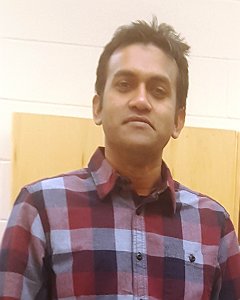
Masud Rahman is an Associate Professor in the Faculty of Computer Science at Dalhousie University, Canada, where he leads the RAISE Lab. Previously a tenure-track Assistant Professor, he completed his Ph.D. in Computer Science/Software Engineering from the University of Saskatchewan and a postdoctoral fellowship at Polytechnique Montreal. His academic career demonstrates strong progression with significant research impact in software engineering. Faculty of Computer Science, Dalhousie University (Current) University of Saskatchewan (Ph.D. studies) Polytechnique Montreal (Postdoctoral research) Dr. Rahman's research focuses on the intelligent automation of software maintenance and evolution, particularly targeting software debugging, code search, and code reviews. His work strategically combines Software Engineering with Artificial Intelligence techniques including Machine/Deep Learning, Information Retrieval, Mining Software Repositories, and Natural Language Processing. His industry experience as a professional developer for three years significantly shaped his research direction toward solving practical software maintenance challenges that cost the global economy billions annually. His research program addresses critical problems in software bug detection, diagnosis, explanation, and reproduction, with increasing focus on AI-powered and simulation modeling software. His publications demonstrate consistent output in top-tier venues including 7 papers at ICSE (A*), 3 at FSE (A*), 3 at ASE (A*), 8 at EMSE (A), 6 at ICSME (A), and 9 at MSR (A). The research trends show increasing focus on deep learning applications for software engineering problems, with particular attention to code search, bug localization, and debugging automation. His work has evolved from traditional information retrieval approaches to incorporate advanced neural network techniques and generative AI. Governor General's Gold Medal 2019 U of S Doctoral Thesis Award 2019 CS Best PhD Thesis Award 2019 TCSE Distinguished Paper Award Most Influential Paper Award Dr Keith Geddes Award Dalhousie Belong Research Fellowship President's Gold Medal (Bangladesh) Dr. Rahman has secured $500K+ in competitive research funding as Principal Investigator, including an NSERC Discovery Grant, Mitacs Accelerate International, and Climate Action and Awareness Fund. He actively collaborates with industry partners including Metabob Inc., Mozilla Firefox, and Vendasta Technologies. His service to the community includes extensive program committee work for major conferences and journal reviewing. He leads the RAISE Lab, which focuses on developing AI-powered solutions for software maintenance challenges, with current projects emphasizing sustainable software innovation and sustainable AI as part of Dalhousie's strategic goals.
Simone Scalabrino is an Assistant Professor at the University of Molise, Italy, where he is part of the STAKE lab. He also serves as CSO at Datasound. His academic career includes teaching courses such as Automated Software Delivery and Object-Oriented Programming at the University of Molise. Dr. Scalabrino received his Ph.D. from the University of Molise in 2019 with a thesis entitled "Automatically Assessing and Improving Code Readability and Understandability," supervised by Prof. Rocco Oliveto. He earned his Master's Degree in Computer Science from the University of Salerno in 2015 and his Bachelor's Degree in Computer Science from the University of Molise in 2013. His research interests focus on Software Quality, Software Testing, Software Security, and Empirical Software Engineering . Dr. Scalabrino's work spans multiple areas including code readability assessment, software testing methodologies, Docker container analysis, game quality assessment, and voice user interface testing. His research often combines empirical methods with machine learning techniques to address practical software engineering challenges. Analysis of his recent publications reveals a strong focus on improving software quality through various approaches. His work spans code readability assessment, Docker container analysis, game quality testing, and voice user interface evaluation. There's a clear trend toward applying machine learning techniques to traditional software engineering problems, particularly in the areas of code understanding, defect prediction, and quality assessment. His research often involves large-scale empirical studies with real-world data from open source projects and commercial applications. Scientific Awards Distinguished Reviewer Award @ FSE 2025 Distinguished Reviewer for TSE (2023) Best Reviewer Award for JSS (2022) ACM Distinguished Paper Award @ MSR 2019 ACM Distinguished Paper Award @ ASE 2017 ACM Distinguished Paper Award @ ICPC 2016 Dr. Scalabrino has been actively involved in mentoring students through research projects, though specific student names are not listed in the provided information. He has served on program committees for numerous prestigious conferences including ASE, ICSE, ICPC, and FSE. His service extends to reviewing for top-tier journals such as Transactions on Software Engineering and Empirical Software Engineering. He leads or contributes to several research projects including DevProDev, which focuses on developer-centered recommendation systems, and ATTICUS, a tele-monitoring system for ambient-assisted living. Dr. Scalabrino has also developed multiple research tools such as Code Readability Predictor, TIRESIAS, OCELOT, CLAP, and ACRyL to address various software engineering challenges.
Hongyu Zhang is a Professor and Dean of the School of Big Data and Software Engineering at Chongqing University, China, and an Honorary Professor at The University of Newcastle, Australia. Previously, he served as a Lead Researcher at Microsoft Research Asia and an Associate Professor at Tsinghua University, China. He received his PhD from the National University of Singapore in 2003. His academic journey spans prestigious institutions, combining industry research experience with academic leadership. Dr. Zhang's research interests focus on intelligent software engineering, software analytics, data-driven software engineering, software fault management, testing and debugging, and software maintenance and reuse. His work centers on improving software quality and productivity by mining and analyzing vast amounts of software data. Over the years, he has developed innovative methods that apply data mining, machine learning (including deep learning), and information retrieval techniques to extract knowledge from software data and solve complex software engineering problems. His research spans three major areas: intelligent programming (code search, code summarization, code generation), intelligent quality prediction (defect prediction, cloud failure prediction, performance prediction), and intelligent fault detection and diagnosis (log-based fault detection, crash-based fault localization, bug report analytics). His recent publications demonstrate a clear trend toward integrating large language models and deep learning techniques with traditional software engineering practices. The research spans intelligent programming assistance, code security, UI automation, distributed systems optimization, and performance analysis. His work increasingly focuses on practical applications of AI in software engineering, with emphasis on real-world impact in industrial settings, particularly in microservices, cloud systems, and large-scale software development environments. 8 ACM Distinguished Paper Awards Best Paper Award: How Long Will it Take to Mitigate this Incident for Online Service Systems? David Lorge Parnis Fellowship Senior Member of IEEE Distinguished Member of ACM Distinguished Member of CCF Fellow of Engineers Australia (FIEAust) Recognized in The Australian's Top Researchers special edition as leading researcher in Software Systems World's Top 2% Scientists (career-long) Dr. Zhang has successfully advised numerous PhD and Master's students who have gone on to prominent positions at leading technology companies and academic institutions worldwide. His research has been supported by significant grants including Australian Research Council Discovery Projects (as Lead CI) and multiple National Science Foundation of China projects. His work has made tangible impacts in industry, most notably through the Microsoft Developer Assistant project which received over 450K downloads in 2016. He leads research groups focused on intelligent software engineering and software analytics, with strong collaborations between Chongqing University, The University of Newcastle, and Microsoft Research. His teams develop practical tools for code intelligence, log analysis, and fault diagnosis that are deployed in real-world online service systems.