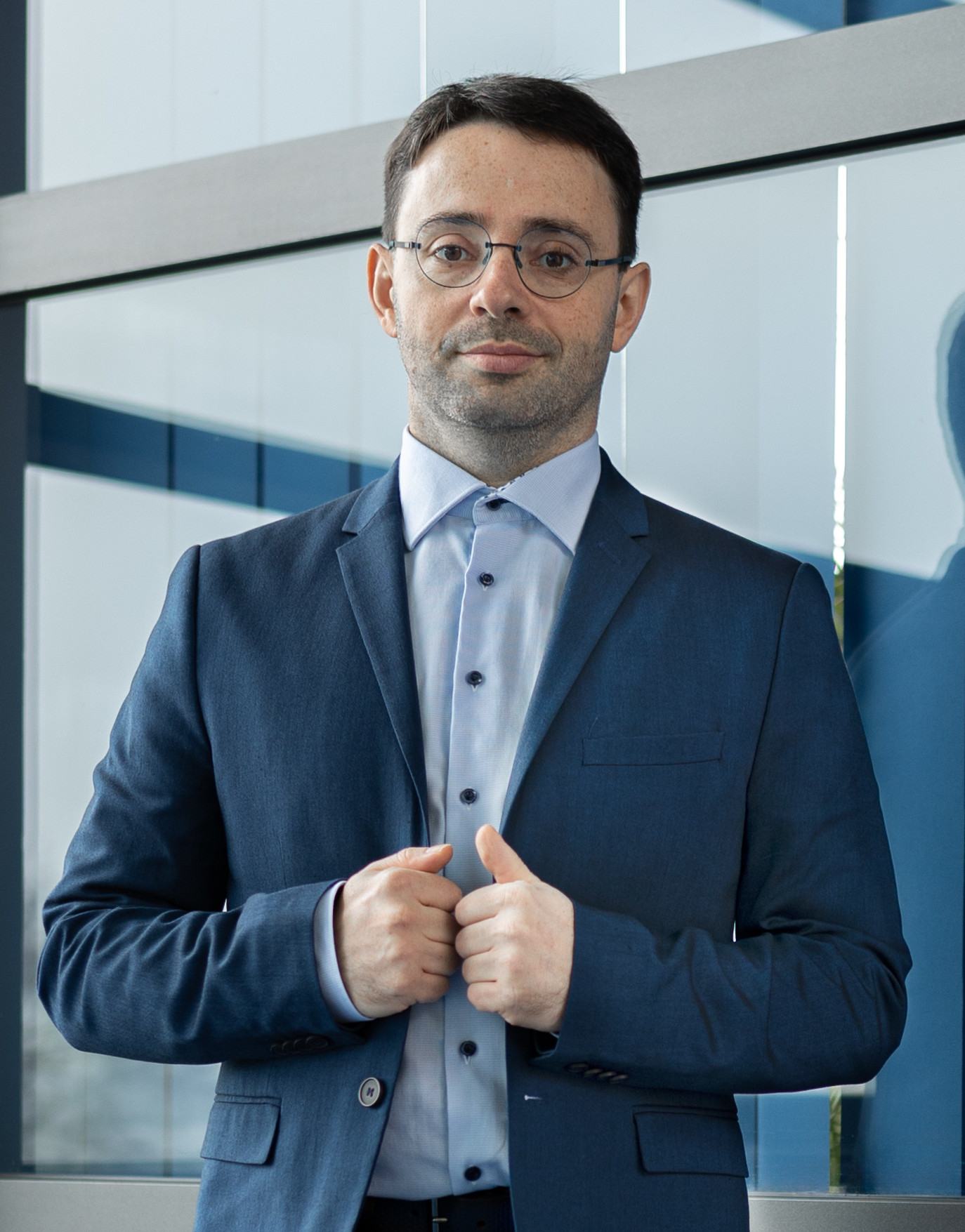
Gregory Gay is an Associate Professor in the Interaction Design and Software Engineering division within the Department of Computer Science and Engineering at Chalmers University of Technology and the University of Gothenburg, Sweden. His academic profile spans numerous software engineering conferences where he has served as committee member, program chair, and active researcher since at least 2018. Dr. Gay's research focuses on the intersection of software engineering and artificial intelligence, with particular emphasis on: Software Testing and Analysis Search-Based Software Engineering AI for Software Engineering (AI4SE) AI Engineering Automation of development tasks Software Carbon Footprint and sustainability His recent publications demonstrate a strong trend toward applying AI and optimization techniques to software testing challenges, with increasing focus on sustainability aspects of software development. Many studies take an industrial perspective, examining real-world applications in automotive software systems. His work blends theoretical foundations with practical applications, making significant contributions to both academic research and industrial practice in software engineering. Dr. Gay has been actively involved in numerous top software engineering conferences including ASE, ICSE, ESEC/FSE, ISSTA, and ICST, serving on program committees and organizing tracks. His research methodology typically combines optimization, artificial intelligence, and machine learning to help developers deliver complex systems in a safe, secure, and efficient manner.
Jan Wilhelm is a Researcher and leader of the Emmy Noether Independent Junior Research Group at the University of Regensburg's Institute for Theoretical Physics. His work focuses on ultrafast electron dynamics and computational methods for electronic structure theory, addressing gaps between experimental capabilities and theoretical predictions in ultrafast processes. He develops low-scaling algorithms for GW calculations to simulate systems with thousands of atoms, enabling studies of materials like 2D heterobilayers and moiré structures. His research intersects quantum technologies, photovoltaics, and nonlinear optics, with collaborations on high-harmonic generation and ultrafast microscopy. Funded by the German Research Foundation (DFG), his work bridges theory and experiment, aiming to understand femtosecond-scale phenomena in materials. Education: Studied physics and mathematics at Karlsruhe Institute of Technology, with a doctorate in theoretical chemistry from the University of Zurich. Prior industry experience in chemical optimization provided insights into applied vs. fundamental research. Research highlights include the development of CUED software for ultrafast dynamics simulations and contributions to the CP2K package. Key projects include ultrafast laser-driven electron dynamics, topological insulator studies, and collaborations with experimental groups at RUN. Future directions involve leveraging the Regensburg Center for Ultrafast Nanoscopy (RUN) to explore uncharted phenomena at atomic scales. Teaching: Lectures on computational methods for nanoscience and condensed matter excitations. Supervised students like Max Graml, who received the Brigitta and Oskar Braumandl Prize.
Matteo Esposito is a postdoctoral researcher at the University of Oulu, Finland, where he works in the M3S Cloud Group. His research focuses on the intersection of Large Language Models, Software Quality, Software Maintenance, and Software Architecture. Prior to his academic career, he served as R&D Vice Director at an Italian cybersecurity firm. Matteo earned his European Label Ph.D. in "Computer Science, Control, and Geoinformation" from the University of Rome, Tor Vergata, where he also completed his MSc Degree in Computer Science Engineering with highest honors (110 cum Laude) in October 2021. His primary research interests span several cutting-edge domains in software engineering: Secure Software Engineering and Security Artificial Intelligence and Large Language Models applications in software development Software Quality, Maintenance, and Architecture Quantum Software Engineering, a rapidly emerging field bridging classical and quantum computing Matteo's recent publications demonstrate a strong focus on applying AI techniques, particularly Large Language Models, to various software engineering challenges. His work spans multiple domains including defect prediction, security analysis, microservice architecture analysis, and quantum computing integration. A significant trend in his research is the application of network analysis methods to understand software architecture evolution and identify potential degradation points in microservice systems. Matteo is actively involved in the academic community, serving on program committees for major software engineering conferences including ESEM, ECSA, and ICSA. He has also organized workshops, such as the First International Workshop on Quantum Software Engineering: The Next Evolution (QSE-NE) co-located with FSE 2024. As a passionate educator, Matteo has served as a Teaching Assistant at the University of Rome "Tor Vergata" since 2019, instructing courses in Software Engineering and Algorithms. He is committed to promoting tech literacy, digital inclusion, and community-driven technological empowerment. Matteo is a member of the M3S Cloud Group at the University of Oulu, where he collaborates with researchers on cloud computing, microservices, and software architecture topics. His work bridges theoretical research with practical applications in mission-critical systems.
Brittany Johnson-Matthews is an Assistant Professor in the Department of Computer Science at George Mason University, where she directs the INSPIRED Lab (INterdisciplinary Software Practice Improvement REsearch and Development). Her work bridges software engineering, human-computer interaction, and machine learning to address sociotechnical challenges in software development. Her educational background includes: Ph.D. in Computer Science from North Carolina State University (2017) B.A. in Computer Science from the College of Charleston (2011) Dr. Johnson-Matthews' research centers on sociotechnical problems in software development, with emphasis on developer productivity, tool support, work environments, ethics, and software for social good. She employs interdisciplinary approaches to study how developers interact with tools and environments, particularly in the context of emerging technologies like AI. Her work often involves empirical studies and tool development to promote fairness, inclusivity, and well-being in software engineering. Analysis of her recent publications (2023-2026) reveals a consistent focus on the human aspects of software engineering. Key themes include the impact of AI-assisted tools on developer well-being, fairness in machine learning toolkits, and ethical considerations in software development. Her research frequently involves building and evaluating tools (e.g., for detecting harmful terminology or causal testing) and conducting empirical studies across open source and industrial settings. She leads the INSPIRED Lab, which fosters interdisciplinary collaboration to improve software practices through research in human-centered computing, empirical software engineering, and ethical AI.
Prof. Dr.-Ing. Matthias Hermes is a Professor of Manufacturing and Forming Technology at the South Westphalia University of Applied Sciences in Meschede, Germany. He leads the Laboratory for Forming and Joining Technology and serves as managing director of the Research Center for Industrial Metal Processing (ReCIMP). His work focuses on developing innovative manufacturing processes for lightweight structures, particularly in tube, profile, and sheet metal forming. Hermes' educational background includes: 1997-2000: Toolmaking apprenticeship 2000-2005: Mechanical Engineering studies at FH Soest and TU Dortmund, graduating with a Diplomingenieur degree His research interests center on flexible manufacturing technologies for lightweight components, with particular expertise in incremental forming processes, 3D bending of tubes and profiles, and hydroforming techniques. Hermes has pioneered several innovative processes including incremental profile forming and torque superposed spatial bending, which enable the production of complex geometries from high-strength materials that were previously unattainable. His work bridges the gap between academic research and industrial application, with numerous patents and technology transfers to manufacturing companies. Hermes' scientific contributions demonstrate a consistent focus on solving practical manufacturing challenges through innovative process development. His recent work has emphasized quality standards for profile bending, high-speed hydroforming technologies, and computational approaches to springback compensation. The research spans fundamental process understanding to industrial implementation, with strong connections to automotive and metal processing industries. His significant scientific achievements have been recognized with numerous awards: Stahl-Innovationspreis 3. Preis (2015) for "Incremental Profile Forming" Best Innovative Paper at IEEE EDUCON 2013 Stahl-Innovationspreis 2. Preis (2012) for "3D Profile Bending with Inductive Heating" Best Paper Award at International Tube Association conference (2012) Best Poster Award at International Conference on Plasticity (2011) Manus-Award 1. Platz (2009) for innovative use of polymer bearings NoAE-Award (2009) for "Incremental Tube Forming" Hochschulpreis NRW 3. Preis "Patente Erfinder" (2009) VDW-Preis (2003) for diploma thesis Hermes has been actively involved in technology transfer through his leadership of the ReCIMP research center, collaborating with numerous industrial partners including Transfluid Maschinenbau, Vossloh Fastening Systems, FWB Bröckelmann, Welser Profile, and Almecon Technology. His laboratory provides services ranging from feasibility studies and prototype development to process simulation and specialized training programs in tube and profile forming, sheet metal forming, and thermal and forming-based joining techniques. The Laboratory for Forming and Joining Technology under Hermes' direction features comprehensive equipment for bending technology (CNC tube and profile bending machines, 3-roll bending machine), profile forming technology (CNC orbital tube forming machine, 4000 bar internal high-pressure forming test stand), measurement and simulation (tactile and laser-based measurement arm, Abaqus FEM software), sheet metal forming (1000 kN press), and all relevant joining processes (MIG, MAG, TIG, Plasma, UP, Laser, Spot, Clinching, etc.). This facility enables end-to-end research from process development through to production-ready implementation.
Prof. Andrey Ustyuzhanin is an Adjunct Professor of Computer Science at Constructor University's School of Computer Science & Engineering and a Visiting Research Professor at the National University of Singapore (NUS), affiliated with the Institute for Future Intelligent Machines (IFIM). He holds a PhD in Computer Science from the Institute of System Programming (Russian Academy of Sciences) and advanced degrees from Moscow Institute of Physics and Technology (MIPT). His research focuses on developing machine learning methods to address complex scientific challenges in particle physics, materials science, and data-driven discovery. He has contributed to projects like the LHCb experiment at CERN, optimizing online triggers and BDT-based processing, and has pioneered initiatives like the Tracking Machine Learning Challenge and the Code4ML dataset. His work bridges AI and fundamental science, emphasizing interdisciplinary applications. He is also the Director of AI/ML Research at Acronis and a co-organizer of international summer schools in machine learning for particle physics. Education PhD in Computer Science, Institute of System Programming (RAS), 2007 M.Sc. in Applied Mathematics & Physics (Autonomous Control Systems), MIPT, 1994–2000 M.Sc. in Innovative Management, MIPT, 1998–1999 B.Sc. in Applied Mathematics, MIPT, 1994–1998 Mathematics & Physics, Moscow Chemical Lyceum, 1991–1994 Research Interests Prof. Ustyuzhanin specializes in machine learning for scientific discovery, including particle physics (LHCb experiment), materials science (defect analysis in 2D materials), and AI-driven experimental optimization. His work also explores symbolic expression generation, code semantics classification (Code4ML), and cybersecurity frameworks like EAGLEEYE for malicious event detection. He advocates for reproducible science and end-to-end optimization of experimental designs using differentiable programming. Key Projects & Contributions Co-developed the Tracking Machine Learning Challenge to advance high-throughput physics analysis Co-created the Code4ML dataset for annotated machine learning code Designed algorithms for LHCb’s online triggers and scintillator tracking systems Co-founded the annual summer schools on ML in particle physics Labs & Collaborations Director of AI/ML Research at Acronis Head of the LAMBDA Lab at HSE University PI at IFIM, NUS Collaborator on CERN-Yandex research programs
Alaukik Saxena is a Researcher at the Department of Computational Materials Design, Max Planck Institute for Sustainable Materials. Their work focuses on applying machine learning techniques to analyze atom probe tomography (APT) datasets for advanced material design. Saxena holds a B.Eng. in Mechanical Engineering from Panjab University (2016), an M.Sc. in Material Science and Simulation from Ruhr University Bochum (2020), and is a PhD candidate at the Max-Planck Institut für Eisenforschung GmbH (2020–2023). Research interests include defect chemistry, microstructure analysis, and data-driven materials science. Saxena’s work bridges experimental techniques like APT and scanning transmission electron tomography (STEM) with machine learning to quantify chemical segregation, grain boundary roles in corrosion, and optimize permanent magnet performance. They also develop open-source tools for high-throughput material data analysis. Publications emphasize APT data workflows, microstructural feature quantification, and roadmap strategies for data-centric materials science. Their contributions highlight theoretical advancements in nanoporous materials and θ′ precipitation in Al-Cu alloys. Saxena collaborates within the Defect Chemistry and Spectroscopy group, advancing computational phase studies and material defect engineering. Awards and grants are not explicitly listed, but their research aligns with sustainable materials innovation. Advising and team leadership are inferred through collaborative projects in computational materials design and defect chemistry.
Rocco Oliveto is a prominent researcher in software engineering with extensive contributions across multiple domains including code quality assessment, smart contracts, Docker configuration analysis, and healthcare applications of AI. His collaborative work spans numerous institutions, with frequent co-authorship with researchers such as Simone Scalabrino, Gabriele Bavota, and Emanuela Guglielmi. Dr. Oliveto's research interests focus on practical software engineering challenges with emphasis on code readability, API compatibility, bug prediction, and smart contract maintenance. His work bridges theoretical research with practical applications, particularly evident in recent projects applying machine learning to healthcare diagnostics and video game quality analysis. His research demonstrates a consistent trajectory toward addressing real-world software engineering problems with innovative methodological approaches. Analysis of his recent publications reveals a strong trend toward interdisciplinary research, particularly at the intersection of software engineering and healthcare applications. His work shows increasing focus on practical applications of AI in medical diagnostics, rehabilitation technology, and patient monitoring systems, while maintaining strong contributions to core software engineering topics like code quality and developer productivity. The diversity of publication venues—from top software engineering journals like Empirical Software Engineering and ACM TOSEM to healthcare conferences like BIOSTEC—demonstrates the breadth of his research impact. Dr. Oliveto has demonstrated significant research leadership through numerous collaborative projects, particularly evident in his participation in the QualAI project focused on continuous quality improvement of AI-based systems. His work shows consistent funding support through collaborative research initiatives that bridge academic and practical software engineering concerns.
Xiang Chen is an Associate Professor at the Department of Software Engineering, School of Artificial Intelligence and Computer Science, Nantong University, China. He received his B.Sc. degree from Xi'an Jiaotong University in 2002 and his M.Sc. and Ph.D. degrees in computer software and theory from Nanjing University in 2008 and 2011 respectively. He is an editorial board member of Information and Software Technology and serves as a program committee member for prestigious conferences including FSE 2026 and ASE 2025. Chen is also a senior member of the China Computer Federation (CCF) and active in various academic committees. Chen's research focuses on empirical software engineering, mining software repositories, and software testing and maintenance, with particular emphasis on applying AI techniques to software engineering problems. His work spans large language models for software engineering, security vulnerability analysis, code change representation, and regression testing. He has published over 110 papers in top-tier journals and conferences including IEEE Transactions on Software Engineering and ACM Transactions on Software Engineering and Methodology. His recent publications demonstrate a strong trend toward integrating AI techniques, particularly large language models, with traditional software engineering practices. The research spans code generation evaluation, deep learning framework testing, vulnerability detection, and automated program repair, showing a consistent focus on improving software quality through innovative testing and analysis techniques. ACM SIGSOFT Distinguished Paper Award (ICSE 2021) ACM SIGSOFT Distinguished Paper Award (ICPC 2023) Top 1% CNKI Highly Cited Scholar (2024) Top 2% Scientist by Stanford University (2023-2025) NASAC 2019 Prototype Competition First Prize Chen has successfully advised numerous graduate and undergraduate students who have gone on to prestigious institutions including Nanjing University, Tsinghua University, and Zhejiang University. Many of his students have won national programming competitions and received scholarships. His research group, smartSE, actively works on projects funded by the Natural Science Foundation of China and various provincial research programs. Chen also serves as a reviewer for top journals including IEEE Transactions on Software Engineering and ACM Transactions on Software Engineering and Methodology.
Dr. Ying Zou is a Professor in the Department of Electrical and Computer Engineering at Queen's University's Smith Engineering faculty in Kingston, Ontario, Canada. With an extensive publication record spanning from 2018 through 2025, Dr. Zou has established herself as a leading researcher in empirical software engineering with a growing focus on AI integration. Dr. Zou's research focuses on Software Engineering , Artificial Intelligence for Software Engineering (AI4SE) , Software Evolution , Software Analytics , and Empirical Software Engineering . Her work bridges theoretical approaches with practical applications, examining developer behavior, code quality improvement, and AI techniques for software engineering tasks. Recent publications demonstrate a clear progression from traditional empirical studies toward more AI-centric approaches, particularly in code refactoring, type inference, and performance analysis. Analysis of Dr. Zou's publication trends reveals a strategic evolution in her research focus. Early work centered on empirical studies of Stack Overflow and GitHub, while recent publications increasingly integrate large language models and AI techniques for software engineering tasks. Her research spans multiple dimensions including code quality, developer productivity, open source community dynamics, and performance optimization, with consistent methodological rigor in empirical validation. Dr. Zou has served in numerous leadership roles across major software engineering conferences including ASE, ICSE, and ESEC/FSE. She has been a Program Committee member for multiple tracks and conferences, and notably served as New Faculty Mentoring Co-Chair for ESEC/FSE 2026. Her service to the community extends to organizing conference tracks, chairing sessions, and mentoring new researchers in the field.
Iftekhar Ahmed is an Associate Professor in Informatics at the Donald Bren School of Information and Computer Science, University of California, Irvine. His research focuses on software engineering, particularly combining software testing, static analysis, and machine learning to develop better tools and techniques for software quality assurance. His educational background includes: PhD in Computer Science (2018) from Oregon State University, advised by Carlos Jensen BSc in Computer Science & Engineering (2007) from Shahjalal University of Science and Technology Dr. Ahmed's research interests center on software testing, static analysis, and the application of machine learning to software engineering problems. He has made significant contributions to mutation analysis, particularly in scaling this technique for real-world software systems. His work often bridges theoretical advances with practical applications, focusing on how to make software testing more effective and efficient for developers. He leads the STAIRS (Software Engineering & Testing Using Artificial Intelligence for Reliable Software) research group at UCI, where his team explores innovative approaches to software reliability through AI and machine learning. His recent publications demonstrate a strong trend toward integrating artificial intelligence with traditional software engineering practices. There's a clear focus on applying machine learning to code analysis, commit message generation, and bug detection, while maintaining rigorous empirical validation through studies of real-world software projects and developer practices. His work spans multiple domains including web accessibility, quantum computing, and Jupyter notebooks, showing both depth in core software engineering topics and breadth across application areas. Dr. Ahmed has received several prestigious awards: IBM Ph.D. Fellowship for academic year 2016-2017 Graduate School tuition relief Scholarship for academic year 2016-2017 IBM Ph.D. Fellowship for academic year 2017-2018 Actively involved in the academic community, Dr. Ahmed serves on program committees for major software engineering conferences including ASE, ICSE, and ESEC/FSE. He is currently accepting PhD students into his research group and emphasizes mentorship and professional development. His research has been supported by various grants that enable his team to explore innovative approaches to software testing and analysis. Dr. Ahmed leads the STAIRS research group at UCI, which focuses on developing AI-powered techniques for software testing and reliability. The group collaborates with industry partners and academic institutions to ensure their research addresses real-world challenges in software development. Current projects include improving mutation testing scalability, analyzing code smells in emerging domains like quantum computing, and developing tools for accessibility testing.
Keywan Sohrabi is a Professor at Technische Hochschule Mittelhessen (THM) , specializing in Biomedical Engineering and Medical Informatics . His work bridges Pulmonology , Sleep Medicine , and Digital Health through innovative applications of 3D Imaging , Acoustic Analysis , and Machine Learning . Contact: keywan.sohrabi@ges.thm.de
Akito Monden is a prolific Japanese software-engineering scholar with 171 publications recorded in dblp during 1995-2025. His recent work centres on defect prediction, online learning, bandit-based tool selection, and empirical studies of software quality and human factors. Research interests span software defect prediction, mining software repositories, effort estimation, clone detection, code generation, and the application of machine-learning techniques (notably bandit algorithms and ensemble methods) to practical software-engineering tasks. He also investigates requirements ambiguity, security-bug identification with large language models, and gaze-based human-computer interaction in programming education. Across 2022-25 articles Monden explores online learning to cope with concept drift in defect datasets, multi-armed bandit algorithms for dynamic selection of clone detectors, fault-localisation techniques and code generators, and LLM-based security-bug detection. These themes reflect a sustained focus on data-driven, adaptive approaches that improve software quality assurance processes.
Carmine Gravino is a Professor in the Department of Computer Science at the University of Salerno, Italy, with an extensive publication record spanning over two decades from 2001 to 2025. His academic career demonstrates consistent research productivity with numerous publications in top software engineering venues including IEEE Transactions on Software Engineering, Empirical Software Engineering, and Information and Software Technology. Gravino's research spans multiple domains within software engineering and its intersection with emerging technologies. His primary research interests include software measurement (particularly COSMIC functional size measurement), requirements engineering, code quality analysis, and the application of artificial intelligence to software engineering problems. In recent years, he has expanded his research into educational technology, focusing on the development of educational metaverses and the integration of generative AI in learning environments. His work also extends to healthcare applications, particularly in diabetes prediction using machine learning techniques. The trajectory of Gravino's recent publications reveals a strategic evolution from traditional software engineering topics toward the integration of cutting-edge AI technologies. His 2023-2025 works prominently feature large language models applied to functional size measurement, requirements engineering, and code analysis. Simultaneously, he has developed a significant research stream in educational technology, creating frameworks for educational metaverses that incorporate ethical considerations for emotion recognition and AI integration. His healthcare-related work demonstrates interdisciplinary collaboration, applying software engineering rigor to medical prediction problems. Gravino maintains an active research group with frequent collaborations, particularly with Filomena Ferrucci (69 joint publications), Genny Tortora (33), Giuseppe Scanniello (30), Vincenzo Deufemia (29), and Michele Risi (29). His work appears in both journal and conference venues, with a strong emphasis on empirical validation through controlled experiments and case studies. His research has practical applications in software project management, requirements engineering processes, and educational technology development.
Dr. Dmitri Bershadskyy serves as Assistant Professor at the Vienna University of Economics and Business within the Institute for Digital Ecosystems, while maintaining an active research role as Senior Research Associate at the Chair of Economics (Faculty of Business and Economics) at Otto von Guericke University Magdeburg. His interdisciplinary work bridges economic theory with artificial intelligence and software engineering methodologies to investigate human behavior in digital environments. His research spans Behavioral and Experimental Economics, Artificial Intelligence, Lie Detection, Software Engineering, Algorithm Aversion, and Institutional Design. Employing laboratory and online experiments, surveys, and software engineering techniques, he examines deception detection mechanisms, human responses to algorithmic advice, and incentive structures in collaborative settings. His methodological approach emphasizes the integration of economic principles with computational tools. Recent publications reveal a strong interdisciplinary trajectory, with increasing collaboration between economics and computer science. Key thematic clusters include AI-driven lie detection systems, human-AI interaction dynamics in decision-making contexts, and the development of experimental frameworks for software engineering research. This work demonstrates consistent methodological innovation through the creation of specialized experimental tools like the Magdeburg Tool for Video Experiments (MTVE). Dr. Bershadskyy actively supervises undergraduate and graduate thesis work, offering dedicated seminars for Bachelor's and Master's candidates. He leads a major DFG-funded project on AI-based lie detection that was recently renewed for three additional years, involving collaboration with software engineers and psychologists across multiple institutions. As a core member of the MaXLab research group at OVGU Magdeburg, he contributes to the development of experimental infrastructure and participates in establishing industry standards, including contributions to official guidelines for software engineering experimentation protocols published by the ACM SIGSOFT Empirical Standards initiative.