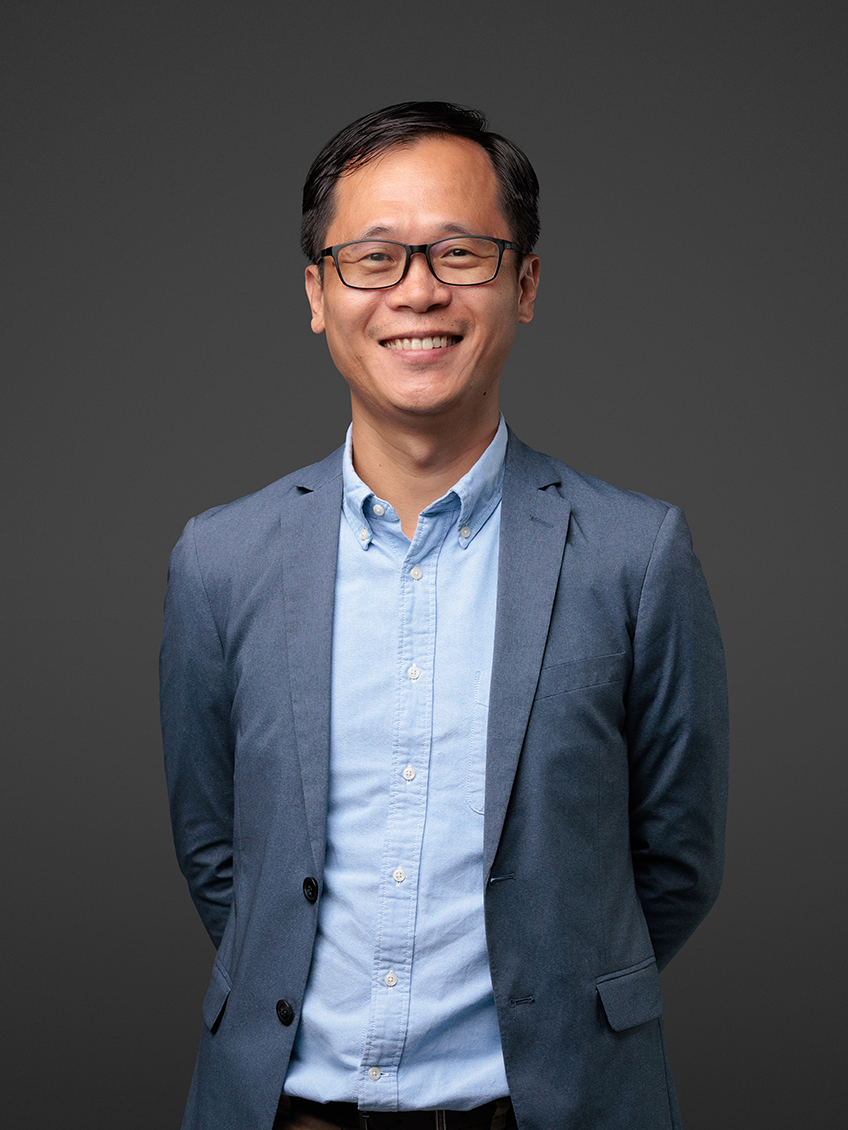
Weiwen Jiang is a tenure-track Assistant Professor in the Department of Electrical and Computer Engineering at George Mason University (GMU), affiliated with the College of Engineering and Computing (CEC). He leads the JQub lab, focusing on hardware/software co-design for computing systems, spanning classical (FPGAs, ASICs) and quantum computing applications in AI-driven fields like medical imaging and geophysics. Prior to GMU, he held a postdoctoral position at the University of Notre Dame and earned his PhD in Computer Science from Chongqing University with a joint PhD in Electrical and Computer Engineering from the University of Pittsburgh. His research emphasizes quantum computing, AI accelerators, and domain-specific computing. Notable achievements include the 2025 NSF CAREER Award, ACM Sigda Meritorious Service Award (2024), and IEEE QuantumWeek Best Paper Award (2023). His work is funded by NSF, DoE, ARO, Meta, and Leidos. He co-chaired IEEE QuantumWeek (2023–2025) and created workshops like StableQ at ESWEEK 2023. Key contributions include developing frameworks like QuPAD for quantum learning and JQub's AI-driven geophysical and medical imaging tools. His lab graduated Dr. Yi Sheng (now at University of South Florida) and Dr. Zhepeng Wang (Amazon Applied Scientist). Current research explores quantum machine learning, noise mitigation, and fairness in AI for edge devices.
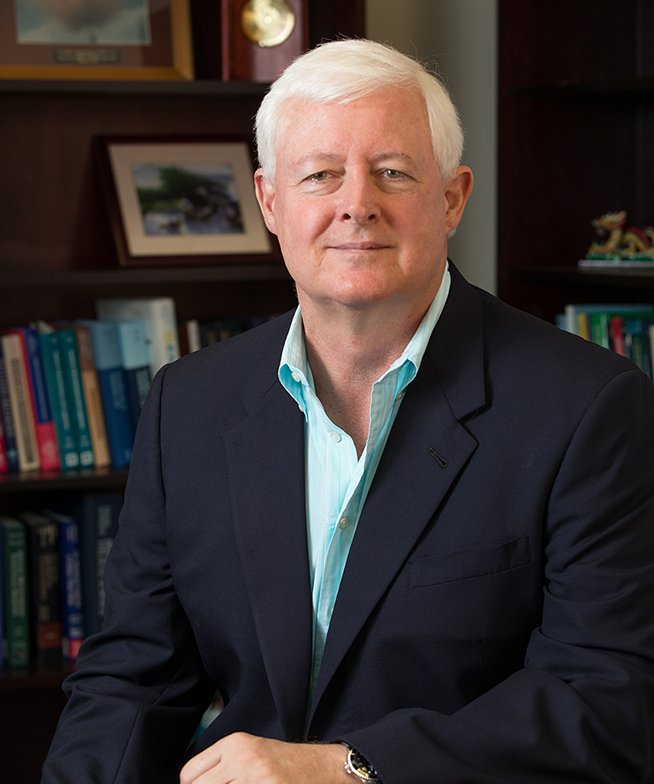
Valen E. Johnson is a University Distinguished Professor and Dean Emeritus of the College of Science at Texas A&M University, where he has been a faculty member since 2012. He previously held professorships at the University of Texas M. D. Anderson Cancer Center (2004–2012), the University of Michigan (2002–2004), and Duke University (1989–2001). He also served as a Technical Staff Member at Los Alamos National Laboratory (2001–2002). Johnson earned his Ph.D. in Statistics from the University of Chicago (1989), M.A. in Applied Mathematics from the University of Texas at Austin (1985), and B.S. in Mathematics from Rensselaer Polytechnic Institute (1981). His research focuses on Bayesian methodology, including hypothesis testing, variable selection in high-dimensional spaces, latent variable models, and applications in medical imaging, clinical trials, and educational assessment. He has contributed to the development of non-local prior densities and Bayesian diagnostics for MCMC convergence. His work bridges Bayesian and classical statistical approaches, emphasizing reproducibility and rigorous evidence assessment in scientific research. Johnson has held editorial roles, including Co-Editor of Bayesian Analysis (2010–2014) and Associate Editor of the Journal of the American Statistical Association (2011–present). He is a Fellow of the American Statistical Association and the Royal Statistical Society and has served on the Board of Directors of the International Society for Bayesian Analysis. His advocacy for revised statistical significance standards has sparked major debates in scientific methodology. Johnson has supervised numerous doctoral students, including those whose theses won prestigious awards like the Savage Award. He has collaborated on grants addressing medical imaging, system reliability, and cancer symptom management, reflecting his interdisciplinary impact in biostatistics and public health.
Roberto Garello is a Tenured Associate Professor at the Department of Electronics and Telecommunications (DET) of Politecnico di Torino . He specializes in Communication Systems , Satellite Networks , and Channel Coding , with a focus on 5G/6G Technologies and Non-Terrestrial Networks . His work aligns with the School of Master’s Programmes and Lifelong Learning . Research Interests: Satellite communications systems, Direct-to-Satellite IoT constellations, Mega-constellation services in space, and physical layer advancements for 5G/6G. Teaching: Offers courses like Information Theory for Data Science , Communication and Network Systems , and Space Exploration and Resources , while supervising Applied Signal Processing Laboratory . Projects: Leads initiatives such as DitDSSS (satellite localization), RESTART (future telecommunications), and TESL@ (ICT energy efficiency). Scientific Awards: Received Best Paper Awards at CTRQ 2010 and COCORA 2013. Students: Supervises PhD candidates including Alessandro Compagnoni, Agbotiname Lucky Imoize, and Riccardo Tuninato, focusing on topics like Wireless Communication, Machine Learning, and Non-Terrestrial Networks. Publications: His recent work explores OTFS vs. OFDM, spectrum sensing algorithms, MIMO with cylindrical arrays, and 5G NTN synchronization, reflecting trends in satellite IoT and machine learning integration.
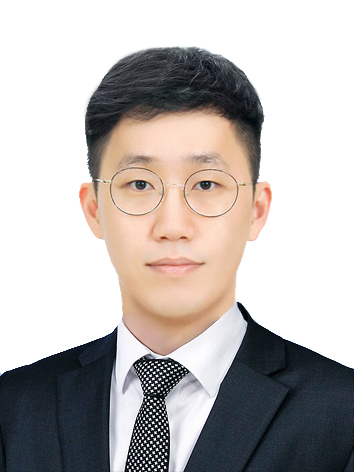
Kihong Heo is an Associate Professor in the School of Computing and Graduate School of Information Security at KAIST (Korea Advanced Institute of Science and Technology) in South Korea. His academic career includes serving as an Assistant Professor at KAIST from 2017-2019 before being promoted to Associate Professor in 2020, following his postdoctoral research at the University of Pennsylvania. He earned both his Ph.D. and B.S. in Computer Science & Engineering from Seoul National University. Dr. Heo's research focuses on developing program reasoning systems for safe and reliable software, with specific interests in AI-based program analysis systems for detecting deep semantic software bugs, general-purpose program simplification systems for secure and efficient software, and scalable program synthesis systems for automatic software generation and repair. His work bridges the gap between programming languages, program analysis, and machine learning techniques to create next-generation programming systems. Analysis of his recent publications reveals a strong trend toward integrating machine learning techniques with traditional program analysis methods, with significant contributions in compiler validation, software security, fault localization, and program debloating. His research has practical impact, with some of his work incorporated into Facebook's Infer static analyzer. ACM SIGSOFT Distinguished Paper Award, FSE 2025 Amazon Research Award, 2024 The Soo-Young Lee Teaching Innovation Award, KAIST, 2024 Prize for Excellence in Teaching, KAIST, 2024 Best Artifact Award, ICSE 2022 ACM SIGPLAN Distinguished Paper Award, PLDI 2019 ACM SIGSOFT Distinguished Paper Award, ICSE 2019 Dr. Heo actively mentors graduate students, currently advising several Ph.D. candidates including Yeonhee Ryou, Taeeun Kim, and Sujin Jang, as well as master's students. He has served on program committees for major software engineering and programming language conferences including PLDI, ICSE, POPL, and SPLASH, demonstrating his active role in the academic community. His laboratory, the Programming Systems Laboratory at KAIST, focuses on creating innovative programming systems that leverage both semantic-based program analysis and AI techniques.
Eduard Kamburjan is a Researcher at the University of Oslo , affiliated with the Reliable Systems (PSY) and Data and Knowledge Systems (DKM) research groups. His work bridges formal methods , digital twin engineering , and knowledge graph applications . Research interests include: Formal verification of hybrid systems using deductive methods Digital twin architecture with compositional correctness guarantees Semantic lifting and ontology-driven modeling for complex systems Concurrency analysis and non-determinism in program verification Interactive visualization as serious games for formal methods His 2024-2023 publications demonstrate expertise in digital twin reconfiguration , semantic interoperability , and knowledge-based runtime enforcement . Key contributions include Crowbar for active object verification and ABS simulator toolchain for model-driven engineering. Collaborations span institutions like Springer , ACM , and IEEE , with work featured in Lecture Notes in Computer Science (LNCS) , Software and Systems Modeling (SoSyM) , and Science of Computer Programming . His research integrates RDF data management , behavioral contracts , and modular analysis for distributed systems.
Gururaj Saileshwar is an Assistant Professor in the Department of Computer Science at the University of Toronto, within the Mathematical and Computational Sciences school. His research focuses on securing computing hardware and systems, with a focus on microarchitectural security (cache side-channels, Rowhammer attacks), system security (memory safety), and security for machine learning systems. Education: PhD in Computer Science from Georgia Institute of Technology (2019), advised by Prof. Moinuddin Qureshi. B.Tech and M.Tech from Indian Institute of Technology Bombay (India). Prior to UofT, he was with NVIDIA Research. Research interests include developing new attacks, defenses, and tools for automated security analysis. His work has received multiple awards including the IEEE Top Pick in Hardware and Embedded Security, HPCA Best Paper Award, and IEEE HOST Best PhD Dissertation Award. He teaches courses on secure computer systems and hardware security, including CSC427 (Computer Security) and a topics course on secure computer systems. His lab focuses on hardware-software co-design solutions for security and reliability challenges in modern computing systems. Labs/Teams: Leads the Secure Hardware Systems Lab at UofT, collaborating on Rowhammer mitigation, cache attack defenses, and machine learning security. Grants: Active funding from NSF, industry partnerships with NVIDIA, and other hardware security initiatives. Advising: Currently recruiting PhD students interested in hardware security, system security, and machine learning systems security.
Hoseung Song is an Assistant Professor at KAIST (Korea Advanced Institute of Science & Technology), affiliated with the Department of Industrial and Systems Engineering and the Graduate School of Data Science. His research focuses on statistical data science, decision making, and biomedical applications, particularly in areas like change-point analysis, two-sample tests, and spatial clustering. His work bridges theoretical statistics with practical biomedical and healthcare challenges. Research interests include advanced statistical methodologies for analyzing complex biological and healthcare data, such as viral genomics, microbiota associations, and immune cell clustering. He develops scalable algorithms and kernel-based methods to address high-dimensional and non-Euclidean data challenges. Recent work highlights applications in infectious diseases (e.g., HSV-2) and postmenopausal health through association studies and differential analysis. His publications emphasize robust statistical testing frameworks, including permutation-based limitations, batch effect corrections, and graph-based methodologies. These contributions enhance reliability in biomedical research and safety-critical data applications. His lab likely integrates computational statistics with real-world healthcare datasets to drive translational insights.
Chen Binbin is an Associate Professor and Associate Head of Pillar (Innovation and Enterprise) in the Information Systems Technology and Design (ISTD) pillar at Singapore University of Technology and Design (SUTD). He serves as Deputy Director for the Future Communications Research and Development Programme (FCP), Singapore. Previously, he was a Principal Research Scientist at the Advanced Digital Sciences Center (now Illinois ARCS), affiliated with the University of Illinois. Education: PhD in Computer Science from National University of Singapore, and Bachelor's from Peking University. Research focuses on wireless networking, distributed systems, and cyber security for critical infrastructures like smart grids and industrial control systems. His work addresses secure communications, intrusion detection, and resilience against cyber-physical threats. Notable contributions include error-estimating coding, provenance verification in ICS, and AI-driven network security solutions. Key awards include the 2010 ACM SIGCOMM Best Paper Award for error-estimating coding research. His grants span agencies like Singapore's National Research Foundation (NRF), Cyber Security Agency (CSA), and Energy Market Authority (EMA). He leads projects on secure smart grid communication, industrial control system defense, and AI-enhanced cybersecurity tools. Technical leadership involves developing frameworks like CyberSAGE for security assessment and CMD for IoT malware detection. Active in collaborations with industry and government, his work bridges theory and practice in securing critical infrastructure systems.
Mateo Valero Cortés is a renowned Professor of Computer Architecture at the Polytechnic University of Catalonia and Director of the Barcelona Supercomputing Center (BSC). He has held academic and leadership roles since 1974, advancing high-performance computing (HPC) and computer architecture research. His work includes pioneering contributions to vector architectures, multithreading, and instruction-level parallelism. Education includes a Telecommunications Engineering degree from the Polytechnic University of Madrid (1974) and a PhD in Telecommunications Engineering from the Polytechnic University of Catalonia (1980). His research spans over 700 publications, focusing on HPC systems, parallel computing, and supercomputing infrastructure. Key research interests include vector processing, super-scalar processors, and task-based programming models. Recent work emphasizes scalable architectures for exascale computing and energy-efficient hardware-software co-design. Notable achievements include the Eckert-Mauchly Prize (highest in computer architecture), Seymour Cray Award, and Charles Babbage Prize. He has led initiatives like the Spanish Supercomputing Network (RES) and PRACE (European HPC partnership). Academic affiliations include the Royal Academy of Engineering of Spain, ACM Fellow, and IEEE Fellow. He has received 13 honorary doctorates and awards such as Mexico’s Order of the Aztec Eagle. Current projects include the Mont-Blanc HPC prototype and ERC-funded research on multi-core chip design. His BSC oversees over 300 researchers and manages MareNostrum supercomputers.
Alastair F. Donaldson is a Professor and Director of Research in the Department of Computing at Imperial College London, where he leads the FastPL research group. His academic career spans over a decade at Imperial, progressing from Lecturer (2011-2014) to Senior Lecturer (2014-2017), Reader (2017-2020), and Professor (2020-present). He has also held significant industry positions, including Founder and Director of GraphicsFuzz Ltd. (acquired by Google in 2018), Senior Software Engineer at Google (2018-2021), and Visiting Researcher at both Google and Microsoft Research Redmond. Donaldson earned his PhD from the University of Glasgow under Alice Miller, following a BSc (hons, First Class) in Computing Science and Mathematics. His postdoctoral work included an EPSRC Postdoctoral Research Fellowship at the University of Oxford and a Research Fellowship at Wolfson College Oxford. His research focuses on formal analysis, software testing and programming languages techniques for improving software reliability, with special emphasis on high-performance systems. Donaldson's work bridges theoretical foundations with practical applications, particularly in compiler testing, GPU programming verification, and metamorphic testing. His research has significantly influenced both academia and industry, as evidenced by the acquisition of his startup GraphicsFuzz by Google. Analysis of his recent publications reveals a strong focus on fuzz testing techniques applied across diverse domains including compilers, GPUs, cryptographic protocols, and large language models. His work consistently combines formal methods with practical testing approaches, addressing challenges in compiler correctness, memory models, and API verification across multiple platforms. 2017 BCS Roger Needham Award EPSRC Early Career Fellowship Best Paper Award, EuroSys 2024 Best Paper Award, MET 2021 Best Paper Award, IWOCL 2019 Best Paper Award, IISWC 2019 Best Paper Award, ICST 2016 ACM SIGSOFT Distinguished Paper Award, ISSTA 2023 ACM SIGSOFT Distinguished Paper Award, FSE 2017 ACM SIGPLAN Most Influential OOPSLA Paper Award, 2022 (for GPUVerify) As Director of Research in the Department of Computing, Donaldson oversees research strategy and development. His FastPL research group investigates novel techniques for programming, testing and reasoning about high performance systems. He has served on numerous program committees and held leadership roles including PLDI Steering Committee Chair (2022-2025) and PACM-PL Advisory Board member. His industry engagement includes testifying as an Expert Witness in the IBM UK Ltd v LzLabs GmbH & Ors case. The FastPL research group, which Donaldson leads, focuses on formal analysis, software testing and programming languages. The group has made significant contributions to compiler testing, GPU verification, and metamorphic testing techniques, with practical impact demonstrated by the acquisition of GraphicsFuzz. Current research directions include fuzzing for zero-knowledge proof circuits, randomized testing of decompilers, and systematic testing of large language models for code generation.
Li Li is a Professor of Software Engineering at Beihang University , China. Previously, he served as an ARC DECRA Fellow and Senior Lecturer at Monash University , leading the SMart software Analysis and Trustworthy computing (SMAT) research lab at the Department of Software Systems and Cybersecurity. His academic journey includes a Ph.D. in Software Engineering from the University of Luxembourg (2016), supervised by IEEE Fellow Prof. Yves Le Traon and Dr. Jacques Klein. Research Interests Li's research focuses on Mobile Software Engineering (Mobile Security, Quality Assurance) and Intelligent Software Engineering (SE4AI, AI4SE). He applies static code analysis , dynamic program testing , and machine/deep learning to enhance software security and reliability. Key areas include Android API evolution, automated patch validation, and multi-language code analysis frameworks like Scalpel for Python. Scientific Recognition ARC DECRA Fellowship Rising SE Research Star Top-5 Most Impactful Early Career SE Researchers (2020, 2017) 5 Best/Distinguished Paper Awards across PLDI, WWW, ASE, MSR, and SANER Academic Contributions He has contributed to foundational Android analysis tools (e.g., AndroZoo++, DroidRA) and developed scalable systems for distributed program analysis (Seads). His work appears in top venues like ICSE, ESEC/FSE, ASE, ISSTA, POPL, and TSE.
Prof. Akash Kumar is a Professor at the Chair of Embedded Systems at Ruhr University Bochum, Germany. He previously held professorships at TU Dresden (2015–2024) and the National University of Singapore (NUS; 2011–2015). His research focuses on design automation of embedded systems, reliability optimization, and approximate computing, with a strong emphasis on FPGA and emerging technologies. He leads projects such as Lean-MICS (DFG-funded) and SecuREFET-II, addressing cross-layer reliability and secure circuits. Education: PhD in Multimedia Multiprocessor Systems from Eindhoven University of Technology (TUe) and NUS (2005–2009), Master of Technological Design (Embedded Systems) from NUS (2003–2004), and B.Eng (Computer Engineering) from NUS (1999–2002, First Class Honours). Research interests span embedded systems, reconfigurable architectures, and hardware-software co-design. His work includes optimizing energy efficiency, fault tolerance, and cross-layer approximation techniques. Recent publications highlight advancements in FPGA-based accelerators, machine learning optimizations, and mixed-criticality systems. Active in grants and leadership, Kumar is Principal Investigator on multiple DFG and industry-funded projects, emphasizing collaborative research in distributed computing and approximate architectures. His contributions bridge theory and practice, with applications in edge AI, IoT, and cybersecurity.
Alexandre Manuel de Castro Passos de Almeida is an Assistant Professor in the Department of Information Science and Technology at the University Institute of Lisbon (ISCTE-IUL), where he also contributes to the School of Technology and Architecture. He is an Associate Researcher at the Institute of Telecommunications - IUL, actively involved in the Radio Systems Group, focusing on telecommunications and sensor-based environmental monitoring. PhD in Telecommunications, ISCTE-IUL, 2012 His research interests span telecommunications, wireless sensor networks, air quality monitoring, computer architecture, and robotics. He has led and contributed to innovative projects such as ExpoLis, which uses mobile sensor networks on public buses to map urban air pollution. His work bridges engineering and environmental science, aiming to influence urban policy and public health through real-time data systems. The most recent publications highlight a strong trend toward deploying low-cost, mobile sensor networks for environmental monitoring, particularly in urban settings. His work integrates computer systems, signal processing, and sustainable technology, with applications in smart cities, public health, and robotics. Topics like air quality mapping, energy harvesting, and noise-aware robot navigation reflect a multidisciplinary approach to solving real-world problems. He has advised seven Master’s students at ISCTE-IUL, guiding research in sensor networks, air pollution, database performance, robotic navigation, and personal photography assistants. While no specific scientific awards are listed, his contributions to funded research projects and consistent scholarly output indicate recognition in his field. He has held leadership roles in academic governance, including Vice President of the Pedagogical Council, underscoring his institutional engagement. His teaching portfolio includes core courses such as Fundamentals of Computer Architecture, Operating Systems, and Big Data Processing, delivered across multiple undergraduate and postgraduate programs. He is involved in research projects that combine academic innovation with practical urban applications, particularly through the deployment of scalable, open-source environmental sensing systems.
Brandon Lucia is a Full Professor in the Department of Electrical and Computer Engineering at Carnegie Mellon University's College of Engineering. He leads the abstract research group focusing on the intersection of computer architecture, systems, and programming languages. His work bridges theoretical foundations with practical implementations in energy-constrained environments. Lucia's research centers on intermittent computing systems and edge computing in extreme environments. His work on energy-harvesting systems has established fundamental principles for batteryless computing, while his orbital edge computing research pioneers computational intelligence for nanosatellite constellations. These research thrusts address critical challenges in reliability, efficiency, and programmability for systems operating under severe power constraints. His publication record shows a clear evolution from foundational work on intermittent computing models to sophisticated applications in space computing and edge intelligence. Recent publications demonstrate increasing integration of dataflow architectures with energy-harvesting constraints, particularly in satellite constellations where computational resources must be managed across distributed, power-constrained platforms operating in extreme environments. NSF CAREER Award (2017) IEEE TCCA Young Computer Architect Award (2019) Sloan Foundation Fellowship (2021) ASPLOS Best Paper Awards (2018, 2020) OOPSLA Distinguished Paper and Artifact Awards (2015) Lucia actively mentors numerous PhD students including Brad Denby, Zhuo Cheng, and Emily Ruppel, many of whom contribute significantly to his research program. His abstract research group maintains strong industry connections while pursuing fundamental advances in computing systems. The group has developed multiple open-source tools including Legerdemain for program analysis and MultiCacheSim for cache coherence simulation. His laboratory work spans from theoretical foundations of intermittent computing to practical implementations in space systems. Current projects include computational nanosatellite constellations, energy-minimal dataflow architectures, and secure edge computing systems that operate reliably despite frequent power failures.
Earl Campbell is Professor of Quantum Computation in the School of Mathematical and Physical Sciences at the University of Sheffield. He holds an MSc in Physics and Philosophy from University of Bristol and a PhD in Quantum Computing from University of Oxford. His research develops fault-tolerant quantum computing protocols, error correction codes, and quantum software architectures to enable reliable quantum technologies. Key focus areas include topological error correction, magic state distillation, qudit computation, and bridging quantum theory with hardware implementation. Research Team: 1 Postdoctoral Researcher (Mark Howard) 1 PhD Student (Luke Heyfron) Major Grants: EPSRC Early Career Fellowship: 'Towards fault-tolerant quantum computing with minimal resources' (£675,867) Royal Commission of Great Exhibition of 1851 Fellowship