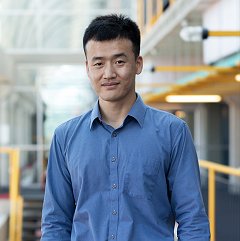
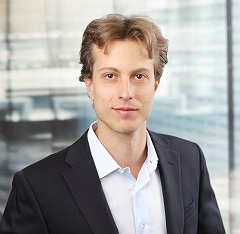
Benoit Piranda is an Associate Professor of Computer Science at the University of Franche-Comté , affiliated with the FEMTO-ST Institute and its Complex Networks Team (DISC/OMNI) . He leads the development of VisibleSim , a parallel behavioral simulator for modular robots. University: University of Franche-Comté Institute: FEMTO-ST Team: DISC/OMNI Role: Researcher & Software Developer Research Focus: Distributed algorithms for modular robots, programmable matter, physical simulations, and parallel execution environments. His work spans self-reconfiguration, communication protocols, and efficient scene encoding for large-scale robotic systems. Article Trends: Recent publications highlight advancements in 2D/3D lattice modular robot algorithms Porous structure reconfiguration Time synchronization protocols VisibleSim simulation framework Multi-scale distributed displays Security protocols for programmable matter Conference Involvement: Active in program committees for DARS, IEEE ATC, IROS, and AINA. Former Publicity Chair positions.
Xiaokang Qiu serves as Associate Professor in Purdue University's Elmore Family School of Electrical and Computer Engineering, specializing in Programming Languages and Software Engineering with core expertise in program verification, program synthesis, and automated deduction. His research establishes critical bridges between enumerative and deductive synthesis methodologies, developing novel frameworks for verified program generation. Key contributions include string transformation synthesis with concurrency guarantees, bit-vector manipulation optimization via syntax-guided enumeration, and network design automation through comparative learning techniques. This work consistently advances formal verification foundations while addressing practical software engineering challenges. Publication trends from 2017-2025 reveal escalating complexity in synthesis targets—from basic data-structure manipulations to concurrent string operations and network configurations. His approach increasingly integrates machine learning elements with formal methods, demonstrating how query-based learning can drive near-optimal system design while maintaining provable correctness guarantees across diverse computational domains.
Mohammed Alsaleh serves as Associate Professor and Data Center Manager in the Department of Information Security and Applied Computing at Eastern Michigan University. Education: Ph.D. in Computing and Information Systems, University of North Carolina at Charlotte (2018) B.S. in Computer Engineering, Jordan University of Science and Technology (2007) Research Focus: His work centers on automated security frameworks and formal verification methods for cyber defense. Key specialties include network resilience against lateral movement, malware analysis automation, and ROI-driven risk mitigation through host compliance systems. His research bridges theoretical formal methods with practical incident response solutions. Publication Trends: His 2014-2018 publications reveal consistent focus on cybersecurity verification, with increasing emphasis on software-defined networking (SDN) solutions and economic risk modeling. Recurring themes include automation of defense strategies, empirical security literature analysis, and innovative approaches like gamified configuration analytics. Academic Contributions: Teaches core courses including IA 150 Networking I and IA 400 Malware Analysis and Reverse Engineering, integrating his research into curriculum development for cybersecurity education.
Lin Chen is an Associate Professor in the Department of Computer Science and Technology at Nanjing University, China, specializing in software engineering and programming languages with applications to AI-integrated systems. His work bridges theoretical foundations and practical tools for software analysis, testing, and ecosystem studies. Education: Ph.D. in Computer Software and Theory, Southeast University (2009) B.S. in Computer Science and Technology, Southeast University (2001) Visiting Scholar at Purdue University (2015-2016) His research spans software testing, programming language design (particularly gradual typing), and AI-enhanced software engineering. Key contributions include empirical studies of Python's dynamic features, mutation testing frameworks for AI systems, and defect prediction models. He investigates how programming language semantics impact software quality and maintenance in open-source ecosystems. Recent publications (2023-2024) reveal strong trends in applying software engineering techniques to AI systems, analyzing Python's typing evolution, and developing practical testing tools. There is significant emphasis on empirical validation, with 60% of recent work focusing on Python ecosystem analysis and 30% on AI/software integration. Scientific Awards: FSE 2016 Distinguished Artifact Award First Prize of Hubei Science and Technology Award (2015) First Prize of Jiangsu Science and Technology Award (2012) First Prize of Jiangsu Science and Technology Award (2007) Professor Chen has advised 14+ graduate students including PhD candidates Hao Ren and Wanwangying Ma, and master's students like Fan Yang and Yuanlei Han. He actively recruits self-motivated PhD and undergraduate researchers for projects in software analysis, testing, and intelligent engineering. His group collaborates with industry partners on tool development for defect prediction and type system analysis. His research team at Nanjing University focuses on four pillars: (1) Software Analysis and Testing for dynamic languages, (2) Technical Debt and Refactoring in evolving systems, (3) AI-driven defect prediction, and (4) Gradual typing semantics for multilingual ecosystems. Current projects include large-model-based test generation and knowledge graph applications for QA system validation.
Lola Burgueño is an Associate Professor at the University of Malaga (UMA), Spain, where she is a member of the Atenea Research Group and part of the Institute of Technology and Software Engineering (ITIS). She completed her PhD with honors in April 2016 from the University of Málaga, following a master's degree in Software Engineering and Artificial Intelligence (2012) and a Computer Science and Engineering degree (2011). Her academic journey includes postdoctoral positions at the Open University of Catalonia (Barcelona, Spain; 2018-2022) and CEA List (Paris, France; 2018-2020), along with visiting researcher appointments at the University of Alabama (USA; 2014), Vanderbilt University (USA; 2016), and Université de Montréal (Canada; 2022). Dr. Burgueño's research spans several interconnected domains: Software Engineering and Model-Driven Software Engineering Artificial Intelligence integration in software development processes Uncertainty management during software design phases Model-based software testing methodologies Performance optimization of model transformations Digital twin technologies and Socio-Cyber-Physical Systems Her publication record shows an evolving research trajectory from foundational work in model transformations and non-functional requirements toward increasingly sophisticated integration of AI techniques with traditional software engineering approaches, with recent emphasis on ethical considerations in AI-enhanced software modeling and human-centered aspects of digital twin technologies. Professional service and recognition: PC (co-)chair for ECMFA'21, SLE'22 and JISBD'25 Active Program Committee member for ASE, ICSE, MODELS, SLE, and other premier software engineering conferences Editorial Board member of the Journal on Software and Systems Modeling (SoSyM) Steering Committee member of the ACM SIGPLAN International Conference on Software Language Engineering (SLE) Member of the WG on Diversity & Inclusion of Informatics Europe Dr. Burgueño maintains strong international collaborations across Europe and North America, regularly reviewing for top-tier journals including TSE, JSS, EMSE, and SoSyM, and contributing to the advancement of software engineering research and education globally.
Jean-Rémy Falleri is a Full Professor of Computer Science at Enseirb-Matmeca (Bordeaux INP) and a researcher at LaBRI laboratory in Bordeaux, France. He serves as head of the Computer Science department at Enseirb-Matmeca and co-head of the Systems and Data department at LaBRI. From 2020 to 2025, he was appointed as a junior member (later honorary member) of the prestigious Institut Universitaire de France. His educational background includes a habilitation from Université de Bordeaux (2015), a PhD from Université Montpellier 2, and a Master's degree from IMT Mines Alès (formerly École des Mines d'Alès). He also completed post-doctoral research at INRIA Lille in the RMoD group. Falleri's research focuses on software engineering, particularly software evolution and the development of practical tools to analyze and understand code changes. His work bridges theoretical research with practical applications, resulting in tools like GumTree for visualizing code differences and Roseau for detecting breaking changes in libraries. His research interests span source code differencing, API analysis, breaking change detection, and software maintenance techniques. His publication record shows consistent contributions to top software engineering conferences including ICSE, ASE, ICSME, and FSE, with research themes evolving from code clone detection and developer expertise extraction to modern challenges in API evolution and Docker configuration analysis. Junior Member of Institut Universitaire de France (2020-2025) Honorary Member of Institut Universitaire de France (2020-2025) Falleri has supervised numerous Master's students, PhD candidates, and post-doctoral researchers throughout his career. He has held significant service roles including Head of LaBRI's Systems and Data department (since 2021), Head of LaBRI's Software Engineering group (2015-2021), and member of various conference program committees. His work has practical impact through actively maintained tools that address real challenges in software development and evolution.
Paul Grünbacher serves as an Associate Professor and Deputy Head of the Institute of Software Systems Engineering at Johannes Kepler University Linz, Austria. With over 150 publications in international peer-reviewed venues, he's established himself as a leading researcher in software engineering, particularly in specialized domains requiring sophisticated modeling approaches. His primary research interests include software product lines , model-based development , software evolution , requirements engineering , and software monitoring . These interconnected fields reflect his focus on creating adaptable, maintainable software systems that can evolve over time while maintaining quality and functionality. His work bridges theoretical foundations with practical applications in complex software environments. Analysis of his recent publications reveals a consistent focus on temporal aspects of software evolution, particularly in product line contexts. His research demonstrates strong emphasis on creating methods to track, analyze, and support software changes across multiple dimensions including spatial distribution and temporal progression. The increasing integration of monitoring techniques with requirements engineering represents an emerging trend in his more recent work. Fellow of Automated Software Engineering (2021) Editorial Board Member, Empirical Software Engineering Journal (Springer, 2018-present) Editorial Board Member, Information and Software Technology Journal (Elsevier, 2015-present) Steering Committee Member, IEEE/ACM International Conference on Automated Software Engineering (2004-present) Grünbacher has served as a program committee member for numerous prestigious conferences including ASE, ICSE, and REFSQ across multiple years. He led the Christian Doppler Laboratory for Monitoring and Evolution of Very-Large-Scale Software Systems from 2013-2021, securing significant research funding and directing a team focused on practical solutions for evolving complex software systems. His editorial roles demonstrate recognition of his expertise in empirical software engineering methodologies. As head of the Christian Doppler Laboratory for Monitoring and Evolution of Very-Large-Scale Software Systems (2013-2021), Grünbacher directed a research team developing innovative approaches for monitoring and evolving complex software systems. His current work through the Institute of Software Systems Engineering continues this focus, with increasing attention to cyber-physical systems and digital process twins.
Qing Liao is a Researcher at Harbin Institute of Technology, specializing in software engineering with a focus on security, machine learning applications for code, and automation. His work bridges theoretical and practical challenges in modern software systems. Research Interests: Qing's research spans several interconnected areas: Software Security : Vulnerability detection, patch analysis, and configuration security. Machine Learning for Code : Application of ML models (e.g., transformers, graph networks) to code understanding, generation, and API recommendation. Program Analysis : Techniques for static analysis, browser fuzzing, and performance tuning. Automation : Tools for IaC generation, UI-to-code transformation, and configuration optimization. Publication Trends (2022–2026): His recent publications emphasize security (7/11 papers), particularly vulnerability detection using graph learning and static analysis. A secondary focus is ML-driven code automation (4/11 papers), including knowledge distillation, API generation, and UI-to-code systems. Work consistently targets real-world applicability, evidenced by industry-track publications at ASE/ICSE.
Dr. Eng. Radu Pentiuc is a Lecturer in the Department of Electrotechnics at the Faculty of Electrical Engineering, University Stefan cel Mare of Suceava. He holds a doctorate in Electrical Technologies (1997) from Universitatea "Gh. Asachi" din Iași and specializes in electric traction systems, industrial power applications, and advanced motor design. With industrial experience prior to his academic career, he bridges theoretical and practical engineering concepts. Research Focus: His work centers on optimizing electric motor efficiency, particularly in hybrid and linear induction systems. Key investigations include electromagnetic field analysis, toroidal inductor configurations, and reducing border effects in motor design. His research extends to industrial power systems, energy conversion technologies, and electric traction applications for railway systems. Publications: His articles (1994-1998) predominantly explore electromagnetic motor design, computational modeling of hybrid systems, and efficiency optimization. Recurring themes include toroidal inductors, magnetic flux analysis, and novel approaches to linear induction motor construction. Student Advising & Projects: Supervised 12+ diploma projects (1993-1998) resulting in functional prototypes, including: Reactive energy compensation devices Electromagnetic braking systems Linear motor designs Industrial power control systems Research Contracts: Coordinated/participated in 13 projects, including: Minimizing technological outputs at SPIT Bucovina SA Optimizing solar energy conversion installations Developing low-speed induction motors Hybrid motor design algorithms Patents: Contributed to 6 inventions including asynchronous linear motors, low-speed induction motors, and electromagnetic drive systems.
Alexander Egyed serves as a full Professor at the Institute of Software Systems Engineering, Johannes Kepler University Linz, where he directs the LIT Secure and Correct Systems Lab. His leadership spans 350+ research outputs and 50+ projects, with current active grants securing research through 2029 in critical software engineering domains. His research focuses on advancing model-driven engineering practices through innovations in software evolution, variability management, and process guidance. Key contributions include reactive link propagation for model consistency, AI-driven refactoring of legacy systems, and industrial-strength process compliance solutions. His work bridges formal methods with practical industrial applications, particularly in secure system development and software modernization. Recent publications (2024-2025) reveal a pronounced shift toward AI-integrated solutions for legacy system transformation, with consistent emphasis on scalable techniques for model consistency and variability control. This trajectory demonstrates increasing industrial collaboration in developing actionable engineering guidance tools. His scientific excellence is recognized through: ACM Best Paper Award (2015) ACM Recognition of Service Award (2024) ACM SIGSOFT Distinguished Paper Awards (2021, 2023) Best Paper Award (2014) Professor Egyed currently leads major funded initiatives including the FWF-sponsored 'Co-Existence of Modeling Language Versions and Co-Evolution' (2025-2029) and dual 'RefactorAI' projects for legacy system modernization (FFG 2025-2028). His supervision of 12 graduate students reflects commitment to academic mentorship alongside his extensive editorial and program committee service across 147 recorded academic activities. He directs the LIT Secure and Correct Systems Lab, a nexus for interdisciplinary research in formal verification, model-driven security, and AI-assisted software engineering, maintaining strong industry partnerships for real-world validation of research outputs.
Fredrik Danielsson is a Professor of Automation at University West, where he serves as an employee of the Department of Industrial Automation. He leads a research group focused on flexibility in industrial automation systems and teaches in University West's master's program in robotics. Professor Danielsson's research spans multiple areas of industrial automation, with a particular emphasis on flexible manufacturing systems. His work explores human-machine interaction to increase operator intervention possibilities in automated processes. He has made significant contributions to the development of Plug and Produce systems, which enable more adaptable and reconfigurable manufacturing environments. His research also encompasses robotics, mechatronics, and the application of Industry 5.0 principles to create human-centric smart manufacturing systems that balance technological advancement with human well-being. An analysis of Professor Danielsson's recent publications reveals a strong focus on making manufacturing systems more adaptable through multi-agent systems, digital twins, and advanced path planning algorithms. His work consistently addresses the challenge of implementing flexible automation that can be easily reconfigured by in-house personnel without requiring extensive programming knowledge. A notable trend is the increasing emphasis on safety management and hazard identification within reconfigurable manufacturing systems. Professor Danielsson supervises graduate students, including Anders Nilsson who completed a licentiate thesis on human-centric process planning for Plug & Produce systems under his guidance. His research group has developed a Plug & Produce test bed in cooperation with industrial representatives, particularly from the prefabricated wooden house industry, demonstrating practical applications of their theoretical work. The research group's approach emphasizes extracting information directly from computer-based product designs and incorporating in-house process knowledge through graphical configuration tools. Their work on intelligent products that 'know how to be finalized' represents an innovative approach to manufacturing automation that reduces complexity for human operators while maintaining high levels of flexibility.
Cinzia Dal Zotto is a Full Professor of Human Resource Management at the Institute of Management within the Faculty of Economics at the University of Neuchâtel, Switzerland. Previously, she served as Professor of Media Management at the Academy of Journalism and Media, which she directed from 2010 to 2012. She has held academic positions at Jönköping International Business School in Sweden and has been a visiting professor at multiple universities including University of Passau, University of Westminster, and University of Bolzano. Education: PhD from the University of Regensburg, Germany Master's degree from the Catholic University of Milan, Italy Visiting scholar at UC Berkeley Professor Dal Zotto's research focuses on digital transformation within organizations, with particular emphasis on human resource management, organizational behavior, and strategy in media and other knowledge-intensive industries. Her work critically examines tensions between efficiency demands and employee well-being in digital newsrooms, the impact of audience analytics on journalistic practices, and how collaborative technologies create new forms of workplace control while enabling greater flexibility. She investigates these dynamics across diverse organizational contexts including media firms, healthcare institutions, and telecommunications companies in both developed and developing countries. Her recent publication record reveals a consistent focus on critical perspectives of digital transformation, examining how technologies reshape workplace power dynamics and employee experiences. Her research spans multiple theoretical frameworks including labor process theory, critical HRM, and institutional entrepreneurship, applied to understand contemporary organizational challenges in the digital age. She frequently collaborates with scholars from diverse disciplinary backgrounds, particularly Afshin Omidi and Robert G. Picard. Scientific Awards: Best Paper Award at the Information and Communication Technologies in Organizations and Society (ICTO) Conference for 'Le Rôle du Leadership dans la Transformation Digitale: Le Cas du Secteur Pharmaceutique' Professor Dal Zotto has secured significant research funding, including a CHF 251,878 grant from the Swiss Network for International Studies for her project 'Telecommunications politics in authoritarian developing countries.' She has organized multiple international conferences, notably the biannual 'Media Development and Sustainability in Africa' conference series. Her media appearances and expert commentary for major Swiss media outlets demonstrate her commitment to public scholarship on contemporary workplace issues including sexual harassment, digital transformation, and leadership challenges. She leads research initiatives examining the intersection of technology, human resource management, and social responsibility, with particular focus on how organizations can navigate digital transformation while maintaining inclusive and sustainable practices. Her 'Media Development and Sustainability in Africa' research group has produced significant work on media ownership structures, managerial challenges, and sustainability in African media and telecommunications sectors.
Associate Professor at Anglia Ruskin University's School of Engineering and the Built Environment within the Faculty of Science and Engineering. Director of the Telecommunications Engineering Research Group with expertise in electronic design of telecommunication networks and wireless systems. Education: PhD in Telecommunication Engineering, Anglia Ruskin University MSc in Telecommunications Systems Management, Anglia Polytechnic University BSc in Electrical & Electronic Engineering, Baghdad University Research focuses on wireless networks , RF systems , noise cancellation , and mobile communications across 2G-5G generations. His work extends to cyber security , RF MEMs , mobile ad hoc networks , and emerging areas including cloud computing and artificial intelligence in networking systems. Recent publications reveal strong emphasis on network performance optimization, security enhancements, and energy efficiency in wireless systems, with significant contributions to mobile ad hoc networks, cloud offloading algorithms, and software-defined networking architectures. Awards: Royal Academy of Engineering award (1999) Supervised 12 PhD students and 2 MPhil students to completion as primary supervisor, with 2 additional PhD completions as secondary supervisor. Currently guides 4 PhD candidates. Secured competitive grants including Newton-Bhabha Fund (2016) and UKIERI UK-India Education and Research Initiative (2014-2016) for collaborative research in mobile accessibility and network security. Leads consortium bids for EU Horizon 2020 projects and directs research in RF MEMs sensor design and mobile multiprotocol switches, with active industry collaborations including Sedgewall Ltd and Glazing Vision.
Chengnian Sun is an Associate Professor in Software Engineering and Programming Languages at the University of Waterloo, Canada. His research spans program reduction, software testing, and compiler-related technologies, with a focus on developing practical tools for debugging and testing. Dr. Sun's research interests center on Software Engineering and Programming Languages , particularly in program reduction techniques, compiler testing, and software security. His work bridges theoretical foundations with practical applications, developing frameworks like Perses and Latra that have become influential in the software engineering community. His research demonstrates a consistent evolution from basic program reduction techniques to incorporating modern approaches like LLMs for compiler testing. His recent publications show a strong trend toward language-agnostic transformation frameworks and practical debugging tools , with increasing emphasis on security applications and integration of AI techniques. The research spans both theoretical foundations and practical implementations, with several tools developed becoming widely used in the software engineering community. Dr. Sun has served on program committees for major software engineering conferences including ASE, ICSE, ESEC/FSE, and ISSTA, demonstrating his standing in the research community. His extensive publication record shows consistent high-impact contributions across multiple venues, with particular emphasis on program reduction and compiler testing techniques. His work has led to the development of several influential tools including Perses (syntax-guided program reduction), Latra (template-based transformation framework), and AddressWatcher (memory leak localization). These tools have been widely adopted in both academic and industrial settings for debugging and testing purposes.
Guido Salvaneschi is a Professor and Head of the Programming Group at the Institute of Computer Science within the School of Computer Science at the University of St. Gallen, Switzerland. His work bridges theoretical foundations with practical applications in programming languages and software engineering, with a particular focus on distributed systems and infrastructure as code. His research interests span programming languages, software engineering, distributed systems, reactive programming, DevOps organizations, and secure software systems. He has made significant contributions to multitier programming languages, consistency models for distributed applications, and infrastructure as code testing frameworks. Salvaneschi's recent publications reveal a strong focus on infrastructure as code analysis and testing, with multiple papers accepted at top conferences in 2024-2025. His work demonstrates a consistent thread connecting programming language theory with practical systems challenges, particularly in cloud and distributed environments. His Programming Group at the University of St. Gallen includes several PhD students and researchers working on cutting-edge topics in software systems. Current projects include Consistency Programming for Local First Software (an SNF project), HORIZON-RIA for European edge computing infrastructure, and Multitier Programming above the Clouds (another SNF project). As an active member of the research community, Salvaneschi serves on program committees for major conferences including ASE, PLDI, and ICSE, demonstrating his standing within the programming languages and software engineering fields.