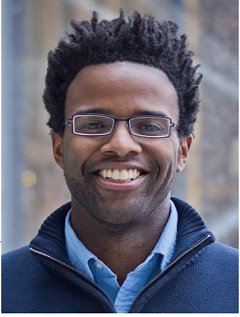
Michael Carbin is the Jamieson Career Development Assistant Professor of Electrical Engineering and Computer Science at the Massachusetts Institute of Technology (MIT) and leads the MIT Programming Systems Group. His research focuses on programming systems that address system uncertainty to enhance performance, energy efficiency, and resilience, particularly in environments involving neural networks , approximate computing , and unreliable hardware . His work spans probabilistic programming , quantum computing , and machine learning systems . Articles highlight contributions in pruning neural networks , quantum data structures , and compiler optimization , reflecting trends in deep learning , formal verification , and language-driven systems . Scientific Awards : MIT Frank E. Perkins Award (2020) Sloan Research Fellowship (2020) Facebook Research Award (2019) NSF CAREER Award (2018) Best Paper Awards at OOPSLA (2013, 2014) He has advised numerous graduate students and postdocs including Eric Atkinson, Cambridge Yang, and Charles Yuan, and served on program committees for conferences like POPL, OOPSLA, and ICLR. His group collaborates with institutions such as MIT CSAIL and explores applications in quantum algorithms and probabilistic inference .
Schloss Dagstuhl - Leibniz Center for InformaticsGermany
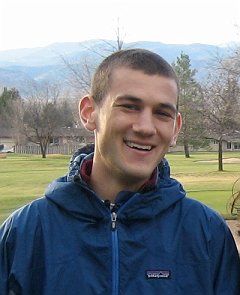
Florian Tramèr is an Assistant Professor in the Department of Computer Science at ETH Zurich, Switzerland, leading research at the intersection of machine learning security, privacy, and AI safety. His work focuses on identifying and mitigating security vulnerabilities in machine learning systems, particularly in large language models and other AI systems. Tramèr's primary research interests include adversarial machine learning, membership inference attacks, privacy-preserving AI, and the security implications of large language models. His work has significantly advanced our understanding of how machine learning models memorize training data, how this memorization creates privacy risks, and how to evaluate the robustness of machine learning systems against various attacks. His recent publications demonstrate a strong focus on practical security challenges in deployed AI systems, including data extraction from language models, adversarial attacks against generative AI, and developing more rigorous evaluation methodologies for machine learning security. Tramèr's research has been published in top venues including ICLR, NeurIPS, ICML, and IEEE Security & Privacy. Tramèr is actively collaborating with leading researchers in the field including Nicholas Carlini, Matthew Jagielski, and Javier Rando, contributing to important initiatives like the International AI Safety Report. His work bridges theoretical security concepts with practical implications for real-world AI deployment.
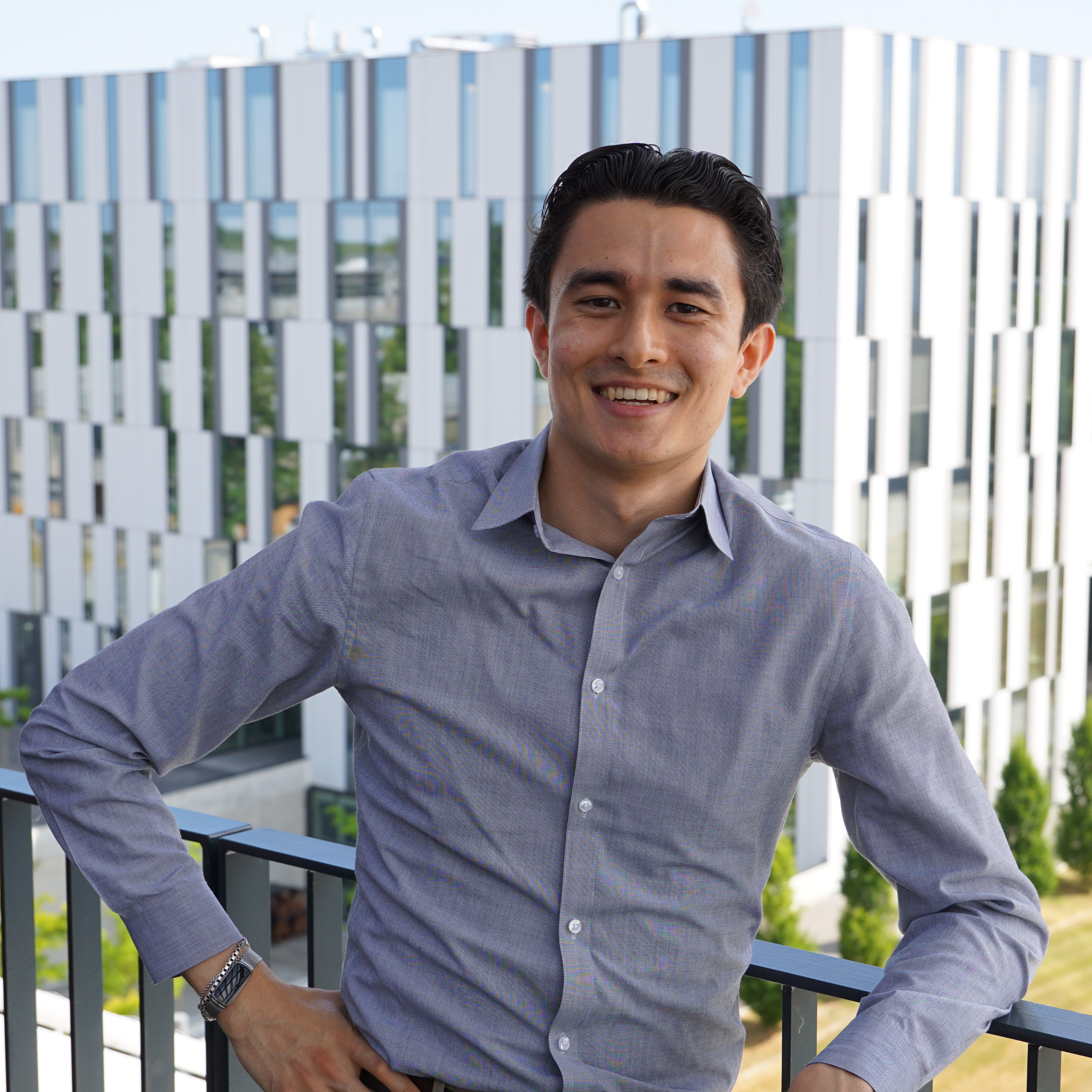
Nate Foster is a Professor of Computer Science at Cornell University and currently serves as the Associate Dean for Research in the Ann S. Bowers College of Computing and Information Science. He is also a Visiting Researcher at Jane Street and served as a Visiting Professor at École Polytechnique Fédérale de Lausanne during the 2023-24 academic year. His research uses ideas from programming languages to solve problems in networking, databases, and security. BA in Computer Science, Williams College (2001) MPhil in History and Philosophy of Science, University of Cambridge (2008, all work completed in 2003) PhD in Computer and Information Science, University of Pennsylvania (2009) Foster's research focuses on developing languages and tools that make it easy for programmers to build secure and reliable systems. His current work centers on the design and implementation of languages and tools for programmable networks, particularly using the P4 language. His past work includes bidirectional languages (also known as 'lenses'), database query languages, data provenance, type systems, mechanized proof, and formal semantics. His research group at Cornell has made significant contributions to network verification, software-defined networking, and formal foundations for programmable data planes. Analysis of Foster's recent publications reveals a strong focus on network verification and programming language foundations for networking. His work consistently applies formal methods to practical networking problems, with a particular emphasis on the NetKAT and P4 languages. Over the past five years, his research has evolved toward more complex network verification techniques, including infinite state verification, active learning of network models, and dependently-typed approaches to network programming. His work bridges theoretical computer science with practical networking systems, making formal methods accessible to network engineers. ACM Fellow (2025) ACM SIGPLAN Robin Milner Award (2023) ACM SIGCOMM Rising Star Award (2018) NSF CAREER Award (2013) Alfred P. Sloan Fellowship (2012) Multiple distinguished paper awards across top conferences including POPL, PLDI, and SIGCOMM Foster has advised numerous PhD and Master's students who have gone on to prominent positions in both industry and academia, with many continuing work in programming languages and networking. He has led multiple significant research grants including an NSF CAREER Award and has been involved in the P4 Language Consortium, serving as Chair of the P4 Language Governing Board. His work has been supported by various organizations including NSF, DARPA, and industry partners like Intel and Jane Street. Foster is also active in the programming languages research community, serving on numerous program committees and as Vice Chair of DARPA's Information Science and Technology (ISAT) study group. Foster leads a vibrant research group at Cornell focused on programming languages for networks, with collaborators from academia and industry. His group has developed several influential tools and frameworks including NetKAT, Petr4, and KATch. They maintain strong connections with the P4 community and work closely with industry partners to ensure their research has practical impact on real-world networking systems.
Prof. Dr.-Ing. Hakan Kayal serves as University Professor for Aerospace Engineering at the University of Würzburg, holding the Chair of Computer Science VIII (Space Technology) and chairing the Interdisciplinary Research Center for Extraterrestrial Studies (IFEX). His leadership bridges computer science and space systems engineering within the university's Institute of Computer Science. Research focuses on three synergistic domains: nanosatellite development for extraterrestrial missions (including the SONATE-2 6U platform demonstrating AI-driven onboard processing), scientific investigation of Unidentified Anomalous Phenomena (UAP) through the university's collaboration with the Federal Aviation Office, and spacecraft autonomy systems enabling higher mission independence. Current projects include the NEAlight mission (extended to develop the Apophis Interceptor concept for the 2029 asteroid flyby), VaMEx3-MarsSymphony for Mars exploration, and JMU Space Observatory initiatives. Publication trends reveal strong emphasis on asteroid defense strategies (particularly for Apophis), CubeSat-based UAP detection methodologies, and real-time AI processing in constrained space environments. His team actively engages students through ADS-B tracking, Meteosat App development, and Moon Base 2030 projects, while recent recognition includes co-authoring a landmark UAP review in Progress in Aerospace Sciences with 33 international scientists.
Bernhard J. Berger is a Lecturer in the Department of Computer Engineering at the Institute of Embedded Systems, Hamburg University of Technology (TUHH). His research focuses on software security, static code analysis, machine learning, optimization, and research data management. He has held significant roles such as Program Committee member for ICPC 2025 and MSR 2025, and has received awards including the Best Reviewer Award (ICPC 2023) and Best Engineering Paper Award (SCAM 2019). His work spans interdisciplinary applications including maritime systems security, GPU-accelerated AI, and evolutionary algorithms. Recent studies emphasize AI-driven security tools (e.g., ML-SAST) and domain-specific language approaches to optimization (EvoAl). He has contributed to over 30 peer-reviewed publications, with notable work in IEEE Transactions on Software Engineering and Science of Computer Programming. Berger collaborates closely with industry through DAAD review committees and serves on artifact evaluation boards for ISSTA and ARES conferences. Education: Doctoral Thesis (2022), Diploma in Computer Science (2007) Key Projects: ArchSec tool suite, Threat Modeling Frameworks, Bauhaus static analysis methodology Lab Affiliation: Embedded Systems Design Group His advisory roles include Deputy of TUHH's Election Verification Committee and Session Chair at IEEE Congress on Evolutionary Computation 2023. Current research trends integrate machine learning with static analysis for automated vulnerability detection, while also exploring explainable AI techniques for neural network optimization.
Prof. Alessandro Golkar is a Professor at the Technical University of Munich (TUM), leading the Chair of Picosatellites, Nanosatellites, and Satellite Constellations. He joined TUM in September 2022 and previously served as one of the founding faculty members at Skoltech, a Moscow-based graduate research university. His research focuses on advanced space mission concepts, systems engineering for picosatellites, and federated satellite systems. Prior to academia, he held roles at Airbus CTO, contributing to technology roadmapping and planning. His academic background includes expertise in aerospace engineering, systems design, and agile development methodologies for space hardware. Key research areas include CubeSat constellations, distributed satellite systems, and the integration of AI tools like Large Language Models (LLMs) into spacecraft design processes. He has pioneered projects such as the FSSCat mission, winner of the ESA Sentinel Small Satellite Challenge, and has explored applications of additive manufacturing for lunar missions. Prof. Golkar’s awards include the 2021 Karman Fellowship and IEEE Senior Membership (2018). His recent work emphasizes optimizing satellite networks, digital twin implementation, and orbital maneuvering for collision avoidance. He actively contributes to technology roadmapping, focusing on future human landing systems and lunar infrastructure development. Education: Ph.D. in Aerospace Engineering (details not explicitly stated). Grants & Funding: Extensive grants for CubeSat projects, federated systems research, and space technology innovation. Labs/Teams: Leads the Chair’s research group at TUM and collaborates with industry partners like Airbus on advanced mission concepts. His publications span over two decades, addressing topics like constellation design, machine learning in space, and agile processes for hardware development. He advocates for hybrid agile methodologies to bridge traditional systems engineering and modern product development.
Marco Platzner is a Professor for Computer Engineering at Paderborn University , Germany. He serves as the Dean of Research for the Faculty of Computer Science, Electrical Engineering and Mathematics and heads the Department of Computer Science. Previously, he held research positions at ETH Zurich, Stanford University, GMD (now Fraunhofer IAIS), and Graz University of Technology. Education: Diploma and PhD in Telematics (Graz University of Technology, 1991 and 1996), Habilitation in Hardware-Software Co-Design (ETH Zurich, 2002) Research Interests focus on reconfigurable computing, approximate computing, self-* computing, and embedded systems. His work addresses hardware security, FPGA design, and sustainable AI in data centers. Current projects include energy-efficient AI through deep neural network approximation for FPGAs (EKI-App) and lifecycle sustainability of socio-technical systems (SAIL). Publication Trends show expertise in FPGA security, approximate circuit synthesis, robotics, and hardware acceleration. Collaborations span robotics (ROS 2 integration), AI (transformer optimization), and cybersecurity (Trojan detection). Scientific Awards: ACM SIGDA Hall of Fame (2020) Significant Paper Award (FPL 2015) Best Paper Awards at IEEE ISVLSI (2024), ARC (2018), IEEE ReConFig (2015), and others Weierstraß Prize for Teaching (2008) Leadership Roles include membership in the board of Paderborn Center for Parallel Computing (PC2) and the Jenny Aloni Centre for Early Career Researchers. He has contributed to EU FP7 FET project EPiCS and German priority programs on embedded systems and organic computing.
Holger Fröning is a full professor at Heidelberg University’s Institute of Computer Engineering (ZITI), where he leads the Hardware and Artificial Intelligence (HAWAII) Lab. His research focuses on embedded machine learning , high-performance computing , and hardware-software co-design , with emphasis on resource efficiency, power optimization, and emerging architectures like analog , photonic , and resistive memory systems. He has held leadership roles including Managing Director of ZITI (2023–present) and Dean of Studies for Computer Science (2019–2022) , and has collaborated with institutions such as NVIDIA Research, Chinese Academy of Sciences, and Graz University of Technology. Research Trends : His recent publications explore Bayesian neural networks , green machine learning , analog computing noise mitigation , and GPU/FPGA optimization . Articles highlight photonic computing for AI , memory-efficient training , and hardware-aware DNN compression . Scientific Awards : 2025 HiPEAC Paper Award (Nature Computational Science) 2014 Google Faculty Research Award Multiple Best Paper Awards (IPDPS, ICPP, ECML-PKDD workshops) Leadership & Service : Organized workshops (WEML, ITEM, F4HD), chaired tracks at EuroPar and ISC, and served on program committees for ICPR, ECAI, and FPL. Education & Affiliations : PhD and MSc from University of Mannheim (2007/2001). Sponsors include DFG, FWF, FFG, NVIDIA, SAP, and XILINX.
Christof Paar is a Professor of Embedded Security at Ruhr University Bochum's Faculty of Computer Science. His work focuses on hardware security, cryptography, and embedded systems security. He leads the Embedded Security Group within the CASE Cluster of Excellence (Cyber Security in the Age of Large-Scale Attacks), addressing cutting-edge challenges in hardware Trojans, side-channel attacks, and cryptographic engineering. His research spans FPGA and IoT security, with contributions to physical-layer security, wireless jamming defenses, and tamper-resistant systems. Research Interests: Paar's expertise lies in hardware-software co-design for security, with a focus on embedded systems. His work includes analyzing vulnerabilities in FPGAs, developing countermeasures against side-channel attacks, and exploring physical-layer security mechanisms. He also investigates the human factors in hardware reverse engineering and the implications of adversarial machine learning on security systems. Notable Work: Recent publications highlight breakthroughs in detecting hardware Trojans across CMOS generations, breaking industry-standard IP protection mechanisms (IEEE 1735), and proposing novel defenses like IRShield against adversarial wireless sensing. His group actively contributes to standards for secure embedded systems and IoT devices, emphasizing practical implementations.
Chita R. Das is a Professor at Pennsylvania State University, known for extensive contributions in computer architecture, machine learning, and high-performance computing. Their research focuses on optimizing hardware-software co-design for edge computing, cloud infrastructure, and energy-efficient systems. Key areas include FPGA acceleration, GPU optimization, and serverless computing frameworks. Das collaborates frequently with institutions like AMD and Intel, addressing challenges in parallel computing and distributed systems. Their work bridges theoretical advancements with practical applications in recommendation systems, bioinformatics, and real-time video processing. Research interests span across hardware acceleration techniques, cloud resource management, and sustainable computing. Notable projects include adaptive training frameworks for intermittent power environments and neural-augmented game streaming for mobile platforms. Das's publications often address performance bottlenecks in modern architectures and propose novel solutions for latency and energy efficiency. Recent articles highlight innovations in serverless computing cost optimization, low-bandwidth VR streaming, and FPGA-based bioinformatics tools. Their contributions are characterized by interdisciplinary approaches combining computer architecture with machine learning and embedded systems.
Prof. Dr. Sebastian Steinhorst is an Associate Professor (W3-level with tenure) at the Technical University of Munich (TUM) within the Embedded Systems and Internet of Things group at the TUM School of Computation, Information and Technology . His research focuses on advancing the security, predictability, reliability, and interoperability of smart connected and autonomous systems, particularly for applications in Internet of Things (IoT) , Industry 4.0 , and automotive systems . PhD in Computer Science (2011) from Goethe University Frankfurt Postdoctoral roles at TUMCREATE Singapore (2011-2016) and Aarhus University (2016) Joined TUM in 2016 as Rudolf Moessbauer Tenure Track Professor His research areas include decentralized embedded systems, hardware/software co-design, modeling and verification of cyber-physical systems, security protocols for automotive networks, and time-sensitive networking (TSN) for industrial applications. Recent work explores blockchain-based data sovereignty, zero-knowledge proofs for vehicle authentication, and resilient architectures for autonomous systems. Key scientific contributions include the 2019 ACM TODAES Best Paper Award and pioneering work on CyberSecDome , LeapChain , and Simutack frameworks. He serves on editorial boards and conference committees, including co-organizing the Autonomous Systems Design initiative at DATE. His teaching portfolio spans lectures on System Design for IoT , Software Architecture for Distributed Systems , and IoT Security across multiple semesters. He also leads advanced seminars on embedded systems and IoT.
Stephen Meisenbacher is a Research Associate at the Technical University of Munich (TUM) , affiliated with the School of Computation, Information and Technology and the Department of Computer Science, I19 . He has been part of the Software Engineering for Business Information Systems (SEBIS) chair since March 2022. His research focuses on Privacy-Preserving Natural Language Processing (NLP) , Differential Privacy , and Privacy-Enhancing Technologies (PETs) , with a particular interest in their integration into software development and business applications. His work also explores Hybrid, Expert-Driven Classification Systems and Usable Privacy solutions. Stephen’s recent publications address trends in AI Privacy Risks , Text Rewriting with DP , Legal AI Use Cases , and Data Protection Compliance . He has contributed to GDPR-related research and PETs adoption in small enterprises. His teaching includes Natural Language Processing seminars and Software Engineering lecture courses for Master’s and Bachelor’s students at TUM. He also organizes Entrepreneurship for Small Software-Oriented Enterprises seminars. Stephen holds a Master’s in Informatics from TUM (DAAD Graduate Scholarship) and a Bachelor’s in Computer Science from the University of Notre Dame, with additional studies in German Language and Literature. Contact: stephen.meisenbacher@tum.de | LinkedIn
Vijay Laxmi is a Professor in the Department of Computer Science and Engineering at Malaviya National Institute of Technology (MNIT) Jaipur, India. With over a decade of active research publication from 2014-2024, Dr. Laxmi has established themselves as a prominent researcher in network security, Android security systems, and Network-on-Chip architectures. Their work demonstrates consistent collaboration with Manoj Singh Gaur and numerous doctoral students at MNIT Jaipur. Dr. Laxmi's research interests span Network Security, Android Security, Malware Analysis, Network-on-Chip Architectures, Routing Protocols, Side-Channel Attacks, Wireless Networks, and Mobile Security. Their work bridges theoretical security frameworks with practical implementations, particularly in mobile and embedded systems. Recent publications indicate a growing focus on AI-based security approaches including GAN applications for fuzzing and deep learning for image dehazing. The research trajectory shows increasing sophistication in security analysis techniques, evolving from basic malware detection to advanced side-channel attack analysis and sophisticated network security protocols. Recent publications demonstrate expertise in both theoretical frameworks and practical implementations with applications in real-world security challenges. Dr. Laxmi has mentored numerous graduate students including Vineeta Jain, Anugrah Jain, Sonal Yadav, Mohit Singh, and Gaurav Singal, who appear as co-authors across multiple publications. Their collaborative network extends to researchers at international institutions, indicating strong academic connections beyond their home institution.
Prof. Martin Boeker is a Professor of Medical Informatics at the Technical University of Munich (TUM), affiliated with the TUM School of Medicine and Health. His work focuses on advancing healthcare through AI-driven solutions, interoperability frameworks, and precision medicine initiatives. Key projects include the German Medical Text Corpus (GeMTeX) and the MIRACUM DIFUTURE Alignment Hub. Expertise: Medical Informatics, AI in Healthcare, Federated Learning, Health Data Integration Key Contributions: FHIR-based systems, clinical decision support, patient-centered outcomes research Leadership: Director of the Institute for AI and Informatics in Medicine at TUM Hospital Right of the Isar Research emphasizes bridging clinical practice and data science through projects like modular health crawlers, automated guideline adherence monitoring, and cross-institutional medical NLP solutions. His work spans oncology informatics, rare disease management, and pandemic response data ecosystems. Recent articles highlight innovations in digital twins for precision oncology, federated analysis in oncology, and German-language medical NLP challenges. He collaborates internationally on EHR standardization and healthcare interoperability, contributing to the Medical Informatics Initiative (MII) and pandemic evidence ecosystems. Grants and collaborations involve the German Federal Ministry of Education and Research, European initiatives, and industry partnerships. Educational efforts focus on training future medical informatics professionals through MII competency programs.
Dr.-Ing. Tobias Fiebig is a Senior Researcher at the Max Planck Institute for Informatics (Internet Architecture department) since April 2022. He previously served as a permanent Assistant Professor at TU Delft's Faculty of Technology, Policy and Management from 2017-2022. His work combines network measurement with human factors to improve security practices, focusing on email protocols, DNS infrastructure, and academic cloud migration. PhD in Computer Science from TU Berlin (2017) MSc in System and Network Engineering from University of Amsterdam (2013) BSc in Cognitive Science from University of Osnabrück (2012) His research spans Internet security (DNS, IPv6, email), academic freedom in cloud contexts, and human-centered security challenges. Recent work analyzes MTA-STS deployment, DNS sampling biases, and university cloud migration privacy implications. He has presented at top conferences including USENIX Security , IEEE Symposium on Security and Privacy , and ACM CCS . Teaching roles include lecturing Data Networks (2023-24) and On the Practice of System and Network Engineering (2024), with prior module management in cyber security analytics and sustainable system operations.