Akash Kumar is a Professor at Ruhr University Bochum, Germany, with affiliations to multiple institutions including TU Dresden and National University of Singapore. His research focuses on computer architecture, hardware acceleration, and approximate computing, with a strong emphasis on FPGA-based systems and neural network optimization. He has contributed extensively to embedded systems, mixed-criticality systems, and security in emerging technologies like reconfigurable nanodevices. His work spans cross-layer approximation methodologies, graph neural networks, and energy-efficient processing for edge AI. Collaborations with industry and academia highlight his leadership in VLSI design and secure hardware implementations. Notable contributions include frameworks for bounding time in mixed-criticality systems and resilient logic locking techniques. Research interests include hardware-software co-design, real-time systems, and efficient neural network architectures. His publications in top-tier conferences (DAC, DATE, FCCM) and journals (IEEE Trans. CAD, ACM TECS) underscore his impact in the field.
Prof. Dr.-Ing. habil. Gero Mühl is a W2-Professor at the University of Rostock, where he holds the chair for "Architecture of Application Systems" since October 2009. His academic journey includes positions as a Heisenberg Fellow at the Technical University of Berlin (2009), postdoctoral research at TU Berlin (2002-2009), and doctoral studies at TU Darmstadt where he received his Dr.-Ing. degree with distinction in 2002. He completed dual Diplomas in Computer Science (Dipl.-Inform.) and Electrical Engineering (Dipl.-Ing.) from FernUniversität in Hagen in 1998. Prof. Mühl's research focuses on Self-Organizing Distributed Systems , with particular expertise in distributed systems, distributed algorithms, event-based systems, middleware, energy-efficient systems, organic computing, sensor networks, web services, and electronic commerce. His work bridges theoretical foundations with practical implementations in real-world distributed environments. His recent publications show a strong trend toward time-sensitive networking, content-based publish/subscribe systems, and P4 programmable data planes. These works address critical challenges in industrial communication, real-time systems, and network reliability. His research group has made significant contributions to making distributed systems more autonomous, reliable, and efficient. Scientific awards and recognitions include: Nomination for the Berlin Science Award for Young Scientists (2008) Heisenberg Fellowship by the German Research Foundation (DFG) (2008) Best paper award in System Software and Security at SAC 2015 Prof. Mühl has been actively involved in numerous research projects and collaborations, particularly focusing on self-organizing and self-stabilizing systems. His work on the REBECA publish/subscribe middleware represents a significant contribution to autonomous distributed systems. He has supervised numerous students and researchers, contributing to the development of the next generation of computer scientists specializing in distributed systems. His laboratory at the University of Rostock focuses on practical implementations of self-organizing distributed systems, with current projects investigating time-sensitive networking, publish/subscribe systems, and energy-efficient distributed computing. The team combines theoretical analysis with practical system development to address real-world challenges in industrial and commercial applications of distributed systems.
Prof. Michael Weyrich is a faculty member at the Institute of Industrial Automation and Software Engineering (IAS) within the University of Stuttgart , leading the Cluster of Excellence IntCDC . His academic rank is Professor, and he focuses on Industrial Automation , Digital Twins , and Large Language Models (LLMs) for manufacturing and automotive systems. His research explores integrating LLMs into industrial automation for adaptive control, cloud offloading of vehicle functions, and semantic interoperability via Asset Administration Shells . He investigates modular production architectures , connected vehicle systems , and synthetic data generation for autonomous machinery. Recent publications highlight LLM-driven production planning , dynamic sensor calibration , and machine learning for fault detection in electric vehicle powertrains. His work emphasizes real-time data modeling and flexible microservice orchestration .
Prof. Dr. Christian Plessl is a W3 Professor of High-Performance Computing at the Institute of Computer Science, University of Paderborn. He leads the Paderborn Center for Parallel Computing (PC²), a national HPC center within the NHR alliance. His roles include Director of PC², Board Member of the NHR association, and member of the Sonderforschungsbereich 901. Education: PhD (Dr. sc. ETH) in Computer Engineering, ETH Zürich (2006) MSc in Electrical Engineering, ETH Zürich (2001) Postdoc at ETH Zürich (2007–2011) Research Interests: Architecture and tools for high-performance parallel and reconfigurable computing, FPGA acceleration, quantum chemistry, scientific computing, adaptive systems, and energy-efficient HPC solutions. Key projects include EKI-App (FPGA-based neural networks), FPGA4XPCS (X-ray spectroscopy), and HighPerMeshes (unstructured grid frameworks). Publications: Over 100 peer-reviewed works, focusing on FPGA acceleration, HPC frameworks, and quantum computing. Recent trends emphasize energy-efficient neural networks, FPGA-based quantum computing, and scalable HPC algorithms. Awards: Best Paper Awards at HEART 2023, ReConFig 2012/2014 Paderborn University Research Awards (2018, 2009) SEW-EURODRIVE Student Award (2001) Grants & Projects: Principal investigator in DFG, BMBF, and EU-funded projects. Collaborates with AMD/Xilinx, Intel/Altera, and Fujitsu. Leads initiatives like PerficienCC (custom computing) and HighPerMeshes. Labs/Teams: Directs the High-Performance Computing group at PC², focusing on FPGA supercomputing and HPC infrastructure. Active in the NHR alliance for national HPC coordination.
Riccardo Tommasini is an Associate Professor at INSA Lyon , a leading engineering institution in France. He leads the Stream Processing and Knowledge Graphs research within the DB Team at LIRIS laboratory under Professor Angela Bonifati. His academic journey began with a PhD in Computer Science from Politecnico di Milano under Emanuele Della Valle, with a dissertation titled Velocity on the Web to be published as a Springer book. Research Interests : Advancing stream processing for real-time data systems Extending knowledge graphs with dynamic data Designing graph databases for big data applications Creating query languages for heterogeneous data environments Building data engineering pipelines with Apache Airflow Enabling big graph processing in distributed settings Key Contributions : Developed Zodiac framework for Datalog reasoning under rule amendments (ICDE 2025) Co-authored foundational Streaming Linked Data book with Springer (2023) Created RSP4J API for RDF stream processing (ESWC 2021) Designed challenge-based learning curriculum for Data Engineering courses Scientific Recognition : Received ANR JCJC grant for POLYFLOW project (2024) Awarded Best Resource at ESWC 2021 Managed industrial collaborations with Neo4j, InfluxData, and Confluent Advising & Teaching : Supervises Mohamed Ragab (PhD candidate at University of Tartu) Course Leadership : Foundational Data Engineering course at INSA Lyon and University of Tartu Structured around Apache Airflow , Docker, and graph databases
Ori Lahav is a faculty member in the School of Computer Science at Tel Aviv University. His research is generously supported by an ERC Starting Grant and an ISF Grant. He actively supervises PhD and MSc students, and seeks highly motivated candidates for postdoc, PhD, and MSc positions in programming language theory, concurrency, and formal methods. Dr. Lahav completed his PhD at Tel Aviv University under the supervision of Arnon Avron. In 2014, he was a postdoctoral researcher at Tel Aviv University hosted by Mooly Sagiv. From 2014 to September 2017, he was a postdoctoral researcher at MPI-SWS in Germany hosted by Viktor Vafeiadis and Derek Dreyer. His primary research areas focus on programming languages and verification, with specialization in concurrency and relaxed memory models. He also has significant interests in proof-theory, semantics of non-classical logics, and automated reasoning. His work bridges theoretical foundations with practical applications in programming language design and implementation. Dr. Lahav's publication record shows a consistent trajectory of high-impact research in top-tier conferences including PLDI, POPL, OOPSLA, and ESOP. His recent work (2023-2025) demonstrates continued leadership in memory models, concurrency semantics, and verification techniques. His research spans both theoretical contributions in denotational semantics and practical tools for verification. Best Paper Award DISC 2024 Best Student Paper Award DISC 2024 Distinguished Artifact Award ESOP 2022 Distinguished Paper Award OOPSLA 2021 Kleene Award for Best Student Paper LICS 2013 Dr. Lahav actively advises students including Yoav Ben Shimon, Yotam Dvir, Amir Karniel, and Roy Margalit (PhD students), Yuval Katsman Ezra (MSc student), and has alumni including Ori Saporta (MSc) and Abhishek Kr Singh (postdoc, now Assistant Professor at IIIT Hyderabad). He has organized significant events including VMCAI 2024 and Dagstuhl Seminars on persistent programming. His teaching portfolio includes courses on Shared Memory Concurrency Semantics, Programming Language Foundations, and Software Foundations in Coq.
Prof. Ilia Polian serves as Head of the Institute of Computer Engineering and Chair of the Hardware-Oriented Computer Science (HOCOS) department at the University of Stuttgart. His leadership spans research, teaching, and institutional coordination across multiple high-impact projects. Prof. Polian's research focuses on developing circuit and system architectures based on both traditional and novel principles, including neuromorphic, stochastic, and approximate architectures. His second major research focus is systematic design methodology and design automation, with particular emphasis on safety and reliability properties of developed systems. Current research directions include quantum computing engineering, secure mixed-signal neural networks, and resource-efficient stochastic circuits for near-sensor computing applications. His recent publications demonstrate strong trends in quantum computing (particularly circuit partitioning and compilation for multi-QPU architectures), hardware security (including memristive cryptographic implementations), and AI-driven approaches to hardware testing and reliability. These works bridge fundamental computer architecture research with practical industrial applications. University of Stuttgart's Publication Prize for Paper on Partitioning of Quantum Circuits Prof. Polian actively supervises doctoral students including Devanshi Upadhyaya, and leads significant research grants such as the DFG Priority Program Nano Security which he coordinates. His department offers numerous thesis and research opportunities for students interested in cutting-edge hardware research. The Hardware-Oriented Computer Science department maintains strong collaborations with industry partners including IBM, Infineon Technologies, and Advantest, as well as academic institutions through the IQST Graduate School and QuantumBW initiatives.
Professor Saman Amarasinghe is a full Professor in the Department of Electrical Engineering and Computer Science (EECS) at the Massachusetts Institute of Technology (MIT), and Principal Investigator at MIT's Computer Science and Artificial Intelligence Laboratory (CSAIL). He leads the Commit compiler research group, which focuses on programming languages and compilers that maximize application performance on modern computing platforms. His work spans multiple academic departments and research centers, with strong affiliations to both MIT's School of Engineering and CSAIL. Professor Amarasinghe's research interests center around high-performance domain-specific languages and compiler technology . His work combines language design with sophisticated compilation techniques to deliver unprecedented performance for targeted application domains. His research spans multiple areas including image processing (Halide), sparse tensor algebra (TACO), graph analytics (GraphIt), stream computations (StreamIt), and bioinformatics (Seq). A significant thread throughout his work is the application of machine learning for compiler optimizations, from Meta optimization in 2003 to the OpenTuner autotuner framework. Analysis of Professor Amarasinghe's recent publications reveals a strong focus on sparse computing , compiler vectorization , and domain-specific language implementation . His work consistently bridges theoretical compiler concepts with practical performance gains across diverse application domains. The progression from earlier work on StreamIt and Halide to more recent projects like GraphIt and TACO shows an evolution toward more specialized, high-performance DSLs targeting specific computational patterns. His 2020-2025 publications particularly emphasize sparse tensor operations, GPU acceleration, and machine learning integration with compiler technology. ACM Fellow (2019) Professor Amarasinghe has made significant contributions to academic entrepreneurship and student development. He founded Determina, Inc. (acquired by VMware) based on security research from his MIT lab and co-founded Lanka Internet Services, Ltd., Sri Lanka's first ISP. As faculty director of MIT Global Startup Labs, his programs across 17 countries have helped create over 20 successful startups. His teaching includes the popular Performance Engineering of Software Systems (6.172) course with Professor Charles Leiserson, as well as innovative project-based courses like the Open Source Software Project Lab and Bring Your Own Software Project Lab. His educational approach emphasizes hands-on experience with compiler and language design concepts. Professor Amarasinghe leads the Commit compiler research group at MIT CSAIL, which has produced numerous influential domain-specific languages and compilers including Halide, TACO, Simit, StreamIt, and GraphIt. The lab maintains strong industry connections through projects like OpenTuner and Determina, and collaborates with researchers worldwide on compiler technology. The group's work spans both theoretical compiler research and practical implementation, with a consistent focus on bridging the performance gap between high-level programming abstractions and hardware capabilities.
Andreas Maier is a Researcher at the University of Hamburg's Faculty of Mathematics, Informatics and Natural Sciences, affiliated with the Computational Systems Biology department. He began his PhD in May 2021 with Cosy.Bio (Center for Systems Biology) at UHH, focusing on drug repurposing projects such as REPO-TRIAL. Previously, he completed a Bioinformatics master's thesis at TUM (Technical University of Munich), developing a web application for analyzing molecular disease networks. His research interests emphasize network medicine, drug repurposing, and computational tools for biomedical discovery. He has contributed to platforms like NeDRex-Web, Drugst.One, and BioCypher, which democratize access to systems medicine workflows. His work bridges heterogeneous data integration, federated learning for rare diseases, and quantum computing applications in genetics. Maier's publications highlight innovations in knowledge graph-based drug discovery, privacy-preserving federated learning, and single-cell network analysis. He actively develops open-source bioinformatics tools to address challenges in disease module identification and patient stratification. His projects align with the REPO4EU consortium and other collaborative initiatives in translational bioinformatics.
Andreas Holzinger is a Professor at Graz University of Technology, with additional affiliations at Medical University Graz and University of Natural Resources and Life Sciences Vienna in Austria. He is recognized as an IFIP Fellow (2021) for his significant contributions to information processing and computer science. His work spans multiple institutions across Europe, with notable collaborations extending to the University of Alberta in Canada. Professor Holzinger's research focuses on Human-Centered AI, Explainable AI (XAI), and their practical applications across diverse domains. His work bridges theoretical AI advancements with real-world implementations in healthcare, forestry, and human-robot interaction. He has pioneered approaches in counterfactual explanations, graph neural networks, and human-in-the-loop systems that emphasize transparency and trustworthiness in AI decision-making processes. His recent publications demonstrate a strong trend toward integrating large language models with traditional AI systems while maintaining explainability. Holzinger's work consistently emphasizes the human element in AI systems, ensuring that technological advancements serve human needs rather than obscuring decision processes. His research in medical AI, smart forestry, and agricultural applications shows a commitment to solving practical problems with human-centered technological solutions. Scientific Awards: IFIP Fellow (2021) Professor Holzinger has been instrumental in establishing design guidelines for explainable AI systems, particularly through his work on post-hoc versus ante-hoc explanations. His research on Kandinsky Patterns has provided valuable experimental frameworks for pattern analysis and machine intelligence. He has secured significant research funding for projects bridging AI with practical applications in healthcare and environmental monitoring. His leadership extends to the organization of major conferences and workshops, including the CD-MAKE conference series, where he has fostered interdisciplinary collaboration between AI researchers and domain experts. His work on the CLARUS platform demonstrates practical implementations of interactive explainable AI for medical applications.
Falko Dressler is a Full Professor and Chair for Telecommunication Networks at the School of Electrical Engineering and Computer Science, Technische Universität Berlin. He holds a Ph.D. and M.Sc. in Computer Science from Friedrich-Alexander University of Erlangen-Nuremberg (1998-2003). His research focuses on next-generation wireless systems , distributed machine learning , edge computing , and applications in Internet of Things (IoT) , cyber-physical systems , and internet of bio-nano-things . Editorial roles: IEEE Trans. on Mobile Computing, Elsevier Computer Communications, IEEE/ACM Trans. on Networking Conference leadership: IEEE INFOCOM, ACM MobiSys, IEEE VNC Textbooks: Self-Organization in Sensor and Actor Networks (Wiley), Vehicular Networking (Cambridge) Recent publications highlight trends in Edge Computing Resilience and 6G Network Architecture , with a strong emphasis on Molecular Communication , Terahertz Band Synchronization , and Federated Learning in vehicular environments. Scientific contributions include multiple IEEE Fellow , ACM Fellow , and VDE ITG Prize 2023 recognitions. Advisory and professional activities include membership in the German National Academy of Science and Engineering (acatech), IEEE COMSOC Conference Council, and ACM SIGMOBILE Executive Committee. His work spans cooperative driving, ultra-low power sensor networks, and security in nano-communication systems.
Professor Amr Rizk is the Director of the Networks and Communication Systems (NCS) Lab at the University of Duisburg-Essen, where he has been serving as Professor since April 2021. Previously, he was Assistant Professor at Ulm University (2019-2021) and completed his habilitation at TU Darmstadt in 2019. His academic journey includes research positions at prestigious institutions including University of Massachusetts Amherst, University of Warwick, and TU Darmstadt where he was an Athene Young Investigator. Professor Rizk's research spans multiple aspects of networking and communication systems with a particular focus on network performance analysis, stochastic modeling, and practical implementations. His work bridges theoretical foundations with real-world applications, especially in content delivery, video streaming, and network protocols. He has made significant contributions to network calculus, quality of experience optimization, and novel approaches to congestion control and caching mechanisms. His publication record demonstrates consistent high-impact contributions across top networking conferences and journals. Recent work shows a growing emphasis on programmable data planes, AI/ML applications in networking, and advanced techniques for network measurement and performance prediction. His research group at Duisburg-Essen maintains strong connections with both academic and industrial partners in the networking ecosystem. Best Paper Award at ACM MMSys Conference (2023) Distinguished TPC Member for IEEE INFOCOM (2020, 2022) Best Paper Award at ACM/USENIX Middleware Conference (2017) Athene Young Investigator Award, TU Darmstadt (2017) Professor Rizk serves as Associate Editor for Elsevier Computer Communications and has extensive experience with research funding bodies as a reviewer. His leadership extends to conference organization, including roles as PC Co-Chair for IEEE MIPR (2023) and Steering Committee member for Workshop on Network Calculus (2022). He maintains active participation in numerous top networking conferences as Technical Program Committee member, reflecting his standing within the international networking research community.
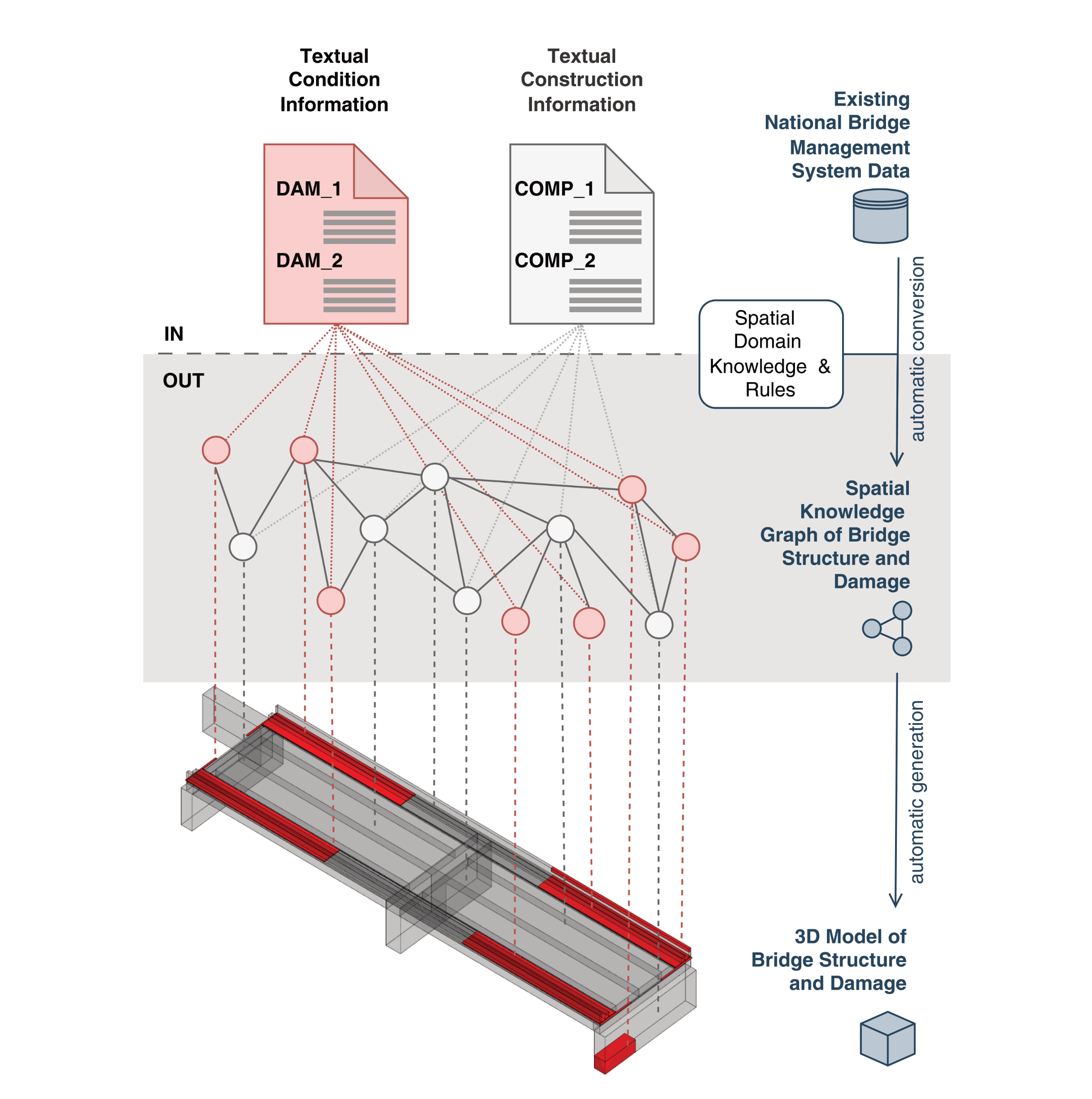
Prof. Dr. Jakob Beetz serves as a University Professor at RWTH Aachen University's Faculty of Architecture, leading the Design Computation (DC) research group. His work addresses critical challenges in sustainable built environments through digital innovation, focusing on integrating knowledge, information, and data across disciplines to reduce the sector's energy and material consumption—which accounts for over one-third of global totals—while advancing climate goals under the European Green Deal. His research spans Building Information Modeling (BIM), digital twins, and artificial intelligence, with emphasis on graph-based data federation, semantic web technologies, and large language models in construction. Key interests include evidence-based planning, parametric design optimization, building physics simulation, and networked knowledge modeling. Recent projects explore federated digital twin ecosystems for infrastructure management, intelligent damage assessment systems, and AI-driven solutions for wood structure preservation, directly contributing to sustainable development targets. Analysis of his 2024-2025 publications reveals a cohesive trajectory toward decentralized data environments and AI integration in Architecture, Engineering, and Construction (AEC). His work bridges theoretical foundations in knowledge representation with practical applications in bridge maintenance, road infrastructure, and timber construction, demonstrating consistent innovation in spatial data querying, federated issue management, and ontology-based process modeling. Prof. Beetz actively supervises PhD candidates, as evidenced by DC.Promotions 2024, and drives international collaboration through events like the Forum Construction Informatics 2025 and CIB W78 conferences. His research group engages with industry standards including Industry Foundation Classes (IFC) and Common Data Environments (CDEs), emphasizing open data principles and interoperability to transform construction workflows.
Lorenz Dörschel is an Adjunct Professor (Lehrbeauftragter) at the Institute of Automatic Control at RWTH Aachen University. He holds the academic title PD Dr.-Ing. habil, signifying post-doctoral research qualifications. His position is part-time, focusing on advanced control theory and applications. His primary research interests include: Control of distributed parameter systems (e.g., fluid dynamics, thermal processes) Model predictive control for industrial and automotive systems Parameter space methods for robust controller design Model reduction techniques for complex nonlinear systems Dörschel's recent publications (2018-2024) demonstrate broad applications across biomedical engineering, renewable energy, automotive systems, and industrial automation. His work consistently integrates mathematical rigor with practical implementations, emphasizing advanced control methodologies like nonlinear MPC, Lyapunov-based design, and Bayesian optimization. A recurring theme is the development of computationally efficient control strategies for distributed parameter systems. No scientific awards, student advising relationships, or research grants are documented in the available information.
Bettina Kemme is a faculty member at McGill University in Montreal, Canada. Her research focuses on database systems , distributed computing , and cloud data management . She has made significant contributions to database replication, consistency models, and middleware frameworks for scalable applications. Research Themes : Database replication, distributed systems, cloud computing, and software engineering. Notable Collaborations : Jörg Kienzle, Joseph Vinish D'silva, Yunjia Zheng, and Marta Patiño-Martínez. Publications span critical areas such as graph database view management, transactional recovery in key-value stores, and latency-aware publish/subscribe systems. Her work is published in venues like VLDB , ICDE , Middleware , and SRDS .