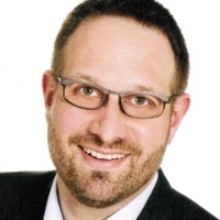
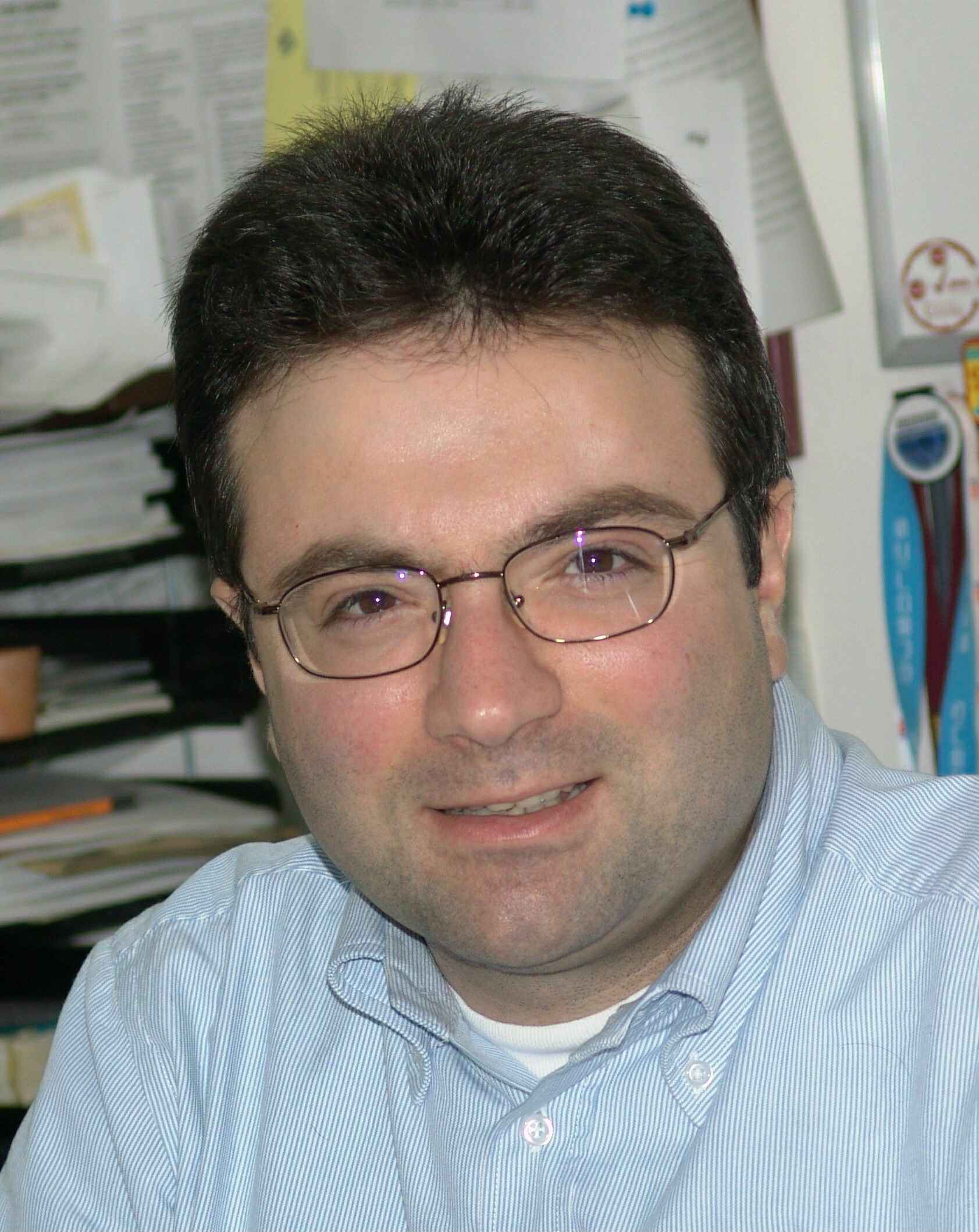
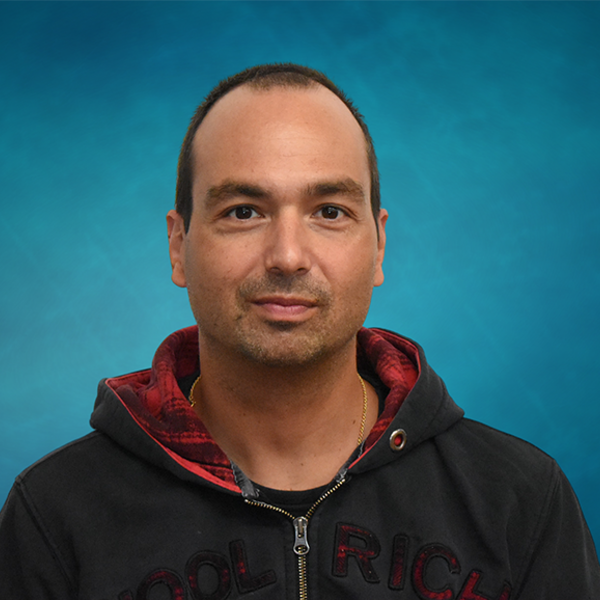
Diala Naboulsi is a Professor at the École de technologie supérieure (ÉTS) in the Department of Software Engineering and IT. Her research focuses on mobile networks, wireless systems, and cybersecurity, with a strong emphasis on machine learning applications in network optimization. She holds an M.Eng. from the Lebanese University and M.Sc. and Ph.D. degrees from INSA Lyon. Research Units: Summit Tech Research Chair, LASI Lab, Imagin Lab Expertise: Network virtualization, resource allocation, mobility management, UAV-based computing Her work spans resilience in wireless backhaul networks, energy-efficient frameworks in RAN slicing, and federated learning for privacy-aware traffic forecasting. She has advised numerous doctoral students, including Ahmed Abdelmoaty, Hnin Pann Phyu, and Philippe Lavoie. Key contributions include deep reinforcement learning approaches for network topology optimization and UAV-assisted MEC systems for Industry 5.0. Recent publications highlight advancements in 6G networks, network slicing, and edge computing. Her research aligns with strategic initiatives in sustainable and secure communication systems.
Willy Zwaenepoel is a Professor and Dean of the Faculty of Engineering at the University of Sydney. He holds a B.S. from the University of Gent and M.S./Ph.D. from Stanford University. Previously, he served as Dean of the School of Computer and Communication Sciences at EPFL and was a faculty member at Rice University. His expertise spans operating systems, distributed systems, and high-performance computing. Education: B.S., University of Ghent, Belgium (1979) M.S., Stanford University (1980) Ph.D., Stanford University (1984) Research Interests: Dr. Zwaenepoel focuses on distributed systems, operating systems, and their applications in database replication, virtual machine performance, and software update mechanisms. His work includes foundational contributions to distributed shared memory (e.g., Treadmarks) and startups like iMimic Networking. Awards: ACM Fellow (2000) IEEE Fellow (1998) Fellow of the Australian Academy of Technical Sciences and Engineering (2020) Recipient of the IEEE Tsutomu Kanai Award (2007) Key Contributions: His research addresses challenges in distributed systems performance, such as latency reduction in key-value stores and efficient graph processing. Current projects explore I/O optimization in virtualized environments and causal consistency for geo-replicated systems. Students/Advising: Advises Ph.D. students and postdocs, including William in database replication. His mentorship led to the Rice University Teaching Award (2000).
Filippo Malandra is an Assistant Professor in the Department of Electrical Engineering at the University at Buffalo, part of the School of Engineering and Applied Sciences. His research focuses on Internet of Things (IoT), wireless communications, 5G/4G cellular networks, network performance analysis, smart grid communications, optimization, and machine learning applications. PhD in Electrical Engineering from École Polytechnique de Montréal Master of Engineering in Telecommunications Engineering from Politecnico di Milano Bachelor of Engineering in Telecommunications Engineering from Politecnico di Milano His research interests include experimental testbed development for 5G-enabled smart grids, analytical modeling of cellular network delays, and machine learning frameworks for optimizing network performance under environmental factors. He has contributed to tools like WTTool for 5G network simulation and PeRF-Mesh for RF-mesh network analysis. Recent work emphasizes 5G testbed experimentation (e.g., ExTODS), weather-based signal prediction, and CBRS spectrum analysis. He has explored synergies between federated learning and O-RAN architectures for elastic network services. Active service roles include TPC Member for IEEE SECON 2019 and reviewer for IEEE journals and conferences like DRCN. Recipient of NSF CRII grant (2021) for CNS research on IoT-aware dynamic spectrum sharing. Collaborates on projects like UBSpot (aerial-ground wireless networks) and smartDESC (distributed energy storage control).
Dr. Sudip Seal is a Joint ORNL-UT Faculty in the Department of Electrical Engineering and Computer Science at the University of Tennessee, Knoxville, and leads the Systems and Decision Sciences Group at Oak Ridge National Laboratory (ORNL). He holds dual PhDs in Computer Engineering (Iowa State University) and Theoretical High Energy Physics (New Mexico State University). His expertise spans scalable algorithms, AI-driven methods for large-scale science, and high-performance computing. He has led over $55M in multidisciplinary projects and currently leads the FORESEE initiative for extreme-scale computing ecosystems. Education: PhD in Computer Engineering, Iowa State University, 2007 PhD in Theoretical High Energy Physics, New Mexico State University, 2002 Research Interests: Design and optimization of scalable algorithms for extreme-scale scientific computing, AI/ML workloads, parallel simulations, architecture-aware algorithms, numerical methods, computational fusion and materials science, and energy-efficient computing. Awards: Best Paper Award (ACM SIGSIM PADS 2024) Paramount Accomplishment Award (ORNL 2024) Significant Event Awards (ORNL 2017 & 2014) Multiple Best Paper Finalist/Runner-up recognitions (2010–2024) Indian Government Fellowships (NTPC, UGC, CSIR) Leadership & Grants: Principal Investigator (PI) and Co-PI for multi-million dollar projects, including the ExaLearn Co-design Center. Leads ORNL's CCSD LDRD FORESEE initiative. Serves as Associate Editor for the Journal of Parallel and Distributed Computing and chairs major HPC conference committees. Labs/Teams: Systems and Decision Sciences Group (ORNL), collaborating with the Computer Science and Mathematics Division on foundational HPC research.
Brian Mitchell is a Teaching Professor in the Department of Computer Science at Drexel University's College of Computing & Informatics (CCI). He brings over two decades of combined industry and academic experience, transitioning fully into academia in 2022 after serving as a Distinguished Engineer at a Fortune 15 company. His work bridges cutting-edge research and practical innovation in software systems. Drexel University, College of Computing & Informatics, Department of Computer Science Education: PhD in Computer Science, Drexel University MS in Computer Science, Drexel University BS in Computer Science, Drexel University ME in Computer & Telecommunication Engineering, Widener University Brian Mitchell's research centers on the intersection of Software Engineering, Software Architecture, Cloud Native Computing, and AI . His early foundational work helped establish the field of Search-Based Software Engineering (SBSE) , particularly in automated software clustering and architecture recovery. Recently, his focus has shifted to modern challenges in cloud-native environments , including misconfiguration detection, malware analysis, and resilient system design. He integrates security, scalability, and intelligent automation into software engineering practices. His recent publications reflect a clear trend toward AI-enhanced cloud-native systems , emphasizing automated analysis, security, and architectural robustness. These works appear in AI and cloud computing venues, showing interdisciplinary engagement. The evolution from source code clustering to cloud-native engineering illustrates his adaptability and leadership in emerging domains. Scientific Awards: Best Paper Award, GECCO'03 Best Paper Award, WCRE'01 Brian is actively involved in mentoring students and encourages research collaboration, particularly with those seeking deeper engagement beyond coursework. He emphasizes hands-on learning and uses modern tools like GitHub and Discord in his teaching. While no specific grants are listed, his industry leadership in digital innovation and open-source contributions suggests strong applied research support. He previously led large engineering teams and drove disruptive technological adoption in enterprise settings. Though no formal lab name is mentioned, his research group appears focused on software architecture, cloud systems, and AI-driven engineering , likely operating under informal or course-based research initiatives. His website and GitHub presence (@ArchitectingSoftware) suggest an active, open, and collaborative environment for student research.
Dr. David Laverty is a Reader at Queen’s University Belfast in the School of Electronics, Electrical Engineering and Computer Science. His research focuses on Smart Grids, Cyber Security of Critical Infrastructure, and Power System Instrumentation. He is the founder of the OpenPMU project, an open-source Phasor Measurement Unit, and has contributed to advancements in precision time transfer and software-defined networking in power systems. Dr. Laverty has secured over £3M in research funding and holds an h-index of 22 with over 100 publications. He actively supervises PhD students in areas such as smart grid telecommunications, distributed energy resources, and secure information systems. His work aligns with UN Sustainable Development Goals, particularly in clean energy and infrastructure. Awards include the 2017 Premium Award for Best Paper in IET Generation, Transmission & Distribution and the 2022 BEST PAPER AWARD. His research projects, such as the Fusion/Electricity Exchange DAC, address challenges in smart grid infrastructure and cyber-physical systems. Dr. Laverty also engages in public outreach through initiatives like the Electric DeLorean project.
Adrian Francalanza is a Professor in the Department of Computer Science at the Faculty of Information and Communication Technology, University of Malta. His research is centered on formal methods, runtime verification, and concurrency, with a focus on monitorability and distributed systems. His research interests include: Runtime Verification and Monitor Synthesis Session Types and Protocol Safety Concurrency and Actor-Based Systems Branching and Linear-Time Temporal Logics Probabilistic and Decentralized Monitoring Formal Tools for Cyber-Physical and Distributed Systems The recent publications highlight a strong trend in theoretical and practical advances in monitorability, especially for branching-time and probabilistic systems. His work bridges theory with implementation, often resulting in tools like STMonitor and DetectEr. There is a clear emphasis on session types, runtime enforcement, and the verification of communication protocols in real-world systems such as REST APIs and SMTP. Scientific awards include: Distinguished Paper Award at ECOOP 2025 Best Paper Award at DisCoTec 2022 He has been actively involved in advising and organizing major academic events. He served as Program Chair for GandALF 2024 and 2025, FORTE 2024, and VORTEX workshops. He led a three-year project funded by Rannis on Theoretical Foundations for Monitorability in collaboration with Reykjavik University. He has received grants and recognition for developing practical tools such as DetectEr and STMonitor, which support runtime monitoring of Erlang and session-typed systems. He is associated with several research teams and labs, including: Runtime Verification and Monitorability Research Group at University of Malta Collaborators on the DetectEr project Developers of STMonitor and polyLarva tools International collaborators at Reykjavik University and beyond
Marco Polverini is an active computer networking researcher with a prolific publication record spanning over a decade, with 59 publications documented from 2012 to 2025. His work primarily focuses on advanced networking technologies including Segment Routing, Software Defined Networking, and Network Function Virtualization. His research interests center around network routing optimization, traffic engineering, and network monitoring. He has made significant contributions to Segment Routing technology, developing novel behaviors for low-latency communication, black hole detection mechanisms, and traffic matrix assessment techniques. His recent work integrates artificial intelligence approaches, particularly reinforcement learning, with traditional networking protocols to create more adaptive and efficient network systems. He has also been exploring the application of Digital Twin technology for network management and optimization. Analysis of his publication trends shows a clear evolution from foundational work on energy-efficient networking and traffic engineering to more recent innovations in Segment Routing, in-band network telemetry, and AI-driven network optimization. His publications consistently appear in top networking venues including IEEE JSAC, IEEE Transactions on Network and Service Management, INFOCOM, and NOMS, demonstrating his standing within the networking research community. Throughout his career, Polverini has maintained strong collaborative relationships, particularly with Antonio Cianfrani (54 joint publications), Marco Listanti (33 publications), and Francesco Giacinto Lavacca (16 publications), suggesting he works within a well-established research group focused on next-generation networking technologies.
Massimo Poncino is a Full Professor at the Department of Control and Computer Science (DAUIN) within the Faculty of Engineering at Politecnico di Torino. He serves as Scientific Advisor for the STMicroelectronics partnership and coordinates basic engineering subjects. A Senior Member of IEEE since 2012 and Fellow since 2012, he has served on editorial boards for IEEE Transactions on Computer-Aided Design, IEEE Design & Test of Computers, and ACM Transactions on Design Automation. Education: Laurea in Electronic Engineering (1989) and PhD in Computer and Systems Engineering (1993) from Politecnico di Torino Academic Career: Visiting Scientist University of Colorado (1993-1994), Researcher at Politecnico di Torino (1995-2001), Associate Professor at University of Verona (2001-2004), Full Professor at Politecnico di Torino (2006-present) His research focuses on energy-efficient digital systems , including design automation of SoCs, hardware-aware AI, battery management, cyber-physical systems, and embedded systems. Recent publications highlight advancements in digital twins for batteries , low-power neural network deployment , and IoT privacy . Scientific Awards: Recognition of Service Award - ACM (2013) Certificate of Appreciation - IEEE Circuits and Systems Society (2006, 2008, 2009) IEEE Fellow (2012-) Research Involvement: EU H2020, VI/VII Framework Programs evaluator Scientific Director for projects: Approxim@ction, EMBAI, DISLO-MAN, DAMASCO Member of EDA research group Teaching: Course director for Energy Management for IoT (2019-2025) Lecturer for Computer Science courses (2003-2025)
David Bermbach is a Full Professor at Technische Universität Berlin , leading the Scalable Software Systems group since 2023. His research focuses on distributed systems, serverless computing, and benchmarking, with significant work on edge and fog computing architectures. He is affiliated with the Einstein Center Digital Future and co-chairs interdisciplinary projects like SimRa for bicycle traffic safety. Full Professor, Scalable Software Systems (2023–present) ECDF-Professor, Mobile Cloud Computing (2017–2023) Postdoctoral Researcher (2014–2017) Education : Diploma in Business Engineering (2010) – Karlsruhe Institute of Technology (KIT) PhD in Computer Science (2014, summa cum laude) – KIT Research Interests span distributed systems with emphasis on cloud, edge, and fog computing, serverless architectures, IoT platforms, and benchmarking frameworks. His work addresses consistency-performance trade-offs, resource placement, and interdisciplinary applications in urban mobility and satellite edge computing. Article Trends show a focus on serverless computing (12/15), edge-cloud integration (9/15), and benchmarking methodologies (7/15). Key themes include optimizing function placement, federated learning architectures, and low-earth orbit computing systems. Scientific Awards Best Paper Award – ShutPub (2024) Best Workshop Paper – A Research Perspective on Fog Computing (2017) Best Paper Runner Up – Benchmarking Eventual Consistency (2014) Summa Cum Laude PhD Thesis (2014) Advising & Grants include mentoring students like Tobias Pfandzelter and Trever Schirmer, leading funded projects through the Einstein Center Digital Future, and contributing to 6G network research. His team works on cloud federation, serverless optimization, and real-world IoT applications.
Stephen Crouch serves as a Software Architect within the School of Electronics and Computer Science at the University of Southampton, where he actively contributes to the Web and Internet Science research group and the Southampton Research Software Group (SRSG). His role bridges technical software development with academic research infrastructure, focusing on creating robust solutions that enhance research capabilities across scientific domains while emphasizing sustainability and reproducibility in software practices. His research spans Research Software Engineering, Software Architecture, Grid Computing, Data Management, Reproducible Research, and High Performance Computing. Crouch has been instrumental in major projects including IGE (funded by the European Union's FP7 program) which developed integrated educational frameworks for research software engineering, and UNIVERSE-HPC (EPSRC-funded) addressing educational strategies in high-performance computing. His work consistently targets the intersection of software engineering principles and scientific research needs, particularly in creating maintainable systems for evolving research workflows. Analysis of his publication trajectory from 2007-2025 reveals a clear evolution from foundational grid computing research toward contemporary challenges in research software sustainability and reproducibility. Early work focused on grid interoperability and job scheduling, while recent contributions emphasize institutional strategies for research software engineering, data evolution pathways, and sustainable software practices. This progression demonstrates his adaptation to shifting research computing paradigms while maintaining core expertise in software architecture for scientific applications. Crouch has secured significant funding from the European Union and EPSRC, supporting his work in research software infrastructure. Within the Southampton Research Software Group, he plays a key role in developing institutional capacity for research software engineering, providing expertise that enables researchers across disciplines to implement reliable, efficient computational solutions. His collaborative approach is evident through extensive co-authorship with national and international research software engineering initiatives.
Prof. Dr. Fadi AL-TURJMAN serves as the founding Dean of the Faculty of AI and Informatics at Near East University (NEU), Cyprus. He holds multiple leadership roles including Head of the Software Engineering Department and Director of the AI and Robotics Institute and the International Research Center for AI and IoT. With a PhD in Computer Science from Queen’s University (2011), he specializes in AIoT systems, wireless networks, and blockchain integration. Affiliation: Near East University Leadership: Founding Dean for AI and Informatics, Director of AI & Robotics Institute Research Focus: His work bridges Artificial Intelligence of Things (AIoT) , Blockchain Applications , and Smart Networking . He explores cybersecurity frameworks for smart cities, quantum state optimization techniques, and novel AI-driven solutions for healthcare, agriculture, and energy systems. Key Article Trends: Recent publications emphasize Transformer models for environmental monitoring, blockchain-enabled security protocols , and evolutionary algorithms for resource optimization. His research spans interdisciplinary domains including medical diagnostics, vehicular networks, and sustainable infrastructure. Scientific Awards: Lifetime Golden Award of Dr. Suat Gunsel (2022) Multiple Best Research Awards at International Venues Labs & Teams: Directs the International Research Center for AI and IoT at NEU, leading multidisciplinary teams in developing advanced networking technologies and AI-driven solutions for global value chain applications.
Holger Schwarz is an Associate Professor (Apl. Professor) at the Institute for Parallel and Distributed Systems (IPVS) within the Faculty of Computer Science, Electrical Engineering and Information Technology at the University of Stuttgart. He serves as Head of the Infrastructure Department and is actively involved in research and teaching in the areas of data management, database systems, and data analytics. Professor Schwarz earned his doctorate (Dr. rer. nat.) from the University of Stuttgart in 2003 with a dissertation on "Integration of Data Mining and Online Analytical Processing." He later completed his habilitation (Dr. rer. nat. habil.), qualifying him as a university professor in Germany. His primary research interests focus on data management systems , particularly in the domains of data lakes, lakehouses, enterprise data platforms, and metadata management. Professor Schwarz investigates how to design efficient and scalable data architectures that support modern analytical workloads while addressing challenges in data integration, governance, and democratization. His work bridges theoretical database concepts with practical industrial applications, as evidenced by numerous collaborations with industry partners. Professor Schwarz's recent publications demonstrate a clear trend toward enterprise data management solutions, particularly focusing on data lakehouse architectures, enterprise data marketplaces, and advanced clustering techniques. His research shows a consistent pattern of addressing real-world data management challenges through innovative architectural patterns and algorithmic improvements, with strong emphasis on practical industrial implementation. Professor Schwarz supervises numerous research projects including MetaMan (metadata management in complex data landscapes), DLArchitecture (design of comprehensive data lake architecture), INTERACT (interactive rapid analytic concepts), and VALID-Partition (improving prediction quality using domain knowledge). He also coordinates the University of Stuttgart's projects within the Software Campus initiative and serves as Managing Director of the Technology Partnership Lab and as a Member of the Board of Directors of the Industrial Data Lab. His teaching portfolio includes courses on Advanced Information Management, Database Systems, and Data Science projects across multiple semesters, demonstrating his commitment to educating the next generation of data management professionals.
Nectarios Koziris is a Professor at the Department of Computer Science , National Technical University of Athens (NTUA) , and former Dean of the School of Electrical and Computer Engineering . His research focuses on Parallel and Distributed Systems , Computer Architecture , and Cloud Computing . Key Research Themes: Compiler-OS-Architecture Interaction, Datacenter Hyperconvergence, Sparse Matrix Optimization, Quantum Computing, FPGA Virtualization Leadership: Founder of ~okeanos (Europe's largest public Cloud IaaS), Co-founder of GFOSS , Member of IEEE Computer Society Greece, Advisor to Arrikto Inc. His work has led to over 180 publications with 5800+ citations (h-index 33) , including two Best Paper Awards (IPDPS 2001, CCGRID 2013) and Intel Recognition (2015). He has supervised 12 PhD students and participated in 15+ EU projects as coordinator or consortium partner. Scientific Leadership: Program Co-Chair for Europar 2012 , Organizer for IPDPS , ICPP , SC conferences, and active member in Cloud Computing Expert Groups for the European Commission.
Giorgio Scorzelli is a researcher at the University of Utah, serving as Director of Software Development for the Center for Extreme Data Management, Analysis, and Visualization (CEDMAV) and the National Science Data Fabric (NSDF) . He specializes in extreme data management, scientific visualization, and computational topology, with a focus on scalable solutions for climate science, materials science, and neuroscience datasets. His work emphasizes democratizing data access through platforms like OpenVisus , enabling efficient analysis of petascale and exascale data. Key contributions include orchestrating cyberinfrastructure, optimizing parallel I/O, and developing real-time visualization systems for heterogeneous resources. Notable scientific contributions include the NSF Grant #2127548 for NSDF development . His projects integrate cloud computing, geo-distributed storage, and FAIR digital objects to lower barriers to data democratization. Giorgio's research spans multi-resolution algorithms , computational topology , and 3D geometric modeling , with applications in infrastructure security, archaeological reconstruction, and biomedical imaging. His work bridges abstract mathematical frameworks (e.g., Boolean algebras, chain complexes) with practical software solutions.