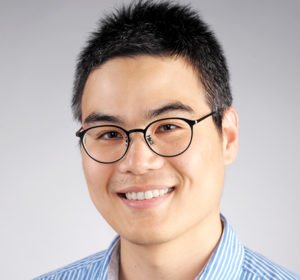
Damian Grela is a Lecturer in the Department of Automation and Computer Science at the Faculty of Electrical and Computer Engineering, Cracow University of Technology. His work spans two distinct research domains: software engineering (focusing on BPEL processes, web services, and fault injection testing) and environmental engineering (specializing in diatomite-based biogennic pollutant removal, rain gardens, and surface water quality monitoring).
Dr. Barry Cardiff is an Assistant Professor in the School of Electrical and Electronic Engineering at University College Dublin (UCD), where he has been a member of academic staff since September 2013. His career spans both industry and academia, with significant experience at Nokia Mobile Phone (UK) Ltd and Silicon & Software Systems (S3 group) before returning to complete his PhD at UCD. Education: B.Eng (1992), M.Eng.Sc. (1995), PhD (2011) from University College Dublin Professional Experience: Design Engineer at Nokia (1993-2001), Systems Architect at S3 group (2001-2007, 2011-2013) Current Position: Assistant Professor at UCD School of Electrical and Electronic Engineering Dr. Cardiff's research focuses on Digital Signal Processing applications in communication systems, with particular emphasis on theoretical analysis and practical implementation. His work bridges traditional communication theory with emerging biomedical applications, especially in wearable IoT sensors. He has made significant contributions to power/complexity reduction techniques in circuit design, specifically DSP algorithms for digitally assisted analog circuits. His research program addresses critical challenges in biomedical signal processing, sensor fusion, and efficient data transmission for healthcare applications. His recent publications demonstrate a strong trend toward biomedical applications of signal processing techniques, with a focus on ECG analysis, atrial fibrillation detection, and respiratory rate estimation using multimodal sensor fusion. The research shows a clear progression from traditional communication systems toward healthcare applications, with an emphasis on edge computing solutions that reduce power consumption in wearable devices. IEEE BioCas best paper award (2024) IEEE senior member since 2019 Active reviewer for multiple IEEE journals including Transactions on Biomedical Circuits and Systems, Circuits and Systems, and VLSI Systems Dr. Cardiff has supervised numerous research projects and has been instrumental in developing curriculum for digital communications, signal processing, and wireless systems. His teaching philosophy emphasizes open, friendly, and hands-on approaches that encourage independent thinking. He coordinates multiple modules including Communication Theory, Digital Electronics, DSP Technology, and Wireless Systems, demonstrating his commitment to both theoretical foundations and practical applications of electrical engineering principles. His research group works at the intersection of signal processing, machine learning, and biomedical engineering, developing innovative solutions for wearable healthcare monitoring. Current projects focus on event-driven processing architectures, decentralized classification systems, and signal quality-aware fusion techniques that enable robust performance in noisy real-world environments.
Silverio Juan Martinez Fernandez is a Professor at the Universitat Politècnica de Catalunya (UPC) , affiliated with the Barcelona School of Informatics (FIB) and the Department of Service and Information Systems Engineering . He is a core member of the inSSIDE and GESSI research groups. His expertise spans Empirical Software Engineering , Green AI , MLOps , and Software Analytics . Education: Bachelor's in Computer Engineering PhD from UPC in Software Engineering Master's in Computing Research Interests: Focuses on sustainable AI practices, energy-efficient ML systems, and MLOps education. He investigates architectural design for green AI, energy labeling tools for ML models, and agile software development methodologies. His work bridges theoretical research and industrial applications, emphasizing data-driven decision-making. Grants & Collaborations: Leads projects like Green AI-Based Systems Architecture and Q-Rapids , funded by national and EU programs. Collaborates with institutions like Softeam and industry partners to apply software analytics in real-world scenarios. Labs & Teams: Coordinates the inSSIDE group, focusing on integrated software and data engineering. Active in organizing conferences like GREENS and ESEM , and co-develops tools like Skuld for technical debt management.
Dr. Irfan Ahmad serves as an Associate Professor in the Department of Information and Computer Science at King Fahd University of Petroleum and Minerals (KFUPM), Dhahran, Saudi Arabia, where he teaches undergraduate and graduate courses in Computer Science and Software Engineering while conducting research and advising graduate students. His academic service includes committee roles on graduate studies, program development, and competitions. His research expertise centers on Pattern Recognition with specialized focus on Document Image Analysis , Handwriting Recognition , and Machine-Printed Text Recognition . He actively explores Machine Learning applications including Deep Learning and Natural Language Processing , with significant contributions across Artificial Intelligence, Computer Vision, Data Mining, Neural Networks, and Computational Linguistics as evidenced by his PeerJ subject area specializations. Recent publications reveal a strategic emphasis on adaptive deep learning architectures for document analysis, particularly generative methods for handwritten text recognition and knowledge distillation techniques. His editorial work on feature extraction and multilingual fake news detection further demonstrates applied research bridging theoretical machine learning with real-world language processing challenges. As an active Academic Editor for PeerJ Computer Science with 1,205 contribution points, Dr. Ahmad provides substantial service to the scholarly community through manuscript evaluation and editorial oversight across emerging technologies in data science and artificial intelligence.
Bryan S. Kim is an Assistant Professor in the Department of Electrical Engineering and Computer Science at Syracuse University. His research focuses on computer systems, particularly data storage systems, emphasizing performance, reliability, and scalability in the context of heterogeneous hardware. He holds a Ph.D. and M.S. in Computer Science and Engineering from Seoul National University and a B.S. in Electrical Engineering and Computer Science from UC Berkeley. Prior to academia, he worked as a postdoctoral researcher at Seoul National University and as a manager at SK Telecom. Key research interests include SSD reliability, storage system design, and overcoming hardware limitations through innovative architectures. Notable recent work includes projects on capacity-variant storage systems, CXL-enabled SSDs, and RAID adaptations for heterogeneous SSDs. He has been awarded two NSF grants: the DESC proposal (CHIPLETS360) in 2025 and a CAREER award for bridging memory/storage gaps in 2025. Education: Ph.D. in Computer Science and Engineering, Seoul National University M.S. in Computer Science and Engineering, Seoul National University B.S. in Electrical Engineering and Computer Science, UC Berkeley Recent Awards: NSF DESC Proposal Award (2025) NSF CAREER Proposal Award (2025) Teaching: CSE486: Design of Operating Systems CIS341: Computer Organization & Programming Systems CIS700: Storage Systems for Big Data His students include Shao-Peng Yang, Xiangqun Zhang, and Omkar Desai. He advises on projects related to storage systems, and his work has been published in top-tier conferences like FAST, ATC, EuroSys, and OSDI.
Hans Tompits is an Associate Professor in the Department of Knowledge-Based Systems at Technische Universität Wien (Vienna University of Technology). His research focuses on computational logic, declarative logic programming, and formal methods, with a particular emphasis on Answer-Set Programming (ASP). He coordinates the Master's program in Logic and Computation and leads projects in areas such as formal methods for optimization, fault-tolerant autonomous systems, and algorithmic composition. His work bridges theoretical advancements with practical applications, including tools like SeaLion (an ASP IDE with debugging support) and dlvhex (an ASP-based semantic web reasoner). He has contributed to foundational topics like program equivalence, debugging techniques, and integration of ASP with external systems. His recent projects address challenges in autonomous vehicle architectures, music composition algorithms, and safety-critical system design. Tompits has published extensively on topics ranging from nonmonotonic reasoning and modal logics to the development of declarative programming tools. His interdisciplinary approach spans computer science, mathematics, and AI, with applications in both academic and industrial contexts.
Jonathan Ragan-Kelley is the Esther and Harold E. Edgerton Assistant Professor of Electrical Engineering & Computer Science at MIT and an Assistant Professor of EECS at UC Berkeley. He leads the Visual Computing group at CSAIL, focusing on high-efficiency visual computing, compilers, and architectures for image processing, machine learning, and 3D rendering. His research bridges systems, compilers, and hardware design, emphasizing scalable solutions for computational challenges. Education: PhD in Computer Science from MIT (2014), postdoc at Stanford University, and visiting researcher at Google. He co-created the Halide language and has developed multiple domain-specific languages (DSLs) and compiler systems. Research interests include compiler optimization, scheduling languages (e.g., Exo), and efficient computing frameworks. He has received awards such as the NSF CAREER Award and ACM SIGGRAPH’s Significant New Researcher Award. Awards: ACM SIGGRAPH Award, NSF CAREER, Intel Outstanding Researcher Award Key Contributions: Halide compiler framework, Exo scheduling language, machine learning acceleration techniques Labs/Teams: Visual Computing at MIT CSAIL
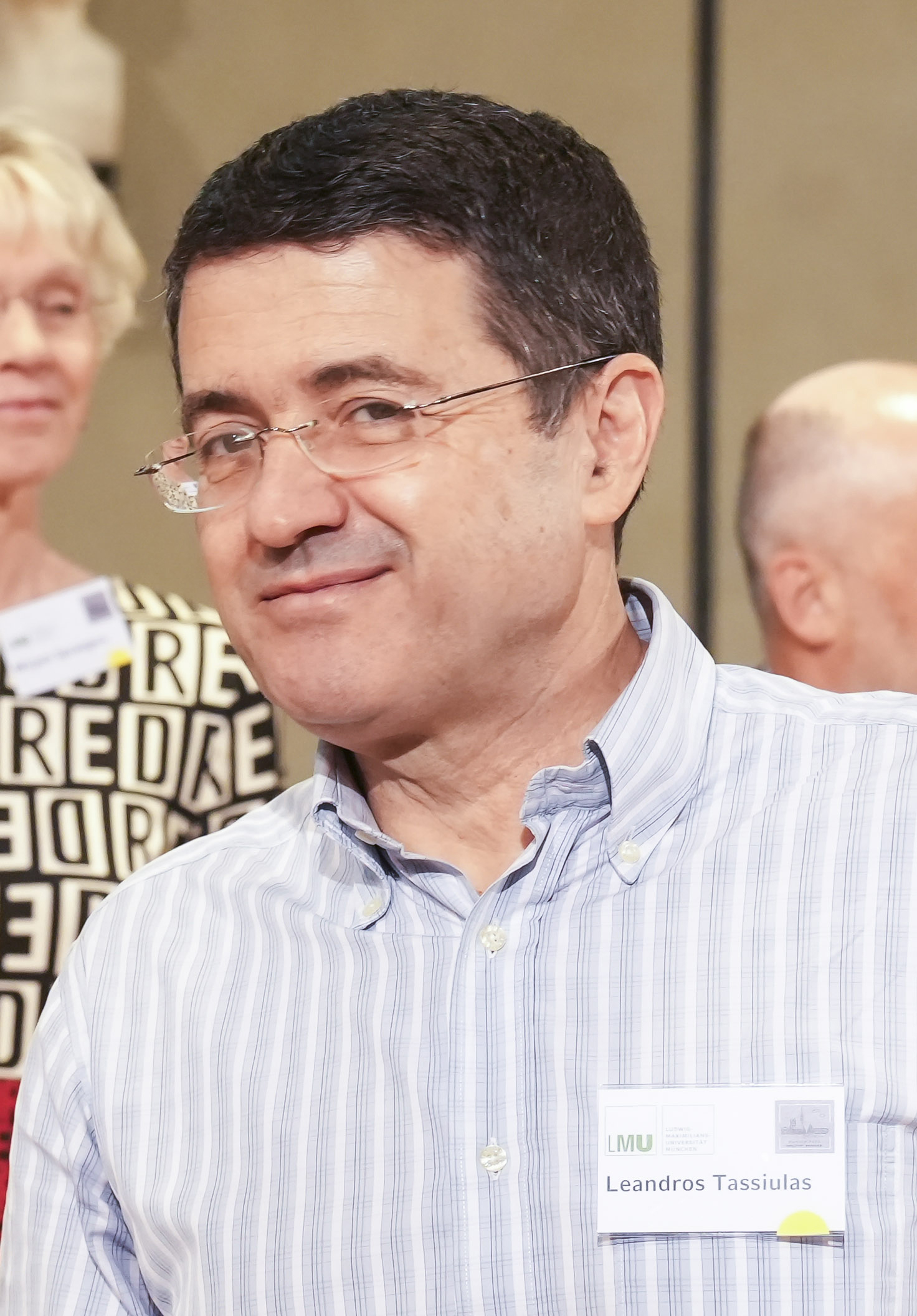
Leandros Tassiulas is the John C. Malone Professor of Electrical Engineering at Yale University, with additional appointments in Computer Science. His career spans faculty positions at the University of Thessaly, University of Maryland, University of Ioannina, and Polytechnic University. A Fellow of both IEEE (2007) and ACM (2020), he is renowned for contributions to network control theory, including the max-weight scheduling algorithm and back-pressure network policy. PhD in Electrical Engineering (1991) from the University of Maryland, College Park His research focuses on computer and communication networks , emphasizing mathematical models for complex networks , wireless system architectures , stochastic systems , and energy-efficient network design . Recent work explores quantum networking (Pant et al., 2019) and federated learning in edge environments (Jiang et al., 2022). Key publication trends include stability analysis (earlier works), mobile edge computing (2019), software-defined networking (2021), and smart grid optimization (2012-2013). The list includes monographs on network theory and patents for distributed bandwidth allocation (2011) and directional antenna protocols (2002). Scientific Awards ACM Fellow (2020) for network control contributions IEEE Koji Kobayashi Award (2016) for scheduling/stability analysis IEEE INFOCOM Achievement Award (2007) for resource allocation Bodossaki Foundation Prize (1999) for distributed systems NSF CAREER, ONR Young Investigator, and multiple best paper awards His work has been funded by the NSF, ONR, and IBM. Current projects bridge AI , quantum communication , and next-generation network architectures .
Univ.-Prof. Martin Pinzger is a Professor at the Department of Informatics Systems, Alpen-Adria-Universität Klagenfurt. He serves as Head of Department and Member of the Senate, actively contributing to academic governance. Research Focus: Automating Software Engineering Tasks, Mining Software Repositories, Program Analysis, Software Evolution and Visualization Recent Work: Developing tools for API evolution analysis, cybersecurity AI (CAI), robotics benchmarking (RobotPerf), and dependency validation His research combines empirical studies with tool development for software maintenance and security. Current projects address challenges in REST API breaking changes, cloud security certifications, and robotic system performance evaluation. Publications since 2023 demonstrate continued engagement with topics spanning AI-driven code segmentation, microservice API evolution, and cybersecurity tool development. Key trends include cross-disciplinary applications of NLP to software engineering and security-focused tool creation. Contact: martin.pinzger@aau.at
Associate Professor Peter Sutton is an academic at the University of Queensland (UQ), holding roles as Deputy Head of School (Teaching and Learning) and Associate Professor in the School of Electrical Engineering and Computer Science. His research focuses on Engineering Education, Embedded Systems, Reconfigurable Computing, and Electronic Design Automation. He has contributed to curriculum design, remote lab management during the pandemic, and hardware-software co-design for embedded systems. Sutton completed his undergraduate studies at UQ and earned advanced degrees at Carnegie Mellon University, with over three decades of experience in computer systems research and education. Education Bachelor of Science, University of Queensland Bachelor (Honours) of Engineering, University of Queensland Masters of Science (Coursework), Carnegie Mellon University Doctor of Philosophy, Carnegie Mellon University Research Interests Sutton’s work spans engineering pedagogy, embedded system design, and reconfigurable computing. Recent projects include adapting hands-on labs for remote learning during the pandemic and optimizing FPGA-based architectures for data compression and encryption. His contributions to cache optimization and multiprocessor systems highlight his expertise in hardware-software integration. Publications His 50+ publications cover topics like FPGA implementations of neural networks, code compression techniques for VLIW processors, and embedded system design tools. Notable contributions include frameworks for reconfigurable system-on-chip development and methods to enhance debugging practices in post-novice students. Labs & Teams He collaborates within UQ’s School of Electrical Engineering and Computer Science, contributing to research groups focused on embedded systems and engineering education innovation.
Professor Saman Amarasinghe is a full Professor in the Department of Electrical Engineering and Computer Science (EECS) at the Massachusetts Institute of Technology (MIT), and Principal Investigator at MIT's Computer Science and Artificial Intelligence Laboratory (CSAIL). He leads the Commit compiler research group, which focuses on programming languages and compilers that maximize application performance on modern computing platforms. His work spans multiple academic departments and research centers, with strong affiliations to both MIT's School of Engineering and CSAIL. Professor Amarasinghe's research interests center around high-performance domain-specific languages and compiler technology . His work combines language design with sophisticated compilation techniques to deliver unprecedented performance for targeted application domains. His research spans multiple areas including image processing (Halide), sparse tensor algebra (TACO), graph analytics (GraphIt), stream computations (StreamIt), and bioinformatics (Seq). A significant thread throughout his work is the application of machine learning for compiler optimizations, from Meta optimization in 2003 to the OpenTuner autotuner framework. Analysis of Professor Amarasinghe's recent publications reveals a strong focus on sparse computing , compiler vectorization , and domain-specific language implementation . His work consistently bridges theoretical compiler concepts with practical performance gains across diverse application domains. The progression from earlier work on StreamIt and Halide to more recent projects like GraphIt and TACO shows an evolution toward more specialized, high-performance DSLs targeting specific computational patterns. His 2020-2025 publications particularly emphasize sparse tensor operations, GPU acceleration, and machine learning integration with compiler technology. ACM Fellow (2019) Professor Amarasinghe has made significant contributions to academic entrepreneurship and student development. He founded Determina, Inc. (acquired by VMware) based on security research from his MIT lab and co-founded Lanka Internet Services, Ltd., Sri Lanka's first ISP. As faculty director of MIT Global Startup Labs, his programs across 17 countries have helped create over 20 successful startups. His teaching includes the popular Performance Engineering of Software Systems (6.172) course with Professor Charles Leiserson, as well as innovative project-based courses like the Open Source Software Project Lab and Bring Your Own Software Project Lab. His educational approach emphasizes hands-on experience with compiler and language design concepts. Professor Amarasinghe leads the Commit compiler research group at MIT CSAIL, which has produced numerous influential domain-specific languages and compilers including Halide, TACO, Simit, StreamIt, and GraphIt. The lab maintains strong industry connections through projects like OpenTuner and Determina, and collaborates with researchers worldwide on compiler technology. The group's work spans both theoretical compiler research and practical implementation, with a consistent focus on bridging the performance gap between high-level programming abstractions and hardware capabilities.
Babak Abedin is a Professor of Business Analytics and Head of the Department of Actuarial Studies and Business Analytics at Macquarie Business School, Macquarie University. He holds a PhD in Information Systems from UNSW Business School and has expertise in AI ethics, cybersecurity governance, and digital transformation. His research focuses on responsible AI, data analytics governance, and the societal impact of technology. He has secured over $4M in external funding and led projects with organizations like the Reserve Bank of Australia and Cancer Council NSW. He is the program leader of Responsible AI at Macquarie’s Centre for Applied AI and serves on editorial boards for journals such as Information Systems Frontiers and Electronic Markets . His teaching emphasizes real-world challenges, earning him the UTS Learning & Teaching Citation (2019) and Macquarie’s Faculty of Business Teaching Award (2010). He has supervised over 10 PhD/Master’s students. His recent work explores agile cybersecurity policy frameworks, digital empowerment in health communities, and AI’s ethical implications. He frequently engages with media on topics like health informatics and AI governance. Key collaborations include studies on blockchain systems, dynamic capabilities in digital transformation, and gender bias in AI. His articles address cybersecurity policymaking, adult learning in online communities, and value co-creation in digital ecosystems.
Dr. Patrick W. C. Ho is a Lecturer in the Department of Electrical & Computer Systems Engineering (ECSE) at Monash University Malaysia School of Engineering. He holds a PhD in Electronics Engineering from the University of Nottingham Malaysia Campus (2016), with research focusing on non-volatile FPGA architectures using memristors. His academic journey includes roles as a Scholarly Teaching Fellow and unit coordinator for courses like ECE2131 Electrical Circuits and ECE4063 Large Scale Digital Design. He has industry experience with Intel Microelectronics and Altera Corporation, alongside teaching A-level Physics at Methodist College Kuala Lumpur. Education: BEng (First Class Honours) in Engineering (2009) MSc in Science (2012) PhD in Electronics Engineering (2016) Research Interests: Dr. Ho specializes in memristor-based non-volatile memory systems, VLSI design, and FPGA architectures. His work bridges hardware design with emerging materials, as seen in his Q1 journal article on memristive LUTs. Collaborations with CAD-IT expand his focus into AI, image processing, and object recognition. Recent projects include studies on memristor substrate performance (2023–2026) and UAV communication reliability (2021–2024). Teaching and Industry Engagement: As ECSE’s Industrial Training Advisor and IAP representative, he actively connects academic curricula with industry needs. His teaching spans foundational engineering courses and advanced digital design modules. Labs and Collaborations: Active in CAD-IT partnerships for student FYP co-sponsorship. Research groups focus on nanotechnology, machine learning integration in UAV systems, and memristor material analysis.
Paul Fischer is a Professor at the University of Illinois, holding dual appointments in the Siebel School of Computing and Data Science and the Mechanical Science and Engineering department. His research focuses on advanced numerical methods for fluid dynamics, particularly leveraging spectral element techniques and high-performance computing. He is a core contributor to the Nek5000/NekRS computational frameworks. Recent work emphasizes turbulence modeling, exascale CFD simulations, and multiphase flow dynamics in complex systems like pebble bed reactors. His research interests span spectral methods, large eddy simulation (LES), direct numerical simulation (DNS), and parallel computing architectures. Key projects include developing scalable algorithms for Reynolds-averaged Navier-Stokes (RANS) models and exploring non-conforming domain decomposition approaches for reacting flows. His contributions bridge computational methodology and engineering applications, with a focus on exascale-ready solutions. Publications from 2024-2025 highlight advancements in energy-efficient CFD simulations, turbulence transition mechanisms in granular media, and reduced order modeling for turbulent flows. Collaborations involve cross-disciplinary teams focusing on combustion, fluid-structure interaction, and high-fidelity flow analysis. He maintains active involvement in computational fluid dynamics communities and contributes to open-source software tools critical for industrial and academic research. Current efforts prioritize scalability, accuracy, and adaptability in numerical methods for next-generation supercomputing platforms.
Srinivas Narayana is an Assistant Professor in the Department of Computer Science at Rutgers University, specializing in programmable networking, formal verification, and systems research. He holds a PhD from Princeton University and a B.Tech from IIT Madras, with postdoctoral work at MIT. His research focuses on building safe, high-performance networks through optimizing compilers, verified programming, and distributed system monitoring. He has received NSF grants, the CGO 2022 Distinguished Paper Award, and the 2017 SIGCOMM Best Paper Award. Education: PhD and MA in Computer Science, Princeton University (2016) B.Tech in Computer Science, IIT Madras (2010) Postdoctoral Research, MIT (2018) Research Interests: His work bridges networking and systems with a focus on compilers, formal methods, and programmable hardware. Notable projects include K2 compiler for eBPF, the eBPF verifier soundness work, and congestion control mechanisms like CCP. He explores parallel packet processing, privacy-preserving analytics, and load balancing strategies. Grants & Awards: NSF Awards #2422076, #1910796, #2019302 eBPF Foundation Grant Facebook Networking Research Award Network Programming Initiative (NPI) Funding Lab & Teams: Leads the NetSys group at Rutgers, collaborating with teams on projects like the eBPF verifier, verified packet processing, and network monitoring tools like Marple. His lab emphasizes open-source contributions and industry collaboration.