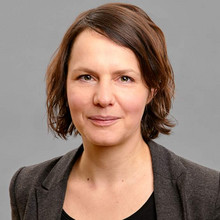
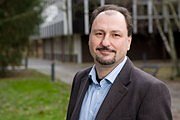
Prof. Dr. Poldi Kuhl is a Professor of Educational Psychology at Leuphana University , Lüneburg, since 2021. Affiliated with the Institute of Psychology in Education (IPE) and the Center for Empirical Research on Language and Education (ERLE) , Kuhl specializes in educational psychology, developmental psychology, and inclusive education. Their research focuses on data-driven decision-making, digital learning platforms, academic language demands, and teacher professional development. Education: Diploma in Psychology (2003) and PhD in Philosophy (2008) from Freie Universität Berlin. Kuhl’s recent work examines how academic language features affect learning outcomes, digital data utilization in primary education, and mental health literacy among teachers. Their publications span topics from virtual reality training tools to inclusive teaching strategies in mathematics. Kuhl’s career includes leadership roles at the Research Data Center (FDZ) at the Institute for Quality Improvement in Education (IQB) and a Junior Professorship at Leuphana University. They have collaborated with institutions like the Universitat Oberta de Catalunya and the Max Planck Institute for Human Development .
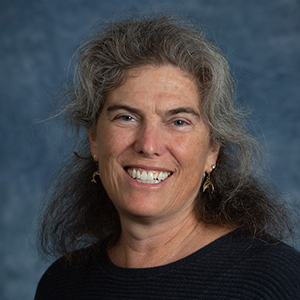
Prof. Dr. Nina Zschocke is Professor of Art History with a focus on 'Digital Aesthetics' at the Karlsruhe University of Arts and Design (HfG Karlsruhe) since April 2024. Previously, she served as senior research associate and lecturer at the Department of Architecture at ETH Zurich until 2023, and as a research associate at the Institute of Art History at the University of Zurich from 2005. She maintains strong connections with the ZKM | Center for Art and Media in Karlsruhe through collaborative projects and lecture series. Her educational background includes studies in art history, ethnology, and classical archaeology at the University of Cologne, where she earned her doctorate in 2004 with a dissertation on 'irritation' in art reception. She furthered her academic work as a DFG visiting scholar at University College London and Columbia University in New York. Zschocke's research centers on the intersection of art history, digital aesthetics, and materiality, with particular emphasis on how computational processes reshape artistic production and reception. Her work explores the material dimensions of digital media, algorithmic authority, and unconventional computing paradigms. She investigates how traditional art historical frameworks can be adapted to address contemporary digital practices and the physical manifestations of computational processes in artistic contexts. Her publications and symposia reveal consistent engagement with digital materiality, examining how digital processes manifest in physical form and how traditional art historical methods apply to contemporary computational practices. Recent work focuses on 'unconventional computing' - exploring alternative physical substrates for computation beyond standard silicon-based systems, and questioning the dominant paradigms of digital technology. Zschocke has organized numerous significant academic events including the 'Conversations on Art and Media' lecture series (2025), 'Dirty Computers' seminar week (2024), 'Digital Matters Symposium' (2024), and the long-running 'Don18 - Conversations on Art and Architecture' (2006-2022). These events demonstrate her commitment to creating interdisciplinary dialogue platforms that bridge art, architecture, media theory, and computational practices. Her academic leadership extends to doctoral program development, having co-designed the SNSF doctoral program 'ProDoc Art&Science' (2008-2014) and the 'Doctoral Program in the History and Theory of Architecture' at ETH Zurich (2012-2015). She has taught at multiple institutions including the University of Fribourg, Bremen University of the Arts, and Bern University of the Arts, establishing herself as a significant figure in European art and media theory education.
Hao Yang is an Assistant Professor in the Department of Civil and Systems Engineering at Johns Hopkins University, with dual affiliations at the Johns Hopkins Data Science and AI Institute and the Johns Hopkins Institute for Assured Autonomy. His research develops Trustworthy Machine Learning methods to enhance urban mobility systems, focusing on traffic safety, equity, and sustainability through ethical AI and human-machine cooperative systems. Yang earned dual bachelor's degrees in Electrical and Computer Engineering from Beijing University of Posts and Telecommunications and the University of London, followed by a Ph.D. in Civil Engineering (Transportation) from the University of Washington. His educational background bridges telecommunications, electrical engineering, and transportation systems. His research integrates spatio-temporal modeling, assured autonomous systems, and multimodal representation learning to address transportation equity and safety. Key projects include edge-AI-powered traffic surveillance, real-time crash identification, and cooperative signal assistance for vulnerable road users. His work emphasizes ethical AI deployment in cyber-physical infrastructure to create sustainable urban mobility solutions. Recent publications reveal a strategic shift toward large language models and multimodal AI for transportation challenges, with strong emphasis on explainability, reliability, and equity in traffic crash prediction, flow forecasting, and autonomous driving systems. This evolution demonstrates his commitment to adapting cutting-edge AI for real-world transportation problems. Yang's scientific contributions have earned significant recognition: Michael Kyte Outstanding Student of the Year Award (2022) High-Value Research Award from AASHTO (2022) Best Paper Award from TRB Information Systems Committee (2023) Best and Outstanding Dissertation Awards (2024) IEEE DTPI Outstanding Paper Award (2022) TRANSFOR22 Data Competition 2nd place (2022) ASCE Bridges Photo Contest First Place (2021) He actively mentors graduate researchers and seeks 2-3 PhD students for Fall 2025 to advance trustworthy AI in transportation. His research is supported by NSF, USDOT, and AASHTO grants including the Real-Time Truck Parking Information System project that received the High-Value Research Award. Current work focuses on edge-AI for traffic safety and multimodal data integration. Yang leads research within Johns Hopkins' Data Science and AI Institute and Institute for Assured Autonomy, collaborating with Transportation Research Board committees. His lab develops real-time perception systems using edge computing and representation learning, with active projects on non-motorized user safety and equitable traffic management for people with disabilities.
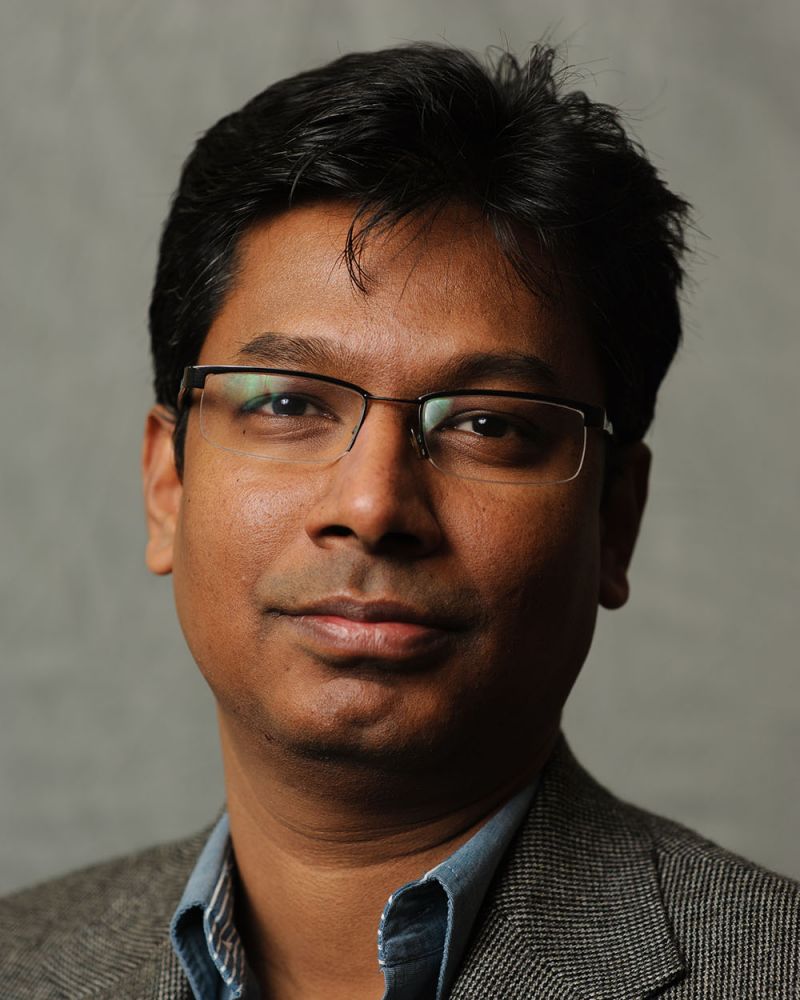
Ntzoufras Ioannis is a Professor in the Department of Statistics at the Athens University of Economics and Business (AUEB), School of Information Sciences and Technology, where he has served continuously since 2004 (promoted to Professor in 2015). Previously, he held teaching positions at the University of the Aegean (2000-2004) and completed military service (1999-2000). Education B.Sc. in Statistics and Insurance Science (1994) M.Sc. in Statistics with Application in Medicine, University of Southampton (1995, with distinction) Ph.D. in Statistics, Athens University of Economics and Business (1999) Research Focus His work centers on Bayesian and computational statistics , specializing in categorical data analysis, statistical modeling, and variable selection methodology. He develops sophisticated models for applications in medical research (clinical trials, risk estimation), psychometrics (latent variable models), and sports analytics (football/basketball modeling), with emphasis on computational efficiency and real-world implementation. Publication Trends Recent publications (2023-2025) reveal three dominant trends: (1) Advanced Bayesian variable selection methods for high-dimensional data, (2) Sports analytics applications in football (goal modeling, competitive balance) and basketball (in-play performance), and (3) Development of specialized R packages (ssifs, PEPBVS) for statistical computation. His work consistently bridges theoretical innovation with practical domain applications. Scientific Awards Lefkopouleion Prize for Greece's best statistics thesis (1999-2000) PROSE Award Honorable Mention for 'Bayesian Modeling Using WinBUGS' (2010) Academic Leadership He has supervised graduate students across AUEB's Statistics, Business Analytics, and Data Science programs, and taught postgraduate courses at the University of Athens (Biostatistics), University of the Aegean (Business Administration), and Italian institutions (University of Pavia, Universita Cattolica, University of Bicocca-Milan). As General Secretary of the Greek Statistical Institute (2006-2007), he advanced national statistical initiatives. Research Community He founded and maintains grstats (http://grstats.forumotion.net/), Greece's primary online statistics community, facilitating collaboration among 1,200+ statisticians and data scientists through forums, workshops, and resource sharing.
Dr. Sameer Mulani is an Associate Professor, Associate Department Head, and Director of Graduate Programs in the Department of Aerospace Engineering and Mechanics at the University of Alabama's College of Engineering. He leads the Stochastic Mechanics and Multi-Disciplinary Optimization Laboratory (SMO Lab) and is an integral part of the Remote Sensing Center and Alabama Materials Institute. Dr. Mulani's research spans uncertainty quantification, random vibrations, multi-disciplinary optimization, and composite structures' multi-scale analysis and design. His work combines computational methods with machine learning to develop innovative solutions for aerospace engineering challenges. He has made significant contributions to self-healing composite materials, uncertainty quantification techniques, and optimization of composite structures. His research group has published extensively on topics including polynomial chaos expansion for uncertainty quantification, self-healing composites, stochastic buckling analysis, and machine learning applications in structural mechanics. The publications demonstrate a strong trend toward integrating probabilistic methods with traditional engineering analysis to improve reliability and safety of aerospace structures. AIAA Associate Fellow, Class of 2025 2025 Department of the Air Force Summer Faculty Fellowship Program 2024 Department of the Air Force Summer Faculty Fellowship Program MSC Software Contest Winner (2011) Night on the Town: General Electric Award (2007) DAAD Fellowship (1999-2000) Dr. Mulani has advised numerous graduate students who have gone on to successful careers at institutions including Los Alamos National Laboratory, Cirrus Aircraft, L3Harris, and Lockheed-Martin. His lab collaborates with various research centers including the Remote Sensing Center where they work on antenna design, manufacturing, and integration for aircraft systems. The SMO Lab utilizes advanced software including MSC NASTRAN/PATRAN, ANSYS Mechanical/FLUENT, ABAQUS, SOLIDWORKS, and CATIA for their simulations and analyses.
Tanel Alumäe is an Associate Professor of Speech Processing at Tallinn University of Technology's School of Information Technologies, Department of Software Science. With over 15 years of academic experience, he has held various research and teaching positions at the university since 2006, progressing from Research Fellow to Tenured Associate Professor. His work focuses on speech and language technologies with a particular emphasis on Estonian language applications. PhD in Information and Communication Technology (2006), Tallinn University of Technology Research Master's Degree in Informatics (2002), Tallinn Technical University MSc studies at Tallinn Technical University (1999-2002) and Universität Erlangen-Nürnberg, Germany (1999-2000) Diploma in Computer and Systems Engineering (1994-1999), Tallinn Technical University Alumäe's research spans automatic speech recognition, speaker recognition, natural language processing, and computational linguistics with a focus on Estonian language technology. His work addresses challenges in multilingual speech processing, deep learning applications for speech technologies, and developing practical systems for real-world applications including broadcast media processing and accessibility solutions. He has made significant contributions to low-resource language processing and specialized applications for children's speech and emotion recognition. His recent publications demonstrate a strong focus on cutting-edge speech processing techniques including deepfake detection, multi-speaker systems, speech-to-speech translation, and applying large language models to speech applications. The research shows a consistent pattern of addressing both theoretical challenges in speech processing and practical implementations for Estonian language technology. Award 'Keeletegu 2019' from the Ministry of Education and Research Award 'Keeletegu 2011' from Estonian Ministry of Education and Research 3rd award at the Tallinn University of Technology contest for applied scientific projects (2011) Boris Tamm stipend (2007) First prize at the national contest of students' scientific works (2007) Ustus Agur stipend of Estonian Information Technology and Telecommunications Association (2005) Alumäe has supervised postdoctoral researchers including Rena Nemoto (2012-2015) on pronunciation modeling for speech recognition. He serves in editorial and review capacities for major journals including Nature, Computer Speech & Language, and IEEE Transactions. His administrative roles include Secretary of the Northern European Association for Language Technology Board and membership on the Department of Software Science Council at TalTech. His research group at Tallinn University of Technology actively participates in international challenges (IWSLT, Interspeech, Odyssey) and collaborates with institutions worldwide. The team has developed open-source platforms for Estonian speech transcription and created systems for automatic closed captioning of Estonian broadcasts, demonstrating strong practical applications of their research.
Pasquale Davide Schiavone holds multiple research and teaching positions at École Polytechnique Fédérale de Lausanne (EPFL), serving as a Lecturer at the School of Computer and Communication Sciences (IC) and as a Scientist at both the Embedded Systems Laboratory (ESL) within the School of Engineering (STI) and PAT Administration. His interdisciplinary work bridges computer architecture, embedded systems design, and biomedical applications, with office located at ELG 136 in Lausanne, Switzerland. Dr. Schiavone's research focuses on ultra-low-power computing systems, particularly RISC-V architectures and TinyML applications for edge devices. His work develops open-source hardware platforms like X-HEEP and HEEPOCRATES that enable energy-efficient AI at the edge, with applications spanning biomedical monitoring, neural interfaces, and wearable computing. He explores innovative hardware-software co-design approaches to overcome energy constraints in resource-limited environments. His recent publications reveal a consistent research trajectory centered on open, configurable computing platforms for specialized applications. The work spans from fundamental RISC-V architecture improvements (ARCANE, e-GPU) to application-specific implementations for biomedical contexts (BiomedBench, neural interfaces). A strong emphasis on energy efficiency permeates all his research, whether through novel arithmetic approaches (Posit), system architecture (near-memory computing), or specialized accelerators (Strela, Quadrilatero). Lecturer, School of Computer and Communication Sciences (IC) Scientist, Embedded Systems Laboratory (ESL), School of Engineering (STI) Scientist, PAT Administration, School of Engineering (STI) Dr. Schiavone teaches courses on hardware compilation, presenting algorithms and methods for transforming hardware description languages into optimized circuit implementations. His Embedded Systems Laboratory work places him at the forefront of developing practical, open-source solutions for next-generation computing challenges in energy-constrained environments.
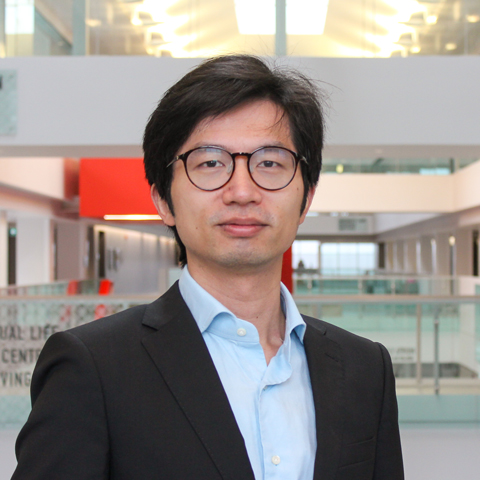
Dr. Qian Zhang serves as Assistant Professor in the Robert M. Buchan Department of Mining at Queen's University's Smith Engineering, leading the Green Mining Value Chain (GreeMVC) Lab. His research develops strategic frameworks for sustainability and resilience throughout mining value chains, with emphasis on climate change mitigation and resource efficiency in global mineral systems. His academic foundation includes a Ph.D. in Urban Engineering from the University of Tokyo (awarded Japanese Government MEXT Scholarship), complemented by MSc and BSc degrees in Environmental Science plus a Minor in Economics from Peking University. Prior to his current role, he conducted postdoctoral research at the University of Victoria and University of Tokyo while consulting for the World Resources Institute on climate-energy initiatives. Dr. Zhang's expertise spans carbon footprint analysis , life-cycle assessment , and industrial ecology applied to mining systems. He employs advanced methodologies including input-output analysis and material flow accounting to model environmental pressures across urban infrastructure and mineral supply chains. His work specifically addresses greenhouse gas accounting, water-energy nexus challenges, and circular economy implementation in resource-intensive sectors. Recent publications reveal strong methodological convergence between artificial intelligence and environmental assessment, particularly in optimizing mining operations through reinforcement learning and geospatial analysis. Key thematic clusters include carbon accounting standardization, critical mineral sustainability, and policy-oriented modeling of environmental pressures throughout mineral value chains. His research program is supported by major competitive grants: NSERC Discovery Grant (2022-2027) SSHRC Institutional Grant (2023, 2025) NSERC Alliance Missions Grant (2023, 2024) Mitacs Accelerate Grant (2023, 2025) NFRF Exploration Grant (2025-2027) NRCan Energy Innovation Program (2025) Dr. Zhang actively mentors a dynamic research group comprising 10+ graduate students and postdocs, securing collaborative funding through institutional and federal channels. His GreeMVC Lab maintains active partnerships with industry leaders and government agencies to translate research into practical sustainability solutions for the mining sector, with current projects focusing on AI-driven fleet management and life-cycle assessment of mineral supply chains. The GreeMVC Lab operates as a multidisciplinary hub with structured mentorship programs, regular industry engagement events, and international collaborations including the COM symposium on sustainable circularity. The lab's physical space in Goodwin Hall supports advanced computational analysis of mining value chains while fostering innovation in green mining technologies through student-led research initiatives.
Christopher Bronk Ramsey is Professor in Archaeological Science and Head of the School of Archaeology at the University of Oxford, affiliated with Merton College. As chair of the INTCAL committee, he oversees global radiocarbon calibration. His expertise spans archaeological science, Quaternary environmental research, and nuclear instrumentation development. Research focuses on radiocarbon dating, Bayesian chronological modeling, and AMS techniques. Key areas include Quaternary chronology, human evolution, climate change impacts, and archaeological applications in the eastern Mediterranean, Amazonia, and Anglo-Saxon England. He develops the OxCal software for statistical chronology analysis. Recent publications emphasize radiocarbon calibration advancements, pre-Columbian land-use in Amazonia, European Neolithic chronologies, and high-precision dating methods. His work integrates archaeology, environmental science, and data science to address chronological challenges across diverse temporal and spatial scales. No specific scientific awards were detailed in the source material. He supervises numerous doctoral students on topics ranging from dendrochronology to digital archaeology and Middle Stone Age chronology. Major projects include FeedSax (Anglo-Saxon agriculture) and HERCA (Amazonian human-environment interactions), securing research grants for interdisciplinary teams. Professor Ramsey directs the OxCal project and co-leads IntCal, IntChron, FeedSax, and HERCA initiatives. These teams develop calibration standards, integrate chronological data, and investigate past human adaptations to environmental change, particularly in Amazonia and Europe.
Jukka K Nurminen is a Professor of Computer Science at the University of Helsinki (since 2019) and a Research Professor at VTT. He leads the Empirical Software Engineering research group and supervises doctoral students in the Doctoral Programme in Computer Science. His career spans academia and industry, including roles as Adjunct Professor at Aalto University (part-time, 2016-2021) and Principal Scientist at VTT (2016-2019). His research focuses on efficient software systems , particularly energy-efficient software , mobile cloud computing , and data-intensive systems . Recent work addresses AI system testing , ethical decision-making in software , and quantum computing software . His publications highlight trends in quantum algorithms , machine learning for edge computing , and ethical AI . Best Paper Award (2023) Nurminen has supervised 6 PhD theses, 48 MSc theses, and 21 BSc theses. He has secured over 1 MEUR in research funding, including projects like FrameQ and EM4QS for quantum middleware. His teaching innovations include hackathons and summer schools, with excellence recognized in tenure-track evaluation (2018) and adjunct professorship (2015).
Dr. Barry Cardiff is an Assistant Professor in the School of Electrical and Electronic Engineering at University College Dublin (UCD), where he has been a member of academic staff since September 2013. His career spans both industry and academia, with significant experience at Nokia Mobile Phone (UK) Ltd and Silicon & Software Systems (S3 group) before returning to complete his PhD at UCD. Education: B.Eng (1992), M.Eng.Sc. (1995), PhD (2011) from University College Dublin Professional Experience: Design Engineer at Nokia (1993-2001), Systems Architect at S3 group (2001-2007, 2011-2013) Current Position: Assistant Professor at UCD School of Electrical and Electronic Engineering Dr. Cardiff's research focuses on Digital Signal Processing applications in communication systems, with particular emphasis on theoretical analysis and practical implementation. His work bridges traditional communication theory with emerging biomedical applications, especially in wearable IoT sensors. He has made significant contributions to power/complexity reduction techniques in circuit design, specifically DSP algorithms for digitally assisted analog circuits. His research program addresses critical challenges in biomedical signal processing, sensor fusion, and efficient data transmission for healthcare applications. His recent publications demonstrate a strong trend toward biomedical applications of signal processing techniques, with a focus on ECG analysis, atrial fibrillation detection, and respiratory rate estimation using multimodal sensor fusion. The research shows a clear progression from traditional communication systems toward healthcare applications, with an emphasis on edge computing solutions that reduce power consumption in wearable devices. IEEE BioCas best paper award (2024) IEEE senior member since 2019 Active reviewer for multiple IEEE journals including Transactions on Biomedical Circuits and Systems, Circuits and Systems, and VLSI Systems Dr. Cardiff has supervised numerous research projects and has been instrumental in developing curriculum for digital communications, signal processing, and wireless systems. His teaching philosophy emphasizes open, friendly, and hands-on approaches that encourage independent thinking. He coordinates multiple modules including Communication Theory, Digital Electronics, DSP Technology, and Wireless Systems, demonstrating his commitment to both theoretical foundations and practical applications of electrical engineering principles. His research group works at the intersection of signal processing, machine learning, and biomedical engineering, developing innovative solutions for wearable healthcare monitoring. Current projects focus on event-driven processing architectures, decentralized classification systems, and signal quality-aware fusion techniques that enable robust performance in noisy real-world environments.
Lionel C. Briand is a Professor of Software Engineering with shared appointments at the University of Luxembourg's SnT Centre for Security, Reliability, and Trust and the School of Electrical Engineering and Computer Science at the University of Ottawa. He holds a Canada Research Chair (Tier 1) in Intelligent Software Dependability and Compliance and serves as Director of Lero, Ireland's national software research center. His academic leadership spans over 25 years of collaborative research with industry partners across automotive, aerospace, energy, financial, and legal domains. Professor Briand's research focuses on software verification and validation, trustworthy AI systems, model-driven engineering, and empirical software engineering methodologies. His work bridges theoretical foundations with industrial applications, particularly in cyber-physical systems where machine learning components interact with safety-critical control systems. He has pioneered techniques for testing AI-enabled systems, GDPR compliance automation, and mutation analysis for space systems. His publication portfolio demonstrates consistent innovation in software testing, with recent emphasis on large language models for test generation, automated compliance checking, and safety analysis of deep neural networks. Key trends include black-box testing methodologies, metamorphic testing for security, and search-based approaches for DNN validation. IEEE Fellow and ACM Fellow IEEE Computer Society Harlan Mills Award (2012) ACM SIGSOFT Outstanding Research Award (2022) IEEE Reliability Society Engineer-of-the-Year Award (2013) ERC Advanced Grant recipient (2016) Fellow of the Academy of Science, Royal Society of Canada (2023) ICSE 2011 Most Influential Paper Award As Director of Lero and holder of a Canada Research Chair, Professor Briand leads major research initiatives including an ERC Advanced Grant on cyber-physical system modeling and testing. His industrial collaborations generate substantial grant funding, particularly in automotive safety validation and regulatory compliance automation. He mentors numerous researchers through his dual appointments and serves on program committees for top software engineering conferences. Professor Briand directs research activities at the SnT Centre's SVV department, focusing on software verification and validation. His team develops practical tools like MASS for space system mutation analysis and COREQQA for compliance requirements understanding, with strong industry adoption in automotive and aerospace sectors.
Xiaobo Li is a Professor in the Department of Bio-Medical Engineering at New Jersey Institute of Technology. Holding a Ph.D. in Computer Aided Geometric Design from the University of Birmingham and a B.S. in Automation from Nanjing University of Aeronautics, their research bridges computational methods with neuroimaging and psychiatric disorder analysis. Ph.D., University of Birmingham (Computer Aided Geometric Design, 2004) B.S., Nanjing University of Aeronautics (Automation, 1999) Dr. Li’s work focuses on applying machine learning and graph theory to understand brain network abnormalities in conditions like ADHD , schizophrenia , and traumatic brain injury . Their studies analyze structural-functional connectivity , reward processing , and gut-brain axis interactions using fMRI , fNIRS , and diffusion tensor imaging . Recent publications highlight their development of tools like the GAT-FD MATLAB toolbox for brain network analysis and their exploration of multimodal MRI in schizophrenia diagnosis. They also investigate the neurobiological effects of photobiomodulation and vision therapy interventions.
Dr. Irfan Ahmad serves as an Associate Professor in the Department of Information and Computer Science at King Fahd University of Petroleum and Minerals (KFUPM), Dhahran, Saudi Arabia, where he teaches undergraduate and graduate courses in Computer Science and Software Engineering while conducting research and advising graduate students. His academic service includes committee roles on graduate studies, program development, and competitions. His research expertise centers on Pattern Recognition with specialized focus on Document Image Analysis , Handwriting Recognition , and Machine-Printed Text Recognition . He actively explores Machine Learning applications including Deep Learning and Natural Language Processing , with significant contributions across Artificial Intelligence, Computer Vision, Data Mining, Neural Networks, and Computational Linguistics as evidenced by his PeerJ subject area specializations. Recent publications reveal a strategic emphasis on adaptive deep learning architectures for document analysis, particularly generative methods for handwritten text recognition and knowledge distillation techniques. His editorial work on feature extraction and multilingual fake news detection further demonstrates applied research bridging theoretical machine learning with real-world language processing challenges. As an active Academic Editor for PeerJ Computer Science with 1,205 contribution points, Dr. Ahmad provides substantial service to the scholarly community through manuscript evaluation and editorial oversight across emerging technologies in data science and artificial intelligence.
Professor Marie Roch is a distinguished faculty member in the Department of Computer Science at San Diego State University within the College of Sciences . Her groundbreaking research bridges Bioacoustics and Machine Learning , focusing on advanced algorithms for automated detection, classification, and analysis of marine mammal vocalizations using passive acoustic monitoring. Core research in marine bioacoustic signal processing and deep learning applications for echolocation click detection Published extensively in Journal of the Acoustical Society of America , Biological Reviews , and IEEE Transactions Developed deep learning frameworks for whale whistle extraction without human annotation Created open-source tools like Silbido Profundo for automated marine mammal call analysis Marie's work has been supported by over $3 million in grants from the DOD Office of Naval Research , Bureau of Ocean Energy Management , and Human Frontier Science Program . She actively mentors graduate students and serves on numerous thesis committees, with recent advisees working on deep learning for baleen whale calls and terrestrial animal recognition . Her Marine Acoustic Research Lab (MAR Lab) leads in developing the Tethys metadata workbench for ocean acoustic data management.