Carlos Enrique Palau is a prominent researcher in the field of Internet of Things (IoT), edge computing, and cyber-physical systems. His work focuses on interoperability, security, and scalability in distributed systems, particularly in industrial and smart city applications. He has contributed to frameworks for cloud-edge continuum integration, blockchain-based IoT solutions, and federated computing architectures. Key areas of research include: IoT interoperability and semantic frameworks Edge computing and distributed workload management Cybersecurity for IoT and critical infrastructure Smart port logistics and real-time data analytics Cognitive services in legacy port management systems His recent work explores: Data-as-a-Product frameworks for Industry 4.0/5.0 Autonomous workload scheduling in energy-efficient edge-cloud systems Deception mechanisms for IoT security Self-* capabilities in cloud-edge nodes Palau has collaborated extensively with institutions like Universitat Politècnica de València and international partners in projects funded by EU initiatives. His research addresses practical challenges in industrial IoT deployments, smart city infrastructure, and emergency management systems.
Juan Zhai is an Assistant Professor in the Manning College of Information & Computer Sciences (CICS) at University of Massachusetts Amherst, where she co-directs the Laboratory for Advanced Software Engineering Research (LASER) and participates in the UMass NLP group. Her academic career spans over 7 years of active service including program committee roles at top-tier conferences like ICSE, FSE, and ASE. Her research focuses on Software-AI Synergy with core areas including: Formal Specification Synthesis for precise software behavior definition Comment Generation and Maintenance using LLMs Trustworthy AI through bias detection and framework testing Deep Learning Infrastructure Reliability Recent work demonstrates strong emphasis on practical tools for AI safety and software dependability. Her publication trends show consistent output in top software engineering venues (ASE, ICSE, FSE) with increasing focus on AI/ML conferences (ACL, CVPR, ICLR). Key themes include metamorphic testing for deep learning frameworks, bias analysis in LLMs, and formal methods for specification synthesis. She actively serves the community through: Program committees for 13 major conferences Reviewing for 5 top journals including TOSEM and TSE 40+ total reviews across SE and AI venues Juan mentors PhD students including Gehao Zhang (research focus: Software Engineering, AI Safety) and teaches graduate courses like CS520 (Theory and Practice of Software Engineering) and CS692P (Hot Topics in SE Research). She leads the LASER lab which develops tools like C2S, CPC, and DevMuT for software reasoning and AI infrastructure testing.
Batuhan Sesli is a Researcher at the Department of Computer Science 12 (Hardware-Software-Co-Design) at Friedrich-Alexander University Erlangen-Nuremberg (FAU), Germany, since July 2024. His work focuses on embedded systems with emphasis on hardware acceleration for machine learning and efficient deployment of TinyML applications on resource-constrained devices. His educational background includes: M.Sc. in Information and Communication Technology from FAU (2022-2024) B.Sc. in Electrical & Electronics Engineering from Istanbul Ozyegin University, Turkey, with a minor in Computer Science (2016-2021) Research interests span acceleration techniques for machine learning workloads via RISC-V ISA extensions and specialized hardware accelerators, efficient deployment of TinyML on low-power devices, and co-design of AI algorithms and hardware. His work optimizes the synergy between algorithmic requirements and hardware capabilities in embedded systems, targeting practical solutions for edge AI applications. His recent DATE 2024 publication on DNN acceleration through weight clustering on RISC-V custom functional units exemplifies the trend toward energy-efficient specialized hardware, reflecting his focus on bridging algorithmic demands with hardware constraints in real-world embedded scenarios. He teaches a tutorial on Embedded Systems for Winter Semester 2024/2025 and offers thesis opportunities in his research domain, though no current open theses are listed.
Thorsten Koch is a Professor for Software and Algorithms for Discrete Optimization at Technische Universität Berlin , with multiple leadership roles including Head of the Applied Algorithmic Intelligence Methods (A²IM) , Digital Data and Information for Society, Science, and Culture (D²IS²C) , Kooperativer Bibliotheksverbund Berlin-Brandenburg (KOBV) , and Forschungs- und Kompetenzzentrum Digitalisierung Berlin (digiS) . Based at Zuse Institute Berlin and affiliated with TU Berlin's Institute for Mathematics, he focuses on integrating mathematical optimization with high-performance computing and artificial intelligence to solve complex real-world problems. Research Pillars : Mathematical optimization algorithms Quantum computing applications AI/ML integration in decision systems Energy systems optimization Scientific software development Leadership Roles : Head of Applied Algorithmic Intelligence Methods (A²IM) Head of Digital Data & Information for Society, Science, and Culture (D²IS²C) Head of Kooperativer Bibliotheksverbund Berlin-Brandenburg (KOBV) Head of Forschungs- und Kompetenzzentrum Digitalisierung Berlin (digiS) Key Collaborations : Working with IBM Quantum on quantum optimization Collaborating across institutions for energy system modeling Developing open-source optimization tools like SCIP Contributing to digital library infrastructure Recent Research Trends : Quantum optimization benchmarking Machine learning-aided optimization Multi-objective decision frameworks Energy infrastructure optimization Adaptive algorithm design CO2 network modeling Impact : Advancing hybrid optimization methods Developing open-source tools for scientific computing Building digital infrastructures for libraries and research Exploring quantum-classical algorithm synergies
Chao Peng is a Principal Research Scientist at ByteDance where he leads the Software Engineering Lab, focusing on AI agents for software engineering. He holds a part-time position as a Postgraduate Student Mentor at Fudan University's School of Computer Science. His research bridges industry and academia, with significant contributions to software testing, program repair, and LLM applications in software development. Education: PhD in Informatics, 2021, University of Edinburgh, UK MSc in High Performance Computing and Data Science, 2017, University of Edinburgh, UK BEng in Computer Science and Technology, 2016, Xuzhou University of Technology, China Dr. Peng's research interests center on the intersection of artificial intelligence and software engineering. He explores how large language models can transform traditional software development practices, particularly in code generation, testing, and bug fixing. His work on LLM4Code has led to innovative frameworks like CodeVisionary for evaluating code generation capabilities and Trae Agent for software engineering tasks with test-time scaling. He investigates the synergy between machine learning techniques and compiler optimizations to enhance software reliability and developer productivity. His recent publications reveal a strong focus on practical evaluation frameworks for LLMs in real-world software engineering contexts. Rather than theoretical benchmarks, his work emphasizes real-world applicability, as seen in RepoMasterEval which evaluates code completion in actual repository settings. He examines multi-faceted challenges including code generation, bug reproduction, issue resolution, and repository-level question answering, consistently addressing the gap between laboratory evaluations and practical development environments. Scientific Awards: Distinguished Reviewer for FSE'25 Invited to program committees for FSE'26, SANER 2026, ASE 2025, and others School of Informatics Scholarship (fully-funded PhD) Multiple national scholarships during undergraduate studies Honours Spot Bonus at ByteDance Dr. Peng actively mentors postgraduate students at Fudan University while leading research initiatives at ByteDance that foster university collaborations. His laboratory work translates academic research into practical tools for software development, with several frameworks deployed in industrial settings. He serves on multiple conference program committees, contributing to the advancement of software engineering research through rigorous peer review and community building. His Software Engineering Lab at ByteDance operates at the forefront of AI-assisted development, exploring how agent-based systems can automate complex software engineering tasks. The team's work on frameworks like AEGIS for bug reproduction and DialogAgent for code question answering demonstrates their commitment to solving practical challenges faced by developers in real-world settings.
Philipp Wiesner is a Research Fellow at Technische Universität Berlin in the Distributed and Operating Systems (DOS) group led by Prof. Odej Kao. He completed his PhD at TU Berlin in June 2025 with summa cum laude honors for his thesis on carbon-aware optimization. Prior to academia, he worked as a Software and Data Engineer in Berlin. His research focuses on carbon-aware computing —aligning computational energy use with renewable availability—and intersects with distributed systems, machine learning infrastructure, and sustainable energy systems. Key methodologies include workload shifting, federated learning optimization, and simulation testbeds. Wiesner received the 1st prize in CarbonHack22 (2022) and his PhD distinction (2025). He led the Software Campus project SYNERGY (2022-2024), developing sustainable federated learning ( FedZero ) and carbon-aware testing tools ( Vessim ). He supervised TU Berlin's Master Project on Distributed Systems (2022) and served on the e-Energy 2026 Technical Program Committee. He collaborates internationally with institutions including the University of Glasgow, PUCRS (Brazil), and IRIT (France), and maintains active roles in workshops like LOCO'24.
Prof. Dr. Mathias Wilhelm is a Professor of Computational Mass Spectrometry at the Chair of Proteomics and Bioanalytics at the Technische Universität München (TUM) . His research focuses on computational proteomics , machine learning applications in mass spectrometry , and multi-omics data integration , particularly through projects like ProteomicsDB and Prosit . He leads a multidisciplinary team developing open-source software for proteomics data analysis and co-founded MSAID and OmicScouts . His teaching includes advanced bioinformatics courses and problem-based learning modules at TUM. He serves on the scientific advisory board of Momentum Biotechnologies and collaborates extensively in quantitative proteomics , phosphoproteomics , and immunopeptidomics . His work emphasizes FAIR data principles and high-throughput experimental frameworks .
Thorsten Jelinek is a Visiting Professor at the Aerospace Research Information Institute of the Chinese Academy of Sciences, focusing on digital governance, AI, cybersecurity, and remote sensing for Sustainable Development Goals (SDGs). He holds affiliations at the University of Cambridge (Department of Sociology), OECD, ITU, and the Taihe Institute. His current roles involve multilateral digital policy contributions to UN forums and the Internet Governance Group. Previously, he served as an associate director at the World Economic Forum and in ICT industry leadership roles. Education: PhD in Sociology, University of Cambridge MSc in Organisational and Social Psychology, LSE Bachelor's in Business Administration and Software Engineering, Berliner Hochschule für Technik Research Interests: Digital governance frameworks, AI policy coordination, data sovereignty, and equitable technology adoption in SMEs. His work bridges cybersecurity, climate action, and global infrastructure innovation. Recent focus areas include federated data platforms, data cooperatives for SME empowerment, and avoiding digital silos. Article Trends: Over 15 years, his research spans AI governance gaps, climate tech collaboration, and digital sovereignty challenges. Post-2020 work emphasizes data cooperatives, construction sector digitalization, and SDG monitoring through digital public goods. Awards: None explicitly listed. Grants/Advising: Contributions to Think20 policy briefs and UN digital cooperation panels. Advises on multistakeholder forums and industry-government partnerships. Labs/Teams: Involved in the Hertie School's Centre for Digital Governance and Jacques Delors Centre initiatives. Collaborates with global institutions on digital policy networks.
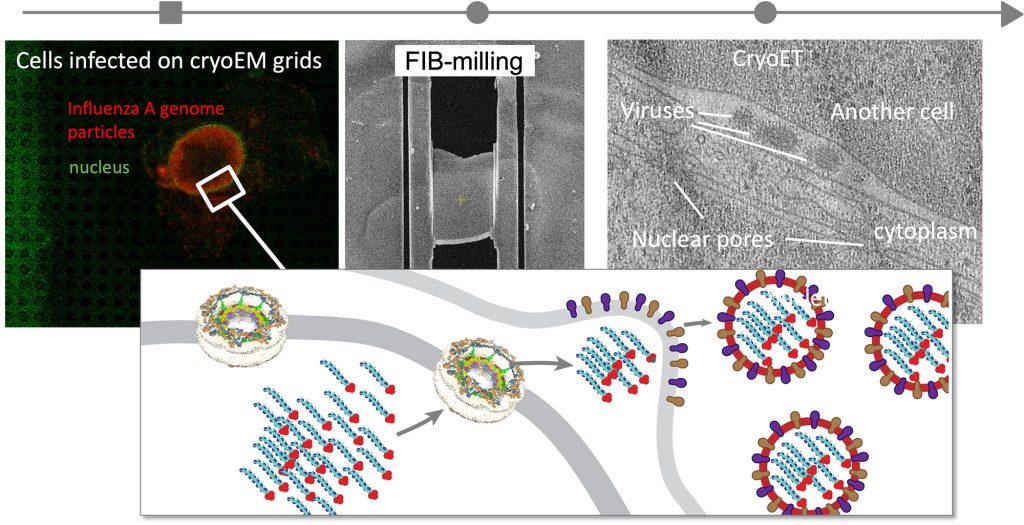
Jan Kosinski is a Group Leader at EMBL Hamburg and Co-chair of the Infection Biology Transversal Theme since 2017. His research integrates structural biology, systems biology, and computational methods to study viruses and parasites. PhD (2009): International Institute of Molecular and Cell Biology, Warsaw, Poland Postdoctoral Researcher: Sapienza University, Rome, Italy; EMBL Heidelberg Research Interests : Integrative structural modeling of macromolecular complexes using AI-based predictions (AlphaFold), cryo-EM, crosslinking, and other data. In-cell structural biology via cryogenic electron tomography (cryo-ET) to study influenza A virus and Giardia lamblia . Multiscale pathway modeling of viral infection cycles to identify critical host-pathogen interactions. Key Software Contributions : Assembline, AlphaPulldown, PyTME, HMFF, Mosaic, ColabSeg. Grants : ERC Synergy Grant to advance in-cell cryo-ET data mining and integrative modeling.
Prof. Chris Biemann is a Professor for Language Technology at the Department of Informatics, University of Hamburg (MIN Faculty). He leads the Language Technology Group, focusing on unsupervised methods, lexical semantics, and NLP applications including speech processing. His work emphasizes open science principles, releasing publications and software in open access/source formats. Education: Dr. rer. nat. and Computer Science Diploma from University of Leipzig. Professional Experience: Co-founded Powerset (acquired by Microsoft for Bing), TU Darmstadt (2011-2016), and currently heads Hamburg's Language Technology group since 2016. Active in ERC Synergy Grant CultCryo (2023) and develops tools like the D-WISE suite for discourse analysis. Research interests span computational linguistics, multimodal analysis, and ethical AI applications. Notable projects include hate speech detection systems, comparative question answering frameworks (CAM), and cross-modal benchmarks (GIMMICK). Recent work emphasizes large vision-language models' multilingual capabilities and human-AI collaboration tools. Awards: None explicitly listed, but group members have received accolades like GSCL master's thesis awards. Grants include EU-funded projects in computational sociology. Supervised students: Not listed in provided texts. Labs/Teams: Language Technology Group (LT) and D-WISE project collaboration network. Tools developed: Discourse Analysis Tool Suite, Golden Retriever (multimodal search), and CAM comparative analysis system.
Dr. Frederik Metzger is a researcher at the Fraunhofer Institute for Systems and Innovation Research ISI since March 2023, specializing in the Business Unit Information and Communication Technologies (ICT). His work focuses on digital business models, data-driven value creation, and the properties of digital data. Previously, he held roles at the Steinbeis-Europa-Zentrum Stuttgart (2014–2017), Heilbronn Bildungscampus (2017–2019), and an agile software company (2020–2023). He earned his PhD in 2013 from the University of Mannheim with a dissertation on interorganizational networks, complemented by a master’s degree (Diplom-Kaufmann) and a double MBA from ESSEC Business School. Education: PhD in Innovation and Coordination of Interorganizational Networks (2013), University of Mannheim Master’s in Business Economics with Intercultural Qualification (2008), University of Mannheim and ESSEC Business School Research Interests: Interorganizational networks and their coordination mechanisms Reciprocity in data-sharing infrastructures Privacy-preserving business models and data anonymization Digital transformation and user-centric innovation Smart-city mobility systems and urban data ecosystems His work bridges theoretical frameworks like Social Exchange Theory with applied research in technology transfer, cluster consulting, and innovation policy. Labs & Projects: Key contributions include the ANYMOS competence cluster (anonymizing mobility systems) and the IMPULSE and PRETINA initiatives. He collaborates on interdisciplinary projects addressing data governance, self-sovereign identity, and mobility-as-a-service frameworks.
Michael Backes is the founding director and CEO of the CISPA Helmholtz Center for Information Security, a leading institution in cybersecurity and privacy. He is also a professor at Saarland University and director of the CISPA-Stanford Center. His research spans trustworthy machine learning, secure software systems, and privacy-preserving technologies, with over 300 publications in top venues. Backes holds a professorship at Saarland University since 2005 and was a Max Planck Fellow at the Max Planck Institute for Software Systems (2007–2017). He earned his doctorate and has been recognized with numerous honors, including an honorary doctorate from Université de Lorraine. His research focuses on trustworthy information processing, particularly in machine learning and AI security. He investigates privacy-preserving methods, secure model training, adversarial robustness, and ethical AI. His work combines theoretical foundations with practical applications in medical data privacy, mobile security, and large language models. The recent publications highlight a strong trend in securing AI systems—especially large language models—against data leakage, prompt theft, misuse, and bias. His group develops benchmarks (e.g., HateBench, MGTBench), analyzes model memorization, and designs privacy-preserving techniques, reflecting a deep engagement with emerging AI security challenges. ACM Fellow (2023) IEEE Fellow (2018) ERC Synergy Grant (2014) ERC Starting Grant (2009) Karl-Heinz Beckurts Prize (2019) MIT TR35 Award (2009) NSA Cybersecurity Research Award (2017) IBM and Microsoft Research Awards Backes has mentored over 30 PhD students and postdocs, many of whom now hold faculty or leadership positions globally. He leads a large research group at CISPA and runs a competitive postdoc fellowship program. His team receives substantial funding from EU and German agencies. He actively promotes technology transfer and public engagement in cybersecurity. He leads the AI Security and Privacy research group at CISPA, which includes current members such as Xinyue Shen, Yang Zhang, and Wenhao Wang. The group collaborates internationally, notably with Stanford University, and operates at the intersection of systems, AI, and security research.
Prof. Dr. Dennis Schlegel is a Professor of Business Informatics at the Faculty of Informatics (Fakultät Informatik) at Hochschule Reutlingen. He serves as Pro-Dean/Deputy Dean and specializes in Digital Transformation, Project Management, and Business Consulting. His academic career includes roles as a Senior Manager at KPMG (2010-2019) and a PhD from Leeds Beckett University (2014). He holds international academic credentials including degrees from DHBW Stuttgart and study periods in Sydney and Madrid. Research focuses on robotic process automation (RPA), AI integration in business processes, and data-driven cultural transformation. Key interests include evaluating risks and success factors in digital initiatives like RPA and AI projects, as well as hybrid project management methodologies. He also explores sustainability in digital applications, such as gamified mobile apps for eco-friendly grocery shopping. Publications emphasize challenges in RPA implementation, skill requirements for digital transformation, and failure factors in AI projects. Recent work proposes frameworks for corporate AI strategy and data-driven cultural change. His articles frequently analyze organizational adoption barriers and expert-driven risk assessments in emerging technologies. Teaching emphasizes foundational business administration, managerial accounting, and business consulting practices. He contributes to bachelor's and master's programs in Business Informatics, integrating practical industry insights into curriculum design. Laboratory affiliations include the Future Mobility and Software Engineering labs at Reutlingen University.
Michael Backes is the Founding Director and Chairman of the CISPA Helmholtz Center for Information Security and a Professor at Saarland University . His research focuses on Trustworthy Machine Learning , Data Privacy , Software Security , and Information Security . He leads a prominent research group in AI Security and Privacy, with extensive collaborations including the CISPA-Stanford Center . Research Interests Trustworthy methods for machine learning Novel approaches for protecting personal data Universal solutions for software/system security AI-generated content detection Privacy-preserving techniques Adversarial machine learning Publications & Research Trends : His recent work examines LLM security , data leakage detection , privacy risks in conversational AI , and ethical challenges in vision-language models . He has pioneered benchmarks like HateBench and MGTBench to evaluate AI security. Scientific Awards & Honors ACM Fellow (2023) IEEE Fellow (2018) ERC Synergy Grant (2014) MIT TR35 Award (2009) NSA Cybersecurity Research Award (2017) Caspar Bowden Privacy Award (2004) VDI Diploma Thesis Award (2002) Advising & Leadership : He has mentored over 40 PhD students, many of whom now hold tenured or leadership positions at institutions like Vrije Universiteit Amsterdam , CISPA Helmholtz Center , and Microsoft Research . His group offers postdoc fellowships with mentorship, funding, and collaboration opportunities. Labs & Teams : Leads the AI Security and Privacy group at CISPA, focusing on foundational and applied research. The team collaborates with institutions like Stanford University and Saarland University .
Prof. Dr. Rüdiger Weißbach is a Professor of Business Informatics, Digital Transformation, and Business Models at Hamburg University of Applied Sciences' Department of Business. He has held leadership roles including Deputy Dean for Research and Digitalization (2021-2025) and co-founded the Business Innovation Lab (BIL@HAW) in 2015, now a research and transfer center. His academic journey includes a Master's in Communication Sciences (1986) and a PhD in Information Sciences (2000). Research focuses on digital transformation strategies for SMEs, requirements engineering, business process management, and intercultural collaboration. He leads projects like EDIH4urbanSAVE (EU Horizon) and Mittelstand-Digital Zentrum Hamburg, addressing digital innovation ecosystems and SME support. His teaching emphasizes practical application and agility in IT projects. Prof. Weißbach has supervised PhD theses on topics like improvisation theatre in project environments and Publishing 4.0. He actively organizes workshops on RE-BPM integration and digital transformation, and contributes to education initiatives like Data Literacy in Context (Erasmus+). Key affiliations include the German Informatics Society (GI), where he chairs the Requirements Engineering & BPM working group. His work bridges academic research with industry needs through interdisciplinary collaboration and real-world project involvement.