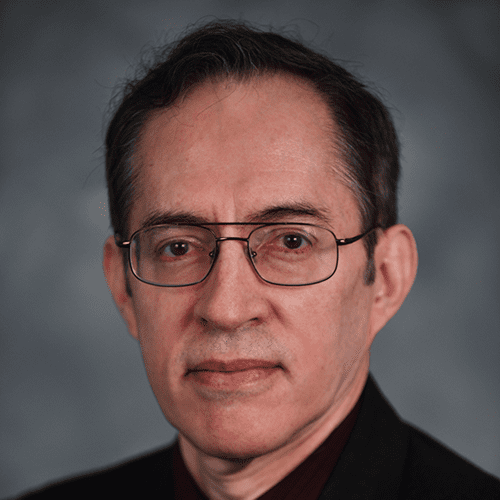
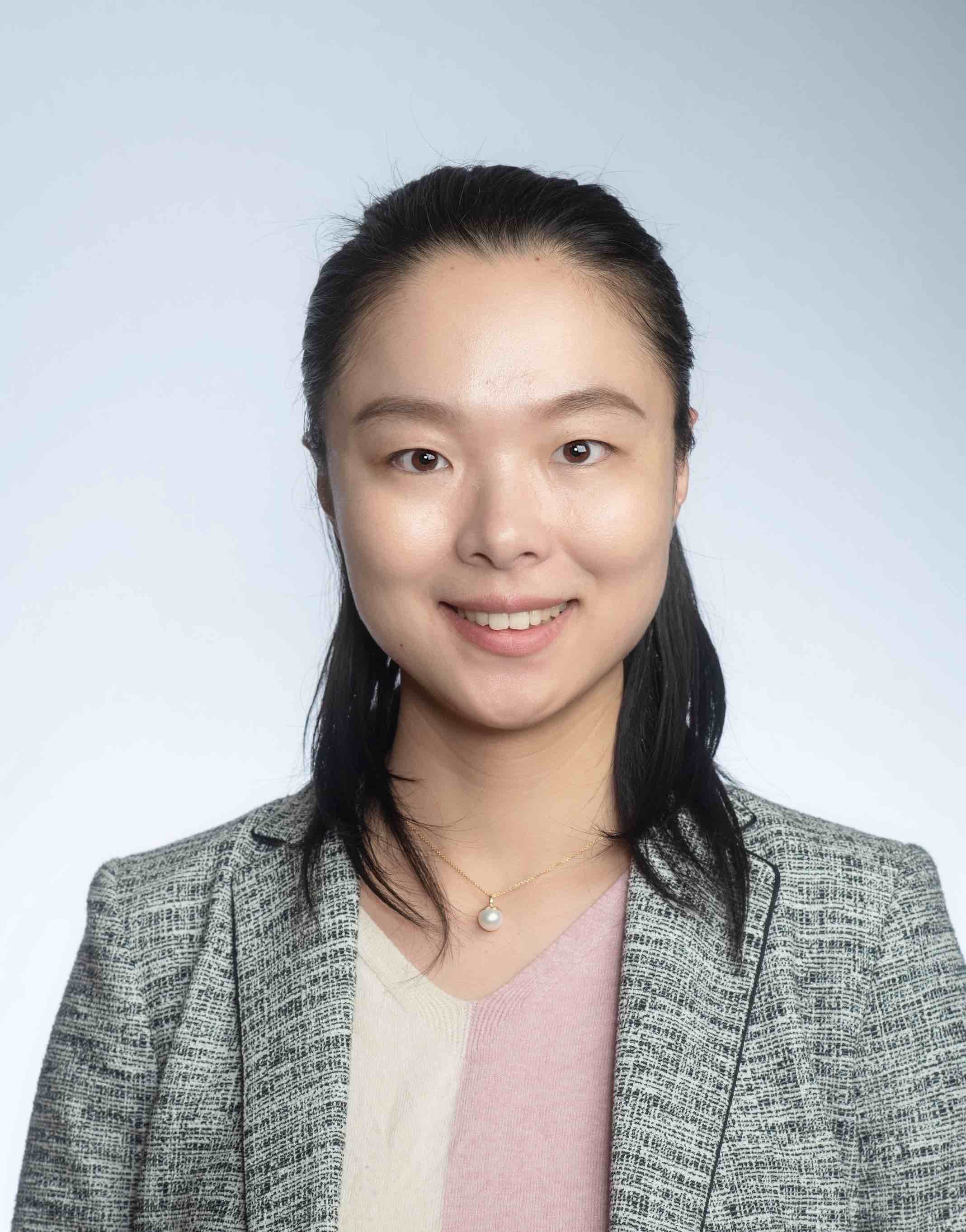
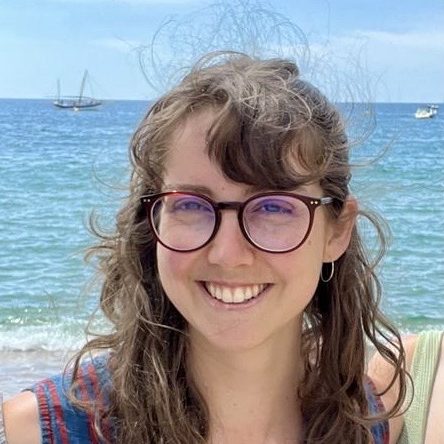
Anita Maria Tabacco is a Full Professor at the Department of Mathematical Sciences (DISMA) of Politecnico di Torino, with a focus on Engineering Education and Harmonic Analysis. She holds multiple administrative roles, including Rector's Delegate for Transparency and Internal Communication, Director of the University Observatory for academic dynamics, and Head of the INDAM local unit. Education: PhD in Mathematics, Washington University in St. Louis (1986) Research: Harmonic and Functional Analysis, Applications to PDEs, Gender Equality in STEM Her recent publications highlight intersections of mathematical analysis, educational technology, and gender diversity initiatives. She has led Erasmus+ projects like HerTechVenture and W-STEM to empower women in tech. Tabacco supervises PhD students including Maria Giulia Ballatore and contributes to textbooks such as Palestra di Analisi Matematica I . She co-leads the TEACH research group at DISMA, integrating pedagogical innovation with advanced mathematics.
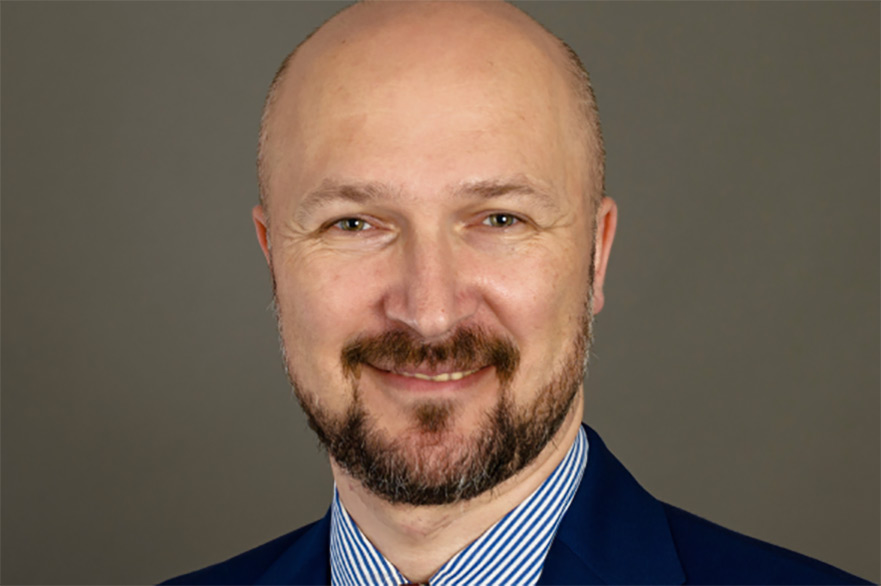
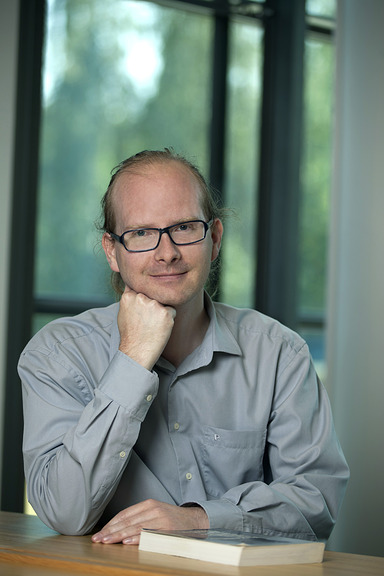
Dr. Ludovic Magerand is a Lecturer (Teaching and Research) in the Computing department at the University of Dundee. His research expertise lies in computer vision, with significant contributions to 3D reconstruction, structure from motion, and medical imaging applications. He has been actively involved in multiple research projects funded by the Engineering and Physical Sciences Research Council (EPSRC), including the 3DFace@Home project for facial growth monitoring and the SoftEn project for soft robotics in colonoscopy. Education: Doctor of Science in Dynamic pose estimation with CMOS cameras using sequential acquisition from Université Clermont Auvergne (2014) Research Interests: Dr. Magerand's research spans several critical areas in computer vision and robotics. His primary focus includes developing robust methods for 3D reconstruction from 2D images, particularly through structure from motion techniques. He has made significant advances in handling missing data and projective geometry problems. In medical applications, his work extends to developing soft robotic systems for minimally invasive procedures like colonoscopy. Additionally, he explores facial reconstruction techniques for medical monitoring applications, bridging the gap between theoretical computer vision and practical healthcare solutions. His research demonstrates a strong commitment to addressing UN Sustainable Development Goals, particularly in advancing healthcare technologies and educational applications of computer vision. Research Trends: Across his publications, a clear evolution is visible from foundational work in 3D reconstruction and pose estimation (2012) to more specialized applications in medical robotics (2023) and facial reconstruction (2025). His early work focused on theoretical aspects of structure from motion and optimization techniques, while recent publications demonstrate a shift toward practical medical applications, including soft robotics for colonoscopy and mobile-based facial reconstruction systems. This progression showcases his ability to translate theoretical computer vision research into impactful medical technologies. Research Projects: 3DFace@Home: Accurate Facial 3D Reconstruction From Mobile Devices At Home For Growth Monitoring (2024-2026, EPSRC funded, joint with Glasgow University) SoftEn: Soft Endorobot for colonoscopy applications (2021-2023, EPSRC funded) Datasets & Supervision: Dr. Magerand has contributed to the MASIVE dataset, a multi-impression fingerprint dataset used for investigating verification failures in African election settings, serving as a supervisor for this 2024 dataset release.
Nick Virgilio is a Full Professor in the Department of Chemical Engineering at Polytechnique Montréal . His research focuses on soft matter interfaces, polymer blends, and advanced hydrogel systems for biomedical and catalytic applications. Director, Research Laboratory on Surfaces, Interfaces and Soft Matter Member, Research Center for High-Performance Polymer and Composite Systems (CREPEC) Research interests include interfacial phenomena in multiphase systems, self-assembly of soft materials, nanoparticle-hydrogel composites, Pickering emulsions, and polymer microstructure engineering. Scientific awards include the 2010 Canadian Macromolecular Science Thesis Prize and the 2004 Polytechnique Montréal Master's Thesis Award. Recent publications highlight his work in macroporous hydrogels for cancer cell capture, nanoparticle synthesis in soft matrices, and interfacial control of polymer blends. His studies frequently appear in high-impact journals like ACS Applied Materials & Interfaces , Green Chemistry , and Macromolecules . Students under his supervision have explored topics from biofilm mechanics to lunar environment polymer systems across 4 PhD and 6 Master’s theses completed or ongoing.
Tero-Petri Ruoko is an Assistant Professor at the University of Tampere , affiliated with the Faculty of Engineering and Natural Sciences and the Materials Science and Environmental Engineering department. He leads the Spectroscopy and Light-Active Materials (SLAM) research group, which is part of the Chemistry and Advanced Materials (CAM) cluster and the PREIN photonics flagship initiative. Research Interests: Ruoko specializes in photochemistry , electrochemistry , and organic electronics , with a focus on light-emitting materials , time-resolved spectroscopy , and electrochemical systems . His work includes organic electrochemical transistors , solar energy conversion , and smart materials for actuation and self-healing . He investigates charge transport mechanisms, defect engineering in semiconductors, and interfacial phenomena in conducting polymers. Recent Publications demonstrate expertise in halogen bonding for material control, oxygen reduction catalysis with doped polymers, and self-healing liquid crystal elastomers . His research spans organic semiconductors , perovskite solar cells , and supramolecular interactions in biohybrid systems. Grants: He has received funding from the EU Horizon 2020 MSCA-IF and the Academy of Finland Postdoc programs, supporting his work on sustainable energy and advanced materials.
Fernando A. Escobedo is a Professor in the Department of Chemical Engineering at Cornell University's College of Engineering, holding the Marjorie Hart Chair of Engineering since joining the faculty in 1998. His research pioneers computational methodologies for understanding entropy-driven self-assembly in complex soft matter systems, with applications spanning solar cells, battery electrodes, and advanced membranes. His educational background includes: B.S. in Chemical Engineering from Universidad de San Agustin, Peru (1986) M.S. in Chemical Engineering from University of Nebraska-Lincoln (1993) Ph.D. in Chemical Engineering from University of Wisconsin-Madison (1997) Professor Escobedo's work centers on molecular-level simulations of thermodynamic and kinetic properties, with particular emphasis on entropy's role in forming intermediate-ordered phases like liquid crystals and block copolymer mesophases. His group develops novel computational frameworks to establish structure-property relationships for nanoscale building blocks, enabling rational design of materials with tailored mechanical, optical, and transport properties. This research bridges statistical mechanics with practical engineering challenges in nanomaterials synthesis. Analysis of his 2023-2025 publications reveals three dominant trends: (1) machine learning integration for multiscale materials design, (2) entropy-controlled phase behavior in non-additive colloidal mixtures, and (3) molecular engineering of liquid crystalline oligomers for enhanced ion transport. Key advancements include heuristic rules for nanoparticle superlattice stability and diffusionless transition mechanisms in faceted colloids. His scientific recognition includes: Fellow, American Physical Society (2014) AIChE Computational Molecular Science & Engineering Impact Award (2012) Alfred P. Sloan Foundation Fellowship (2004) NSF CAREER Award (2001) Camille & Henry Dreyfus Foundation New Faculty Award (1999) College of Engineering Teaching Excellence Award (2003) Professor Escobedo has secured sustained funding through competitive grants including the NSF CAREER award and Sloan Fellowship, supporting his computational research group's high-impact publications in top journals. His mentorship focuses on training graduate students in advanced simulation techniques, with research outputs frequently appearing in Journal of Physical Chemistry and Macromolecules . While no dedicated lab name is specified, his work operates at the intersection of Cornell's Chemical Engineering department and nanomaterials research initiatives, emphasizing collaborative approaches to entropy-driven assembly problems.
Michael M. Zavlanos is the Yoh Family Professor in the Thomas Lord Department of Mechanical Engineering and Materials Science at Duke University's Pratt School of Engineering. He also holds secondary appointments in the Department of Computer Science and the Department of Electrical and Computer Engineering. Currently serving as the Director of the Healthcare Systems Optimization program with Duke AI Health and as an Amazon Scholar with Amazon Robotics, his academic career spans control theory, optimization, and artificial intelligence with applications across multiple domains. Dr. Zavlanos received his educational foundation from prestigious institutions: Diploma in Mechanical Engineering from the National Technical University of Athens (NTUA), Greece (2002) M.S.E. in Electrical and Systems Engineering from the University of Pennsylvania (2005) Ph.D. in Electrical and Systems Engineering from the University of Pennsylvania (2008) His research program spans multiple interconnected domains, with a strong foundation in control theory, optimization, and learning methodologies . This theoretical work directly enables applications in robotics and autonomous systems , where his team develops algorithms for multi-robot coordination, motion planning under complex constraints, and network connectivity maintenance. A significant portion of his work addresses networked and distributed control systems , focusing on how multiple agents can coordinate effectively with limited communication. More recently, he has expanded his research into cyber-physical systems with healthcare applications, leveraging his expertise to optimize healthcare delivery systems through the Duke AI Health initiative. Dr. Zavlanos' work demonstrates a consistent trajectory from theoretical foundations to real-world applications. His early work established fundamental principles for maintaining connectivity in mobile robot networks, which evolved into more sophisticated approaches for temporal task planning and risk-averse decision making in uncertain environments. The most recent phase of his research integrates machine learning with traditional control theory to address complex healthcare system optimization problems. His significant contributions to the field have been recognized through prestigious awards: Office of Naval Research Young Investigator Program (YIP) Award (2014) National Science Foundation Faculty Early Career Development (CAREER) Award (2012) National Science Foundation Faculty Early Career Development (CAREER) Award (2011) Duke University Distinguished Faculty Rank (2019) Duke University Distinguished Professor designation (2018) As an educator, Dr. Zavlanos has taught courses including ME 627: Linear System Theory, ME 592: Research Independent Study, ECE 391/291: Projects in Electrical and Computer Engineering, and CEE 627: Linear System Theory. His research program has been supported by multiple grants from the National Science Foundation and the Office of Naval Research, enabling him to mentor numerous graduate students and postdoctoral researchers in the development of cutting-edge control and optimization algorithms. Dr. Zavlanos leads research efforts at the intersection of control theory, optimization, and artificial intelligence, with particular focus on translating theoretical advances into practical applications. His recent work with Duke AI Health represents a strategic expansion of his research portfolio into healthcare systems optimization, where he applies his expertise in algorithmic decision making to improve patient scheduling, resource allocation, and operational efficiency in medical settings. Through his Amazon Scholar role, he also contributes to advancing robotics technologies for real-world applications.
Juan Camilo Arias is a Doctoral Researcher at Aalto University, affiliated with the Department of Electronics and Nanoengineering. He is a member of the Zhipei Sun Group, focusing on advanced optical properties of 2D materials. His research spans Optical Engineering, Nanotechnology, and Materials Science , with emphasis on nonlinear optics, defect engineering, and optoelectronic applications of transition metal dichalcogenides (e.g., MoS2). He has contributed to studies on interlayer coupling, chirality-based optical logic, and light-driven actuation in artificial muscles. Recent publications in journals like Advanced Functional Materials , Applied Physics Letters , and Advanced Materials highlight his work on defect-engineered nonlinear responses, anti-ambipolar photoresponses, and multidirectional bending in nanocomposites. No formal students or awards are listed in the provided data.
Dr. Mykola Tasinkevych is a Senior Lecturer at the School of Science & Technology, Nottingham Trent University (since 2021). Previously, he held research positions at the Max Planck Institute for Metals Research (Senior Scientist), University of Lisbon (FCT Fellow), and Northwestern University. He completed his PhD in 1999 and has since published 75+ peer-reviewed papers, secured €1M+ in competitive grants (FCT, DFG, EU), and supervised 15+ students/postdocs. His research centers on soft condensed matter , with expertise in: Liquid crystal-enabled nanoparticle self-assembly and topological defects Dynamics of active colloids and microswimmers Superhydrophobic surfaces and wetting phenomena Capillary interactions at fluid interfaces He collaborates internationally with groups at University of Colorado Boulder, University of Lisbon, and University of Hawaiʻi. His recent publications (2020–2025) focus on active matter control (e.g., microswimmers in ratchets), liquid crystal skyrmions under flow/topological constraints, and nanoparticle assembly in chiral environments. Machine learning applications for texture analysis also emerge in forthcoming work. Awards/Grants: FCT Postdoctoral Fellowship (1999–2003) FCT 5-year Principal Investigator Fellowship (2017; 10% success rate) DFG/EU FP7 Grants (2007–2016) FCT Major Grant PTDC/FIS-MAC/5689/2020 (6% success rate) He leads theoretical research groups on soft matter, advising projects in physics and securing funding for international collaborations. Current work explores dynamical phenomena in topological solitons and nanoparticle composites.
Dr. Hualu Zhou is an Assistant Professor in the Department of Food Science & Technology at the University of Georgia's College of Agricultural & Environmental Sciences. She leads the Laboratory of Future Foods and Biomaterials at the UGA Griffin campus, where her research focuses on developing innovative plant-based food systems and sustainable biomaterials through advanced scientific principles. Dr. Zhou earned her undergraduate degree from Nanchang University (2010-2014), completed her Master's at Xiamen University (2014-2017), and obtained her Ph.D. from the University of Massachusetts Amherst (2017-2021), followed by postdoctoral research there (2021-2023) before joining UGA faculty in 2023. Her research program integrates experimental food science techniques including nanotechnologies, emulsion technologies, and INFOGEST in vitro digestion models with computational approaches such as molecular modeling and data analysis. Current projects focus on: (1) developing plant-based food alternatives using low-energy methods; (2) creating standardized assessment methods for plant-based foods; and (3) exploring food nanotechnology applications for enhanced bioactive compound delivery. Her work emphasizes sustainability, health benefits, and practical food system applications. Analysis of Dr. Zhou's recent publications reveals a strong emphasis on pH-driven processing technologies, plant protein functionality, and innovative delivery systems for bioactive compounds. Her research bridges fundamental food chemistry with practical applications, particularly in developing plant-based meat and dairy alternatives. She maintains extensive collaborations, especially with Dr. D.J. McClements, demonstrating an interdisciplinary approach to solving complex food science challenges. Dr. Zhou has served as a reviewer for numerous scientific journals and has contributed to over 50 reviewed papers in prestigious publications including Food Chemistry, Food Hydrocolloids, and Trends in Food Science & Technology. She also serves on the Early Career Advisory Board for the Journal of Agricultural and Food Chemistry and as an Editorial Board member for Grain & Oil Science and Technology. As an advisor, Dr. Zhou currently mentors Master's student Anthony Suryamiharja, Ph.D. student Minghe Wang, and collaborates with postdoctoral associate Xiping Gong. She has served on graduate committees and trained numerous undergraduate researchers. Her extension work through FoodPIC connects her research with industry partners developing plant-based products like pecan milk and polyphenol-enriched peanut butter. The recently renovated Laboratory of Future Foods and Biomaterials maintains state-of-the-art equipment for food chemistry analysis, including instrumentation for microscopy, HPLC, laser diffraction, and rheometry.
Dr. Wojciech Solowski is an Associate Professor at Aalto University , specializing in computational simulations of soils and granular materials with a focus on numerical methods and constitutive modeling. His research spans geotechnical engineering, environmental geomechanics, and computational mechanics. Research Interests : Numerical modeling (FEM/MPM), THMC behavior of soils, unsaturated soil mechanics, soil improvement, frost susceptibility, ground vibrations, and laboratory testing. Scientific Contributions : Dr. Solowski has extensively advanced the Material Point Method (MPM) for large deformation problems in geotechnics and developed the in-house finite element code Thebes for THMC coupling simulations. His work addresses critical challenges in nuclear waste repositories, soft soil stabilization, and offshore sediment characterization. Publication Trends : Recent articles focus on MPM for marine clay analysis, THMC coupling in bentonite barriers, 3D shrinkage deformation measurements, and geophysical-geotechnical integration for offshore wind farms. His research emphasizes practical applications in energy transition and infrastructure resilience. Affiliations : Mineral Based Materials and Mechanics research group at Aalto University. Committee Roles : International Secretary of the Finnish Geotechnical Society; member of ISSMGE TC106 (unsaturated soils) and ERTC7 (numerical methods).
Xavier Décoret is a researcher at INRIA since October 2003, specializing in computer graphics with core expertise in real-time rendering, visibility algorithms, and level-of-detail techniques. He teaches courses at Grenoble (Master IVR program) and École Polytechnique, including Java programming, virtual image creation, and advanced image synthesis. His educational background includes: PhD in Computer Graphics under François Sillion Post-doctoral position at MIT under Frédo Durand Décoret's research spans non-photorealistic rendering, shadow computation, and GPU-accelerated algorithms. He develops practical graphics tools including XdkWRL (VRML parsing), Argstream (command-line arguments), and XdkBibTeX (BibTeX handling), emphasizing real-world implementation for interactive systems. His 2008 publications reveal trends toward efficient interactive rendering techniques, with contributions in dynamic stylization, label placement, soft shadows, and GPU voxelization—highlighting innovations in plausible visual effects for real-time applications. He is affiliated with the Artis research team at INRIA, focusing on virtual reality and computer graphics advancements.
Alice Haynes is a Digital Futures Postdoctoral Fellow at KTH Royal Institute of Technology, working on the Felt Connections project under the Division of Media Technology and Interaction Design . She collaborates with Prof. Kristina Höök and Associate Prof. Iolanda Leite to create shape-changing textile interfaces that foster meaningful bodily interactions for children and adults. Education PhD in Engineering Mathematics, University of Bristol (2022) Specialization in Soft Robotics and Haptic Interfaces Her research blends soft robotics, e-textiles, and soma design to develop tactile technologies that prioritize bodily engagement over traditional visual/auditory interfaces. Current work explores: first-person design for scoliosis, symmetry-asymmetry dynamics in bodily interactions, and soma-driven methods that emphasize felt experiences. Key article trends include shape-changing textiles (SMA-actuated smocking, machine embroidery), emotional/therapeutic applications (anxiety relief, social touch), and multisensory integration (audio-tactile mappings, biosignal interaction). Scientific Contributions Recipient of Digital Futures Postdoctoral Fellowship Co-design methodologies for child-centered technology Material-driven evaluation frameworks for e-textiles Embodied interaction paradigms through haptic cushions Alice teaches Human-Computer Interaction Research Seminars (DH2632) and Media Technology and Interaction Design (DM2601) , while actively seeking Master's students for collaborative thesis work.
Prof. Michal Czakon is a full-time University Professor at the Institute for Theoretical Particle Physics and Cosmology, RWTH Aachen University. His research group focuses on high-energy theoretical physics, particularly top-quark interactions, QCD corrections, and Higgs boson production mechanisms at particle colliders. Top-quark physics Factorization and resummation techniques Parton showers with quantum effects Subtraction schemes for real radiation Automation of higher-order calculations His recent publications analyze renormalization effects, interference contributions, and precision observables in collider experiments. The group develops tools like Top++ and HELAC-NLO for cross-section evaluations. Scientific Awards: Sofja-Kovalevskaja Award (2004) Heisenberg Professorship (2009) Current advisees include PhD candidates and Master's students such as Manal Alsairafi, Marco Bigazzi, and Felix Eschment. The group also collaborates on software projects for high-energy physics simulations.
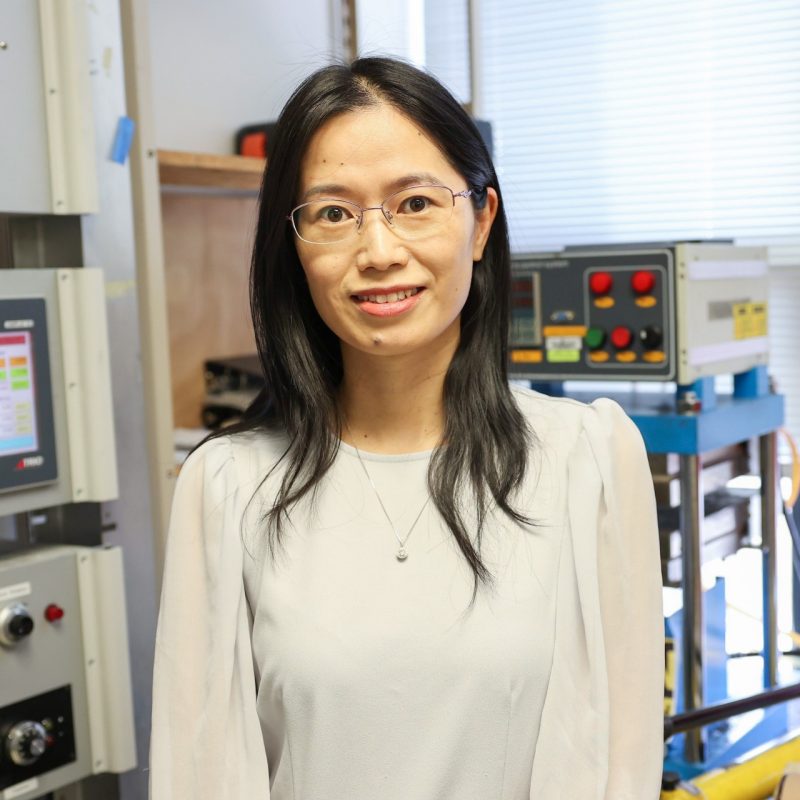
Xiaoting Jia is a Professor in the Bradley Department of Electrical and Computer Engineering at Virginia Tech. Her research focuses on advanced functional fibers with applications in biomedical devices, optoelectronics, and neurotechnology. She holds affiliations including the Virginia Tech College of Engineering and maintains an active scholarly profile with collaborations in materials science and neural interfacing. Education : Ph.D., Massachusetts Institute of Technology (2011) M.S., Stony Brook University (2006) B.S., Fudan University (2004) Research Interests : Development of multifunctional fibers for neural recording and stimulation Optically and magnetically controlled power electronics Bio-inspired flexible materials and wearable sensors Neuropharmacological studies using fiber-based probes Her recent work emphasizes hybrid fiber systems combining electrical, optical, and chemical functionalities for biomedical applications. Over 150 peer-reviewed articles demonstrate contributions to neural interfaces, energy harvesting, and advanced fiber fabrication techniques. Awards and service roles are pending specific documentation. Grants & Labs : Led projects in National Science Foundation-funded neural engineering initiatives Collaborated with industry partners on fiber-optic sensor commercialization
Fosca Giannotti is a Full Professor at Scuola Normale Superiore in Pisa, Italy, and leads the Pisa KDD Lab - Knowledge Discovery and Data Mining Laboratory, a joint research initiative of the University of Pisa and ISTI-CNR. Founded in 1994, the Pisa KDD Lab is one of the earliest research labs focused on data mining. Giannotti is a pioneering scientist in mobility data mining, social network analysis, and privacy-preserving data mining. Her educational background includes a Master Degree in Computer Science from the University of Pisa (1982) with 110/100 cum laude. She has held numerous visiting positions including at MCC in Austin, CWI Amsterdam, UCLA, and the Barabasi Lab at Northeastern University. Giannotti's research focuses on social mining from big data, encompassing smart cities, human dynamics, social and economic networks, ethics and trust, and diffusion of innovations. She has authored more than 300 papers and coordinated tens of European projects and industrial collaborations. Her current work increasingly centers on Explainable AI (XAI), as evidenced by her prestigious ERC Advanced Grant for the XAI project focused on "Science and technology for the explanation of AI decision making." Her recent publications reveal a strong emphasis on trustworthy AI, with research spanning privacy-preserving techniques, fairness in machine learning, human-AI collaboration frameworks, and medical applications of explainable AI. The breadth of her work demonstrates how data mining principles are being applied across diverse domains from social sciences to healthcare. ERC Advanced Grant for XAI project Premio Internazionale Tecnovisionarie 2021 Intelligenza Artificiale Giannotti has coordinated numerous significant projects including SoBigData (the European research infrastructure on Big Data Analytics and Social Mining), XAI, TAILOR (Foundations of Trustworthy AI), HumanE-AI-Net, and AI4EU. As former coordinator of SoBigData, she led an ecosystem of ten cutting-edge European research centers providing an open platform for interdisciplinary data science. She leads the Pisa KDD Lab, which serves as a hub for research on knowledge discovery and data mining. The lab has been instrumental in developing techniques for mobility data analysis, social network mining, and privacy-preserving data analytics, with applications ranging from smart cities to pandemic response.