Martin Michael Hanczyc is an Associate Professor in the Department of Cellular, Computational, and Integrative Biology (CIBIO) at the University of Trento, Italy. His research program bridges biochemistry, biophysics, and synthetic biology to explore the fundamental principles of life through artificial systems. Dr. Hanczyc's primary research interests focus on synthetic biology and artificial life , particularly the creation and study of artificial cell systems using vesicles and droplets as model compartments. His work explores how simple chemical systems can exhibit life-like behaviors including self-organization, compartmentalization, and survival strategies. He investigates the physical and chemical principles underlying the formation of primitive cell-like structures, with implications for understanding the origin of life. His recent publications reveal a strong trend toward quantitative analysis of dynamic systems, with increasing focus on network formation, computational modeling, and high-throughput methods for studying artificial cell behaviors. The research spans from fundamental studies of vesicle and droplet dynamics to more complex investigations of artificial ecosystems and chemical networks that mimic biological processes. As an educator, Dr. Hanczyc teaches in the Biotechnology Engineering program and contributes to the RNA Biology and Biotechnology course, focusing on advanced biomaterials, tissue engineering, and regenerative medicine applications. His teaching emphasizes the integration of theoretical principles with practical applications in biomedical technologies.
Sesilja Aranko is an Assistant Professor at Aalto University , affiliated with the Department of Bioproducts and Biosystems. Her research focuses on protein engineering, biomolecular condensates, and sustainable materials derived from biological macromolecules. Research Groups : Cellular Engineering Email : sesilja.aranko@aalto.fi Her work explores protein self-assembly mechanisms, particularly in spider silk and collagen systems, leveraging liquid-liquid phase separation for advanced biomaterial design. Recent studies investigate how polymer length and modular protein architecture control condensate properties, alongside developing bio-inspired adhesives from recombinant proteins and nanocellulose. She has pioneered the use of Catcher/Tag click-reaction tools for protein engineering and developed sustainable methods for spider silk production with inherent functionalization potential. Collaborative projects span marine biology (sea cucumbers) and keratin waste upcycling for textile applications. Key methodologies include intein-mediated protein splicing, segmental isotopic labeling, and structural characterization of protein ligation systems. Her research bridges fundamental biophysics with industrial applications in sustainable chemistry and biomimetic composites.
Valeriya Nikolaeva Simeonova is an Associate Professor at the Faculty of Mathematics and Informatics, University of Sofia, specializing in Information Technologies . Her research focuses on interdisciplinary applications at the intersection of Bioinformatics , Machine Learning , and Parallel Computing , particularly for error discovery in metagenomics data and QSAR modeling in plant biology. Her work emphasizes Next-Generation Sequencing (NGS) data analysis, where she develops algorithms for error detection and correction. She has contributed to optimizing genome assembly techniques through soft computing approaches and explored distributed computing for financial time series forecasting. Notable publications include studies on Golden Root in vitro culture growth (2013) and metagenomics NGS error detection (2015) in journals like BIOTECHNOLOGY & BIOTECHNOLOGICAL EQUIPMENT . Her collaborations span institutions in Bulgaria, France, and Belgium.
Olga Ilieva Georgieva is a Professor at the Faculty of Mathematics and Informatics (FMI) , Sofia University , specializing in Software Technologies . She has held academic positions at the Bulgarian Academy of Sciences and Technical University of Sofia , and is actively involved in research, teaching, and national/EU-funded projects. Education: 1986 – Faculty of Automatics, TU-Sofia 1995 – PhD, Institute of Control and System Research, Bulgarian Academy of Sciences 2000 – Associate Professor, Institute of Control and System Research, Bulgarian Academy of Sciences 2008 – Associate Professor, Faculty of Mathematics and Informatics, Sofia University Research Interests: Her work spans Artificial Intelligence , Machine Learning , Data Mining , and Soft Computing Methods . She applies these to domains such as emotion recognition from EEG , QoS in web services , educational data mining , and industrial energy modeling . Scientific Awards: Best Paper Award, IEEE 8th International Conference on Intelligent Systems (2016) Teaching & Projects: She teaches courses including Requirements Engineering , Models of Software Systems , Fuzzy Sets and Applications , and Professional Ethics at Sofia University, and previously taught at TU-Sofia. She leads or co-leads multiple national and EU projects such as GATE: Big Data for Smart Society , ITDGate , and Modelling of Voluntary Saccadic Eye Movements .
Anna C. Balazs is the John A. Swanson Chair of Engineering and Distinguished Professor of Chemical Engineering at the University of Pittsburgh Swanson School of Engineering, with an adjunct appointment in the Department of Chemistry. She has held visiting professorships at the Scripps Research Institute, University of Texas at Austin, and Oxford University. Dr. Balazs serves on the Advisory Board of the Materials Council for Materials Sciences and Engineering Division of the Department of Energy, Basic Energy Sciences, and is a member of the Editorial Advisory Boards of Langmuir, Soft Matter, and Polymer Reviews. Education: A.B. in Physics from Bryn Mawr College (1975) Ph.D. in Materials Science from MIT (1981) Postdoctoral research at Brandeis University, MIT, and University of Massachusetts Dr. Balazs specializes in the statistical, mechanical, and computer modeling of complex chemical systems, with particular expertise in polymer blends and the behavior of polymers at surfaces and interfaces. Her research focuses on developing theoretical frameworks for understanding responsive materials, particularly self-oscillating polymer gels, active matter systems, and nanocomposites. She investigates how chemical reactions can drive mechanical motion and pattern formation in soft materials, creating biomimetic systems with lifelike functionality. Her work bridges fundamental theoretical modeling with practical applications in microfluidics, drug delivery, and smart materials design. Analysis of Dr. Balazs' recent publications reveals a strong focus on the integration of chemistry, fluid dynamics, and mechanics to create responsive materials systems. Her research demonstrates how chemical reactions can drive complex mechanical behaviors in polymer gels and microstructures, enabling the spontaneous formation of 3D patterns, self-propulsion, and lifelike functionality. The work spans from fundamental theoretical modeling to practical applications in microfluidics and soft robotics, with a particular emphasis on enzyme-powered systems, chemically responsive materials, and the autonomous assembly of hierarchical structures. Dr. Balazs has made significant contributions to the field through her extensive publication record in top journals including Proceedings of the National Academy of Sciences, Nature Nanotechnology, and Advanced Functional Materials. Her work has been widely cited and has influenced multiple disciplines including materials science, chemical engineering, and soft matter physics. As a leading researcher in computational materials science, Dr. Balazs has mentored numerous students and postdoctoral researchers throughout her career. Her research has been supported by various funding agencies including the National Science Foundation and Department of Energy. She has established herself as a leading authority in the theoretical modeling of complex soft matter systems. Dr. Balazs' research group at the University of Pittsburgh focuses on developing computational models to understand and predict the behavior of responsive materials. Her team employs a range of simulation techniques to study phenomena ranging from molecular-scale interactions to macroscale material behaviors, with particular emphasis on the coupling between chemical reactions and mechanical responses in polymer systems.
Simon Ostermann serves as a Senior Lecturer at Saarland University and Senior Researcher & Deputy Director at the Multilinguality and Language Technology (MLT) lab of the German Research Center for Artificial Intelligence (DFKI). He leads the Efficient and Explainable NLP (E&E) research group and contributes to major projects including lorAI (Low Resource AI), TRAILS (Trustworthy Machines), PERKS (Procedural Knowledge), DAM-S (Semantic Search), and DisAI (Disinformation Combat). His research centers on democratizing language technology through transparent, robust models—specializing in mechanistic interpretability to reverse-engineer LLM internals and enhance efficiency for low-resource languages. Key focus areas include reducing model size for constrained environments, improving cross-lingual transfer via adapters, and developing structured input techniques. His work bridges theoretical interpretability with practical applications in resource-limited settings. 2025 publications reveal concentrated efforts in low-resource adaptation (language adapters, graph-enhanced embeddings), explainable AI (counterfactual generation, conversational XAI datasets), and multilingual fact-checking systems. Notable trends include systematic neuron manipulation frameworks, rigorous evaluation of synthetic data strategies, and cross-lingual claim verification benchmarks. Ostermann advises six PhD candidates (Anikina, Oguz, Bäumel, al Ghussin, Gurgurov, Vykopal) and multiple MSc students on topics spanning RAG hallucinations, multilabel classification, and adapter interpretability. His research receives funding through DFKI-led consortia with European and international partners focusing on trustworthy, efficient AI deployment. The E&E group under his leadership drives innovation in efficient NLP through biweekly seminars, collaborative coding sessions, and partnerships with institutions like KInIT. Current initiatives prioritize green computing for language models and real-world deployment in industrial procedural knowledge systems.
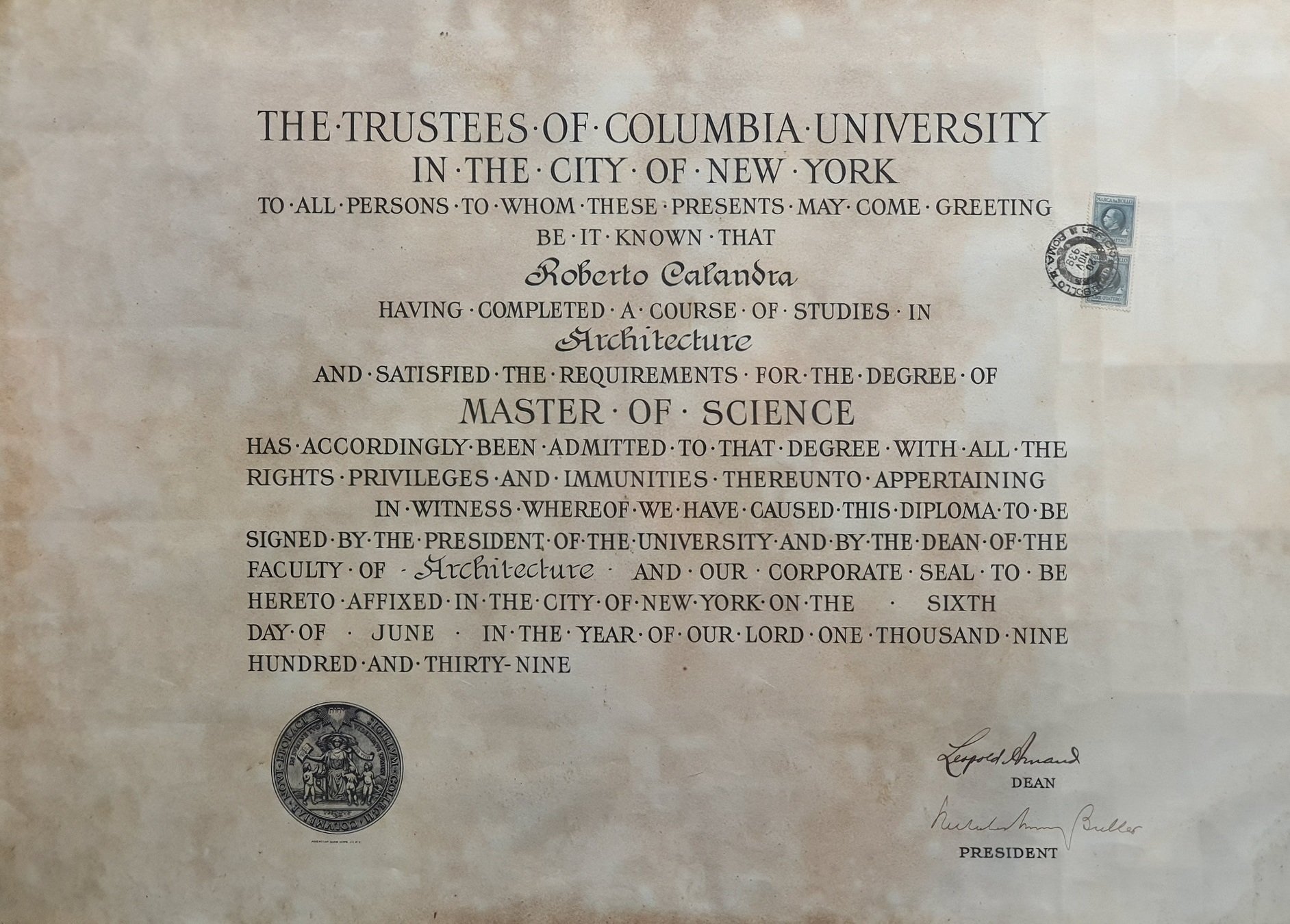
Roberto Calandra is a Full (W3) Professor at Technische Universität Dresden, where he leads the Learning, Adaptive Systems and Robotics (LASR) Lab. Previously, he served as a Research Scientist at Meta AI (formerly Facebook AI Research) and a Postdoctoral Scholar at UC Berkeley’s BAIR Lab under Sergey Levine. His academic journey includes a PhD in Robotics from TU Darmstadt, an M.Sc. in Machine Learning from Aalto University, and a B.Sc. in Computer Science from Università di Palermo. His research bridges Robotics and Machine Learning, focusing on tactile sensing, Bayesian Optimization, and model-based reinforcement learning. He pioneered the DIGIT tactile sensor , now the most widely used tactile sensor in robotics, and advocates for a computational field of Touch Processing to advance haptic understanding. His work emphasizes data-efficient learning, real-world dexterous manipulation, and multimodal perception. Recent publications highlight breakthroughs in tactile sensor design, in-hand object manipulation, and multimodal integration. He organizes workshops on robotics and machine learning (e.g., at NeurIPS, ICRA) and promotes open-source tools like PyTouch and TACTO .
Mark Wilson is a Professor in the Department of Chemistry at Durham University, where he leads the Computational Soft Matter research group. His laboratory is housed in the Wolfson Suite for Computational Chemistry, focusing on molecular dynamics and Monte Carlo simulations of complex molecular systems. The group's research is primarily funded by EPSRC grants, supporting investigations into liquid crystals, polymers, proteins, and nanostructured materials. Wilson's research integrates theoretical chemistry with computational physics to study: Self-assembly processes in chromonic liquid crystals and surfactants Multiscale modeling approaches combining atomistic and coarse-grained methods Protein dynamics and allosteric regulation mechanisms Phase behavior of bent-core liquid crystals and ferroelectric nematics Interfacial phenomena in polymer-surfactant systems Analysis of his 15 most recent publications reveals strong emphasis on: methodological developments in dissipative particle dynamics; molecular engineering of pharmaceuticals; and predictive modeling of soft material behavior. Recurring themes include surfactant phase diagrams, liquid crystal polymorphism, and computational methods validation through experimental collaboration. Wilson currently supervises four PhD students and maintains an active research team with six group members. His laboratory utilizes advanced high-performance computing resources for large-scale simulations, with recent work extending to biomolecular systems including beta-amyloid aggregation and antimicrobial peptides.
Professor Kenneth Harris is a Distinguished Research Professor in the School of Chemistry at Cardiff University, specializing in the fundamental properties of solids and the development of advanced experimental techniques for materials characterization. His work bridges the gap between traditional crystallography and modern analytical methodologies, with a particular focus on overcoming limitations in structural analysis of complex materials. His research spans three primary interconnected themes: the development of techniques for determining crystal structures of organic solids directly from powder X-ray diffraction data; the advancement of in-situ solid-state NMR strategies for monitoring crystallization processes in real time; and the investigation of structural properties of anisotropic materials using polarized X-ray beam techniques, including the pioneering development of X-ray Birefringence Imaging (XBI). This work has significant implications for pharmaceutical development, materials science, and understanding biological crystallization processes. Analysis of his recent publications reveals a consistent trajectory toward increasingly sophisticated multi-technique approaches to materials characterization. His work increasingly integrates 3D electron diffraction, powder XRD, solid-state NMR, and computational methods like DFT calculations to solve previously intractable structural problems. A notable trend is the application of these methods to biologically relevant molecules (xanthine, riboflavin, L-tyrosine) and the development of techniques to monitor dynamic processes like crystallization and phase transitions in real time. His research demonstrates a shift from purely structural determination toward understanding the dynamic processes that govern material formation and transformation. Distinguished Research Professor title at Cardiff University Key contributor to the development of X-ray Birefringence Imaging Significant contributions to NMR crystallography methodologies Extensive publication record in top chemistry and materials science journals Professor Harris leads a research group focused on developing and applying cutting-edge techniques for materials characterization. His work has significant implications for pharmaceutical development, where understanding crystal structure and polymorphism is critical for drug efficacy and safety. His group has developed innovative approaches to monitor crystallization processes in real time, which has applications in both industrial manufacturing and understanding natural biomineralization processes. The group maintains strong collaborations with researchers across multiple disciplines, including physics, biology, and engineering, reflecting the interdisciplinary nature of modern materials science research.
Dr. José Luis Calvo Rolle serves as a Professor in the Department of Industrial Engineering at the School of Engineering, Universidade da Coruña (UDC), specializing in Systems Engineering and Automation. His research focuses on intelligent control systems, fault detection, and virtual instrumentation within the Cybernetic Science and Technology Research Group. Teaches across multiple programs including Master's in Industrial Computing and Robotics, Textile Technology, and Occupational Risk Prevention Coordinates thesis supervision across Industrial Engineering and related disciplines His research spans intelligent control systems and optimization, with significant contributions in virtual sensors, fault detection, and AI-driven modeling for industrial applications. Current projects integrate machine learning with industrial processes for naval construction, wastewater treatment, and precision livestock farming, demonstrating cross-disciplinary impact from energy systems to agricultural technology. Recent publications reveal strong trends in applying deep learning to industrial metaverse frameworks, wastewater optimization, and livestock monitoring systems. His work bridges theoretical control engineering with practical implementations in energy management, naval manufacturing, and sustainable agriculture, frequently utilizing dimensionality reduction and one-class classification techniques. Dr. Calvo Rolle actively mentors students through thesis supervision across multiple engineering disciplines and coordinates research projects with diverse funding sources including the European Commission, Spanish National Research Agency, and industrial partners like Navantia and Telefónica. His laboratory work centers on the Cybernetic Science and Technology Research Group, developing testbeds for industrial automation, virtual instrumentation, and AI-driven monitoring systems. Current initiatives include digital twin implementations for naval manufacturing and smart energy management systems.
Anita Maria Tabacco is a Full Professor at the Department of Mathematical Sciences (DISMA) of Politecnico di Torino, with a focus on Engineering Education and Harmonic Analysis. She holds multiple administrative roles, including Rector's Delegate for Transparency and Internal Communication, Director of the University Observatory for academic dynamics, and Head of the INDAM local unit. Education: PhD in Mathematics, Washington University in St. Louis (1986) Research: Harmonic and Functional Analysis, Applications to PDEs, Gender Equality in STEM Her recent publications highlight intersections of mathematical analysis, educational technology, and gender diversity initiatives. She has led Erasmus+ projects like HerTechVenture and W-STEM to empower women in tech. Tabacco supervises PhD students including Maria Giulia Ballatore and contributes to textbooks such as Palestra di Analisi Matematica I . She co-leads the TEACH research group at DISMA, integrating pedagogical innovation with advanced mathematics.
Dr. Ludovic Magerand is a Lecturer (Teaching and Research) in the Computing department at the University of Dundee. His research expertise lies in computer vision, with significant contributions to 3D reconstruction, structure from motion, and medical imaging applications. He has been actively involved in multiple research projects funded by the Engineering and Physical Sciences Research Council (EPSRC), including the 3DFace@Home project for facial growth monitoring and the SoftEn project for soft robotics in colonoscopy. Education: Doctor of Science in Dynamic pose estimation with CMOS cameras using sequential acquisition from Université Clermont Auvergne (2014) Research Interests: Dr. Magerand's research spans several critical areas in computer vision and robotics. His primary focus includes developing robust methods for 3D reconstruction from 2D images, particularly through structure from motion techniques. He has made significant advances in handling missing data and projective geometry problems. In medical applications, his work extends to developing soft robotic systems for minimally invasive procedures like colonoscopy. Additionally, he explores facial reconstruction techniques for medical monitoring applications, bridging the gap between theoretical computer vision and practical healthcare solutions. His research demonstrates a strong commitment to addressing UN Sustainable Development Goals, particularly in advancing healthcare technologies and educational applications of computer vision. Research Trends: Across his publications, a clear evolution is visible from foundational work in 3D reconstruction and pose estimation (2012) to more specialized applications in medical robotics (2023) and facial reconstruction (2025). His early work focused on theoretical aspects of structure from motion and optimization techniques, while recent publications demonstrate a shift toward practical medical applications, including soft robotics for colonoscopy and mobile-based facial reconstruction systems. This progression showcases his ability to translate theoretical computer vision research into impactful medical technologies. Research Projects: 3DFace@Home: Accurate Facial 3D Reconstruction From Mobile Devices At Home For Growth Monitoring (2024-2026, EPSRC funded, joint with Glasgow University) SoftEn: Soft Endorobot for colonoscopy applications (2021-2023, EPSRC funded) Datasets & Supervision: Dr. Magerand has contributed to the MASIVE dataset, a multi-impression fingerprint dataset used for investigating verification failures in African election settings, serving as a supervisor for this 2024 dataset release.
Nick Virgilio is a Full Professor in the Department of Chemical Engineering at Polytechnique Montréal . His research focuses on soft matter interfaces, polymer blends, and advanced hydrogel systems for biomedical and catalytic applications. Director, Research Laboratory on Surfaces, Interfaces and Soft Matter Member, Research Center for High-Performance Polymer and Composite Systems (CREPEC) Research interests include interfacial phenomena in multiphase systems, self-assembly of soft materials, nanoparticle-hydrogel composites, Pickering emulsions, and polymer microstructure engineering. Scientific awards include the 2010 Canadian Macromolecular Science Thesis Prize and the 2004 Polytechnique Montréal Master's Thesis Award. Recent publications highlight his work in macroporous hydrogels for cancer cell capture, nanoparticle synthesis in soft matrices, and interfacial control of polymer blends. His studies frequently appear in high-impact journals like ACS Applied Materials & Interfaces , Green Chemistry , and Macromolecules . Students under his supervision have explored topics from biofilm mechanics to lunar environment polymer systems across 4 PhD and 6 Master’s theses completed or ongoing.
Tero-Petri Ruoko is an Assistant Professor at the University of Tampere , affiliated with the Faculty of Engineering and Natural Sciences and the Materials Science and Environmental Engineering department. He leads the Spectroscopy and Light-Active Materials (SLAM) research group, which is part of the Chemistry and Advanced Materials (CAM) cluster and the PREIN photonics flagship initiative. Research Interests: Ruoko specializes in photochemistry , electrochemistry , and organic electronics , with a focus on light-emitting materials , time-resolved spectroscopy , and electrochemical systems . His work includes organic electrochemical transistors , solar energy conversion , and smart materials for actuation and self-healing . He investigates charge transport mechanisms, defect engineering in semiconductors, and interfacial phenomena in conducting polymers. Recent Publications demonstrate expertise in halogen bonding for material control, oxygen reduction catalysis with doped polymers, and self-healing liquid crystal elastomers . His research spans organic semiconductors , perovskite solar cells , and supramolecular interactions in biohybrid systems. Grants: He has received funding from the EU Horizon 2020 MSCA-IF and the Academy of Finland Postdoc programs, supporting his work on sustainable energy and advanced materials.
Fernando A. Escobedo is a Professor in the Department of Chemical Engineering at Cornell University's College of Engineering, holding the Marjorie Hart Chair of Engineering since joining the faculty in 1998. His research pioneers computational methodologies for understanding entropy-driven self-assembly in complex soft matter systems, with applications spanning solar cells, battery electrodes, and advanced membranes. His educational background includes: B.S. in Chemical Engineering from Universidad de San Agustin, Peru (1986) M.S. in Chemical Engineering from University of Nebraska-Lincoln (1993) Ph.D. in Chemical Engineering from University of Wisconsin-Madison (1997) Professor Escobedo's work centers on molecular-level simulations of thermodynamic and kinetic properties, with particular emphasis on entropy's role in forming intermediate-ordered phases like liquid crystals and block copolymer mesophases. His group develops novel computational frameworks to establish structure-property relationships for nanoscale building blocks, enabling rational design of materials with tailored mechanical, optical, and transport properties. This research bridges statistical mechanics with practical engineering challenges in nanomaterials synthesis. Analysis of his 2023-2025 publications reveals three dominant trends: (1) machine learning integration for multiscale materials design, (2) entropy-controlled phase behavior in non-additive colloidal mixtures, and (3) molecular engineering of liquid crystalline oligomers for enhanced ion transport. Key advancements include heuristic rules for nanoparticle superlattice stability and diffusionless transition mechanisms in faceted colloids. His scientific recognition includes: Fellow, American Physical Society (2014) AIChE Computational Molecular Science & Engineering Impact Award (2012) Alfred P. Sloan Foundation Fellowship (2004) NSF CAREER Award (2001) Camille & Henry Dreyfus Foundation New Faculty Award (1999) College of Engineering Teaching Excellence Award (2003) Professor Escobedo has secured sustained funding through competitive grants including the NSF CAREER award and Sloan Fellowship, supporting his computational research group's high-impact publications in top journals. His mentorship focuses on training graduate students in advanced simulation techniques, with research outputs frequently appearing in Journal of Physical Chemistry and Macromolecules . While no dedicated lab name is specified, his work operates at the intersection of Cornell's Chemical Engineering department and nanomaterials research initiatives, emphasizing collaborative approaches to entropy-driven assembly problems.