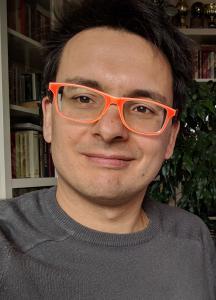
János Abonyi is a Professor at the Department of Process Engineering, Faculty of Engineering, University of Pannonia, Hungary. With over 118 publications spanning from 2000 to 2024, he has established himself as a leading researcher in process systems engineering, machine learning applications, and Industry 4.0 technologies. His work bridges theoretical computational intelligence with practical industrial applications, particularly in process optimization, fault detection, and smart manufacturing systems. Abonyi's research interests focus on applying machine learning and data mining techniques to industrial process systems. His work spans several key areas including soft sensor development, fault detection and diagnosis, optimization algorithms for manufacturing, and Industry 4.0/5.0 applications. He has pioneered approaches combining sequence mining with deep learning for alarm management, reinforcement learning for disassembly line optimization, and explainable AI for industrial applications. His research demonstrates a consistent trajectory from fundamental computational intelligence methods to their practical implementation in real industrial settings. His recent publications (2020-2024) show a strong emphasis on Industry 4.0 and 5.0 applications, with particular focus on human-machine collaboration, real-time locating systems, digital twins, and explainable AI for industrial applications. The interdisciplinary nature of his work is evident through collaborations across computer science, electrical engineering, and chemical engineering domains. His research group has produced significant contributions in optimization algorithms, particularly in reinforcement learning applications for manufacturing and process systems. Abonyi has supervised numerous PhD students who have become active researchers in their own right, including Tamás Ruppert, Ágnes Vathy-Fogarassy, and Balazs Feil. His collaborative network extends internationally, with publications in top journals including IEEE Access, Sensors, and Computers & Chemical Engineering. His work demonstrates strong industry relevance with practical implementations in manufacturing, process control, and industrial automation contexts.