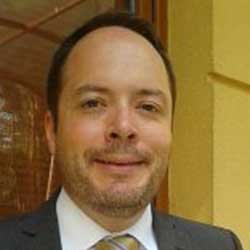
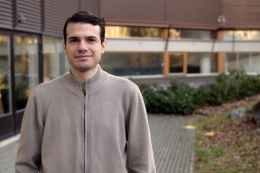
Michael Friesenecker is a researcher at the Institute of Landscape Planning , University of Natural Resources and Life Sciences Vienna (BOKU). His work bridges urban planning , climate change adaptation , and social equity , focusing on nature-based solutions for urban heat islands and green gentrification challenges. 2025: Socially equitable climate risk management of urban heat (npj Urban Sustainability) 2024: Strategien allein lassen keine Bäume wachsen – Klimawandelanpassung in Wien (PLANERIN) His research explores the intersection of climate resilience and social justice , analyzing how urban green spaces and sustainability policies affect vulnerable populations. Key themes include: Equity in nature-based solutions Green gentrification dynamics Urban heat vulnerability assessment Integration of climate and housing policies Transformative recovery after systemic shocks Media contributions highlight his expertise in Vienna's climate policy and social impacts of sustainability measures , including 17 lectures on these topics (2022–2024). Contact: michael.friesenecker@boku.ac.at
Anneli Kährik is an Associate Professor in Urban Geography at the University of Tartu, Faculty of Science and Technology, Institute of Ecology and Earth Sciences. She has held this position since February 1, 2023, working full-time. Prior to this, she served in various academic roles at the University of Tartu including Senior Research Fellow and Research Fellow in Urban Geography, with varying percentages of full-time equivalent from 2016-2023. She also worked as a Scientific Adviser at the Ministry of Education and Research (2019-2022) and has been involved in numerous international research projects. Dr. Kährik earned her PhD in Human Geography from the University of Tartu in 2006 with a dissertation on 'Socio-spatial residential segregation in post-socialist cities: the case of Tallinn, Estonia,' supervised by Jussi Sakari Jauhiainen and Tiit Tammaru. She also holds a Research Master's Degree in Human Geography from the University of Tartu (1999) and completed MPhil studies at Oslo University. Her academic journey included a year at Oxford University (2001-2002) during her doctoral studies. Her research focuses on urban geography, urban policy and planning, housing policy, social geography, residential mobility, neighborhood choices, urban socio-spatial segregation, and neighborhood change. Dr. Kährik has conducted extensive research on post-socialist urban transformation, particularly in Tallinn, examining how housing markets, policy changes, and social dynamics have reshaped urban spaces since the collapse of the Soviet Union. Her work often employs mixed methods approaches, combining quantitative analysis with qualitative insights from resident interviews. Dr. Kährik's recent publications demonstrate continued focus on housing inequalities, neighborhood change, and urban segregation patterns. Her work spans from theoretical urban studies to applied policy research, with strong emphasis on the Estonian context but also comparative studies with other post-socialist and Western European cities. Marie Curie Intra-European Fellowship (2012-2016) STSM from COST Action 0803 'Cities Regrowing Smaller' (2012) Estonian Science Foundation 4-year research grant (2008-2013) Kristjan Jaak Peterson Fellowship for Oxford University stay (2004) OSI-FCO British Chevening scholarship for Oxford University research (2001-2002) Dr. Kährik serves on evaluation committees for PhD students and has supervised numerous BSc and MSc students. She is Principal Investigator for the 'European Urban Initiative Urban Contact Point for Estonia' project (2023-2029) and has coordinated significant research projects including the 'Socio-spatial residential differentiation in the Tallinn urban region during the post-socialist period' (2008-2012) and 'Social Dynamics in Urban Residential Neighbourhoods' (2013-2016). She teaches courses on Urban Planning, East-European Cities, Socio-spatial Changes in Cities in Transition, and Demography and Urban Social Geography. Dr. Kährik is also a member of the Editorial Board of 'Critical Housing Analysis' and actively participates in international research networks including ISA RC21 and RC43.
Dr. Matthew Stevens is an Associate Professor in History at Swansea University's School of Culture and Communication, specializing in medieval social, legal, and economic history. His research examines everyday life in the Middle Ages with particular focus on marginalized groups, colonization patterns, and ethnic discrimination in medieval societies. Research Focus Stevens investigates the intersection of law, economy, and social identity in medieval Europe, particularly through comparative studies of colonial settlements in Wales, Ireland, Prussia, and Livonia. His work analyzes: The economic agency of women under coverture laws Ethnic discrimination in English-colonized territories Credit systems during economic crises Urban development in conquered regions Petition systems in colonial towns Publications Overview Stevens' scholarship demonstrates consistent focus on legal discrimination, economic systems in colonial contexts, and urban development patterns across medieval Europe. His recent comparative work examines parallel structures in Welsh and Prussian settlements under foreign rule. Awards and Recognition Fellow of the Royal Historical Society (2012) Donald W. Sutherland Prize finalist (2010) Eileen Power Post-Doctoral Fellowship, Oxford University Prince Llywelyn ap Gruffydd Memorial Prize (2005) Research Leadership Stevens has secured £149,680 in competitive grants including: British Academy funding for 'Jim Crow in Medieval Wales' (£7,931) Polish National Agency grant for colonial comparison study (£49,400) ESRC award for women's economic history research (£81,349) He currently supervises doctoral projects on decolonization in medieval Wales and nationalism during the English Civil War.
Dr. Irma Kveladze is a Tenure Track Assistant Professor at Aalborg University's Technical Faculty of IT and Design, specifically within the Department of Sustainability and Planning. Her research focuses on geoinformatics, earth observation, and urban mobility solutions. Current Affiliation: Aalborg University (Copenhagen campus), Technical Faculty of IT and Design Research Themes: Urban mobility, migration patterns, spatial data visualization, mixed reality geospatial applications Her work involves advanced spatial analysis and innovative cartographic representations, recently developing frameworks for micro-mobility integration in urban contexts through the PROMISE project. She contributes to mixed reality usability evaluation standards and analyzes digital communication networks across European countries. Key projects include: PROMISE (2025-2028): Principal Investigator for car dependency reduction through smart policy AquaINFRA (2024): Project participant in data infrastructure development She serves as peer reviewer for journals like Sustainability and ISPRS International Journal of Geo-Information , and participates in organizations such as AGILE and EuroSDR.
Eva Andersson is a Professor at Stockholm University within the Department of Human Geography. Her research focuses on urban and social geography, residential and school segregation, neighborhood effects, life course analysis, migration patterns, and elderly housing. She employs Swedish register data combined with spatial analysis methods to investigate how residential contexts influence socioeconomic outcomes. Current research projects include Migrant Trajectories (2019-2024), exploring migrant life courses across five domains. Lyckliga gatan examines spatial polarization and social cohesion in Sweden. Socio-spatial stratification analyzes housing tenure trajectories across 21 years. Her work demonstrates that neighborhood context at multiple scales affects educational attainment, income trajectories, and family formation. She finds stronger microscale effects on education and macroscale impacts on income, with Sweden showing less segregation than the Netherlands. Schools in 75% of municipalities successfully mix students from diverse backgrounds, though performance gaps correlate with socioeconomic peer groups. She teaches urban social geography at both undergraduate and graduate levels, supervises doctoral students, and contributes methodological innovations through individualized neighborhood analysis. Her housing research reveals increasing homeownership trends in Sweden and age-related shifts toward central urban housing for elderly populations.
Hernan Mondani is a Docent in Sociology and Researcher at Stockholm University, with additional affiliations at the Institute for Futures Studies and as Associate Professor at the School of Police Studies, Södertörn University. His research bridges sociology, criminology, and data science, focusing on social cohesion, criminal network dynamics, and migrant integration. Research Focus: Modeling social phenomena via large-scale datasets and non-traditional quantitative methods His work examines how societies maintain stability through social network models, particularly in criminal collaboration and extremist group engagement. Key projects include the Migrant Trajectories programme, analyzing life trajectories across housing, family, and labor domains, and studies on neighborhood polarization in Sweden. Recent publications (2025–2019) span violent extremism, refugee mobility, and criminal network analysis. He supervises Bachelor's theses in Sociology and teaches organizational theory. Education: PhD in Sociology (2017), MSc in Engineering Physics (2012), BSc in Industrial Engineering (2008). Key Collaborations: Affiliated with Stockholm University's Department of Sociology, Institute for Futures Studies, and Södertörn University's interdisciplinary projects.
Albert Sabater Coll is Serra Húnter Professor of Sociology at the University of Girona and Director of the Chair-Observatory of Ethics in Artificial Intelligence of Catalonia (OEIAC) . His institutional affiliation also includes the Educational Research Institute and the Interdisciplinary Research Group on Gender and Social Inequalities (IGESI) . Education PhD in Social Statistics, University of Manchester MSc in Social Research Methods and Statistics, University of Manchester MSc in Demography, Autonomous University of Barcelona Research Interests Professor Sabater’s work sits at the intersection of computational social science , demography and AI ethics . He explores socio-spatial inequalities—housing segregation, generational divides, digital divides—using large-scale census, survey and big-data sources. Methodologically, he develops iterative algorithms to handle missing-data biases and differential non-response in population counts, paying special attention to gender, age, ethnicity and residential location. His recent agenda expands into the ethical governance of AI systems in public services, especially social-welfare assessment. Recent publications (2023-2025) reveal a clear pivot toward AI governance and ethics , with studies on participatory AI in social services, self-assessment models for regulatory compliance, and gender-based violence. Earlier work (2017-2022) focused on housing affordability , age segregation , and intergenerational transfers , utilising advanced demographic and spatial methods. Scientific Awards & Distinctions Marie Skłodowska-Curie predoctoral fellow, European Commission Juan de la Cierva postdoctoral researcher, Spanish Ministry Research Accreditation in Social Sciences, Catalan Agency for University Quality (AQU) Invited researcher, Princeton University (Office of Population Research) Invited researcher, University of Oxford (Oxford Institute of Population Aging) Grants & Leadership Roles Principal Investigator, AI FORA (AI for Assessment) – Horizon Europe case study Lead member, National Plan for Protection of Vulnerable Groups in AI, Spanish Ministry of Foreign Affairs & Digital Transformation Co-investigator & coordination team, RESCHOOL (Horizon Europe) Co-investigator, CLIMA project on energy communities and inter-generational transfers Laboratories & Teams He heads the Chair-Observatory of Ethics in AI of Catalonia (OEIAC) and is a core member of the Interdisciplinary Research Group on Gender and Social Inequalities (IGESI) . He also contributes to the European Lighthouse on Secure and Safe AI Ethics Board and advises the Catalan Government’s Data Ethics and Health/AI Programme Committees.
Qiong He is a Lecturer at the School of Geography & Sustainable Development, University of St Andrews (since 2024). Her research integrates urban geography, housing studies, and population dynamics to analyze residential segregation, migration patterns, and urban governance frameworks. PhD in Urban Geography (University of Amsterdam, 2022) Postdoctoral researcher (University of Hong Kong, 2022-2024) Research Themes: • Critical geographies of education-housing intersections in China • Transnational residential practices of skilled migrants • Urban restructuring and middle-class mobility dynamics • Contributions to UN Sustainable Development Goals (SDGs) related to sustainable cities and reduced inequalities. Recent Trends: Her latest publications examine state-led infrastructuring of mobility through education systems, habitus theory in migrant housing practices, and intergenerational housing strategies in China. Awards & Roles: Early Career Editor, Area Development and Policy (2024–) Seed grant recipient (University of Amsterdam's Center for Urban Studies) Mentorship: Accepting postgraduate research students while advancing her mixed-methods research agenda.
Mathieu Van Criekingen is a Lecturer in Geography and Urban Studies at the Université libre de Bruxelles (ULB). He coordinates the academic program for the Euromaster in Urban Studies 4Cities and co-participates in the interdisciplinary Master in Urban Studies VUB-ULB. Since 2011, he has been active in the academic collective "L'atelier des chercheurs," which advocates for de-hierarchization of knowledge production in universities. His research specializes in critical urban studies with emphases on: Spatial manifestations of social domination in capitalist cities Political economy frameworks for analyzing urban transformations Gentrification dynamics in working-class neighborhoods Resistance practices against neoliberal urban planning models Transnational comparative analyses of urban marketplaces His publications (2014-2017) demonstrate consistent focus on gentrification mechanisms, urban conflict zones, and critical evaluations of participatory urban policies. Thematically, they reveal deep engagement with Brussels as a case study while developing theoretical critiques of neoliberal urban governance. Van Criekingen contributes to academic communities promoting alternative university models and participates actively in European urban studies education frameworks through his coordination roles in graduate programs.
Roman Sellner Novotný serves as Assistant Professor in the Department of Information Studies and Library Science at Masaryk University's Faculty of Arts, actively teaching design, information systems, and digital media courses through Spring 2026. His institutional affiliation includes membership on the Program Board for Information Services Design (Bachelor's Degree) and office location in building C/C.123 at Arna Nováka 1, Brno. His research integrates service design with societal challenges, focusing on housing crises, post-Anthropocene transitions, and library innovation as social incubators. He pioneers methodologies extending beyond human-centered design to incorporate non-human elements and systemic thinking, particularly examining eviction dynamics, digital identity in commons-based systems, and climate crisis responses through design lenses. Analysis of his 15 most recent publications reveals consistent interdisciplinary exploration at the intersection of design, sociology, and information science. Key trends include applying speculative design to housing insecurity, developing frameworks for non-human centered design in ecological contexts, and transforming libraries into social innovation hubs. His work demonstrates strong collaboration across sociology, urban studies, and digital humanities disciplines. No scientific awards are documented in available institutional records. As thesis supervisor, he guides bachelor's and diploma students through all stages from background research to final text completion. He actively organizes academic events including conferences on digital culture (Speaking Digital, 2021) and workshops on post-Anthropocene methodologies, contributing to scholarly discourse through event curation and collaborative research projects.
Nikolaos Kapitsinis is a Tenure Track Assistant Professor in Economic Geography at the Department of Geosciences and Natural Resource Management, Faculty of Science, University of Copenhagen. His research focuses on political economy approaches to uneven geographical development, labour geography, and the spatial organization of socio-economic change. Previously, he worked as a Research Associate at Cardiff Business School, examining structural issues of the Welsh economy. Education: PhD in Economic Geography, University of Bristol (2017) MRes in Regional Studies, University of Groningen (2012) MSc in European Regional Development Studies, University of Thessaly (2010) BSc in Planning and Regional Development, University of Thessaly (2009) Dr. Kapitsinis is a member of the research group 'Transformation of cities and landscapes – Geoinformatics' and his work has been published in top-ranked journals including Geoforum and European Planning Studies. He is a Regional Studies Association Fellow with research interests spanning economic geography, regional development, geographical inequalities, labour geography, political economy, spatial organisation, socio-economic change, firm relocation, and industrial location. His recent publications demonstrate a strong focus on commons theory, socio-ecological crisis responses, trade fair development in urban contexts, and the political economy of regional development. His work often employs case studies from Greece, particularly Thessaloniki, while maintaining a comparative international perspective. The research shows interdisciplinary connections between geography, political ecology, urban studies, and economic sociology. Scientific Awards: ISABEL- Horizon Project (2025) Commendation for Best Young Scientist Paper (2015) Institute of Human Geography Research Grant (2024) Dr. Kapitsinis has been actively involved in peer review activities for numerous journals including British Accounting Review, Risk Management and Healthcare Policy, and Eastern Journal of European Studies. He has also served as a reviewer for research proposals for the Dutch organisation for health research and care innovation and the Hellenic Foundation for Research & Innovation. His media engagements focus on labor precarity, trade fairs' economic impacts, and regional responses to the COVID-19 pandemic. His research is characterized by strong community engagement, particularly in Greek contexts, with an emphasis on participatory approaches to urban planning, common resource management, and addressing socio-economic inequalities. Current projects examine the intersection of environmental challenges, economic restructuring, and community resilience.
Christophe Jalaudin is a Lecturer at the Champollion National University Institute (INU Champollion) and a permanent member of the Interdisciplinary Laboratory for Solidarity, Societies, Territories (LISST). His academic work spans sociology, education, and tourism studies, with particular focus on Holocaust education, rural studies, urban sociology, and energy consumption patterns. He has maintained a long-standing research partnership with Ygal Fijalkow on multiple projects related to education and tourism in the Albi region of France. Dr. Jalaudin's research interests demonstrate remarkable breadth across sociological subfields. His work on Holocaust education examines how historical memory is transmitted to students and the varying impacts of such education across different student populations. In tourism studies, he has conducted extensive research on visitor behavior in Albi, a UNESCO World Heritage site, particularly analyzing how tourists navigate and experience the 'episcopal city' and interact with local populations. His rural sociology research investigates public service access in rural communities, while his more recent work examines household energy consumption patterns within the framework of the Territorial Climate Air-Energy Plan. His publications reveal consistent methodological approaches emphasizing empirical fieldwork, particularly survey-based research involving large samples of participants. He frequently collaborates with sociology students from License 3 programs, providing them with research experience while gathering data for his projects. His work often addresses practical policy implications, bridging academic research with real-world applications in education, tourism management, and environmental policy. Dr. Jalaudin has supervised numerous student research projects through the Jean-François Champollion University Training and Research Center, particularly focusing on student life conditions, socio-academic characteristics of students, and the evolution of student numbers. His research teams have conducted extensive fieldwork in Albi and surrounding areas, gathering data through questionnaires, interviews, and observational methods.
Ahmet Uysal is an Associate Professor at Nevsehir Haci Bektas Veli University's Faculty of Arts and Sciences, specializing in human and cultural geography. His research examines migration, urban spaces, tourism geography, and socio-spatial relationships, with particular focus on Turkish diaspora communities and cultural landscapes. Education includes: Doctorate in Geography, Istanbul University (2015) Master's in Geography, Istanbul University (2010) Bachelor's in Social Studies Education, Ondokuz Mayis University (1998) Research explores emotional geographies, post-structuralist spatial theory, and everyday practices. Recent publications analyze Industry 4.0's spatial impacts, citizen science methodologies, and discursive constructions of institutional spaces. His work consistently intersects cultural theory with empirical studies of Turkish communities domestically and abroad. Currently supervises 9 Master's students investigating diverse topics like digital geographies, consumer spaces, and tourism development. Graduated 6 students since 2020 with theses on smart factories, transnational identities, and autism geography.
Dr. Alex J. Moffett-Bateau is an Associate Professor of Political Science at John Jay College, City University of New York (CUNY), with a research focus on Black feminist political science and extra-systemic politics. They hold a Ph.D. in Political Science from the University of Chicago and a BA in Political Science and African American Studies from the University of Michigan, Ann Arbor. Originally from Detroit, Michigan, Dr. Moffett-Bateau now resides in New York City and maintains an active presence in both academic and public discourse. Dr. Moffett-Bateau's research centers on redefining what counts as political, particularly examining how Black women living below the poverty line engage politically within constrained environments. Their work explores how spatial and governmental realities impact political imagination and citizenship development, arguing that violent, isolated environments function to limit democratic participation. They teach courses including Race and Politics, Race and the Law, Gender and the Law, Introduction to Qualitative Methods, and Senior Research Course. Dr. Moffett-Bateau's scholarly output reveals consistent focus on Black women's political experiences, with their 2024 book Redefining the Political: Black Women Living Below the Poverty Line in Chicago, Black Feminism, and the Politics of Everyday Life winning the 2025 Anna Julia Cooper Outstanding Publication award. Their research spans multiple disciplines including political science, gender studies, urban studies, and critical race theory, with particular attention to how race, class, gender, and geography intersect to create structural vulnerability. 2025 Anna Julia Cooper Outstanding Publication award 2024 Book Publication Award from John Jay College 2024 Rodney Higgins Best Faculty Paper Award 2023-2024 BRES Research Faculty Fellowship 2021 Institute for Civically Engaged Research Multiple CUNY Research Awards (2015-2020) As a political knowledge worker focused on Black feminist, abolitionist, and disability justice political education, Dr. Moffett-Bateau actively engages with media outlets including The Guardian, Urban Affairs Forum, and various podcasts and television appearances. Their work intentionally uses accessible language to help communities understand how politics relates to everyday life, emphasizing that imagination combined with politics can enable transformative socio-political engagement toward justice and wellbeing.
Erik Hansson serves as Associate Professor at Uppsala University's Department of Human Geography, specializing in critical geographical analyses of social phenomena. His research bridges political geography, psychoanalytic theory, and continental philosophy to examine power structures in contemporary society. Research interests focus on political geography , racialization processes , poverty studies , and moral geographies , with particular attention to how ideology shapes spatial experiences. Current projects investigate socio-economic accessibility of swimming pools in Sweden, neoliberal dynamics in EU institutional discourses, and historical transformations of public bathing spaces since 1945. Key Publications Trend : Recent work demonstrates consistent focus on embodied experiences in public space (particularly swimming pools), psychoanalytic interpretations of migration crises, and critical examinations of racialized poverty through continental philosophical frameworks. Methodological Approach : Combines time-space analysis with psychoanalytic theory and critical race studies to unpack social exclusion mechanisms in Swedish welfare contexts. Scientific Recognition : The Lars Erik Lundberg Scholarship Foundation postdoctoral fellowship for research on public swimming pools' societal role Hansson's collaborative projects examine resilience in EU institutional discourses (with Monica Columbo) and socio-spatial distribution of swimming infrastructure (with Martina Calovi). His monograph The Begging Question: Sweden's Social Responses to the Roma Destitute (University of Nebraska Press, 2023) represents significant scholarly contribution to migration studies. Current fieldwork includes "Swimming Diaries" documenting lived experiences in Swedish aquatic spaces.