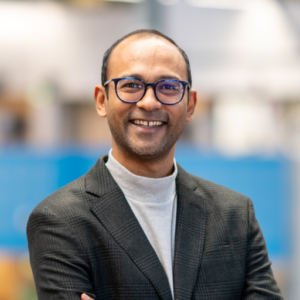
Lourens Waldorp is an Associate Professor at the University of Amsterdam within the Faculty of Social and Behavioural Sciences , specifically the Department of Psychological Methods . His research focuses on network theory, causal inference, and statistical modeling in psychology and neuroscience. University of Amsterdam IAS Fellow (2024) His research interests include: Network psychometrics Causal inference in psychological models High-dimensional statistical methods Dynamical systems in psychopathology Graph theory applications Signal processing for biophysical data The trends in his recent publications center on causal modeling, network analysis of psychopathology, and statistical techniques for time-series data. He has developed methods for perturbation graphs, moderated network models, and dynamic intervention frameworks. Notable scientific awards : IAS Fellowship for 6 months (2024) He advises PhD students like Kyra Evers and collaborates with researchers across disciplines, including J. Haslbeck , D. Borsboom , and O. Ryan . His work intersects with network theory and clinical psychology .
Raquel Fernández is Full Professor of Computational Linguistics and Dialogue Systems at the University of Amsterdam, where she leads the Dialogue Modelling Group at the Institute for Logic, Language & Computation (ILLC). As Vice-Director for Research at ILLC and a Fellow of the ELLIS Society, she bridges computational linguistics, cognitive science, and artificial intelligence through her research on language use in multimodal and conversational contexts. PhD in Computational Linguistics from King's College London Prior research positions at University of Potsdam and Stanford University's CSLI Her work explores how cognitive constraints, social interaction, and perception shape language use, with a focus on: Visually-grounded language processing Multimodal dialogue modeling Model uncertainty and calibration Language grounding in multimodal data Language learning and semantic change Dialogue reference resolution Recent publications analyze multimodal reasoning limitations, cross-lingual knowledge consistency, and uncertainty modeling in dialogue systems. She has received multiple accolades including an ERC Consolidator Grant , NWO VENI/VIDI/Aspasia fellowships , and EMNLP/GenBench awards . Outstanding Paper Award (EMNLP 2023) Best Data Award (GenBench Workshop 2023) ELLIS Society Fellow ERC Consolidator Grant #819455 recipient NWO VENI/VIDI/Aspasia awardee As a leader in academic service, she serves on the SIGDAT Executive Committee and chairs multiple conference committees. Her lab develops models for multimodal dialogue, visual storytelling, and grounded language understanding.
Hyosang Lee is an Assistant Professor in the Robotics Section of the Mechanical Engineering Department at Eindhoven University of Technology (TU/e). He holds a PhD from KAIST and has held research positions at the Max Planck Institute and University of Stuttgart. His work focuses on tactile sensing technologies, including artificial skin development, soft robotics, and integration of sensory systems with AI. Bachelor's: Mechanical Engineering, Korea University Master's: Robotics and Mechanical Engineering (double major) PhD: Mechanical Engineering, KAIST (2017) Research interests span tactile sensor design, electrical impedance tomography (EIT), and human-robot interaction. His group emphasizes creating scalable, flexible tactile systems for robots. Recent work includes air pressure sensing for force estimation and biomimetic skin materials. Publications highlight innovations in multi-directional force sensing, soft component technologies, and haptic interfaces for autism therapy. He teaches 'Dynamics and Control of Robotic Systems' and serves on the editorial board of npj Robotics . No formal student advisees are listed, though his lab, the Tactile Sensing and Robotic Skin Group , likely involves graduate researchers. His research contributes to UN Sustainable Development Goals related to health and technology.
Dr. Rong-Hao Liang is an Assistant Professor at Eindhoven University of Technology (TU/e), affiliated with both the Future Everyday Group (Department of Industrial Design) and the Signal Processing Systems Group (Department of Electrical Engineering). His research bridges intelligent sensing systems and user interface technology for ubiquitous computing and embodied human-computer interaction . He co-organized international ACM conferences (CHI, UIST, DIS) and has over 70 peer-reviewed publications and 10 patents. PhD in Computer Science (2014) and MSc in Electrical Engineering (2010) from National Taiwan University Founded GaussToys Inc. in 2015, focusing on magnetic-field sensors Cross-appointed to Electrical Engineering in 2021 His research explores intelligent sensing systems , tangible user interfaces , and physiological sensors for real-world challenges. Key trends in his work include ubiquitous health monitoring (e.g., preterm infants), wearable technology , and innovative interaction design . Articles like GaussBits and NFCStack demonstrate his focus on magnetic and RFID-based tangible systems . Scientific awards include the ACM CHI 2013 Best Paper Award , 2014 Honorable Mentions , and the ACM SIGGRAPH Asia 2012 Emerging Technologies Prize . He mentors passion-driven projects in user interface design and embedded systems , emphasizing technical rigor and creativity. His STRAP project (2020–2025) addresses heart disease prevention via big data and AI . Labs and teams include the Future Everyday Group and Signal Processing Systems Group , with collaborations across healthcare , education , and technology startups . His work aligns with UN Sustainable Development Goals , particularly good health and well-being .
Khiet P. Truong is an Associate Professor affiliated with the Digital Society Institute and the Human Media Interaction group. Their research focuses on the intersection of artificial intelligence, robotics, and human-computer interaction, with particular emphasis on speech emotion recognition, conversational agents for children, and multimodal interaction analysis. Recent work includes exploring how robots can restore trust through apologies, benchmarking Dutch automatic speech recognition systems, and developing child-friendly interfaces for cultural heritage archives. Truong has also investigated physiological signals like laughter and stress markers in speech across diverse contexts. Scientific Awards : Best Functional Design Award (2019) Research Trends : Analysis of speech patterns, emotion recognition, robot-human dialogue, and multimodal behavioral cues dominate their recent publications. Key subfields include Dutch language processing, laughter classification, trust indicators in child-robot interactions, and healthcare applications of speech technology. Academic Activities : Chair of the 26th ACM International Conference on Multimodal Interaction (2024) Examiner roles for PhD defenses and research evaluations (2024–2023) Contributions to workshops on emotion representation and social signal processing
Himanshu Verma is an Assistant Professor at the Knowledge and Intelligence Design Group within the Faculty of Industrial Design Engineering at Delft University of Technology. His research focuses on Human-AI Collaboration, Cognitive Empathy, and designing AI systems attuned to human needs. Prior to TU Delft, he held postdoctoral roles at the University of Fribourg, EPFL, and HES-SO Valais-Wallis, Switzerland. Education: PhD in Computer Science (EPFL, Switzerland), focusing on collaborative group interactions and shared environments. Postdoctoral research in Human-Computer Interaction and Ubiquitous Computing. Research Interests: Empathy-Centric Design for inclusive technologies. Social Signal Processing in human-AI interactions. Health, well-being, and accessibility in AI systems. Key Projects: Co-leads the PERISCOPE (H2020) research project. Designs tools like EmpathiCH and COCTEAU for empathy-driven decision-making. Teaching: Design Analytics (2023–2024). Empirical Design Research (2024). Labs & Teams: Active in the Knowledge and Intelligence Design Group, focusing on AI ethics, hybrid workspaces, and empathetic systems.
Prof. Dr. J. Ellers is a Full Professor at the Faculty of Science, Vrije Universiteit Amsterdam , and a member of the Amsterdam Institute for Life and Environment . His research focuses on understanding how an individual’s phenotype is shaped by interactions between genes, genome, and environment , employing molecular, physiological, and experimental tools within an evolutionary framework. Ellers contributes to the Netherlands Society of Evolutionary Biology (NLSEB) as a co-founder and serves as Vice-Chair of the Dutch Biology Council , advocating for biology research and education in the Netherlands. Research Interests: Ellers explores the intersection of evolutionary biology, ecology, and environmental science , with key themes in phenotypic plasticity, urbanization effects on species, trait-based ecology, and adaptive signaling . His work spans soil fauna dynamics, invasive species impacts, and metabolic adaptations , emphasizing interdisciplinary approaches to link mechanisms with ecological and evolutionary outcomes. Recent Publications highlight trends in urban ecology, climate change impacts, and trait evolution . Notable studies examine how noise and light pollution alter animal communication , high-sugar diets affect microbiomes , and robot morphologies reflect biological systems . His research also addresses data interoperability through initiatives like ShareTrait and global soil arthropod assessments . Scientific Contributions: Ellers advocates for open-access publishing and interdisciplinary climate change experiments. His leadership in the Dutch Biology Council and co-founding of NLSEB reflect sustained commitment to scientific policy and community engagement. Supervised 23 PhD theses and teaching courses like Ecosystem Services and Scientific Advocacy underscore his mentorship and educational impact.
Sal Hagen is a postdoctoral researcher at the Institute for Logic, Language and Computation (ILLC) at the University of Amsterdam, working within the Natural Language Processing & Digital Humanities group. His research focuses on the intersection of computational methods and cultural analysis, particularly examining online communities, political discourse, and meme culture. His educational background includes a Research Master's in Media Studies from the University of Amsterdam, for which he received the prestigious 2018 Internet Thesis Prize in the Internet & Social Sciences or Humanities category for his work "Here I Am, Praying to an Egyptian Frog: Exploring Political Fluidity on 4chan/pol/". He also won the Audience Award for his presentation at the ceremony. Hagen's research interests center on understanding the dynamics of online communities, with particular expertise in 4chan and related platforms. His work combines qualitative and quantitative approaches to analyze political discourse, far-right movements, and the evolution of memes across digital spaces. He examines how anonymity, platform architecture, and cultural context shape online interactions and political expression. His publication record demonstrates a consistent focus on tracing political movements through digital footprints, with particular attention to the interplay between platform-specific cultures and broader political trends. Hagen's work often bridges computational social science with cultural studies, creating methodologies that capture both the quantitative patterns and qualitative meanings of online discourse. Scientific Awards: 2018 Internet Thesis Prize (Internet & Social Sciences or Humanities category) Audience Award for presentation at Internet Thesis Prize ceremony Hagen has secured significant research funding, including an NWO PhD grant for humanities research running from 2019-2024. He has been involved in multiple research projects including the CAT4SMR project (2024), OILab (2017-present), and the ERC-funded ODYCCEUS project (2018-2019). As part of OILab (Online Intelligence Lab), Hagen contributes to research on online political subcultures, while his work on the CAT4SMR project focuses on stabilizing and developing tools for social media data collection and analysis. He is also the developer of the 4CAT Capture and Analysis Toolkit, which provides transparent and traceable methods for social media research.
Gonzalo Nápoles is an Assistant Professor at Tilburg University's School of Humanities and Digital Sciences, Department of Cognitive Science and AI. He holds a Doctoral Degree in Computer Science from Rough Cognitive Networks (2014–2017). His research focuses on AI applications in cognitive modeling, pattern classification, and neural networks with interdisciplinary applications in healthcare, finance, and social sciences. Key research areas include Fuzzy Cognitive Maps, data augmentation techniques for neuroimaging, and interpretable machine learning systems. He actively contributes to UN Sustainable Development Goals related to education and innovation. Recent work explores AI ethics, financial risk assessment using dynamic networks, and sensory processing disorder analysis through neural networks. Education: Doctoral Degree in Computer Science, 2017 (Thesis: Rough Cognitive Networks) Prize-winning research includes Best Paper Awards at CIARP 2021 and IWAIPR 2023. He collaborates internationally, hosting academic visitors and serving on multiple PhD committees. Current projects involve stock prediction using graph neural networks and fMRI data augmentation methodologies. Awards: Best Paper Award - CIARP 2021 Best Paper Award - IWAIPR 2023 Nápoles advises on PhD theses in cognitive science and AI applications. His work bridges theoretical advancements with practical implementations in healthcare, finance, and urban systems.
Raymond H. Cuijpers is an Associate Professor at Eindhoven University of Technology in the Human Technology Interaction group. His research focuses on Cognitive Robotics , Human-Robot Interaction , and Artificial Intelligence for cognitive agents, with applications in healthcare robotics and aging population support. PhD in Physics of Man from Utrecht University (2000) Postdoctoral research at Erasmus MC Rotterdam and Radboud University Nijmegen Key research areas include: Developing socially intelligent robots with proper social cue interpretation Hybrid AI approaches for real-world complexity handling Visual-haptic perception integration in human motor control Service robots for COPD patient assistance (KSERA project) Rescue robotics and tele-operation applications Recent research output (2025) includes studies on: Personalization in human-robot communication Optimal lighting for elderly visual perception Human-robot bonding mechanisms Interactive sensorized platforms for homecare (GUARDIAN) Audiovisual temporal integration in virtual environments He coordinates large-scale European projects like GUARDIAN and previously KSERA, contributes to sustainable development goals through healthcare robotics, and serves on editorial boards of leading journals including International Journal of Social Robotics . His work spans both technical robotics development and human-centric interaction studies.
Netherlands Institute for the Study of Crime and Law EnforcementNetherlands
Virginia Pallante is a Postdoctoral Researcher at the Netherlands Institute for the Study of Crime and Law Enforcement (NSCR) since 2020, specializing in ethological analysis of human behavior within criminological contexts. Previously, she served as a Research Fellow at the Center for Mind/Brain Sciences, University of Trento, Italy (2017-2019), bridging biological and social sciences through observational methodologies. Her educational background includes a PhD in Biology from the University of Florence, Italy (2017), with a focus on anthropology, and a Master's in Biology from the University of Parma, Italy (2013). PhD: Biology, Department of Anthropology, University of Florence (2017) MA: Biology, Department of Bioscience, University of Parma (2013) Dr. Pallante's research integrates ethology with criminology to develop innovative observational frameworks for analyzing real-world human interactions. Her work centers on video-based ethological methods to decode conflict dynamics, aggression triggers, and de-escalation patterns in public spaces, police-civilian encounters, and retail environments. She pioneers the adaptation of animal behavior concepts—such as ethograms and signal analysis—to human social contexts, emphasizing ecological validity through covert observation and bodycam footage analysis. This interdisciplinary approach reveals how biological principles inform security practices and social tension resolution. Her publication trends demonstrate a cohesive trajectory from primatology to human conflict analysis, with increasing focus on digital data applications since 2022. Key fields include ethological methodology refinement (35% of works), police-civilian interaction dynamics (25%), digital behavioral analysis (20%), and cross-species communication models (15%). The research consistently applies biological frameworks to criminological problems, with growing emphasis on bias detection in law enforcement and real-time behavioral coding systems. Dr. Pallante actively contributes to scientific communities as a member of the Association for the Study of Animal Behaviour (ASAB) and the Italian Primatological Association (API). Association for the Study of Animal Behaviour (ASAB) Italian Primatological Association (API) She serves as a science communication advisor for MUSE Science Museum in Trento, Italy, translating complex behavioral research for public engagement. Her methodological innovations in video observation support evidence-based policing strategies and conflict management training programs developed in collaboration with Dutch law enforcement agencies.
Dr. Almila Akdag is an Assistant Professor in Human-Centered Computing at Utrecht University's Faculty of Science, Department of Information and Computing Sciences. As a Digital Humanities scholar with expertise spanning new media analysis, bibliometrics, and information visualization, she combines qualitative and quantitative methods to study humanities and social data. Research Focus Her interdisciplinary research bridges: Digital Humanities : Computational analysis of cultural artifacts including paintings, poetry, and oral histories Human-Centered AI : Developing empathetic and accessible AI systems Trauma Informatics : Analyzing breathing patterns in oral histories of trauma survivors Cultural Analytics : Studying art communities and online creative platforms Following the 2023 Turkey/Syria earthquake, she is creating an oral history archive to document collective memory of the disaster, with particular focus on Turkish, Kurdish and Syrian diaspora experiences. Awards and Recognition NWO VENI laureate for 'deviantArt: Mapping the Alternative Art World' project Co-initiator of Mellon Grant: 'Tools for Analysis and Visualization of Large Image/Video Collections for Humanities' Leadership and Service Workgroup leader of 'Visual Media and Interactivity' for DARIAH-EU Founding member of International Society for Knowledge Organization (ISKO LC Low Countries Chapter)
Dr. Aurelien Baillon is a Professor of Economics of Uncertainty at the Erasmus School of Economics , Erasmus University Rotterdam, specializing in the Department of Applied Economics . His research focuses on individual decision-making under risk and ambiguity, combining empirical and theoretical approaches to understand probability elicitation and expert opinion aggregation. Key research areas: Behavioral Economics, Risk Attitudes, Bayesian Modeling Major projects: Bayesian Markets , Personal Model of Trumpery , Malakoff Humanis Chair His recent publications explore ambiguity theories , cybersecurity decision-making , and linguistic deception detection . Notable grants include the ERC Starting Grant (2016) and NWO Vidi Grant (2014). Collaborations span institutions like BRiO , HITS Institute , and GATE . The Datavisualization project with Alice Havrileck demonstrates his interdisciplinary approach to uncertainty analysis.
Martijn Mes is a full professor of Transportation and Logistics Management and chair of the Industrial Engineering & Business Information Systems section at the University of Twente, Netherlands. He leads research and education initiatives that integrate AI, simulation and optimisation into logistics and supply-chain innovation. Education: Ph.D. in Operations Research, University of Twente – 2008 M.Sc. in Applied Mathematics, University of Twente – 2002 Post-doctoral researcher, Princeton University, Dept. of Operations Research & Financial Engineering Research focus: Mes develops quantitative models and AI techniques for strategic, tactical and operational logistics challenges. His work spans three application pillars: Emergency & humanitarian logistics – rapid relief distribution with trucks and UAVs Urban logistics – city distribution, self-organising systems and last-mile innovations Sustainable logistics – synchromodal transport, green ports and electric/autonomous fleets Methodologically he combines approximate dynamic programming, reinforcement learning, multi-agent simulation, discrete-event simulation and stochastic optimisation to create decision-support tools for industry and government. Publications trend: Recent articles (2025-2022) exhibit a strong emphasis on integrating reinforcement learning and stochastic optimisation into dynamic vehicle routing, drone-assisted delivery and post-disaster inventory allocation, signalling a shift towards data-driven, real-time logistic systems. Grants & projects: Mes has coordinated and participated in numerous national and European projects on sustainable logistics, urban distribution, port optimisation and healthcare logistics, frequently collaborating with industry partners and public bodies. Teaching & supervision: He coordinates and lectures in the BSc and MSc programmes Industrial Engineering & Management, offering courses on simulation, queueing theory, dynamic programming, Markov chains, transportation management and technology management. He has authored a widely used Plant Simulation tutorial and supervises PhD candidates working on AI-driven logistics, autonomous vehicles and digital twins.
Gwenn Englebienne is an Assistant Professor at the Digital Society Institute and Human Media Interaction group of Utrecht University. Their research focuses on Artificial Intelligence, Computer Vision, and Human-AI Interaction, with applications in robotics, health, and social computing. They have contributed to over 80 research outputs since 2007, emphasizing embodied AI, social robotics, and explainable machine learning. Research interests span activity recognition, teleoperation systems, and ethical AI design. Notable work includes developing GNN-based group detection algorithms and evaluating chatbot reliability through automated question-answering frameworks. Their studies often bridge technical innovation with human-centered design, such as measuring embodiment via pupil dilation or addressing asymmetry in video-conferencing interactions. Key collaborations include work on social robotics, telepresence systems, and health monitoring using ambient sensors. Publications span conferences like IDA, CogMI, and LREC-COLING, reflecting interdisciplinary impact. A dataset on robot social positioning behavior is publicly accessible via 4TU.Centre for Research Data. Current work explores semi-supervised domain adaptation, spiking neural networks, and the psychological dimensions of AI trustworthiness. They lead initiatives in the Digital Society Institute to align technological advancements with societal needs.