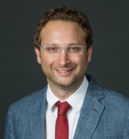
Michael Clare is a Professor Adjunct Senior Research Fellow at The University of Western Australia's School of Allied Health, specializing in Social Work and Social Policy. His research focuses on child and family welfare, elder abuse prevention, and policy development. He has contributed to over 35 publications and secured 15 grants, including ARC-funded projects on children's courts and elder abuse. Notable achievements include the 2020 Adam Sutton Crime Prevention Award. Research Interests: Evaluation of social policies addressing child welfare and homelessness Aboriginal child welfare and cultural preservation Legal frameworks for elder abuse prevention Grants & Projects Challenges Possibilities & Future Directions - National Assessment of Children's Courts (ARC, 2008-2010) Evaluation of Foster Care Impacts (2006) Anglicare Youth Suicide Program Assessment (2002) His work bridges academic research with practical solutions for vulnerable populations, emphasizing collaboration with criminal justice agencies and social services.
Dr. Makedonka Radulovic is an Associate Professor at the Institute of Family Studies, Faculty of Philosophy, Ss. Cyril and Methodius University in Skopje. She holds a PhD in European Integration Studies (2011) and has extensive experience in teaching and research related to family dynamics, health policy, and human rights. Her research explores intersections between European Union policies and Macedonian societal structures, with a focus on family education, health equity, and cultural values. Education: Bachelor's in Journalism (2004), Faculty of Law, Ss. Cyril and Methodius University Master's in European Studies (2009), Institute of Sociology PhD in European Integration Studies (2011), Institute of Sociology Research Interests: European social policy, family structures, healthcare rights, marital education, globalization impacts, and human rights compliance. She actively participates in international conferences and serves as National Coordinator for COST Action 18123 (European Family Network) and Vice President of the European Movement of Macedonia. Teaching Roles: "Contemporary Challenges of Families in Europe" "The Family in EU Strategies" "Family Health and Healthcare" "Tradition in European and Macedonian Families" "Family, Marital Education, and Communication" Labs/Teams: Leads research initiatives at the Institute of Family Studies, collaborating with EU networks and local policymakers to advance family policy frameworks.
Gideon Nave is the Carlos and Rosa de la Cruz Associate Professor of Marketing at The Wharton School, University of Pennsylvania. He holds a prominent position within the Department of Marketing and contributes significantly to the school's research and teaching missions in consumer behavior, marketing analytics, and decision sciences. His academic journey began with B.Sc and M.Sc degrees in Electrical Engineering from the Technion – Israel Institute of Technology, specializing in Signal Processing. He then pursued and earned his PhD in Computation & Neural Systems from the California Institute of Technology (Caltech), establishing the interdisciplinary foundation for his current research program. Nave's research focuses on how technological developments in measurement instruments have granted unprecedented access to individual-level data. His work spans several interconnected domains: Consumer neuroscience and neuroeconomics Applications of genetic data in marketing AI's impact on creativity and consumer research Ethical implications of new data collection technologies Decision-making processes across various contexts He investigates how digital footprints of online behavior, MRI, genotyping, and hormonal assays can help understand consumer preferences and behavior, while critically evaluating the ethical challenges these technologies present. His publication record demonstrates a clear trajectory toward understanding the intersection of emerging technologies and consumer behavior. Recent work particularly emphasizes AI applications in marketing research, genetic data utilization for personalization, and neuroscientific approaches to understanding decision-making processes. His methodological approach often combines large-scale datasets with rigorous experimental designs, contributing significantly to both theoretical advancement and practical applications in marketing. Nave's contributions to the field have been recognized with several prestigious awards: National Science Foundation Faculty Early Career Development (CAREER) Award (2020-2025) Association For Consumer Research (ACR) Early Career Award (2024-2025) APS Rising Star Award (2020) Poets & Quants Selection as one of the "World's Best 40 B-School Professors under the Age of 40" (2021) As a recipient of the NSF CAREER Award, Nave leads significant research initiatives examining the applications and ethical implications of new measurement technologies in marketing and consumer behavior. His work has attracted considerable media attention, with features in major outlets including The New York Times, The Guardian, CNN, and The Economist, reflecting the broad relevance and impact of his research. While specific lab names aren't prominently featured in his public profile, Nave's research appears to involve extensive interdisciplinary collaborations spanning neuroscience, genetics, computer science, and marketing. His publications frequently include co-authors from diverse disciplinary backgrounds, suggesting a team-based research approach that bridges traditional academic boundaries.
Dr. Tamara Blakemore is an Associate Professor in Social Work at the University of Newcastle 's School of Humanities, Creative Industries and Social Sciences. Her career spans academia, policy development, and clinical practice, with particular focus on trauma-informed social work , youth violence , and institutional child sexual abuse . A leader in experience-based learning models , she co-developed the innovative Name.Narrate.Navigate (NNN) program for trauma-exposed youth. Education: PhD, Bachelor of Arts (Psychology), Bachelor of Social Work (Honours) from the University of Queensland Tamara's research explores intergenerational trauma , systemic oppression , and community resilience through longitudinal studies like the Longitudinal Study of Australian Children . Her work emphasizes visual methodologies , deep listening practices , and Aboriginal knowledge integration to address complex social issues. Recent publications highlight trauma-informed tools ( Now.See.Hear! ), gendered violence dynamics , and trauma's impact on empathy development . These contributions demonstrate her commitment to translating research into practice through community-based participatory frameworks . Scientific Awards: Work Integrated Learning Staff of the Year (2014, 2012) Mid-Career Researcher Award (2018) College Excellence Award for Industry Engagement (2022) Finalist - Engagement Excellence Award (2023) Tamara maintains clinical practice with Hunter New England Area Health while serving as Equity Ambassador for Community Wellbeing at the University of Newcastle. Her multidisciplinary collaborations with legal institutions and disability sector organizations demonstrate her commitment to social justice and policy innovation .
C.J. Pascoe is an Associate Professor of Sociology at the University of Oregon's College of Arts and Sciences. She specializes in studying gender, sexuality, inequality, and educational systems through ethnographic methods. University of Oregon (2006-present) Colorado College (2006-2011) Digital Youth Project (2004-2006) Her research examines how schools perpetuate and address systemic inequalities through: Gender and sexuality dynamics Homophobic discourse in adolescent culture Technology's role in youth socialization "Regime of kindness" critiques Hybrid masculinity analysis Racialized organizational behaviors Recent publications focus on: 2025: Racialized emotions in institutions 2024: Transition from protection to care frameworks 2023: Anti-bullying strategies and digital youth behavior Scientific recognition includes: AERA Book of the Year (2007) ASA Honorable Mention (2007) Public engagement features: Media appearances (Frontline, NY Times, NPR) Advisory roles for Born This Way Foundation, Gay/Straight Alliance Network Books translated into multiple languages
Sergio M. González serves as Associate Professor of History at Marquette University, specializing in twentieth-century U.S. migration, labor, and religious history with emphasis on Latino communities in the Midwest. His scholarship examines faith-based social movements and Latino community formation through historical analysis of religious institutions and civil rights activism. Education Ph.D. in History, University of Wisconsin-Madison Research Focus González investigates intersections of Latino religious identity, immigration, and social justice movements, particularly within Midwestern urban contexts. His work bridges historical scholarship with contemporary debates on sanctuary policies, belonging, and the role of faith communities in immigrant rights advocacy. Key themes include the development of Latino civil society, religious-political mobilization, and the historical roots of current immigration debates. Publication Trends His 15 most recent publications (2016-2024) demonstrate sustained focus on sanctuary movements, Midwest Latino history, and religious dimensions of immigration. The corpus reveals methodological emphasis on urban history and religious studies, with geographic concentration on Wisconsin, Chicago, and Philadelphia. Recent works increasingly analyze transnational religious networks and the historical continuity between 20th-century civil rights struggles and contemporary immigrant justice movements. Academic Engagement González teaches cross-disciplinary courses in History, Latino Studies, and the Honors Program covering Latino belonging, civil rights movements, urban settlement, and citizenship development. His public humanities work includes co-hosting Wisconsin PBS's educational series The Look Back and the podcast Sanctuary: On the Border Between Church and State , extending scholarly insights to broader audiences through media partnerships. Community Leadership As founding member of the Wisconsin Latinx History Collective, González leads initiatives documenting Midwest Latino heritage. His collaborative projects with Axis Mundi Media and Wisconsin PBS exemplify commitment to translating academic research into accessible public history resources that address contemporary social issues through historical perspective.
Francesco Rotondo is an Associate Professor at the Department of Civil, Environmental, and Architectural Engineering (DICEA) within the School of Engineering at Università Politecnica delle Marche. His research focuses on urban planning, regeneration, and sustainable development. Role: Associate Professor Department: DICEA University: Università Politecnica delle Marche Research Areas: Urban Regeneration, Placemaking, Circular Economy Rotondo’s work emphasizes participatory urbanism, ecological transition, and resilient public space design. Recent publications explore tactical urbanism in Italy, statistical analysis for circular economy policies, and cultural heritage integration in territorial planning. He engages with international research frameworks like Horizon Europe and contributes to national projects such as the National Recovery and Resilience Plan (NRRP). His outreach includes teaching roles in engineering programs and collaborations on seismic resilience in Central Italy.
Dr. Alia Dietsch serves as an Associate Professor in Parks, Protected Areas, and Natural Resources Management at The Ohio State University's School of Environment and Natural Resources. Her work bridges social science theory with practical conservation applications, focusing on human dimensions of natural resource management. She maintains an active research program collaborating with state and federal natural resource agencies to inform planning, management, and communication efforts. Dr. Dietsch employs social psychological approaches to understand how human cognition influences individual behaviors across various conservation contexts. Her research spans human cognition and behavior, nature-based recreation, noncompliance issues, equity and justice in conservation, public lands management, and human-wildlife interactions, with particular expertise in carnivore-related conflicts. She utilizes advanced methodologies including multilevel modeling, survey sampling, and geospatial analysis to investigate complex human-nature relationships. Her publication record demonstrates consistent scholarly output across high-impact conservation journals, with recent work examining trauma in nature-based leisure, trust in conservation partnerships, wildlife value orientations, and human dimensions of wildlife management. Her research increasingly addresses equity, justice, and power dynamics in conservation decision-making, reflecting evolving societal values toward wildlife. Dr. Dietsch leads the Dietsch Team which has worked extensively on human-nature interactions, carnivore conservation, wildlife management, nature-based experiences, and recreation management on public lands. She directs significant projects including The National Visitor Survey in partnership with the U.S. Fish and Wildlife Service, which has surveyed over 15,000 visitors across 110+ national wildlife refuges to inform management decisions. She also contributes to America's Wildlife Values project and the Environmental and Social Sustainability Lab. As an educator, Dr. Dietsch teaches ENR 2300 (Society and Natural Resources), ENR 3600 (Recreation Management on Public Lands), and ENR 6510 (Research Design for Environmental Social Sciences), mentoring numerous graduate students who appear as co-authors on her publications. Her work has practical applications for wildlife managers seeking to understand public perspectives and improve conservation outcomes through evidence-based approaches.
Kaveh Khoshnood is an Associate Professor of Epidemiology (Microbial Diseases) at the Yale School of Public Health, where he serves as Director of Undergraduate Studies and Faculty Director for the Humanitarian Research Lab. He is Program Co-Director of the Global Health Ethics Program at the Yale Institute for Global Health and an executive committee member at the Yale Council on Middle East Studies. Dr. Khoshnood's academic affiliations span multiple departments and organizations including: Epidemiology of Microbial Diseases (Primary Appointment) School of Nursing (Secondary Appointment) African Studies Center for Interdisciplinary Research on AIDS Climate Change and Health Formative Childhood and Peace Building GEOHealth-MENA program Global Health Studies Yale Center for Asylum Medicine Yale Institute for Global Health Trained as an infectious disease epidemiologist with over three decades of experience, Dr. Khoshnood specializes in HIV prevention research among people who use drugs and other at-risk populations. His research interests encompass epidemiology and prevention of HIV/AIDS, research ethics, and humanitarian health, with particular focus on health and human rights, international relations, and ethical dilemmas involving vulnerable populations. His work spans multiple continents, with active research and mentoring in China, Lebanon, and Bhutan. Dr. Khoshnood's recent scholarly output demonstrates significant contributions to understanding healthcare delivery in conflict zones, with emphasis on Ukraine, Syria, and Yemen. His work combines epidemiological methods with human rights documentation, producing actionable evidence for humanitarian response. Through the Humanitarian Research Lab, he has pioneered methodologies for documenting war crimes against healthcare infrastructure and exposed Russia's program of coerced adoption of Ukrainian children. Among his notable recognitions are the Teacher of the Year Award from the Yale School of Public Health and the Surgeon General's Certificate of Appreciation. Dr. Khoshnood has served as a consultant for the Office of AIDS Research at the National Institute on Drug Abuse, extending his impact on national health policy. As Faculty Director of the Humanitarian Research Lab, Dr. Khoshnood oversees a team that analyzes open source and remote sensing data, including satellite imagery and social media information, to document humanitarian crises and support operational response. The Lab maintains rigorous chain-of-custody procedures for data preservation to support accountability mechanisms. Their real-time analyses provide critical support to partners delivering healthcare in conflict settings worldwide.
Univ.-Prof. Dr. Franz-Stefan Meissel is a full Professor of Roman Law with a focus on European Private Law Development at the Faculty of Law, University of Vienna. He serves as Vice-Dean of the Faculty, Director of the Institute for Roman Law and Ancient Legal History, and holds visiting professorships at institutions including University of Paris Cité, Paris Panthéon-Assas, Montpellier, Roma Tor Vergata, and Cologne. His research bridges Roman law, comparative legal history, and post-war restitution practices. Academic Leadership includes directing the University of Vienna Summer School (2007-present), chairing the Vienna Legal History Society (2001-2002, 2017-2018), and spearheading doctoral programs like the Vienna Doctoral Academy "Communicating the Law" (2016-2020). He co-founded the University of Vienna Law Review and edits the Journal of Legal History of the Savigny Foundation (Romance Studies). Research Focus centers on Roman law's influence on European private law Historical and comparative analysis of quasi-contractual liability (negotiorum gestio) Art restitution under Nazi and post-war contexts Evolution of property transfer doctrines Fin de siècle Viennese jurisprudence Legal gender studies intersections Scientific Awards include the Figdor Prize (1994), Premio Boulvert (2004), and Gold Medal from University Federico II (2004). He was elected a full member of the Academia Europaea (MAE) in 2023. Additional Roles encompass participation in advisory committees (Leopold Museum Provenance Issues, 2010-2020), editorial boards, and international academic networks. Contact: Mag. iur. (1988), Dr. iur. (1993), Habilitation (2000), Institute for Roman Law, University of Vienna (Schenkenstraße 8-10, 3rd floor).
Jung Sim Jun is an Associate Professor of Social Work at Kansas State University's College of Arts and Sciences, with affiliate appointments at the Center on Aging and Johnson Cancer Research Center. Her work focuses on health disparities and cancer literacy among minority and immigrant older adults, particularly Korean immigrants and American Indian populations. Education: Ph.D. in Social Work, University of Missouri-Columbia (2017) M.S.W., Wichita State University (2012) B.Ed., Kang-Nam University, South Korea (1997) Dr. Jun's research examines psychological, social, and physical health among older adults through culturally tailored approaches. Her current projects include gastric cancer prevention for Korean immigrant elders using mobile health applications and breast cancer screening literacy among American Indian women. She investigates technology acceptance, social support networks, and mental health outcomes among rural and minority elders, with significant work on depressive symptoms among caregivers of HIV-affected children in Namibia. Her methodology integrates cross-cultural perspectives and community-engaged research to address health inequities. Her publication record (2019-2022) reveals three dominant research streams: mental health of older caregivers in HIV-affected communities (particularly in Namibia), technology adoption among immigrant and rural elders, and cancer health literacy interventions. These works consistently emphasize cultural adaptation, community-specific barriers, and interdisciplinary collaboration between social work, public health, and gerontology. Scientific Awards: NIH AREA R15 Grant (2022-2025) as Co-PI for cancer literacy research Scholar in Global & Intercultural Competence Award (2022) K-State Global Campus Excellence in Online Teaching Award (2021) Teaching and Mentoring Award from K-State Honors Program (2021) Multiple internal university grants for immigrant health research (2019-2022) Minority Fellowship Program Fellowship (2015-2017) Dr. Jun actively mentors undergraduate and graduate students in research projects related to gerontology and health disparities. She has secured over $500,000 in research funding including NIH grants and university awards for pilot studies on gastric cancer prevention among Korean immigrants and technology-based interventions for rural elders. As Faculty Advisor for Phi Alpha Honor Society and member of the Community Advisory Committee, she bridges academic research with community practice. Her work at the Johnson Cancer Research Center focuses on developing culturally appropriate mobile health applications for high-risk populations with elevated cancer incidence rates.
Michelle Mazurek is an Associate Professor of Computer Science and Director of the Maryland Cybersecurity Center (MC2) at the University of Maryland, College Park. She holds affiliations with UMIACS and is an Affiliate Associate Professor in Electrical and Computer Engineering (ECE). Her research focuses on human-centered security and privacy, emphasizing real-world user behavior analysis to improve security practices for professionals and end-users. Key areas include developer security education, end-user security behaviors, and encrypted messaging adoption. Education: Ph.D., Electrical and Computer Engineering, Carnegie Mellon University (2014) B.S., Computer Science, University of Maryland (2004) Research Interests: Dr. Mazurek investigates how humans interact with security systems, particularly in professional (e.g., sysadmins, developers) and everyday contexts. Her work addresses challenges like insecure code propagation from online forums, privacy implications of digital tracking, and safety needs of marginalized groups (e.g., sex workers). She leads the Security, Privacy, People (SP2) lab and collaborates with industry partners to design usable security tools. Awards: NSF CAREER Award (2020) CyLab Distinguished Alumni Award (2022) Best Paper Awards at USENIX Security (2018) and NSA (2016) Advising & Leadership: Mazurek advises multiple PhD students in computer science and oversees MC2’s postdoctoral fellowship program. Her leadership expands MC2’s interdisciplinary research in areas like blockchain security, post-quantum cryptography, and human-centered approaches. She also fosters collaborations with industry leaders such as Cisco and Northrop Grumman. Labs & Teams: Directs the SP2 lab within MC2 and participates in the Human-Computer Interaction Lab (HCIL). Past affiliations include CyLab and the Parallel Data Lab (PDL).
Thomas Choi is a Regents Professor and the AT&T Professor at Arizona State University's W. P. Carey School of Business, specializing in supply chain management. He leads the Complex Adaptive Supply Networks Research Accelerator (CASN-RA) and has advised major organizations like LG Electronics, Samsung, and the U.S. Department of Energy. His research focuses on supply chain design, multi-tier dynamics, and complex adaptive systems. He holds a Ph.D. from the University of Michigan (1992) and a B.A. from UC Berkeley (1980). Research Interests: Supply chain design, multi-tier management, supply network complexity, and resilience. Notable contributions include theories on triads in supply networks and supply chain financing. He has co-authored the Oxford Handbook of Supply Chain Management and been recognized as a Clarivate Highly Cited Researcher. Awards: 2018 Highly Cited Researcher, 2017 Emerald Citation of Excellence, 2016 Harold Fearon Best Paper Award. Collaborations span academia and industry, including a $15M USAID project in Ghana. Grants and Labs: Principal researcher in NSF-funded studies on supply network design and environmental performance. Co-directs CASN-RA and CAPS Research. Advised doctoral students now leading academic and industry roles globally. Service: Editorships in top journals, invited talks at institutions worldwide, and leadership in global executive education programs.
Dr. Lauren B Cattaneo, a Clinical Professor at George Mason University's Clinical Psychology Program, focuses on community psychology, marginalized populations, and social justice. Her work bridges individual experiences with systemic inequities, emphasizing partnership with community organizations in research and advocacy. Doctorate in Clinical/Community Psychology from University of Maryland (2001) Faculty at George Mason University since 2003 Her research centers on empowerment and resilience among survivors of intimate partner violence, exploring survivor-centered practices and systemic barriers. She also investigates transformative education strategies to cultivate civic engagement and social change. Recent publications highlight intersections of policy gaps in housing assistance for survivors, religious help-seeking dynamics, and structural factors influencing trauma responses. Her work spans empirical studies, theoretical frameworks, and service-learning pedagogy. Scientific awards include recognition for teaching and mentorship from George Mason University and the Society for the Psychological Study of Social Issues. Supervised 11 PhD students, including Kevin Ramseur II and Tahani Chaudhry Currently teaches courses on psychopathology, therapeutic communication, and social change
James V. Shuls is an Associate Professor and Department Chair of Educator Preparation and Leadership at the University of Missouri-St. Louis, College of Education. He also serves as the graduate program director of educational leadership and policy studies. Dr. Shuls earned his Ph.D. in education policy from the University of Arkansas and holds master's and bachelor's degrees in elementary education from Missouri State University and Missouri Southern State University, respectively. Dr. Shuls' research focuses primarily on teacher labor markets, school finance, and school choice. His expertise has led him to serve as an expert witness in the school finance case, Martinez/Yazzie v. New Mexico. His methodological approaches include longitudinal data analysis, ethnography, and various evaluation methods including randomized control studies and quasi-experimental design. His scholarly work appears in journals such as Social Science Quarterly, The Rural Educator, Educational Policy, Journal of Education Finance, and Journal of School Choice, where he serves on the editorial board. Recent publications address the four-day school week in Missouri, teacher pension systems, school finance equity, and the conservative appeal of private schools. His research often bridges academic rigor with practical policy implications. Before joining UMSL, Dr. Shuls served as director of education policy for the Show-Me Institute, where he remains a distinguished fellow. His practical classroom experience teaching first and fifth grade in Republic, MO provides valuable context for his research and policy analysis. Dr. Shuls actively engages with broader audiences through popular media, talk radio, and television appearances on education policy matters.