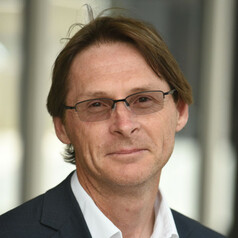
Shane Dawson is the Executive Dean of UniSA Education Futures and Professor of Learning Analytics at the University of South Australia. His work bridges social network analysis and learner interaction data to enhance teaching quality and educational outcomes. Affiliation : University of South Australia Research Focus : Learning Analytics, Curriculum Mapping, K-12 Decision-Making Systems, and AI in Education Recent Research Trends : Shane’s 2025 publications emphasize generative AI for curriculum analytics, ethical considerations in K-12 dashboards, and longitudinal graduate attribute monitoring. His articles often integrate psychometric models, social network tools, and open-source software like OVAL and SNAPP . Advising and Collaboration : As a co-developer of key learning analytics tools and a supervisor for research students, he collaborates globally with institutions such as Johns Hopkins University and Shahid Beheshti University of Medical Sciences. Labs and Teams : Shane leads UniSA’s Teaching Innovation Unit and is a founding member of the Society for Learning Analytics Research , driving institutional and international initiatives in educational technology.
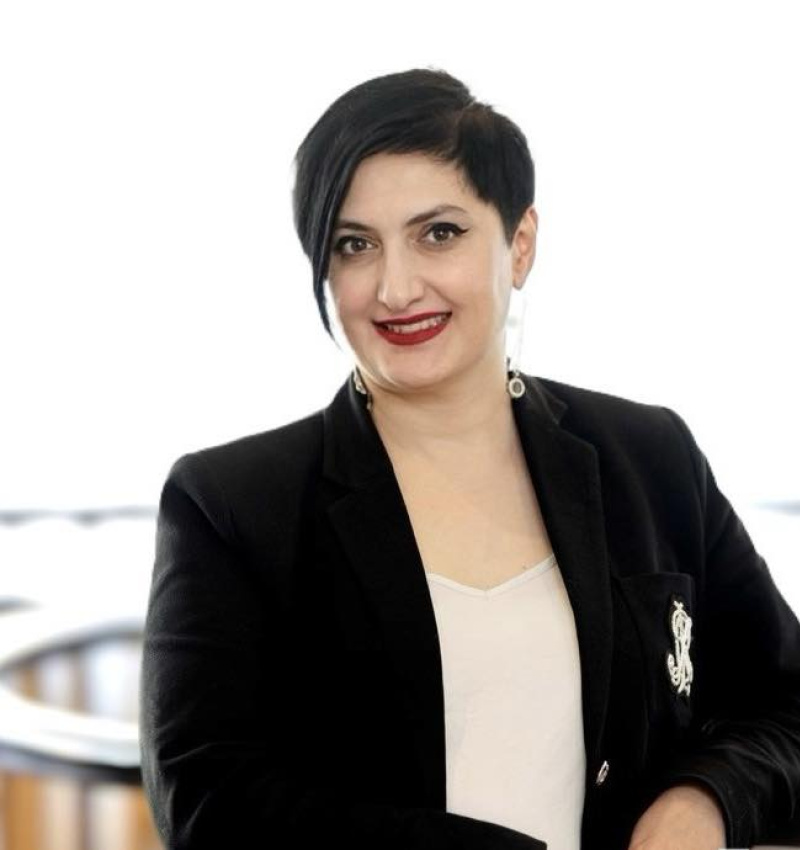
Nvard A. Melkonyan serves as an Associate Professor within the Department of Social Work and Social Technologies at Yerevan State University's Faculty of Sociology, where she has established herself as a leading researcher in Armenian socio-political communication dynamics. Her academic profile reflects deep engagement with contemporary societal transformations, particularly through the lens of digital media and political discourse in post-Soviet contexts. Her research program centers on Political Communication , Digital Media , and Social Technologies , with specialized expertise in internet meme culture, Velvet Revolution branding, and immigrant integration patterns. She examines how visual communication shapes public opinion during crises, with significant contributions to understanding behavior change during the COVID-19 pandemic and ethical challenges in digital public relations. Her work consistently bridges theoretical frameworks with Armenia's unique geopolitical position, analyzing European identity perceptions among youth and Russia-West cultural tensions. Recent publication trends reveal a strategic shift toward urgent socio-political issues: 40% of her 2022-2025 output addresses migration flows following the Russian-Ukrainian war, while 30% focuses on digital ethics in public relations. Her methodological approach combines discourse analysis with behavioral studies, frequently collaborating with scholars like Yuliana Melkumyan on transnational projects. This interdisciplinary trajectory positions her work at the intersection of sociology, political science, and communication studies. Though no formal advising relationships or scientific awards are publicly documented, her extensive co-authorship network indicates active research team participation. Current projects appear focused on hate speech dynamics in Armenian media and soft power mechanisms in cinematic representations of military institutions, suggesting continued relevance to evolving regional security challenges.
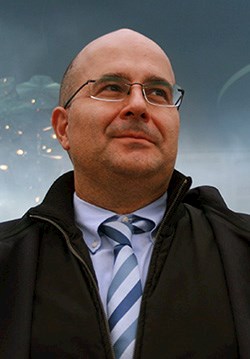
Giuseppe Grossi is Professor of Business Administration at Kristianstad University (Sweden), Research Professor of Accounting at Nord University (Norway), and Visiting Professor at Kozminski University (Poland). He serves as a part-time Associate Professor at the University of Siena (Italy) and has held visiting/researcher positions at Stockholm University, Sydney University, Victoria University of Wellington, and Kozminski University (2015–present). Kristianstad University: Department of Business Administration, Faculty of Economics Nord University: Research Professor of Accounting Kozminski University: Visiting Professor Research Focus: His work bridges smart cities , hybrid organizations , government accounting , and public sector auditing , emphasizing intersections with sustainability, governance, and digital transformation. He explores how accounting systems shape public value creation and accountability in complex institutional settings. Recent Publications: His 15 most recent articles (2023–2025) analyze topics including: Socio-technical imaginaries in smart city sustainability Performance measurement for social sustainability in municipalities Digital transformation's impact on auditing practices Hybrid organizations' accounting tensions IPSAS implementation across European countries Leadership dynamics at the European Court of Auditors Leadership & Editorial Roles: Grossi chairs the Comparative International Governmental Accounting Research (CIGAR) network since 2023 and serves on editorial boards of 12 journals, including Accounting, Auditing and Accountability Journal and Pacific Accounting Review . He is Editor-in-Chief of Journal of Public Budgeting, Accounting and Financial Management (since 2018) and Associate Editor of Qualitative Research in Accounting & Management (since 2021). Grants & Projects: He leads/co-leads research funded by the Swedish Research Council, Polish National Science Centre, Portuguese Foundation for Science and Technology, and Nordic Council of Ministers. Current projects include 'Measuring vulnerability – Reporting on social sustainability in Swedish municipalities' and 'Reinventing Auditing: A new role of the European Court of Auditors.'
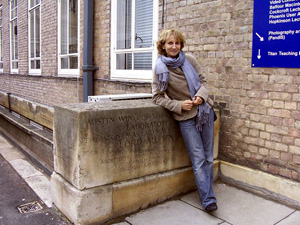
Soraya de Chadarevian serves as Professor in the Department of History and the Institute for Society and Genetics at the University of California, Los Angeles, where she bridges historical scholarship with contemporary bioscience through rigorous analysis of material practices and cultural contexts in the life sciences. Her academic trajectory spans over three decades with significant contributions to understanding molecular biology's development and human heredity's evolution from the nineteenth century to present. Her educational foundation includes a PhD in Philosophy from the University of Konstanz, Germany, and an Advanced degree (Diplom) in Biology from the University of Freiburg, Germany, providing unique interdisciplinary perspective. These qualifications enabled her dual expertise in scientific practice and philosophical inquiry that defines her scholarly approach. De Chadarevian's research centers on the intricate relationship between scientific practice and cultural context in the life sciences, with particular emphasis on visual and material dimensions of molecular biology and chromosome research. She examines how laboratory techniques, archival practices, and data systems shape biological knowledge, exploring themes like the microscope's role in heredity studies, genetic evidence in historical narratives, and pandemic responses. Her work reveals how scientific concepts like the double helix or human genome emerge through complex negotiations between technical possibilities, institutional frameworks, and societal concerns. Analysis of her recent publications shows a decisive shift toward contemporary scientific challenges including pandemic responses, data-intensive biology, and ethical dimensions of genetic research. While maintaining deep historical perspective, her scholarship increasingly engages with urgent present-day issues such as biobanking, forensic genetics, and the societal implications of genomic databases, demonstrating how historical understanding informs current scientific controversies. Her scientific recognition includes: National Science Foundation Scholar Award (2015-2021) Walther Rathenau Program Fellowship Max Planck Institute for History of Science Fellowship Fellowship at La Villette Fellowship at École des Hautes Études en Sciences Sociales Hamburg Institute for Social Research Fellowship Churchill College Cambridge Fellowship Institute for Advanced Studies in the Humanities Fellowship Research funding has been consistently secured through competitive grants, most notably the six-year NSF award supporting her chromosome history project. She actively mentors students through UCLA's graduate programs in History and the Institute for Society and Genetics, teaching specialized courses on genetics and society while supervising research on science-society intersections. Her collaborative approach extends to co-editing special journal issues and organizing international research networks. Through sustained engagement with institutions like the Max Planck Society and Cambridge University, de Chadarevian maintains active participation in global scholarly communities. Her current work involves interdisciplinary teams examining data practices in contemporary biology and historical dimensions of pandemic responses, positioning her at the forefront of science studies' engagement with pressing societal challenges.
Shuhao Fu is a Program Postdoctoral Fellow at the Santa Fe Institute (SFI) researching the intersection of machine learning and cognitive science. He completed his Ph.D. in Psychology at UCLA under advisors Hongjing Lu and Ying Nian Wu, following a B.S. in Computer Science and Mathematics from Hong Kong University of Science and Technology. His research examines human-like relational reasoning in AI systems through cognitive modeling and computational approaches. Research focuses on: Bridging human-machine reasoning gaps via analogical mapping Developing explicit relational representations in vision models Structural cognitive modeling for compositional understanding Multimodal reasoning and scene interpretation Relational knowledge representation in biological and artificial systems Publication trends show concentrated work in computational cognitive science (2021-2025), with evolving focus from visual analogy fundamentals to applications in 3D recognition, social interaction modeling, and mental health diagnostics. Recent work demonstrates increased emphasis on transformer architectures, multimodal integration, and human-AI comparative studies. Professional experience includes research internships at Google X and Mineral.ai, with prior affiliation at Johns Hopkins University's CCVL lab under Alan Yuille. Currently serves as reviewer for ICML, ICCV, and Cognitive Science Society conferences.
Heather O'Brien is a Professor at the School of Information , University of British Columbia, specializing in user engagement with digital technologies , information retrieval , and knowledge exchange . Her work bridges human-computer interaction and health informatics through projects like the User Engagement Scale (UES) and the PolarUs app for bipolar disorder management. Education: MLIS and PhD from Dalhousie University Research: Focuses on engagement theory, digital health, and university-community knowledge exchange Her STOREE project (SSHRC-funded) develops frameworks for open scholarship and community-centered metadata practices. She co-developed the internationally adopted UES tool for measuring technology engagement, translated into French, German, Italian, and Portuguese . Scientific Awards: 2022 ASIS&T Research in Information Science Award 2018 ASIS&T SIG USE Best Paper Award Professor O'Brien mentors graduate students in information behavior and digital health while leading interdisciplinary collaborations with institutions like CREST.BD and BC Centre on Substance Use .
Michalis Vazirgiannis is a Professor at LIX, École Polytechnique in France, where he leads the Data Science and Mining group (DaSciM). He holds a degree in Physics and a PhD in Informatics from Athens University (Greece), and a Master's degree in AI from Heriot Watt University, Edinburgh (UK). His academic career spans multiple prestigious institutions including Fraunhofer and Max Planck MPI in Germany, INRIA/FUTURS in Paris, AUEB in Greece, Telecom-Paristech, ENS in France, Tsinghua and Jiaotong Shanghai in China, and Deusto University in Spain. Professor Vazirgiannis's research focuses on machine and deep learning methods for graph analysis, including community detection, graph clustering, node embeddings, and influence maximization. His work in text mining encompasses Graph of Words, word embeddings with applications to web advertising and marketing, event detection, and summarization. He has active collaborations with industrial partners in analytics and machine learning for large-scale data repositories across various application domains such as recommendations, meeting summarization, influence metrics for scientific and social networks, and predictive maintenance. His recent publications demonstrate a strong emphasis on Graph Neural Networks, multilingual NLP (particularly for French and Arabic), and applications of deep learning to diverse domains including social networks, legal text, and biomedical data. There's a clear trajectory toward developing more efficient, explainable, and specialized models that address real-world challenges in data analysis. ERCIM fellowship Marie Curie EU fellowship Tencent "Rhino-Bird International Academic Expert Award" (2017) Best Paper Award at IJCAI 2018 Best Paper Award at CIKM 2013 Professor Vazirgiannis has supervised 29 completed PhD theses and has attracted significant R&D funding from national and international sources, including research agencies and industrial partners such as Google, Airbus, Huawei, Deezer, BNP, and LVMH. He leads or has led several academic research chairs including DIGITEO (2013-15), ANR/HELAS (2020-25), and AXA (2015-2018). The DaSciM research group, which he leads at École Polytechnique, has extensive experience in real-world R&D projects involving large-scale data mining. The team maintains active collaborations with major industrial partners including AIRBUS, Google, BNP, Tencent, and Tradelab, working on cutting-edge machine learning projects. The group has co-organized major conferences such as ECML PKDD 2011 and ECML/PKDD 2017 and participates in the senior organization of AI and data mining events like AAAI and IJCAI.
Dr. Christian Morgner is a Senior Lecturer in Cultural and Creative Industries at the Sheffield University Management School. He holds a PhD and MA, with expertise in complexity studies, relational sociology, and cultural networks. His research focuses on: Global cultural processes and innovation Diversity and inclusivity in creative industries Network analysis in urban informal settlements Dementia care through arts interventions Media events and translation dynamics Recent publications analyze cultural transformations in Santiago de Chile, relational creativity in Olympic ceremonies, and digital heritage politics in China. He has secured grants including the Rutherford Fellowship and Japanese Society for the Promotion of Science funding. Scientific awards include: Rutherford Fellowship Japanese Society for the Promotion of Science Postdoctoral Research Fellowship He supervises PhD students and teaches modules on critical theories in cultural and creative industries, marketing, and branding.
Professor Joseph Wood is a Professor of Visual Analytics at City St George's, University of London, where he serves as a founding member of the giCentre. His academic career spans over three decades, with continuous contributions to Geographic Information Science and visualization since 1990. He previously served as Head of Department for Computer Science at City University between 2014 and 2017. Professor Wood's educational background includes a PhD in Geographical Information Science from the University of Leicester (1996), an MSc in the same field from the University of Leicester (1990), and a BSc in Physical Geography & Geology from the University of Sheffield (1989). His academic progression shows steady advancement from Research Scholar at the University of Leicester (1990-1992) through various lecturer and senior positions to his current professorship. His research interests center on visual analytics and data visualization, with particular expertise in geographic information science and terrain analysis. Professor Wood has developed innovative methods bridging GI Science, Data Visualization, and education domains. His specific interests include narrative of visual analytic design, computational thinking in pedagogy, and novel visualization design for geographic data. His work demonstrates a consistent focus on making complex spatial data understandable through innovative visualization techniques. Analysis of Professor Wood's recent publications reveals a strong emphasis on practical applications of visualization techniques across diverse domains including transportation, epidemiology, sports analytics, and historical migration patterns. His work shows an evolution from foundational geographic information science toward broader applications in visual analytics, with increasing focus on narrative structures, responsive design, and accessibility considerations in visualization. The interdisciplinary nature of his research is evident in collaborations spanning computer science, geography, urban planning, and public health domains. Professor Wood has been actively involved in the academic community, serving on organizing and program committees for major international conferences including IEEE Infovis and VAST, Eurovis, GIScience, Spatial Accuracy, and Geomorphometry. His contributions to the field have been recognized through invitations to deliver keynote talks at prestigious venues ranging from GeoComputation to TEDx, where he presented on topics such as visualizing movement behavior of cyclists. As an advisor, Professor Wood has supervised numerous PhD and Master's students, with current supervision of Julia Crossley (Student conceptualisation of abstraction in computer science) and Jude Nzemeke (Understanding student misconception in recursive algorithmic thinking). His extensive supervision history includes completed PhDs on topics ranging from cycling behavior to spatio-social relations in photographic archives. His academic leadership extends to software development, with contributions to tools like litvis, elm-vega/el-vegalite, giCentre Utils, handy, and LandSerf GIS. Professor Wood is an active member of professional organizations including IEEE (2007-present), Association of Computing Machinery (ACM) (2007-present), and Association of Geographic Information (AGI) (1997-present), demonstrating his commitment to interdisciplinary collaboration across computer science and geographic information domains.
Rob Gleasure is a Professor in the Department of Digitalization at Copenhagen Business School (CBS), Denmark. His research focuses on the intersection of information systems, digital technologies, and human behavior, with particular expertise in blockchain technology, crowdfunding, AI applications, and technology adaptation. Based at Solbjerg Square 3 in Frederiksberg, he contributes to CBS's mission of advancing knowledge in business and society through digital transformation. Professor Gleasure's research spans several key areas within information systems and digital innovation: Digital finance and blockchain technologies, including cryptocurrency and financial applications Crowdfunding platforms and digital fundraising mechanisms Artificial intelligence applications in various domains including healthcare and banking Human-computer interaction and the psychological aspects of technology adoption Digital collaboration and the affective dimensions of online work Quantum computing infrastructure and emerging technologies His recent publications reveal an evolving research trajectory that increasingly addresses the societal implications of digital technologies. Gleasure has moved from foundational work on crowdfunding and blockchain to more complex examinations of AI ethics, gender bias in technological systems, and the psychological impacts of digital media. His research demonstrates growing attention to sustainable development goals, particularly those related to responsible consumption and production, reduced inequalities, and climate action. The interdisciplinary nature of his work bridges business, technology, and social sciences, often employing both qualitative and experimental methodologies. Professor Gleasure has served as a supervisor for numerous students (21 supervisor tasks mentioned) and has been active in academic service including co-chairing the ACM Collective Intelligence Conference in 2021. His research has attracted media attention, with contributions to discussions on cryptocurrency, carbon offsetting in aviation, and AI applications.
Oliver Janz is Professor of Modern History at the Department of History and Cultural Studies at Free University of Berlin, where he has been teaching since 2007. He previously served as Dean of the Department from 2017-2021 and has held visiting professorships at institutions including the German Historical Institute in Rome, University of Bern, and University of Trient. His academic leadership extends to editorial roles for multiple book series and journals focusing on modern Italian history, transnational history, and World War I studies. Doctorate (1991): Freie Universität Berlin - History of Protestant clergy in Prussia 1850-1914 (summa cum laude) Magister Artium (1985): Freie Universität Berlin - History Studies (1978-1985): History, Philosophy and Sociology at University of Heidelberg, Bielefeld, and Freie Universität Berlin Professor Janz specializes in several interconnected research areas that examine European history through transnational and comparative lenses. His primary focus is on the history of World War I, particularly examining commemoration practices, the cult of fallen soldiers, and the war's transnational dimensions. He has extensively researched the history of the European bourgeoisie, nation and nationalism in Europe, and the intersection of family, gender, and political identity. His work on Italian history spans from the Risorgimento through the Fascist period, with particular attention to religious and cultural dimensions of political movements. Janz is a leading scholar in transnational history methodology, exploring how historical phenomena transcend national boundaries and how comparative approaches can illuminate shared European experiences. Janz's scholarly output demonstrates a consistent focus on memory, commemoration, and the cultural dimensions of warfare, particularly World War I. His work reveals how societies process collective trauma through rituals, monuments, and narratives that intertwine religious, familial, and national identities. The international encyclopedia project 1914-1918-online represents a significant contribution to digital humanities, creating a global platform for understanding the war's multifaceted impacts. His research increasingly examines the digital representation of historical memory, bridging traditional scholarship with contemporary digital culture. Research fellowship from the DFG (2000-2004): "The Cult of the Fallen: Soldiers in Italy during the First World War" DAAD Fellowship (1996): "Exchange of Young Scholars between Italy and Germany" Fellow of the FAZIT-Stiftung (1990) Maison des Sciences de l'Homme Fellowship (1985) Fellowship Grant from the "Studienstiftung des Deutschen Volkes" (1979-1985) Professor Janz has supervised numerous master's students at Freie Universität Berlin, with thesis topics spanning European history from the 19th century to the contemporary period. His students have examined subjects including war commemoration, gender history, colonial encounters, and political movements across Europe. As editor of the "1914-1918-online" International Encyclopedia of the First World War, he has coordinated significant international research funding. His leadership extends to multiple research projects including Collaborative EuropeaN Digital/Archival Infrastructure (CENDARI), Making War, Mapping Europe, and studies on German Soldiers and the Ottoman Empire. Janz leads the research team focused on World War I studies at the Friedrich-Meinecke-Institut, which includes multiple researchers working on the 1914-1918-online encyclopedia project. His team collaborates with international partners across Europe and beyond, creating a network of scholars dedicated to transnational approaches to war history. The research group maintains strong connections with institutions including the German Historical Institute in Rome and participates in the Berlin Program for Advanced German and European Studies.
Edward J.K. Gitre is an Associate Professor in the Department of History at Virginia Tech (College of Liberal Arts and Human Sciences). He directs the NEH-funded digital initiative The American Soldier in World War II , which uses crowdsourcing and machine learning to analyze uncensored WWII soldier commentaries. Affiliations : Center for Human-Computer Interaction, ASPECT (Alliance for Social, Political, Ethical, and Cultural Thought) Research Interests include war and society studies, martial racial conflict, interdisciplinarity in social sciences (particularly the 'Culture and Personality' movement), and postwar American cultural legacy. He is working on three book manuscripts focusing on soldier readjustment, transnational social science dialogue, and David Riesman’s The Lonely Crowd . Grants & Awards : American Philosophical Society, Rockefeller Archive funding; CLAHS Excellence in Research, XCaliber and Diggs teaching awards. His scholarly works appear in journals like Journal of the History of the Behavioral Sciences and Current Research in Digital History . Teaching : Courses on WWII, digital history methods, postwar society, and martial racial conflict. He developed the History Minor in War & Society and mentored students in topics like modern American culture. Media : Regular contributor to Business Insider , The Conversation , and Washington Post .
Professor Miriyam Aouragh is a Digital Anthropologist at the University of Westminster, affiliated with the Communication and Media Research Institute (CAMRI). Her work critically examines the intersection of technology, revolution, and anti-capitalism across West Asia and North Africa, with a focus on Palestine, Lebanon, Jordan, and Morocco. Through ethnographic fieldwork and critical theory, she explores how digital infrastructures mediate resistance, memory, and identity under settler-colonialism and neoliberalism. Key Research Areas: Revolution, Infrastructure, Anti-Capitalism, Critical Race Theory, Digital Colonialism Awards: NIAS Fellowship (2023), Swiss Foundation Grant (2024), TNI Fellow (2023-2028) Academic Engagements: Co-Director, Arab Media Centre (2018-2020); Co-Lead, Global Media Research Group; Coordinator, Labor-Tech Social Justice Working Group Her publications, including Palestine Online (2011) and Infrastructures of Empire (forthcoming), analyze techno-social politics from the Arab Spring to Palestinian cyber resistance. She critiques Western liberal democratic narratives and advocates for decolonial digital praxis, arguing against corporate co-optation of social justice movements. Public Engagement: Aouragh is a vocal critic of Big Tech capitalism and Israeli digital occupation, delivering keynotes at events like the Tom Hurndall Memorial Lecture. She connects struggles across Palestine, Ferguson, and Standing Rock through frameworks of radical kinship and intersectionality.
Dr Liyuan Wei is an Associate Professor in Marketing at Southampton Business School, University of Southampton. She joined the university in 2024 after academic positions at Brunel University London and City University of Hong Kong. Her research explores intersections between digital strategies, consumer psychology, technology, wellbeing, and quantitative methods. PhD: Rotman School of Management, University of Toronto Her research focuses on responsible consumption, ethical marketing practices, and consumer wellbeing. She employs quantitative methodologies to examine digital marketing impacts and develops frameworks for healthy aging interventions through marketing strategies. Recent publications demonstrate expertise in tourism marketing, film industry analytics, healthcare interventions, and sustainability research. Key themes include mindfulness in ethical consumption, pandemic response strategies, and digital loyalty systems. Articles appear in journals like Journal of Policy Research in Tourism , International Journal of Research in Marketing , and Journal of Business Research . Teaching responsibilities include Marketing Research Methods, Marketing Analytics, Digital Marketing, and Strategic Marketing. She actively supervises PhD students in marketing-related topics and welcomes new applicants.
Christoph Witzenrath is a Professor for Premodern Slavery and Strong Asymmetrical Dependencies at the University of Bonn's Bonn Center for Dependency and Slavery Studies (BCDSS). His research spans Eurasian history, focusing on nomadic-settled relations, slave trade, and state-dependent group dynamics. Education: Ph.D. in History, King’s College, University of London (1999–2005) M.A. in History and Political Science, University of Freiburg, Humboldt University, and Free University Berlin (1991–1998) Witzenrath's work interrogates the structural gaps between premodern states and dependent populations, comparing Eurasian systems to community-oriented African models. His transdisciplinary approach integrates legal, cultural, and political frameworks, emphasizing liberation narratives and asymmetrical dependencies. Key article themes include Muscovite-Ottoman interactions, Siberian expansion, and transcultural legitimacy. His award-winning monograph Cossacks and the Russian Empire (2009) explores frontier governance and rebellion dynamics. Scientific Awards & Funding: DFG Priority Program funding (2017–2020) King’s College London research studentship (1998–2001) Leverhulme Early Career Fellowship (2007–2009) Shklar Fellowship at Harvard (2010) He has supervised 40 national/international lectures and mentored researchers like Turkana Allahverdiyeva and Stanislav Mohylnyi. As founding member of the Transottomanica project (2017–2020), he advanced mobility studies across Eurasia.