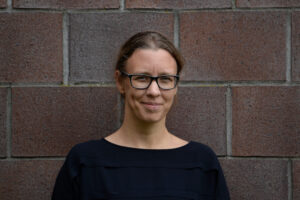
Ryan Galt is a Professor in the Department of Community & Regional Development at the University of California, Davis. His research focuses on the governance of agrifood systems, political ecology, and the intersection of agriculture, environment, and society across scales. He holds a Ph.D. (2006) and M.S. (2001) in Geography from the University of Wisconsin, Madison, and a B.A. (1999) in Geography from UC Berkeley. Key research themes include: (1) pesticide use and regulation in global food systems, (2) community-based food systems like CSA models, (3) wildfire resilience in agricultural landscapes, and (4) agroecological transitions in the Corn Belt. He emphasizes participatory methodologies and critical pedagogy in sustainability education. Recent work explores pandemic impacts on direct-market farmers, pesticide trade inequities, and institutional pathways for agricultural diversification. His publications span 30 years of addressing systemic challenges in food systems through interdisciplinary approaches.
Dr. Anil Ufuk Batmaz is an Assistant Professor in the Department of Computer Science and Software Engineering at Concordia University. His research focuses on Virtual Reality (VR), Augmented Reality (AR), and Human-Computer Interaction, with emphasis on interaction techniques, immersive analytics, and motor skill training systems. He holds a BSc in Electrical and Electronics Engineering (2007-2011), an MSc in the same field (2011-2013), and a PhD in Biomedical Engineering (2015-2018). His work bridges engineering and cognitive science, investigating how visual and haptic feedback impact user performance in immersive environments. Research interests include: 3D interaction techniques for mid-air tasks Effects of display technologies on motor coordination Hybrid UI design for mixed reality systems Training systems for precision tasks using VR Recent publications emphasize evaluation of AR/VR interfaces in healthcare, sports training, and collaborative environments. His work has appeared in venues like IEEE TVCG, ACM CHI, and ISMAR, addressing challenges in spatial navigation, error feedback, and system reliability.
Amelia Acker is an Associate Professor and Graduate Advisor/Director of Masters Studies at the University of Texas at Austin's School of Information. Her work focuses on the emergence of new information objects in wireless networks, digital preservation, and cultural memory. She holds a PhD with award-winning research on SMS standardization and mobile communication infrastructure. Prior to UT Austin, she served as an Assistant Professor at the University of Pittsburgh's iSchool and worked as an archivist/librarian in Southern California. Her research is funded by NSF and IMLS grants, and has been published in journals like JASIST and Archival Science. She teaches courses on metadata, information studies, and cultural heritage informatics. Her current projects address digital traces in mobile computing and data justice issues. She previously worked with artist John Baldessari as an arts cataloger and has extensive experience in library preservation practices. Key contributions include analyses of Venmo social payments, Palantir's surveillance systems, and API-driven social media archives. She emphasizes interdisciplinary approaches to sociotechnical systems and data ethics in emerging technologies.
Ricki O'Rawe is a Senior Lecturer at Queen's University Belfast's School of Arts, English and Languages. He specializes in Hispanic literature, art, and cultural studies, with a focus on Argentine literature, surrealism, and decolonial aesthetics. His research intersects themes of spirituality, political aesthetics, and identity in Latin American contexts. PhD Supervision Areas: Argentine Literature, The Fantastic in Art, Hispanic Surrealism, Religion & Art, Decolonial Approaches Current Research Project: 'Women and Religion in the Hispanic World' (2019–present) He actively engages in academic networks such as the International Society for the Study of Surrealism and organizes conferences like the Society for Latin American Studies Annual Conference (2023). His work has been recognized with the AHSS Faculty Research Initiatives Fund Award (2017). Key contributions include analyses of Samanta Schweblin's political narratives, Borges' poetry, and Remedios Varo's feminist surrealist art. He also explores coloniality in contemporary art through writings on the Turner Prize and pandemic-era religious imagery in Hispanic art.
Lenwood S. Heath is a Professor in the Department of Computer Science at Virginia Tech's College of Engineering. He holds a Ph.D. in Computer Science from the University of North Carolina at Chapel Hill (1985), an M.S. in Mathematics from the University of Chicago (1976), and a B.S. in Mathematics from the University of North Carolina at Chapel Hill (1975). Before joining Virginia Tech in 1987, he was an Instructor of Applied Mathematics and member of the Laboratory of Computer Science at MIT. His research focuses on algorithms, theoretical computer science, computational biology, bioinformatics, computational genomics, complex networks, and computational epidemiology. He is a lifetime member of SIAM and a senior member of the IEEE. Heath is retiring in 2025 and currently does not accept new graduate students. His work spans computational methods for analyzing genomic data, including taxonomic classification, pathogen detection, and evolutionary genomics. Notable contributions include frameworks for genome-based taxonomy (e.g., LINgroups), metagenomic pipelines for antibiotic resistance genes (ARGem), and epidemic modeling using social contact networks. His publications address challenges in plant pathology, viral evolution (e.g., SARS-CoV-2 variants), and computational tools for microbial identification. Key research areas include alignment-free sequence analysis, genomic island detection, and phylogenetic reconstruction. He has developed tools like genomeRxiv for microbial genome databases and PEAK for gene regulatory network inference. His work emphasizes interdisciplinary applications of computational methods to biological and epidemiological problems.
Chris Thomas is an Assistant Professor in the Department of Computer Science at Virginia Tech’s College of Engineering. His research focuses on computer vision, cross-modal retrieval, and multimodal knowledge representation, with applications in information extraction, fake news detection, and AI safety. He leads the Sanghani Center for Artificial Intelligence and Data Analytics and has received grants from the Commonwealth Cyber Initiative and a Google Research Scholar award. Education: Ph.D. (2020) and B.S. (2013) in Computer Science, University of Pittsburgh. Research Interests: Developing robust cross-modal systems that bridge vision and language. Key areas include fine-grained visual entailment, multimodal inconsistency detection, and defending AI models against adversarial attacks. His work emphasizes practical applications like fact-checking and cybersecurity. Recent Contributions: Led the development of JourneyBench (a vision-language benchmark) and the Semantic Shield defense framework. Recent grants include cybersecurity for embodied agents and safer multimodal web agents. Awards: Google Research Scholar Award (2025), multiple Commonwealth Cyber Initiative grants (2024–2025). Advising & Grants: Advises students like Hani Alomari (ACL 2025) and collaborates with institutions like Columbia University and UCLA. His work integrates multimodal data to address real-world challenges in AI safety and information integrity. Labs/Teams: Active in Virginia Tech’s AI initiatives, focusing on interdisciplinary research at the intersection of vision, language, and security.
Dr. Heather Campbell is a Senior Lecturer in Entomology at Harper Adams University's Agriculture and Environment Department. Her research focuses on insect biodiversity conservation, community ecology, and social insects, particularly in arid ecosystems of southern Africa. She employs citizen science and explores insect-plant interactions to address ecological challenges. Professional affiliations include Fellowship of the Royal Entomological Society and membership in the British Ecological Society. Education includes a PhD, MSc, and BSc (Hons) in relevant fields. Key research interests span ant ecology, biopesticide development, and sustainable pest control strategies in agricultural systems. Recent work emphasizes integrating citizen science for biodiversity mapping and leveraging technology in ecological research education. Publications highlight innovative approaches to pest control, ant behavior studies, and global entomology priorities. Her work bridges academic research and practical applications, such as developing lure-and-kill systems for thrips and advancing biopesticide solutions for crop pests. Ongoing projects include exploring the impacts of climate change on insect communities in arid regions. Dr. Campbell actively advises on entomology education and outreach, contributing to public understanding of insect conservation through visual guides and media engagement. She leads the Entomology Group at Harper Adams University, fostering collaborative research networks across Africa and the UK.
Dr. James F. O'Brien is a Professor of Computer Science at the University of California, Berkeley, affiliated with research centers including the Berkeley Artificial Intelligence Research Lab (BAIR) and the Visual Computing Lab (VCL). His research focuses on computer graphics, animation, physical simulation, and image forensics, with applications in film, gaming, and virtual reality. O'Brien pioneered destruction modeling techniques used in over 200 films and games, earning an Academy Award in 2015. He holds leadership roles in tech companies like Juice Labs and Get Klothed, and has advised on patent litigation cases. Education: PhD in Computer Science (Georgia Tech, 2000), MS (Georgia Tech, 1997), BS (Florida International University, 1992). Research Interests: Computer Animation & Simulation Image/Video Forensics Human Perception of Motion VR/AR Privacy & Motion Data Machine Learning Applications Awards: Recipient of the 2015 Academy Award for Technical Achievement, ACM Distinguished Scientist (2009), and MIT TR-35 Innovator (2004). His work spans over 50,000+ VR user studies and groundbreaking contributions to cloth simulation and destruction modeling. Current Projects: Exploring ethical implications of extended reality (XR) motion data, developing privacy-preserving VR systems, and advancing AI-driven animation techniques.
Fernando Sánchez-Figueroa is a Full Professor at the University of Extremadura's Department of Computer Systems Engineering and Telematics. He is a co-founder of Homeria Open Solutions, a spin-off engaged in R&D projects under EU frameworks. His research focuses on Software Engineering, Machine Learning, Data Visualization, and Ambient Intelligence. He has authored over 50 scientific articles and led numerous R&D contracts with public and private entities. Key roles include: Academic: Full Professor at University of Extremadura Entrepreneur: Co-founder of Homeria Open Solutions Research: Participation in EU-funded projects and development of AI-driven solutions for healthcare, smart cities, and education Research Interests: Machine Learning applications in healthcare, predictive analytics for education, and sustainable smart city technologies. His work bridges theoretical advancements with practical implementations, such as medical image segmentation using SAM models and cost-efficient UAV systems. Publications: Recent works include decision support systems for employability analysis, zero-shot learning in medical imaging, and recommender systems for education. He emphasizes data-driven approaches and model-driven engineering in software development. Impact: Developed tools like CompareML for preliminary data analysis and LiveSankey for advanced web visualization. His contributions span academia and industry, addressing challenges in healthcare, urban sustainability, and educational technology.
Cheng Han is a tenure-track Assistant Professor in the School of Science and Engineering at the University of Missouri -- Kansas City (UMKC), where he conducts research in adaptable and sustainable intelligence, focusing on efficient AI systems and parameter-efficient fine-tuning methods for large-scale models. Ph.D., Rochester Institute of Technology (RIT) M.S., Pennsylvania State University (PSU) B.S., Tianjin University (TJU) His research interests center on creating energy-wise AI systems that empower communities and address environmental and social challenges. He focuses on multimodal and visual prompt tuning, transfer learning, and robust AI. His work bridges theoretical innovation with real-world deployment, particularly in efficient adaptation of vision and language models. His recent publications span top venues like NeurIPS, ICCV, CVPR, ICLR, EMNLP, and IEEE TPAMI. The research trends highlight a strong focus on parameter efficiency , prompt engineering , model robustness , and multimodal understanding . He investigates when and why prompt tuning outperforms full fine-tuning and develops novel frameworks like E^2VPT and M^2PT for efficient adaptation. Cheng Han actively contributes to the academic community as a reviewer and committee member. Program Committee, AAAI (2023–present) Program Committee, SIAM SDM (2024) Reviewer for NeurIPS, ICLR, CVPR, ICML, ICCV, TPAMI, TMLR, and others He advises Ph.D. students and teaches courses such as Deep Learning (COMP-SCI 5567). He has given invited talks at ICLR, ICCV, and seminars at NSF and Naval Research Laboratory. His research is supported by academic collaborations and likely grant funding, given his active publication and service profile. He leads a research group focused on sustainable and efficient AI, with code available on GitHub.
Karine Charry is a Professor at the Louvain School of Management (LSM) within the University of Louvain (UCLouvain), affiliated with the Louvain Research Institute in Management and Organizations (LouRIM) . Her work focuses on behavioral responses to marketing strategies in health and sustainability contexts. Email: karine.charry@uclouvain.be Office: Building B, Floor 02, Office B207, Chaussée de Binche 151, 7000 Mons Research Interests: Behavioral impact of sustainability labels and nudges Effectiveness of environmental NGO campaigns Role of social media influencers in dietary and ecological behaviors Prosocial communication via platforms like Twitter Co-branding and packaging strategies for child-targeted products Key Article Trends (2006-2025): Her publications span food marketing ethics, social media dynamics, threat appeals in youth campaigns, gamification for health apps, and sustainability labeling. Notably, she investigates how social norms and digital engagement shape pro-environmental and healthy eating behaviors in children and adolescents.
Kerstin Radde-Antweiler is a full Professor of Religious Studies at the University of Bremen , where she has held a chair in Media and Religion since 2018. She serves as Deputy Spokeswoman of ZeMKI (Center for Media, Communication and Information Research) and Chairwoman of the Tenure Boards at the university. Her research focuses on deep mediatization of religious practices, digital gaming cultures , and media appropriation in religious contexts . Radde-Antweiler leads international projects such as ReCov19 (funded by the Trans-Atlantic Platform ) and Video Game Development in Asia (funded by Beethoven 2 ). She founded the International Academy of the Study of Gaming and Religion and chairs the Network of German-speaking Researchers on Religion and Culture in Times of Deep Mediatization (GeNet-ISMRC). She also contributes to the University of Zürich's Digital Religion(s) research group . Her recent publications analyze digital gaming as a transformative religious space , media settlers in mediatized religion, and value formations in gamevironments . She emphasizes interdisciplinary approaches combining religious studies, media theory, and computational analysis. Her work appears in journals like Religion , Media and Communication , and Gamevironments .
Baki Tezcan is Professor of History at the University of California, Davis, with a joint affiliation in Religious Studies until 2015. He is also affiliated with the Middle East/South Asia Studies Program (ME/SA), Medieval and Early Modern Studies, and has directed the ME/SA program from 2012 to 2015. He led the 'Last Empire of Islam' Summer Abroad Program in Istanbul in 2007, 2009, and 2011. Ph.D., Near Eastern Studies, Princeton University (2001) M.A., Near Eastern Studies, Princeton University (1996) B.S., International Relations, Bilkent University, Turkey (1994) Graduate, Istanbul Lisesi Tezcan's research centers on the intellectual and socio-political transformation of the Ottoman Empire, particularly the evolution of Islam in the public sphere from the late thirteenth to the early twentieth century. His work explores Islamic law, pre-modern racial and ethnic identities, Ottoman perceptions of others, and the interplay between politics, philosophy, and science in the Islamic tradition. He investigates early modernity through the lens of legal rationalization, secularism, and the disenchantment of Sufism. His recent publications reveal a consistent focus on Ottoman intellectual history, legal transformation, and identity formation. Themes include the rationalization of Sunni Islam, the role of the ulema, judicial administration in former Mamluk territories, and autobiographical writings of early modern preachers. His scholarship bridges Turkish and Anglophone academic traditions, with several of his works translated into Turkish and published in bilingual journals. Tezcan has received multiple prestigious awards and fellowships: UC Davis Outstanding Faculty Advisor Award (2005) National Endowment for the Humanities (NEH) Fellowship (2018–19) TÜBİTAK Fellowship (2011–12) Society for the Humanities Fellowship, Cornell University (2005–06) ARIT Postdoctoral Fellowship funded by NEH (2001–02) He has advised students across multiple departments and has been recognized for his mentorship. His current projects include finishing several articles and writing a book on the transformation of Islam in the Ottoman Empire from the late medieval to the modern period. He is actively engaged in editorial work, serving as President of the Ottoman and Turkish Studies Association (OTSA), and on the editorial boards of the Journal of Ottoman Studies and the Journal of the Ottoman and Turkish Studies Association . He co-founded the Western Ottomanists' Workshop (WOW) and GIT-North America, fostering scholarly dialogue in the field.
Rob Gleasure is a Professor in the Department of Digitalization at Copenhagen Business School (CBS), Denmark. His research focuses on the intersection of information systems, digital technologies, and human behavior, with particular expertise in blockchain technology, crowdfunding, AI applications, and technology adaptation. Based at Solbjerg Square 3 in Frederiksberg, he contributes to CBS's mission of advancing knowledge in business and society through digital transformation. Professor Gleasure's research spans several key areas within information systems and digital innovation: Digital finance and blockchain technologies, including cryptocurrency and financial applications Crowdfunding platforms and digital fundraising mechanisms Artificial intelligence applications in various domains including healthcare and banking Human-computer interaction and the psychological aspects of technology adoption Digital collaboration and the affective dimensions of online work Quantum computing infrastructure and emerging technologies His recent publications reveal an evolving research trajectory that increasingly addresses the societal implications of digital technologies. Gleasure has moved from foundational work on crowdfunding and blockchain to more complex examinations of AI ethics, gender bias in technological systems, and the psychological impacts of digital media. His research demonstrates growing attention to sustainable development goals, particularly those related to responsible consumption and production, reduced inequalities, and climate action. The interdisciplinary nature of his work bridges business, technology, and social sciences, often employing both qualitative and experimental methodologies. Professor Gleasure has served as a supervisor for numerous students (21 supervisor tasks mentioned) and has been active in academic service including co-chairing the ACM Collective Intelligence Conference in 2021. His research has attracted media attention, with contributions to discussions on cryptocurrency, carbon offsetting in aviation, and AI applications.
Professor Joseph Wood is a Professor of Visual Analytics at City St George's, University of London, where he serves as a founding member of the giCentre. His academic career spans over three decades, with continuous contributions to Geographic Information Science and visualization since 1990. He previously served as Head of Department for Computer Science at City University between 2014 and 2017. Professor Wood's educational background includes a PhD in Geographical Information Science from the University of Leicester (1996), an MSc in the same field from the University of Leicester (1990), and a BSc in Physical Geography & Geology from the University of Sheffield (1989). His academic progression shows steady advancement from Research Scholar at the University of Leicester (1990-1992) through various lecturer and senior positions to his current professorship. His research interests center on visual analytics and data visualization, with particular expertise in geographic information science and terrain analysis. Professor Wood has developed innovative methods bridging GI Science, Data Visualization, and education domains. His specific interests include narrative of visual analytic design, computational thinking in pedagogy, and novel visualization design for geographic data. His work demonstrates a consistent focus on making complex spatial data understandable through innovative visualization techniques. Analysis of Professor Wood's recent publications reveals a strong emphasis on practical applications of visualization techniques across diverse domains including transportation, epidemiology, sports analytics, and historical migration patterns. His work shows an evolution from foundational geographic information science toward broader applications in visual analytics, with increasing focus on narrative structures, responsive design, and accessibility considerations in visualization. The interdisciplinary nature of his research is evident in collaborations spanning computer science, geography, urban planning, and public health domains. Professor Wood has been actively involved in the academic community, serving on organizing and program committees for major international conferences including IEEE Infovis and VAST, Eurovis, GIScience, Spatial Accuracy, and Geomorphometry. His contributions to the field have been recognized through invitations to deliver keynote talks at prestigious venues ranging from GeoComputation to TEDx, where he presented on topics such as visualizing movement behavior of cyclists. As an advisor, Professor Wood has supervised numerous PhD and Master's students, with current supervision of Julia Crossley (Student conceptualisation of abstraction in computer science) and Jude Nzemeke (Understanding student misconception in recursive algorithmic thinking). His extensive supervision history includes completed PhDs on topics ranging from cycling behavior to spatio-social relations in photographic archives. His academic leadership extends to software development, with contributions to tools like litvis, elm-vega/el-vegalite, giCentre Utils, handy, and LandSerf GIS. Professor Wood is an active member of professional organizations including IEEE (2007-present), Association of Computing Machinery (ACM) (2007-present), and Association of Geographic Information (AGI) (1997-present), demonstrating his commitment to interdisciplinary collaboration across computer science and geographic information domains.