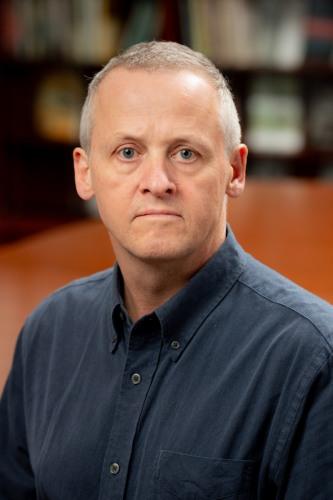
Kerry Smith is a Professor of History and East Asian Studies at Brown University, and Interim Chair of Sociology. He joined the Brown History Department in 1997. His research focuses on modern Japan, disaster history, and the intersections of science, technology, and environment. He holds a BA and PhD from Harvard University. His major works include Predicting Disasters: Earthquakes, Scientists, and Uncertainty in Modern Japan (2024) and A Time of Crisis: Japan, the Great Depression, and Rural Revitalization (2001). He teaches courses on modern Japan, the atomic age, and Tokyo's history. Research interests include disaster planning, colonial history, and the sociopolitical impacts of scientific uncertainty. Awards include the Karen T. Romer Award for Excellence in Advising (2021) and the G. Wesley Johnson Prize (2003). His funded research includes fellowships from the National Endowment for the Humanities and the Max Planck Institute for the History of Science. His publications analyze post-earthquake violence, colonial dynamics, and the role of science in disaster preparedness. Recent work explores the legacy of the 1923 Great Kantō Earthquake, emphasizing misinformation and vigilante actions. He is affiliated with Brown's East Asian Studies and Sociology departments, contributing to interdisciplinary studies of Japan's modern trajectory.
Professor Dietrich Darr is a faculty member at Hochschule Weihenstephan-Triesdorf (HSWT), specifically within the Department of Agriculture, Food, and Nutrition. His academic journey includes previous professorship at Hochschule Rhein-Waal (2012-2024) and visiting positions at Universidade de Brasília (2023-2024), Vietnam National University of Forestry (2020), and ICRAF Central Asia office (2018). Dr. Darr's research focuses on sustainable and resilient farming and food systems with particular expertise in agribusiness, corporate management, and sustainable resource utilization. His work prominently features baobab tree applications in African and European food industries, agroforestry systems, non-timber forest products, and sustainable land management. His international research projects span Sub-Saharan Africa, Central Asia, and Southeast Asia. His recent publications reveal strong trends in sustainable value chain development, climate-smart agriculture, and innovative approaches to rural livelihood improvement. The articles demonstrate consistent focus on practical applications of agroforestry systems, analysis of non-timber forest products commercialization, and sustainable land management solutions for smallholder farmers in developing regions. Dr. Darr leads numerous research projects including SUFACHAIN (2022-2025) on sustainable agroforestry value chains in Central Asia, CONFARMED (2024) on edible insects for circular food economy in Uganda, and previously led BAOQUALITY (2019-2022) on baobab quality improvement for food security in Africa. His projects are primarily funded by German institutions including BMBF, BMEL, and DFG. As an active member of professional organizations including ATSAF, EFARD, IUFRO, DeFAF, and EURAF, Dr. Darr contributes to international agricultural research communities with focus on tropical and subtropical agriculture, agroforestry, and forest research.
Katrin Vogt is a Group Leader at the University of Konstanz and an Affiliated Scientist at the Max Planck Institute of Animal Behavior. She serves on the IMPRS Board and Faculty, focusing on behavioral neuroscience in Drosophila larvae. Her research explores how social context and internal states (e.g., hunger) modulate neural circuits and behavior, utilizing genetic tools like optogenetics, RNAi, and CRISPR. Key Research Areas: Behavioral flexibility under internal state changes Neural integration of sensory and state signals in the antennal lobe Role of serotonin (CSD neuron) in modulating output pathways Computational modeling of state-dependent circuit dynamics Notable Achievements: Discovered state-dependent olfactory valence switching (e.g., geranyl acetate shifts from aversion to attraction under food deprivation) Elucidated glutamatergic inhibition mechanisms in picky local interneurons Identified 5-HT7 receptor's role in upregulating uniglomerular projection neuron activity Recent Publications: 2025: PLoS Biology on multimodal sensory neurons 2024: Current Biology commentary on behavioral neuroscience 2023: Current Biology on multisensory memory merging Academic Affiliations: University of Konstanz (Group Leader, Department of Collective Behavior) Max Planck Institute of Animal Behavior (Affiliated Scientist) IMPRS for Organismal Biology (Faculty Member) Scientific Awards: DFG Research Fellowship (Project No. 345729665) Students & Collaborators: PhD students: Hari P. Narayanan, Akhila Mudunuri Research assistants: Nora Tutas, Julius Klein, Constantin Dyroff DAAD summer student: Élyse Zadigue-Dubé Recent graduates: Amelie Edmaier (BSc 2023), Constantin Dyroff (BSc 2023)
John Grieco is a Research Professor in the Department of Biological Sciences and a joint faculty member at the Eck Institute for Global Health at the University of Notre Dame. He serves as Associate Director of the Eck Institute and co-director of the Belize Vector and Ecology Center (BVEC), where he leads a multidisciplinary research program focused on the ecology, behavior, and control of vectors of diseases such as malaria, dengue, Chagas, and Japanese encephalitis. University: University of Notre Dame School: College of Science Department: Department of Biological Sciences Position: Research Professor Joint Appointment: Eck Institute for Global Health Leadership Role: Associate Director, Eck Institute for Global Health; Co-Director, BVEC Dr. Grieco completed his Ph.D. at the Uniformed Services University, an M.S. at Texas A&M University, and earned his B.S. from the University of Notre Dame. His research spans vector behavior, spatial repellency, insecticide resistance, and disease risk modeling using GIS and remote sensing. He has led and collaborated on field studies in Belize, Thailand, Nepal, Peru, Mexico, and South Korea, and maintains partnerships with industry leaders such as BASF, SC Johnson, and Olfactor Laboratories. His recent publications highlight innovations in spatial repellent deployment, mosquito trap efficacy, and novel vector control strategies. The research consistently emphasizes translational outcomes for public health, particularly in low-resource settings. His work is supported by major initiatives including the Spatial Repellents Program, IMPACTS, AEGIS, and BRICC, often in collaboration with WHO, PAHO, and the Mayo Clinic. Dr. Grieco actively mentors undergraduate and Master of Science in Global Health students, supervising numerous capstone projects on vector-borne disease interventions. His lab, the Achee/Grieco Lab, is known for its field-based, interdisciplinary approach and commitment to training the next generation of global health scientists. Medical Entomology Vector Ecology and Behavior Vector Control Strategies Spatial Repellents and Irritants Infectious Disease Dynamics Disease Risk Mapping (GIS/Remote Sensing) Arbovirus and Malaria Transmission Scientific awards and honors are not explicitly mentioned in the provided texts. Dr. Grieco advises numerous students at both undergraduate and graduate levels, particularly through the Master of Science in Global Health program. His lab supports student research on topics including insecticide resistance, community perceptions of vector control, disease surveillance, and behavioral effects of repellents. He also leads the High-Throughput Screening System (HITSS) for evaluating vector behavioral responses. The Achee/Grieco Lab operates the Belize Vector and Ecology Center (BVEC), which conducts extensive field research, community outreach, and surveillance in Belize. BVEC collaborates with the Ministry of Health, University of Belize, and international partners. The lab also participates in global networks such as the Worldwide Insecticide Resistance Network (WIN) and the Remote Emerging Disease Intelligence NETwork (REDI-NET).
Martin Schreier is a Professor and head of the Institute for Marketing Management at the Vienna University of Economics and Business (WU). His research focuses on marketing, product development, consumer behavior, and user-driven innovation. A key finding from his work demonstrates that crowdsourced product ideas yield higher sales and gross margins compared to designer-generated products, as evidenced by a Japanese enterprise study showing €10 million revenue growth over three years. His studies also highlight how labeling products as user-ideated enhances consumer trust and sales performance. Schreier's research spans diverse topics, including the psychological drivers of customization, blockchain applications in marketing, and the role of consumer communities in innovation. Recent studies examine generative AI in luxury product co-creation, groundedness in retail experiences, and ethical implications of crowdsourcing. His work bridges academic insights with real-world applications, advising companies on leveraging user creativity and designing effective innovation incentives. He has published extensively on the economic and psychological impacts of consumer-driven innovation, with a focus on cross-cultural differences and market-specific strategies. His findings challenge traditional R&D models, emphasizing the commercial potential of user participation in product development across non-luxury sectors.
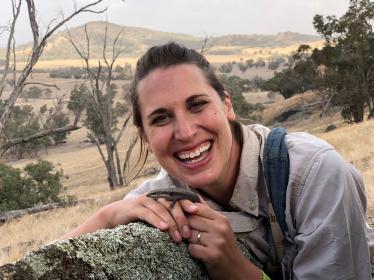
Dr. Julia Riley is an Assistant Professor in the Department of Biology at Mount Allison University. Her research focuses on amphibian and reptile behavior, evolution, and ecology, with a strong emphasis on conservation. She leads the Riley Integrative Ecology Lab, which investigates topics such as social behavior in lizards, developmental plasticity in reptiles, and the impacts of urbanization on species adaptation. Dr. Riley collaborates with institutions across Canada and globally, including Dalhousie University and the New Brunswick Museum. Her work integrates behavioral ecology, evolutionary biology, and conservation science, addressing questions like how environmental factors shape animal traits and how urbanization affects ecological interactions. She actively promotes conservation strategies, such as evaluating protective measures for turtle nests and mitigating road mortality for amphibians and reptiles. Research Themes: Amphibian/Reptile Conservation, Behavioral Ecology, Urban Ecology, Evolutionary Adaptation Key Collaborations: Dr. Joshua Baxter-Gilbert, Dr. Mike Whiting, Dr. Liese Schwanz Funding Partners: NSERC, New Brunswick Innovation Fund, Nature Conservancy of Canada Dr. Riley’s lab emphasizes interdisciplinary approaches, combining fieldwork with quantitative analysis. She mentors students in MSc/PhD programs through her adjunct appointments and prioritizes training in grant writing, field techniques, and ethical research practices.
Dr. Rachel Parkinson is a Research Fellow at Wolfson College, University of Oxford, and holds a Lecturer position in Biology at Keble College. She is also an Eric & Wendy Schmidt AI in Science Postdoctoral Fellow. Her research focuses on insect sensory processing, particularly how pollinators like bees perceive environmental stressors such as pesticides. She develops AI-driven tools to diagnose sublethal toxicity and leads projects using large language models for systematic reviews of pesticide risks. Her work aims to assess environmental threats to pollinators and devise mitigation strategies. Her research interests include neuroethology, pesticide impacts on insect behavior, and AI applications in ecological research. She collaborates with the Bee Lab to advance understanding of pollinator health and ecological resilience. Her interdisciplinary approach bridges biology, neuroscience, and computational methods to address global environmental challenges. Awards: Eric & Wendy Schmidt AI in Science Postdoctoral Fellow Labs/Teams: Bee Lab, University of Oxford
Dr. DeAnna E. Beasley is an Associate Professor in the Department of Biology, Geology, and Environmental Science at the University of Tennessee at Chattanooga (UTC). She holds a PhD from the University of South Carolina (2013) and specializes in integrative ecology, focusing on how environmental changes—particularly urbanization—affect insect development, behavior, and biodiversity. Her research bridges ecological and social sciences to address urban resilience and biodiversity conservation. Teaching responsibilities include courses such as Ecology, Evolution, and Ant Ecology, along with supervising thesis projects and individual studies. She actively mentors undergraduate and graduate students in field and lab research, emphasizing community engagement and citizen science. Key research interests include urban ecology, insect-fungal interactions, and the socio-ecological dynamics of urban systems. Notable projects investigate honey bee health in urban environments and biodiversity patterns in green infrastructure. Her work frequently involves interdisciplinary collaborations and public outreach, including initiatives to promote diversity in STEM. Dr. Beasley is committed to equity, diversity, and inclusion in academia, serving on UTC's DEI committee and the Africana Studies Advisory Committee. She also contributes to professional societies such as the Ecological Society of America and engages communities through science education and media outreach.
Shana M. Caro is an Assistant Professor in the Department of Biology at Adelphi University, within the College of Arts and Sciences. Her research integrates behavioral neuroscience and evolutionary biology to investigate animal behavior, with a focus on birds and insects in both laboratory and field settings. Educational Background: DPhil, University of Oxford (2017) BA, Harvard University (2007) Her research interests include animal behavior, cognition, metacognition, communication, parental care, urbanization, and the effects of ultra-processed food and noise pollution on non-human animals. She explores how stress, evolutionary conflicts, and environmental challenges shape decision-making in animals. Notably, she investigates metacognition in great tits and chickens, personality effects on cognition, maternal hormonal manipulation of offspring, and sex differences in parental responses to offspring begging. Her recent publications reflect a strong trend in behavioral ecology and evolutionary theory, particularly in avian systems, with studies appearing in journals such as Nature Communications , PNAS , and Evolution Letters . Her work combines empirical research with theoretical models to understand signaling, parental investment, and behavioral plasticity. Scientific Awards and Fellowships: Stengl-Wyer Scholar, The University of Texas at Austin (2020–2022) Simons Junior Fellow, Columbia University (2017–2020) Dr. Caro advises both undergraduate and master’s students, guiding capstone and scholarly research projects on topics such as hormonal mediation of development, dietary effects on insect fitness, and olfactory foraging in sparrows. She has conducted international research in Kenya, the Netherlands, Costa Rica, and Uganda, working with species like superb starlings, great tits, capuchin monkeys, and chimpanzees. She teaches courses such as Animal Behavior, Neurobiology, and Urban Behavioral Biology, and maintains an active lab focused on behavioral mechanisms and evolutionary drivers.
Derek D. Houston is an Assistant Professor of Biology at Western Colorado University, affiliated with the Natural & Environmental Sciences Department and the Clark Family School of Environment & Sustainability. He holds a PhD in Biology from the University of Nevada, Las Vegas (2009), an MS in Zoology from Brigham Young University (2002), and a BS in Zoology from Brigham Young University (1999). His research focuses on phylogeography , molecular ecology , and conservation of desert fishes , with fieldwork spanning western North America, British Columbia, and Baja California. Key interests include: Evolutionary adaptations of aquatic organisms using DNA sequencing Population genetics of western North American fishes Ecological impacts of parasites on mutualistic systems Climate change effects on alpine and desert species Houston teaches courses including Biogeography, Cell Biology, Conservation Genetics, Ecology, and Fisheries Biology. His publications emphasize evolutionary patterns in aquatic insects and fishes , nematode-fig wasp interactions , and conservation genetics , frequently leveraging genomic tools to explore ecological relationships. He conducts fieldwork in diverse western ecosystems and values interdisciplinary collaboration to address conservation challenges.
Andrea Perna is an Assistant Professor at the IMT School for Advanced Studies in Lucca, Italy, with a background in theoretical biology and biophysics. Previously, he held a Senior Lecturer position at the University of Roehampton, UK, and conducted research across Europe and Australia. His work focuses on collective animal behavior, pattern formation in biological systems, and ecology, combining experimental, computational, and mathematical approaches. Education: Degree in Biological Sciences from Scuola Normale Superiore and University of Pisa (Italy), followed by a PhD in Psychophysics (neurobiology) from Scuola Normale Superiore, Pisa. Research Interests: Collective behavior in fish schooling, termite nest architecture, biophysical principles of animal group cohesion, and the interplay between individual behavior and ecosystem properties. Notable projects include modeling trail networks in ants and exploring how environmental factors influence nest construction in termites. Labs/Teams: Leads the Networks Unit at IMT School, collaborating with institutions like the Hawk Conservancy Trust and international researchers in ecology, mathematics, and physics. Active in mentoring PhD and post-doctoral researchers in complex systems and ecological modeling. Grants/Funding: Secured funding for post-doctoral positions studying termite nest evo-devo and collaborative projects on raptor flight mechanics.
Sonia M. Altizer is a Professor and Department Head of Entomology at the University of Georgia's College of Agricultural and Environmental Sciences. Her research focuses on the intersection of insect ecology, animal migrations, and the ecology of infectious diseases in natural populations. With a Ph.D. from the University of Minnesota and a B.S. from Duke University, she has established herself as a leading expert on monarch butterfly migration and disease dynamics. Her work combines field studies, laboratory experiments, and mathematical modeling to understand host-parasite interactions in migratory systems. Ph.D. – University of Minnesota B.S. – Duke University Dr. Altizer investigates how migration affects disease transmission in wildlife populations, with particular emphasis on monarch butterflies and their protozoan parasites. Her research explores the evolution of host resistance, parasite virulence, and the impacts of climate change and anthropogenic factors on these interactions. She has pioneered studies on tropical milkweed's role in monarch disease risk and developed conservation strategies for declining migratory species. Dr. Altizer's recent articles examine thermal tolerance in butterfly-parasite systems, migratory phenology shifts, and the consequences of resource supplementation for disease dynamics. These publications consistently address climate change effects, pesticide impacts, and conservation-oriented solutions across ecological, evolutionary, and epidemiological contexts. 2025: UGA Distinguished Research Professor 2024: Fellow, Ecological Society of America 2020: AAAS Fellow 2018: Lamar Dodd Creative Research Award 2016: Lothar Tresp Outstanding Honors Professor 2014: UGA Athletic Association Professor of Ecology 2008: Presidential Early Career Award in Science and Engineering (PECASE) 2008: UGA Award for Teaching Excellence As head of the Altizer Lab (altizerlab.org), she leads interdisciplinary research teams investigating migratory animal health, with applications to conservation policy and practice. Her work has shaped understanding of how human-altered landscapes affect disease risks in wildlife populations, particularly for pollinators like monarch butterflies.
Tomás Bartoletti serves as Senior Lecturer at ETH Zurich's Department of Humanities, Social and Political Sciences and Principal Investigator of the Swiss National Science Foundation-funded Ambizione Project 'Insect Pests and Economic Entomology in Plantations, c. 1870-1930s.' His scholarship bridges environmental history, history of science, and global capitalism with critical focus on Latin America and the Global South. His educational background includes: PhD from University of Buenos Aires Latin American Studies at University of Buenos Aires History of Science and Technology at University of Quilmes, Argentina Bartoletti's research examines colonial science, multispecies entanglements, and imperial knowledge circulation. Current projects investigate pest control history in plantation economies (1880-1930) and Swiss scientific expeditions in 19th-century Latin America, emphasizing indigenous perspectives and material culture approaches within transdisciplinary frameworks. His 2019-2024 publications reveal consistent engagement with decolonial methodologies, examining how Western scientific practices intersected with capitalist expansion across imperial contexts. Key themes include the transnational circulation of pest control knowledge, radical cartographies challenging Eurocentric historiography, and multispecies conviviality in Latin American contexts. Major recognitions include: Ambizione Fellowship (SNSF) Max Weber Fellowship (European University Institute, 2021-2023) Research fellowships at Gotha Research Centre, University of Erfurt, and Humboldt-Universität zu Berlin As Ambizione Principal Investigator, Bartoletti directs research on economic entomology's role in global capitalism while leading the 'Naming Natures' exhibition project funded through SNSF's Science Communication Agora Scheme. His editorial roles with Environmental Humanities and Commodity Frontiers Journal further establish his scholarly leadership. He currently leads the Ambizione research team investigating multispecies histories of capitalism through pest control frameworks and collaborates with the Natural History Museum of Neuchâtel on decolonizing natural history narratives through the 'Naming Natures' exhibition (December 2024).
Tanita Schmidt is a Researcher in Early Modern History at the University of Kassel's Department of Early Modern History, where she has served as a research assistant since 2018 while completing her dissertation on natural research as religious practice (1750-1830). Education: Master of Arts in European History, University of Kassel (2018) Bachelor of Arts in History and Art History, University of Kassel (2018) Bachelor of Arts in Ancient Studies, Freie Universität Berlin (2013) Her research examines cultural and knowledge production in the Early Modern period through visual/material cultures, sensory history, and disability studies. She investigates how 18th-century nature-human relationships were shaped by religious frameworks, bodily perceptions, and scientific observation, bridging history of science with cultural and religious studies. Recent publications reveal a cohesive focus on Enlightenment-era entomology and knowledge formation, analyzing how visual culture, material practices, and religious contexts transformed sensory experiences into scientific understanding. Her work consistently explores intersections between observation, belief systems, and knowledge validation in natural history. Scientific Awards: Dr. Liselotte Kirchner scholarship (2024) for research at Francke Foundations, Halle As a PhD candidate, Schmidt has not supervised formal advisees but has secured competitive research funding. Her 2024 scholarship enabled primary source analysis at Francke Foundations, supporting her dissertation's investigation of sensory dimensions in natural philosophy. She actively collaborates within Kassel's Early Modern History research group, presenting at international venues including Goethe-University Frankfurt and Francke Foundations, while developing courses on scientific methodology and material culture.
Johan Ekroos is a researcher at Lund University's Centre for Environmental and Climate Science (CEC), where he leads significant interdisciplinary work at the intersection of landscape ecology, biodiversity conservation, and sustainable land management. His research portfolio spans over 87 publications and 24 research projects, with 4 currently active initiatives addressing critical environmental challenges. Dr. Ekroos's work centers on three interconnected domains: landscape ecology, environmental science, and interdisciplinary environmental research. His landscape ecology investigations examine why certain species persist in transformed landscapes while others disappear, using trait-based approaches across taxa with contrasting ecological requirements. His environmental science research analyzes fundamental trade-offs between different ecosystem services and how to optimize land-use in production landscapes to simultaneously address food production, biodiversity protection, and climate change adaptation. His interdisciplinary work focuses on bridging scientific evidence with policy decisions, particularly regarding the efficacy of agri-environment schemes and conservation interventions. His recent publication record reveals consistent focus on agricultural landscapes as critical arenas for biodiversity conservation. Key themes include the relationship between green infrastructure and biodiversity, landscape composition effects on ecological processes, fire ecology in boreal systems, organic farming dynamics, and sustainable bioenergy production. These works collectively address the complex challenge of balancing human needs with environmental protection in rapidly changing landscapes. Dr. Ekroos actively contributes to major collaborative initiatives including LU Land (a network project), Land4biomass, BECC AG: Social and ecological context of climate change adaptation for biodiversity, and Land sparing 2.0. His collaborations span multiple disciplines, working closely with economists, sustainability scientists, and governance experts to develop evidence-based solutions for environmental challenges. He regularly participates in knowledge exchange activities, having organized and presented at numerous workshops, seminars, and public lectures on ecological farming and biodiversity conservation. His involvement in projects like the LONA Pollineringspilot on Lindängen demonstrates his commitment to practical applications of research findings. With 8 supervised works documented, he plays an active role in mentoring the next generation of environmental researchers.