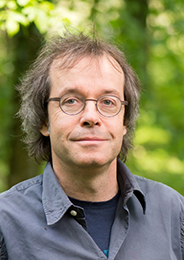
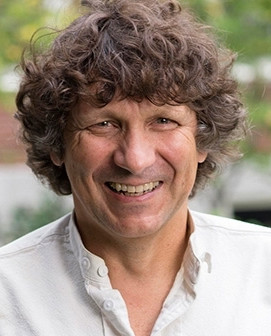
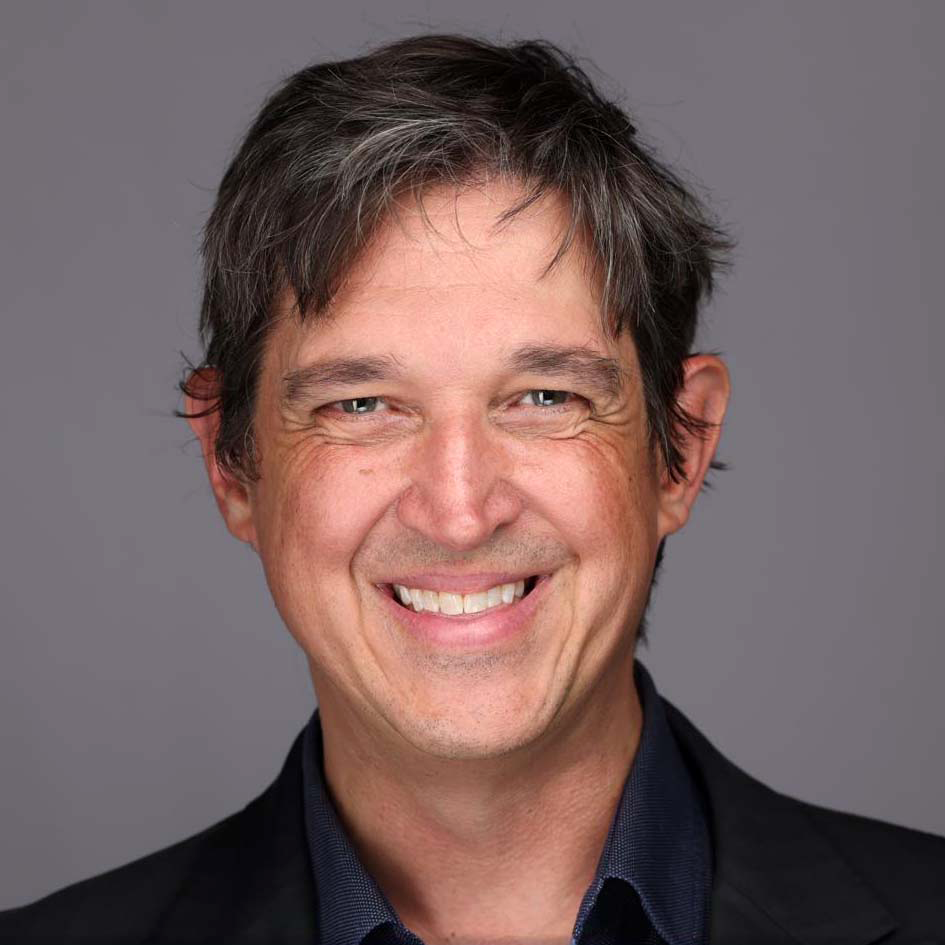
Gerrit Gort is an Assistant Professor at Wageningen University & Research, specializing in Mathematical and Statistical Methods within Biometris. His research spans agricultural sciences, microbiology, and ecological systems, with significant contributions to insect-based solutions, plant defense mechanisms, and statistical modeling. Recent work includes: Investigating female dominance in bonobos (Communications Biology, 2025) Reducing GHG emissions in dairy cattle systems (J. Environmental Management, 2025) Seagrass recovery patterns across the North Atlantic (Global Change Biology, 2025) Tick control using fungal biopesticides in Kenyan cattle (Parasite Epidemiology and Control, 2024) His research integrates statistical analysis with applied biological systems, focusing on sustainable agricultural practices and ecological resilience. Collaborative networks include institutions across Europe and Africa, with datasets spanning soil microbiology, parasite ecology, and animal behavior studies.
Pim Brascamp, a Professor at Wageningen University & Research's Animal Breeding and Genetics department, specializes in honeybee genetics and breeding optimization. His research focuses on enhancing genetic gain through phenotyping strategies and resilience traits in Apis mellifera populations. Key affiliations: Wageningen University & Research, Animal Breeding and Genetics Research Trends (2024–2025): Recent publications address breeding goal design, inbreeding effects, and trait correlations for honey yield and disease resistance. Active in developing methods to accelerate genetic improvement via reduced generation intervals and partial phenotyping. Collaborations & Dissemination : Co-authored studies with European institutions (Estonian University of Life Sciences) and experts like Pieter Bijma. Delivered lectures on honeybee assessment and breeding value estimation, including a 2019 presentation on Varroa destructor resistance.
Dr. Maarten Jongsma is a senior researcher at Wageningen University & Research 's BIOS Applied Metabolic Systems department, specializing in plant-insect interactions, chemical ecology, and food flavor biotechnology. His work bridges agricultural science with molecular biology. Current research focuses on terpene-based insect resistance and glucosinolate-mediated plant stress responses Develops bioluminescent "tongue-on-a-chip" technology for flavor analysis 2012 recipient of the Making sense Prize for innovative research Active in EU-funded LVVN projects (Sensory-on-chip 2.0, TrackGene) through 2028 Recent publications examine prey-sharing behavior in aphid predators, glucosinolate-heat stress interactions, and floral volatile emissions influencing pollinator behavior. His projects integrate metabolomics with agricultural applications.
Cory Miller is an Associate Professor in the Department of Psychology at the University of California, San Diego (UCSD), where he leads the Cortical Systems & Behavior Laboratory. His research focuses on understanding the cortical basis of behavior with an emphasis on species-typical natural behaviors in marmoset monkeys. Dr. Miller's work spans the continuum of sensory to motor processes, investigating sensory recognition, categorization, sensory-motor interactions, and decision-making through integrated approaches combining field and laboratory experiments with neural techniques such as single-unit neurophysiology. Dr. Miller's research program is organized around three primary projects: Social Communication, which examines the co-evolution of brain and behavior in marmoset vocal communication systems; Navigating Social Space, which investigates how primates represent both spatial position and social identity through medial temporal lobe structures; and Natural Vision, which explores active vision by studying marmosets as they hunt insects in naturalistic conditions. His lab leverages the unique advantages of the marmoset model, including its highly similar visual and oculomotor system to humans, recent development of transgenic lines, and smooth lissencephalic brain that facilitates neural recording. This approach provides novel platforms to examine the complex interplay between social, ecological, and neurobiological factors that contribute to primate behavior. Dr. Miller's publication record demonstrates a strong focus on naturalistic approaches to studying brain function, with recent work emphasizing active vision in freely moving marmosets, neural basis of vocal communication, and spatial navigation in primate hippocampus. His research shows a clear trajectory toward more ecologically valid paradigms that bridge the gap between controlled laboratory experiments and natural behavior, with increasing emphasis on cross-modal integration, social cognition, and ethologically relevant neural mechanisms. Dr. Miller's research is supported by multiple grants from prestigious funding sources: National Institute of Health grant R01 DC012097 Air Force Office of Scientific Research grant 19RT0316 National Institute of Health grant R01 NS109294 National Institute of Health grant U01 NS116377 National Institute of Health grant R01 NS118457 National Institute of Health grant U24 MH123423 Dr. Miller actively mentors the next generation of neuroscientists, currently advising graduate students Brendan Prendergast (researching the Cocktail Party Paradigm in marmosets) and Tim Tyree (studying computational efficiency of the visual system), along with postdoctoral fellows Vikram Pal Singh, Dori Grijseels, Jingwen Li, and Arthur Lefevre. His laboratory has trained numerous successful alumni who have gone on to academic and research positions, demonstrating his commitment to comprehensive scientific training and professional development. The Cortical Systems & Behavior Laboratory maintains strong collaborative relationships with researchers at The Salk Institute, particularly Ed Callaway and John Reynolds in Systems Neurobiology. The lab is affiliated with both the UCSD Psychology Graduate Program and the Neurosciences Graduate Program, providing interdisciplinary training opportunities for students interested in the neural basis of natural behavior. Dr. Miller's team of neuroscientists is dedicated to advancing our understanding of how cortical circuits support complex behavior in ecologically relevant contexts.
Jenna Kohles is a postdoctoral researcher at the Max Planck Institute of Animal Behavior (Department for the Ecology of Animal Societies) and the Smithsonian Tropical Research Institute in Panama. Her work focuses on how sociality helps animals cope with environmental uncertainty, using biologging technology, prey landscape quantification, and biomarkers for energetic stress in bat populations. PhD from University of Konstanz (2024) Master in Ecology, Evolution, and Behavior (2018) Bachelor in Wildlife Biology (2015) Research Interests: Kohles investigates social foraging dynamics, animal societies, and the ecological impacts of ephemeral resources. Her work spans insectivorous and fruit bat populations in Panama and Cyprus, examining how social connections influence foraging efficiency and stress mitigation. Publication Trends: Recent articles focus on social information use in vultures, biologging precision in bat movement, group facilitation during reproduction, and the effects of habitat management on insect-bat activity patterns. Theoretical contributions include frameworks for predicting social information use based on resource ephemerality. Scientific Awards & Grants: Smithsonian Tropical Research Institute-NOMIS Postdoctoral Fellowship DAAD PRIME Postdoctoral Fellowship National Geographic Society Level I Grant Fulbright Research Fellowship Multiple PhD and predoctoral fellowships Lab Affiliation: Kohles works in the Department for the Ecology of Animal Societies under Dina Dechmann’s mentorship, with long-term collaborations at STRI in Gamboa, Panama.
Dr. Katherine Brown is an Associate Professor and Associate Head (Students) in the School of Criminology and Criminal Justice at the University of Portsmouth, Faculty of Humanities & Social Sciences. She is actively involved in forensic research, particularly in forensic entomology, taphonomy with an aquatic focus, and the application of 3D technologies such as VR, 360 imagery, and 3D printing in forensic science. She is currently accepting PhD students and supervising research in these areas. Her research interests center on the development of Calliphoridae (blowflies), aquatic taphonomy, and innovative forensic methodologies. She employs advanced 3D imaging and printing techniques to reconstruct fragmented skeletal remains and improve postmortem interval estimation. Her work integrates entomological, morphological, and technological approaches to solve complex forensic cases. Dr. Brown has published extensively from 2012 to 2025, with recent articles focusing on pan-European taphonomic infrastructure, the use of blowfly larvae in offender identification, and annual colonization patterns in Southern England. Her publications demonstrate a consistent trend in interdisciplinary forensic science, combining biology, technology, and criminology to advance forensic methodologies and evidence interpretation. She has supervised PhD students including H. McGonigal and A. L. Clarke, and has been involved in multiple research projects and conference presentations. Her work has been featured in exhibitions at The Natural History Museum and has received attention in news outlets and social media, reflecting its public and academic impact. Dr. Brown leads and collaborates on significant projects such as the UK-Netherlands Decomposition Experimental Research (UNDER) Group, aiming to establish a pan-European taphonomic research infrastructure. Her interdisciplinary approach is evident in projects optimizing DNA profiling in sexual offences through user-centered design. She is affiliated with the School of Criminology and Criminal Justice and contributes to academic and public understanding through exhibitions like Locust War and The Locust, The Empire and The Museum , which explore historical and scientific intersections of entomology and colonialism.
Robert D. Renthal is a Professor in the Department of Biology at The University of Texas at San Antonio (UTSA), within the College of Sciences. He also holds a joint appointment with the Biochemistry Department at the University of Texas Health Science Center at San Antonio. His research focuses on the biochemistry and biophysics of cell membranes, insect chemical communication, and the structural dynamics of transmembrane proteins. Ph.D. in Biochemistry, Columbia University (1972) A.B. in Chemistry, Princeton University (1967) Dr. Renthal's research interests center on membrane protein structure and function, particularly bacteriorhodopsin and transmembrane helix interactions. He has pioneered methods in pheromone discovery in insects, especially in the red imported fire ant. His work bridges biophysics, biochemistry, and entomology, with applications in pest control and protein engineering. His recent publications reflect a strong focus on membrane dynamics, protein-lipid interactions, and insect sensory biology. Themes include helix-helix association in transmembrane domains, antennal chemosensory proteins, and energy transfer in live bacterial cells. These works span structural biology, chemical ecology, and molecular imaging. University of Texas at San Antonio President's Distinguished Service Award for Research (1989) University of Texas at San Antonio Innovation of Excellence Award (2013) Dr. Renthal has mentored numerous students and researchers through his lab at UTSA. His research has been supported by various grants, particularly in the areas of membrane biophysics and insect pheromone discovery. He holds two U.S. patents for methods of pheromone discovery in insects, indicating translational impact. His lab actively investigates membrane protein folding, insect antennal structures, and live-cell imaging techniques. The Renthal Lab conducts interdisciplinary research in three main areas: membrane biophysics (focusing on transmembrane helices and protein folding), insect chemical ecology (including pheromone-binding proteins and antennal glands), and cell imaging (using luminescence resonance energy transfer in live bacteria). The lab integrates biochemical, biophysical, and entomological approaches to study fundamental biological processes.
Prof. Dr. Aletta Bonn is Head of Department at the German Centre for Integrative Biodiversity Research (iDiv) Halle-Jena-Leipzig, affiliated with the Helmholtz Centre for Environmental Research (UFZ) in Leipzig. She leads research in Conservation Biology & Social-Ecological Systems within the Research Unit Ecosystems of the Future, focusing on biodiversity, ecosystem services, and human-environment interactions. Her research interests span Biodiversity Conservation , Ecosystem Services , Nature-based Solutions , Citizen Science , Urban and Landscape Ecology , and Climate Change Adaptation . She investigates how human well-being is interconnected with biodiversity and how participatory science can bridge research, policy, and society. Recent publications highlight trends in urban biodiversity , nature-health connections , thermal comfort in forests , and the use of emerging technologies in citizen science. Her work emphasizes interdisciplinary approaches integrating ecology, social sciences, and public health. She has co-authored influential books including Citizen Science – Innovation in Open Science, Society and Policy (2018), Nature-based solutions to climate change adaptation in urban areas (2017), and Peatland Restoration and Ecosystem Services (2016), which are widely recognized in the field. Aletta Bonn actively supervises graduate and postdoctoral researchers and promotes opportunities in her Ecosystem Services group. She is deeply engaged in science-policy interfaces and public outreach, advancing integrative biodiversity research for a sustainable future.
Eleni Katifori is an Associate Professor and Undergraduate Affairs Chair in the Department of Physics and Astronomy at the University of Pennsylvania's School of Arts & Sciences. She previously served as an Assistant Professor at Penn (2015-2020), was a Visiting Professor at Université Paris Diderot (2017), led an independent research group at the Max Planck Institute for Dynamics and Self-Organization (2012-2014), and was a Fellow at Rockefeller University's Center for Physics and Biology (2008-2012). Her educational background includes a Ph.D. in Physics from Harvard University (2008) and a B.S. from the University of Athens, Greece (2002). These foundational experiences established her interdisciplinary approach bridging physics and biology. Dr. Katifori's research focuses on the theoretical physics of biological transport networks, examining how systems like plant vasculature and animal circulatory systems achieve optimal functionality through evolutionary pressures. Her work investigates the topological properties of these networks, their resilience to damage, and the physical principles governing their development. She employs mathematical modeling to understand how hierarchical structures in biological flow systems balance competing demands of cost, efficiency, and robustness. Her approach integrates concepts from soft matter physics, network theory, and biophysics to uncover universal principles applicable across biological scales. Analysis of her publication record reveals a consistent focus on the mathematical foundations of biological flow networks, with increasing sophistication in topological analysis methods. Her work demonstrates how network architecture determines functional capabilities and resilience properties, with significant contributions to understanding hierarchical organization in biological systems and the physical constraints shaping network evolution. Simons Investigators in the Mathematical Modeling of Living Systems (2018) NSF Career Award (2016) Burroughs Wellcome Career Award at the Scientific Interface (2011) 2021 APS Early Career Award in Soft Matter Research APS DSOFT Early Career Award Member at Large, APS Topical Group on Soft Matter (2018-2021) Dr. Katifori actively mentors students and postdoctoral researchers, with several notable advisees including Henrik Ronellenfitsch, Sean Fancher, and Yongtian Luo. Her research is supported by multiple prestigious grants, including her Simons Investigator award which provides sustained research funding for mathematical modeling of living systems. She has established a productive research group that combines theoretical physics with biological applications, fostering interdisciplinary collaboration across physics, biology, and mathematics. Her laboratory focuses on developing mathematical frameworks to analyze biological transport networks, with particular emphasis on leaf venation patterns, vascular systems, and the physical principles underlying their evolution and function. The group employs computational modeling, topological analysis, and theoretical physics approaches to uncover fundamental principles governing biological flow systems.
Theodore Eugene Burk is a Professor in the Department of Biology at Creighton University . He earned his D.Phil. in Zoology from the University of Oxford and has been a faculty member at Creighton since 1982. His academic leadership includes serving as Department Chair (1990–2000) and Interim Chair of Environmental and Atmospheric Sciences (2002–2003). B.A. in Biology, University of Kansas (1974) D.Phil. in Zoology, University of Oxford (1979) Research Interests : Dr. Burk specializes in insect conservation biology and behavioral ecology , focusing on: Butterfly and pollinator conservation Insect communication and social behavior Forensic entomology applications Citizen science for habitat monitoring Fire management impacts on prairies Invasive species ecology Publication Trends : His work spans entomology , conservation biology , and ecological education , with a focus on prairie ecosystems, forensic entomology, and public engagement in insect conservation. Scientific Awards : Distinguished Faculty Award for 30 years in Pre-Medical/Pre-Dental Education Creighton College of Arts and Sciences Dean's Awards for Teaching, Advising, and Service Father William Kelly Awards for Teaching and Service 'Iggy Award' for Jesuit Cura Personalis (2012, 2014, 2020) Additional Contributions : Dr. Burk has received NSF grants for collaborative behavioral biology research and actively contributes to Glacier Creek Preserve management . He co-authored the textbook Biology of Animal Behavior and has published over 30 papers.
Luca Fumagalli is an Associate Professor at the University of Lausanne since 2023, leading the Conservation Genetics Section within the Department of Ecology and Evolution under the Faculty of Biology and Medicine . With a career spanning over two decades at the University of Lausanne, he has held roles such as Maître d'enseignement et de recherche (2005–2022), Privat-docent (2002–2022), and Maître-assistant (2000–2022). Research Interests: His work focuses on conservation genetics , molecular ecology , and environmental DNA (eDNA) metabarcoding , addressing critical issues like hybridization between species , genetic diversity loss , and non-invasive wildlife monitoring . Notable contributions include studies on wolf-dog hybrids , avian malaria vectors , and genetic profiling of large carnivores via snow tracks . Article Trends: Recent publications emphasize eDNA applications for amphibian habitat use , primate dietary variation , and herbivore niche overlap . His group explores hybridization dynamics , MHC diversity in birds , and robotics in biodiversity monitoring . Education and Collaborations: He earned his PhD in Zoology and Ecology from the University of Lausanne (1984–1995) and conducted postdoctoral research at the University of Queensland (1996–1997). Collaborations include projects with the Institute of Human Forensic (since 2003) and institutions in Australia, China, and Ghana. Students and Grants: Supervised PhD candidates like Judith Schneider and Eduard Mas-Carrió , and Master’s students such as Loïc Brun and Carlo Ossola . His research is funded by ERC and SNSF Starting Grants , with a focus on conservation policy and genetic forensics . Labs and Teams: Leads the Laboratory for Conservation Biology (LCB) , integrating multidisciplinary approaches for threatened species management . The group collaborates with governmental agencies , NGOs , and forensic institutions to apply genetic tools in species reintroduction , hybrid detection , and ecosystem surveillance .
Dr. Robert Huber is a Professor in the Department of Biological Sciences at Bowling Green State University (College of Arts and Sciences). His research focuses on the neuropharmacology of drug addiction and aggression , employing invertebrate models like crayfish and Drosophila to study neurochemical mechanisms underlying motivational states in behavior. Ph.D. from Texas Tech University Office: 227B Life Sciences Building Email: rh.bgsu@gmail.com Phone: (419) 372-7492 Using neuroethological, pharmacological, and molecular approaches , his lab examines how amines influence behavioral choices in animals. The structured behavior of crayfish and the genetic tractability of fruit flies provide unique platforms for studying neural designs and self-structuring behavioral properties. Research Trends : Recent publications focus on synthetic cathinones in invertebrate behavior , automated behavioral screening , and neurochemical measures across diverse species. The lab combines comparative neurobiology with quantitative analysis to uncover fundamental principles of motivational mechanisms. The lab specializes in: Neurochemical analysis (HPLC, amine detection) Automated behavioral screening Drosophila sleep-feeding interactions Crayfish aggression models Self-structuring behavioral properties
Daina Matise Schubiger serves as a Lecturer and Researcher at the University of Applied Sciences and Arts of Southern Switzerland (SUPSI) within the Department of Business Economics, Health and Social Care (DEASS). Holding dual responsibilities as both a faculty member and Co-Program Director for the Bachelor's program in Leisure Management, she maintains active roles in teaching, research supervision, and curriculum development. Her academic appointments include positions in the Basic Training Division (FBDEASS) with current affiliation status as of July 2022. Her educational background features a Bachelor of Science and Master of Science in Communication and Economics (majoring in Marketing) with summa cum laude honors from the University of Italian Switzerland (USI). Additional qualifications include a Certificate of Advanced Studies in Teaching from SUPSI and specialized training in Service Automation from the London School of Economics. Research interests focus on cutting-edge consumer behavior topics with particular emphasis on entomophagy adoption among Generation Z , sustainable marketing practices, and the application of extended realities in consumption contexts. Her work bridges theoretical marketing frameworks with practical industry applications, especially in leisure management and healthcare marketing sectors. Current projects investigate Western consumer resistance to insect-based foods and the role of virtual reality in overcoming dietary barriers. Publication trends reveal concentrated expertise in sustainable consumption patterns, with 9 peer-reviewed outputs between 2017-2024. Her research methodology combines mixed approaches including stakeholder interviews with quantitative analysis of generational consumer data. Key thematic clusters emerge around novel food acceptance, digital marketing innovation, and post-pandemic leisure sector transformation. Teaching responsibilities encompass comprehensive course leadership across the Leisure Management curriculum, including Innovation Marketing, Integrated Digital & Sustainable Marketing, and Thesis supervision. She also manages the MOOC on Integrated Digital Marketing and Project II research initiatives. Operational projects demonstrate strong industry engagement through collaborations with organizations like Hockey Club Lugano and RUAG Aviation. Current initiatives include the Food Design Thinking and VR in Entomophagy project and the Campus Bleniese feasibility study, reflecting her commitment to translating academic research into practical business solutions.
Dr. G. Matthew Fricke is a Research Associate Professor in the Department of Computer Science at the University of New Mexico, affiliated with the Center for Advanced Research Computing (CARC) and Moses Biological Computation Lab. His research explores decentralized systems including supercomputing clusters, robot swarms, social insects, and immune responses, with additional focus on AI ethics and biosignatures. Education: BA in Anthropology (Archaeology), Appalachian State University BS in Mathematics, University of New Mexico MS in Artificial Intelligence, University of New Mexico PhD in Computer Science, University of New Mexico Research Interests: Dr. Fricke's work bridges robotics, computational biology, and earth sciences. Key areas include bio-inspired swarm algorithms for volcanic gas monitoring, immune system modeling for search optimization, machine learning applications in climate science, and complexity measures for biosignature detection. His interdisciplinary approach combines field robotics with theoretical frameworks from complex adaptive systems. Publications: Recent articles demonstrate strong trends in environmental robotics (volcanic drone swarms), causal inference in climate systems, and molecular complexity analysis. Works frequently integrate machine learning with empirical field data, spanning geoscience, immunology, and astrobiology. Student Advising: Mentored multiple PhD candidates including Jannatul Ferdous (immune system modeling), John Ericksen (aerial robotics), Jake Nichol (climate causality), Humayra Tasnim (information theory), and MS student Quincy Wofford (distributed systems). Projects & Labs: Leads robotics initiatives like VolCAN (volcanic CO2 mapping) and SIMReef (coral ecosystem modeling). Collaborates with NASA on swarm robotics challenges and supercomputing education through UNM's student cluster competition teams.
Dr. Jan Van Lent is a Senior Lecturer in Applied Mathematics at the University of the West of England , affiliated with the Faculty of Engineering and Technology and its Engineering, Design and Mathematics department. His academic focus spans numerical methods, computational mathematics, and interdisciplinary applications in biological modeling. His research interests include Numerical Analysis , Numerical Linear Algebra , Optimization , Scientific Computing , Machine Learning , and Optimal Transport . He has contributed extensively to numerical methods for PDEs and multigrid techniques, alongside interdisciplinary work in ant colony behavior modeling. His publications reflect a strong emphasis on multigrid methods for partial differential equations (e.g., energy-minimizing coarse spaces , implicit Runge–Kutta discretizations ), with applications in both traditional numerical analysis and biological systems. His 2020 work on Python in teaching highlights his pedagogical contributions to computational education.