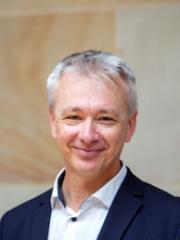
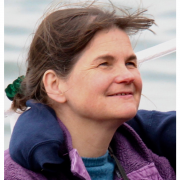
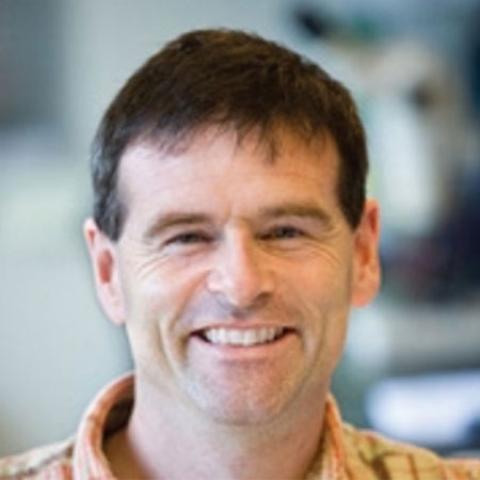
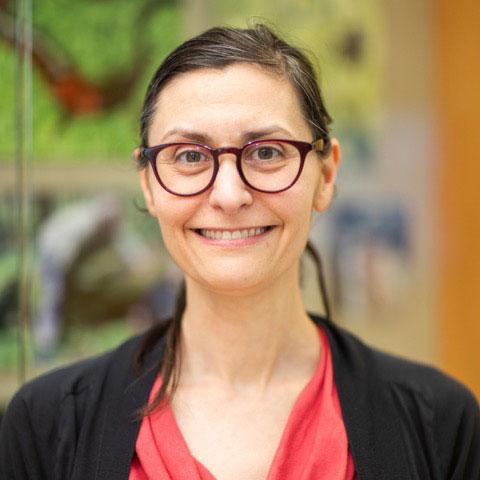
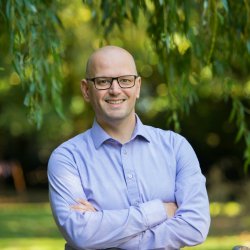
Matthew Steffenson is an Associate Professor of Biological Sciences at St. Edward's University in Austin, Texas. He teaches courses in General Biology, Entomology, Ecophysiology, Biostatistics, and Evolution. His research focuses on understanding how ecological factors influence immunological activity in insects and arachnids, particularly honeybees and wolf spiders. He has a Ph.D. in Quantitative Biology from the University of Texas at Arlington (2014), an M.S. in Biology from Tennessee Technological University (2009), and a B.S. in Biology from Siena College (2006). Dr. Steffenson's work integrates teaching and research, emphasizing undergraduate research opportunities. His research themes include immunological responses to environmental stressors, predator-prey interactions, and the mechanisms underlying population declines such as colony collapse disorder (CCD) in honeybees. He has explored how stressors like temperature, pesticides, and colony relocation affect honeybee immunity, as well as autotomy mechanisms in spiders and scorpions. His academic journey includes roles at Adams State University (2014–2017) and St. Edward's University since 2017. He has published extensively on immunology, ecophysiology, and pedagogical strategies in biochemistry education. His work bridges basic ecological research with applied concerns in agriculture and conservation.
Reuven Dukas is a Professor in the Department of Psychology, Neuroscience & Behaviour at McMaster University, where he conducts research at the intersection of cognitive science, behavioral ecology, and evolutionary biology. His work primarily focuses on understanding the mechanisms, ecology, and evolution of animal cognition, with particular emphasis on fruit flies as model organisms. Dukas maintains an active research program investigating how cognitive traits influence animal behavior, ecology, and evolutionary processes. Postdoctoral Fellow, University of British Columbia (1993-1997) Ph.D., North Carolina State University (1987-1991) B.Sc., Hebrew University of Jerusalem (1982-1985) Dukas' research program centers on cognitive ecology, examining how perception, learning, and decision-making evolve and function in natural contexts. His work spans multiple interconnected domains including sociability and social cognition, aggression dynamics, expertise development, and perseverance. A significant portion of his research investigates how limited attention constrains animal behavior and shapes evolutionary trajectories. His laboratory employs both theoretical and empirical approaches to understand how cognitive processes influence ecological interactions and evolutionary change. Analysis of Dukas' recent publications (2022-2025) reveals a strong focus on social dynamics in animal behavior, particularly examining winner-loser effects across species including humans. His research increasingly integrates neurogenetic approaches with behavioral ecology, as seen in studies on dopamine's role in social recovery and autism-related genes. The work demonstrates sophisticated methodological approaches including meta-analyses, experimental evolution, and social network analysis applied to questions of sexual conflict, aggression, and social learning. Dukas actively mentors numerous graduate students, as evidenced by the frequent appearance of asterisked names in his publication list. His teaching portfolio includes advanced courses in animal behavior, evolution, and psychology, reflecting his commitment to training the next generation of behavioral ecologists. He has taught courses such as Advanced Topics in Psychology, Neuroscience and Behaviour, Special Topics in Animal Behaviour, Animal Behaviour & Evolution, and Animal Behaviour Lab consistently from 2017-2025. Dukas leads the Cognitive Ecology Lab at McMaster University, which focuses on understanding the evolutionary and ecological dimensions of cognition. The lab investigates questions related to social behavior, learning, and decision-making across various species, with particular expertise in insect models. Current research directions include examining how experience shapes collective decision-making, the genetic basis of social behavior, and the evolutionary consequences of cognitive constraints.
Dr. Judith Mank is a Professor and Canada 150 Research Chair in Evolutionary Genomics at the University of British Columbia (UBC), Department of Zoology. She leads the Mank Lab, focusing on evolutionary genomics, sexual dimorphism, and sex chromosome evolution. Her work integrates genomic, transcriptomic, and ecological approaches to study how selection shapes phenotypic diversity. Education: Ph.D. in Genetics, University of Georgia (2006) M.S. in Forest Resources, Pennsylvania State University (2001) B.A. in Anthropology, University of Florida (1997) Research Interests: Her lab investigates the genetic and genomic basis of sexual dimorphism, sex chromosome evolution, and dosage compensation. Key areas include: Genetic mechanisms underlying sexual conflict and adaptation Evolutionary dynamics of sex chromosomes (e.g., Y and W chromosomes) Role of transposable elements and epigenetics in genome evolution Behavioral genomics and social behavior in fish Awards & Honors: 2020 Honorary Doctorate, Uppsala University 2016 Royal Society Wolfson Fellowship 2013 Zoological Society of London Scientific Medal Labs & Collaborations: The Mank Lab is part of UBC’s Biodiversity Research Centre and collaborates with global institutions. They maintain state-of-the-art facilities for molecular genetics, including single-cell RNA-Seq and fish behavior experiments. Current projects involve guppies, willows, and other model organisms to study sex chromosome evolution and sexual selection.
Professor Steve Chenoweth is the Head of School at the School of the Environment, University of Queensland. His research focuses on evolutionary genetics, particularly the relationship between genotypic and phenotypic changes during adaptive evolution. He leads a lab using Drosophila species and mosquitoes (Aedes aegypti) to study sexual selection, genomic architecture, and the genetic basis of traits like lifespan and pathogen transmission. His work integrates experimental evolution, quantitative genetics, and genomic tools to address fundamental questions in evolutionary biology. Research Themes: Sexual selection, genomic constraints, adaptive evolution, and vector biology. Lab Techniques: Experimental evolution, molecular population genetics, and computational genomics. Key projects include dissecting the genetic basis of Wolbachia-mediated dengue blocking in mosquitoes and understanding sexual antagonism in Drosophila. He has supervised numerous PhD students and secured funding from ARC, NIH, and Queensland Government. Notable collaborations involve studying mosquito vectors and their role in disease transmission, leveraging genomic resources like the Drosophila serrata genome. His lab emphasizes interdisciplinary approaches to uncover evolutionary mechanisms.
Dr. Peter Graystock is a Lecturer in Human and Animal Health at Imperial College London's Department of Life Sciences (Silwood Park). His research focuses on microbial ecology, host-parasite interactions, and pollinator health, with a particular emphasis on bees and their microbiomes. Collaborations include Natural England, the Bumblebee Conservation Trust, and industry partners to inform conservation and policy. Key projects include the Microbiome Green Revolution (funded by a £2.45M grant) exploring plant-microbe interactions to improve crop yields, and the Leverhulme Centre for the Holobiont (£10M funding) studying host-microbe symbioses across life. His work on European Foul Brood (EFB) and pesticide impacts has been recognized by NERC's Impact Awards. Research interests span parasite transmission dynamics, microbiome engineering, and the gut-brain axis in bees. He supervises a dynamic group of PhD and MRes students exploring topics like pathogen spillover, microbial evolution, and epiphyte speciation. The lab also engages in public outreach through events like the Bugs, Birds and Beasts Day and educational workshops. Awards: NERC Inaugural Impact Award (2020) Grants: Microbiome Green Revolution (£2.45M), Leverhulme Holobiont Centre (£10M) Students: Supervises 15+ students including Miles Nesbit (parasite spillover) and Monika Yordanova (EFB disease). Labs and facilities include advanced microscopy, microbiome sequencing, and experimental apiaries at Silwood Park.
Eirene Markenscoff-Papadimitriou is an Assistant Professor in the Department of Molecular Biology and Genetics at Cornell University's College of Agriculture and Life Sciences (CALS). Her research focuses on gene-regulatory mechanisms in brain development, particularly how chromatin regulation and genetic variants contribute to neurodevelopmental disorders like autism. She employs transgenic mice and human induced pluripotent stem cell-derived neurons to model developmental processes. Key areas include autism-associated genes, epigenetic mechanisms, and the functional impact of genetic variants. Education: BA from Harvard University; PhD from University of California, San Francisco. Honors include the Klingenstein-Simons Fellowship Award (2024) and SFARI Bridge to Independence Fellowship (2022). Research interests emphasize chromatin accessibility, synaptic gene expression, and the interplay between gene networks and neurodevelopmental disorders. Her lab uses cutting-edge techniques like spatial transcriptomics and epigenomics to study neuronal diversity. Recent work explores how non-coding RNA variants and human accelerated regions influence brain evolution and disease. Contact: Located in 249 Biotechnology Building, Ithaca, NY. Lab: Papadimitriou Lab (ecm253@cornell.edu), actively recruiting graduate students and postdocs. Open projects involve neurodevelopmental mechanisms, epigenetic regulation, and translational therapies for psychiatric disorders.
Ros Gloag is a Research Fellow at the University of Sydney's School of Life and Environmental Sciences. She holds the Robinson Fellowship (2023) and ARC DECRA Fellowship (2022) . Her research focuses on evolutionary biology, behavioral ecology, and genetics of bees, particularly stingless bees in Australia and Fiji. She explores topics like invasive species dynamics, pollinator ecology, and the genetic basis of social insect behavior. Dr. Gloag earned a PhD in Zoology from the University of Oxford (2010s), followed by postdoctoral work at Oxford and the Australian National University. Her work integrates field studies and molecular techniques to understand ecological and evolutionary processes in social insects. Key themes include how environmental constraints shape species distribution and the role of genetic diversity in invasive populations. Her grants include a Strategic Partnership Seeding Grant (2024) for insect-microbe symbiosis research and a Robinson Award (2023) . Media coverage includes features in Nature , ABC News , and BBC CrowdScience . She leads the Behavior, Ecology, and Evolution (BEE) Lab and collaborates with institutions like the Sydney Environment Institute. Dr. Gloag's research highlights include studies on the Apis cerana invasion in Australia, thermal tolerance in stingless bees, and the evolutionary origins of venom genes. Her work bridges fundamental biology with applied questions in conservation and agriculture.
Associate Professor Tanya Latty is an entomologist at the University of Sydney's School of Life and Environmental Sciences. She holds a BSc in Biology and Environmental Science from Trent University (Canada) and a PhD in Insect Ecology from the University of Calgary (Canada). Her research focuses on insect behavior and ecology, with interdisciplinary collaborations spanning mathematics, computer science, and operations research. She is a member of the Sydney Institute of Agriculture and leads studies on pollination systems, swarm intelligence, and sustainable insect management. Her current projects include a systems approach to optimizing crop pollination via companion flowers (funded by ARC Future Fellowship) and assessing impacts of prescribed burning on honeybees (AgriFutures Australia grant). She has published extensively on topics like ant transportation networks, slime mould decision-making, and urban bee ecology. Media engagements include features on Quirks & Quarks discussing slime mould cognition and ant navigation. Research themes include bio-inspired technology development, pollination ecology, and invertebrate conservation. Her lab emphasizes Indigenous land acknowledgments, recognizing Gadigal traditional custodianship. Grants total over $2M in recent years, supporting both fundamental and applied ecological research.
Professor Nathan Lo is a leading evolutionary biologist at the School of Life and Environmental Sciences, The University of Sydney. He holds a BMedSci (Hons) and PhD from the University of Sydney. His research focuses on genome evolution, molecular ecology, and phylogenetics of arthropods, with particular emphasis on termites and cockroaches. He has held prestigious fellowships including ARC Future Fellow (2017-2021) and ARC QEII Research Fellow (2010-2014). Key affiliations include membership in the Sydney Institute of Agriculture and collaboration with institutions like the Australian Museum and National Institute of Agrobiological Sciences (Japan). His work spans symbiosis evolution, conservation genetics, and sociogenomics of eusocial insects. Recent research highlights include discovering cryptic termite species, studying cave-adapted cockroaches, and analyzing genomic erosion in endosymbionts. He has published over 150 papers cited 9,000+ times, with notable contributions to termite caste genetics and evolutionary timescales of marine species. Awards: ARC Fellowships, multiple grant awards Labs/Teams: Molecular Ecology, Evolution, and Phylogenomics Lab Grants: Current projects include termite systematics and cockroach phylogeography
Dr Fiona Hunter is a Senior University Teacher in the Department of Ecology, Evolution and Behaviour at the University of Sheffield's School of Biosciences. She has held roles including Director of Education (2021-present) and Director of Learning and Teaching (2015-2021). She completed her PhD in Zoology at the University of Sheffield (1988-1990). Her research focuses on avian behavior, particularly penguins and auklets, with emphasis on sperm competition, sexual selection, and climate impacts. She has secured over £1.4 million in research funding and collaborates internationally. Teaching responsibilities span over 30 years, covering zoology and field studies. She leads initiatives like the Biologies Teaching Partnership and designed outreach programs reaching 55,000+ children. Awards include being a National Geographic Explorer and NERC Independent Research Fellow (1992-1999). Education: PhD (Zoology) from University of Sheffield (1988-1990). Research interests include mate choice, sperm competition mechanisms in Adélie penguins, auklet plumage evolution, and climate-driven demographic changes. She has published extensively on seabird ecology, sexual selection, and genetic basis of traits. Teaching spans lectures, field courses, and curriculum design. She coordinates public engagement programs like 'Be a Scientist for the Day' and Christmastime Lectures, emphasizing science communication and biodiversity conservation.
Barry Condron is a Professor of Biology at the University of Virginia and Director of Graduate Admissions. His research focuses on understanding brain development principles and their application to disease. He holds a B.S. from University College Cork (1985) and a Ph.D. from the University of Utah (1991). His lab investigates serotonergic systems, Drosophila neural circuits, and visual system plasticity, with recent work on cooperative behavior in larvae. Key collaborations include projects with Janelia Research Campus. His work bridges developmental neurobiology, genetics, and computational neuroscience, emphasizing critical periods in social brain development. He maintains the Condron Lab (Gilmer 415) and has published extensively on neural circuit mapping and behavior. Research interests include the molecular and cellular mechanisms of neurodevelopment, leveraging Drosophila as a model system. Recent studies explore how environmental factors like temperature and visual cues influence cooperative behaviors and neural plasticity. His lab develops novel imaging and computational tools for neuron segmentation and comparison, such as the Tubularity flow field method and Neuropath2path algorithm. He actively contributes to open neuroscience data initiatives via platforms like CRCNS.
Jessamyn Manson is an Associate Professor of Biology at the University of Virginia. She holds a B.Sc. from the University of British Columbia and a Ph.D. from the University of Toronto. Her research focuses on plant-animal interactions, particularly the ecological and evolutionary dynamics between plants and their pollinators. She examines how floral rewards and defensive traits influence pollinator behavior, health, and community structures in both natural and agricultural ecosystems. Her work combines field experiments, lab studies, and surveys to analyze the consequences of floral nectar chemistry on pollinator diversity, pathogen resistance, and plant fitness. Key areas include the role of nectar secondary metabolites in plant defense, herbivory effects on pollination, and pollinator community responses to land-use changes. Manson collaborates with institutions like the University of Alberta and the Mountain Lake Biological Station, engaging students in undergraduate research programs such as the REU. Her research has led to insights on nectar alkaloid impacts on bumble bee health, the ecological significance of floral reward composition, and the drivers of pollinator diversity in prairie ecosystems. Manson’s findings contribute to understanding how plant-pollinator interactions shape ecological communities and inform conservation strategies in agroecosystems.
Karl Glastad is an Assistant Professor in the Department of Biology at the University of Rochester's School of Arts & Sciences. His research focuses on understanding the molecular mechanisms governing lifespan regulation, behavioral plasticity, and social caste determination in ants. He employs model systems such as Harpegnathos saltator and Camponotus floridanus to investigate epigenetic and hormonal pathways that underpin aging, stress responses, and caste-specific traits. Glastad's work combines experimental approaches like transgenic manipulation, neuronal culture studies, and in vivo ant research with interdisciplinary methods in molecular biology and genomics. Education: PhD (specific institution not listed). Current roles include accepting PhD students and postdoctoral researchers. His lab explores conserved and novel mechanisms of aging mitigation, blood-brain barrier regulation of behavior, and the evolutionary origins of social insect traits. Collaborations include work with Janko Gospocic and others on hormonal signaling pathways and epigenetic regulators such as HSF2 and CoREST. Key projects: Lifespan extension in reproductive ants, epigenetic disruption by SARS-CoV-2, and neurohormonal control of caste behavior. Methodologies: Transgenic manipulation, transcriptomic profiling, and comparative genomics. Future directions: Exploring convergent mechanisms in eusocial systems like termites and naked mole-rats.
Dr. Lorenzo Santorelli is a Senior Lecturer in Zoology and Senior Teaching Fellow at the University of Surrey's School of Biosciences and Medicine. He serves as Programme Director for Biological Sciences and Senior Tutor for International Placements. His academic roles include Undergraduate Admissions Tutor and teaching responsibilities across modules such as Animal Diversity, Evolutionary Origins of Biodiversity, and Molecular Biology. With a PhD and MSc in biological sciences, Santorelli's research focuses on cooperative behavior in microorganisms and animals, employing interdisciplinary approaches in entomology, molecular biology, genetics, and microbiology. His work bridges evolutionary biology and social behavior, with notable studies on Dictyostelium discoideum social genes and Pseudomonas aeruginosa dynamics. Santorelli's teaching emphasizes zoology curriculum development for Biological Sciences and Veterinary Biosciences programs. His recent publications address microbiome analysis in beehives, antibiotic resistance environmental factors, and acupuncture efficacy in post-stroke care, reflecting his evolving research interests in both basic and applied science. While no formal grants or awards are listed, his contributions to undergraduate and international student placement support highlight his commitment to academic administration and student success.
Prof. Dr. Martijn Egas is an Associate Professor at the University of Groningen, affiliated with the Groningen Institute for Evolutionary Life Sciences (GELIFES) within the Faculty of Science and Engineering. His research focuses on eco-evolutionary dynamics, particularly in the context of alternative reproductive tactics, social behavior, and the evolution of altruism. He leads the 'Evolution of social organizations' research group and is involved in interdisciplinary projects like the Metahealth consortium studying microbiome evolution. Egas holds editorial roles, including Editor-in-Chief of Animal Biology , and directs the Erasmus Mundus Master Programme in Evolutionary Biology (MEME). He has contributed to funded projects such as NWA grants exploring evolutionary predictions and microbiome dynamics. His work integrates theoretical models with empirical studies, often using spider mites as model organisms. He collaborates internationally on topics like tRNA gene repertoire variation and the genetic code's evolution. Education While specific educational details are not explicitly listed, his academic roles and publications indicate a strong background in evolutionary biology and theoretical ecology. Research Interests Egas' research revolves around eco-evolutionary feedbacks, behavioral ecology, and the evolutionary mechanisms behind social behaviors. He explores polymorphic traits, such as alternative reproductive tactics in spider mites, and their ecological implications. His recent work includes studies on predation risk in guarded females, altruism as a sexual signal in humans, and tRNA gene classification in prokaryotes. Grants & Collaborations He co-leads projects funded by the Dutch Research Agenda (NWA), including a €6.7M grant for predicting evolutionary responses. Collaborations span institutions like the Max Planck Institute and Oklahoma State University, focusing on topics like microbial evolution and the genetic code. Labs/Teams He heads the Egas group - Evolution and Behaviour at GELIFES, fostering interdisciplinary research in evolutionary biology. His team addresses questions at the intersection of ecology and evolution, leveraging experimental and theoretical approaches.