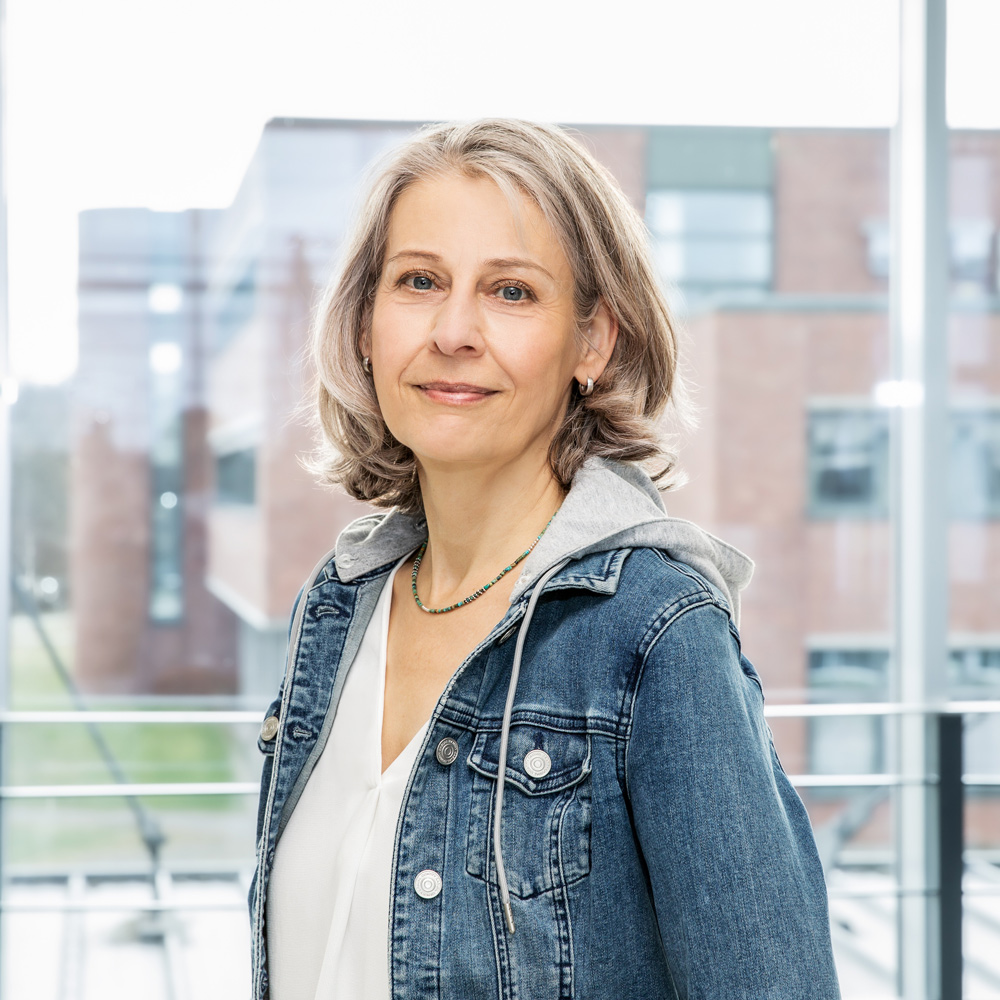
Prof. Dr. Eva Spies is a Professor for the Study of Religion with Focus on Africa at the University of Bayreuth within the Faculty of Humanities & Social Sciences . She holds a PhD in Cultural Anthropology from the University of Mainz and leads the Research Section Moralities in the Africa Multiple Cluster of Excellence (EXC 2052). Key Roles : Principal Investigator, Bayreuth International Graduate School of African Studies (BIGSAS) Vice Dean of Research Co-founder, German Association for the Study of Religion's Africa working group Research Interests span religious plurality, development cooperation, and transformative practices. She coined the concept of religious engineering to analyze how religious resources shape social/political worlds. Regional expertise in Niger/West Africa and Madagascar/Indian Ocean , with focus on: South-South mission Religion and pandemic response Intercultural hermeneutics Epistemological conflicts Material culture in development Projects : Africa Multiple Cluster of Excellence (2025): "Religious engineering. The making of moralities, development and religion in Niger" Humboldt Research Hub (2021): "Fighting pandemics with religion?" (with Moi University and University of Zimbabwe) Education : PhD in Cultural Anthropology, University of Mainz
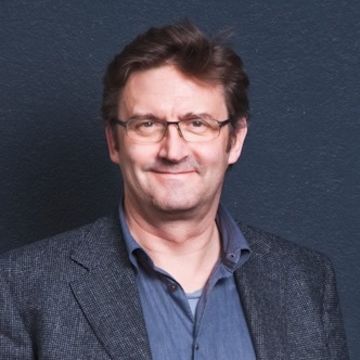
Ekaterina Shutova is an Associate Professor at the Institute for Logic, Language and Computation (ILLC) within the Faculty of Science at the University of Amsterdam. She concurrently holds a Visiting Associate Professor position in the Computer Science Department at Stanford University. She leads the Amsterdam Natural Language Understanding Lab and heads the NLP & Digital Humanities research unit at ILLC. An ELLIS Scholar, she earned her PhD from the University of Cambridge Computer Laboratory and Pembroke College. Her research has been funded by ERC, Innovate UK, British Academy, Leverhulme Trust, Google, Meta, and Deloitte. Her research spans natural language processing and machine learning, with core interests in: Few-shot learning for NLP Multilingual and cross-lingual systems Joint modeling of language and vision Cognitive processing and semantic representation Figurative language interpretation Computational social science applications Her recent publications (2024-2025) predominantly focus on multimodal learning, cultural alignment in AI, metaphor processing, and evaluation methodologies for language models. These works reflect a trend toward integrating cognitive science with multilingual systems and ethical considerations. Awards & Fellowships: ERC Consolidator Grant (2025) ELLIS Scholar Outstanding Paper Award at ACL 2023 Finalist for Outstanding Certification by TMLR Runner-up Best Paper Award at NAACL-HLT 2016 Research Leadership: She directs the Amsterdam Natural Language Understanding Lab, supervising 8 PhD students, 1 MSc student, and 34 alumni. Her projects include an ERC-funded initiative on globally accessible language technology and an AI Democratization grant for hate speech detection.
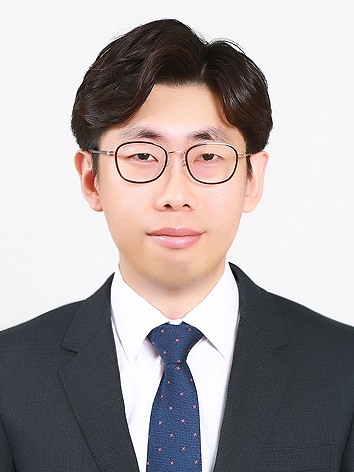
Marc Erich Latoschik is a Professor in the Department of Human-Computer Interaction at the University of Würzburg, Germany. He previously held roles at Bayreuth University, Bielefeld University, and FHTW Berlin. His research focuses on virtual and augmented reality, embodiment, human-computer interaction, and applications in health, education, and social systems. Education: Completed his PhD in 2001 at Bielefeld University with a thesis on multimodal interaction in virtual reality. Research Interests: Embodied interaction, virtual embodiment, presence and plausibility in VR/AR, avatar design, social virtual reality, health applications (e.g., VR therapy for body image issues), and XR security/privacy. Active in developing frameworks like Reality Stack I/O and MAIL for VR/AR research. Key Projects: ViTraS study on body image exercises in VR, avatars for mass use via smartphone reconstruction, and motion-based biometrics in XR. Collaborates with medical teams on cybersickness detection and emergency training simulations. Labs/Teams: Leads research groups on immersive technologies and social VR applications. Involved in interdisciplinary projects combining HCI, AI, and healthcare.
Prof. Dr. Peter Vorderer is a full professor of Media and Communication Studies at the University of Mannheim's Philosophical Faculty, leading the Institute for Media and Communication Studies. He holds a PhD from TU Berlin and has held professorships at institutions such as the University of Toronto, USC's Annenberg School, and the Free University of Amsterdam since 2010. His research focuses on media psychology, exploring media effects, entertainment media narratives, and the pervasive role of digital connectivity in everyday life. Education includes studies at Heidelberg and Mannheim Universities, with additional training at NYU and the University of Michigan. He has served as editor for Zeitschrift für Medienpsychologie and Media Psychology , and as President of the International Communication Association (2014-2015). His work bridges psychological and societal impacts of media, emphasizing entertainment's cognitive and emotional dimensions. Key research themes include media-induced resonance theory, mobile communication's psychological effects, and digital dependency. His 15 most recent articles (2014-2020) reveal a focus on media's role in well-being, social behavior, and cognitive processing. Awards include ICA Fellowship (2016). His lab contributes to understanding media's dual hedonic/eudaimonic functions and their societal implications.
Inho Hong is an Assistant Professor at the Graduate School of Data Science, Chonnam National University (Gwangju, Korea), leading the Computational Social Science and Complex Systems Lab (CSL). His research explores socio-spatial systems through data science and complex systems methods, focusing on urban dynamics, human mobility, and AI's societal impact. Education: Ph.D. in Physics (2019), Pohang University of Science and Technology (POSTECH) M.S. in Physics (2012), POSTECH B.S. in Physics (2010), POSTECH Research Interests: Urban Data Science : Analyzing urban scaling laws and innovation pathways Human Mobility : Modeling intra-city movement patterns Social Impact of AI : Ethical and societal challenges Natural Language Processing : Text embedding for policy analysis Complex Systems : Network approaches to protests and epidemics Recent Work Trends: Over 2020–2022, his articles centered on pandemic control, protest networks, and urban green spaces' psychological impact. Recent 2023–2025 work extends to vocational education analysis and mobility laws within cities. His methods combine network science with large-scale data analytics. Awards: Young Statistical Physicist Award (Korean Physical Society, 2021) Best Paper Award (Korea Computer Congress 2021) Global Ph.D. Fellowship (NRF, 2014–2017) Grants & Labs: Current lab focuses on socio-spatial systems. Past roles include Associate Research Scientist at Max Planck Institute for Human Development (2020–2023) and Postdoctoral Fellowships at POSTECH and APCTP.
Prof. Nicole Deitelhoff is Executive Director at the Peace Research Institute Frankfurt (PRIF) and holds a chair in International Relations and Theories of Global Order at Goethe University Frankfurt. She leads PRIF's International Institutions research department and co-leads the Frankfurt section of the Research Institute Social Cohesion (RISC). Her work examines contestation of international norms, world order politics, and democratic conflict integration. She has held visiting roles at Harvard, Hebrew University, and the European University Institute. Recognized with the Ernst-Otto Czempiel Award and Hessian Peace Prize, her research bridges academic rigor with policy relevance. Education : Ph.D. (summa cum laude) TU Darmstadt (2004), M.A. Political Science SUNY Buffalo (1998) Key Roles : Head of PRIF's Research Department since 2017, LOEWE Top Professor (2023), Co-speaker of Normative Orders Research Center Research Interests : Focuses on institutional legitimacy crises, norm dynamics, and security governance. Recent work analyzes the Ukraine war's impact on European order and democratic cohesion mechanisms. Awards : Includes the prestigious Hessian Peace Prize (2020) and sustained academic honors reflecting her contributions to global governance studies. Grants & Projects : Leads projects on Cold War comparisons ( PATTERN ), radicalization studies, and normative orders. Active in policy dialogue through initiatives like Global House of Young Voices .
Prof. Dr. Andreas Zick is a leading scholar at Bielefeld University, serving as Scientific Director of the Institute for Interdisciplinary Conflict and Violence Research (IKG) and Professor for Socialization and Conflict Research at the Faculty of Education. He also co-leads the ConflictA initiative since 2023 and contributes to migration education through the Faculty of Education. 2008: Professor for Socialization and Conflict Research, Bielefeld University 2013: Director of IKG 2023: Scientific Head of ConflictA His research focuses on intergroup conflicts , group-based antipathy , right-wing extremism , radicalization , and socialization processes . He investigates spatial dimensions of radicalization, societal integration challenges, and prejudice dynamics through comparative studies. Recent publications analyze radicalization spaces (2024-2025) using spatial sociology, democratic conflict perceptions (2025), and cross-cultural prosocial behavior during pandemics. Key methods include ethnography, longitudinal surveys, and multi-perspective comparative analysis. Scientific contributions recognized by: Communicator Award (2016) Nevitt Sanford Lifetime Award (2022) Active in public policy as member of the Federal Agency for Civic Education's advisory board and Federal Commissioner's Antiracism Expert Council. Leads major projects on radicalization prevention and spatial conflict dynamics with national/international partners.
Daniel Frischemeier is a Professor of Mathematics Didactics with a focus on Primary Education at the University of Münster's Faculty of Mathematics and Computer Science. He has established himself as a leading researcher in statistics and data science education for primary school students, with extensive contributions to educational methodology and teacher training. University of Münster (2021-present) TU Dortmund (2020-2021) University of Paderborn (2009-2020) Ludwig-Maximilians-Universität München (2017-2018) Dr. Frischemeier completed his doctoral studies at the University of Paderborn with a dissertation on statistical thinking and research using TinkerPlots software. His educational background includes graduate studies in Mathematics and undergraduate studies in Mathematics and Physics for teaching at various school levels. His research focuses on the design and testing of teaching-learning environments for primary mathematics education, particularly in the areas of data analysis, probability, and statistics. He conducts qualitative analysis of learners' cognitive processes related to the guiding principle of 'data and chance' in primary education. His work also includes the design and evaluation of teaching materials in data science and civil statistics, the use of learning videos to promote process-related skills, and the implementation of Fermi tasks and computer science education within primary mathematics lessons. Analysis of Dr. Frischemeier's recent publications reveals a strong emphasis on data literacy development in primary education, with increasing focus on the integration of digital tools and the conceptual understanding of data as models. His work bridges mathematics education with emerging fields of data science, addressing both theoretical frameworks and practical classroom applications. The research demonstrates a progression from basic statistical concepts toward more complex data modeling approaches suitable for young learners. Elected member of the International Statistical Institute (ISI) Chair of the Local Organizing Committees for IASE Satellite 2025 Conference Council-Member of the International Statistical Institute Special Edition Editor of the Statistics Education Research Journal Member of International Program Committees for major statistics education conferences Co-Leader of CERME Thematic Working Group 5 on Probability and Statistics Education Dr. Frischemeier serves in numerous editorial capacities and review roles for prominent journals in mathematics and statistics education. He leads significant research projects including 'Promoting Data Science Education for Teacher Education at the University level (DataSETUP)' and 'Data Science Education in STEAM for Civic Engagement and Social Justice from the Early Years (DataScEd4CiEn)'. His work has substantial impact on teacher education programs and curriculum development in statistics and data science for primary schools. He is actively involved in the development and leadership of the Math Center Münster (MaZ), which promotes mathematical potential for all students. His team includes numerous research assistants and doctoral candidates working on various aspects of mathematics education research, particularly focusing on data literacy and statistical reasoning in primary education contexts.
Prof. Felix Brandt is a Professor of Algorithmic Game Theory at the Technical University of Munich (TUM), within the School of Computation, Information and Technology. His research focuses on algorithmic game theory, computational social choice, and their intersections with theoretical computer science, AI, and economics. Education: Diploma and PhD from TUM, postdoctoral research at Carnegie Mellon University and Stanford University. Habilitation from LMU Munich (2010). Research interests include social choice theory, mechanism design, and strategic behavior in multi-agent systems. Notable contributions include work on tournament solutions, probabilistic social choice, and Nash equilibrium characterizations. Recent articles explore Condorcet-consistent voting systems, stability in hedonic games, and axiomatic foundations of Nash equilibrium. Awards include the DFG Heisenberg Professorship (2010) and TUM Supervisory Award (2021). Advises over 10 PhD students and has supervised numerous postdocs. Active in editorial roles for journals like Games and Economic Behavior and Social Choice and Welfare .
Prof. Dr. Gert Pickel is a Professor of Sociology of Religion and Church at the Institute for Practical Theology, Faculty of Theology, Leipzig University. His roles include deputy spokesperson for the Competence Center for Right-Wing Extremism and Democracy Research, member of the Center for the Study of Religion, and advisory board member for the Academy of World Religions in Hamburg and the Hannah Arendt Institute at Dresden University of Technology. He heads the "Racism in Institutions" project network and co-directs the Leipzig branch of the Research Institute for Social Cohesion. Research focuses on sociology of religion , democracy , and political culture Current projects: German-Swiss study on religious/political collective identities, modern populism in Europe (East Germany), racism in institutions Research Interests span comparative sociology of religion (secularization, pluralization), political sociology (social capital, populism, radicalism), and integration of migrants in Germany. He explores how religion interacts with politics, addressing issues like euthanasia, abortion, and gender identities through empirical, theory-driven methodologies. Teaching covers religion in Germany/Europe, secularization processes, religion-politics dynamics, group-based prejudices, and intercultural comparisons. Courses are interdisciplinary (social sciences, humanities) with field trips to Central/Eastern Europe. Scientific Awards : No awards explicitly mentioned in the text. Grants and Projects : DFG-funded "Multiple Bible Uses in Late Modern Society" (2021-2024) BMBF-funded "Social Polarization and Radicalization" (2020-2024) EU-funded Jean-Monnet Centre (2020-2024) "InRa-Study" (2021-2024) on institutional racism Labs and Teams : Member of Research Academy Leipzig; co-leader of the Leipzig branch of the Research Institute for Social Cohesion; contributor to the Leibniz WissenschaftsCampus Eastern Europe–Global Area.
Prof. Dr. Nils Stieglitz is a distinguished Professor of Strategy at Frankfurt School of Finance & Management since 2012 and serves as President & CEO since 2018. He leads the Management Department (2015–2018) and held the Executive Board role as Vice President Corporate Development (2017–2018). His research spans Strategic decision-making Organizational adaptation Human-agent interaction across dynamic environments. His scholarly work appears in top-tier journals like Strategic Management Journal , Management Science , and Organization Science , focusing on complex organizational trade-offs, incentive design, and scenario planning. He also contributes strategic insights to global media outlets such as Harvard Business Review and The Economist . As Senior Editor at the Journal of Organization Design and editorial board member of Organization Science , he shapes discourse on organizational theory. His teaching emphasizes strategy formulation and organizational design principles.
Prof. Dr. Michael Bosnjak leads the Department for Psychological Research Methods at the University of Trier, Germany, focusing on research synthesis methods, theory-driven machine learning, survey methodology, and experimental designs applied to personality psychology (HEXACO model), consumer behavior, and public health. His team includes Dr. Henning Silber (GESIS), Dr. Bernd Weiß (GESIS), and international collaborators at Utrecht University. Affiliation: University of Trier (Department of Psychology) Editorial Roles: Zeitschrift für Psychologie (Editorial Board), Social Science Computer Review (Associate Editor), Frontiers in Psychology (Review Editorial Board) Grants: DFG SFB 884 (co-applicant), DFG Project PaCO (2019-2024, principle investigator), BMBF-funded GESIS Panel Campus His recent publications analyze panel conditioning effects in longitudinal studies, e-commerce privacy dynamics, personality-trait interactions, and psychosis proneness measurement. Scientific awards include the 2016 BMBF infrastructure grant, 2011 Isaac Manasseh Meyer Fellowship, and 2003 Karin Islinger Award. Current projects address data quality in probability-based and opt-in panels, with experimental designs across eight groups testing measurement error mechanisms. He serves as a co-editor for multiple special issues on survey methodology and tourism psychology.
Dr. Kathi Diel serves as an Akademische Rätin (Academic Councilor) at Saarland University, holding a tenured faculty position equivalent to Associate Professor in the Department of Psychology within the Faculty of Social Sciences. Her research profile demonstrates active engagement in both theoretical and applied psychological research with international collaborations spanning multiple continents. Dr. Diel's research focuses primarily on social comparison processes and their motivational consequences, with particular emphasis on how comparison direction (upward vs. downward) and extremity (moderate vs. extreme standards) influence goal pursuit behaviors. Her work reveals that upward comparisons enhance self-improvement motivation when standards are moderate and attainable, but lead to goal disengagement when standards are extreme. She has developed a comprehensive motivational framework that identifies three key response patterns to social comparisons: pushing (increased effort), coasting (reduced effort), and disengagement (giving up). More recently, Dr. Diel has expanded her research to environmental psychology, investigating how social comparison dynamics affect climate action behaviors. Her work reveals that people often engage in downward comparisons regarding environmental behavior to maintain positive moral self-images, which can lead to reduced effort in climate action (coasting). She explores interventions that might shift people toward more motivating upward comparisons in environmental contexts. Her publication record shows consistent high-impact output with numerous articles in top psychology journals including Journal of Personality and Social Psychology , Personality and Social Psychology Bulletin , and Journal of Environmental Psychology . Her recent work has increasingly focused on large-scale international collaborations, most notably the International Climate Psychology Collaboration spanning 63 countries, demonstrating her growing influence in global environmental psychology research. Dr. Diel collaborates extensively with prominent researchers including Wilhelm Hofmann, Martina Friese, and the international team behind the global climate intervention studies. Her research methodology combines experimental laboratory studies with real-world intervention approaches, demonstrating both theoretical rigor and practical application. Her work bridges fundamental social psychology with pressing contemporary issues, particularly climate change behavior. By applying social comparison theory to environmental contexts, she has created a novel research trajectory that addresses how people's perceptions of others' environmental behaviors influence their own climate action efforts.
Christian von Scheve is a Professor of Sociology and Head of the Department of Sociology of Emotions at Freie Universität Berlin. He also serves on the board of the Collaborative Research Center (SFB) 1171 'Affective Societies' and is a Research Fellow at the German Institute for Economic Research (DIW Berlin). His academic journey includes positions as a Research Professor at DIW Berlin (2011-2014), Junior Professor at Freie Universität Berlin (2008-2014), and Assistant Professor at the University of Vienna (2007-2008). His research examines the interplay between culture, social structures, and emotions, with emphasis on: The social/cultural constitution of emotions and affective experiences Emotional dimensions of economic action Human/non-human social interaction He employs diverse methodologies including surveys, interviews, and experiments. His recent publications (2022-2025) predominantly explore affective polarization , refugee integration , and the role of emotions in political discourse, utilizing interdisciplinary approaches spanning sociology, neuroscience, and political science. A consistent theme is how emotions shape social cohesion and conflict in contemporary societies. He holds key editorial roles including Co-Editor of Soziale Welt , Associate Editor of Emotion Review , and Editorial Board positions for multiple book series on affective societies and emotion research. He actively advises Master's students, requiring thesis proposals to be submitted six weeks before registration deadlines. His research is embedded in collaborative projects like SFB 1171 'Affective Societies' and the 'Social Cohesion and Civil Society' initiative.
Max Planck Institute for the Study of SocietiesGermany
Lucio Baccaro is Director at the Max Planck Institute for the Study of Societies (MPIfG) and was Full Professor of Macrosociology at the University of Geneva, where he also served as Deputy Dean for Research (2016–2020). He has held academic positions at MIT, Case Western Reserve University, and visiting roles at the University of Turin and the University of Vienna. His primary affiliations are with MPIfG and the University of Geneva, both central to his research in political economy and sociology. Education: PhD in Management and Political Science, Massachusetts Institute of Technology (MIT), 1999 Doctorate in Labor Law and Industrial Relations, University of Pavia, 1997 Master of Business Administration, Stoa' (IRI-MIT joint venture), 1991 Laurea in Philosophy, summa cum laude, University "La Sapienza", Rome, 1989 Lucio Baccaro’s research focuses on comparative political economy, labor relations, global worker rights, and deliberative governance . His work integrates economic sociology and political sociology to analyze institutional change, social dialogue, and the impact of globalization on labor and welfare systems. He has led major comparative studies on employment models, pension reforms, and international labor standards. His scholarship emphasizes the interplay between institutions, ideas, and power in shaping economic governance. His recent publications reveal a consistent focus on institutional change, deliberative processes, labor market reforms, and global justice . Themes include path dependence in international organizations, the transformation of collective bargaining, and the role of expertise in democratic governance. His interdisciplinary approach bridges sociology, political science, and economics, with strong methodological rigor in comparative and qualitative analysis. Scientific Awards and Honors: Honorary Professor, University of Duisburg-Essen (2023) Professeur honoraire, University of Geneva (2020) International Geneva Award (2011) Outstanding Young Scholar Award, IRRA (2003) Founder's Prize, SASE (2001) Maurice F. Strong Career Development Chair, MIT (2006–2009) Multiple fellowships from SSRC, Harvard, MIT, and CUNY Alfiere del Lavoro, awarded by the President of Italy (1984) Advising and Grants: While specific student advisees are not listed, Baccaro has supervised research and mentored scholars through his roles at MPIfG and the University of Geneva. He has secured substantial research funding, including grants from the Swiss National Science Foundation (SNF) and the Swiss Network for International Studies (SNIS), supporting projects on post-Fordist growth models, employment policy, and deliberative governance. His leadership in co-principal investigator roles highlights his collaborative research approach and institutional influence. Labs and Research Teams: As Director at MPIfG, Baccaro leads a major research institute focused on the study of societal and economic institutions. He has been instrumental in shaping research agendas on political economy and governance, fostering interdisciplinary collaboration and international scholarly exchange.