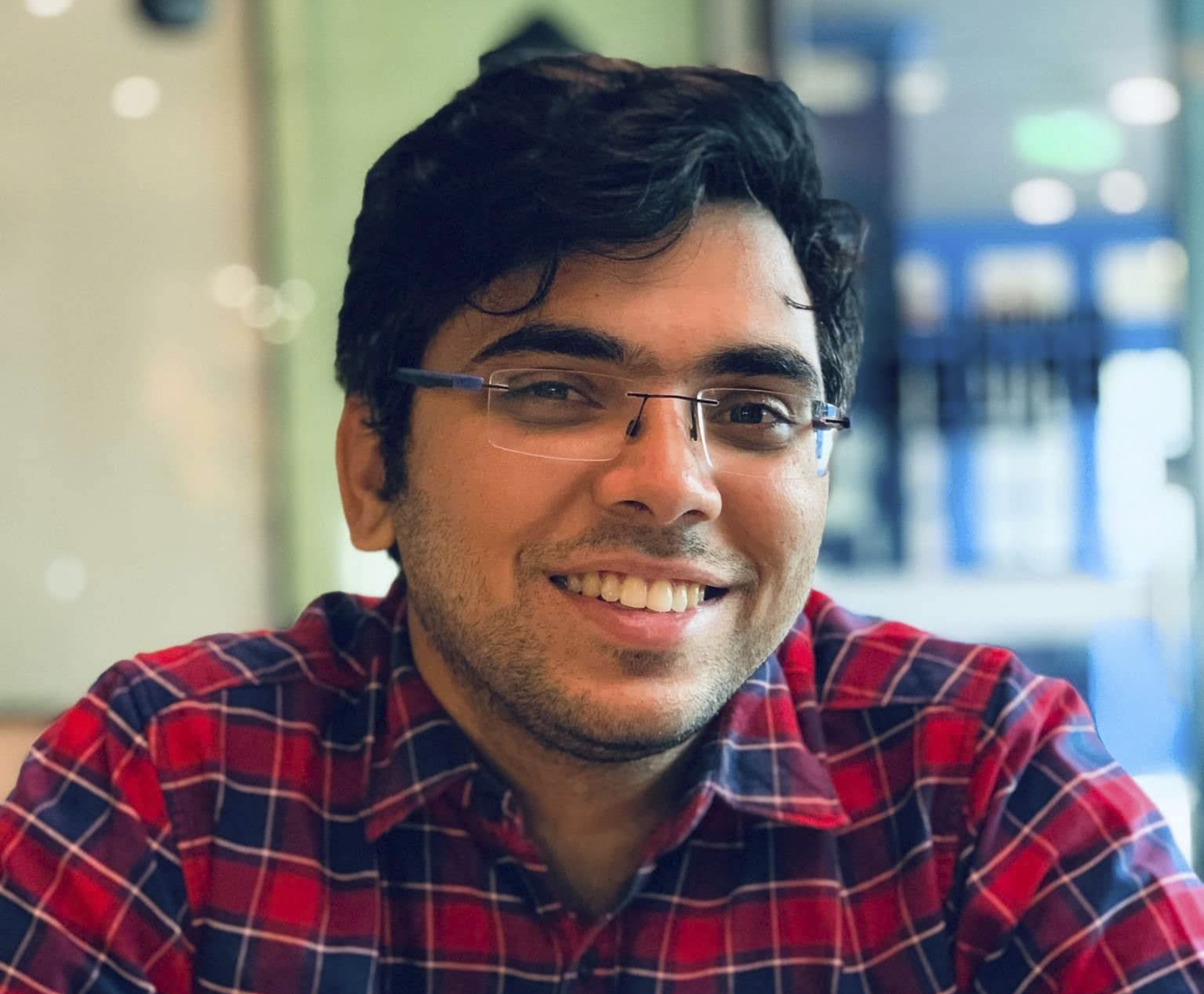
Labros Bisdounis is a Professor at the Department of Electrical and Computer Engineering, University of the Peloponnese, Greece. He previously held positions at the Technological Educational Institute of Western Greece, including Associate Professor, Full Professor, and Dean of the School of Technological Applications (2016–2018). He has extensive industry experience as a senior research engineer and project manager at Intracom S.A. (2000–2008), focusing on VLSI circuits and telecom applications. His research interests include CMOS circuit timing/power modeling, low-power/high-speed design, MOSFET modeling, and sensor applications. He has authored over 30 papers with 740+ citations and is an IEEE member. Education: Diploma in Electrical Engineering (1992), University of Patras Ph.D. in Electrical Engineering (1999), University of Patras Research Interests: CMOS circuit timing and power dissipation modeling Deep-submicron/nano-CMOS circuit design MOSFET device modeling Low-power embedded systems and SoC Sensor applications and organic electronics Leadership Roles: Dean of the School of Engineering, University of the Peloponnese (2023–present) Director of Training & Lifelong Learning Centre (2019–2019) Board Member, Hellenic NARIC (2016–2019) Collaborations: Active at the Hellenic Open University as a tutor in Computer Architecture and Digital Systems modules. Co-developed the AETHER framework for pervasive computing and contributed to energy-aware SoC designs for 5 GHz WLANs.
Riadul Islam serves as an Assistant Professor in the Department of Computer Science and Electrical Engineering at the University of Maryland, Baltimore County (UMBC), maintaining his primary office in room 316 of the Information Technology and Engineering (ITE) Building. His academic appointment focuses on hardware design and verification within the institution's engineering framework. His educational qualifications include: Ph.D. in Computer Engineering from UCSC (2017) M.A.Sc. in Electrical and Computer Engineering from Concordia University, Montreal (2011) B.Sc. in Electrical and Electronic Engineering from Bangladesh University of Engineering and Technology (2007) Professor Islam's research centers on VLSI CAD tools and low-power digital/mixed-signal IC design , with significant contributions to current-mode clock networks, vehicular security systems, and error-robust circuit architectures. His work increasingly integrates machine learning for design automation while exploring neuromorphic computing applications and secure hardware implementations. This multidisciplinary approach bridges traditional IC design with modern AI-driven optimization techniques. Analysis of his 2023-2025 publications reveals three dominant research thrusts: (1) Machine learning applications in early-stage Design Rule Checking (DRC) prediction and clock network optimization, (2) Graph-based intrusion detection systems for automotive networks (particularly CAN bus security), and (3) Event-based vision systems and neuromorphic computing architectures. These areas demonstrate consistent innovation in merging hardware design with AI/ML methodologies for enhanced system reliability and efficiency. He directs the UMBC VLSI and SoC Research Group , which develops energy-efficient clocking networks, secure vehicular communication protocols, and compute-in-memory architectures. The lab maintains active collaboration with industry partners on hardware security and neuromorphic computing initiatives while supporting graduate student research in cutting-edge IC design methodologies.
Kanad Basu is an Associate Professor in the Department of Electrical, Computer, and Systems Engineering at The University of Texas at Dallas, Jonsson School of Engineering and Computer Science. He leads the Trustworthy and Intelligent Embedded Systems (TIES) lab, focusing on hardware security, reliability, and emerging computing paradigms. His research spans AI hardware, quantum computing, functional safety, and hardware-based security validation. Research Interests: His work emphasizes improving the trustworthiness of modern hardware systems. Key areas include hardware security (e.g., side-channel analysis, hardware trojans), functional safety in AI accelerators, quantum computing security and verification, and post-silicon validation techniques. He combines formal methods, machine learning, and hardware design to address vulnerabilities in SoCs, DNN accelerators, and quantum systems. Publication Trends: Recent publications (2023–2025) show a strong focus on interdisciplinary research, integrating AI/ML with hardware security, quantum computing, and functional safety. There is a growing emphasis on using large language models for assertion generation, symbolic execution for hardware fuzzing, and graph neural networks for quantum circuit analysis. His work frequently appears in top venues like DAC, DATE, HOST, ISVLSI, and IEEE journals. Scientific Awards: NSF CAREER Award, 2025 IEEE Top Picks in Test and Reliability, 2024 and 2023 Multiple Hack@DAC Prizes (2nd and 3rd) Best Paper Award at VLSI Design 2011 Assistant Professor Award at UTD Jonsson School, 2024 Nominated for Blavatnik Awards for Young Scientists, 2019 Advising and Grants: Dr. Basu has mentored numerous PhD, MS, and undergraduate students, many of whom have published in top-tier venues. He leads the TIES lab, which has received significant recognition, including the NSF CAREER Award. He actively collaborates across disciplines, advising students on topics ranging from quantum computing to AI hardware and functional safety. His lab produces high-impact research with real-world applications in automotive, cloud, and embedded systems. Labs and Teams: He leads the Trustworthy and Intelligent Embedded Systems (TIES) lab at UT Dallas, which fosters innovation in hardware security and reliability. The lab has produced award-winning work, including second prize at HACK@DAC 2025. He also serves on technical committees for IEEE DATE and HOST, and acts as Hardware Hacking Chair for IEEE HOST, indicating strong leadership in the hardware security community.
Nicole L. Beebe is a Professor at the Alvarez College of Business, The University of Texas at San Antonio , specializing in cybersecurity, cyber analytics, and digital forensics. With over two decades of experience spanning academia, government, and industry, she has contributed extensively to research on insider threats, IoT security, and threat hunting. Ph.D. in Business Administration (Information Technology), UTSA MS in Criminal Justice, Georgia State University BS in Electrical Engineering, Michigan Technological University Her research explores cybersecurity challenges in emerging technologies, including quantum computing, IoT, and large language models. She has pioneered studies on cyberbullying dynamics, forensic automation, and AI-driven threat detection. Recent publications focus on adversarial image obfuscation , VR for security operations , IoT forensic methodologies , and deepfake detection frameworks , reflecting interdisciplinary work at the intersection of security, AI, and digital evidence. 2022 Best Paper Award, Journal of Network & Computer Applications Senior Member, IEEE and ACM Senior Fellow, Information Systems Security Association As an Associate Editor for Computers & Security , she shapes the field through peer review. Her $14M+ in funding from NSF, DHS, and DoD underscores her impact on advancing cybersecurity research and education.
Hongxin Hu is a Professor and Associate Chair in the Department of Computer Science and Engineering at the University at Buffalo, State University of New York (SUNY). His research spans security, networking, and machine learning, with publications across top conferences including security (S&P, CCS, USENIX Security, and NDSS), networking (SIGCOMM and NSDI), machine learning (NeurIPS, ICML, and EMNLP), and human-computer interaction (CHI and CSCW). His work has been funded by NSF (SaTC, CNS, IIS, OAC, SOC), USDOT, VMware, Amazon, Google, and Dell. Dr. Hu earned his PhD in Computer Science and Engineering from Arizona State University in 2012. His academic journey has led him to become a prominent researcher in cybersecurity with a strong publication record and significant research impact. Dr. Hu's research interests encompass a wide range of topics at the intersection of security, networking, and artificial intelligence. His work focuses on Emerging Network Technologies and Security (5G/Future-G, NFV, SDN, Edge computing), Machine Learning for Security and Privacy , Security and Privacy in IoT and Cyber-Physical Systems , and AI for Social Good (addressing online abuse, unsafe children's games, and cyberbullying). His interdisciplinary approach has enabled him to tackle complex security challenges through innovative solutions that combine networking expertise with machine learning techniques. His recent publications demonstrate a strong trend toward applying large language models and advanced machine learning techniques to security challenges, particularly in content moderation, vulnerability detection, and privacy protection. The research spans multiple domains including voice assistant security, IoT security, network security, and social media safety, showing a consistent pattern of addressing real-world security problems with cutting-edge technical approaches. IEEE Big Data Security Senior Research Award (2025) ACM SACMAT Test-of-Time Award (2024) NSF CAREER Award (2019) Multiple Best Paper Awards from ACM ASIACCS (2022), ACSAC (2020), IEEE ICC (2020), and ACM SIGCSE (2018) Amazon Faculty Research Award (2022) First Place Award in ACM SIGCOMM 2018 Student Research Competition Dr. Hu has successfully advised multiple PhD students, including Nishant Vishwamitra who joined UT San Antonio as a tenure-track Assistant Professor. His research has been generously funded by major agencies and industry partners. As an active member of the academic community, he serves as Associate Editor for IEEE Transactions on Dependable and Secure Computing and Computers & Security, and has held numerous leadership roles in major security conferences including TPC Co-Chair for ASONAM 2025 and IWSPA 2024/2025. Dr. Hu leads a vibrant research group that has produced significant contributions in network security function virtualization, intrusion detection systems, and privacy-preserving technologies. Current projects include developing LLM-assisted vulnerability detection systems, defenses against jailbreak attacks on large language models, and security mechanisms for emerging networking technologies. His team's work on IoT security, voice assistant applications, and online content moderation has received wide recognition and press coverage.
Massimo Poncino is a Full Professor at the Department of Control and Computer Science (DAUIN) within the Faculty of Engineering at Politecnico di Torino. He serves as Scientific Advisor for the STMicroelectronics partnership and coordinates basic engineering subjects. A Senior Member of IEEE since 2012 and Fellow since 2012, he has served on editorial boards for IEEE Transactions on Computer-Aided Design, IEEE Design & Test of Computers, and ACM Transactions on Design Automation. Education: Laurea in Electronic Engineering (1989) and PhD in Computer and Systems Engineering (1993) from Politecnico di Torino Academic Career: Visiting Scientist University of Colorado (1993-1994), Researcher at Politecnico di Torino (1995-2001), Associate Professor at University of Verona (2001-2004), Full Professor at Politecnico di Torino (2006-present) His research focuses on energy-efficient digital systems , including design automation of SoCs, hardware-aware AI, battery management, cyber-physical systems, and embedded systems. Recent publications highlight advancements in digital twins for batteries , low-power neural network deployment , and IoT privacy . Scientific Awards: Recognition of Service Award - ACM (2013) Certificate of Appreciation - IEEE Circuits and Systems Society (2006, 2008, 2009) IEEE Fellow (2012-) Research Involvement: EU H2020, VI/VII Framework Programs evaluator Scientific Director for projects: Approxim@ction, EMBAI, DISLO-MAN, DAMASCO Member of EDA research group Teaching: Course director for Energy Management for IoT (2019-2025) Lecturer for Computer Science courses (2003-2025)
Damir Regvart is a lecturer at Algebra University of Applied Sciences , specializing in Cybersecurity , Network Protocols , and Cloud Computing . With a background in Electrical Engineering and a Master's in Electrical Engineering from the Faculty of Electrical Engineering and Computing in Zagreb (2002), he focuses on advanced network security protocols, Zero-touch technologies, and cloud infrastructure. Research Highlights : Zero Trust Architecture, Honeypot Deception Strategies, Machine Learning in Threat Detection, Microsoft Azure Security, and Infrastructure as Code hardening. Key Projects : Pan-European and national initiatives in network automation, cloud forensics, and IoT security. Recent Publications (2024-2025) explore cutting-edge topics like AI-driven security testing, forensic capabilities in cloud environments, and the intersection of SDN and cybersecurity. His work addresses vulnerabilities in cryptographic systems and the legal implications of digital signatures. Technology Focus : Zero-touch provisioning, Microsoft Sentinel automation, and RedFish/vSphere API integration.
Jennifer Dykema is the H.I. Romnes Professor of Sociology and Faculty Director of the University of Wisconsin Survey Center (UWSC) at the University of Wisconsin-Madison. She holds affiliate positions at the Center for Demography and Ecology, the Social and Administrative Sciences Division of the School of Pharmacy, the Center for Demography of Health and Aging, and the Center for Financial Security. Dr. Dykema earned her Ph.D. in Sociology from the University of Wisconsin-Madison in 2004, following an M.S. in Sociology from the same institution. She received her B.A. in psychology and sociology from the University of Michigan. Prior to joining UW-Madison, she worked at the University of Michigan's Survey Research Center. Her research focuses on survey methodology, specifically identifying sources of error in standardized measurements and developing methods to reduce those errors. Dr. Dykema's work examines three main areas: interviewer-respondent interaction, questionnaire design, and methods to increase response rates. As Faculty Director of UWSC, she oversees methodological research addressing critical issues such as response rates, nonresponse bias, field procedures' impact on costs, and design decisions' consequences on data quality. Recent projects include studying incentive combinations to improve response, examining straightlining behavior across survey modes, optimizing household addressing in postal surveys, and comparing data quality between agree-disagree and construct-specific questions. Dr. Dykema's publication record demonstrates a consistent focus on advancing survey methodology. Her work shows increasing attention to mixed-mode surveys, medical research participation, and sociodemographic variations in survey responses, while maintaining a strong foundation in cognitive aspects of survey responding and measurement error reduction. AAPOR Student Paper Award (2005) H.I. Romnes Professorship (prestigious faculty award at UW-Madison) Dr. Dykema has secured extramural funding from NSF and NIH for her research. Her current NSF-funded project examines barriers and facilitators to participating in medical research among underrepresented groups. As Faculty Director of UWSC, she oversees numerous methodological experiments addressing survey implementation challenges. She teaches graduate courses in survey methods, including Soc 751 Survey Methods for Social Research and Soc 752 Measurement and Questionnaires for Survey Research. Dr. Dykema directs the University of Wisconsin Survey Center, a major research facility conducting surveys across various domains. She is highly active in the survey research community, having served as 2017 Annual Conference Chair and Executive Council member (2015-2017) for the American Association for Public Opinion Research (AAPOR). She also contributed to the Midwest Association for Public Opinion Research (MAPOR) by chairing the committee that launched their "Methods and Substance" webinar series.
Yue Guo is a Professor of Battery Systems at Coventry University, affiliated with the Institute of Future Transport and Cities and the Centre for E-Mobility and Clean Growth. He holds a BEng in Electrical Engineering and Automation from Harbin Institute of Technology (China), an MSc in Management of Information Technology from the University of Nottingham, a PhD in Model-Based Design for Automotive Electronic Systems from the University of Warwick, and an MBA in Global Energy Industry from Warwick Business School. His research focuses on energy storage systems, battery thermal management, and automotive electronics. He has collaborated extensively with the automotive industry on projects involving system-of-systems modeling, Li-ion battery testing, and low-carbon transport technologies. Notable roles include former Project Manager and Deputy Head of the Energy Innovation Centre at WMG, University of Warwick, and current Chair of Battery Systems at C-ALPS. Professional memberships include Chartered Engineer, IEEE Senior Member, and SAE International Battery Thermal Management Committee. Key research trends in his publications include predictive battery diagnostics, thermal runaway prevention, and LCA analysis of battery production. His work emphasizes real-time monitoring technologies and sustainable energy storage solutions. Projects address challenges in battery aging, environmental impacts, and integration into low-carbon vehicle systems. Awards and recognitions include his academic appointments and industry collaborations, though no specific scientific awards are listed. He has advised on numerous research initiatives and contributed to advancing battery technologies through innovative thermal management systems and model-based testing frameworks. Labs and teams: Active in the Centre for E-Mobility and Clean Growth, leading interdisciplinary projects at Coventry University's Institute of Future Transport and Cities. Collaborations span academic and industrial partners globally, focusing on next-generation energy storage solutions.
Peter J. Mirski is a Professor of Management and IT at the Management Center Innsbruck (MCI), a leading business school in Austria. He has been associated with MCI since 1998, serving as head of the Management, Communication & IT and Digital Business & Software Engineering Online programs, which he co-founded. As Chief Information Officer (CIO), he oversees the central IT services department. He also holds a visiting professorship at the University of Nebraska, Omaha, USA. His academic background includes a Doctorate (Dr. rer. soc. oec.) from the University of Innsbruck, specializing in business management and information systems. He co-founded the PDAgroup GmbH in 2008 and has led numerous EU-funded research projects, notably the OPENSKIMR initiative for skill matching in digital labor markets. Mirski's research focuses on eLearning innovations, Industry 4.0, digital transformation, and project management. His work bridges academia and industry, emphasizing practical applications. He has authored over 100 peer-reviewed articles, books, and chapters, spanning topics like big data solutions, mentoring frameworks, and tourism technology. Key Awards: SAP University Alliances Visionary Member, ESCO Maintenance Committee (EU Commission) Professional Roles: Member of Academic Board (SAP DACH), Chair of ERP Summerschool, Scientific Advisor (PDAgroup) Mirski’s teaching spans design thinking, entrepreneurship, and IT governance. He has advised over 50 students in bachelor, diploma, and master theses, focusing on topics like digital twin applications, GDPR compliance, and IT governance maturity. His leadership in EU projects has driven innovations in education, tourism, and workforce development.
Patanjali Sristi is an Assistant Professor at Augusta University's School of Computer and Cyber Sciences, specifically within the Department of Cybersecurity Engineering. Located at 100 Grace Hopper Lane in Augusta, Georgia, Dr. Sristi joined the university in January 2025 after previously working as a Postdoctoral Researcher at the University of Florida with Dr. Swarup Bhunia. Their academic journey began with a B.Tech in Electrical and Electronics Engineering from Pondicherry University in 2011, followed by both MS and Ph.D. in Computer Engineering from the Indian Institute of Technology (IIT Madras). Dr. Sristi's educational background demonstrates a strong foundation in electrical engineering and computer science, with advanced specialization in hardware security. Their Ph.D. research at IIT Madras was supervised by Dr. Kamakoti Veezhinathan, focusing on critical aspects of hardware security that would form the basis of their future research career. Dr. Sristi's research program centers on addressing one fundamental question: "How can we design, measure and build efficient and affordable security assurances for a given hardware design in the context of an untrusted supply chain while respecting the design constraints at each level of abstraction?" This research vision spans three interconnected domains: AI for System Design: Developing data models and AI techniques for next-generation hardware systems AI for Hardware Security: Creating AI models for vulnerability detection, countermeasure evaluation, and mitigation of supply chain threats Cybersecurity for AI: Establishing metrics and algorithms for secure development, deployment, and operation of AI systems Dr. Sristi's scholarly output reveals a consistent focus on hardware security challenges within the modern distributed electronics supply chain. Their work demonstrates a progression from foundational research on hardware trojans and side-channel attacks toward comprehensive frameworks addressing the emerging "zero trust" paradigm in hardware security. A notable trend is the integration of AI/ML techniques with traditional hardware security approaches, reflecting the evolving nature of security threats and countermeasures. Their publications span prestigious venues including IEEE Transactions on VLSI Systems, IEEE Transactions on Computers, and various IEEE conferences, indicating strong recognition within the hardware security community. While specific awards aren't detailed in the available information, Dr. Sristi's research impact is evident through multiple US patents (including US Patent 11,899,827 and US Patent App. 17/392,376) and invitations to deliver talks at prominent organizations including Sony Finishing School, Northrop Grumman, and IEEE events. Their work on Netflix Privacy Analysis was featured in Wired, demonstrating real-world relevance and impact. Dr. Sristi actively engages with students through courses including CSCI 8940 (Dissertation Research), CSCI 8720 (Problems in Computer & Cyber), and CSCI 7900 (Research Colloquium). Their research program appears well-supported through collaborations with major institutions and industry partners, as evidenced by workshops conducted for the Indian Army in conjunction with Pravartak and IIT Madras. These partnerships suggest substantial research funding and collaborative opportunities that enhance the educational experience for students. Though specific lab information isn't provided in the available text, Dr. Sristi's research scope suggests involvement with hardware security laboratories equipped for VLSI design, testing, and security evaluation. Their work on IoT security, hardware trojans, and supply chain security would require facilities for physical device testing, side-channel analysis, and hardware emulation. The focus on "zero trust" implementation for hardware security indicates a research environment that bridges theoretical security models with practical implementation challenges.
Prof. Dr. Raif Bayır is a Turkish academic at Karabük University's College of Engineering, Department of Mechatronics Engineering. With a career spanning 2000-2024, he has held continuous full-time faculty positions from Assistant Professor to Professor. His research focuses on Robotics, Hybrid/Electric Vehicles, and Artificial Intelligence. Doctorate: Gazi University (2005) - Electronics & Computer Education Postgraduate: Gazi University (1998) - Electronics & Computer Education Undergraduate: Gazi University (1995) - Electronics & Computer Education His work integrates Artificial Intelligence techniques into Electric Vehicle systems, Robotics, and Agricultural Engineering applications. Recent publications emphasize Deep Learning for Mask Detection, Real-Time Battery Monitoring, and Autonomous Navigation Systems. Scientific awards include: 2017 METU Line-Following Robot 1st Prize 2016 TÜBİTAK Domestic Product Award 2015 TÜBİTAK Electromobil Best Design Prize He has advised over 20 graduate theses on topics spanning Electric Vehicle Components, Beehive Monitoring Systems, and Intelligent Control Applications. His research teams have developed multiple TÜBİTAK-supported projects including Automotive Test Stands and Battery Management Systems.
Lei Wang is the F. L. Castleman Associate Professor in Engineering Innovation at the University of Connecticut's School of Engineering, Department of Electrical and Computer Engineering. He holds a PhD from the University of Illinois at Urbana-Champaign (2001), an MS (1996) and BS (1992) from Tsinghua University, China. His research focuses on cyber-physical systems , embedded computing with renewable energy , and nanoscale integrated circuit design . Key areas include microbial fuel cells , memristor-based hardware security , and low-power signal processing architectures . Recent work trends involve Quantum-dot transistor applications for in-memory computing Adaptive LDPC decoder optimization Hardware security leveraging memristor properties Energy-efficient power management systems for underwater sensors Scientific recognition includes National Science Foundation CAREER Award (2010) F. L. Castleman Term Professorship in Engineering Innovation Professional roles encompass editorial and committee positions at IEEE and ACM journals. His work spans interdisciplinary domains in renewable energy integration , VLSI design , and bio-inspired computing systems .
Darshana Jayasinghe is a Postdoctoral Research Associate at the School of Electrical and Information Engineering (EIE) , University of Sydney. He holds a PhD from the University of New South Wales (UNSW), completed in 2017, and worked as a Research Associate there until December 2022. His research focuses on hardware security, particularly side-channel analysis attacks and countermeasures. Education: PhD, University of New South Wales (2017) Research Interests include: Side-channel analysis attacks (Power Analysis, EM Attacks, Fault Injection) Countermeasures (Balancing, Random Execution, Masking) On-chip sensors for FPGA monitoring FPGA reliability under power fluctuations Publication Trends reveal expertise in: Hardware Security (15/15 articles) FPGA Vulnerabilities (10/15 articles) Cryptographic Countermeasures (12/15 articles) Sensor Development (5/15 articles)
Rohit Bhagat is a Professor and Centre Director at the Centre for E-Mobility and Clean Growth. His research focuses on advancing energy storage technologies, particularly lithium-ion batteries, through material science innovations and real-time monitoring systems. Key areas of interest include battery degradation mechanisms, sensor integration for diagnostics, and environmental impact assessments of battery production. Research highlights include developing predictive models for lithium plating detection using machine learning, investigating electrolyte degradation under elevated temperatures, and optimizing cathode materials for zinc-ion batteries. He has led projects such as the British Council MRes scholars initiative in STEM, emphasizing interdisciplinary collaboration. Bhagat’s work spans experimental design methodologies for battery modeling, thermal management strategies, and life cycle assessments. His contributions address critical challenges in battery safety, longevity, and sustainability, with applications in electric vehicles and renewable energy systems.