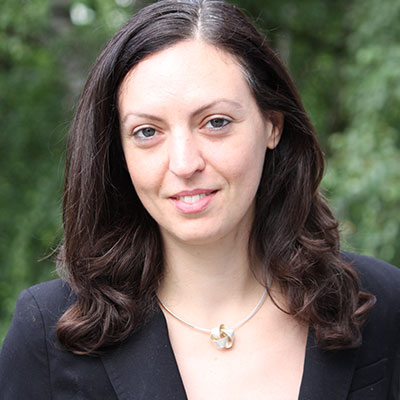
Giovanna Gioliمشاهده پروفایل
مدرس ارشد
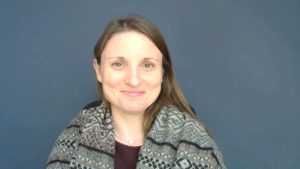
Giovanna Gioli is a Senior Lecturer in Human Geography at Bath Spa University's School of Sciences. She is a co-investigator in the Leverhulme Trust-funded project Digital Climate Futures , exploring decolonial and justice perspectives in climate change adaptation. Her research focuses on political ecology, climate migration, gender equity, and socio-ecological resilience in mountain regions of the Global South, particularly South Asia. PhD in Political Philosophy (University of Parma) MA in Political Philosophy (University of Pisa) MSc in European Studies and Migration (London School of Economics) Her research interests intersect political ecology, climate change adaptation, and the socio-cultural dimensions of migration. She examines how gender, conflict, and environmental hazards shape livelihoods and vulnerability in regions like Pakistan, Nepal, and the Hindu Kush Himalaya. Her work challenges dominant narratives, advocating for justice-oriented approaches to digitalized climate adaptation and decolonizing environmental research frameworks. Gioli has contributed to major projects such as HI-AWARE, analyzing vulnerability in glacier-dependent river basins, and authored commissioned reports for UN Women on migrant workers' socio-economic impacts in Nepal. She also co-edited Water Security across the Gender Divide and Thinking as Anarchists , advancing interdisciplinary debates in environmental humanities and critical theory. Teaching: Directed BSc Global Development and Sustainability at Bath Spa University (2020–2025), module leader for Cities and Environment , and teaches interdisciplinary research methods in environmental humanities. Grants: Leverhulme Trust (Digital Climate Futures, 2023–2026), HI-AWARE (2014–2018), and others addressing environmental migration and vulnerability. She is affiliated with the Research Centre for Environmental Humanities and the Climate, Hazards and Environmental Change Research Cluster at Bath Spa University. Her work bridges philosophical inquiry (e.g., Deleuze, Sartre) with applied research on environmental displacement, emphasizing the need for equitable, community-centered solutions.