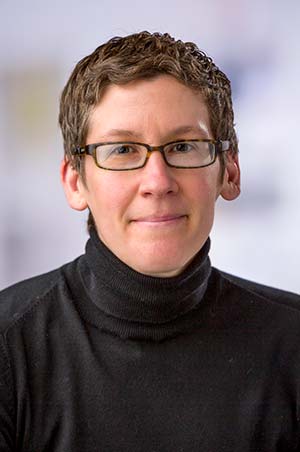
Dr. Katharine Smales is a Research Fellow in the Department of Information Studies at University College London, specializing in young people's information literacy and digital experiences. Her research employs co-production methods, innovative video documentation, and participatory arts approaches to investigate how individuals navigate digital technologies and algorithmic systems. Her work utilizes publishing theory, Agential Realism, and Practice Theory to frame digital, data, and algorithmic literacy development. She approaches information literacy through sociocultural perspectives that recognize its social construction and relationship to power dynamics, examining how material and paratextual features can be leveraged to create accessible educational resources. Dr. Smales currently leads two significant research initiatives: An AHRC-funded project with Dr. Kaitlyn Regehr in collaboration with the Association of School and College Leaders examining smartphone relationships among 120+ UK youth to identify digital literacy education gaps The Co-Creating Digital Bibliotherapy project with Dr. Laura Dietz and the Reading Agency, funded by UCL Grand Challenges, designing wellbeing interventions around digital reading Her doctoral research at UCL, supported by the AHRC London Arts and Humanities Partnership, pioneered ethical protocols for video research with children during social distancing, including illustrated consent materials presented as best practices to the UK Department of Education. Research funding includes: AHRC London Arts and Humanities Partnership (PhD) AHRC project funding UCL Grand Challenges grant Teaching experience spans multiple institutions: Four years as Associate Lecturer for Children's Literature MA at Goldsmiths Publishing Skills module at University of Roehampton Guest lectures at City University, Bath Spa, Kingston, and UCL
Dr. Thurmon Lockhart serves as the Inaugural MORE Foundation Professor of Life in Motion in the School of Biological and Health Systems Engineering at Arizona State University. He additionally holds positions as Research Affiliate Professor at Mayo Clinic College of Medicine, Division of Endocrinology, and as Adjunct Professor at Barrow Neurological Institute. Dr. Lockhart previously held faculty positions at Virginia Tech from 2000-2014, progressing from Assistant to full Professor in the Industrial and Systems Engineering Department and the Virginia Tech/Wake Forest School of Biomedical Engineering and Science. Dr. Lockhart earned his Ph.D. in Industrial and Systems Engineering from Texas Tech University in 2000, with his dissertation focusing on the Biomechanics of Slips and Falls. His academic journey includes progression through academic ranks at Virginia Tech before joining Arizona State University as a full Professor in 2014. Dr. Lockhart's research primarily centers on identifying injury mechanisms and quantifying sensorimotor deficits related to aging and neurological disorders, with particular emphasis on fall accidents. His expertise spans biomechanical modeling, nonlinear dynamics, human postural control, gait mechanics, and wearable biosensor design. His work bridges engineering and biomedical principles to develop clinical solutions for injury prevention. Current research directions involve collecting real-time physiological data about health behaviors (fall risk, fatigue, frailty) using wearable systems with sensors including PPG, Graphene sensors, EMG, FMG, and ECG, followed by utilizing computational methods based on nonlinear dynamics and chaos theory to extract actionable intelligence and predict behavioral declines using machine learning and deep neural networks. Analysis of Dr. Lockhart's recent publications reveals a strong focus on fall risk prediction technology using wearable systems, with particular attention to applications for elderly populations and those with movement disorders like Parkinson's disease. His work consistently integrates engineering principles with clinical applications, emphasizing nonlinear dynamics approaches to analyze gait and posture. The research shows increasing sophistication in sensor technology and data analysis methods, with growing emphasis on machine learning applications for predictive analytics in fall risk assessment. Alexander C. Williams, Jr., Design Award (Human Factors and Ergonomics Society, 2008) ADA Disability Research Award (2007) Liberty Mutual Best Paper Award (Published in Ergonomics, 2003-2004) (2005) The Whitaker Foundation Biomedical Engineering Grant Investigator (2003) CDC/NIH Special Emphasis Research Career Award (SERCA K01) (2001) ARCS Scholar, Achievement Rewards for College Scientists (1999) Dr. Lockhart has advised numerous students through his teaching of courses including Biomechanics for BME, Honors Directed Study, and Honors Thesis. His research has been supported by substantial funding from diverse sources including the National Science Foundation (NSF), CDC, NIH, National Institute of Occupational Safety and Health (NIOSH), Office of Naval Research (ONR), Department of Labor (DOL), Whitaker Foundation, Los Alamos National Laboratory, UPS, ITT, and others. Current projects include ExoBoot research funded by The Henry M. Jackson Foundation ($224,997), Combat Readiness research with DOD/ARMY ($49,250), Fall Detection Tools development with NSF ($75K), and Adult Bathing Surface Standards Development with CPSC ($340,667). Dr. Lockhart directs the Locomotion Research Laboratory, which focuses on human movement, gait and posture analysis, and wearable sensor development. His laboratory work integrates biomechanical modeling with clinical applications, particularly in fall risk assessment and prevention. The lab collaborates extensively with medical institutions including Mayo Clinic and Barrow Neurological Institute, creating a strong bridge between engineering innovation and clinical practice.
Suhyb Salama is Associate Professor of Remote Sensing of Water Quality and Water Resources Management at the Department of Water Resources, Faculty of Geo-information Science and Earth Observation (ITC), University of Twente, the Netherlands. His research integrates radiative-transfer physics, machine-learning analytics and multi-sensor satellite data to unravel hydrological and water-quality processes from micro-scale spectroscopy to meso-scale land–atmosphere interactions, directly supporting UN Sustainable Development Goals 6 and 14. Education: PhD in Civil Engineering, Katholieke Universiteit Leuven, Belgium (2003) MSc in Hydraulic Engineering (magna cum laude), KU Leuven (1999) BSc in Civil Engineering, Damascus University, Syria (1993) Research interests: Salama’s scholarly work spans remote sensing of biogeophysical variables, spatiotemporal modelling of suspended sediments and algal blooms, radiative-transfer theory across visible to microwave domains, development of smartphone-based water-quality apps, detection of floating plastic litter, and assessment of groundwater–vegetation feedbacks. He combines optical, thermal and microwave observations with physical and data-driven models to deliver actionable information on water scarcity, pollution extremes and climate-change impacts. Recent publication trends (2023-2025): His latest articles focus on machine-learning quantification of estuarine sediment variability, advanced detection of floating plastics, smartphone calibration for citizen-based water-quality monitoring, spectral-textural mining mapping, and analytical derivation of water-clarity time series from Sentinel-2 imagery. Collectively these works push toward operational, open-source solutions for high-frequency, basin-scale water-quality monitoring and UN SDG reporting. Editorial & professional service: Salama serves as topical editor for the journal Remote Sensing (2020-2024) and has chaired sessions on long-term earth-observation of suspended particulate matter. He actively collaborates across Europe, Africa and Asia on projects that merge remote sensing, hydrodynamic modelling and capacity development. Teaching & capacity building: He teaches MSc courses on optical and microwave remote sensing for water resources, supervises MSc and PhD research, and champions problem-based learning that equips students with enterprising skills to tackle complex water and climate challenges.
Bernad Batinic is a Professor at Johannes Kepler University Linz, where he serves as Head of the Department of Work, Organizational, and Media Psychology and Director of the Institute of Psychology. He has held these leadership positions since founding the department in 2005 and becoming Institute Director in 2007, and has been a university professor at JKU Linz since 2004. Batinic completed his psychology education at the University of Giessen (1995), earned his doctorate at the University of Erlangen-Nuremberg in 2001 (summa cum laude, with faculty prize), and habilitated there in 2006. He also served as a visiting professor at the University of Marburg in 2003. His academic career shows continuous progression from research assistant positions to his current leadership roles. His research primarily focuses on the relationship between work and well-being, examining how employment status affects mental health through longitudinal studies with five waves of data collection. Batinic has repeatedly demonstrated the mediating role of Marie Jahoda's latent functions of work in the relationship between employment aspects and well-being. He also investigates media psychology, particularly the use and effects of new technologies, internet-based data collection methods (including web experiments and panel research), personnel development, and opinion leadership/trendsetting phenomena. A pioneer in online research methodology, he conducted one of the first online surveys on Usenet in 1994 and published the first online guide for conducting online surveys in 1995. Analysis of Batinic's recent publications (2020-2025) reveals a strong methodological evolution toward integrating technological approaches, including wearable devices for experience sampling and objective measurement of digital behavior. His work increasingly combines traditional psychological assessment with real-world behavioral data, examining topics like fear of missing out, chatbot interactions, laughter in daily life, and the relationship between job characteristics and physical activity. The research consistently applies longitudinal and meta-analytic approaches to understand the complex relationship between work, technology, and psychological well-being. Bernad Batinic has served in numerous leadership roles at JKU Linz beyond his departmental and institute director positions. He was the spokesperson for the professorial committee of the Faculty of Social and Economic Sciences and remains an active member of various university commissions and bodies, including as department spokesperson, senate member, and member of the study commission for web sciences. Notably, in 2015 he declined an offer for a W3 professorship at the University of Trier that would have included management of the Leibniz Center for Psychological Information and Documentation. He leads a productive research team that has generated numerous publications in high-impact journals including Journal of Occupational and Organizational Psychology, Frontiers in Psychology, and European Journal of Work and Organizational Psychology. His work has practical applications in organizational settings and has informed the development of measurement tools like the New Work Values Scale (NWVS) and the Latent and Manifest Benefits of Work (LAMB) scale. Batinic has also co-founded several companies related to his research, including Globalpark AG (now Questback), tivian GmbH, and respondi AG, where he served in advisory capacities.
Adriano Jorge Cardoso Moreira is an Associate Professor with Habilitation at the Department of Information Systems, School of Engineering, University of Minho, Portugal. He holds multiple leadership roles including Scientific Coordinator of Urban Computing at Centro de Computação Gráfica and Director of the MAP-tele PhD Program. His research is conducted primarily through the Urban Computing Lab , focusing on smart place technologies. Education: PhD in Electrical Engineering (1997) and Bachelor's in Electronic and Telecommunications Engineering (1989), both from University of Aveiro, Portugal. Research Focus: His work spans indoor positioning, mobile/context-aware systems, urban computing, and wireless network simulation. Key innovations include fingerprinting algorithms for localization, multi-sensor fusion techniques, and human mobility analysis. Research outputs consistently address real-world industrial challenges such as warehouse management, factory automation, and urban infrastructure. Research Output Trends: Recent publications (2021-2023) emphasize practical applications of Wi-Fi/LoRaWAN fingerprinting, machine learning for sensor calibration, and industrial vehicle tracking. Over 70% of recent works involve experimental validation in real environments, reflecting a strong applied research focus. Key thematic clusters include radio map optimization, multi-sensor datasets, and scalability of positioning systems. Awards & Recognition: First Prize, EvAAL-ETRI Indoor Localization Competition (Off-site track, 2015 & 2017) Second Prize, EvAAL-ETRI Indoor Localization Competition (2016) IEEE Senior Member status Patent in computational geometry Projects & Funding: He leads/participates in numerous EU/national projects including: ORIENTATE (2021-2023): Low-cost indoor positioning for factories Lab4U&Spaces (2021-2023): Urban space solutions AR WARE (2018-2022): AR for warehouse management SAMU (2015-2018): Smart autonomous mobile units Lab & Team: He established/leads the Urban Computing Lab developing technologies for smart environments. Previously headed the Computer Communications and Pervasive Media Group (until 2016). Current team includes PhD/Master students working on wireless positioning and mobility analysis.
Jaimee Heffner, PhD is an Associate Professor in the Cancer Prevention Program at Fred Hutchinson Cancer Center's Public Health Sciences Division. Her research focuses on developing tobacco-cessation interventions for health disparity populations including individuals with mental health conditions, low-income veterans, and sexual/gender minorities. Her primary research interests involve: Behavioral treatments like Acceptance and Commitment Therapy (ACT) and Behavioral Activation Digital delivery methods (websites, smartphone apps) to improve treatment accessibility Implementation of cessation programs in lung cancer screening settings Targeted interventions for specific populations through proactive outreach Current research trends show strong emphasis on mHealth applications for smoking cessation, with notable projects adapting ACT-based interventions for veterans, LGBTQ+ populations, and individuals with bipolar disorder. Her work consistently addresses health equity through technology-mediated behavioral interventions. Dr. Heffner serves as Principal Investigator for multiple NIH-funded projects including Vet Flexiquit (NCI), WebQuit Plus (NIDA), and the Safeway Project. She also co-investigates significant trials like PROACT (VA HSR&D) and iCanQuit (NCI), demonstrating extensive grant leadership in tobacco cessation research.
Prof. Dr. Gertraud Stadler serves as Professor for Gender-Sensitive Prevention Research and Director of the Institute of Gender in Medicine (GiM) at Charité - Universitätsmedizin Berlin. She also holds an Honorary Senior Lecturer position in Health Psychology at the University of Aberdeen's School of Medicine. Her academic journey includes significant roles at Columbia University, where she served as Postdoctoral Research Fellow and Managing Director of the Columbia Couples Lab, and later as Associate Research Scientist at the Mailman School of Public Health. Dr. Stadler's educational background includes a Diploma in Psychology from the University of Eichstätt-Ingolstadt (2000) and a Doctorate Summa Cum Laude from the University of Hamburg (2006), where she researched self-regulation of health behavior in collaboration with a major health insurance company. Her early career included research positions at the Max Planck Institute for Human Development in Berlin. Her research focuses on personalized prevention interventions and how individuals and couples can modify daily behaviors to maintain lifelong health and better manage illness. Three core research questions drive her work: strategies for sustainable health behavior change among women, men, and couples; the influence of social networks on health and well-being; and methods for valid and reliable reporting of behavior changes. Her work is characterized by interdisciplinary collaboration spanning medicine, nutritional sciences, nursing sciences, sports sciences, statistics, and technology. Analysis of her 15 most recent publications reveals a strong emphasis on couples-based health interventions, mobile health technologies, and longitudinal assessment methods. Her research consistently applies intensive longitudinal methodologies to understand health behavior change in real-world contexts, with particular attention to gender differences and dyadic processes. Key thematic areas include smoking cessation, physical activity promotion, medication adherence, and coping with chronic conditions. 2014 Early Career Award, Department of Health Psychology, International Association for Applied Psychology 2003-2004 Scholarship Abroad, German Academic Exchange Service (DAAD) 2002-2005 Scholarship for Graduate Studies, German Research Foundation (DFG) Dr. Stadler has secured significant research funding including a National Institute on Alcohol Abuse and Alcoholism grant (2017-2022) for 'Tailored Adaptive Mobile Messaging to Reduce Problem Drinking,' an NIHR Public Health Research Programme grant (2018-2020) for alcohol intervention in prison settings, and a Columbia University pilot grant (2014-2015) for medication adherence research in epilepsy patients. Her collaborative approach spans multiple institutions and disciplines, reflecting her commitment to translational research that bridges theory and practice. As Director of the Institute of Gender in Medicine at Charité, Dr. Stadler leads a research environment focused on understanding gender differences in health and disease. Her work with the Columbia Couples Lab established foundational methodologies for studying dyadic health processes, and she continues to advance these approaches through interdisciplinary collaborations across Europe and North America.
Anette Eltner is a Junior Professor for Geosensor Systems at the Technical University of Dresden since 2021. Her work focuses on developing innovative methods for environmental monitoring using AI and remote sensing technologies. She leads research projects that aim to improve flood forecasting systems and monitor geomorphological changes through advanced imaging techniques. Her educational background includes: PhD in Geography from TU Dresden (2016), awarded by the German working group for geomorphology Diploma in Geography from TU Dresden (2010) with minors in Photogrammetry/Remote Sensing, Soil Science and Hydrology Professor Eltner's research spans multiple cutting-edge areas in geospatial technology and environmental science. She specializes in UAV photogrammetry and remote sensing, developing methods for precise geomorphological and hydrological monitoring. Her work integrates artificial intelligence with environmental sciences to create more accurate predictive models for natural processes. She focuses particularly on erosion processes in fragile landscapes and has pioneered techniques for spatio-temporal high resolution topography using laserscanning, structure-from-motion, and time-lapse imaging. Her innovative approach to image processing enables automatic feature detection and tracking in geographic applications, while her development of low-cost geosensor systems makes advanced monitoring accessible in resource-limited settings. Her publication record demonstrates consistent advancement from foundational photogrammetric techniques to sophisticated AI integration for real-time environmental assessment. The research shows increasing emphasis on practical flood warning applications and dynamic landscape monitoring, particularly for small waterways where traditional monitoring systems are lacking. Her notable scientific achievements include: PhD thesis award from the German working group for geomorphology (AK Geomorphologie) TUD Young Investigator status (recognizing excellent, independent junior research group leaders) Editorial board membership for Geoscientific Instrumentation, Methods and Data Systems and Photogrammetric Record Professor Eltner leads the "Artificial Intelligence for Flood Warning (KIWA)" project, evaluating camera-based water level monitoring systems along small tributaries of the Elbe River in Saxony. Her research group develops AI-supported methods to analyze water surface imagery and predict flood events in small waterways. She has secured funding for projects in Germany and internationally, including current work in Oman combining cameras and seismic sensors to monitor rare flood events in wadis. Her team is developing systems that allow sensors to communicate with each other for dynamic environmental monitoring. Her laboratory work focuses on developing cost-effective monitoring solutions using accessible technology like Raspberry Pi computers and standard cameras. She has demonstrated that these low-cost systems can effectively monitor significant landscape changes, making advanced environmental monitoring more widely available. Current projects involve creating 3D point cloud analysis methods that incorporate temporal components to better predict dynamic processes like soil erosion, rockfalls, and landslides.
Enric Senabre Hidalgo is a Ramón y Cajal researcher at the Faculty of Information and Audiovisual Media of the University of Barcelona. Previously, he has held postdoctoral positions at the Open University of Catalonia (UOC), University Paris Cité, and the Austrian Academy of Sciences. He is also the co-founder of Goteo.org, an open-source crowdfunding platform, and serves as vice president of the Observatori per a la CiberSocietat. Dr. Senabre Hidalgo earned his PhD in Information and Knowledge Society from the Interdisciplinary Institute of Internet (IN3) at the UOC and holds a degree in Hispanic Philology from the University of Barcelona. He has also been a predoctoral fellow at CECAN, University of Surrey, and an associate professor at UOC's Informàtica, Multimèdia i Telecomunicació studies. His research focuses on digital humanities, citizen science, and co-creation methodologies, with particular interest in data commons, platform economy, and digital disengagement. His work often bridges academic research with practical applications through open-source and community-driven approaches. Recent publications highlight his innovative work in arts-inspired co-design, digital disengagement studies, and alternative sociotechnical visions of data governance. His publication record reveals a strong trend toward interdisciplinary collaboration, with recent work spanning digital humanities, social sciences, health studies, and environmental research. His research consistently emphasizes participatory methodologies, community engagement, and the development of alternative models for knowledge production and data governance outside traditional institutional frameworks. Ramón y Cajal Program Fellowship Dr. Senabre Hidalgo has extensive experience in research management and co-creation, having developed methodologies for agile project management in academic settings and co-designed citizen science experiments. His work with Goteo.org connects crowdfunding with sustainable development goals, demonstrating practical applications of his research. He has also collaborated with institutions including Generalitat de Catalunya and Mozilla Foundation to develop open educational resources. His research involves multiple collaborative networks, including the Quantified Self community, citizen science initiatives, and digital humanities projects. He frequently employs experimental approaches to knowledge co-creation, such as manifesto sprints and arts-based research methods, working across disciplinary boundaries to develop innovative sociotechnical solutions.