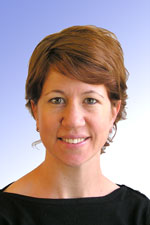
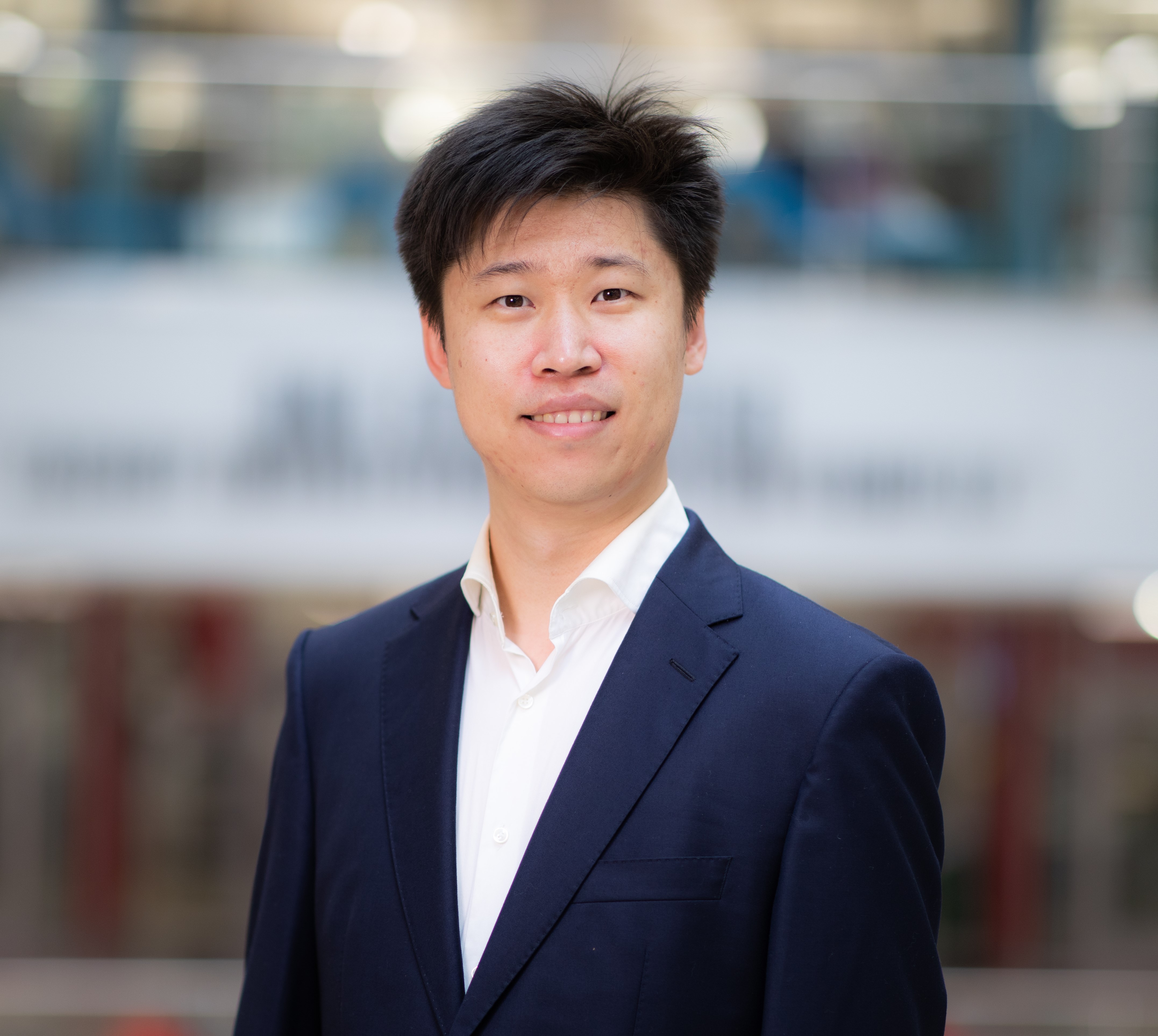
Sandra Simaria de Oliveira Lucas is an Associate Professor in the Department of the Built Environment at Eindhoven University of Technology (TU/e). Her research focuses on autonomous manufacturing of construction materials, leveraging machine learning and data science to develop sustainable and functional materials. She leads two NWO-funded projects on smart, sustainable 3D-printed concrete and previously held a senior lecturer position at the University of Greenwich. Education: BEng in Ceramic and Glass Engineering from University of Aveiro MSc in Environmental Management and Materials PhD in Civil Engineering (2011, University of Aveiro) Marie Curie Postdoctoral Researcher at Fraunhofer Institute UMSICHT (Germany) Visiting Researcher at EPSI ParisTech (France) and TU/e Research Interests: Sandra explores machine learning applications in material discovery, sustainable construction materials, and additive manufacturing. Her work emphasizes materials with adaptive properties and environmental impact mitigation. Recent projects include 3D-printed concrete waste valorization and bio-based materials education frameworks. Key Achievements: Marie Curie Postdoctoral Fellowship Principal Investigator (PI) for multiple Innovate UK and NWO projects Grants & Advising: Currently leads two NWO projects. Prior roles include PI for industry-academia collaborations via Innovate UK. Advises on structural design and materials education through TU/e assignments like the 'Bouwkundewinkel' practicals. Labs & Teams: Core member of the Concrete Structures research group at TU/e, focusing on 3D printing and material functionality.
Bjorn Birgisson is the Chair of the School of Environmental, Civil, Agricultural and Mechanical Engineering and holds the Georgia Power E-Mobility Distinguished Professorship at the University of Georgia. His research focuses on infrastructure resilience, pavement engineering, materials science, and novel construction technologies. He has pioneered work on asphalt mixture performance, autonomous vehicle impacts on roadways, and extraterrestrial construction materials using lunar regolith. His interdisciplinary approach integrates computational modeling, experimental testing, and environmental sustainability. Educational Background: Ph.D., P.E. credentials are highlighted but formal education details are not provided in the text. His professional appointments emphasize practical application of research to real-world infrastructure challenges. Research Interests include: Transportation infrastructure resilience to climate change Advanced material characterization for pavements Additive manufacturing for space exploration Non-destructive evaluation techniques His recent publications (2020-2025) address: Moisture variation in clayey soils Pavement crack initiation modeling Autonomous truck infrastructure impacts Lunar regolith utilization Scientific Awards: Georgia Power E-Mobility Distinguished Professorship recognizes his contributions to sustainable transportation infrastructure. Advising/Grants: While student names are not listed, his research teams focus on doctoral-level projects in geotechnical engineering and materials science. Grant activities likely include federal/state transportation initiatives and space exploration partnerships. Labs/Teams: Active in the Boyd Research and Education Center, collaborating with industry partners on pavement testing and additive manufacturing technologies.
Dr. Ali Sadaghiani is an Associate Professor in Surface Engineering and an Anniversary Fellow at the University of Birmingham, affiliated with the Department of Mechanical Engineering in the School of Engineering. He leads the Smart Research Group, focusing on advancing phase-change heat transfer and interfacial transport phenomena for sustainable energy and water solutions. PhD in Thermofluidics, Sabanci University, 2019 MSc in Mechatronics Engineering, Sabanci University, 2015 BSc in Mechanical Engineering, Iran University of Science and Technology, 2012 His research lies at the intersection of thermal-fluid engineering and material science, with a strong emphasis on boiling, condensation, evaporation, and freezing. He develops advanced engineered surfaces to enhance heat transfer efficiency in applications such as electronic cooling, battery thermal management, solar desalination, and anti-icing systems. His work integrates experimental methods (e.g., micro-PIV, Raman spectroscopy), multiscale modeling (CFD, MD), and surface modification techniques. His recent publications and projects reflect a consistent focus on sustainable technologies, including solar-driven interfacial evaporation, hydrogen-powered propulsion systems, and solid-state battery thermal regulation. He has led and contributed to multiple Horizon Europe and national research initiatives such as Triathlon, ARISE, MicroFlowTec, and BioAFC, demonstrating strong interdisciplinary collaboration and innovation. ERC Starting Grant laureate Anniversary Fellow Dr. Sadaghiani actively supervises PhD students and welcomes applicants interested in phase-change heat transfer, surface engineering, AI-driven material design, and sustainable thermal systems. He has secured significant research funding and continues to develop scalable solutions for next-generation energy and water technologies.
Professor Anthony Gachagan is a leading academic at the University of Strathclyde, serving as Head of Department and Research Director in the Department of Electronic and Electrical Engineering (EEE) within the Faculty of Engineering. He has been Director of the Centre for Ultrasonic Engineering (CUE) since 2010, leading a multidisciplinary team of around 55 researchers with over £5M in active funding. He also holds leadership roles in RCNDE as Academic Chair and Management Board member, and participates in BINDT committees. His research spans ultrasonic transducer design, non-destructive evaluation (NDE), robotics, high-power ultrasound, and industrial process control. His work is highly collaborative, involving national and international partnerships with industry and academia, and contributes to sectors such as energy, aerospace, nuclear, and healthcare. He is actively involved in major research initiatives aimed at net zero, structural integrity, and advanced manufacturing. Recent publications highlight his focus on robotic ultrasonic inspection, adaptive signal processing, phased array techniques, and in-process monitoring of additive manufacturing. These works demonstrate a strong trend toward automation, real-time defect detection, and integration of ultrasonic systems in industrial and safety-critical applications. Scientific Awards: The BINDT Annual Conference Award (2019) Prof Gachagan has secured significant grants from EPSRC, Innovate UK, and industry partners, including projects on future ultrasonic engineering, lightning impulse testing, and robotic inspection for offshore wind. He supervises numerous research students and leads large collaborative teams. He also contributes to research commercialization through IAA projects. He leads the Centre for Ultrasonic Engineering (CUE), a vibrant research unit integrating electronic, mechanical, and biomedical engineers, physicists, and material scientists. The centre focuses on next-generation ultrasonic technologies, robotics integration, and industrial deployment.
Dr. Ehsan Mohseni is a Senior Lecturer in the Department of Electronics and Electrical Engineering at the University of Strathclyde, Faculty of Engineering. He is a key member of the Centre of Ultrasound Engineering (CUE) research group and supports the Royal Academy of Engineering and Spirit AeroSystems research chair led by Professor Gareth Pierce. His work focuses on advancing robotic and intelligent Non-Destructive Evaluation (NDE) systems for industrial applications. B.Sc. in Materials Science and Metallurgical Engineering, University of Tehran, 2006 M.Sc. in Metal Forming Processes, University of Tehran Ph.D. in Automated Defect Detection using Electromagnetic NDE, École de Technologie Supérieure (ETS), Montreal, Canada Dr. Mohseni’s research is centered on NDE 4.0, integrating advanced sensing, multi-physics modeling, and machine learning. His expertise spans ultrasonic and eddy current testing, multi-sensor data fusion, and probability of detection studies. He focuses on applications in additive manufacturing, welding, composites, and metal processing, aiming to overcome current technological barriers in industrial inspection. The recent publications highlight a strong trend toward intelligent, automated, and robotic NDE systems. Key themes include self-supervised learning for ultrasonic segmentation, human-machine collaboration in data analysis, and advanced signal processing for weld and composite inspection. The integration of AI, flexible sensor arrays, and embedded navigation systems reflects a shift toward smart, adaptive inspection platforms aligned with Industry 4.0. Scientific Awards: The BINDT Annual Conference Award (2019) Dr. Mohseni is actively involved in research funding and knowledge transfer. He serves as Principal Investigator on KTP projects with ETHER NDE LIMITED and NATIONAL OILWELL VARCO UK LIMITED, focusing on in-process inspection for additive manufacturing and field calibration for ultrasonic testing. He contributes to large-scale collaborative projects funded by Innovate UK and industry partners, emphasizing practical deployment of NDE solutions. He also supervises research staff and collaborates with global aerospace firms including Pratt & Whitney Canada, Safran, and Bell Helicopter. He is a core member of the Centre of Ultrasound Engineering (CUE), a dynamic research group developing next-generation ultrasound technologies. The team works on advanced robotic sensing hubs, flexible transducer arrays, and AI-driven data interpretation tools, often in collaboration with the Royal Academy of Engineering research chair and industrial partners.
Prof. Dr. Kai Essig is a Professor of Human Factors and Interactive Systems at the Faculty of Communication and Environment, Rhine-Waal University of Applied Sciences, Kamp-Lintfort, Germany. He has a strong interdisciplinary background combining computer science, cognitive science, and human-computer interaction, with a focus on eye tracking, visual perception, and assistive technologies. Master of Science in Computer Science and Chemistry, Bielefeld University (1998) Ph.D. in Computer Science, Bielefeld University (2007) His research centers on eye tracking, human-computer interaction, usability engineering, visual attention, and cognitive interaction technology . He investigates how movement expertise influences visual perception and how multimodal software can support real-time human actions. His work integrates computer vision, machine learning, and neuroscience to develop intelligent systems that adapt to user behavior. The 15 most recent publications reflect a consistent trend in eye movement analysis, mental representations, brain-machine interfaces, and assistive technologies . These works span domains such as sports psychology, robotics, augmented reality, and cognitive neuroscience, demonstrating a strong interdisciplinary approach. Key themes include gaze-based interaction, automated annotation of visual behavior, and the implementation of smart systems for daily living assistance. Scientific recognition includes: Landmark in the Land of Ideas (2018) – for the ADAMAAS project, awarded by 'Land of Ideas', a joint initiative of the German government and the Federation of German Industries Prof. Essig has been actively involved in research projects such as ADAMAAS (Adaptive and Mobile Action Assistance in Daily Living Activities), which received national recognition. He has collaborated extensively with the Neurocognition and Action-Biomechanics Research Group at Bielefeld University and the Excellence Cluster CITEC. While no formal advising of students is listed, his publications suggest mentorship and collaboration with junior researchers. His lab work is centered on eye-tracking systems, multimodal interaction, and cognitive modeling , particularly within applied environments like smart glasses and assistive technologies.
Michaela Trippl is a Full Professor of Economic Geography at the University of Vienna, Faculty of Earth Sciences, Geography and Astronomy, and Head of the Department of Geography and Regional Research's Economic Geography working group. Her work focuses on regional innovation systems, economic resilience, and sustainability transitions, emphasizing place-based strategies and institutional dynamics. Affiliation: University of Vienna (2002–present) Role: Head of Economic Geography working group Research: Regional development, innovation policy, industrial transformation Recent research trends highlight her exploration of challenge-oriented regional innovation systems (CORIS approach), green path development in bioplastics, and transformative resilience frameworks. Publications often integrate theoretical advancements with policy applications, addressing multiscalar exnovation pressures and sustainable industrial transitions. Projects led by Trippl include "Transformative Innovation for Climate Change Adaptation in the Danube Region (TiCCA4Danu)" (2025–2028) and "RIS4Danu: Sustainable Smart Specialisation for the Reopening of Industrial Sites in the Danube Region" (2022–2024), reflecting her commitment to European green industrial policy and regional sustainability. As a keynote speaker at international conferences (e.g., 2023: "Navigating regional industrial transitions"), she bridges academic research with real-world policy. Media coverage (e.g., 2019: "Ist auf dem Land alles rückständiger? Die tatsächlichen Chancen der Provinz") underscores her public engagement in regional development narratives.
Hans Smid is a researcher at Wageningen University & Research working in the Laboratory of Entomology. He holds a doctorate and serves as a research supervisor and collaborator on multiple projects focusing on insect behavior, particularly parasitoid wasps and their interactions with host plants and insects. Dr. Smid's research focuses on several key areas in entomology and insect neuroscience: Parasitoid wasp behavior and biological control applications Olfactory learning and memory in insects Neural mechanisms underlying insect behavior Plant-insect interactions, particularly in agricultural contexts Neuroethology of small-brained insects Brain size evolution in parasitic wasps His recent work shows a strong emphasis on understanding how insects like Pieris brassicae butterflies and Cotesia glomerata wasps use olfactory cues in their foraging and oviposition behaviors. This research has important implications for developing more sustainable agricultural practices through biological control methods, as evidenced by his 2024 publication on strawberry cultivation and parasitic wasp attraction. Dr. Smid's research has generated significant attention, with his work being picked up by 4 news outlets, posted by 9 X users, and shared on Facebook pages, indicating broad interest in his findings. His publications have accumulated readers on Mendeley and citations in Scopus. As a research supervisor, Dr. Smid has guided multiple PhD students including J. de Bruijn and J. Groothuis through their doctoral work. His collaborative approach is evident in the numerous multi-investigator projects he participates in, often working alongside colleagues like Marcel Dicke and Louise Vet. Current active projects include 'Apport, parasitic wasps as biodetectors' and 'Smart parasitoids: effective biological control.' Dr. Smid maintains an active research profile with continuous output, including multiple publications in 2024. His work bridges basic research on insect behavior with practical agricultural applications, demonstrating the real-world impact of entomological research.
Konstantinos Gryllias is a Professor in the Department of Mechanical Engineering at KU Leuven's Faculty of Engineering Sciences. He leads research in the Mechatronic System Dynamics (LMSD) unit at the Arenberg campus. His academic affiliations extend across multiple KU Leuven institutes including Leuven.AI, Leuven.AM (Additive Manufacturing), and the Gravitation Institute. He serves on important governance bodies as a member of the Faculty Council of Engineering Sciences, Faculty Doctoral Committee of Engineering Sciences, and Departmental Council of Mechanical Engineering. Dr. Gryllias specializes in signal processing, fault detection and diagnosis of rotating machinery, condition monitoring, and machine learning applications in structural health monitoring. His research spans linear and nonlinear vibrations, anomaly detection, rotordynamics, and pattern recognition. His work bridges theoretical signal processing with practical engineering applications in wind turbines, marine propulsion systems, and industrial machinery. His recent publications demonstrate strong focus on deep learning approaches for wind turbine anomaly detection, bearing diagnostics, stern bearing lubrication optimization, and structural health monitoring using advanced signal processing techniques. The research shows increasing integration of explainable AI methods with traditional vibration analysis. Dr. Gryllias teaches advanced courses including Monitoring & Prognostics, Structural Dynamics, Smart Sensing Technologies, and Applied AI perspectives. His teaching portfolio reflects the interdisciplinary nature of his research, connecting mechanical engineering fundamentals with cutting-edge AI methodologies. He currently leads multiple research projects through 2025-2029, primarily as Promotor, focusing on fault detection in gears using fiber optic sensors, multi-sensor monitoring of drivelines, physics-inspired machine learning for condition monitoring, and digital twin applications for wind turbine efficiency improvement.
Professor Anthony Burke is a Professor of Architecture in the Faculty of Design Architecture and Building at the University of Technology Sydney (UTS), where he currently serves as Course Director for the Master of Architecture program. Previously, he held significant leadership roles including Associate Dean of International and Engagement (2017-2019) and Head of the School of Architecture (2010-2016). Internationally recognized for his work in architectural design, curation and commentary, Burke specializes in contemporary design theory at the intersection of technology, urbanism and practice, with a particular focus on ethical considerations in smart city development. Burke holds an M.Sc. in Advanced Architectural Design from Columbia University (2000) and a B.Architecture (First Class Honors) from UNSW Australia (1995). Prior to his current position at UTS, he was an Assistant Professor in Architecture at the University of California, Berkeley between 2002 and 2007. He has also served as a Visiting Professor at the Beijing Institute of Technology (2018-2020) and Institut Teknologi Bandung (2018-2019). Professor Burke's research explores the complex relationship between architecture, technology, and urban environments, with particular emphasis on how design can address societal challenges while maintaining human-centered values. His work spans architectural theory, urban technologies, and innovative practice models, often bridging academic scholarship with practical applications through numerous funded research projects and industry collaborations. He has published extensively on topics including the ethics of smart cities, architectural restoration, and the evolving role of architects in contemporary society. His recent publications reveal a consistent exploration of architecture's role in contemporary society, with recurring themes including the intersection of technology and design, ethical considerations in urban development, and innovative approaches to architectural practice. This body of work demonstrates both theoretical depth and practical relevance, connecting academic discourse with real-world applications. 2024 ACTAA Award for Lifestyle Category - Grand Designs Australia Season 11 2024 Honorary Fellow Beyond traditional academic work, Burke actively supervises PhD students and has secured significant research funding from organizations including Cumberland Council, IKEA, and the NSW Office of the Government Architect. His projects frequently involve interdisciplinary collaboration, bringing together architects, urban planners, technologists, and policymakers to address complex urban challenges. He has also founded initiatives like Open Agenda, an annual speculative design research competition for emerging Australian architects. Professor Burke extends his impact through media engagements, serving as host and presenter for popular television programs including Grand Designs Australia (Seasons 4-11), Restoration Australia (Seasons 4-7), and Culture X Design. These platforms allow him to communicate architectural concepts to broad audiences, with Grand Designs Australia reaching approximately 1 million viewers per episode in Australia and more internationally. His public outreach includes regular contributions to The Conversation, ABC News, and other media outlets, making architecture and design accessible to the general public while showcasing innovative Australian architecture.
Dr. Sotirios Argyroudis is a Reader (Associate Professor) of Infrastructure Engineering at Brunel University London within the Department of Civil & Environmental Engineering, College of Engineering, Design and Physical Sciences. He leads the infrastructure risk and resilience research group and serves as Coordinator of the Horizon PORTAL project and deputy Scientific Coordinator of the Horizon/UKRI ReCharged project. He co-founded bridgeUkraine.org and co-leads metaInfrastructure.org, both initiatives focused on critical infrastructure recovery and sustainability. With over 20 years of experience, Dr. Argyroudis specializes in vulnerability, disaster risk, and resilience assessment of critical infrastructure exposed to multiple hazards including floods and earthquakes. His educational background includes: Graduate Certificate in Learning and Teaching, University of Surrey, UK (2021) PhD in Geotechnical Earthquake Engineering, Aristotle University of Thessaloniki, Greece (2010) BSc in Geology, Aristotle University of Thessaloniki, Greece (2008) MEng in Civil Engineering, Aristotle University of Thessaloniki, Greece (2000) Dr. Argyroudis' research focuses on infrastructure risk and resilience assessment under multiple hazards including earthquakes, floods, and climate change effects. His work spans vulnerability assessment of transportation networks, bridges, tunnels, and urban systems, with particular emphasis on developing frameworks for climate-resilient infrastructure. He integrates emerging technologies like AI and remote sensing to enhance infrastructure monitoring and decision-making processes. His research has significant applications in disaster risk reduction, post-conflict recovery, and sustainable infrastructure development aligned with UN Sustainable Development Goals. His recent publications demonstrate a clear trend toward integrating climate adaptation with infrastructure resilience, with increasing focus on multi-hazard approaches, digital technologies, and sustainability metrics. His work spans transportation infrastructure (railways, bridges, tunnels), energy systems, and urban networks, with growing emphasis on post-conflict recovery applications as seen in his bridgeUkraine.org initiative. The publications show strong international collaboration across Europe, North America, and Asia. Dr. Argyroudis has received notable recognition including: 2022 European Council on Computing in Construction (EC3) Thorpe Medal Top 2% most highly cited scientists for 2021, 2022, and 2023 (Elsevier/Stanford list) Fellow of the Higher Education Academy, UK (FHEA) Member of the Institution of Civil Engineers (UK), CEng, MICE Dr. Argyroudis actively supervises PhD students across multiple institutions including University Sains Malaysia, Aristotle University of Thessaloniki, and Democritus University of Thrace. His current research portfolio includes significant grants such as the Horizon Europe-funded PORTAL and ReCharged projects, the Brunel BRIEF AWARDS-funded CCRI project, and the HORIZON-INFRA-funded SCOUR&SHAKE project. He serves as a reviewer for EPSRC, the European Commission, and numerous scientific journals, contributing to the advancement of infrastructure resilience research globally. He is a key member of Brunel's Centre for Flood Risk and Resilience and the Research Group of Geotechnical and Environmental Engineering. Through his leadership of the PORTAL project and co-leadership of metaInfrastructure.org, he fosters international collaboration on sustainable and resilient infrastructure solutions. His work with bridgeUkraine.org demonstrates practical application of research to urgent global challenges, connecting academic research with real-world infrastructure recovery needs.
John P. Swensen is an Associate Professor at Washington State University's School of Mechanical and Materials Engineering, directing the M3 Robotics Lab. His research focuses on medical robotics, particularly steerable needle technology and tunably compliant mechanisms using smart materials. Ph.D., Johns Hopkins University (2012) M.S., Mechanical Engineering, Johns Hopkins University (2009) B.S., Electrical Engineering, Utah State University (2003) Research areas include: Medical robotics and surgical devices Compliant and steerable mechanisms Smart material applications in robotics Kinematic modeling and control algorithms Recent work demonstrates waterjet-assisted needle technology achieving unprecedented curvature control and reduced tissue damage in soft tissue phantoms. Collaborations with graduate students Mahdieh Babaiasl, Fan Yang, Emily Allen, and Lee Taylor have resulted in multiple IEEE publications and conference presentations at IROS, BioRob, and ISMR.
Assoc. Prof. Dr. Fatih Buğra Erdem is an Associate Professor at the Department of Commercial Law within the School of Law at Ankara Social Sciences University (since 2021), holding a full-time position. He also serves as a part-time faculty at Freie Universitaet Berlin 's Law School (Department of Competition Law) since 2021. Education: LL.B. in Law from Atılım University (2010-2015) LL.M. in Commercial Law from Birkbeck College, University of London (2023) Ph.D. in Commercial Law from Brunel University London (2018-2021) Postdoctoral Research at Trinity College Dublin 's Law Faculty (2024) Research Interests focus on Competition Law , Corporate Law , and Intellectual Property Law , with a particular emphasis on intersections between legal theory and practical applications in maritime contracts , corporate governance , and digital economies . Publication Trends include analyses of force majeure in maritime contracts , business judgment rules , and comparative advertising regulations , reflecting his expertise in EU competition law and innovation policy . Recent works explore blockchain technology's legal implications and cross-border consumer protection mechanisms. Advising includes supervising graduate theses on topics like crowdfunding in Turkey , social media trademark violations , and blockchain in data protection , with students such as Firuze Nazlıcan Göktolga and Kübra Nur Buyur .
Professor Nicole Kessissoglou is a distinguished academic in the School of Mechanical and Manufacturing Engineering at the University of New South Wales (UNSW Sydney). She holds the position of Professor and conducts her research within the Ainsworth Building (J17), Level 4, Room 408 at the Kensington Campus. Her academic profile is prominently featured on UNSW's research portal, highlighting her expertise in structural vibration, acoustics, and fluid-structure interaction. Professor Kessissoglou's research interests span across several critical areas of mechanical engineering, with a particular focus on Structural vibration and transmission , Acoustics , Structure-fluid coupling , Active vibration control , and Active structural acoustic control . Her work falls within the broader Fields of Research categories of Mechanical Engineering, Dynamics, Vibration and Vibration Control, and Acoustics and Noise Control. Her research addresses fundamental challenges in how structures interact with fluids and how sound and vibrations propagate through these systems. Analysis of her most recent publications (2023-2025) reveals a strong focus on wave phenomena in periodic and resonant systems, with significant attention to underwater applications. Her work spans theoretical modeling, numerical simulation, and experimental validation of acoustic and vibration phenomena. Key themes include structural cloaking technology, uncertainty quantification in resonant systems, vibroacoustic responses of coated cylindrical shells, and novel acoustic metamaterial designs. Her research has important applications in naval engineering, underwater acoustics, and noise control technologies. Professor Kessissoglou maintains an extensive publication record with 140 journal articles, 9 book chapters, 187 conference papers, and various other scholarly outputs. Her work demonstrates a consistent trajectory of advancing knowledge in structural acoustics and vibration control, with increasing focus on metamaterial applications and hybrid active-passive control systems in recent years. Her research activities appear to be well-integrated within UNSW's broader engineering research ecosystem, particularly within the university's strengths in aerospace, structural engineering, and technology for good initiatives. While specific grant information isn't detailed in the available materials, her publication output suggests sustained research funding and active collaboration with other researchers in her field.
Yupeng Zhang is an Assistant Professor at the University of Illinois Urbana-Champaign in the Department of Electrical and Computer Engineering, with an affiliate appointment in Computer Science. His research focuses on cybersecurity and applied cryptography , particularly zero-knowledge proofs , secure multiparty computations , and their applications in blockchain and machine learning. Education: Ph.D., Electrical and Computer Engineering, University of Maryland (2018) M.Phil., Information Engineering, Chinese University of Hong Kong (2013) Bachelor of Engineering, Information Engineering, Chinese University of Hong Kong (2011) Research Highlights: Developed scalable zero-knowledge proof systems for blockchain and machine learning Created verifiable computation frameworks for SQL and RAM Advancing privacy-preserving ML and cross-chain blockchain bridges Grants: NSF CAREER award Air Force Research Lab DARPA Google Research Scholar Award Facebook Research Award Latticex Foundation Teaching: CS 461/ECE 422: Computer Security I CS 591 SP: Security and Privacy ECE 407/CS 407: Cryptography ECE 598 YPZ: Advanced Topics in Applied Cryptography Co-taught MOOC on Zero-Knowledge Proofs (Spring 2023) Professional Service: Program Vice Co-Chair, USENIX Security 2024 Program Committee, Crypto 2025, S&P 2025 Reviewer for major journals and conferences