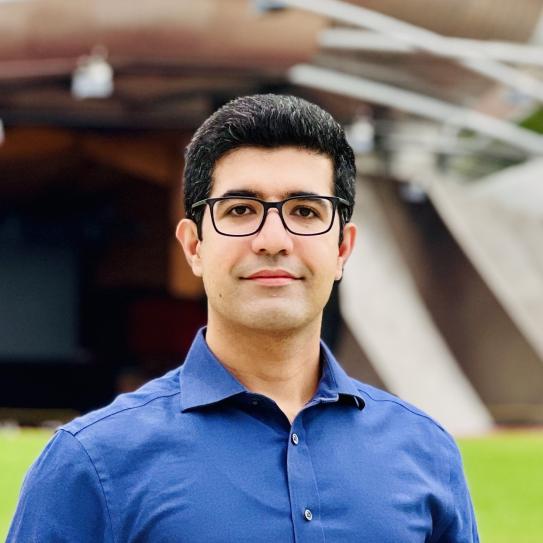
Sarah Billington is the UPS Foundation Professor of Civil and Environmental Engineering at Stanford University and a Senior Fellow at the Woods Institute for the Environment. Her research program focuses on sustainable building design, human wellbeing, and ethical supply chain practices. Education: PhD, University of Texas at Austin, Structural Engineering (1997) MSE, University of Texas at Austin, Structural Engineering (1994) BSE, Princeton University, Civil Engineering & Operations Research (1990) Her lab employs interdisciplinary methods to study how built environments impact human physical, psychological, and social wellbeing. Current projects include developing tools to quantify nature exposure in buildings, exploring affordable housing's role in wellbeing, and using AI to assess forced labor risks in material supply chains. While no longer active in this area, her group previously pioneered research on sustainable construction materials like bio-based composites and ductile cement-based composites. Her recent publications address topics such as nature integration in architecture, workplace design optimization, and health impacts of building materials. The Billington Lab at Stanford fosters collaborative team science, welcoming partnerships to advance occupant-centric engineering solutions.
New Jersey Institute of Technology (NJIT)United States
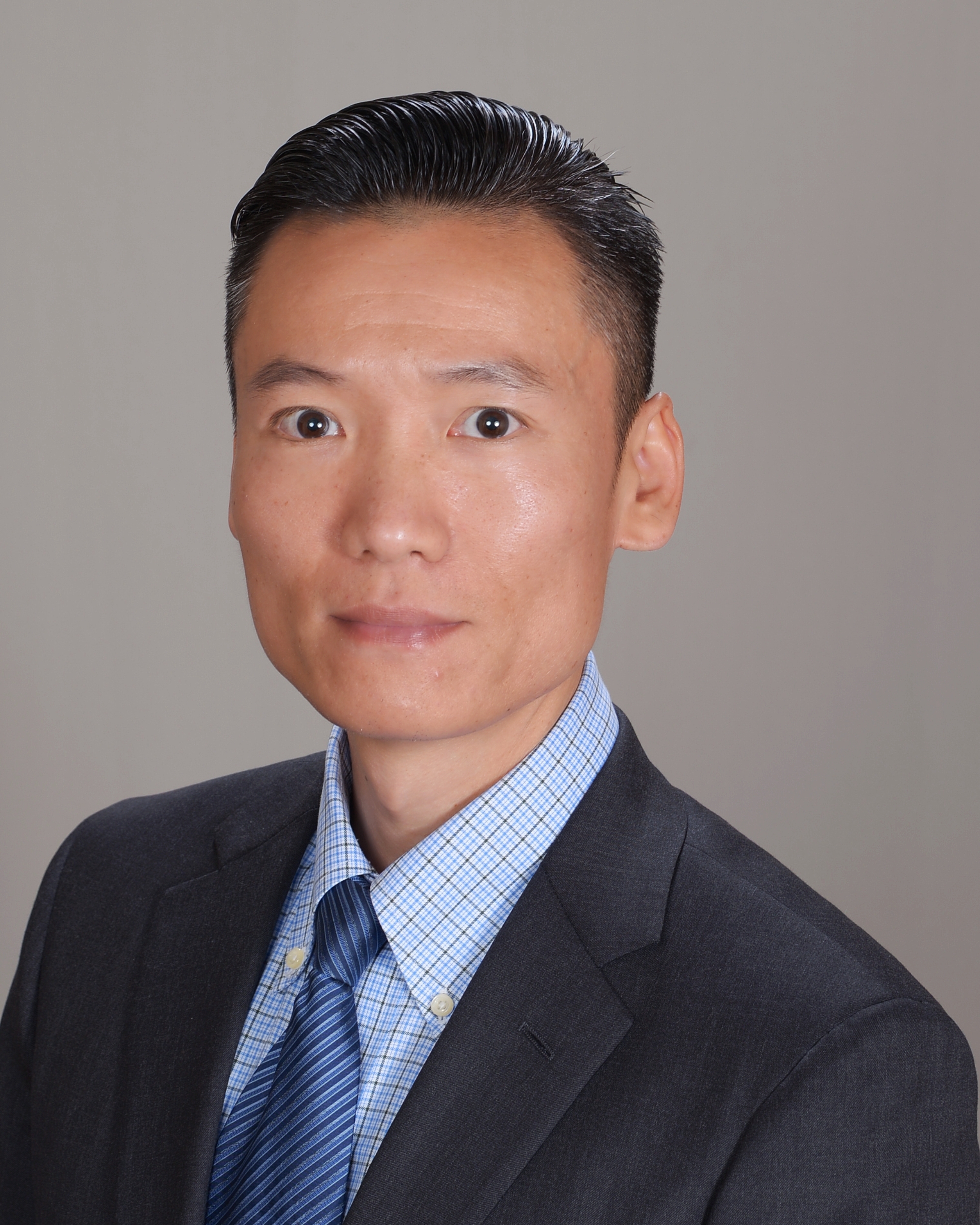
Steven I-Jy Chien serves as Professor and Director of the Transportation Program within the Department of Civil and Environmental Engineering at the New Jersey Institute of Technology (NJIT). His career spans academia, government, and industry with significant contributions to transportation engineering research and practice. His educational credentials include: Ph.D. in Civil and Environmental Engineering from University of Maryland-College Park (1995) M.S. in Civil and Environmental Engineering from University of Maryland-College Park (1991) B.S. in Civil Engineering from Tamkang University (1983) Professor Chien's research focuses on transportation system resilience, sustainable transit operations, and advanced traffic modeling. His work addresses critical challenges in urban rail networks, demand-responsive transit services, and energy-efficient transportation systems. He employs sophisticated computational methods including genetic algorithms, machine learning, and Bayesian approaches to solve complex transportation problems involving network vulnerability, passenger behavior, and infrastructure optimization under uncertainty. Analysis of his recent publications reveals strong emphasis on transportation resilience against cascading failures, sustainable operations for electric transit systems, and pandemic-responsive aviation scheduling. His research spans diverse geographic contexts including major Chinese metropolitan areas and U.S. transportation networks, demonstrating global applicability of his methodologies. His professional recognition includes: 2024 Keynote Speaker at Union-Tech Lecture, National Taiwan Ocean University 2022 Keynote Speaker at International Conference of Chinese Institute of Transportation 2022 Best Poster Award from New Jersey Department of Transportation Professor Chien has secured research funding from federal agencies including the Federal Highway Administration (FHWA) where he contributed to CORSIM traffic simulation software development. His industry experience with China Engineering Consultants Inc. and Information Dynamic Inc. informs his practical approach to transportation challenges. As Transportation Program Director, he oversees curriculum development and industry partnerships that prepare students for transportation sector careers. He maintains active collaboration with transportation agencies globally, particularly through his leadership in the Transportation Program at NJIT which serves as a hub for innovation in urban mobility solutions.
Hamed Rahmani is an Assistant Professor of Electrical and Computer Engineering at New York University (NYU Tandon School of Engineering). He is affiliated with NYU WIRELESS and the Center for Advanced Technology in Telecommunications (CATT), leading the Research in Advanced Integrated Systems and Electronics (RAISE) Lab. His research focuses on integrated circuits and systems for biomedical applications, IoT, and 5G/6G communication. Education: Ph.D., Electrical and Computer Engineering, UCLA (2020) M.Sc., Electrical and Computer Engineering, Rice University (2017) B.Sc., Electrical Engineering, Sharif University of Technology (2014) Research Interests: RF/mm-Wave circuits, low-power biomedical sensors, energy-efficient IoT systems, and wireless power transfer. His work emphasizes miniaturized implants, smart healthcare, and sustainable electronics. Awards: Recipient of the NSF CAREER Award (2025), IEEE MTT-S Graduate Fellowship (2019), and the 2023 Best Paper Award in the Journal of Microwave. He serves on technical committees for major conferences like CICC and IMS. Labs & Groups: Directs the RAISE Lab, collaborating with NYU WIRELESS on 6G research and CATT for technology transfer.
Dr. Liang Cheng is the Department Chair and Professor in the Department of Electrical Engineering and Computer Science at the University of Toledo. He leads a department with ~700 students across CS, CSE, and EE programs. His research focuses on Cyber-Physical Systems (CPS), IoT, AI/ML, and intelligent infrastructure, supported by over $30M in funding from NSF, DOE, DOT, and industry. Notable projects include CPS Breakthrough initiatives and underground sensing systems. He co-edited a multidisciplinary book on Underground Sensing and contributed to smart grid cybersecurity. Dr. Cheng has held leadership roles at Lehigh University, shaping faculty governance and equity policies. His 100+ publications span networking, real-time systems, and sensor networks. He advises on funded projects totaling $30M+ and has pioneered pedagogical approaches in computer science education. Research Interests: Cyber-Physical Systems (CPS): Focuses on autonomous drones, energy systems, and real-time infrastructure Networking: Expertise in TSN, DTN, and wireless protocols Cybersecurity: SCADA systems, PLC attack detection, and blockchain energy modeling Underground Sensing: Geo-sensing via wireless signals and subsurface tomography Grants & Projects: Over 20 sponsored projects including NSF CPS Breakthrough (2018-2023), ABB smart grid projects, and DARPA-funded EDIFY systems. Key contributions include reconfigurable wireless architectures and network calculus tools for real-time systems. Teaching: Courses span senior design, compiler design, parallel computing, and wireless sensor networks. Developed pedagogical patterns for non-CS programming education. Awards: Recognized for leadership in academic governance and interdisciplinary research collaboration.
Suchi Saria is the John C. Malone Associate Professor at Johns Hopkins University , with appointments in the Whiting School of Engineering (Computer Science), the Bloomberg School of Public Health (Health Policy & Management), and the Whiting School (Applied Math & Statistics). She directs the Machine Learning and Healthcare Lab and co-founded the Bayesian Health startup. Education: PhD in Computer Science from Stanford University (advisor: Daphne Koller), NSF Computing Innovation Fellowship at Harvard (2011), prior research at UMass (Barto, Madhavan), and industry experience at Aster Data Systems (acquired by Teradata). Research Focus: Saria develops statistical machine learning tools to extract insights from heterogeneous clinical data (structured/unstructured EHRs, sensor streams). Her work enables counterfactual reasoning for personalized treatment plans, dataset shift mitigation in healthcare AI, and weak supervision frameworks for mobile health apps. Key applications include sepsis prediction , Parkinson’s symptom tracking , and critical care optimization . Article Trends: Recent publications emphasize AI safety (2024-2025), addressing racial bias , transparency frameworks , and dynamic monitoring for clinical deployments. Her work spans conformal prediction , causal modeling , and policy guidelines for health AI. Scientific Awards: Sloan Research Fellowship (2018) DARPA Young Faculty Award (2016) MIT Technology Review TR35 Innovator (2017) Popular Science Brilliant 10 (2016) IEEE Intelligent Systems AI’s 10 to Watch (2015) NSF Computing Innovation Fellowship (2011) Rambus Fellowship (2004-2010) Best Paper Awards in ML, Informatics, and Medicine venues Advising & Grants: Saria mentors PhD students/postdocs in machine learning and health informatics , including funded projects like the NSF Smart and Connected Health Grant (2014) and Google Research Award (2014). Her lab’s TREWScore system (Science Translational Medicine 2015) is deployed in hospitals, while her Bayesian Health startup commercializes AI solutions for provider experience.
Dr. Jiaqi Gong serves as Associate Professor in Computer Science and Adjunct Associate Professor in Mechanical Engineering at The University of Alabama's College of Engineering, while directing the Alabama Center for the Advancement of Artificial Intelligence. His academic foundation includes: B.S. in Engineering, China University of Geoscience (2004) Ph.D. in Engineering, Huazhong University of Science and Technology (2010) Dr. Gong's research pioneers human-AI convergence through cyber-physical systems and smart health technologies, developing mobile/wearable platforms to enhance human perceptual, cognitive, and physical capabilities. His work spans artificial intelligence, machine learning, computer vision, and IoT with applications in healthcare, environmental monitoring, and education. The Sensor-Accelerated Intelligent Learning (SAIL) laboratory he founded drives innovation in behavior change interventions, human movement modeling, and educational data mining. Recent publications reveal strong interdisciplinary trends: healthcare AI dominates with medication adherence prediction and surgical classification systems, while environmental applications feature flood-risk communication and drought analysis. His work increasingly integrates generative AI and LLMs across domains, demonstrating methodological innovation in federated learning, knowledge graphs, and explainable storytelling frameworks. Notable recognitions include: Best Student Paper Award, IEEE/ACM Connected Health Conference (2022) Best Student Paper Award, Body Sensor Networks Conference (2019) Data Challenge Win, IEEE Biomedical Health Informatics (2018) Best Paper Award, Body Area Networks Conference (2014) Best Demonstration Award, IEEE Wireless Health Conference (2014) Dr. Gong leads significant funded projects including a $2M CDC/NIOSH grant for first responder safety and $3M NSF funding for hydrologic research. As SAIL laboratory director, he mentors students in developing clinically deployed technologies for multiple sclerosis, dementia, and mental health. Future work focuses on scaling AI applications in chronic disease management and climate resilience through the Alabama AI Center. The SAIL laboratory (founded 2017) operates as a multidisciplinary hub developing wearable/mobile systems for health applications, with active collaborations across medical clinics and engineering departments for real-world deployment of behavior change interventions and movement analysis tools.
University of California , Santa Barbara (UCSB)United States
Professor Yasamin Mostofi is a faculty member in the Department of Electrical and Computer Engineering at the University of California, Santa Barbara. She is also affiliated with the Department of Computer Science and the Center for Control, Dynamical Systems and Computation. Her work bridges wireless systems, robotics, and machine learning. PhD, Stanford University MS, Stanford University MS, Sharif University of Technology Research Interests : Her lab focuses on wireless systems and autonomous agents , developing novel mathematical models for RF sensing and communication-aware robotics. Current directions include WiFi/millimeter wave/6G-based imaging and analytics, networked robotics for cellular systems, human-robot collaboration, and machine learning integration. Recent Publications : Her work spans through-wall crowd analytics , robot-assisted connectivity , and vision-aided wireless sensing , with applications in smart health, security, and retail optimization. Key trends include cross-modal integration (WiFi and vision), synthetic data generation, and real-world clinical validation. Scientific Recognition : Presidential Early Career Award for Scientists and Engineers (PECASE) Antonio Ruberti Prize, IEEE Control Systems Society NSF CAREER Award IEEE Region 6 Outstanding Engineer Award IEEE Fellow (2020) Advising and Leadership : She mentors PhD students in systems research, with graduates joining leading companies like Qualcomm and Google. She co-founded NPJ Wireless Technology (Nature Portfolio) and serves on editorial boards including IEEE Transactions on Control of Network Systems .
University of California, Los AngelesUnited States
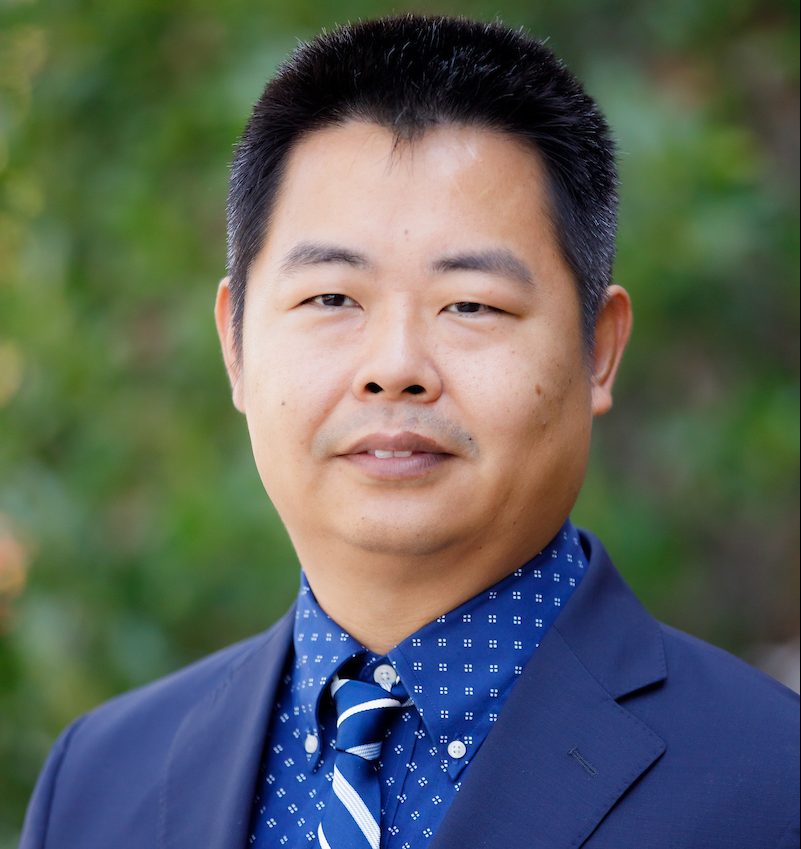
Christopher S. Tang is a UCLA Distinguished Professor and Edward W. Carter Chair in Business Administration at the Anderson School of Management , where he researches global supply chain management with a focus on social innovation in developing countries . He also serves as Senior Associate Dean for Global Initiatives and Faculty Director of the Center for Global Management . Education: Ph.D. in Management Science (1985, Yale University) M.Phil. in Administrative Science (1983, Yale University) M.A. in Statistics (1983, Yale University) B.Sc. in Mathematics (First Class Honors, 1981, King’s College, University of London) His research explores the intersection of corporate responsibility and supply chain innovation , addressing topics like microfinancing , mobile platforms for developing economies , direct agricultural procurement , and disaster response logistics . He emphasizes visibility, integrity, and agility in uncertain environments. Recent work highlights AI adoption benefits for supply chains , strategies to reduce forced labor risks , and policy impacts on ride-sharing platforms . His research bridges operations management and social justice , advocating for environmental stewardship alongside business growth. Scientific Awards: Salzberg Medallion (2017) Lifetime Fellow, INFORMS (2011) Responsible Research in Management Award (2017) Teaching Excellence Award (multiple years, UCLA-NUS) Dean’s Excellent Service Award (2014) As an influential adviser and consultant , Tang has worked with Amazon, HP, IBM, Nestlé, GKN , and Accenture . He has taught at Stanford University, UC Berkeley, Hong Kong University of Science and Technology , and served as visiting professor at Cambridge University and the Institute of Advanced Study at HKUST .
N. Rich Nguyen is an Assistant Professor in the Department of Computer Science at the University of Virginia (UVA), where he joined in August 2018. He's part of the School of Engineering and Applied Science and is on a teaching track , focusing on making machine learning accessible and engaging for all students. Research and Innovation: Rich Nguyen's research interests include biomedical image analysis , machine learning , and computer science education . He aims to reinvent instructional activities to make them adaptive and engaging by incorporating art and music elements to help everyone learn coding. Notable research contributions include: Floodwatch : A system for flood monitoring using crowdsourced images TuneScope : A digital music creation tool combining SoundScope and Snaps! technology CAD Library : Open-source design tools for educators AI for early sepsis detection : Highlighted in UVA Today Teaching Accomplishments: Before UVA, Rich taught computer science courses at UNC Charlotte for four years to a total of 1,458 students. At UVA, he teaches several courses including: CS 4774: Machine Learning (multiple semesters) CS 2501: Machine Learning for All (launched in Fall 2021) SYS 6016 / SDS 6050: Deep Learning CS 2150: Data and Program Representation (multiple semesters) CS 6316: Machine Learning (Graduate Level) CS 2910: CS Education Practicum (for Teaching Assistants) He previously taught at UNC Charlotte: ITCS 1600: Computing Professionals ITCS 2600: Computing Professionals for Transfer Students ITCS 4156: Introduction to Machine Learning ITCS 2215: Design and Analysis of Algorithms Academic Achievements: Rich Nguyen has received several notable awards and grants: Google Faculty Award for Machine Learning Education with TensorFlow (2019) Best Paper Award at IEEE BigDataSE (2022) Best Poster Award at SITE Conference (2022) CCI Faculty Innovation Award (2018) NSF grants for Smart and Connected Communities (2022) and Computational Thinking (2021) 3 Cavaliers Grant on Coding and Music (2021) Student Mentorship: Rich has mentored numerous students and teaching assistants who have achieved recognition. Notable students include: Joy Qiu - Published in Clinical Infectious Diseases Louisa Edwards and Zach Boner - Invited to Ken Ono Podcast Mike Ferguson - Winner of CS Louis T. Rader Undergraduate Teaching Award He has also served as faculty advisor for HooHacks (UVA's hackathon) and co-founded CharlotteHack at UNC Charlotte. Labs and Collaborations: Rich Nguyen leads the ML4VA (Machine Learning for Virginia) initiative, engaging students in project-based learning to apply machine learning to real-world problems affecting Virginia communities. He collaborates with institutions for symposiums on smart cities, particularly with ASEAN universities, and has partnered with Premier Healthcare for hackathons and with Glen Bull on educational technology projects.
Deepak Ganesan is a Professor at the Manning College of Information and Computer Sciences (CICS) at the University of Massachusetts Amherst. His research focuses on low-power sensing and communication, networked systems, and machine learning applied to pervasive health monitoring and societal challenges. PhD, Computer Science, University of California, Los Angeles (2004) MS, Computer Science, University of California, Los Angeles (2000) BTech, Computer Science, Indian Institute of Technology, Madras (1998) Ganesan's work bridges wireless sensor networks, smart textiles, and healthcare applications. He designs ultra-low-power wearable devices for tracking health signals like drug use, smoking, and cognitive performance, often integrating machine learning for robust detection. His research emphasizes societal impact, particularly in aging and Alzheimer's care through the Massachusetts AI and Technology Center for Connected Care (MassAITC) and the Center for Personalized Health Monitoring (CPHM). Recent publications highlight innovations in edge-cloud collaboration, fabric-based sensors, and longitudinal health analytics. His NIH-funded MD2K Center for Excellence and affiliations with the Center for Data Science and Computational Social Science Institute further underscore his interdisciplinary approach. ACM Fellow NSF CAREER Award (2006) IBM Faculty Award (2008) UMass Junior Faculty Fellow (2008) UMass Lilly Teaching Fellow (2009) Best Paper at CHI 2013 Best Paper Runner-up at Mobicom 2014 Honorable Mentions at Ubicomp 2013 Ganesan leads the SENSORS: Wireless Sensor Networks Group and contributes to global initiatives like the Internet of Battlefield Things. His work spans academic research, industry partnerships, and policy development in AgeTech and digital health.
Santosh Basapur is an Assistant Professor in the Department of Family and Preventive Medicine at Rush Medical Center and Director of Design at Rush University. He also serves as an Adjunct Faculty Lecturer and planning coordinator for human factors and systems design at the Institute of Design (ID) at Illinois Institute of Technology. His expertise bridges human-centered design, healthcare systems, and user experience research, with a focus on applying methods from HCI, social sciences, and anthropology to complex healthcare challenges. Education: PhD in Design from the Institute of Design (ID), MS in Industrial and Systems Engineering (Human Factors) from SUNY Buffalo, and BS in Mechanical Engineering from Karnatak University. Research Interests: Santosh focuses on innovative systems design in healthcare, including UX research methodologies, smart technologies integration, and cross-disciplinary healthcare innovation. His work emphasizes human factors engineering and culturally sensitive design approaches to improve healthcare delivery and patient outcomes. Industry Roles: Director of Project Management at Rush University Medical Center, Founder/Principal of UX Yantra Inc., and former Chief Experience Architect at Vizlore. He has over 19 years of industry experience in UX design, including roles at Motorola Research Labs and Mobility (Google), where he led projects in Smart Media, Connected Home, and Wellness Experiences. Award Recognition: Notable contributions include patents in media-related systems (2016, 2017) and invited speaking engagements at global conferences like Human-Centered Design (Leuven, 2016) and Service Design Week (Chicago, 2019). His work has been published in venues such as the International Conference on Intelligent Human Systems Integration and BCS Human Computer Interaction Conference. Grants & Collaborations: Collaborated on an NIH-funded project to improve sickle cell care via design interventions. His cross-disciplinary approach integrates clinical, technical, and design expertise to address systemic healthcare challenges. Labs/Teams: Associated with the Center for Collaborative Healthcare Design at ID, focused on equitable healthcare solutions through design innovation.
Scott Moura is a Professor in Civil and Environmental Engineering at the University of California, Berkeley, holding the Clare and Hsieh Wen Shen Distinguished Professorship. He serves as the Acting Director of the Institute of Transportation Studies (ITS) and directs the Energy, Controls, and Applications Lab (eCAL). Previously, he was Faculty Director of the California Program for Advanced Transportation Technology (PATH) starting January 2022, with recent news (June 2025) confirming new leadership roles at both ITS and PATH. Education: B.S. in Mechanical Engineering, University of California, Berkeley, 2006 M.S.E. in Mechanical Engineering, University of Michigan, Ann Arbor, 2008 Ph.D. in Mechanical Engineering, University of Michigan, Ann Arbor, 2011 Postdoctoral Fellow, University of California, San Diego, Cymer Center for Control Systems and Dynamics, 2013 Visiting Researcher, MINES ParisTech, Centre Automatique et Systèmes, Paris, 2013 Moura's research spans multi-scale energy systems: battery modeling and control at component level, electrified/connected vehicles at system level, and distributed energy resources/smart grid integration at grid scale. His work pioneers real-time battery health estimation, fast-charging algorithms, and vehicle-grid integration to enhance capacity, safety, and efficiency while minimizing degradation. Key methodological contributions include PDE control theory, adaptive control frameworks, and machine learning applications for energy storage systems. Scientific Awards: ASME Division of Control Systems Outstanding Young Investigator Award National Science Foundation CAREER Award NSF Graduate Research Fellowship UC Presidential Postdoctoral Fellowship University of Michigan Distinguished ProQuest Dissertation Honorable Mention University of Michigan Rackham Merit Fellowship College of Engineering Distinguished Leadership Award ITS Faculty of the Year Award (2020) As eCAL Lab Director, Moura mentors undergraduate/graduate students, postdocs, and visiting scholars in developing battery monitoring software and control systems. His research attracts significant funding including a $10M USDOT grant for rural autonomous vehicle freight (2025) and the I-40 Corridor SMART Grant (2024), with industry partnerships focused on practical deployment of energy management solutions. Current projects address EV longevity, HOV lane optimization via AI traffic signals, and climate impact assessments for California infrastructure. eCAL Lab operates at the forefront of energy systems research, combining theoretical control frameworks with experimental validation. The lab's work on battery degradation models directly informs industry practices, while its vehicle-grid integration research supports California's clean energy transition. Recent initiatives include KTH Royal Institute of Technology student exchanges and Bay Area climate impact assessments.
Gulsah Akar is a Professor and Chair of the School of City & Regional Planning at Georgia Institute of Technology. She specializes in sustainable urban mobility, focusing on built environment-travel connections, equity, and new mobility technologies. Her research has been supported by grants from the Ohio Department of Transportation (ODOT) and the National Science Foundation (NSF). Prior to Georgia Tech, she held a professorship at The Ohio State University (OSU), where she led the PhD Program in City and Regional Planning from 2015–2021 and served as Research Program Lead at OSU’s Sustainability Institute (2019–2021). Her research interests include transportation equity, multimodal travel behavior, and smart city technologies. She co-authored over 35 peer-reviewed articles in top-tier journals, with recent work examining pandemic impacts on urban resilience, autonomous vehicle adoption, and aging populations’ travel patterns. Akar holds editorial roles, including former Editor of the Journal of Planning Literature (2015–2021), and actively contributes to Transportation Research Board committees. Educated at Middle East Technical University (B.Sc. and M.Sc.) and the University of Maryland (Ph.D.), her academic career bridges transportation engineering and urban planning. Key research trends in her publications focus on: 1) built environment interactions with travel behavior, 2) equity in mobility access, and 3) innovation in transportation systems. Her articles consistently analyze data from major U.S. cities like Columbus, Seattle, and New York.
Xiaofan (Fred) Jiang serves as an Associate Professor in the Department of Electrical Engineering within Columbia Engineering at Columbia University, holding dual affiliations as a Data Science Institute (DSI) Member and Smart Cities Chair for the Sense, Collect and Move Data Committee. His academic foundation was established at UC Berkeley through three earned degrees: Bachelor of Science in Electrical Engineering and Computer Science (2004) Master of Science in Electrical Engineering and Computer Science (2007) Doctor of Philosophy in Computer Science (2010) Dr. Jiang's research program bridges systems and data science with a core focus on intelligent embedded systems, driving innovations across mobile/wearable computing, intelligent built environments, IoT infrastructure, and connected health solutions. This interdisciplinary work has generated over four thousand citations and received widespread media coverage in The Economist, New York Post, Mashable, Gizmodo, The Telegraph, and Fast Company. His scholarly excellence is recognized through prestigious honors: National Science Foundation Graduate Research Fellowship Vodafone-US Foundation Fellowship National Science Foundation CAREER Award Prior to his Columbia appointment, Dr. Jiang directed analytics and IoT research as Senior Staff Researcher at Intel Labs China. His current work is funded by competitive grants including the NSF CAREER award while mentoring graduate students in electrical engineering. He actively shapes Columbia's research ecosystem through leadership in the Data Science Institute's Smart Cities initiative and the Sense, Collect and Move Data Committee, advancing urban technology applications.
Duminda Wijesekera serves as Professor in the Department of Cyber Security Engineering and Department of Computer Science at George Mason University, where he was inaugural chairman of the Cyber Security Engineering Department until December 2022. He concurrently held the position of visiting research scientist at the National Institute of Standards and Technology (NIST) from 2007-2022 and maintains status as a fellow at the Potomac Institute of Policy Studies. He leads the Mason Innovation Laboratory at Mason Square, driving translational research in cyber-physical security. His educational foundation includes: PhD in Computer Science, University of Minnesota (1997) PhD in Mathematical Logic, Cornell University (1990) BSc in Mathematics, University of Colombo Professor Wijesekera's research centers on cyber-physical system security , with pioneering work in Intelligent Transportation Systems spanning trains, aircraft, and connected vehicles. His digital forensics innovations establish frameworks for evidence-based scenario reconstruction and error management, while his formal methods research provides mathematical guarantees for safety-critical systems. Current projects address Next G-based edge services, digital twin vulnerability detection, and healthcare security architectures, consistently bridging theoretical rigor with real-world infrastructure protection. Analysis of his 2022-2025 publications reveals intense focus on autonomous vehicle security (38% of recent output), including traffic signal control optimization, ramming attack countermeasures, and CARLA-based scenario validation. Digital forensics using AI (20%) and secure manufacturing/edge computing (27%) constitute other major thrusts, demonstrating how formal verification and machine learning converge to solve complex cyber-physical security challenges across transportation, energy, and healthcare domains. His scientific recognition includes: CCI Impact Award (2022) for groundbreaking cyber-physical security contributions Fellowship at the Potomac Institute of Policy Studies for cybersecurity policy leadership Professor Wijesekera has secured substantial research funding through: NIST grants for health record security frameworks (2014-2015) US Department of Transportation projects on wireless frequency mapping for high-speed rail (2013-2014) Cyber Security Research Alliance funding for trust architectures in cyber-physical systems (2014) Commonwealth Cyber Initiative awards for autonomous vehicle security and energy-efficient manufacturing His industry partnerships with Honeywell and NIST ensure practical impact of theoretical research. The Mason Innovation Laboratory under his direction serves as an interdisciplinary hub for cyber-physical security, integrating researchers from computer science, electrical engineering, and policy studies to develop deployable solutions for transportation networks, power grids, and critical infrastructure protection.