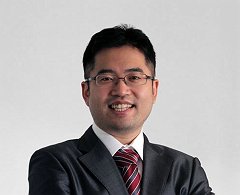
Riccardo Lancellotti is an Associate Professor at the Department of Engineering 'Enzo Ferrari' of the University of Modena and Reggio Emilia. His research focuses on Edge/Fog/Cloud Computing, Cyber Security, and Resource Management in distributed systems. He has extensive contributions in optimizing infrastructure performance, load balancing, and energy efficiency in cloud and fog environments. His work often combines theoretical models with practical simulations, addressing challenges like stale information in edge systems and heterogeneous resource allocation in smart cities. Key research areas include: Fog/Edge computing infrastructure design and optimization Cloud resource provisioning and SLA compliance Security for Industry 4.0 and automotive systems Genetic algorithms for service placement Scalable VM clustering and resource allocation Publications highlight trends in cloud/fog integration, robust game theory for microservices, and distributed load balancing under dynamic conditions. His work emphasizes practical applications, such as pharmaceutical distribution routing and smart city sensor management. No awards are explicitly listed, but his extensive publication record reflects recognition in the field.
Dr. Yu (Chelsea) Jin is an Assistant Professor in the Department of Industrial Engineering at the University at Buffalo, specializing in quality inspection, predictive modeling, and data analytics for advanced manufacturing systems. She holds a PhD in Industrial Engineering from the University of Arkansas, an ME from the University of Michigan, and dual BS degrees in Network Engineering and Finance from Jinan University. Her research focuses on integrating machine learning and physics-based models to optimize manufacturing processes, such as additive manufacturing, PCB assembly, and pharmaceutical distribution systems. She has developed frameworks like ReflowNet for reflow oven optimization and physics-informed neural networks for thermal profile prediction. Her work emphasizes both theoretical advancements and practical applications in smart manufacturing and healthcare logistics. Dr. Jin's recent publications highlight contributions to generative AI for knowledge retrieval, AGV system optimization, and multi-source transfer learning for pandemic modeling. She actively collaborates with industry partners to bridge academic research and real-world manufacturing challenges.
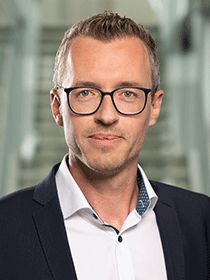
Włodzimierz Kasprzak is a Professor at the Institute of Control and Computation Engineering, Faculty of Electronics and Information Technology, Warsaw University of Technology. His research focuses on computer vision, robotics, human-computer interaction, and machine learning. He has contributed to advancements in human action classification, skeleton-based feature analysis, and multimodal interface design. Research Highlights: Development of lightweight classification models for human actions in video using skeleton-based features. Advances in multi-stream fusion techniques for image and video analysis. Design of embodied agent systems for cybersecurity event visualization and control. Awards and Recognition: 2024: Individual First Class Rector's Award for Scientific Achievements (2022-2023) 2021: Medal of the Commission of National Education 2011: Golden Cross of Merit His work integrates theoretical contributions with practical applications in robotics, surveillance systems, and human-centered technologies.
Valentina Serra is a Full Professor at the Department of Energy (DENERG), Polytechnic University of Turin, and a member of the Future Urban Legacy Lab (FULL Center). She specializes in advanced building envelopes , energy performance , and indoor environmental quality , with a focus on experimental facilities and sustainable materials. Research Interests: Adaptive façades, PCM integration, thermochromic coatings, and acoustic absorption using natural waste materials. Projects: Scientific Director for EU-funded Wall-ACE (2016–2019), PRIN (2019–2021), and regional research initiatives like GRE_EN_S (2010–2012). Awards: Member of the Energy and Buildings editorial board since 2019, Program Chair for SEB-16, and organizer for IBPC 2015. Teaching: Course Lecturer for Eco-Friendly Architectural Design B at Politecnico di Torino since 2021. Students: Supervises PhD candidates like Ramona Russo and Giorgia Autretto, focusing on occupant-centric design and PCM-based systems. Patents: Co-inventor of the national patent NBT - Not Bed Technology .
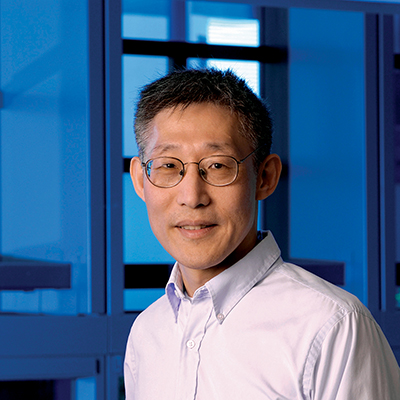
Sang Kil Cha is an Associate Professor at KAIST's Graduate School of Information Security and School of Computing, where he also serves as Director of the Cyber Security Research Center (CSRC). His research focuses at the intersection of computer security and software engineering, with emphasis on building and evaluating systems that analyze programs. Dr. Cha received his B.S. from Korea University, and both his M.S. and Ph.D. from Carnegie Mellon University (CMU). His educational background forms the foundation for his experimental approach to computer science research. His primary research interests include software security, software engineering, program analysis, binary code analysis, and fuzzing. Dr. Cha's work centers on developing practical security tools and methodologies that bridge theoretical concepts with real-world applications, particularly in program analysis and vulnerability detection. His research has significant implications for improving software reliability and security through advanced analysis techniques. Dr. Cha's publication record shows a strong focus on fuzzing techniques, binary analysis, and program understanding, with recent work expanding into blockchain security and decompilation. His research consistently appears in top-tier security and software engineering conferences including IEEE S&P, USENIX Security, and CCS. ACM Distinguished Paper Award (2024, 2022, 2014) USENIX Distinguished Paper Award (2023) IEEE Best Paper Award (2021) NDSS Best Paper Award (2019) As Director of CSRC and leader of SoftSec Lab at KAIST, Dr. Cha oversees multiple research projects focused on practical security solutions. His lab develops tools like B2R2 (a binary analysis framework) and OFuzz (a fuzzing platform), which have gained recognition in the security community. Dr. Cha actively contributes to the research community through program committee roles at major conferences including PLDI, ICSE, and ISSTA.
Professor Mark Baker is a Professor of Surface Science and Engineering at the University of Surrey, affiliated with the School of Engineering and the Engineering Materials Research Centre. He holds a BSc in Chemical Physics from the University of Kent and a PhD in Materials Science from the University of Surrey. His research focuses on advanced materials characterization techniques for thin films and coatings, particularly femtosecond laser ablation (fs-LA) XPS depth profiling, corrosion resistance, and energy materials. He has supervised multiple PhD/EngD students and collaborates with industry partners like Thermo Fisher Scientific and Plasma Quest Ltd. Research interests include thin film devices, wear/corrosion coatings, and spectroscopic techniques like XPS, AES, and SEM. Over 200 publications and 6,000+ citations highlight his contributions to surface engineering and materials science. His recent work explores fs-LA XPS for perovskite solar cells and corrosion mitigation in cast iron pipelines. He also leads employability initiatives as Faculty Director of Employability. Notable projects include collaborations on smart windows using VO₂ coatings and fs-LA XPS instrumentation development. His work bridges academia and industry, addressing challenges in energy conservation, corrosion control, and advanced material synthesis.
Ajeet Kumar is a Researcher in the Department of Mechanical Engineering at the University of Bath, affiliated with the Centre for Integrated Materials, Processes & Structures (IMPS) and the Centre for Sustainable Energy Systems (SES). He holds a PhD in Physics from the University of Hyderabad (2016) and an MSc from Mohanlal Sukhadiya University (2007). His research focuses on textured porous piezoelectric materials for sensors and energy harvesting applications, contributing to UN Sustainable Development Goals related to energy and innovation. Key roles include Research Assistant Professor (Yeungnam University, 2018–2023), Postdoctoral Fellow (Yeungnam University, 2018), and prior Research Associateships at Defence Metallurgical Research Laboratory and the University of Hyderabad. His expertise spans piezoelectrics, ferroelectrics, thin/thick films, and energy storage technologies. Research interests emphasize advanced materials for energy harvesting, including pyroelectric, thermomagnetic, and magneto-mechano-electric systems. Recent work explores single-crystal piezoelectricity, laser-based material processing, and low-temperature energy conversion. Publications highlight innovations in piezoelectric single crystals, magneto-mechano-electric generators, and energy-efficient composites. Collaborations focus on sustainable energy solutions and multifunctional materials.
Rachael Medhurst is a Senior Lecturer in Digital Forensics and Course Leader of the MSc Applied Cyber Security at the University of South Wales, part of the Faculty of Computing, Engineering and Science. She leads research and teaching in Digital Forensics, Cyber Security, and Emerging Technologies, with a focus on authentic workplace emulation learning environments. Her roles include teaching courses such as Digital Crime Scene Management, Mobile Device Forensics, and Incident Response Investigations. Education: BSc (Hons) and MSc in Digital Forensics from the University of South Wales, PGCLTHE (Postgraduate Certificate in Learning and Teaching in Higher Education). Research Interests: Emerging Technology Forensics, Vehicle Forensics, Cybersecurity Incident Response, and Digital Evidence Analysis. Awards: FHEA, MCSFS, MCFE. Her research explores forensic methodologies for emerging technologies like smart vehicles and IoT devices. She has presented at conferences such as the Chartered Society of Forensic Science Conference and contributed to BBC Frontline Fightback, discussing vehicle data vulnerabilities. She leads initiatives to bridge academic and industry practices through partnerships with law enforcement, cybersecurity firms, and certifications like Bond Solon and Magnet AXIOM. Her teaching leverages cutting-edge facilities like the Crime Scene House, Moot Court, and Secure Operations Centre to simulate real-world scenarios. She emphasizes continual professional development, completing training in Windows 11 Forensics, Apple Mac Examinations, and Vehicle Forensics. Recent articles and media appearances highlight her work in public cyber safety, healthcare cybersecurity, and forensic science innovation. She is pursuing a PhD in Emerging Technology and Digital Forensics to advance forensic methodologies for new technologies.
Minsu Liu serves as a Senior Research Fellow at Monash University's Suzhou campus under the Office of the Pro Vice-Chancellor and President, actively supervising PhD students and maintaining a robust research profile with 40+ publications since 2014. His academic foundation includes a PhD in Chemical Engineering (awarded March 2018) and a Bachelor of Engineering (Honours) in Chemical Engineering (awarded March 2013), establishing expertise in advanced materials development. Dr. Liu's research spans Materials Science and Chemical Engineering , focusing on sustainable technologies that advance UN Sustainable Development Goals. Key contributions include: Thermal management solutions using 2D materials for energy-efficient buildings Electrochromic smart windows enabling dynamic radiative cooling Graphene-based neural interfaces for biomedical applications Innovative battery and hydrogen storage technologies Analysis of his 2023-2025 publications reveals a strategic emphasis on boron nitride and graphene composites, with fabrication breakthroughs in 3D printing and wet-spinning techniques driving applications in energy conservation and healthcare diagnostics. He currently contributes as Associate Investigator to the $5$-year project 'Development of direct reduction technologies based on fluidized bed systems' (2024-2029), while mentoring the next generation of researchers through PhD supervision. Though specific laboratory infrastructure isn't detailed in source materials, his extensive collaborations across materials engineering and sustainable technology domains indicate leadership in multidisciplinary research teams addressing global energy challenges.
I-Wei Chen serves as a Professor and the Skirkanich Professor of Innovation in the Department of Materials Science & Engineering at the University of Pennsylvania's School of Engineering and Applied Science. His extensive research portfolio spans ceramics, polymers, and electronic materials with a particular focus on nanomaterial applications. Chen's research interests encompass magnetic and fluorescent smart colloids for molecular imaging (primarily MRI), nanograin ceramics related to multilayer ceramic capacitors (MLCC), sintering and dielectric/ferroelectric properties of barium titanate, and thin film nanometallic electronic devices for resistance random access memory (RRAM). He also investigates energy materials including zirconia, thermoelectrics, and transparent electrodes. His work bridges fundamental materials science with practical applications in electronics, energy storage, and biomedical engineering. Analysis of his recent publications reveals a strong focus on nanocrystalline materials, solid electrolytes, and advanced energy storage systems. His research demonstrates consistent innovation in ceramic processing techniques, particularly in two-step sintering methods, while expanding into biomedical applications like pH-sensitive nanoparticle drug delivery systems. The interdisciplinary nature of his work connects traditional ceramics research with cutting-edge applications in electronics, energy, and medicine. Scientific Awards: Sosman Award of the American Ceramic Society (2006) Edward C. Henry Award, Electronic Division, American Ceramic Society (1999) Humboldt Prize (1997) Ross Coffin Purdy Award, American Ceramic Society (1994) Fellow, American Ceramic Society (1991) Professor Chen has secured significant research funding including NSF grants for nanograin BaTiO3 ceramics research (2009-2012), DOD funding for breast tumor targeting and prostate tumor imaging projects (2010-2013), and DOE support for electric-loading enhanced kinetics in oxide ceramics (2011-2014). His laboratory in the LRSM Building at Penn is equipped with advanced materials characterization tools including atomic force microscopy, sintering equipment, and various analytical instruments. His research group operates within the Laboratory for Research on the Structure of Matter at Penn, utilizing extensive facilities for materials synthesis, characterization, and testing. Current projects focus on nanometallic resistance switching memory devices, advanced ceramic processing techniques, and theranostic nanoparticle platforms for cancer treatment.
Markus Winkler is a Researcher at the University for Continuing Education Krems , affiliated with the Department for Building and Environment . He holds roles as Head of Center and Course Manager for Building Innovation, emphasizing practical and academic leadership. His work focuses on sustainable building technologies, energy efficiency, and climate-resilient construction. Affiliations: University for Continuing Education Krems, Department for Building and Environment. Roles: Head of Center, Course Manager, Scientific Staff. Research Focus Winkler’s research addresses cutting-edge topics such as passive cooling strategies (e.g., CoolAIR project), building envelope innovation, and adaptive urban design. Key themes include: Automated ventilation/shading systems for energy efficiency. Thermal activation of building materials (e.g., concrete basements as heat sinks). Climate adaptation of historic buildings (e.g., Danube-University Krems offices). Grants & Projects He leads or co-leads high-profile projects funded by Austrian Federal and EU grants, including: Innovationscamp Kreislaufmanager im Bauwesen (FFG-funded, 2022–2024). NÖ WBF 2025 (evaluating sustainable housing subsidies, 2021–2025). CoolDUK (cooling historic buildings, 2016–2018). Dissemination He actively shares findings through lectures like Future-Proof Building & Retrofitting in Times of Climate Crisis and publishes in venues like Advanced Building Skins and Zement + Beton . His work bridges academic research and practical implementation, addressing urgent challenges in sustainable urban development and building technology.
Daniel Rönnow is a Professor of Electronics at the University of Gävle since 2011. Previously, he held roles such as lecturer at the University of Gävle (2004–2006), researcher at Acreo (1998–2000), and postdoc at the Max Planck Institute (1996–1998). He earned his MSc and PhD in Engineering Physics from Uppsala University (1991–1996). His research focuses on RF/microwave components, including phase noise characterization, nonlinear system linearization, metamaterials, and measurement technology. Key areas include MIMO systems, thin-film optics, and seismic sensors. Recent work emphasizes ultrawideband radar for nondestructive testing and antenna design for industrial applications. Rönnow has authored/co-authored over 50 publications, with notable contributions in IEEE Transactions and other journals. His work bridges theoretical models (e.g., behavioral amplifiers) with practical applications like sensor development and radar systems.
Terence Williamson is an Associate Professor at the School of Architecture, Landscape Architecture and Urban Design, University of Adelaide, within the Faculty of Sciences, Engineering and Technology. His research focuses on thermal performance, sustainability, and urban microclimate design, with a particular emphasis on the built environment's impact on older populations. Educated in engineering and architecture in Australia, he has authored/co-authored over 100 publications including books and articles on sustainable architecture and energy efficiency. Research interests include adaptive thermal comfort models, building energy codes (e.g., NatHERS), and urban microclimate modeling (e.g., the CAT model for street canyon temperatures). His work bridges engineering and social science, addressing ethical and cultural dimensions of sustainable design. He currently supervises Masters and PhD candidates, emphasizing sustainability in building design and climate-resilient housing solutions for vulnerable groups. Collaborations include projects with Dr. Evyatar Erell (Ben-Gurion University) on urban microclimate models and investigations into occupants' thermal behaviors in aged care facilities. His research contributes to policy frameworks for energy efficiency and health-focused housing standards in Australia.
Liping Wang is a Professor in the Department of Civil and Architectural Engineering at the University of Wyoming, part of the College of Engineering and Physical Sciences. She also serves as the Director of the Center for Controlled Environment Agriculture, highlighting her leadership in sustainable building and agricultural systems. Her work bridges engineering, energy efficiency, and environmental resilience. Academic Background: B.S., Xi’an University of Architecture and Technology, China M.S., Xi’an University of Architecture and Technology, China Ph.D., National University of Singapore Her research interests focus on building performance modeling, fault detection and diagnosis for HVAC systems, energy efficiency in indoor agriculture, and the development of resource-efficient and resilient future communities. She applies data-driven and adaptive modeling techniques to enhance building energy systems and indoor environmental quality. The analysis of her recent publications reveals a strong trend toward intelligent building systems, with recurring use of machine learning (e.g., Gaussian mixture models, particle swarm optimization) for HVAC modeling, fault detection, and energy optimization. Her work increasingly integrates controlled environment agriculture, reflecting a shift toward sustainable food-energy-water nexus solutions. Topics span from fundamental thermodynamics to applied field evaluations of ASHRAE standards. Scientific Awards: NSF CAREER Award (1944823), National Science Foundation, 2019 Appreciation Award, Advisor of ASHRAE Student Branch, University of Wyoming, 2019 Liping Wang has secured competitive research funding, notably the NSF CAREER Award, and mentors students through research and professional engagement. She actively contributes to the academic community as an Associate Editor of the International Journal of Sustainable Energy Technologies and Assessments and a guest editor for Energy and Buildings . Her work involves interdisciplinary collaboration, with co-authors from diverse engineering and environmental science backgrounds. She has served as an ad hoc reviewer for top journals including Building and Environment , Energy and Buildings , and Applied Energy . She leads the Center for Controlled Environment Agriculture, which likely involves a research team focused on energy-efficient indoor farming technologies, greenhouse modeling, and sustainable building-agriculture integration. Her lab appears to utilize low-cost sensor systems (e.g., Arduino-based platforms) for real-time monitoring of environmental conditions.
Jun Wu is a Professor in the Department of Public Health at the University of California, Irvine. Her research focuses on air pollution exposure assessment and air pollution epidemiology, particularly in reproductive health, aiming to improve exposure characterization and assess health impacts. Ph.D. in Environmental Health from University of California, Los Angeles Her exposure assessment work employs geographical information systems (GIS), atmospheric dispersion models, and statistical techniques to quantify population and individual air pollution exposures, including studies on vehicle-related pollution, naphthalene, wildfires, and traffic pollutants. Her epidemiology research links air pollution to adverse pregnancy outcomes like preeclampsia, preterm births, and early pregnancy loss. The Google Scholar articles reflect interdisciplinary work in photonics, semiconductor devices, and optical systems, featuring advancements in microwave photonic oscillators, photodiodes, and color-tunable organic light-emitting diodes. These studies emphasize low phase noise, thermal dissipation, and high-efficiency device design across microwave and optoelectronic domains. Health Effect Institute Walter A. Rosenblith New Investigator Award, 2010 International Society of Exposure Analysis Young Investigator Award, 2005 Samuel J. Tibbitts Fellowship, School of Public Health, UCLA, 2003 Chancellor’s Fellowship, UCLA, 2000, 2003 PWEA Student Research Award, Pennsylvania Water Environment Association, 2000 Jun Wu's laboratory (https://drwulab.net/) develops exposure models and investigates environmental health impacts, combining GIS with atmospheric modeling. Her research bridges environmental science and public health, targeting pollution-related health risks.