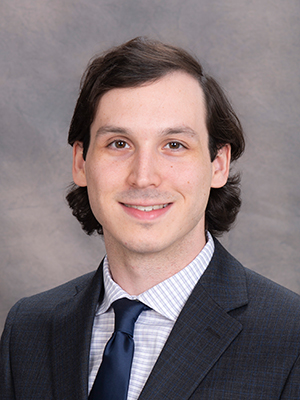
Dr. Disi Chen is a Lecturer in Robotics and Machine Vision at the Faculty of Environment and Technology (FET), University of the West of England, Bristol. He is affiliated with the Centre for Machine Vision (CMV) and Bristol Robotics Laboratory (BRL). BEng in Mechanical Engineering MEng in Engineering PhD in Probabilistic Framework for Human-Robot Skill Transfer (University of Portsmouth) His research focuses on Machine Vision , Machine Learning , and Robotics , with specific expertise in human-robot skill transfer, gesture recognition, and surface electromyography (sEMG) signal processing. He has developed novel frameworks like the Curved Gaussian Mixture Model (CGMM) and Virtual Reality systems for intuitive skill demonstration perception. Disi Chen's publications emphasize gesture recognition , sEMG signal analysis , and robotic control systems , often integrating deep learning , image segmentation , and human-computer interaction . His work spans applications in prosthetic limbs , rehabilitation robotics , and urban computing . He is part of the Centre for Machine Vision and Bristol Robotics Laboratory , collaborating with institutions like the University of Portsmouth and Wuhan University of Science and Technology. His teaching includes modules on Machine Vision and Robotics .
Scott Copsey is a researcher at the University of Hertfordshire's School of Life and Medical Sciences, affiliated with the Department of Psychology, Sport and Geography and the Smart Mobility Unit. His work focuses on transportation geography, smart urban and rural mobility, and sustainable transport planning. Rural Planning in the 2020s (2021-2022) MaaSafe: Gender inclusivity and safety in shared mobility (2022-2023) Transport for Counties Research Initiative (2019-2020) His research examines smart mobility systems , electric vehicle infrastructure , and gender inclusivity in transportation . Key projects include developing integrated journey planning tools (2016) and advising county authorities on sustainable transport implementation. Recent publications highlight Mobility as a Service (MaaS) , shared transport , and decarbonization trends, with specific emphasis on women's adoption barriers in shared mobility systems. Collaborations span public-private partnerships and UK regional councils.
Jeffrey Walker is a Research Fellow in the School of Civil Engineering at the University of New South Wales . His work focuses on soil moisture retrieval using advanced remote sensing technologies, including synthetic aperture radar (SAR), L-band and P-band radiometers, and GNSS-R systems. He integrates machine learning algorithms for spatial downscaling, multi-scale modeling, and time-series analysis to improve hydrological monitoring in agricultural, urban, and infrastructure contexts. Key Research Areas : Soil moisture remote sensing, microwave radiometry, machine learning applications in environmental data, geospatial modeling, sustainable construction, and eco-friendly pavement design. Notable Contributions : Development of LSTM neural networks for pavement moisture prediction, novel downscaling methods using optical trapezoid models, and assimilation frameworks for land surface models. Recent Trends : Emphasis on UAV-based radiometry, multi-frequency sensor fusion, and addressing over-optimism in SAR soil moisture modeling. Applications : Smart rehabilitation of pavements, flood model calibration with crowd-sourced data, and crop yield estimation via satellite imagery fusion.
Glenn Walker is an Associate Dean for Research and Graduate Programs and a Professor of Biomedical Engineering and Electrical Engineering at The University of Mississippi. He holds a Ph.D. in Biomedical Engineering from the University of Wisconsin-Madison (2002). His research focuses on microfluidic systems, biomedical device development, and cellular engineering, with applications in diagnostics, drug delivery, and tissue modeling. Key areas include hypoxia studies, organ-on-a-chip platforms, and automated cell culture systems. Walker’s work bridges engineering and medicine, emphasizing innovative microfluidic technologies for biomedical challenges. His recent publications highlight advancements in passive pumping systems, oxygen-controlled bioreactors, and multiplexed diagnostic tools. He has contributed to over 50 peer-reviewed articles spanning microfluidic design, cell biology, and biomedical instrumentation. His academic leadership roles include overseeing graduate programs and research initiatives. While no specific grants or awards are listed in the provided materials, his extensive publication record underscores his technical contributions to the field.
Prof. Michael Famulok is a faculty member at the University of Bonn, affiliated with the Life and Medical Sciences Institute (LIMES) and the Faculty of Mathematics and Natural Sciences. His research focuses on DNA nanotechnology, aptamer development, and chemical biology, with an emphasis on creating functional biomolecular machines and molecular switches. His work explores interlocked DNA structures like rotaxanes and catenanes, aiming to develop controllable nano-devices for applications in diagnostics and therapeutics. Key projects include light-activated DNA nanoengines, self-regulating actuators, and aptamer-based systems targeting SARS-CoV-2 and cancer biomarkers. Research Interests: DNA Nanotechnology, Aptamer Selection, Chemical Biology, Molecular Switches, Bio-Hybrid Systems, Diagnostic Assays. Selected Publications Highlight Dynamic DNA Architectures, SARS-CoV-2 Aptamer Therapeutics, and Interlocked Nanostructures. His lab actively contributes to advancing nanoengineering and biotechnological applications.
Jonathan Weaver-Rosen is an Instructional Assistant Professor in the Department of Mechanical Engineering at Texas A&M University, holding a Ph.D. and B.S. in Mechanical Engineering from the same institution. His research specializes in design automation methodologies, particularly parametric optimization and adaptive systems design. Research interests focus on: Design theory and methodology Computational methods for design optimization Engineering education pedagogy and curriculum development His work emphasizes preparing engineers to effectively utilize analysis tools and collaborate in teams. Awards include: 2024 Peggy L. & Charles Brittan Outstanding Undergraduate Teaching Award 2023 ASME Best Teacher Award 2020 J. Mike Walker '66 Impact Award
Feifei Shi is an Assistant Professor of Energy Engineering in the John and Willie Leone Family Department of Energy and Mineral Engineering at the College of Earth and Mineral Sciences, The Pennsylvania State University. She also holds courtesy appointments in the Materials Science and Engineering and Mechanical Engineering departments at Penn State. Dr. Shi joined Penn State in August 2019 after completing a postdoctoral fellowship at Stanford University. Dr. Shi earned her B.Sc. in Chemistry from Fudan University in 2010 and her Ph.D. in Mechanical Engineering from the University of California, Berkeley in 2015. Her academic journey reflects a strong interdisciplinary foundation spanning chemistry, mechanical engineering, and energy systems. Dr. Shi's research focuses at the intersection of surface chemistry, material science, and mechanical engineering, with particular emphasis on electrochemical energy conversion and storage systems. Her work spans multiple areas including battery technology, catalysis, molten salt systems, and sustainable resource extraction. She investigates fundamental mechanisms at electrode-electrolyte interfaces, develops novel characterization techniques, and works on practical applications for next-generation energy storage solutions. Her research group employs advanced experimental methods including in-situ spectroscopy, electrochemical analysis, and materials characterization to address critical challenges in energy systems. Analysis of Dr. Shi's recent publications reveals a strong focus on battery technology, particularly lithium-based systems. Her work spans fundamental interfacial science, novel battery architectures, and practical manufacturing considerations. She has made significant contributions to understanding solid-electrolyte interphases, developing fast-charging capabilities, improving low-temperature performance, and creating sustainable lithium extraction methods. Her research demonstrates a balanced approach that connects fundamental science with practical engineering applications. Dr. Shi has received several prestigious awards recognizing her research excellence: 2023 NSF CAREER Award 2022 J&J WiSTEM2D Scholar by Johnson & Johnson 2021 George H. Deike, Jr. Research Grant 2019 Virginia S. and Philip L. Walker Faculty Fellow at Penn State University Dr. Shi actively mentors graduate and undergraduate students in her research group, which focuses on experimental energy research. She serves as guest editor for Frontiers in Energy Research and Energy & Environmental Materials (EEM), and sits on the editorial board of Energy Materials. Her research has been supported by multiple grants, including the NSF CAREER award, which funds her work on fundamental battery interface science. Dr. Shi leads the Feifei Shi Research Group, housed in the Energy and Environmental Lab (EEL) on Hastings road. Her laboratory focuses on experimental investigations of electrochemical energy systems, with particular expertise in in-situ characterization techniques. The group collaborates extensively with other researchers at Penn State and beyond, leveraging facilities like the Millennium Science Complex and the Penn State Materials Research Institute.
Valeriy Vyatkin is a Professor at Aalto University's Department of Electrical Engineering and Automation within the School of Engineering. He also maintains an affiliation with Luleå University of Technology in Sweden. His research spans industrial automation, distributed control systems, and digital transformation of manufacturing processes. Vyatkin leads a significant research group focusing on next-generation industrial control architectures and has established himself as a leading authority in the IEC 61499 standard for distributed industrial automation systems. Professor Vyatkin's research interests center around industrial automation systems with particular emphasis on distributed control architectures, formal methods for verification of industrial control systems, and digital twin technologies. His work bridges theoretical computer science with practical industrial applications, developing methods for model checking, virtual commissioning, and formal verification of industrial automation systems. He has pioneered approaches for applying reinforcement learning to industrial process control, particularly in steel manufacturing and energy systems. His recent work explores the integration of generative AI with industrial control systems, focusing on rapid prototyping and code generation for IEC 61499 applications. The analysis of Professor Vyatkin's recent publications (2023-2025) reveals a strong research trajectory focused on advancing industrial automation through multiple complementary approaches. His work demonstrates a consistent emphasis on the IEC 61499 standard as a foundation for distributed control systems, with growing integration of AI techniques, particularly generative models and reinforcement learning. A notable trend is the progression from theoretical foundations toward practical implementation frameworks, with increasing attention to security, privacy, and human factors in industrial settings. His research group has expanded into new application domains including energy systems, horticulture, and nuclear instrumentation while maintaining core expertise in manufacturing automation. Professor Vyatkin has made significant contributions to the field through his editorial work, including serving as guest editor for special issues in IEEE Transactions on Industrial Informatics. His research has been supported by multiple grants from national and international funding agencies focusing on industrial digitalization and smart manufacturing initiatives. Professor Vyatkin actively supervises numerous PhD and Master's students, with a consistent research group of 8-10 students and postdoctoral researchers. His advising approach emphasizes both theoretical rigor and industrial relevance, with many students collaborating directly with industry partners. His research group has established collaborations with major industrial players in manufacturing, energy, and automation sectors across Europe. The research activities are centered around the Industrial Automation research group at Aalto University, which maintains strong connections with the international IEC 61499 community. The team operates a dedicated laboratory for industrial automation research with capabilities for virtual commissioning, digital twin development, and formal verification of control systems. The group participates in multiple European research projects focused on Industry 4.0 and 5.0 technologies, with particular emphasis on human-centric automation and secure industrial systems.
Professor Guy H. Walker is a leading academic in Human Factors and Sociotechnical Systems at Heriot-Watt University's School of Social Sciences. He holds roles including Work Package Lead for the £46m TransiT Hub (focusing on decarbonizing transport via digital twinning) and previously served as Associate Executive Dean for Education and Student Life. His career spans academia, consultancy, and industry collaboration, with projects in nuclear safety, aviation, construction, and sustainable transportation. Education: BSc (Hons) Psychology (University of Southampton, 1999); PhD in Human Factors (Brunel University, 2002). Early roles included Human Factors Consultant at Nickleby HFE Ltd and Research Fellowships at Brunel University and University of Southampton. He became a Professor at Heriot-Watt in 2018, with leadership roles in online learning and pioneering education initiatives. Research focuses on applying Human Factors to complex systems, including the Palace of Westminster restoration (innovating 'Sociotechnical Construction') and sustainable road freight with Cambridge University. He has authored over 140 peer-reviewed papers and 20 books, with an h-index of 46. Recognitions include the Stanford List of Top 2% Scientists (2024), President's Medal (Ergonomics Society, 2008), and PRIME Award for research impact. Awards highlight his contributions to teaching and research: Global Teaching Team Award (2021), Graduates Prize (2010), and Grant Innes Student Voice Award (2022). He chairs the editorial board for Ergonomics and has media features on BBC, Discovery Channel, and National Geographic. Current projects emphasize sustainable development goals, including flood resilience strategies and decarbonization. His work integrates human-centered approaches across diverse sectors, blending academic rigor with real-world application.
David Walker is a Senior Lecturer at the University of Western Australia (UWA), affiliated with the School of Physics, Maths and Computing and the Department of Mathematics and Statistics. His research focuses on complex systems, dynamical systems, and granular materials, with applications in epidemiology, environmental science, and engineering. He holds an h-index of 15 and has published over 86 peer-reviewed articles. Walker’s research interests include the analysis of granular media mechanics, network science applied to time series data, and mathematical modeling of biological systems. His work contributes to UN Sustainable Development Goals related to clean water and climate action through studies on aquifer systems and disease control strategies. Key contributions include advancements in reservoir computing, network-based analysis of granular dynamics, and epidemic modeling. Recent work addresses mobility data analysis for pandemic control and utilizes ordinal partition networks for time series analysis. His research methodologies often integrate nonlinear dynamics, data compression techniques, and complex systems theory. Walker has secured seven grants, including projects on animal welfare, smart farming technologies, and network modeling of biological systems. Notable collaborations span institutions like the University of Melbourne, The Hong Kong Polytechnic University, and Bioss.ac.uk. His expertise bridges theoretical mathematics, computational science, and applied engineering challenges. Despite extensive contributions, no scientific awards are explicitly listed. His work emphasizes interdisciplinary applications, with ongoing projects in livestock health monitoring and geospatial analysis of groundwater systems.
Dr. Tanya Hutter is an Assistant Professor in the Walker Department of Mechanical Engineering at The University of Texas at Austin, affiliated with The Cockrell School of Engineering, Materials Science Program, and Texas Quantum Institute. Her research focuses on molecular sensing technologies, nanomaterials, and photonics with applications in environmental monitoring, medical diagnostics, and homeland security. She holds a Ph.D. in Physical Chemistry from the University of Cambridge and has held prestigious fellowships such as the L’Oréal-UNESCO For Women in Science Award (2016) and the NSF CAREER Award (2024). Dr. Hutter’s work includes developing optical probes for real-time brain alcohol monitoring, sensors for toxic contaminants in hand sanitizers, and microfluidic devices for neurochemical analysis. She teaches courses like ME 316T (Thermodynamics) and ME 334 (Materials Engineering). Her lab has 9 patents and over 50 peer-reviewed publications. Awards include the 2025 Advisor of the Year and 2023 Outstanding Teaching Award. She co-founded startups in nanophotonic sensing and MedTech, emphasizing technology commercialization. Education: Ph.D. in Physical Chemistry (University of Cambridge, 2013) M.Sc. in Materials Science and Engineering (Tel Aviv University, Summa Cum Laude, 2009) B.Sc. in Chemical Engineering (Ben-Gurion University, 2007) Research Interests: Chemical/bio-sensing, nanophotonics, medical sensors, neuropharmacology, and environmental monitoring. Current projects include real-time ethanol monitoring in brain tissue and protein oligomer detection in neurodegenerative diseases. Grants & Funding: NIH, NSF, NIHR, and industry partnerships with institutions like MD Anderson Cancer Center. Recent grants include a National Institute on Alcohol Abuse and Alcoholism (NIAAA) award (2022). Labs & Teams: Hutter Research Group, collaborating with experts in neurosurgery, materials science, and petroleum engineering. Recent projects include developing a mid-infrared fiber sensor for traumatic brain injury monitoring and a smart mask for COPD patient care.